Home Blog Page 1720

Circular economy crucial for Paris climate goals

0

The world can maximise chances of avoiding dangerous climate change by moving to a circular economy, thereby allowing societies to meet the goals of the Paris Agreement on Climate Action.
Paris Agreement
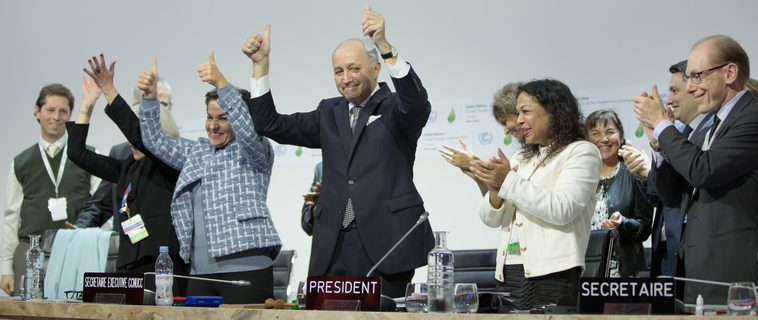
Jubilation greeted the adoption of the Paris Agreement in December 2015 in Paris, France. Photo credit: unfccc.int

This is the key finding of “The Circularity Gap Report 2019”, released by the organisation Circle Economy at Davos during the annual meeting of the World Economic Forum.

A circular economy is a regenerative system in which resource input and waste, emission, and energy leakage are minimised by slowing, closing, and narrowing energy and material loops. The can be achieved through long-lasting design, maintenance, repair, reuse, remanufacturing, refurbishing and recycling.

The report highlights the vast scope to reduce greenhouse gas emissions by applying circular principles – notably re-use, re-manufacturing and re-cycling – to key sectors such as the built environment. Yet it notes that most governments barely consider circular economy measures in policies aimed at meeting the Paris Agreement target of limiting global warming to as close as possible to 1.5°C.

The report by Circle Economy, a group supported by UN Environment and the Global Environment Facility, ​finds that the global economy is only 9% circular – just 9% of the 92.8 billion tonnes of minerals, fossil fuels, metals and biomass that enter the economy are re-used annually.

Climate change and material use are closely linked. Circle Economy calculates that 62% of global greenhouse gas emissions (excluding those from land use and forestry) are released during the extraction, processing and manufacturing of goods to serve society’s needs; only 38% are emitted in the delivery and use of products and services.

Yet global use of materials is accelerating. It has more than tripled since 1970 and could double again by 2050 without action, according to the UN International Resource Panel.

Circle Economy’s CEO, Harald Friedl, said: “A 1.5-degree world can only be a circular world. Recycling, greater resource efficiency and circular business models offer huge scope to reduce emissions. A systemic approach to applying these strategies would tip the balance in the battle against global warming.

“Governments’ climate change strategies have focused on renewable energy, energy efficiency and avoiding deforestation but they have overlooked the vast potential of the circular economy. They should re-engineer supply chains all the way back to the wells, fields, mines and quarries where our resources originate so that we consume fewer raw materials. This will not only reduce emissions but also boost growth by making economies more efficient.”

The report calls on governments to act to move from a linear “Take-Make-Waste” economy to a circular economy that maximises the use of existing assets, while reducing dependence on new raw materials and minimising waste. It argues that innovation to extend the lifespan of existing resources will not only curb emissions but also reduce social inequality and foster low-carbon growth.

Lagos killing water corporation to pave way for privatisation, activists allege

0

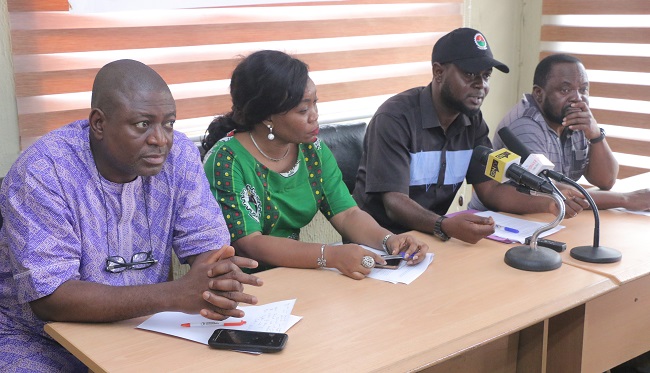
Members of the Amalgamated Union of Public Corporations Civil Service Technical and Recreational Services Employees (AUPCTRE) have accused the management of the Lagos Water Corporation (LWC) of systematically crippling the corporation to pave way for privatisation.

AUPCTRE
L-R: Akinbode Oluwafemi, Comrade Isimeme, Abiodun Bakare and Ayodele Akele

At a media briefing held in Lagos on Tuesday, January 22, 2019, the activists frowned at the development, saying they would ensure that the alleged act is nipped in the bud.

Comrade Isimeme Eboh of AUPCTRE said: “The management of the LWC continues to de-motivate workers through incessant retrenchments and no new recruitments to fill vacant offices. We believe all these actions are deliberately been carried out to frustrate staff and pave the way for privatisation.”

Ayodele Akele, executive director of Labour, Health and Human Rights Development Centre, submitted: “The Lagos government and management of LWC are nurturing a major crisis if they think they can allow the LWC to collapse to pave way for privatisation. The general public will resist it because we know the neglect of the corporation workers is deliberate. We anticipate the governorship candidates will react to this expose of the sleaze in the corporation.”

Akinbode Oluwafemi, deputy executive director, Environmental Rights Action/Friends of the Earth Nigeria, said: “We want to thank AUPCTRE members for standing firm in the face of brazen intimidation. It is disheartening that the water sector is allowed to slide even when the state government’s internally-generated revenue is now close to N60 billion monthly. It is now time for Lagos residents to ask questions.”

American worries about global warming surge to all-time highs

0

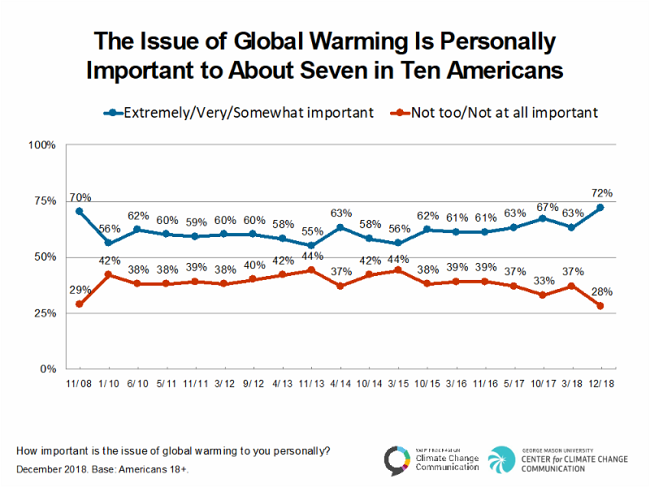
A recent national survey by the Centre for Climate Change Communication of the George Mason University in the US finds that a large majority of Americans say the issue of global warming is personally important to them, outnumbering those who don’t by more than a 2 to 1 margin. The percentage of Americans who say global warming is personally important is now at a record high (72%), up 9 percentage points since March 2018.

Global warming
The issue of global warming is personally important to about seven in 10 Americans

Other record highs include:

  • 73% of Americans think global warming is happening, an increase of 3 percentage points since March 2018.
  • 62% of Americans understand that global warming is mostly human-caused (+4 points since March 2018). By contrast, a record low 23% say it is due mostly to natural changes in the environment (-5 points since March 2018).
  • 69% of Americans are worried about global warming, including 29% who are “very worried”, an 8-point increase since March 2018.
  • 65% think global warming is affecting weather in the United States, and 32% think weather is being affected “a lot.” About half think global warming made the 2018 wildfires in the western U.S. (50%) and/or hurricanes Florence and Michael (49%) worse.
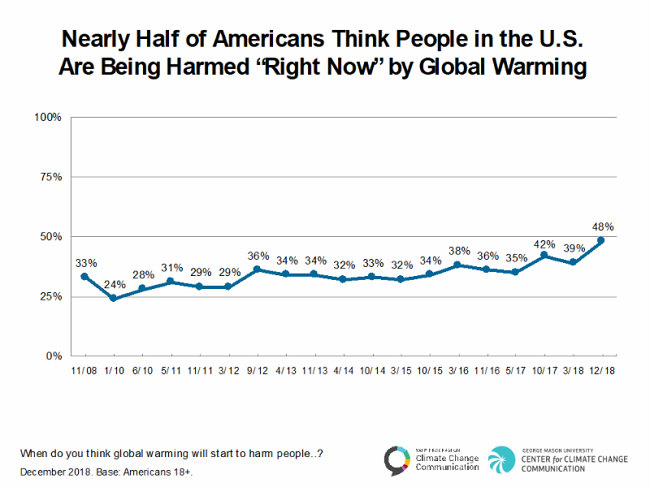
  • 48% think people in the United States are being harmed by global warming “right now” – an increase of 9 percentage points since March 2018.
  • About half of Americans think they personally (49%, +7 points since March 2018) and/or their family (56%, +9) will be harmed by global warming. Majorities think global warming will harm people in their community (57%, +8 points), people in the U.S. (65%, +7 points), people in developing countries (68%, +6 points), the world’s poor (67%, +4 points), future generations of people (75%, +4 points) and/or plant and animal species (74%, +3 points).
Global warming
Nearly half of Americans think people in the US are being harmed ‘right now’ by global warming

The report, says the centre, includes several other interesting findings, including how often Americans hear and talk about global warming.

Zambia biosafety body halts transiting of GMO grains

0

The National Biosafety Authority (NBA) of Zambia has halted the transiting of grains suspected to contain genetically modified organisms (GMOs) from a neighbouring country.

GMO rice
GMO grains

The Authority reportedly collected samples and subjected them to laboratory tests to ascertain whether they were genetically modified.

The products are believed to be from a neighbouring country which is conducting confined field trials.

NBA Senior Biosafety Officer Standards and Technical Liaison, Christopher Simuntala, said the trucks were stopped from proceeding because the Authority wanted to subject the products to laboratory analysis.

“The Clearing Agent and Border officials were asked to hold on before the products could proceed. We just want to ensure that the products are GMO free. The products have permits from other relevant authorities and there is an escort for them, but we just want to be sure they are not genetically modified especially that the country where they are coming from there is research going on although at confined field trials,” he said.

Mr. Simuntala said the samples were collected from a truck which was among three others already at the port of entry.

He said other trucks with the same products were expected to arrive in the country before they could proceed to the neighboring country.

NBA Chief Executive Officer, Lackson Tonga, said the Authority is mandated to ensure the safety of humans, animals and the environment and anything that is suspicious will not be allowed either to pass through or come in the country.

“We are happy that our colleagues at the border points are also alert. We learnt through our recent inspections, surveillance and monitoring of some border points in the Northern and Muchinga Provinces that there were some trucks that were transporting some grains and we decided to subject the samples to laboratory tests. While on surveillance we asked the Clearing Agents and Port officials to hold on before the trucks could proceed,” he said.

“We are happy with the cooperation that we got from the Zambia Revenue Authority border point staff and the Zambia National Service. The collected samples were taken to the laboratories at Zambia Agriculture Research Institute and the GMO laboratory at National Institute for Scientific and Industrial Research for tests. We cannot take chances. It is law that if products are of genetic modification and have to pass through the country, they need a Transit permit from the NBA, and such products are supposed to be escorted by security officers and or Biosafety Inspectors to ensure that they are not diverted and do not spill on the Zambian ground.”

Mr Tonga said the results indicate that the products are not genetically modified, and the trucks have since been allowed to proceed to their destination with escort.

Mr Tonga said NBA had intensified its surveillance and was working with key stakeholders to ensure that its mandate is executed.

Apart from Mpulungu Harbour and Nakonde Border post, the Authority also conducted inspections, monitoring, sensitisation and awareness activities in Mpika, Kasama and Mbala.

The NBA met with officials from Zambia Revenue Authority (ZRA), Ministry of Health (MoH), Ministry of Agriculture, District Administrative Officer, other government officials and some Clearing Agents.

“Our findings indicate that there is a lot of sensitisation and awareness that we need to do. Some people know about GMOs but there is also a lot of miscommunications and myths associated with genetically modified products in some other parts of the country. It is saddening that most people think of anything big as being GMO,” he said.

At Mpulungu Harbour, ZRA Assistant Officer in Charge, Mike Zunga, said the port was being used mostly for exports. He said the maize being exported was mostly from Zambia and other products transiting from East Africa. While outgoing District Agriculture Coordinating Officer, John Mwanza, said most of the products were transiting to or from Burundi, Rwanda and Tanzania.

Nakonde Border Regional Manager, Joe Simwanza, said most of the imports were coming from neighbouring countries especially Tanzania and others transiting to Zambia’s neighbouring countries like the Democratic Republic of Congo (DRC). Meanwhile, NBA has reiterated its calls on border officials to ensure that there is no infiltration of products containing GMOs including those suspected to be genetically modified.

UNICEF urges governments to place priority on children of the poor

0

The United Nations Children’s Fund (UNICEF) on Tuesday, January 22, 2019 urged government at all levels to pay more attention to children in poor communities in the implementation of Sustainable Development Goals (SDGs) to achieve result.

Anthony Lake
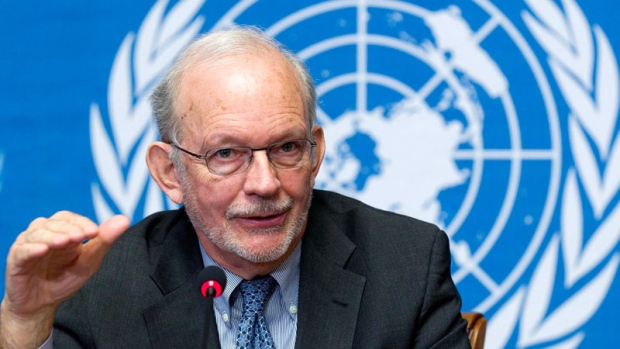
Anthony Lake, Executive Director, UNICEF. Photo credit: ctvnews.ca

Mohammed Fall, UNICEF Country Representative, Nigeria, made the call at a two-day Acceleration Conference on SDGs, organised by Kaduna State to strengthen partnership with local and international partners for effective implementation.

According to him, there is a much higher return on investment, with double fold gain, when investment is made on the poorest children, compared to those who are wealthy.

“This is important as out of pocket expenditure among the poor is around 80 per cent,” he said.

Fall also stressed the need to focus attention on outreach activities targeting communities, households, parents, pregnant women and children, prioritising preventive rather than curative services.

He said that UNICEF would support Kaduna State Government to integrate intervention of health, nutrition, education, water and sanitation services to accelerate attainment of SDGs.

“We have recently signed a memorandum of understanding with the state government, integrating our support in routine immunisation to a broader partnership, building on primary healthcare under one roof.

“This is part of our effort to take health services to poor communities in all parts of the state, to ensure that women and children have a chance of survival and a quality life.

“We want to see a situation whereby a pregnant mother, a nursing mother, and children could access all health services in one health facility, be it immunisation, nutrition, antenatal care, sanitation or hygiene,” he said.

He commended the state government for making huge investment in the health sector, adding that Kaduna state had paid over N1 billion as counterpart fund to different intervention areas with UNICEF.

He, however, expressed concern over the state’s disturbing malnutrition and sanitation indices, which he said, would impair progress being made in primary healthcare service delivery.

Earlier, Susna De, Interim Deputy Director, Bill and Melinda Gates Foundation, stressed the need to harmonise health intervention, to achieve more result.

De also called on the government to mobilise community leaders and the private sector to invest in the provision of health services, adding that funding must be increased, and budgetary allocation, cash-backed.

She said that the foundation would continue to support the Kaduna state government in ensuring quality of health services at primary healthcare centres.

Dr Eugene Kongnyuy of the United Nations Population Fund stressed the need to build a health system that works and takes health services to the door step of the people.

Kongnyuy expressed concern that about 70 per cent of women in Kaduna state delivered outside health facilities, which, according to him, predisposes pregnant mothers to complications during delivery and untimely deaths.

He also noted the need for a robust accountability framework that would ensure transparency in the health sector for quality service delivery.

The state’s Commissioner for Health and Human Services, Dr Paul Dogo, said that the state government had in the last three and a half years, focus attention on building health system that work.

According to him, no amount of funding will create a positive health outcome without the existence of a strong health system.

“This is why the government partnered with local and international partners to build health system, particularly primary healthcare, to provide quality services.

“Our health outcomes are improving but we need more support to do more towards achieving SDGs by 2030,” he said.

By Philip Yatai

Kaduna engages new solid waste management company

0

The Kaduna State Government has engaged the services of Cape Gate Investment Company Ltd. as its new service provider on solid waste management in the state.

Amina Sijuwade
Amina Sijuwade, Kaduna State Commissioner for Environment and Natural Resources

The Commissioner for Environment and Natural Resources, Hajia Amina Sijuwade, on Tuesday, January 22, 2019 said that the engagement was after the contract expiration of ZL Global Alliance (ZLGA) on the Dec. 31, 2018.

According to her, the ministry must address the challenges experienced in solid waste management because the project is very sensitive, which directly affects the health and wellbeing of the residents in the state.

She said that in its efforts to improve the wellbeing and cleanliness of our environment, the state government had decided to engage a new company because of its wealth of experience and good track record in Federal Capital Territory (FCT) and other states to take over the project.

“The company has gradually rolled out its service plans for the three cities of Kaduna, Kafanchan and Zaria (KKZ),’’ she said.

The commissioner said that the target of the new company was primarily to get the three metropolitan cities clean.

She said that as part of the contract agreement, the company would be covering four main areas – evacuation of all wastes to the official dump sites, street cleaning and sweeping to ensure all the routes were clean, vegetation control and desilting of drains.

The commissioner informed the contractor that the state government had a plastics recycling plant which was set up by the Federal Ministry of Environment but had not been in operation.

She said that the contract was awarded for the purchase and installation of Double Blown Plastics Machine, which was yet to be completed.

“Plans are in top gear to complete and revive the plant this year to enable the contractor commence waste to wealth in the second phase of the waste management programme.”

The managing director of the company, Mr Bashir Namadina, said that the company’s vision “is not only to make profit but also to address the general climate related problems that has been existing for many years in the state.’’

He said that the vision of the company was to ensure that Kaduna would become the cleanest city in the country within the next six months.

“Cape Gate Investment Company will improve solid waste management by bringing in new modalities to improve service delivery and will take the services to the next level God willing.”

The Permanent Secretary of the ministry, Muhammad Shu’aibu, appreciated the support and cooperation accorded to ZLGA by the general public and urged them to accord same to the new company.

He called on the public to desist from indiscriminate dumping of refuse in their neighbourhoods and ensure they always used designated collection centres to avoid spread of diseases.

By Ezra Musa

Quantity surveyor seeks modernised mud houses

0

The Vice-President of the Nigerian Institute of Quantity Surveyors (NIQS), Mr Olayemi Shonubi, on Tuesday, January 22, 2019 urged the Federal Government to encourage researches into the modernisation of mud houses in the country.

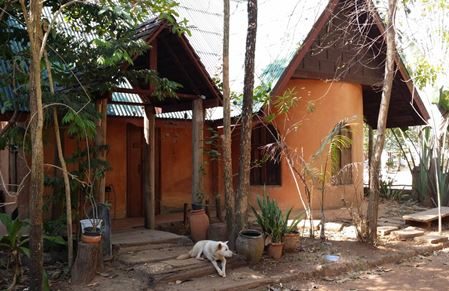
Modernised mud house

Shonubi told the News Agency of Nigeria (NAN) in Lagos that the mud could be molded into bricks for the building of modern houses.

The NIQS chief suggested that brick-blocks could be designed into inter-locking shape, so that there would be no need for cement to bind the bricks.

According to him, the country has enough mud and other materials that can be used in building construction, adding that such material will be sourced locally at affordable cost.

He said that if government leverage on such initiative, the cost of housing in Nigeria would reduce.

“Mud houses are cheaper to construct; as a result, it can be produced in large quantity because mass house production is what the country needs, to be out of the housing deficit.

“There is virtually no component used in the construction of the building that cannot be sourced within the country,” he said.

Shonubi said there was need to expand the capacities of the industries involved in the production of local building materials from sources like bricks, clay, concrete products, and timbers among others.

According to him, houses constructed with mud and other indigenous building materials are more economical, durable, better and easier to maintain compared to the ones built with cement and imported materials.

“With mud houses, there is no need for extra expenses to install air-conditioner because during heat period, mud houses are constantly cool.

“While a cemented block house generates heat particularly during the dry season, a mud house is conducive all-round the year,” he said.

By Lilian Okoro

Research institute runs risk of losing high-priced, breaded animals

0

The National Animal Production Research Institute (NAPRI) has called on Federal Government to save the institute from total collapse due to loss of high-priced and breaded animals.

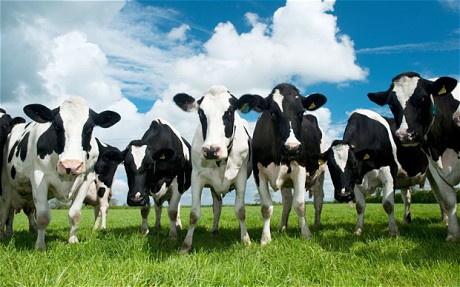
Cows
Cows. Photo credit: telegraph.co.uk

Prof. Clearance Lakpini, the Executive Director, NAPRI, Zaria made the call on Tuesday, January 22, 2019 in a telephone interview with the News Agency of Nigeria (NAN) in Abuja.

He said that the institute was running the risk of losing high-priced and breaded animals that had been selected over decades for desirable productive genetic traits.

Lakpini said that a large population of various species of livestock and poultry that must be fed and maintained daily to be in good condition for research and production in the institute “are feeling the heat’’.

The executive director said that unfortunately the institute was faced with series of challenges affecting its activities as a research institute.

Lakpini listed some of the factors to include inadequate, obsolete equipment and untimely release of funds to the institute which made planning inefficient and ineffective.

“The institute’s production capacity and potential are limited because of dilapidated and inadequate infrastructures, if you look around you will see that many of the animal pens and handling facilities we are using are those we inherited since 1928.

“Yet we are trying to make our impact felt but imagine a farm machinery of over 30 years in this modern age of high technology, how much success can be achieved,’’ he said.

Lakpini said that for the institute to be relevant internationally in its fields of specialisation and carry out its mandate, it must be abreast with the trends through adequate funding.

“The institute urgently requires easy access to modern technologies that include molecular biology, Stem Cell Culture Analysis, production of fodder by hydroponic technique and Multiple Ovulation and Embryo Transfer (MOET) to meet any emerging challenges,’’ he said.

He said that the institute produced the first genetic product in Nigeria, which had since become one of the best chickens in the world called the “Shicka-Brown’’.

“It is named after Shicka where the institute is in Zaria and has suffered a great setback in production and distribution.’’

Lakpini said that a strain of layers chicken resistant to prevailing diseases were dominant in and around the country, had been certified by the institute to be of high quality at different agro-ecological zones.

According to him, they are capable of laying not less than 300 eggs in a laying circle unlike in exotic breeds where acclimatisation is difficult.

He said even though the Shicka Brown chicken “is in high demand across the country, yet the institute cannot meet the demands because of the low incubation capacity of the institute.’’

Lakpini said that the incubators were very obsolete and the total incubation capacity “is 38,000 eggs per hatching period’’.

“The development of Shika Brown is so unique that it is good for egg-laying chicken and takes between 18 and 24 weeks to reach full maturity to begin laying eggs.

“The unsteady powers supply is another major problem, because when you incubate the eggs for hatching, there must be steady power supply and doing this with the generator is always consuming a lot of diesel, and it is a major challenge.

“As at now, there is just one customer with the demand of getting 200,000 to 300,000-day-old chicks and we cannot meet such demands as a result of obsolete equipment and lack of funds,’’ he said.

By Hawa Lawal

Scheme allows poor parents to pay school fees with recyclables

0

Parents finding it challenging to pay their children’s tuition fees may now heave a sigh of relief, thanks to an initiative designed to boost educational development and clean the environment.

RecyclesPay Educational Programme
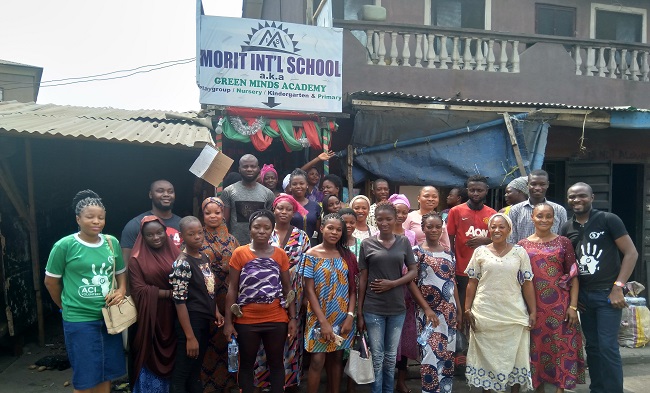
Officials of the African Clean Up Initiative and partners, Morit International School, and beneficiaries of the scheme

Tagged the “RecyclesPay Educational Programme”, the project allows parents that have children in low-income schools to be able to pay the school fees of their offspring with recyclables such as plastic bottles and cans.

The project is the brainchild of the African Clean Up Initiative (ACI), a Lagos-based not-for-profit group, which is working in collaboration with Wecyclers Limited, the scheme’s official recycling partner.

Morit International School in Ajegunle is said to be the first in Lagos State to embrace the project, which is aimed at assisting parents keep their children in school by gathering discarded plastic bottles and cans that ordinarily would clog up drainages or deface the environment due to indiscriminate waste disposal by residents.

Mr. Alex Akhigbe, Chief Environmental Officer, ACI, described the project as an answer to the cries of numerous parents who are having difficulty keeping their children in school due to the economic situation in the country. Most of these parents which he said are in slums and low-income areas can now take advantage of the PET bottles and cans waste littering the neighbourhood to pay their children’s school fees.

His words: “Our goal is to support 10,000 children from not dropping out of school by the year 2025.

“Following the project’s pre-launch ceremony held recently, this low-income school in Ajegunle will be the first school in Lagos State to accept recyclables as payment for students’ school fees from parents in the school.

“RecyclesPay can be used for the full or part payment of a child’s tuition fee. The latter payment stipulates a parent pays partly with cash and partly recyclables.”

The parents of Morit International School, Ajegunle expressed excitement with the introduction of the project. According to the School Proprietor, Mr. Patrick Mbamarah, parents have been having difficulty in paying the N4,000 school fees of their children. This situation, he said, is affecting the timely payment of teachers’ salaries. He expressed optimism that the project would help to address the situation in the school as well as help maintain a clean environment.

The ACI Communications Manager, Miss Blessing Martins, said the first set of accumulated recyclables would be collected in the month of January. She added that ACI would organise the Lagos Beat Plastic Carnival, as an avenue to sensitise the community members to shun indiscriminate disposal of recyclables and embrace recycling.

“The Lagos Beat Plastic Carnival is an event that will give instant rewards to community members for remitting accumulate recyclables on the day of the event. This event is in line with the vision of the organisation to raise environmentally responsible citizens in Africa,” she said.  

Environment minister lauds biosafety agency on implementation of mandate

0

Minister of Environment, Surveyor Suleiman Hassan Zarma, has commended the National Biosafety Management Agency (NBMA) on its ability to properly implement its mandate.

NBMA
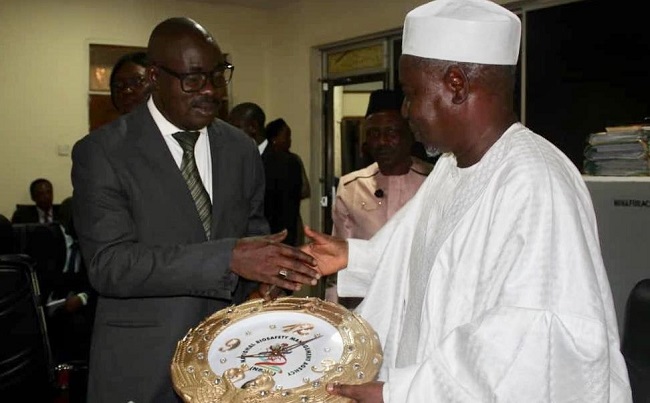
DG/CEO, NBMA, Dr. Rufus Ebegba (left), presenting a gift to the Minister of Environment, Surveyor Suleiman Hassan Zarma

The minister gave the commendation when he visited the agency on a familiarisation tour in Abuja on Monday, January 21, 2019.

The minister however urged the agency not to relent in sensitising the public to distinguish between its role of regulating for safety and the promotion of the technology, saying that the public is most times confused on the role of the NBMA.

He also said that the agency needed to be supported and encouraged in view of its regulatory activities.

Zarma promised that the Ministry of Environment would continue to ensure that the NBMA executes its responsibilities as contained in the Act that sets up the agency.

In his presentation, the Director General/Chief Executive Officer of the Agency, Dr, Rufus Ebegba, briefed the minister on the milestones of the agency since inception, noting that one of the greatest challenges facing the agency is the opinion that the agency was established to stop Genetically Modified Organisms (GMOs). Hence what ever it does otherwise is heavily criticised, lamented the DG.

Dr Ebegba however stated that, contrary to the views that the NBMA was established to stop GMOs, the agency is rather established to ensure safety of products making sure that they do not cause harm to the environment and humans.

“One of the greatest challenges facing us is the fact that people think we were established to stop GMOs. Unregulated GMOs are bound to be abused. That is why NBMA was established to ensure safety,” Ebegba stated.

He also highlighted funding as a major drawback for the agency as the budgetary allocation is grossly inadequate to take care of its needs, adding that the agency is blessed with capable professionals and dedicated staff.

The DG/CEO took the minister on a tour of the agency’s GMO Detection and Analysis Laboratory and other offices of the organisation.