New Zealand Ministry for Primary Industries (MPI) on
Wednesday, January 23, 2019 issued a public health warning on the consumption
of toxic shellfish from the coastal area of the Bay of Plenty down to Bowentown
Heads.
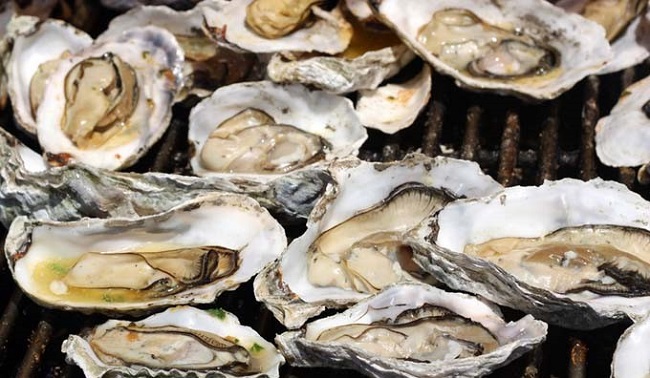
Shellfish
Routine tests on shellfish samples taken from this region in
the North Island have shown levels of toxins above the safe limit, said an MPI
statement.
MPI added that anyone eating shellfish from this area is
potentially at risk of illness.
Cooking shellfish cannot remove the toxin, it said, adding
that paua, crab and crayfish might still be eaten if the gut has been
completely removed prior to cooking, as toxins accumulate in the gut.
The ministry said it will continue to monitor the toxin
levels.
It added that commercially harvested shellfish, sold in
shops and supermarkets or exported, is subject to strict water and flesh
monitoring programmes by the MPI.
The National Emergency Management Agency (NEMA) says it is currently reviewing the National Contingency Plan (NCP) to effectively tackle issues of climate change and complex emergencies.
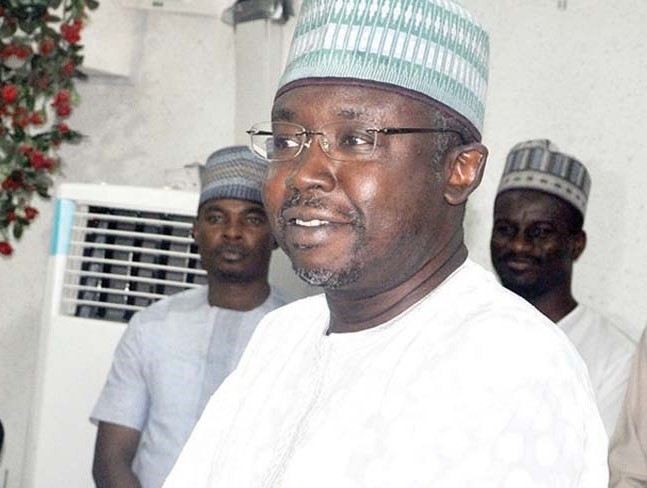
Mustapha Maihaja, Director General, NEMA
Director General of NEMA, Mr Mustapha Maihaja, said this on Wednesday, January 23, 2019 in Enugu in an address at the national workshop on the review of the NCP.
Maihaja, who was represented Mr Kayode Fagbemi, Director of
Planning, Research and Forecasting, said there was a need to update the NCP
plan to reflect the current realities on ground.
“In view of the current realities of increases in
environmental disasters, complex emergencies and the phenomenon of climate
change, and going by the dynamic changes that has occurred in the risk profile
of the country, you will agree with me that the time is ripe to update the NCP
for the country.
“Basically, we have adopted a multi-hazard model with a
focus on hazards with the highest probability of occurrence and severity in
Nigeria in the development of the NCP.
“Thus, my expectation is that we review the risks we face
and develop a contingency plan that can be activated and operationalised in the
event of any humanitarian crises that might occur,’’ he said.
The NEMA boss thanked all the sectors for their
contributions during the several meetings to produce the zero draft of the
update.
He also thanked partners, the United Nations agencies in
Nigeria, especially the UNICEF for your support over the years in capacity
building and technical support to NEMA,’’ he said.
Speaking, Nicki Bennett, UNICEF Chief of Emergencies, said
that UNICEF had been in the forefront of assisting the Federal Government to
achieve its emergency targets and plans as well as help in direct intervention
at times.
Bennett, however, said that the government had to do more on
provision of clean and potable water and sanitation facilities to effectively
check all forms of disease emergencies as well as stop open defecation nationwide.
She also said that government at all levels must be working
fast to mitigate conflict triggering issues and developments to forestall
emergencies in the first place.
“We are partners in progress, and UNICEF will continue to
give all forms of assistance to NEMA and by extension the Federal Government to
see that it prepares adequately for emergency responses in any part of the
country,’’ he said.
According to her, UNICEF has been effectively working in the
North-East; while we also worked with government agencies in states with flood
issues some months back.
The idea of developing an NCP was conceived in late 2010 as
a coordinated attempt to proactively prepare for response to disasters in
Nigeria.
Thereafter, a clean copy of the NCP was produced with inputs
from stakeholders in line with international standard and best practices; while
the final copy was subsequently presented to stakeholders in July 2012.
The 70 participants of the workshop are drawn from Ministries,
Departments and Agencies (MDAs), State Emergency Management Agencies (SEMAs),
United Nations Agencies, Development Partners, International and National
Non-Governmental Organisations (NGOs), private sector and the media.
The three-day workshop, which started Wednesday, Jan. 23, will
end on Friday, Jan. 25.
WaterAid Nigeria, in partnership with the Bauchi State Rural
Water Supply Agency (RUWASA), said on Wednesday, January 23, 2019 that it would
spend about N52 million on provision of potable to 15 communities in Kirfi
Local Government Area of the state.
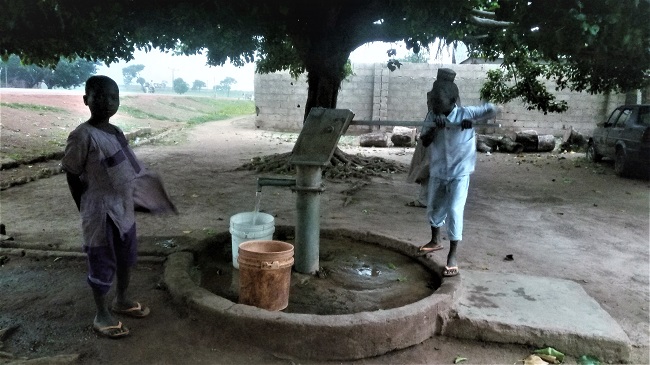
Children of Unguwan Gandu Zuntu, Kubau Local Government Area of Kaduna State fetching water from a handpump borehole provided by SHAWN II Project in the community
Mr Tanko Reubeno, Water Sanitation and Hygiene (WASH)
Specialist, gave the figure at the commencement of drilling of boreholes at
Kafin-Turaki Village in Kirfi Local Government Area of Bauchi.
He said that the water projects, to be cited in Kafin-Iya and Dewu Districts of the Local Government Area, would comprise of five solar-powered water supply schemes, five hand pump boreholes, and rehabilitation of five other projects that would be converted to solar schemes.
“Under the first phase, WaterAid, with the support of RUWASA,
will construct hand pump-fitted boreholes at Kafin-Turaki, Gula, Wuro-Dishi,
Wuro-Male and Gadagassol.
“Moreso, some of the existing dysfunctional boreholes will
also be converted to solar schemes, for sustainability and ease of maintenance.
“Unlike in the past when such water supply projects often
breakdown due to lack of diesel, petrol or gas, the solar scheme will help to
eliminate all forms of hiccups as Kirfi LGA is fully blessed with solar
energy,” Reubeno said.
The WASH specialist also noted that two health facilities
would benefit from the WaterAid project, in view of the importance of water to
maternal and child healthcare, adding that the benefiting villages were
the most disadvantaged communities in the entire area.
Mr Abdulrazak Salau, the Managing Director of Transtechnic,
the firm executing the project, said that the boreholes would be fitted with
‘Afri-development hand Pumps’ because of its long-life span and sustainability.
Salau said his company would complete the projects in less
than two months, as three days had been fixed for drilling in each of the
benefiting communities.
The Federal Government and Global Fund has signed a funding
support agreement worth $71,216,215 for the fight against HIV/AIDS,
Tuberculosis (TB) and Malaria.
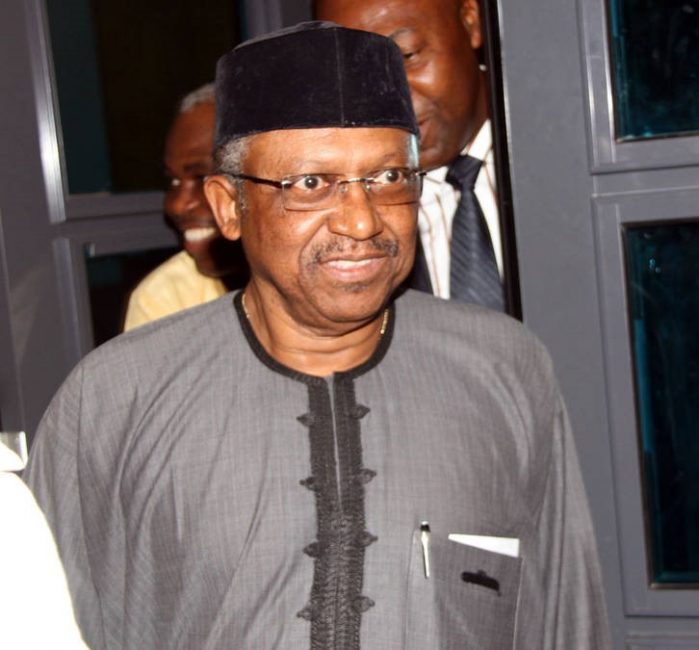
Minister of State for Health, Dr Osagie Ehanire
A statement signed by Mrs Boade Akinola, Director, Media and
Public Relations in the Ministry of Health, quoted the Health Minister of State,
Dr Osagie Ehanire, as saying that the support agreement covered the period
between 2019 and 2020.
It said the essence of the funding support was to increase
government’s efforts in controlling TB epidemic in Nigeria.
According to the statement, Global Fund had committed a total of $245,997,701 to TB control response in Nigeria since the inception of its support in 2005.
The statement said that through investment and collaboration
with partners, the country had treated more than one million Nigerians
with Drug Resistant TB cases.
It said TB still ranks as the ninth leading cause of deaths
in the country, adding, “it is a huge threat to any country like ours with high
burden of the disease.”
“TB has turned many children to orphans, taken many bread
winners away with severe consequences on the economy of families and that of
the nation,” the statement added.
It said the federal government remained committed towards
ensuring adequate budgetary allocation and release to support the TB programme
in the country.
The statement also quoted the Head, Grant Management, Global
Fund, Mr Mark Edington, as commending the Federal Government for the prompt
release of its 2018 counterpart fund for the programme.
Acting Executive Director of the UN Environment, Joyce Msuya, on Tuesday, January 22, 2019 commended Kenya for developing a homegrown dhow. from plastic waste.
The Flipflopi
The dhow is the generic name of a number of traditional
sailing vessels with one or more masts with settee or sometimes lateen sails,
used in the Red Sea and Indian Ocean region.
Msuya said this at the unveiling of the world’s first dhow
made from plastic waste in Nairobi.
Msuya said the innovation demonstrated that African
countries could take the lead in environmental conservation.
“This is a sign that community-driven initiatives can as
well offer a solution to long term problems that the world is going through,”
Msuya said.
She noted that the initiative showcased progress that Kenya
had made since banning the use of plastic carrier bags in 2017.
Msuya said currently, some eight million tonnes of plastic
waste flows into the oceans globally every year while only less than nine per
cent is recycled.
She called on African governments that are yet to take
drastic actions to move with speed to do so, adding that Sub-Saharan Africa
currently generates about 170 million tonnes of waste and 12 per cent of them
being plastics.
Koleka Mqulwana, South Africa High Commissioner to Kenya and
Acting Dean of Africa Diplomatic Corps, urged African governments to develop
strategies that could lead to durable solution to plastic waste choking large
water bodies.
“We have to help create awareness to help inform communities
to take plastic pollution seriously and help remove plastics from the oceans
where they have outnumbered fish,” said Mqulwana.
She emphasised that African countries must move beyond
sustainable programmes and begin to deal with the waste right from the source.
“Single use plastics are no longer useful in Africa and have
to be eradicated forthwith,” Mqulwana noted, calling for the inclusion of
private sector in the fight against the use of plastic bags in Africa.
The envoy also urged governments to develop initiatives to
benefit communities by helping reduce poverty.
“We have to empower communities to relate with ocean by
coming up with innovative ideas,” said Mqulwana.
She requested environmental experts to start simplifying the
technical terminology to ensure all citizens understand what they mean to
enable them to take necessary actions against plastic bags.
Dipesh Pabari, co-founder of the dhow, said it was created
to help solve plastic pollution in the world.
The dhow serves as a call for communities living along the
oceans to rise up and help clean up the oceans, said Pabari.
He said that the nine-metre sailing dhow that is made from
10 tonnes of discarded plastics has been built by a team calling for plastic
revolution to stem the flow of plastic waste dumped into the world’s ocean.
Pabari said that the dhow has unique components such as life
jackets and a radio.
Flipflopi, the world’s first 100 per cent recycled plastic dhow, will be embarking on its 500 kilometre maiden voyage from Lamu, Kenya to Stone Town in Tanzania’s Zanzibar this week, visiting schools, communities and government officials.
The expedition that is supported by the UN Environment’s CleanSeas programme is being used to share solutions and change mindsets along its route before it arrives in time for the upcoming Sauti za Busara music festival in Zanzibar.
The world can maximise chances of avoiding dangerous climate
change by moving to a circular economy, thereby allowing societies to meet the
goals of the Paris Agreement on Climate Action.
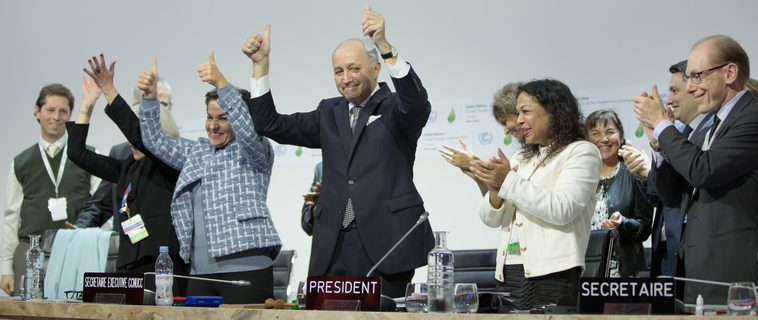
Jubilation greeted the adoption of the Paris Agreement in December 2015 in Paris, France. Photo credit: unfccc.int
This is the key finding of “The Circularity Gap Report
2019”, released by the organisation Circle Economy at Davos during the
annual meeting of the World Economic Forum.
A circular economy is a regenerative system in which
resource input and waste, emission, and energy leakage are minimised by
slowing, closing, and narrowing energy and material loops. The can be achieved
through long-lasting design, maintenance, repair, reuse, remanufacturing, refurbishing
and recycling.
The report highlights the vast scope to reduce greenhouse
gas emissions by applying circular principles – notably re-use,
re-manufacturing and re-cycling – to key sectors such as the built environment.
Yet it notes that most governments barely consider circular economy measures in
policies aimed at meeting the Paris Agreement target of limiting global warming
to as close as possible to 1.5°C.
The report by Circle Economy, a group supported by UN
Environment and the Global Environment Facility, finds that the global
economy is only 9% circular – just 9% of the 92.8 billion tonnes of minerals,
fossil fuels, metals and biomass that enter the economy are re-used annually.
Climate change and material use are closely linked. Circle
Economy calculates that 62% of global greenhouse gas emissions (excluding those
from land use and forestry) are released during the extraction, processing and
manufacturing of goods to serve society’s needs; only 38% are emitted in the
delivery and use of products and services.
Yet global use of materials is accelerating. It has more
than tripled since 1970 and could double again by 2050 without action,
according to the UN International Resource Panel.
Circle Economy’s CEO, Harald Friedl, said: “A 1.5-degree
world can only be a circular world. Recycling, greater resource efficiency and
circular business models offer huge scope to reduce emissions. A systemic
approach to applying these strategies would tip the balance in the battle
against global warming.
“Governments’ climate change strategies have focused on
renewable energy, energy efficiency and avoiding deforestation but they have
overlooked the vast potential of the circular economy. They should re-engineer supply
chains all the way back to the wells, fields, mines and quarries where our
resources originate so that we consume fewer raw materials. This will not only
reduce emissions but also boost growth by making economies more efficient.”
The report calls on governments to act to move from a linear
“Take-Make-Waste” economy to a circular economy that maximises the use of
existing assets, while reducing dependence on new raw materials and minimising
waste. It argues that innovation to extend the lifespan of existing resources
will not only curb emissions but also reduce social inequality and foster
low-carbon growth.
Members of the Amalgamated Union of Public Corporations
Civil Service Technical and Recreational Services Employees (AUPCTRE) have
accused the management of the Lagos Water Corporation (LWC) of systematically
crippling the corporation to pave way for privatisation.
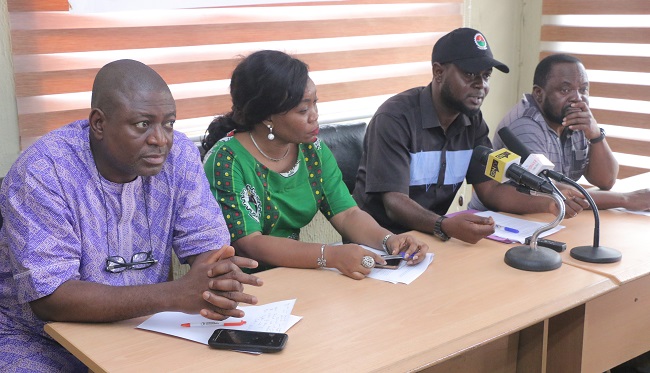
L-R: Akinbode Oluwafemi, Comrade Isimeme, Abiodun Bakare and Ayodele Akele
At a media briefing held in Lagos on Tuesday, January 22,
2019, the activists frowned at the development, saying they would ensure that
the alleged act is nipped in the bud.
Comrade Isimeme Eboh of AUPCTRE said: “The management of the
LWC continues to de-motivate workers through incessant retrenchments and no new
recruitments to fill vacant offices. We believe all these actions are
deliberately been carried out to frustrate staff and pave the way for privatisation.”
Ayodele Akele, executive director of Labour, Health and
Human Rights Development Centre, submitted: “The Lagos government and
management of LWC are nurturing a major crisis if they think they can allow the
LWC to collapse to pave way for privatisation. The general public will resist
it because we know the neglect of the corporation workers is deliberate. We
anticipate the governorship candidates will react to this expose of the sleaze
in the corporation.”
Akinbode Oluwafemi, deputy executive director, Environmental
Rights Action/Friends of the Earth Nigeria, said: “We want to thank AUPCTRE
members for standing firm in the face of brazen intimidation. It is
disheartening that the water sector is allowed to slide even when the state
government’s internally-generated revenue is now close to N60 billion monthly.
It is now time for Lagos residents to ask questions.”
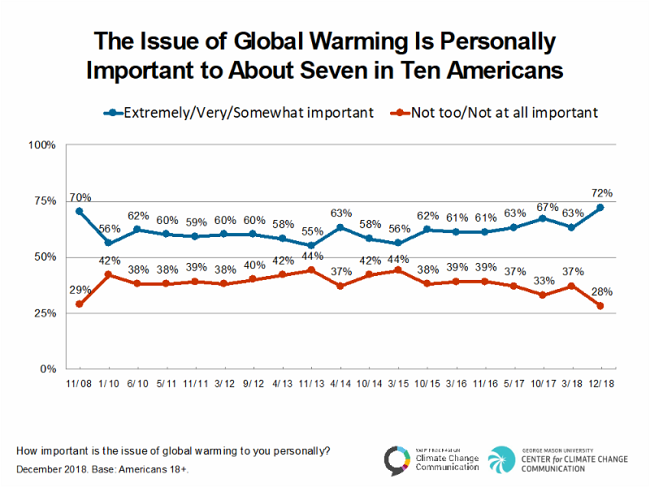
A recent national survey by the Centre for Climate Change Communication
of the George Mason University in the US finds that a large majority of
Americans say the issue of global warming is personally important to them,
outnumbering those who don’t by more than a 2 to 1 margin. The percentage of
Americans who say global warming is personally important is now at a record
high (72%), up 9 percentage points since March 2018.
The issue of global warming is personally important to about seven in 10 Americans
Other record highs include:
73% of Americans think global warming is
happening, an increase of 3 percentage points since March 2018.
62% of Americans understand that global warming
is mostly human-caused (+4 points since March 2018). By contrast, a record low
23% say it is due mostly to natural changes in the environment (-5 points since
March 2018).
69% of Americans are worried about global
warming, including 29% who are “very worried”, an 8-point increase since
March 2018.
65% think global warming is affecting weather in
the United States, and 32% think weather is being affected “a
lot.” About half think global warming made the 2018 wildfires in the
western U.S. (50%) and/or hurricanes Florence and Michael (49%) worse.
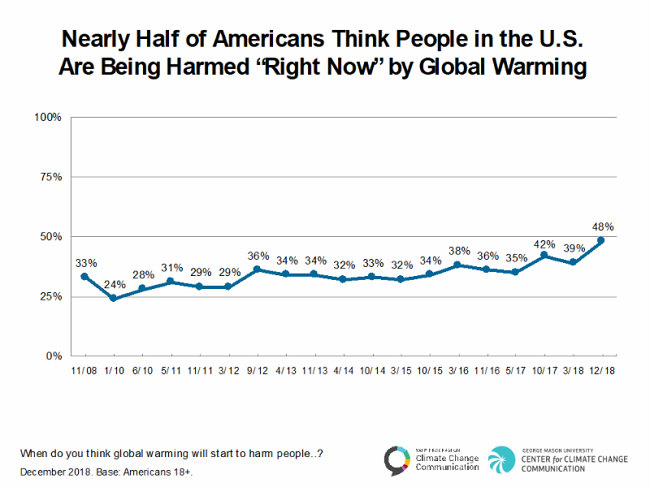
48% think people in the United States are being
harmed by global warming “right now” – an increase of 9 percentage
points since March 2018.
About half of Americans think they personally
(49%, +7 points since March 2018) and/or their family (56%, +9) will be harmed
by global warming. Majorities think global warming will harm people in their
community (57%, +8 points), people in the U.S. (65%, +7 points), people in
developing countries (68%, +6 points), the world’s poor (67%, +4 points),
future generations of people (75%, +4 points) and/or plant and animal species
(74%, +3 points).
Nearly half of Americans think people in the US are being harmed ‘right now’ by global warming
The report, says the centre, includes several other
interesting findings, including how often Americans hear and talk about global
warming.
The National Biosafety Authority (NBA) of Zambia has halted
the transiting of grains suspected to contain genetically modified organisms (GMOs)
from a neighbouring country.
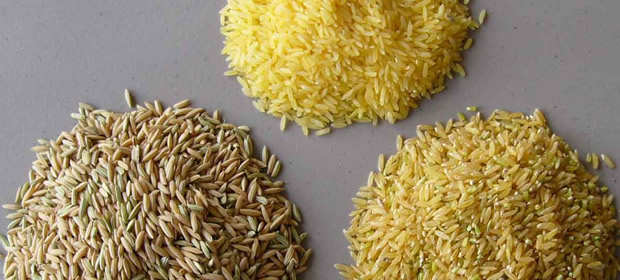
GMO grains
The Authority reportedly collected samples and subjected
them to laboratory tests to ascertain whether they were genetically modified.
The products are believed to be from a neighbouring country
which is conducting confined field trials.
NBA Senior Biosafety Officer Standards and Technical Liaison,
Christopher Simuntala, said the trucks were stopped from proceeding because the
Authority wanted to subject the products to laboratory analysis.
“The Clearing Agent and Border officials were asked to hold
on before the products could proceed. We just want to ensure that the products
are GMO free. The products have permits from other relevant authorities and
there is an escort for them, but we just want to be sure they are not
genetically modified especially that the country where they are coming from
there is research going on although at confined field trials,” he said.
Mr. Simuntala said the samples were collected from a truck
which was among three others already at the port of entry.
He said other trucks with the same products were expected to
arrive in the country before they could proceed to the neighboring country.
NBA Chief Executive Officer, Lackson Tonga, said the
Authority is mandated to ensure the safety of humans, animals and the
environment and anything that is suspicious will not be allowed either to pass
through or come in the country.
“We are happy that our colleagues at the border points are
also alert. We learnt through our recent inspections, surveillance and
monitoring of some border points in the Northern and Muchinga Provinces that
there were some trucks that were transporting some grains and we decided to
subject the samples to laboratory tests. While on surveillance we asked the
Clearing Agents and Port officials to hold on before the trucks could proceed,”
he said.
“We are happy with the cooperation that we got from the
Zambia Revenue Authority border point staff and the Zambia National Service.
The collected samples were taken to the laboratories at Zambia Agriculture
Research Institute and the GMO laboratory at National Institute for Scientific
and Industrial Research for tests. We cannot take chances. It is law that if
products are of genetic modification and have to pass through the country, they
need a Transit permit from the NBA, and such products are supposed to be
escorted by security officers and or Biosafety Inspectors to ensure that they
are not diverted and do not spill on the Zambian ground.”
Mr Tonga said the results indicate that the products are not
genetically modified, and the trucks have since been allowed to proceed to
their destination with escort.
Mr Tonga said NBA had intensified its surveillance and was working
with key stakeholders to ensure that its mandate is executed.
Apart from Mpulungu Harbour and Nakonde Border post, the
Authority also conducted inspections, monitoring, sensitisation and awareness
activities in Mpika, Kasama and Mbala.
The NBA met with officials from Zambia Revenue Authority
(ZRA), Ministry of Health (MoH), Ministry of Agriculture, District
Administrative Officer, other government officials and some Clearing Agents.
“Our findings indicate that there is a lot of sensitisation and awareness that we need to do. Some people know about GMOs but there is also a lot of miscommunications and myths associated with genetically modified products in some other parts of the country. It is saddening that most people think of anything big as being GMO,” he said.
At Mpulungu Harbour, ZRA Assistant Officer in Charge, Mike
Zunga, said the port was being used mostly for exports. He said the maize being
exported was mostly from Zambia and other products transiting from East Africa.
While outgoing District Agriculture Coordinating Officer, John Mwanza, said
most of the products were transiting to or from Burundi, Rwanda and Tanzania.
Nakonde Border Regional Manager, Joe Simwanza, said most of
the imports were coming from neighbouring countries especially Tanzania and
others transiting to Zambia’s neighbouring countries like the Democratic
Republic of Congo (DRC).
Meanwhile, NBA has reiterated its calls on
border officials to ensure that there is no infiltration of products containing
GMOs including those suspected to be genetically modified.
The United Nations Children’s Fund (UNICEF) on Tuesday,
January 22, 2019 urged government at all levels to pay more attention to
children in poor communities in the implementation of Sustainable Development
Goals (SDGs) to achieve result.
Anthony Lake, Executive Director, UNICEF. Photo credit: ctvnews.ca
Mohammed Fall, UNICEF Country Representative, Nigeria, made
the call at a two-day Acceleration Conference on SDGs, organised by Kaduna
State to strengthen partnership with local and international partners for
effective implementation.
According to him, there is a much higher return on
investment, with double fold gain, when investment is made on the poorest
children, compared to those who are wealthy.
“This is important as out of pocket expenditure among the
poor is around 80 per cent,” he said.
Fall also stressed the need to focus attention on outreach
activities targeting communities, households, parents, pregnant women and
children, prioritising preventive rather than curative services.
He said that UNICEF would support Kaduna State Government to
integrate intervention of health, nutrition, education, water and sanitation
services to accelerate attainment of SDGs.
“We have recently signed a memorandum of understanding with
the state government, integrating our support in routine immunisation to a
broader partnership, building on primary healthcare under one roof.
“This is part of our effort to take health services to poor
communities in all parts of the state, to ensure that women and children have a
chance of survival and a quality life.
“We want to see a situation whereby a pregnant mother, a
nursing mother, and children could access all health services in one health
facility, be it immunisation, nutrition, antenatal care, sanitation or
hygiene,” he said.
He commended the state government for making huge investment
in the health sector, adding that Kaduna state had paid over N1 billion as
counterpart fund to different intervention areas with UNICEF.
He, however, expressed concern over the state’s disturbing
malnutrition and sanitation indices, which he said, would impair progress being
made in primary healthcare service delivery.
Earlier, Susna De, Interim Deputy Director, Bill and Melinda
Gates Foundation, stressed the need to harmonise health intervention, to
achieve more result.
De also called on the government to mobilise community
leaders and the private sector to invest in the provision of health services, adding
that funding must be increased, and budgetary allocation, cash-backed.
She said that the foundation would continue to support the
Kaduna state government in ensuring quality of health services at primary
healthcare centres.
Dr Eugene Kongnyuy of the United Nations Population Fund
stressed the need to build a health system that works and takes health services
to the door step of the people.
Kongnyuy expressed concern that about 70 per cent of women
in Kaduna state delivered outside health facilities, which, according to him,
predisposes pregnant mothers to complications during delivery and untimely
deaths.
He also noted the need for a robust accountability framework
that would ensure transparency in the health sector for quality service
delivery.
The state’s Commissioner for Health and Human Services, Dr
Paul Dogo, said that the state government had in the last three and a half
years, focus attention on building health system that work.
According to him, no amount of funding will create a
positive health outcome without the existence of a strong health system.
“This is why the government partnered with local and
international partners to build health system, particularly primary healthcare,
to provide quality services.
“Our health outcomes are improving but we need more support
to do more towards achieving SDGs by 2030,” he said.