The Kaduna State Government has engaged the services of Cape
Gate Investment Company Ltd. as its new service provider on solid waste
management in the state.
Amina Sijuwade, Kaduna State Commissioner for Environment and Natural Resources
The Commissioner for Environment and Natural Resources,
Hajia Amina Sijuwade, on Tuesday, January 22, 2019 said that the engagement was
after the contract expiration of ZL Global Alliance (ZLGA) on the Dec. 31,
2018.
According to her, the ministry must address the challenges
experienced in solid waste management because the project is very sensitive,
which directly affects the health and wellbeing of the residents in the state.
She said that in its efforts to improve the wellbeing and
cleanliness of our environment, the state government had decided to engage a
new company because of its wealth of experience and good track record in
Federal Capital Territory (FCT) and other states to take over the project.
“The company has gradually rolled out its service plans for
the three cities of Kaduna, Kafanchan and Zaria (KKZ),’’ she said.
The commissioner said that the target of the new company was
primarily to get the three metropolitan cities clean.
She said that as part of the contract agreement, the company
would be covering four main areas – evacuation of all wastes to the official
dump sites, street cleaning and sweeping to ensure all the routes were clean,
vegetation control and desilting of drains.
The commissioner informed the contractor that the state
government had a plastics recycling plant which was set up by the Federal
Ministry of Environment but had not been in operation.
She said that the contract was awarded for the purchase and
installation of Double Blown Plastics Machine, which was yet to be completed.
“Plans are in top gear to complete and revive the plant this
year to enable the contractor commence waste to wealth in the second phase of
the waste management programme.”
The managing director of the company, Mr Bashir Namadina,
said that the company’s vision “is not only to make profit but also to address
the general climate related problems that has been existing for many years in
the state.’’
He said that the vision of the company was to ensure that
Kaduna would become the cleanest city in the country within the next six
months.
“Cape Gate Investment Company will improve solid waste
management by bringing in new modalities to improve service delivery and will
take the services to the next level God willing.”
The Permanent Secretary of the ministry, Muhammad Shu’aibu,
appreciated the support and cooperation accorded to ZLGA by the general public
and urged them to accord same to the new company.
He called on the public to desist from indiscriminate
dumping of refuse in their neighbourhoods and ensure they always used
designated collection centres to avoid spread of diseases.
The Vice-President of the Nigerian Institute of Quantity
Surveyors (NIQS), Mr Olayemi Shonubi, on Tuesday, January 22, 2019 urged the
Federal Government to encourage researches into the modernisation of mud houses
in the country.
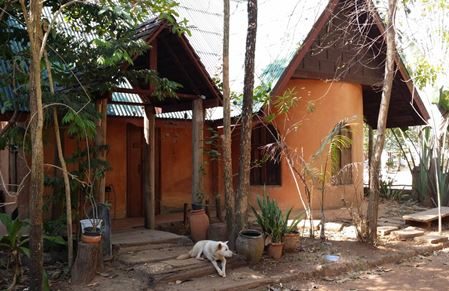
Modernised mud house
Shonubi told the News Agency of Nigeria (NAN) in Lagos that
the mud could be molded into bricks for the building of modern houses.
The NIQS chief suggested that brick-blocks could be designed
into inter-locking shape, so that there would be no need for cement to bind the
bricks.
According to him, the country has enough mud and other
materials that can be used in building construction, adding that such material
will be sourced locally at affordable cost.
He said that if government leverage on such initiative, the
cost of housing in Nigeria would reduce.
“Mud houses are cheaper to construct; as a result, it can be
produced in large quantity because mass house production is what the country
needs, to be out of the housing deficit.
“There is virtually no component used in the construction of
the building that cannot be sourced within the country,” he said.
Shonubi said there was need to expand the capacities of the
industries involved in the production of local building materials from sources
like bricks, clay, concrete products, and timbers among others.
According to him, houses constructed with mud and other
indigenous building materials are more economical, durable, better and easier
to maintain compared to the ones built with cement and imported materials.
“With mud houses, there is no need for extra expenses to
install air-conditioner because during heat period, mud houses are constantly
cool.
“While a cemented block house generates heat particularly
during the dry season, a mud house is conducive all-round the year,” he said.
The National Animal Production Research Institute (NAPRI)
has called on Federal Government to save the institute from total collapse due
to loss of high-priced and breaded animals.
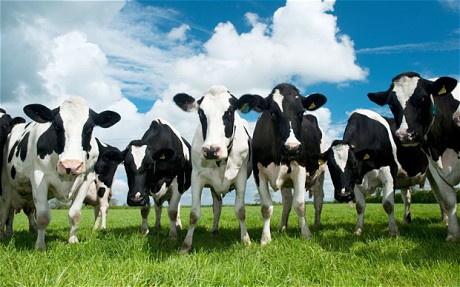
Cows. Photo credit: telegraph.co.uk
Prof. Clearance Lakpini, the Executive Director, NAPRI,
Zaria made the call on Tuesday, January 22, 2019 in a telephone interview with
the News Agency of Nigeria (NAN) in Abuja.
He said that the institute was running the risk of losing
high-priced and breaded animals that had been selected over decades for
desirable productive genetic traits.
Lakpini said that a large population of various species of
livestock and poultry that must be fed and maintained daily to be in good
condition for research and production in the institute “are feeling the heat’’.
The executive director said that unfortunately the institute
was faced with series of challenges affecting its activities as a research
institute.
Lakpini listed some of the factors to include inadequate,
obsolete equipment and untimely release of funds to the institute which made
planning inefficient and ineffective.
“The institute’s production capacity and potential are limited because of dilapidated and inadequate infrastructures, if you look around you will see that many of the animal pens and handling facilities we are using are those we inherited since 1928.
“Yet we are trying to make our impact felt but imagine a
farm machinery of over 30 years in this modern age of high technology, how much
success can be achieved,’’ he said.
Lakpini said that for the institute to be relevant
internationally in its fields of specialisation and carry out its mandate, it
must be abreast with the trends through adequate funding.
“The institute urgently requires easy access to modern
technologies that include molecular biology, Stem Cell Culture Analysis,
production of fodder by hydroponic technique and Multiple Ovulation and Embryo
Transfer (MOET) to meet any emerging challenges,’’ he said.
He said that the institute produced the first genetic
product in Nigeria, which had since become one of the best chickens in the
world called the “Shicka-Brown’’.
“It is named after Shicka where the institute is in Zaria
and has suffered a great setback in production and distribution.’’
Lakpini said that a strain of layers chicken resistant to
prevailing diseases were dominant in and around the country, had been certified
by the institute to be of high quality at different agro-ecological zones.
According to him, they are capable of laying not less than
300 eggs in a laying circle unlike in exotic breeds where acclimatisation is
difficult.
He said even though the Shicka Brown chicken “is in high
demand across the country, yet the institute cannot meet the demands because of
the low incubation capacity of the institute.’’
Lakpini said that the incubators were very obsolete and the
total incubation capacity “is 38,000 eggs per hatching period’’.
“The development of Shika Brown is so unique that it is good
for egg-laying chicken and takes between 18 and 24 weeks to reach full maturity
to begin laying eggs.
“The unsteady powers supply is another major problem,
because when you incubate the eggs for hatching, there must be steady power
supply and doing this with the generator is always consuming a lot of diesel,
and it is a major challenge.
“As at now, there is just one customer with the demand of
getting 200,000 to 300,000-day-old chicks and we cannot meet such demands as a
result of obsolete equipment and lack of funds,’’ he said.
Parents finding it challenging to pay their children’s tuition
fees may now heave a sigh of relief, thanks to an initiative designed to boost
educational development and clean the environment.
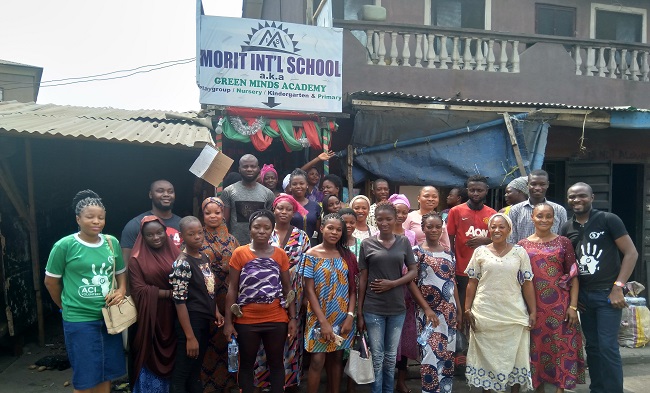
Officials of the African Clean Up Initiative and partners, Morit International School, and beneficiaries of the scheme
Tagged the “RecyclesPay Educational Programme”, the project
allows parents that have children in low-income schools to be able to pay the
school fees of their offspring with recyclables such as plastic bottles and
cans.
The project is the brainchild of the African Clean Up
Initiative (ACI), a Lagos-based not-for-profit group, which is working in collaboration
with Wecyclers Limited, the scheme’s official recycling partner.
Morit International School in Ajegunle is said to be the
first in Lagos State to embrace the project, which is aimed at assisting
parents keep their children in school by gathering discarded plastic bottles
and cans that ordinarily would clog up drainages or deface the environment due
to indiscriminate waste disposal by residents.
Mr. Alex Akhigbe, Chief Environmental Officer, ACI, described
the project as an answer to the cries of numerous parents who are having
difficulty keeping their children in school due to the economic situation in
the country. Most of these parents which he said are in slums and low-income
areas can now take advantage of the PET bottles and cans waste littering the
neighbourhood to pay their children’s school fees.
His words: “Our goal is to support 10,000 children from not
dropping out of school by the year 2025.
“Following the project’s pre-launch ceremony held recently, this low-income school in Ajegunle will be the first school in Lagos State to accept recyclables as payment for students’ school fees from parents in the school.
“RecyclesPay can be used for the full or part payment of a
child’s tuition fee. The latter payment stipulates a parent pays partly with
cash and partly recyclables.”
The parents of Morit International School, Ajegunle
expressed excitement with the introduction of the project. According to the
School Proprietor, Mr. Patrick Mbamarah, parents have been having difficulty in
paying the N4,000 school fees of their children. This situation, he said, is
affecting the timely payment of teachers’ salaries. He expressed optimism that
the project would help to address the situation in the school as well as help
maintain a clean environment.
The ACI Communications Manager, Miss Blessing Martins, said
the first set of accumulated recyclables would be collected in the month of
January. She added that ACI would organise the Lagos Beat Plastic Carnival, as
an avenue to sensitise the community members to shun indiscriminate disposal of
recyclables and embrace recycling.
“The Lagos Beat Plastic Carnival is an event that will give
instant rewards to community members for remitting accumulate recyclables on the
day of the event. This event is in line with the vision of the organisation to
raise environmentally responsible citizens in Africa,” she said.
Minister of Environment, Surveyor Suleiman Hassan Zarma, has
commended the National Biosafety Management Agency (NBMA) on its ability to
properly implement its mandate.
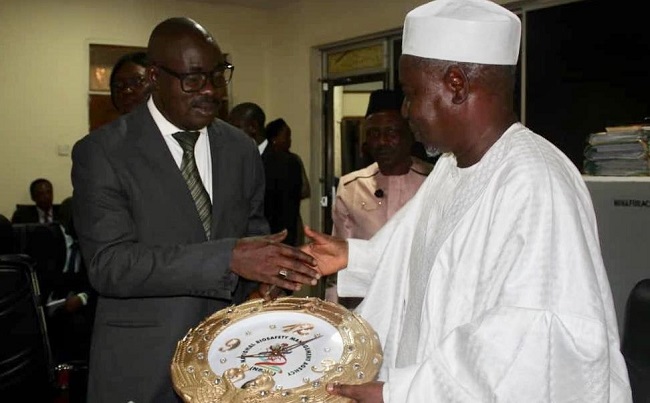
DG/CEO, NBMA, Dr. Rufus Ebegba (left), presenting a gift to the Minister of Environment, Surveyor Suleiman Hassan Zarma
The minister gave the commendation when he visited the agency
on a familiarisation tour in Abuja on Monday, January 21, 2019.
The minister however urged the agency not to relent in
sensitising the public to distinguish between its role of regulating for safety
and the promotion of the technology, saying that the public is most times
confused on the role of the NBMA.
He also said that the agency needed to be supported and
encouraged in view of its regulatory activities.
Zarma promised that the Ministry of Environment would
continue to ensure that the NBMA executes its responsibilities as contained in
the Act that sets up the agency.
In his presentation, the Director General/Chief Executive
Officer of the Agency, Dr, Rufus Ebegba, briefed the minister on the milestones
of the agency since inception, noting that one of the greatest challenges
facing the agency is the opinion that the agency was established to stop
Genetically Modified Organisms (GMOs). Hence what ever it does otherwise is
heavily criticised, lamented the DG.
Dr Ebegba however stated that, contrary to the views that
the NBMA was established to stop GMOs, the agency is rather established to
ensure safety of products making sure that they do not cause harm to the
environment and humans.
“One of the greatest challenges facing us is the fact that
people think we were established to stop GMOs. Unregulated GMOs are bound to be
abused. That is why NBMA was established to ensure safety,” Ebegba stated.
He also highlighted funding as a major drawback for the agency
as the budgetary allocation is grossly inadequate to take care of its needs,
adding that the agency is blessed with capable professionals and dedicated
staff.
The DG/CEO took the minister on a tour of the agency’s GMO
Detection and Analysis Laboratory and other offices of the organisation.
According to the African Energy Chamber, 2019 will be key for the
advancement of new exploration and production development projects from West to
East Africa
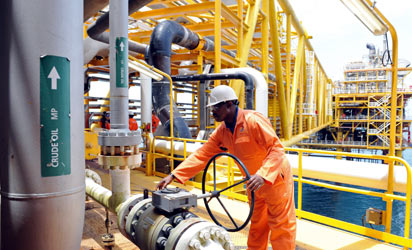
Oil installation
After a year of rebound and recovery, Africa’s old and new
hydrocarbons markets have an opportunity to further entrench the continent’s
position as the world’s hottest oil and gas frontier in 2019. However, the new
year also brings a new set of dynamics and challenges set to influence the
future of the industry, from presidential elections to megaprojects
developments, amidst intensifying international competition.
New African frontiers
opening up
Independents are leading the way in exploring and opening
new frontiers across Africa. This year will be key for the advancement of new
exploration and production development projects from West to East Africa.
Developments to watch notably include Senegal’s SNE field development, where
FEED works are ongoing and a final investment decision (FID) is expected by
Woodside Energy and Cairn Energy this year; Niger’s Amdigh oilfield
development, where Savannah Petroleum’s $5m early production scheme is set to start
anytime soon; and the opening up of Kenya’s South Lokichar Basin by Tullow Oil,
where FID is also expected before year end amidst rising tensions with the
Turkana local community.
A year to confirm
Africa as a global exploration hotspot
Ongoing bidding rounds in key existing and new African
hydrocarbons markets will tell if Africa further confirms its position as the
world’s new exploration hotspot and manages to attract necessary investment in
its oil and gas acreages.
Amongst well-established African producers, OPEC members
Gabon and Congo-Brazzaville each have ongoing bidding rounds. Gabon’s 12th shallow
and deep-water licensing round is set to close in April 2019 and
Congo-Brazzaville’s License round phase II in June 2019. With both
countries struggling to implement their new Hydrocarbons Codes, the success of
these rounds will tell if investors have been convinced by policy reforms
developed over the past two years.
Two bigger African producers and also OPEC members, Nigeria
and Angola, are set to launch landmark and out-of-the-ordinary bidding rounds
this year. Nigeria will auction its gas flare sites under the Nigerian Gas
Flare Commercialisation Programme, likely to happen after the February general
election, and Angola will hold its Marginal Fields Bidding Round, result of a
new May 2018 policy enacted by President Lourenço, and to be launched at the
Africa Oil & Power conference in Luanda in June 2019. With the Nigerian
Petroleum Industry Bill yet to be signed and the ink still fresh on Angola’s
new policy regime, both rounds will also be key in assessing investors’
interest for both countries’ business environments.
Also attracting interest is the newest and arguably one of
the upcoming entrants – Ghana – holding its first formal licensing round
set to close in May 2019 which has reportedly got the attention of 16 oil
companies, including majors ExxonMobil, BP, Total and ENI. As a hopeful new
East African offshore frontier, Madagascar is also putting 44 concessions on
offer until May 2019, none of which has ever been tendered or explored before.
For a country without any major oil discovery to date, the ongoing license
round is a wager test.
Africa’s struggling
FLNG industry
After the start of commercial operations at Golar LNG’s
Hilli Episeyo FLNG vessel in Cameroon in June 2018, hopes were high that
Equatorial Guinea would soon move forward with its own Fortuna FLNG project,
set to be Africa’s first deep-water FLNG development. While Fortuna was to be
game changing for the gas industry of Equatorial Guinea and the rest of the continent,
the development of the $2 billion project has stalled due to a lack of
financing. And the clock has been ticking since.
The lack of progress on this plan has been so slow that
operator Ophir Energy has been denied the extension of its license to operate
block R (as of January 2019), which contains the giant Fortuna gas discovery.
While Equatorial Guinea’s FLNG aspirations look more uncertain than ever, 2019
will tell if the country can find the right partners to put the project back on
Africa’s FLNG map.
Meanwhile, new entrants in Africa’s hydrocarbons stage are
making remarkable advances towards the development of their own FLNG industry.
On December 21st last year, BP finally announced its FID for phase 1 of the
cross-border Greater Tortue Ahmeyim development between Senegal and Mauritania,
which involves the installation of a 2.5MTPA FLNG facility. It became the third
African FLNG project to reach FID after Cameroon’s 2.4MTPA Hilli Episeyo and
Mozambique’s 3.4MTPA Coral South FLNG.
Mega projects on the
move
Africa’s come back on the global oil and gas map is not only
due to the vast natural resources found in its soil and waters, but also to the
continent being home to mega energy projects set to transform the future of the
industry.
On the upstream side, the recent inter-governmental
cooperation agreement between Senegal and Mauritania, and BP’s FID on its
cross-border Greater Tortue Ahmeyim development, bodes well for the future of
West Africa’s hydrocarbons industry. The project aims at extracting the 15Tcf
of gas estimated to be held in the Tortue gas field, located at a depth of
2,850 metres. However, the ability of both Senegal and Mauritania to work out
their differences to ensure a more sustainable development of their offshore
reserves and facilities around the MSGBC Basin is a factor to watch out for.
African mega gas projects are not the sole property of the
continent’s West coast, with Mozambique moving forward with two landmark
projects putting the Southern African nation on the global LNG map. Following
the launch of the Coral South FLNG project by ENI in June 2017, a FID is now
expected in the coming months for the Anardarko-led Mozambique LNG project, an
onshore LNG development initially consisting of two LNG trains totaling 12.88MTPA
to export the gas extracted from the offshore Area 1, estimated to contain a
whooping 75Tcf.
Sub-Saharan Africa’s biggest petroleum producers, Nigeria,
is also moving forward with massive oil development projects in 2019. Last year
already saw the launch of Total’s $3.3 billion Egina FPSO in Nigeria, where
production officially started in the first days of 2019 and is set to peak at
200,000 bopd. FID is now expected on Shell’s Bonga Southwest offshore field in
Nigeria early this year, a multi billion-dollars development whose production
is expected to reach 180,000 bopd.
International
contenders and pretenders
As Africa strengthens its position at the centre of global
transformations, it is increasingly becoming the playground for international
actors willing to benefit from the continent’s vast resources.
While China has asserted its position of a contender in the
continent, will new continental dynamics lead the Asian giant to change its
investment strategy or portfolio? With Russia’s intentions on the continent
becoming clearer and clearer, will the first Russia-Africa Summit this year
translate into more concrete Russian deals across the continent? At the same
time, will the US’ “Prosper Africa” initiative launched in December 2018 be
able to counter both rising international competition and declining US
influence on the continent?
A complex energy
diplomacy dilemma for OPEC in Africa
With a majority of its members made up of African nations
since the joining of the Republic of Congo in June 2018, OPEC’s evolving
relationship with the continent as it strives to manage the global supply glut
will be requiring skillful diplomatic ingenuity.
On one side, Africa’s biggest producers and OPEC members Algeria,
Libya, Nigeria, Angola and Congo-Brazzaville, are striving to boost their
domestic output, which makes it harder and harder for the Organisation to
negotiate its production cuts.
On the other side, the continent is also home to a flurry of
upcoming petroleum producers like Senegal, Kenya or Uganda, or old players
making a comeback like South Sudan, some of them part of OPEC’s Declaration of
Cooperation, whose upcoming or increasing output adds another layer of
complexity to the formulation of OPEC’s global oil prices management strategy.
An increasing African output from OPEC and non-OPEC member
countries only complicates OPEC’s maneuver capabilities and increases its
dilemma of both providing a stable pricing environment conducive to
investments, while avoiding a worsening of the supply glut that would push
prices further down.
Africa’s biggest
petroleum producers casts their ballots
Amongst the series of elections happening in the continent
this year, from Senegal to Mozambique, none will be more important for the African
oil sector than that of Nigeria this February. The Nigerian presidential
election is set to shape the future of the industry, not only because Nigeria
is Africa’s biggest oil & gas producer, but because what happens in Nigeria
impacts the rest of the subcontinent one way or the other. While both Muhammadu
Buhari, seeking re-election, and his ally turned rival Atiku Abubakar have
committed to the signing of the Nigerian Petroleum Industry Bill, the ability
of the future President to get his office in order and get the bill passed
quickly will heavily influence investments within Nigeria’s hydrocarbons sector
for years to come.
North, Algeria and Libya are also entering an election year,
with the 2019 Libyan general election set for the first half of the year, and
Algeria’s for April. Both countries are on a transformation path. Libyan
authorities plan to more than double the country’s output to 2.1 million bopd
by 2021, providing politics doesn’t tamper hydrocarbons governance and the work
of the National Oil Company. With Muammar Gaddafi’s son Saif al-Islam Gaddafi
set to stand for election and the country still divided between West and East,
maintaining the stability required by investors will prove challenging.
In Algeria, where a wave of reform is shaking the entire
hydrocarbons sector, elections are expected to maintain a relative status-quo,
at least politically speaking. The country’s national oil company, Sonatrach,
has launched an ambitious transformation strategy that will see it investing $56bn
over the next four years and internationalising its operations across major
global energy markets. 2019 could even see the state-owned giant and Africa’s
biggest company further expand south of the Sahara.
Angola’s steady road
to reforms
Since taking office in the summer of 2017, Angolan President
João Lourenço has been implementing a bullish reformist agenda which is
drastically transforming the governance of the country’s oil & gas sector.
Angola is reforming fast, but will market forces allow changes to happen at
that pace and yield the results that the government is looking for?
While international investors seem to think so, with Total
and BP signing major agreements to boost their Angolan operations over the past
few months, 2019 will tell if the international oil industry is being convinced
of Angola’s return as a competitive African frontier or not.
To showcase the work being done by Sonangol and the Angolan
government to generate more investment in the country’s oil & gas industry,
Angola is backing up an international conference being organised by Africa Oil
& Power in Luanda on June 4-6, 2019, where it will be launching the Angolan
Marginal Field Bidding Round. This will be the first official investment
roadshow organised in Angola under the current administration, and one that is
set to unveil a new set of reforms and investment commitments.
South Sudan’s march
to peace
The major progression in South Sudan, and one on which the entire economy relies, is that of the peace accords. The Sudanese and South Sudanese authorities have time and again demonstrated their commitment to the peace process, which has remained peaceful for the most part. However, will peace deals translate into investment promises and money being invested into the South Sudanese economy this year? Some signals point to that direction, with South Africa’s Central Energy Fund committing $1 billion to South Sudan late last year, but markets are still skeptics and observers will remain pragmatics and wait to see how the peaceful transition is managed and how oil production resumes before making any concrete moves.
A year to improve
market access for East African producers
With Uganda set to join the club of African petroleum
producers by the early 2020s, efforts are on the way to develop adequate
infrastructure for the evacuation of oil that will be produced from the Lake
Albert Basin. The project seemed to be positively moving forward when Uganda
and Tanzania exchanged the inter-governmental agreement for the 1,443km East
African Crude Oil Pipeline in May 2017. However, the partners in the pipeline’s
construction, French major Total, China’s CNOOC and Tullow Oil, are yet to make
a final investment decision on the project. Meanwhile, the Host Government
Agreements are to be signed this January, but delays in concluding the
pipeline’s financial deal have already pushed back Uganda’s oil production
ambitions from 2020 to 2021. The pipeline is crucial for the further
integration of the East African community and to set a positive record of joint
planning, financing and implementation of landmark energy projects in the
region.
The National Biotechnology Development Agency (NABDA) says
the agency is poised to use biotechnology tools in developing a sustainable
value chain for improved productivity of gum arabic in the country.
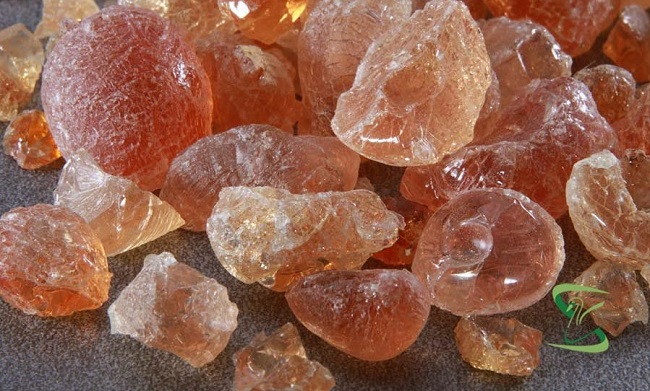
Gum arabic lumps
Prof. Alex Akpa, the acting Director-General of NABDA, said
this at the 1st National Gum Arabic Biosciences and Biotechnology Stakeholders
Session on Monday, January 21, 2019 in Abuja.
The theme of the session was “Sustainable Exploitation of
Gum Arabic for Socio-economic Development of Nigeria’’ which had in attendance
experts from fields such as genomics, phylogeny, agronomy and related areas.
According to him, the goal of the session is to aggregate
the perspectives and research results of experts in the fields on the best
approach to carry out the exploration and exploitation for gum arabic for
socio-economic development.
He said that “potentially, gum Arabic is an export crop that
can add value to various sectors of Nigeria’s economy, most especially in the
food industry, biomedicine and afforestation, thereby contributing to national
Gross Domestic Products (GDP).
“Gum arabic is one of the most important crops in the
mitigation of climate, hence the priority needs for its massive cultivation in
strategic areas of the country at the time in our history.
“NABDA is positioned to lead the use of biotechnological
tools in developing a sustainable value chain of the crop for improved
productivity.
“Specifically, shortening the maturity age of the crop,
massive production of the seedling using tissue culture, enhancing the quality
of the product at molecular level, phylogenetic studies, among others, shall be
our priorities.’’
Akpa said that the engagement was expected to lead to the
development of actionable work plans on the crop to the benefit of the nation
at large.
Dr Nasiru Ibrahim, the acting Director, Agricultural
Biotechnology Department, NABDA, said that the meeting was to get all those
involved in one way or the other in the field to make impactful inputs that
would lead to sustainable research and development of the crop.
He added that gum arabic tree, otherwise known as Desert
Gold, was native to Africa and Nigeria was the second largest producer of the
crop in the world.
He said: “Gum arabic is used as an additive in beverages,
flavour and pharmaceutical companies, textiles, lithography, candy, tannaries,
among others.’’
The director, who said that research and development of the
crop was only done through traditional improvement methods, noted that
successive efforts at harnessing its production and development by the Federal
Government went as far back as the times of Late former President Shehu Shagari
“with little to show for it.’’
Ibrahim, however, said that NABDA had commenced molecular
authentication studies which necessitated the gathering of the experts, both
private and in the public sector to make inputs on the way forward.
The National President of Genetics Society of Nigeria, Prof.
Kwon Ndong in his paper presentation titled “Beneficial Potential of
Biotechnology for gum arabic Seed and Variety Development’’ said all the
challenges foreseen in the development of the crop could constitute a research
focus.
He added that such focus could be a roadmap for sustainable
exploitation of Nigerian gum Arabic for socio-economic development.
Experts who attended the session included Mr Adeleke
Ademuyiwa, representive of the Director, Development Finance Department of CBN,
Prof. Abubakar Gidado from the North East Technology Centre of Excellence in
Maiduguri, Prof. Muhammed Ishiaku from Inistitute of Agricultural Research,
ABU, Zaria, and Dr Kenneth Omokhafe from Rubber Research Institute, Benin City.
The Secretary-General, Alliance of Religions and
Conservation (ARC) in the UK, Mr Martin Palmer, has said that religious bodies
and communities should be involved in cleaning-up of the Niger Delta
environment.
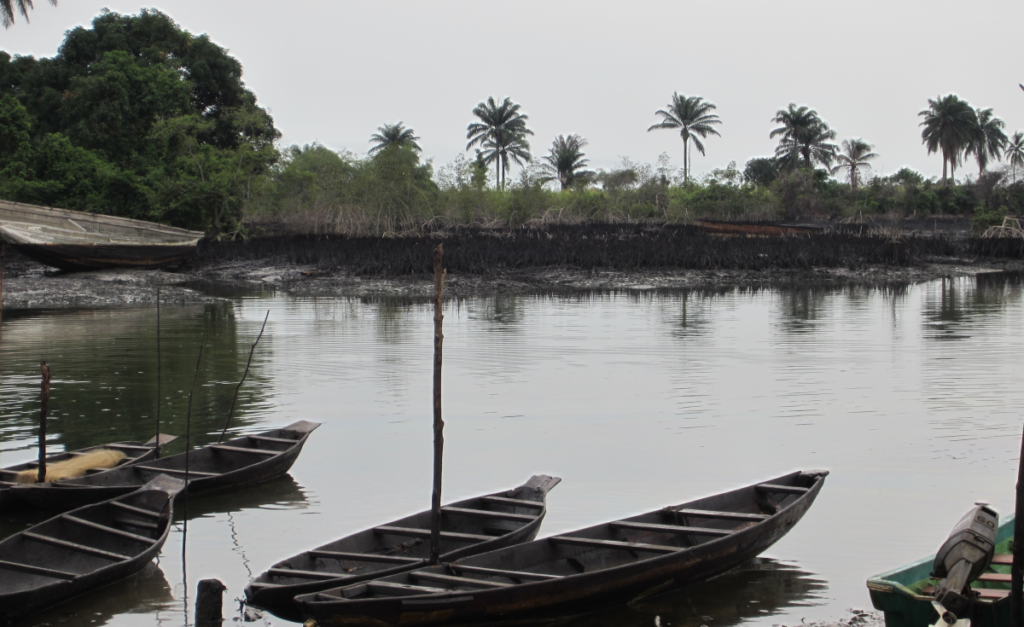
A water body in the Niger Delta polluted by crude oil
Palmer told the News Agency of Nigeria (NAN) in Lagos that
it was appropriate for religious bodies and communities to work with the
governments and oil companies for lasting solution to the Niger Delta
environmental degradation.
According to him, the Niger Delta environmental degradation
through oil spillage is a massive problem that has not been experienced
anywhere in the world.
“There is a lot of work to be done in restoring the Niger
Delta environment where oil spillage has rendered the communities, farm lands
and aquatic lives useless.
“It is time the population tackle the problem directly.
“The religious bodies in the area can lead the environmental
restoration by holding accountable the oil and chemical companies indicted to
clean-up the mess they have created over the years.
“They should also encourage the communities and the
companies to invest more in environmentally-friendly developments,’’ the ARC
scribe said.
He said that the religious bodies could also encourage
investments in fossil fuel than in petrochemicals.
According to Palmer, churches and religious bodies have
played a great role in restoring the environment to save human lives, plants
and other living creatures over the centuries.
He recalled that during the Roman Empire, the Catholic
Church through the Benedictines restored balance in Italy’s degraded
environment by reintroducing organic farming and allowing farmlands to rest.
He added that the Moslem unions in Indonesia had used
religion to bring balance in their environment, while the Buddhists had also
used it to bring order to the Mongolia environment.
The ARC scribe said that religious bodies should not leave
the restoration of the Niger Delta to the government alone, adding that their
presence would speed up whatever remedial actions that had been put in place.
He stated that the Niger Delta was not just home for humans
and the companies but was also home to the various eco and bio diversities,
aquatic lives, plants and animals, all depend on the environment.
Palmer said that God had placed the people there to protect
and look after all the living creatures, and not just themselves.
An ecologist, Mrs Nnenna Didigu, says hot foods packaged in
polythene bags are harmful to human health because they are usually
contaminated with the chemicals used in producing the bags.
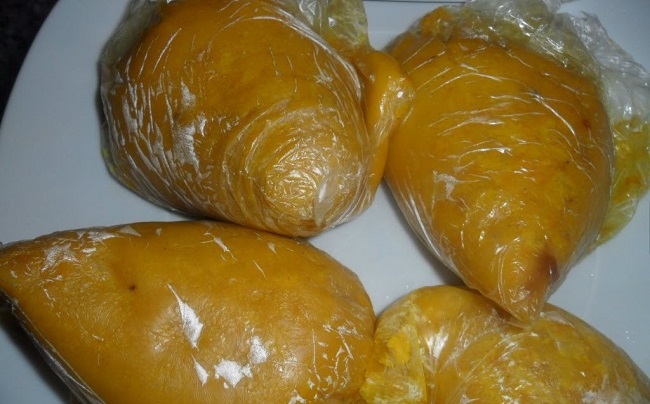
Hot food in polythene bags
Didigu, the Executive Director, Developing Communities for
Sustainability Organisation, an NGO, told the News Agency of Nigeria (NAN) in
Abuja on Monday, January 21, 2019.
“Prolific use of polythene bags for packaging hot food items
is not only harmful to the people but also to our environment.
“There are various chemicals disseminated from plastic bags
like polyvinyl chloride.
“Hot foods packaged in polythene bags are contaminated by
these chemicals mostly when they are hot or heated.
“Those chemicals include styrene and bisphenol-A which can
cause cancer, heart diseases and harm the reproductive problems,’’ she said.
According to her, the number of people suffering from kidney
and throat ailments, cancer and infertility is on the increase in the country.
“The rise in such cases is attributed largely to people
eating hot food items carried in polythene or plastic bags.
“When hot food is packed in polythene and plastics, chemical
exchange between plastic and food is maximised by high temperature and the
nature of the food.
“There have been cases of environmental pollution as a
result of used non-degradable polythene materials littered over the places,
especially in city centres,’’ Didigu said.
Didigu said that some experts in the health sector revealed
that beans meal or “moi-moi’’ wrapped in polythene bag is poisonous.
“Because the bag contains large dosage of dioxins that do
not naturally exist in the traditional leaves that was hitherto used in
wrapping the beans meal.
“Added to this is the consumption of sachet water exposed to
sun at over 280C is poisonous and as such has resulted in many cases of kidney
and liver failures among Nigerians,’’ she said.
The executive director said that unfortunately, most people
consumed foods that were packaged with plastics.
“Plastic plays a part in every phase of food production and
preparation.
“Food gets processed on plastic equipment and packaged and
shipped in plastic lined boxes and cans.
“At home, we store and reheat leftovers in plastic
containers,’’ she said.
According to her, government should intensify efforts to
control the problem and conduct awareness programmes against the use of
polythene bags for hot food items.
She said that government should adopt best practices of
disposal of polythene bags and other plastic materials.
“This can be done through strategic engagements with civil society
organisations and non-governmental organisations whose mandate is on
sustainable environmental practices and community development,’’ she
said.
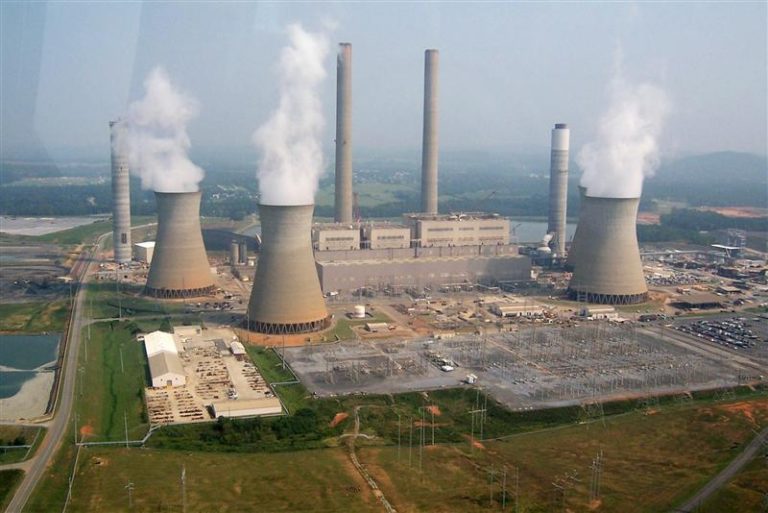
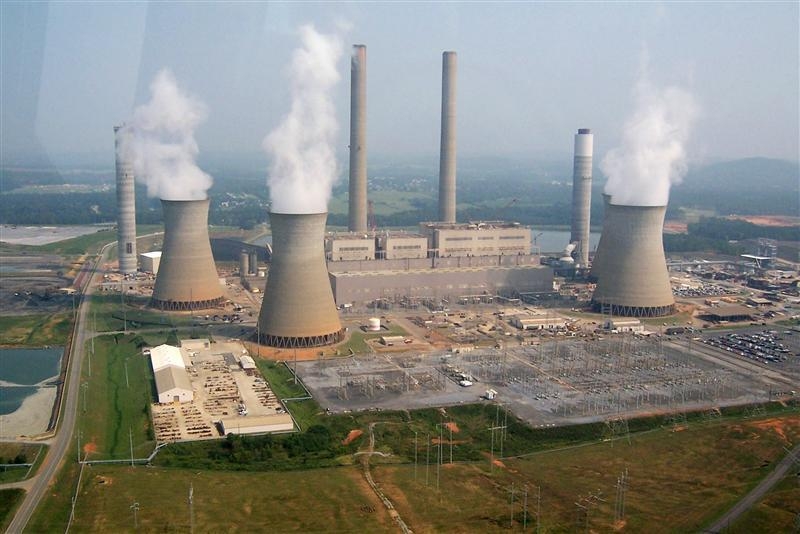
Nigeria is on course to generating 30 megawatts of
electricity from coal in 2020, the Ministry of Mines and Steel Development has
announced.
A power plant fired by coal
The ministry made the announcement in a document released by
the Minister of State in the ministry, Alhaji Abubakar Bwari, given to
reporters in Abuja on Sunday, January 20, 2019.
Bwari said that the power would be generated because Nigeria
has more than 2.7 billion tonnes of coal deposits.
“Nigerian coal reserves are estimated at over 2.7 billion
tonnes out of which about 650 million tonnes are proven,” he said.
He added that available data suggested that there were coal
deposits on more than 22 coal fields in 16 states of the federation.
According to him, a project delivery team has been
inaugurated for the concession of the remaining five coal blocks of the
Nigerian Coal Corporation, adding that this will be done through a competitive
bidding process.
On the Ease of Doing Business in the mining sector, Bwari
said that the ministry had taken appropriate steps to improve Nigeria’s ranking
in the World Bank Ease-of-Doing-Business Index.
“In line with the Federal Government’s focus on making it
easier to do business in the sector, we have continued to address issues
towards achieving a decent ranking in the Fraser’s Investment Attractiveness
Index,” said Bwari.