Home Blog Page 1703

New €1bn Senegal express train cuts travel time in capital

0

The daily one-hour commute between the densely populated Senegalese capital and the new suburb of Diamniadio will soon be cut in half when the new Regional Express Train (TER) comes into service.
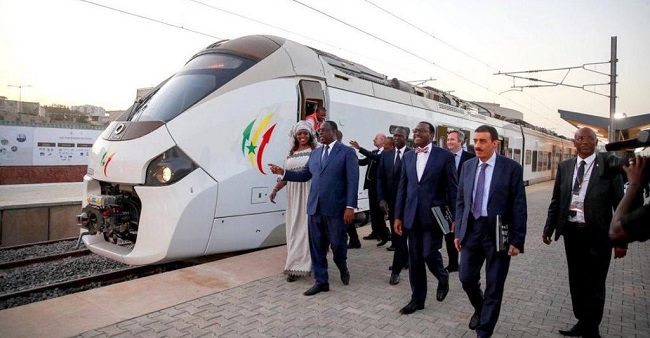
Regional Express Train
Senegalese President Macky Sall, AfDB President Akinwumi Adesina, and other dignitaries during the official ceremony for the handover of the first coaches for the Regional Express Train in Dakar

With a population of approximately three million, Dakar is home to 25% of Senegal’s total population. An efficient, safe and fast mass transit system has been described as a strategic response to the development challenges of the Senegalese capital.

The TER route will link Dakar with the Blaise Diagne International Airport, via the new rapidly developing business centre of Diamniadio. The first phase of the €1 billion project received funding from the African Development Bank, the Islamic Development Bank, the French Agency for Development, the French Treasury and Senegal.

Senegal is the second country in West Africa, after Nigeria, to adopt a dual-mode (electric and diesel) mass rail transit system. When the Regional Express Railway becomes fully operational, it will take just 35 minutes to travel from Dakar to Diamniadio, half the time the 55-kilometre road trip currently takes during peak traffic hours.

Work on the second phase, linking Diamniadio with Blaise Diagne International Airport, will start immediately after completion of the first section in June 2019.

At an official ceremony for the handover of the first coaches for the railway on Monday, January 14, 2019, Senegalese President Macky Sall remarked: “This is the first railway project in an independent Senegal after the Dakar-Rufisque line was built in 1883.”

“We chose to position ourselves at the forefront of progress, right from the invitation to tender for the TER. Every carriage in this dual-mode electro-diesel train has air-conditioning and Wi-Fi. The people of Senegal deserve to travel in comfort and safety, and to save both time and money,” Sall said.

President of the African Development Bank (AfDB), Akinwumi Adesina, said: “This outstanding and transformative railway project makes Senegal a pioneer in the development of modern high-speed urban transport systems in West Africa.”

“This is the largest-ever investment by the Islamic Development Bank in a sub-Saharan Africa project, and it bears witness to our confidence in the country,” said Islamic Development Bank President, Bandar Al Hajjar.

Speaking at the event, French Secretary of State in the Ministry of European and Foreign Affairs, Jean-Baptiste Lemoyne, said: “Senegal is a model of emergence. With this train link, you have shown that ‘impossible’ is not in the Senegalese vocabulary. What the people of Senegal have now, is an advanced Regional Express Train that is on the cutting edge of technology.”

The AfDB says it is committed to strengthening urban connectivity and financing road networks and public transport infrastructure. It adds that since it started operations in Senegal in 1972, it has supported 108 operations with an estimated value of $2.9 billion.
SDGs: Nile University hosts training programme for students

0

Educational institutions are well positioned to communicate the United Nations’ Sustainable Development Goals, especially among young people. Nigerian universities, when they accept this responsibility, can play a central role in promoting the Global Goals to deliver a better, more sustainable future for all.

SDGs4Uni
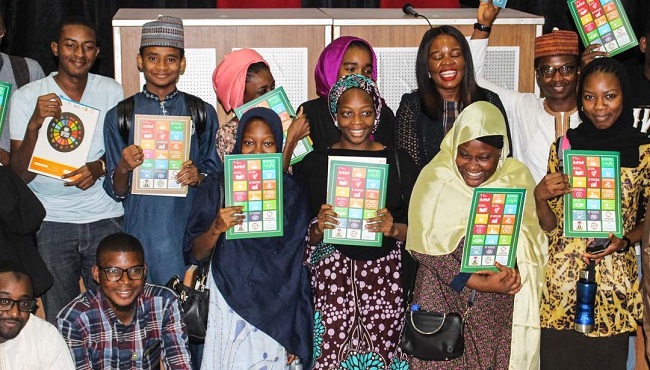
Some of the participants at the training

On Tuesday, January 15, 2019, the International Climate Change Development Initiative through her SDGs4Universities programme trained 70 selected students from the Nile University, Abuja. The programme, which held at the Conference Hall of the university, was targeted to introduce the United Nations’ Sustainable Development Goals (SDGs) framework to young students across African universities and more specifically to engage them to take tailored, innovative actions in their local community that have the potentials to birth global transformation.

According to the Director of Student Affairs, Nile University, Mrs. Aleshinloye, “We believe the Sustainable Development Goals will expose our students to understand how they can make social impacts beyond educational knowledge, as well as, interact with other young people doing amazing things in their communities. Our university will always welcome opportunities like this that helps us to amplify our efforts towards sustainability and sharing best practices to inspire students to implement their own plans.”

Making a presentation at the SDGs4Universities, Semiye Michael, one of 2018 United Nations Goalkeeper and the co-founder of DEAN Initiative, shared with the students present some of his solution-based actions towards driving the SDGs in Nigeria. Another speaker, Rita Idehai, explained how students can identify some social challenges prevalent in Nigerian universities, and what measures the students can take to bring about solutions.

Rose Keffas, a special adviser to Princess Adejoke Adefulire, the Senior Special Assistant to the President, from the Office of the Senior Special Assistant to the President on the SDGs, inaugurated a 20-man SDGs Ambassador group. This group of students will be further trained and equipped on ways of better advancing the Sustainable Development Goals in Nile University, demanding accountability from government and creating solutions to social challenges.

SDGs4University project coordinator, Seyifunmi Adebote, said: “We are taking this project to many other universities across Nigeria to promote knowledge and action about the Global Goals among young people in Universities across Nigeria – private and public.”

By ‘Seyifunmi Adebote, Abuja

Flood, gridlock as Lagos records first rainfall in 2019

0

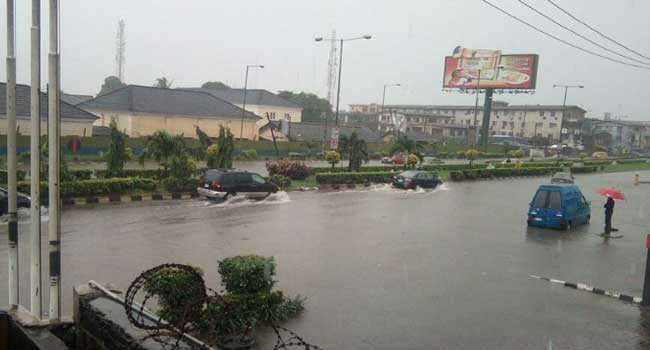
Heavy flash floods and traffic gridlock were the aftermath of the first rain of 2019 in Lagos on Sunday, January 20, 2019. Starting at about 12:30pm, the rain lasted for about an hour and half.

Lagos flood
Flooding in Lagos

It was preceded by a heavy wind and cloudy atmosphere. The rain reportedly touched almost every nook and cranny of the state.

Many residents heaved a sigh of relief due to the harsh weather experienced since the yuletide season. Some described the rain as a sign of good things to come in the year.

Mrs Laide Abayomi, a hair stylist, told NAN that the rain was long overdue.

“We thank God for the rain, though we have been expecting it since last week when other states were experiencing there own.

“The weather pattern has also changed, everything now has changed, even the harmattan started late. We pray the rain brings good increase in our agricultural sector,” Abayomi said.

Mr Akinyemi Badmus, a transporter said the first rain of the year was a sign of blessing.

“I never knew it will come today (Sunday). It has really affected my business as the roads are blocked.

“I want to advice that government should prepare for the rainy season so that we will not be caught unawares when heavy rain comes.

“I ply Yaba route but since the rain started around mid-day, I couldn’t make any fast trip due to the blocked drains along that axis to Ojuelegba.

“Let the Ministry of Environment start work, all the gutters, drainages and roads are blocked,” Badmus said.

Mr Kay Shittu, a resident around Mile 12 area of lkosi/Isheri Local Council Development Area (LCDA), said he was happy to witness the first rain of the year.

“Although there was no sign that it would rain in the morning, I got drenched when it poured and was happy.

“The heat has been too much of recent, especially with the epileptic power supply.

“I know this night would be a bit cool for me to have a sound sleep,” he said.

Mrs Augustina Ekwe, a resident of Ikorodu area, said that the rain was good.

“I was at the Ikorodu Bus stop waiting for vehicle to board to Ketu when I observed that the weather was cloudy.

“Thank God l boarded a vehicle before the rain started.

“I like it. The rain is very good for everybody generally.

“This is January and with such a heavy rain, it shows a sign of good things to happen in the new year,” she said.

Mr Johnson Bola, a trader at Ikosi/Ketu Jakande Fruit Market, said the first rain was okay, but it should have fallen at night.

“Yes, the rain was a downpour. I wished it had fallen in the night.

“Now the market is flooded and full of dirt and muddy water.

“It is good as it fell and stopped. No drizzling, no intermittent falling of the rain.

“As the first rain of the year, l am happy. It had been hot, and at least it will make everywhere cool for a while,” he said.

Efforts to reach the Lagos NiMet Director, Mr Peter Odjugo, proved abortive as his number “was not reachable”.

Places like Akerele, Idi-Araba Road, Lawanson/Itire Road, and Ogulana Drive experienced heavy flood, while some residents were seen clearing the gutters by their houses. 

Agency to disburse N200m to 2018 flood-ravaged communities in Kogi

Kogi State Community and Social Development Agency (CSDA) says it will soon disburse about N200 million to support communities in nine Local Government Areas of the state ravaged by flood water in 2018.

Nigeria flood
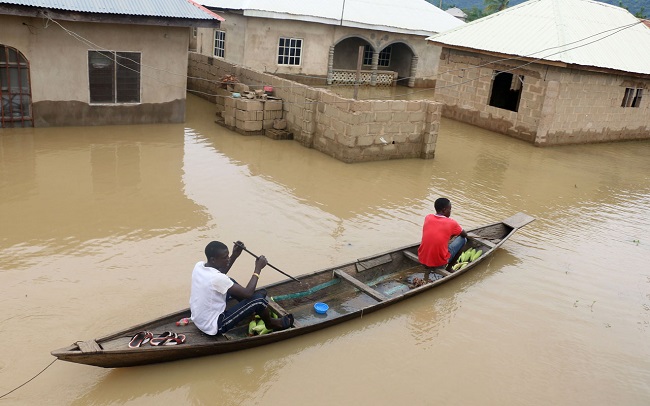
Residents steer a dugout canoe past flooded houses following heavy rain in the Nigerian town of Lokoja, in Kogi State, on September 14, 2018. Photo credit: AFP / Sodiq Adelakun

Mr Abdulkareem Obaje, National Coordinator, CSDP Nigeria, disclosed this in an interview with the News Agency of Nigeria (NAN) after a “Thematic visit” to the state office of the project on Saturday, January 19, 2019 in Lokoja, the state capital.

Obaje said the fund would be disbursed under the “Flooded Communities Response Plan” to support flooded communities in the nine local governments to get back to their livelihood and continue living their lives.

“There is a special funding this year (2019) called Flooded Communities Response Plan and about N200 million would be disbursed to the Kogi CSDA.

“It is meant to support communities such as Ibaji Local Government and others,” he said.

The national coordinator said after the general lull in activities at the state CSDA over the last two years which he attributed to “procedural issues with the former management”, the agency was fully back on stream.

“We expect that before the middle of this year, the current restriction on approval of new Community Development Projects (CDPs) would be lifted.

“This is necessary so that the agency can go ahead, full blast to start implementing and awarding more projects to poor communities in the state.

“One thing that we expect in the immediate is a fast-track completion of the micro projects that have been approved by the state agency.

“Community Driven Development (CDD) is the way to go to alleviate poverty of poor masses in our communities,” Obaje said.

Malam Momoh Dauda, General Manager of the state CSDA, who also spoke with NAN, said the agency had commenced implementation of Micro Projects.

The general manager said 62 micro projects were rolled over from 2018 for completion this year, adding that the third and last tranche for 26 of the projects had been released.

“The World Bank is ready to fund us, and we are ready to go and hopefully, by the first week of March, all the projects would have attained 70 to 80 per cent completion.

“We are also ready to come up with new CDPs.

“By first week of April, we would have sealed up new CDPs for all the seven focal Local Governments that we are going to intervene this year.

“However, we have a limitation to the number of CDPs that we can do. We are also going to add 17 CDPs making about 42 additional micro projects and by June, we should request for more,” Dauda said.

By Friday Idachaba

Nothing to fear about eclipse – Scientists

0

Astronomy and astrophysics researchers at the University of Nigeria, Nsukka (UNN) in Enugu State said on Saturday, January 19, 2019 that there was nothing to fear over the expected total lunar eclipse on Monday.

Lunar eclipse
Lunar eclipse

The researchers said eclipse is a natural occurrence that helps scientists understand the celestial body.

The scientists made the remarks in separate telephone interviews with the News Agency of Nigeria (NAN) in Abuja.

One of them, Dr Bonaventure Okere, while reacting to the lunar eclipse expected to take place on Monday, said some people still misunderstood the natural occurrence.

Okere, who is also the Acting Director, Centre for Basic Space Science (CBSS) Nsukka, said some people still attach spiritual meanings to eclipse which should not be so.

Lunar eclipse occurs when the moon appears darkened as it passes into the earth’s shadow and occurs only when the sun, earth and moon were exactly aligned with the earth between the two.

It can occur only on the night of a full moon. The type and length of a lunar eclipse depend on the moon’s proximity to either node of its orbit.

The National Space Research and Development Agency (NASRDA) predicted that Nigeria would experience total lunar eclipse on Monday.

Okere said: “For the scientists, eclipse helps them to study and understand the shape of the celestial bodies but for the lay man, it is just to demystify some myths.

“Some people attach some spiritual meanings to it which is not meant to be.

“Some people may see it and think that the world is coming to an end. We create the awareness to sensitise people that it is not something to be frightened about.

“People should understand that a lot of things happen naturally, and it is the scientist who is left to inform people about such occurrence”.

He said that the total lunar eclipse would be the last eclipse to be experienced until 2021.

Prof. Augustine Ubachukwu, leader of the researchers, said unlike solar eclipse, which occurs when the moon completely covers the sun’s disk, lunar eclipse was safe to view.

Ubachukwu said: “People can view the lunar eclipse without any eye protection or special precautions, as they are dimmer than the full moon.”

According to him, the total phase of this total lunar eclipse will be visible from North and South America, and Western parts of Europe and Africa.

“Central and Eastern Africa, Europe, and Asia will see a partial eclipse of the Moon.

“The lunar eclipse begins at 3:36 a.m. early Monday and last until 8:48 a.m., starting and ending as the moon passes through the penumbra (the lighter part) of the earth’s shadow”.

The team leader said the whole duration of the eclipse would be one hour, one minute and 58 seconds.

He further said the whole process would include partial eclipse initially, full eclipse, maximum eclipse, full eclipse again, moon set and ending with a partial eclipse.

Ubachukwu also said people should not be scared, as the eclipse was one of creation’s mysteries. 

By Ijeoma Olorunfemi

Lagos, engineers collaborate on adherence to site safety

0

The Nigerian Institution of Civil Engineers (NICE), in conjunction with Lagos State Safety Commission (LSSC), has called for strict adherence to safety measures in civil engineering infrastructure and facilities management.

Construction site
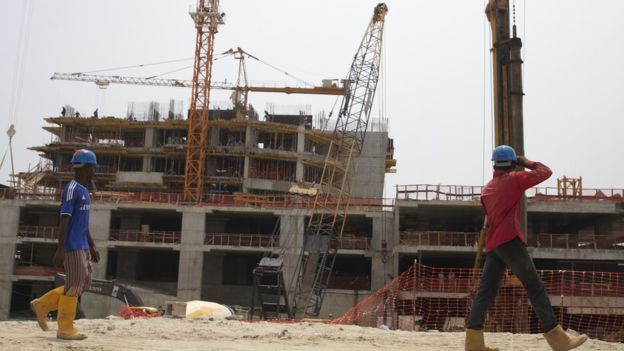
A construction site in Lagos

Chairman, Lagos Chapter of NICE, Mrs Omolola Adetona, made the call at a seminar organised in collaboration with the commission in Lagos on Saturday, January 19, 2019.

The seminar had “Safety Consideration in Civil Engineering Infrastructure and Facilities Management” as its theme.

Adetona said that many people had lost their lives due to carelessness and negligence in adhering to construction site safety.

She enjoined construction operators, particularly civil engineers, to be more conscious of safety measures.

According to her, rarely do professionals like architects or surveyors die on site, but the artisans and civil engineers are most vulnerable to site accidents.

“Many operators in the built environment still pay deaf ears to safety tips like wearing helmets, boots and safety jackets in the course delivering their services.

“Safety is the basis of every engineering designs.

“When safety is given adequate consideration, the money that could have been spent on remedies, repairs and hospitals due to accidents will be saved and the economy becomes better,” she said.

Also, Mr James Akanmu, a civil engineer, urged the government and the civil engineers to ensure adequate maintenance and control of the infrastructure facilities to enhance their safety conditions.

Akanmu said the roads, market, electricity stations, railways, among others, are always all civil engineering infrastructure that needed to be in safe conditions.

“Let the civil engineers and the governments take a critical look at the infrastructure with the view to ensuring their safety conditions and sustenance.

“Governments have the responsibility of ensuring quality control, maintenance and assurance of the infrastructure facilities in the environment.

“Let the LSSC live up to its mandates by providing safety best practices and ensure strict compliance in all sectors of the economy,” Akanmu said.

In his remarks, Mr Hakeem Dickson, the Director-General of LSSC, reiterated the commitment of the state government to attend a zero per cent tolerance of all forms of accidents in the environment.

Dickson said that the rate of building collapse had reduced to a great extent, stressing that more efforts need to be put in place until a zero per cent building collapsed was attended.

According to him, it is not until a building collapses, before provision will be made for remedies, preventive measures and solutions.

“It is not until a building collapses, we start shedding tears. We need to sit up and continuously push for proactive measures to ensure zero cent per building collapse,” he said.

Dickson said it was observed that some operators in the built environment rarely obey the rules, codes and conducts governing the profession.

“Some professionals are obviously cutting corners with the use of substandard products. This is highly unacceptable and must be nipped in the bud.

“In adherence to construction codes and conducts, attention should be given to construction safety measures at sites,” Dickson said. 

By Lilian Okoro

Coffee under threat from climate change, says study

0

A new study has found that wild coffee species are now under threat from climate change.

Coffee
Coffee

Scientists at the Royal Botanic Gardens have found that 60 per cent of wild coffee species are at risk of extinction. This includes Arabica, the world’s most widely traded coffee.

The report states how despite the success of Arabica and Robusta coffee in the industry, they now face new threats of climate change, including the increasing incidence and duration of drought.

Dr Justin Moat, Head of Spatial Analysis at Kew and one of the authors of the paper, said: “Our initial evaluation of Arabica coffee suggested that it was not threatened with extinction in the wild.

“However, after factoring in climate change, it moved upwards by two categories to become an endangered species. These findings are so important as they indicate that the extinction risk to many other coffee species could be much worse if we consider climate change.”

The coffee industry currently relies on Arabica and Robusta coffee. However, as climate change worsens, it could result in having to rely on different coffee species for coffee crop plant development.

Ethiopia is the natural birthplace of wild Arabica coffee with an annual export value of $1 billion. It is an important source of seed stock for coffee farming, but it could be in serious jeopardy if conservation action is not taken to protect the plant form a changing climate and deforestation, says experts.  

Dr Aaron Davis, Head of Coffee Research at Kew and lead author of the Science Advances paper, said: “Among the coffee species threatened with extinction are those that have potential to be used to breed and develop the coffees of the future, including those resistant to disease and capable of withstanding worsening climatic conditions. The use and development of wild coffee resources could be key to the long-term sustainability of the coffee sector. Targeted action is urgently required in specific tropical countries, particularly in Africa, to protect the future of coffee.”

Courtesy: Climate Action

£1.5m for 15 African climate researchers

0

The African Academy of Sciences (The AAS), the United Kindgoms’ Department for International Development (DFID) Weather and Climate information SERvices for Africa (WISER) programme and the Africa Climate Policy Centre (ACPC) of the United Nations Economic Commission for Africa on Friday, January 18, 2019 announced the implementation of a multi-million-dollar initiative to support Africa-led climate science research through the Climate Research for Development (CR4D) in Africa initiative.

Prof. Nelson Torto
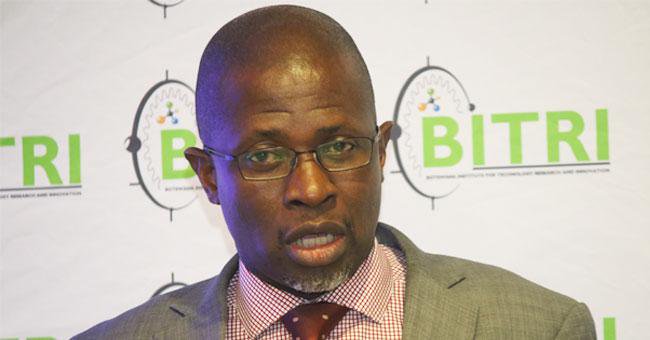
Executive Director of The AAS, Prof. Nelson Torto

CR4D will award one-year research grants to 15 African climate researchers of up to $130,000. Through The AAS Rising Research Leaders programme, grantees will be supported to develop as independent research leaders through training, mentoring, and networking opportunities that will enable international collaborations.

According to the CR4D, candidates must be hosted by or affiliated with a university, research institute or other eligible institution of higher education in Africa. They must and hold a PhD in climate or related sciences and/or have a proven track record of high-quality, impactful research in a relevant field. Applicants must have a clearly defined scientific research proposal and all African nationals are eligible to apply.

A call for proposals for CR4D has been issued and is open from January 18 to February 10, 2019. The call is accessible here https://aasishango.ccgranttracker.com/Login.aspx?ReturnUrl=/

The CR4D initiative was conceptualised at the Africa Climate Conference in 2013 as a mechanism to strengthen links between climate science research and climate information needs to support development planning in Africa. The initiative addresses climate research priority areas that have been identified in Africa by African researchers.

Over the next year, CR4D will support research into identified priority areas for climate change and development linkages. The research will cover foundational climate science, impacts, information and research translation and engagement with policy and decision-making communities. The goal will be to produce research outputs that inform policy in climate sensitive sectors to better prepare Africa to deal with the impacts of climate change.

Dr James Murombedzi of the ACPC noted: “While Africa is responsible for only 4% of global greenhouse-gas emissions, 65% of the African population is directly impacted by climate change. It is therefore imperative that climate action must be stepped up to deliver high impact outcomes for African populations, and to ensure the resilience of economies, ecosystems and infrastructure on the continent. The framework for scaling up climate action was put in place in the 2015 Paris Agreement.

“The realisation of the ideals of this agreement will be determined by the national frameworks, strategies and policies that are put in place to implement national and sub-national climate actions. The CR4D initiative will enhance support for improved climate information and services to contribute to climate sensitive planning. This, in turn, will contribute towards ensuring human and environmental security, improved investment policies, as well as institutional developments to manage potential threats from climate change.”

The Executive Director of The AAS, Prof. Nelson Torto, says, “With smallholder farms, most being rainfed, forming about 80% of farmed land in sub-Saharan Africa and given that most of sub-Saharan Africa’s population draws its livelihood from smallholder farming, the CR4D initiative will be a huge addition to Africa’s quest to transform itself through science.

“Tackling climate change in Africa requires that African researchers are supported to ensure they have the best understanding of the problems to be better prepared to provide and amplify solutions. The AAS is particularly proud to be part of this noble initiative and we look forward to celebrating its impact in all climate sensitive sectors including agriculture, health, water resources, tourism and other areas of socio-economic development.”

Total lunar eclipse to take place on Monday

0

The National Space Research and Development Agency (NASRDA) on Friday, January 18, 2019 says Nigeria will join other countries of the world to experience total lunar eclipse on Monday, January 21.

Lunar eclipse
Lunar eclipse

The information is in a statement by Dr Felix Alle, the Head, Media and Public Communications of the agency in Abuja.

According to Alle, lunar eclipse is one in which the moon appears darkened as it passes into the earth’s shadow.

He stated that “lunar eclipse occurs only when the sun, earth and moon are exactly aligned with the earth between the two.

“There will be a lunar eclipse over Nigeria on Monday, Jan. 21, 2019.

“The eclipse, expected to be total, will begin in the evening of Sunday and end on Monday.

“The eclipse will start across Nigeria in the early hours of Monday at approximately 3.36 a.m. to reach its maximum at 6.12 a.m. and end at about 6.51 a.m.

“The total duration of the occurrence over Nigeria will be three hours and 15 minutes.”

The media head said that the lunar eclipse would by 4.33 a.m. become partial eclipse, where the moon would start getting red.

He added that “at exactly 5.41 a.m., a maximum eclipse of the moon which may be visible to human sight will be witnessed, while the moon eclipse is expected to end at 6.43 a.m.”

The communications officer stated that the eclipse was expected to take place across North, South America, Western Europe, North and West Africa and Asia.

He said that the year’s total lunar eclipse would be the last eclipse to be experienced until 2021. 

By Ijeoma Olorunfemi

Cameroon’s inspiring agroecology practice recognised in Berlin

0

World Agroforestry (ICRAF) Cameroon’s Participatory Domestication of Indigenous Tree Programme has been declared an Outstanding Practice in Agroecology 2019 by the World Future Council in collaboration with the start-up Technology for Agroecology in the Global South (TAGS).

Ann Degrande
Ann Degrande, country representative for World Agroforestry Cameroon

At the International Green Week and the Global Forum for Food and Agriculture 2019, the World Future Council hosted a panel discussion on Friday, January 18, 2019 at the Heinrich Böll Foundation in Berlin. The aim was to promote the strengthening of agroecology in politics and practice in Germany and beyond.

Fifteen Outstanding Practices in Agroecology were presented, including Cameroon’s, highlighting practices that protect the lives and livelihoods of smallholders, empower small-scale food producers, nurture sustainable food production systems, promote resilient agricultural practices that help maintain ecosystems, strengthen capacity for adaptation to climate change and progressively improve land and soil quality.

Participatory Domestication of Indigenous Trees for the Delivery of Multifunctional Agriculture by Agroforestry, the name of World Agroforestry Cameroon’s outstanding practice, helped resolve food insecurity, lower extreme poverty, decrease malnutrition and social inequity through building the capacity of smallholding and subsistence farming communities in using affordable and appropriate farming practices with low-end, agroecological technologies, particularly, agroforestry.

From 1994 to 2009, 10,000 farmers were trained and over 1.6 million trees were planted to improve soil fertility and initiate an agroecological succession that raises above and below-ground biodiversity that is important for ecosystem functions.

“Inclusion in the Top 15 worldwide is a great honour and acknowledgement that will contribute to the momentum of World Agroforestry in Cameroon and other countries where we work,” said Ann Degrande, country representative for World Agroforestry Cameroon.

Through participatory tree domestication, World Agroforestry has helped farmers gain access to high-quality planting material, increase productivity, diversify farming systems, and improve their livelihoods through high-value indigenous fruit trees.

“World Agroforestry in Cameroon is a pioneer of this practice which is receiving some well-deserved recognition of the great work done over 30 years of our presence in the country,” said Tony Simons, director general of ICRAF. “The communities the team worked with saw the evidence, adopted the technologies and have improved their lives and the environment at the same time. Global recognition for research work remains essential if we are to continue to test new technologies. Cameroon is an example of world-class research in development getting world attention.”

World Agroforestry’s Participatory Domestication of Indigenous Tree Programme was developed under the leadership of Prof Roger Leakey, a past director of research for World Agroforestry, and Dr Zac Tchoundjeu, former regional coordinator for World Agroforestry West and Central Africa.