The Ministry of Interior says the upcoming Second Regional
Protection Dialogue on Lake Chad Basin will develop a framework for
comprehensive solutions to tackle refugees’ challenges in the region.
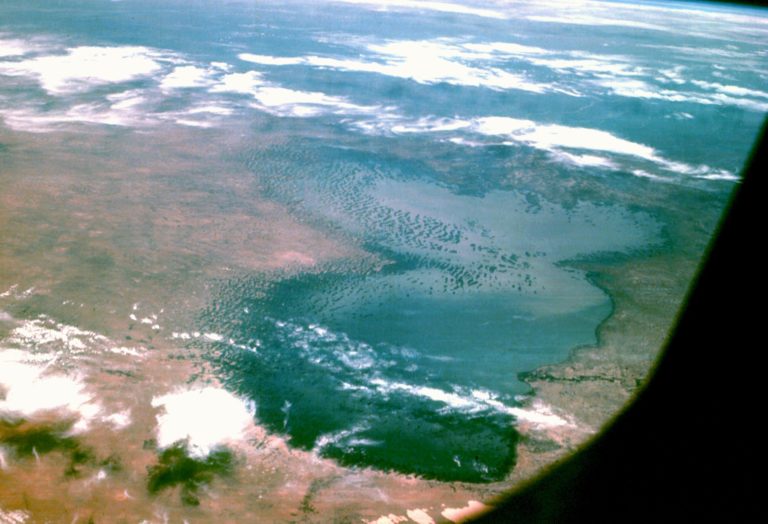
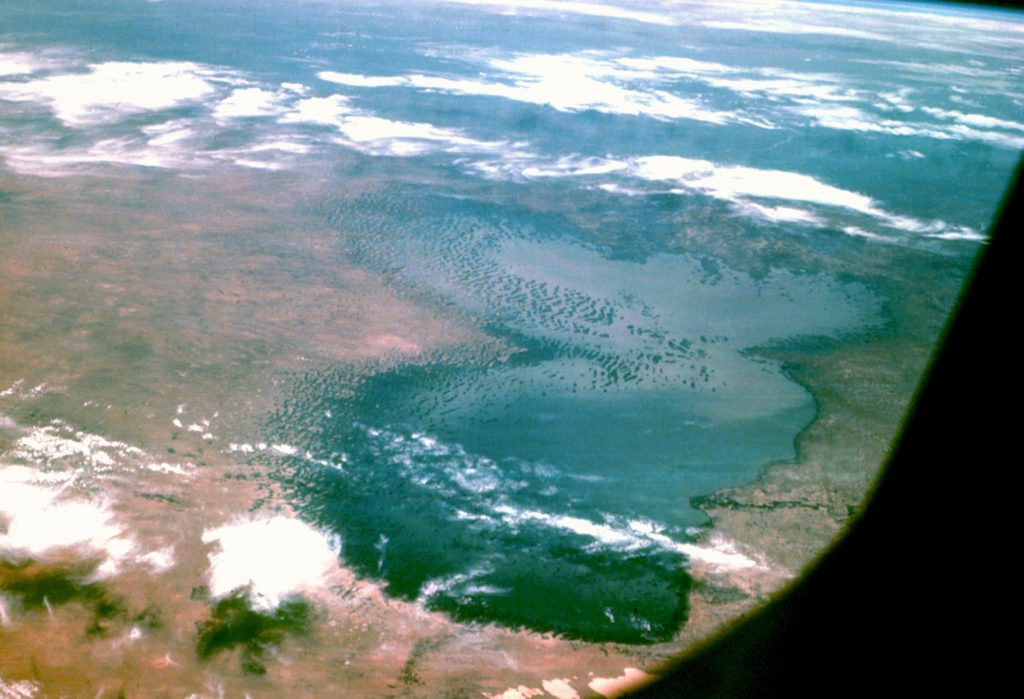
Lake Chad viewed from Apollo 7
Minister of Interior, Lt.-Gen. Abdulraham Dambazau (retd),
announced this at a pre-conference news briefing on Friday, January 25, 2019 in
Abuja.
He said that evolving the framework was in line with
international principles and standards, adding that the ministry was
collaborating with United Nations High Commissioner for Refugees (UNHCR) to
host the conference billed for Abuja.
The minister, who was represented by the Permanent Secretary
in the ministry, Dr Mohammed Umar, said that Dialogue is a two-day programme
scheduled to hold from Monday, January 28 to Tuesday, January 29.
He said that the Dialogue would review the protection
situation in the Lake Chad Basin countries, including achievements two years
after the adoption of the Abuja Action Statement, ongoing challenges, capacity
and gaps in protection response.
He added that it would also “reinvigorate consensus around
protection considerations and principles as informed by international law,
standards and norms.”
“The conference also aims to boost strategic partnerships to
enhance protection and solutions through coordinated and complementary
response.
“It also aims to enhance visibility and continue resource
mobilisation to ensure a more effective, coordinated and complementary response
to the protection risk and needs as well as the search for durable solutions in
the region,” Dambazau said.
He announced that the Dialogue would commence with technical/experts’
discussions, which would be followed by a ministerial-level meeting “to
validate first signs and endorse the way forward’’.
The minister explained that the meeting of experts would
include a mix of plenary and thematic sessions around key issues and themes
with the aim to develop recommendations for consideration during the Dialogue.
He added that the thematic session would also focus on
specific protection challenges like centrality of protection in humanitarian
action, forced displacement and access to asylum and protection.
According to Damazau, the sessions would also focus on Civil
Military Coordination and Civilian Character of Refugee and Internally
Displaced Persons hosting areas (including return areas).
In June 2016, the ministry also collaborated with UNHCR to
host the regional dialogue on Lake Chad Basin.
It was aimed at identifying the protection risk in the region, resulting from conflict-induced crises, and proffer solution.
Head of Environment Department, Gwagwalada Area Council, Mr
Tijani Ado, has told residents of the area to desist from indiscriminate waste
dumping.
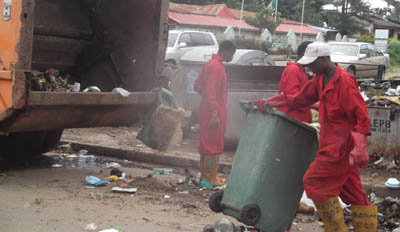
Officials of one of the AEPB waste evacuation contractors, on duty in Garki Area of Abuja
Ado, in an interview with the News Agency of Nigeria (NAN)
in Gwagwalada on Friday, January 25, 2019, said that indiscriminate waste
disposal by the roadside and gutters promotes the spread of many communicable
diseases.
“Despite the council’s effort on waste evacuation to keep
the environment clean, some people have failed to comply with sanitation rules
and regulations.
“The council is trying its best in terms of creating
awareness on proper waste disposal, but some residents have refused to do the
right thing.
“Sanitation should be a matter of necessity and should be
observed daily in every home for healthy living.’’
He also warned against open defecation and described the
inability to build toilets by some landlords in the area as a setback to good
hygiene.
Ado also advised the residents to cooperate with the council
in its effort to make the area clean.
Environmental threats like climate change and pollution are
linked to lethargic enforcement of laws governing management of vital
ecosystems, says a report released on Thursday, January 24, 2019 by the UN
Environment.
UN Environment Acting Executive Director, Joyce Msuya
According to the first ever global assessment of
environmental rule of law, the quest to maintain a healthy and clean planet is
being undermined by weak enforcement of legislation to protect it from natural
and human-induced threats.
“This report solves the mystery of why problems such as
pollution, declining biodiversity and climate change persist despite the
proliferation of environmental laws in the last 10 years,’’ said David Boyd, UN
Special Rapporteur on Human Rights and the Environment.
“Unless the environmental rule of law is strengthened, even
seemingly rigorous rules are destined to fail and the fundamental human right
to a healthy environment will go unfulfilled,’’ he added.
The UN Environment report says that rapid development of
environmental laws and treaties since 1972 has not translated into their
enactment thus escalating threats to ecosystems that sustain livelihoods.
It says more than 1,100 environmental treaties and legal
frameworks have been developed by national governments since 1972 when the UN
environment agency was formed.
At the same time, donor support and robust domestic funding
to facilitate development of new environmental laws has been consistent in the
last 40 years, but it has not been matched with their enforcement, says the
report.
The report notes that poor coordination among government
agencies, weak institutional capacity, lack of access to information,
corruption and limited civic engagement have contributed to weak enforcement of
environmental rule of laws.
“We have the machinery in the form of laws, regulations and agencies
to govern our environment sustainably,’’ said Joyce Msuya, UN Environment
acting executive director.
“Political will is now critical to making sure our laws work
for the planet.
“This first global assessment on environmental rule of law
highlights the work of those standing on the right side of history – and how
many nations are stronger and safer as a result,’’ she added.
The report reveals that 88 countries have adopted the
constitutional right to a healthy environment while an additional 65 have
enshrined environmental protection in their constitutions.
Likewise, over 350 environmental courts and tribunals have
been established in more than 50 countries while over 60 countries have some
legal provisions for citizen’s right to environmental information.
Experts urged governments to address hiccups that have
undermined enforcement of legislation that promote environmental governance.
Carl Bruch, director of international programmes
at the Environmental Law Institute said that a paradigm shift is required to
ensure that a culture of compliance with environmental laws is embraced by key
stakeholders.
The year 2018 is likely to have been the fourth warmest year
on record, a scientific group pronounced Thursday,
January 24, 2019 – and joins a quartet of extra-hot years since 2015 that
suggest a leap upward in warmth that the Earth may never return from in our
lifetimes.
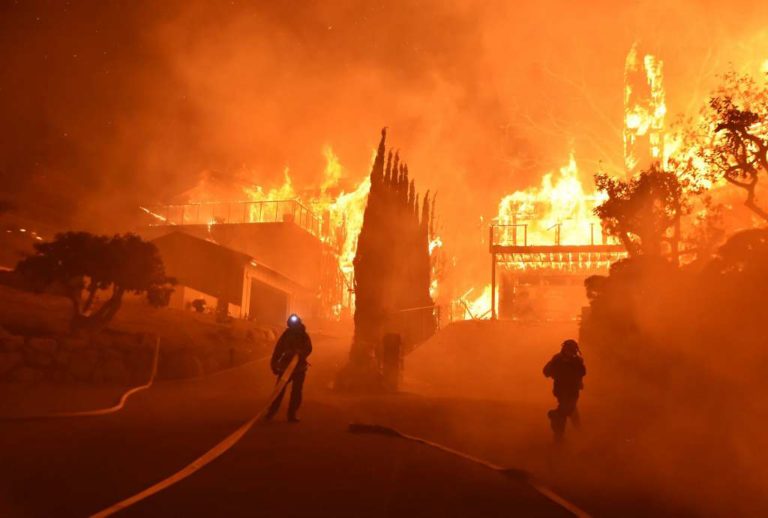
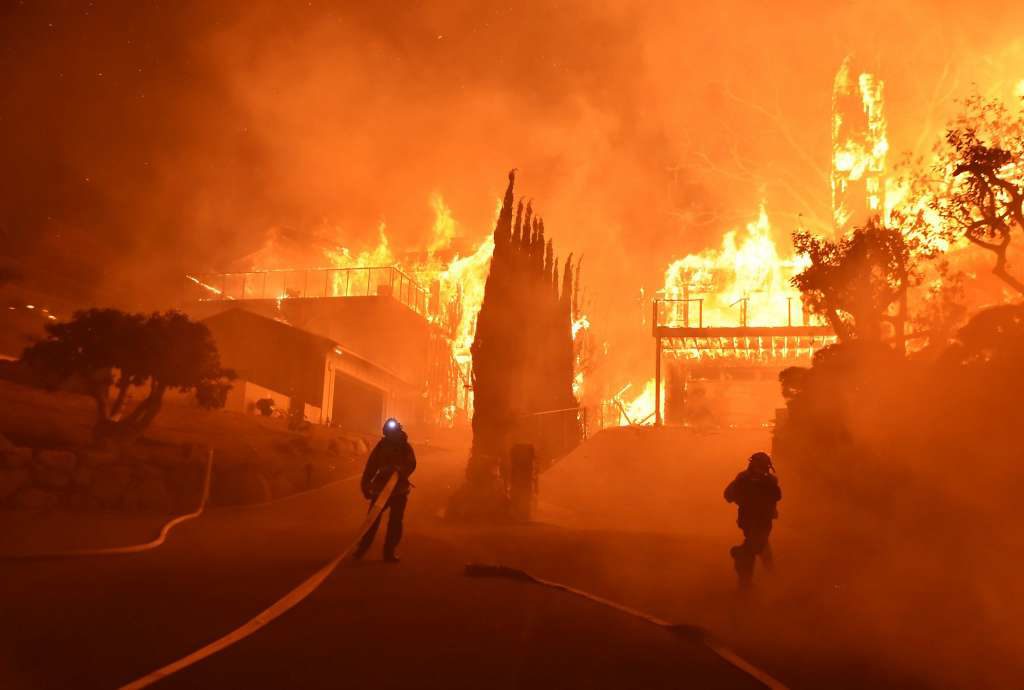
Firefighters work to put out raging flames in California. Photo credit: Ventura County Fire Department
The warmest year on record for the Earth’s land and oceans
was 2016 – by a long shot, thanks to a very strong El Nino event. That’s
followed by 2017, 2015, and now 2018, said Zeke Hausfather, a research
scientist with Berkeley Earth, which released the findings.
“2018 is consistent with the long-term warming trend,”
Hausfather said. “It’s significantly warmer than any of the years before 2015.
There’s still this big bump up after 2014, and 2015, 2016, 2017, and 2018 are
all in a class of their own.”
While expert groups have sometimes divided on such annual
temperature rankings — and not all assessments are yet in – Berkeley Earth’s
findings appear unlikely to be disputed.
The Copernicus Climate Change Service, a European Union
body, had also
proclaimed 2018 the fourth warmest year on record earlier this month.
And Kevin Cowtan, a researcher at the University of York who
also keeps an influential temperature dataset, agreed with the ranking, though
he noted by email that he is only able to track data through November of last
year due to the U.S. government shutdown, leaving his assessment one month
short at present.
“Our results to November clearly put 2018 in 4th place,
significantly warmer than 2010 in 5th,” said Cowtan. “The 11 hottest years on
record have all occurred since 2005.”
Amid the government shutdown the U.S.’s two top keepers of
temperature records — NASA and NOAA — have not yet released their findings.
Last year, both agencies released their assessments for 2017′s temperatures,
which NASA called the second warmest and NOAA the third, on January
18.
Hausfather said a coordinated release had been planned for January 17 with his organisation and the U.S. government agencies – before the shutdown, that is. Once that happened, he said, Berkeley Earth decided to go ahead and release its own numbers.
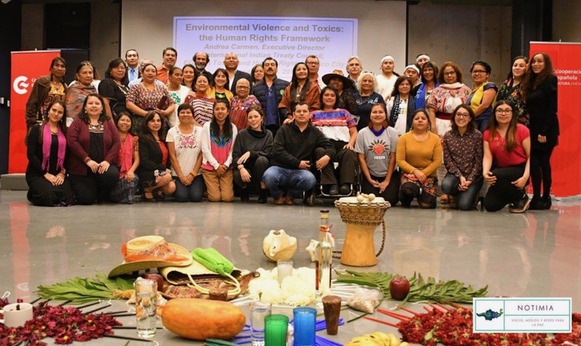
An Expert Group (EGM) meeting was held from January 19 to 20, 2019 at the Centro Cultural de España in Mexico City, Mexico, to provide information to the United Nations Special Rapporteur on the implications for human rights of the environmentally sound management and disposal of hazardous substances and wastes, Mr. Baskut Tuncak.
Participants at the UN Expert Group Meeting in Mexico City, Mexico
The EGM, hosted by the International Indian Treaty Council
(IITC) and the Centre for the Autonomy and Development of Indigenous Peoples
(CADPI, Nicaragua) with the Fund for Development of Indigenous Peoples of Latin
American and the Caribbean (FILAC), provided the opportunity for
representatives from five regions to present testimonies and community-based
studies to contribute to the Special Rapporteur’s current Human Rights Legal
Review of the United Nations Chemical Conventions focusing on the impacts on
Indigenous Peoples.
During the two-day meeting, Indigenous community-based
experts and scientists shared examples of the human rights and health impacts
caused by the application of banned and highly toxic pesticides, extractive
industries such as gold mining using mercury, toxic waste incineration and
other activities carried out in Indigenous Peoples’ lands and territories
without their free prior and informed consent.
Representatives of the United Nations Permanent Forum on
Indigenous issues, the UN Committee on the Rights of the Child, the UN Food and
Agriculture Organisation and the UN Committee on Food Security Civil Society
and indigenous Peoples Mechanism also presented at the EGM. The Mexican
government’s National Institute of Indigenous Peoples provided an official
welcome statement to inaugurate the EGM and also participated for both days.
Indigenous experts shared testimonies and studies confirming
the devastating health impacts of toxic contamination in their communities
including birth defects, infant mortality, reproductive impairment, and
cancers. Many identified these impacts as “environmental violence” resulting in
extreme suffering and many deaths, especially among infants and small children.
They affirmed that Indigenous women and girls are
particularly affected because of the well-known impacts of
environmental toxics on women’s bodies and reproductive health. The
disproportionate impacts on disabled persons in Indigenous communities were
also presented.
Indigenous presenters insisted that drastic and immediate
change was required on the local national and international levels so that the
use and storage of hazardous substances could not take place in their lands
without their free prior and informed consent as affirmed in Article 29 of the
UN Declaration on the Rights of Indigenous Peoples.
They called for effective clean-up of contaminated areas,
remedies for those whose lives and human rights have been affected, corporate
and government responsibility to provide redress and remedy to those who have
been harmed, restoration of traditional food systems and non-toxic agricultural
methods, programs to address extreme poverty and the development of safe, economically
viable livelihoods in Indigenous communities that are not harmful to their
health or the environment.
The UN Permanent Forum on Indigenous Issues (UNPFII)
recommended that this legal review be carried out in 2014 and again in 2016
with the assistance of the UN Special Rapporteur on Human Rights and Toxics to
address the disconnect between the UN chemicals conventions, in particular the
Rotterdam Convention which permits the international import and export of
banned pesticides and other toxic chemicals, and UN Human Rights Norms and
Standards including the UN Declaration on the Rights of Indigenous Peoples, the
Convention on the Rights of the Child, and the Convention on the Rights of
Persons with Disabilities.
In April 2018, the Special Rapporteur shared some of his
preliminary observations at the UNPFII’s 17th session “…Indigenous peoples such
as the Yaqui have suffered grave adverse impacts on their health and dignity
from of the ongoing use of highly hazardous pesticides. These pesticides are
often imported from countries that have banned their use domestically because
of uncontrollable and unreasonable risks.”
In this statement, he also observed that regarding the
import, export, and use of toxic substances impacting Indigenous communities “there
is no recognition of the right to free, prior and informed consent of
indigenous peoples.”
“This legal review by the Special Rapporteur on Human Rights
and Toxics is very important to the UNPFII and to Indigenous Peoples around the
world,” said Tarcila Rivera Zea, Quechua from Peru, who participated in the EGM
as an expert member of the UNPFII from Latin America and the Caribbean,
focusing on issues impacting Indigenous women, children and youth.
Rivera Zea affirmed at the EGM that “it is time for UN
mechanisms and processes to move from recommendations to implementations” and
to find “new ways forward that effectively respect international legal norms
and standards protecting the rights of women, children, and Indigenous
Peoples”. She also called upon States to take responsibility to respect the
rights of Indigenous Peoples and the public health of everyone by halting the
production, import and export and use of substances known to be deadly to human
health and children’s development, whether they are produced by industrial
agriculture, mining, oil drilling, fracking or other forms of unsustainable
production.”
The outcomes of the Special Rapporteur’s legal review will
be presented at the 18th session of the UNPFII in April and also at the 74th
session of the UN General Assembly in 2019.
The United Nations Special Rapporteur on the implications
for human rights of the environmentally sound management and disposal of
hazardous substances and wastes (informally known as the Special Rapporteur on
Human Rights and Toxics) was established by the UN Commission on Human Rights
in 1995 to examine the human rights implications of toxic and otherwise
hazardous substances.
A comprehensive conservation plan has been released to
establish a long-term mechanism for the conservation and utilisation of the
Great Wall in China, a senior official of the State Administration of Cultural
Heritage (SACH) announced on Thursday, January 24, 2019.
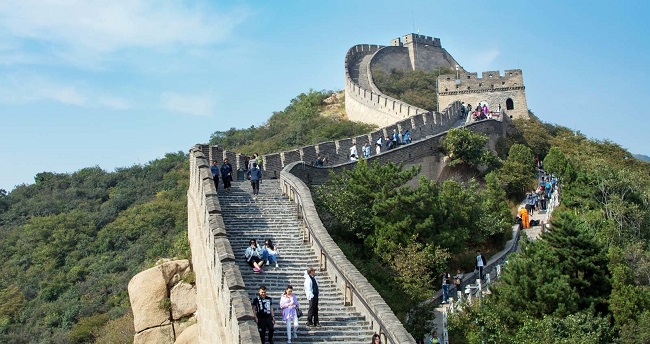
The Great Wall of China
The plan was jointly publicised by the Ministry of Culture
and Tourism and the SACH on Tuesday.
“The government’s role in protecting the Great Wall should
be strengthened,’’ Liu Yuzhu, head of SACH, at a State Council Information
Office press conference, said.
“Individuals and relevant social organisations are
encouraged to provide not-for-profit service for the Great Wall,’’ Liu said.
Liu said sections of the Great Wall built during the Qin
(221 B.C. to 206 B.C.), Han (202 B.C. to 220 A.D.) and Ming (1368 A.D. to 1644
A.D.) dynasties were the key areas to be conserved.
The Great Wall consists of many interconnected walls built
between the seventh century B.C. and the Ming Dynasty.
It was listed as a World Heritage Site by UNESCO in 1987.
The National Emergency Management Agency (NEMA) has sought
partnership with the News Agency of Nigeria (NAN) on disaster control and
management.
Mustapha Maihaja, Director General, NEMA
Mr. Eugene Yenlong, NEMA North Central Zonal Manager, called
for the collaboration on Thursday, January 24, 2019 when he paid a
familiarisation visit to the NAN office in Jos, Plateau State.
He described the proposed partnership as a purveyor of news
that would help in disseminating information regarding disaster control and
management within the zone.
Yelong said it would also help achieve his agency’s
objective of reducing to the barest minimum, effects of certain types of
disaster.
In his remarks, Mr. Ephraims Sheyin, the Zonal Manager of
NAN in Jos, gave the assurance of NAN’s continuous support in partnering with
NEMA.
Sheyin tasked the newly posted zonal manager on the need to
engage in regular sensitisation and training of stakeholders, especially
in areas that are disaster prone.
An ecologist, Mr Richard Inyamkume, says that it is safer to
use glassware in packaging or storing food instead of plastic materials.
Glassware food packaging
Inyamkume, the Executive Director, Ambassadors of Dialogue,
Climate and Reintegration, a non-governmental organisation (NGO), said this on
Thursday, January 24, 2019 in an interview with News Agency of Nigeria (NAN) in
Abuja.
He said that it was also safer to use glassware to package
or store both hot and cold foods.
“Majority of the plastics which we use contain toxic
chemicals and their continued use could be linked to the occurrence of certain
health challenges such as obesity, enlarged male breasts and increased prostate
cancer, among others.
“I strongly recommend that citizens should consider the use
of glass products for food handling in place of plastics because of its
advantages.
“This is because glass is safer for packaging hot food or
even liquids; it does not leach potentially harmful chemicals into food as
plastics.
“Nigeria is facing plastics infiltration crisis, which
threatens human health systems and our environment,’’ he said.
Inyamkume said that Nigerians had indulged in the use of
plastics for packaging or storing food and other substances without any fear of
the potential harm which plastics could cause to the human body.
“I have observed with dismay that the demand for plastic
products in the country is relatively high, when compared to the demand for
plastics in other countries.
“Our people make use of plastics a lot for shopping or
garbage bags, film packaging, wrapping of foods and fluids packaging as well as
production of water bottles and toys, among others.
“This trend is unhealthy, as there are certain risks that
are associated with plastics use,’’ he said.
Inyamkume, who underscored the need for Nigerians to reduce
their use of plastics, said that people should be sensitised to the fact that
plastics were non-biodegradable materials which would remain in the environment
for decades.
“I believe if more people are aware of the risks involved in
plastics use, they would be extra-careful in taking decisions and in the choice
of the kinds of vessels to use.
“I understand that recycled plastics are even more harmful
to the environment than the initial products due to the mixture of additional
colouring agents, stabilisers, flame retardants and other addictives.
“Although plastics seem to be unavoidable in our daily life,
tangible efforts should, however, be made to inform the people that plastics
leach harmful chemicals like phthalates, xenoestrogens, lead and antimony into
foods, beverages and the physical environment,’’ he said.
Inyamkume stressed that Nigeria should enact laws that would
regulate the production of plastics so as to stem the infiltration of
communities with plastics that contained harmful chemicals.
“Government needs to strengthen environmental protection
systems that would ensure that what we produce in the country is not causing so
much harm to the citizens and the environment.
“A review of plastics production guidelines and recycling
(if at all there are any) should be top priority.
“Definite steps should also be taken to regulate
manufacturing companies which produce plastics that contain harmful
chemicals,’’ he added.
Inyamkume urged the Federal Government to invest more in the production of chemical-free plastics, while encouraging the private sector to follow suit by making such products cheaper and more readily available to consumers.
The UN’s Food and Agriculture Organisation (FAO) has stepped
in to assist Sri Lanka control a worm that has spread throughout the
country damaging maize cultivation.
Armyworm invasion
The worm had damaged thousands of acres of maize and
threatened to harm rice crops, the organisation said on Thursday, January 24,
2019.
More than 40,000 hectares, or half of the country’s maize, have been destroyed by the pest known as fall armyworm, or spodoptera frugiperda.
The worm has gradually started spreading to other crops.
“In the absence of natural control or good management, the
(fall armyworm) can cause significant damage to crops and affect the
livelihoods of farmers.
“Once established in a new area, (fall armyworm) cannot be
practically eradicated,’’ read an FAO statement.
The FAO said it had shared background information on the
pest with Sri Lanka and presented a range of options available that don’t
require hazardous pesticides and minimise the use of chemical pesticides.
Farmers have taken to the streets in some areas demanding
compensation and a quick solution to controlling the pest’s spread.
The worm has already affected cultivation in mostly the
eastern, north central and south eastern parts of the country.
Agriculture Minister P Harrison said the government proposed
paying compensation to the affected farmers, while trying all chemical and
biological controls possible for the pest, which is believed to have spread
from India.
Sri Lanka has been concerned that the pest could
spread to paddy lands, affecting production of rice, the country’s main staple.
International experts in water sector have expressed worry
over unprofessional and unscientific extraction of water resources through mass
drilling of boreholes across the country.
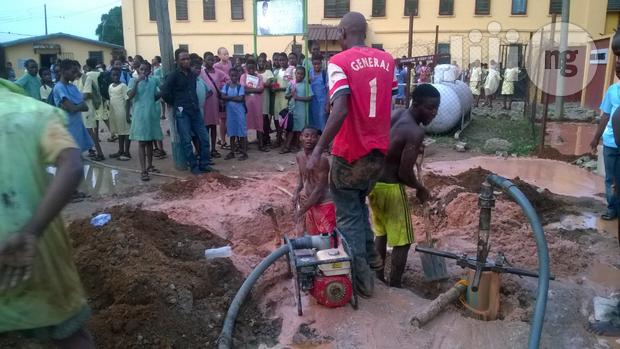
Borehole drilling
They made the observation at a workshop organised by the
Nigeria Hydrological Services Agency (NIHSA), in collaboration with the
International Atomic Energy Agency (IAEA) on Thursday, January 24, 2019 in
Abuja.
Ms Lawrence Goorcy, an IAEA expert, said the aim of the
event was to carry out analysis to ascertain the level of groundwater in order
to prevent water crisis in the country.
Goorcy, who is also a Hydro-geologist, said that a team of
hydro-logical management experts has been in the country for a week for
critical examination of the nation’s groundwater resources.
“From our evaluation, there are gaps in the aquifer, and we
are here to adopt scientific approach because this has affected some parts of
the country.
“That is why sometimes we will have shortage of water in
some parts of the country,” she said.
Earlier in his opening remark, Mr Clement Nze,
Director-General, NIHSA, said the workshop was aimed at implementing Technical
Cooperation (CT) project, tagged: “RAF/7019”.
According to Nze, the CT project will be implemented through
International Water Availability Enhancement projects which embrace experts
from international body to investigate Nigeria’s water resources management.
Nze said the rate of extraction of groundwater resources in
Nigeria had become alarming, hence the need to engage international experts for
critical examination to prevent the country from running into water crisis in
future.
“If we are able to get proper rate at which groundwater is
being replenish or recharged, we will be able to advise properly the rate at
which we can engage in boreholes drilling.
“Our operation is just like we are mining without being
replenished which lead us to water crisis.
“There is completely risk of depletion of water, like in
Maiduguri in particular, there are three levels of aquifer.
“The first one is from 0 – 150 meters deep, the second
aquifer level is between 150 – 250 m deep, the third one is 250 to 600 meters
deep.
“It is observed that we have finished the first level and if
we don’t guide against the rate at which people are extracting water from the
ground, it might result in depletion of the second aquifer,” he said.
Also, Alhaji Suleiman Adamu, Minister of Water Resources,
who welcomed the experts in his remarks, explained that the goal was to help
government to tackle groundwater related issues in the country.