Home Blog Page 1803

How access to clean water changed our lives, by Kaduna community

0

Members of Unguwan Gandu Zuntu, Kubau Local Government Area of Kaduna State said on Friday, August 24, 2018 that access to clean water in the community had significantly changed their lives for good.
Kaduna community
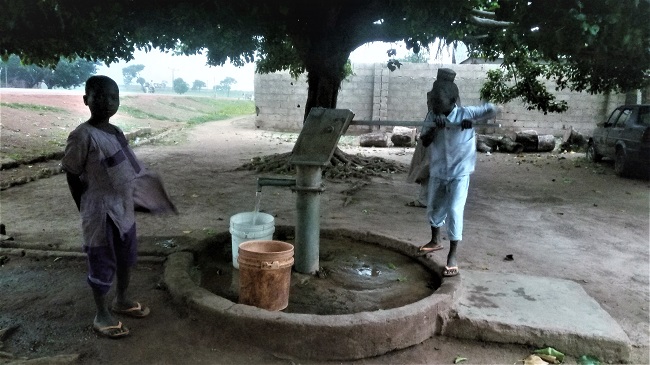
Children of Unguwan Gandu Zuntu, Kubau Local Government Area of Kaduna State fetching water from a handpump borehole provided by SHAWN II Project in the community

They stated this while interacting with a correspondent of the News Agency of Nigeria (NAN) who was in the community to assess the impact of Phase II of Sanitation, Hygiene and Water in Nigeria (SHAWN) project on the people.

One of them, Mrs Matina Tanko, recalled that families in the area had suffered water borne diseases and other related ailments due to unsafe water and poor sanitation conditions, stressing that life had been tough for both the young and the old in the community.

“We had to walk more than two kilometres from our house to River Lakarbu to get drinking water whenever our only source of water, a well became dry.

“The most disturbing problem was that people washed their clothes and bathed in the river. Not only that, cattle also drank, defecated and urinated in the water.

“Yet, we walked for about two kilometres to get these bacteria and germs infected water for drinking, cooking, and other domestic uses, because we had no alternative,” she said.

The Ward Head of the Community, Mr Yohana Tahum, also said that the people preferred to go to the river, early, to avoid the long queue and hours of waiting to get water from the only well in the community.

“People go to the well as early as 3 a.m. to be able to get water between 7 a.m. and 8 a.m. because of the long queue, with our women and school girls suffering the most,” Tahum said.

Mrs Saraya Ibrahim, a house wife, however, expressed joy that the community now had access to clean water through a hand pump borehole provided by the SHAWN II project.

According to her, the project, jointly funded by UNICEF, DFID and the Kaduna State Government has changed the lives of the community, away the pains of having to walk long distance to get water.

“Not only that, good sanitation and hygiene practices that become our new way of life, courtesy of the project, has also saved us from constant vomits and diarrhea due to unhealthy living environment.

“We had no idea what it means to live in a hygienic environment until the SHAWN project; and now we live in clean environment, practice good hygiene and built toilets to properly dispose excretes,” Ibrahim said.

At Unguwan Masama, also in the local government, Malam Umaru Mukaila, the Water, Sanitation and Hygiene Committee Chairman in the community said every household now had a toilet, to discourage open defecation.

Mukaila also said that the community was also provided with motorised borehole supplying clean water to its 2,500 inhabitants.

Members of Unguwan Masama, Kubau Local Government Area of Kaduna State, were provided drinking water from a motorise borehole provided by SHAWN II Project in the Community.

He thanked UNICEF, the state government and DFID for improving the quality of life in the community through the SHAWN II projects, saying, “We never had it this good.”

SHAWN II project is aimed at improving access to sanitation, hygiene and water supply to all citizens through eradication of open defecation, hand washing promotion, sanitation and provision of water facility.

It is being funded by United Kingdom’s Department for International Development (DFID) and UNICEF with counterpart funding from the state governments of Kaduna, Katsina, Zamfara, Benue, Bauchi and Jigawa.

By Philip Yatai
Hundreds evacuated as forest fire sends smoke over Berlin

0

Hundreds of people were on Friday, August 24, 2018 evacuated from their homes as about 600 firefighters battled a blaze in a forest strewn with unexploded ammunition south of Berlin. A pall of acrid smoke hung over the city.

Germany
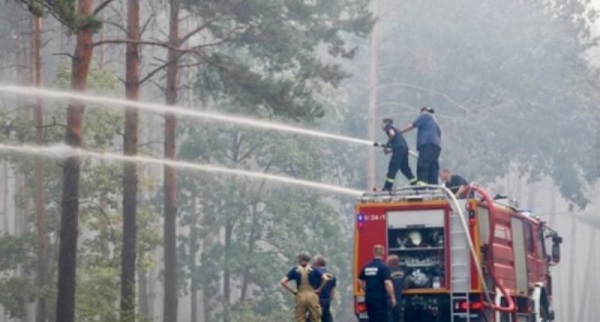
Firefighters help to put out a forest fire near Treuenbrietzen, Germany

Attempts to fight the fire were complicated by the presence of the ammunition thought to date from the Soviet Army’s activities in former East Germany.

The blaze, about 50km (30 miles) southeast of Berlin, spread rapidly overnight to cover an area as big as the size of 500 football fields, aided by the parched conditions after one of Europe’s hottest summers.

“I have huge respect for the firefighters, who are out there right now, risking their lives.

“We know there is ammunition lying around in the forest,” said a local politician, Guenther Baaske, who added that some explosions had been heard.

The summer has seen forest fires across much of eastern Germany, but this blaze, so close to its largest city, led authorities to activate emergency alert systems in the early hours of Friday telling Berliners to shut their windows.

Helicopters dropped water on flames near the village of Treuenbrietzen and firefighters were spraying water in a blackened landscape thick with smoke.

Flames came within 100 meters of houses in some places.

Authorities said that 540 people had to leave their homes, with many forced into emergency accommodation.

In many places, flames reached as high as the forest canopy in the ordinarily swampy, heavily-wooded region that surrounds Berlin.

Traditional ruler tasks Nasarawa residents on clean environment

0

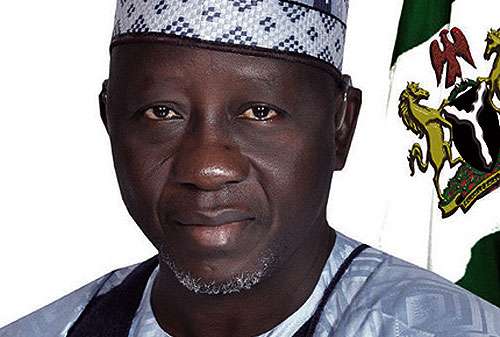
A first-class traditional ruler in Nasarawa State, Alhaji Halilu Bala-Usman, on Friday, August 24, 2018 urged residents in the state to always keep their environment clean to enhance healthy living and the overall development of the state.

tanko Al-Makura
Governor of Nasarawa State, Umaru Tanko Al-makura

Bala-Usman, the Osu Ajiri of Udege chiefdom, spoke while receiving Mr Ifiora Kevin, the newly posted Medical Superintendent of General Hospital, Mararaba, in Udege Development Area of the state.

According to the royal father, a clean environment is good for human health and prevents the outbreak of diseases.

He assured the new medical official of adequate support, urging him and other health officers in the area to continue to adhere strictly to their professional ethics, to save human lives.

Bala-Usman wished the officer and other management members of the hospital well in their new assignment.

“I want to use this medium to advise the people of my domain, the state and Nigeria at large on the need to maintain personal and environmental hygiene in the interest of lives and for the overall development of the society.

“Let us complement government efforts by keeping our environment clean, because it is often said that a healthy nation is a wealthy nation,” he said.

The traditional ruler urged people of the area to be their brother’s keeper by living in peace and to tolerate one another, irrespective of their affiliation.

He lauded Gov. Tanko Al-Makura of Nasarawa State for his development strides, calling for their sustenance.

Earlier, Kevin said that the visit to the royal father was aimed at seeking for his support, to enable him and other members of staff to succeed.

Kevin, who pledged the dedication of staff of the hospital to their duties, solicited the support of people of the area, to enable him and his colleagues to excel.

By Awayi Kuje

Why fish is more valuable than oil, by Bassey

0

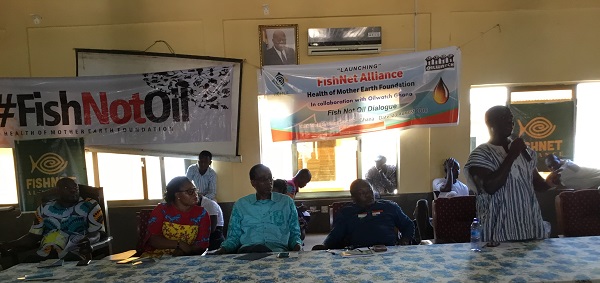
Nnimmo Bassey, Director, Health of Mother Earth Foundation (HOMEF), at the FishNet Dialogue held at Keta, Volta Region, Ghana on Thursday, August 23, 2018, describes oil drilling as a threat to the natural heritage of coastal communities, adding that the venture is a tragedy to marine life forms, as it kills and injures them

FishNet Dialogue
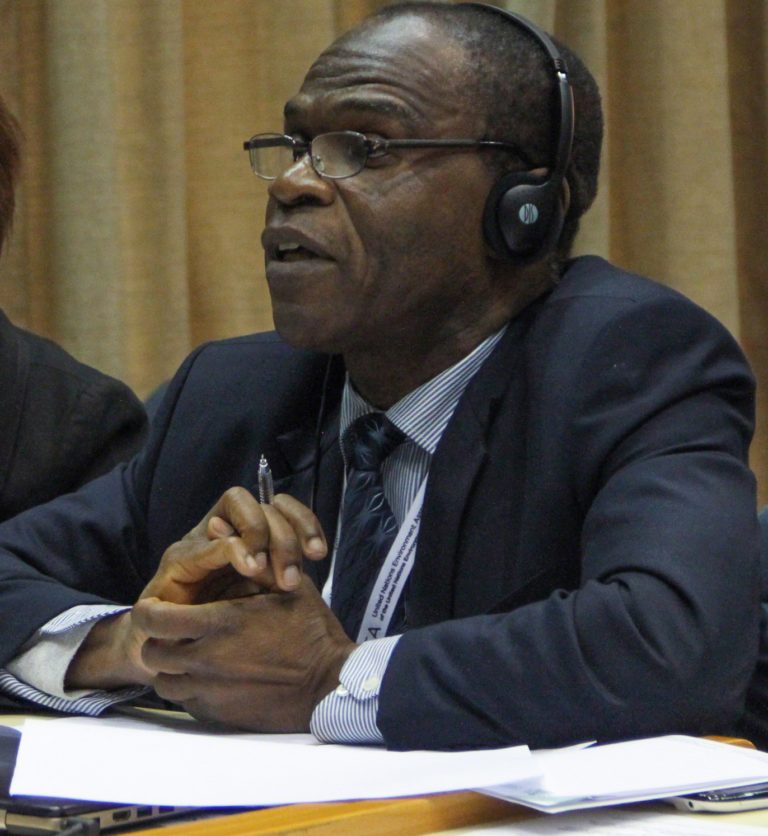
Nnimmo Bassey (in blue) seated with other delegates at the FishNet Dialogue held at Keta, Volta Region, Ghana

When we say that fish is more valuable than oil, we are staying a plain fact. Fish are living organisms whereas crude oil comes from fossils or long dead matter. Fish support our life with necessary protein. It is estimated that about 63.2 percent of Ghanaians depend on fish for animal protein. Marine resources provide the backbone of the economy and social life of many coastal communities.

They employ millions of peoples across the coast lines of Africa and in both Great and small lakes on the continent. The economic value of artisanal and small-scale fishing includes the big population of processors and sellers that are mostly women. To these must be added the families that depend on them and the income from the sector. With these considerations and in comparison, to the negative impacts of oil exploration and extraction in our waters, the fishing sector is more valuable and needs to be consciously protected.

Before the arrival of oil and gas rigs in our territories we enjoyed pristine waters and we could fish freely in the deep offshore and on the inland shores. Our people could literally pick sea foods from the shallow waters and from the creeks. Oil activities in our waters have raised serious security concerns, with large areas around oil installations becoming off limits to fishers. Sadly, oil fields have notoriously been found in areas with endemic fish species. Besides oil spills from offshore oil operations, they also pollute the oceans with drilling muds, pipeline leaks, produced water and deck runoff water. These have considerable impacts on the fish, coral reefs and water birds in the short and long terms.

When the seismic ships arrive, trouble knocks. Oil companies invest a lot in their search for oil reserves. Governments readily back these searches because both corporations and governments benefit from huge reserves as the market value of an oil company rises as their reserves rise. Governments that belong to a cartel like the Organisation of Petroleum Exporting Countries (OPEC) can press for higher production quotas depending on how much reserves they can show that they have. While their reserves rise, so do the pains and poverty of the fishers.

Seismic testing is often carried using multiple air guns that emit thousands of high-decibel explosive impulses to map the seafloor. The engineers repeat the blasts from the seismic air-guns every ten seconds and all through the day and these go on for days and weeks at a time.

These activities are known to disorientate marine mammals such as whales and other marine life. This happens when the sensory organs of these aquatic animals are affected causing them to lose their sense of orientation as well as ability to track food sources.

You are witnesses to the many whales that have died off the Ghanaian coasts in recent years. Right here in Keta, a dead whale washed onshore at the Tettekope beach on Tuesday, September 19, 2017. A total of 24 whales died on the coasts of Ghana between 2009 and 2013. While the government and oil companies keep insisting that the deaths of the whales have nothing to do with oil and gas exploration and extraction, what cannot be denied is that the alignment of the incidents and oil exploration and exploitation are too close to be ignored.

In South Africa, as exploratory activities intensify off the coast of Durban, concerns have risen over the fate of the highly valuable marine ecosystem there. Just this week a dead whale washed onshore. Before the beaching of the whale, scientists were worried that a particular fish species that has survived millions of years including the ice age, without much change, may not be equipped to withstand oil pollution. Last week a baby whale washed onshore on the coast of Delta State, Nigeria. These incidents have become more regular in recent times.

Oil drilling is a resounding tragedy to marine life forms, killing and injuring them. It is a threat to the natural heritage of our coastal communities. It is time for our nations to ban extractive activities and reckless fish exploitation by local and foreign fleets in our waters, create marine parks and protect them. Our fishers are getting tired of going all night in search of fish and returning home only with polluted nets.

Our FishNet Dialogues provide spaces for us to interrogate changes in the state of our marine environment and to map actors negatively impacting our marine ecosystems, and to proffer actions that must be taken to halt the harms. During our conversations today, we will ask ourselves some questions. Such questions will include whether crude oil is in anyway more valuable to us than fish. We will compare how many persons work in the oil sector to the number that work in fisheries. We will also ask which of these supports our local livelihoods, natural heritage and socio-cultural activities.

As you will see, we are not here to give or receive lectures. We are here to have a dialogue, listen to ourselves, ask questions and collectively seek answers. We are here to seek ways we can work together and extend the webs of solidarity to other fishers who could not join with us today.

Health of Mother Earth Foundation is pleased to collaborate with Oilwatch Ghana and our fishers here in Keta to make this gathering happen. We also welcome FishNet Alliance members form Togo to the gathering.

NEMA expresses worry over erosion menace in southeast

0

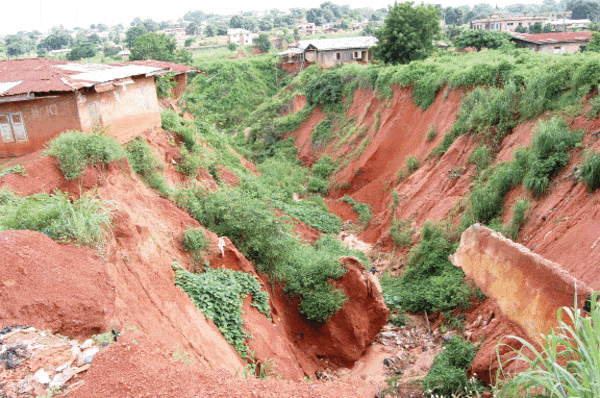
The National Emergency Management Agency (NEMA) has expressed worry over the level of erosion menace in the southeast of Nigeria.

Erosion Anambra State
A erosion site in Idemili, Anambra State

Mr Walson Ibarakumo, the Enugu Regional Coordinator of the agency, expressed the sentiments in an interview with the News agency of Nigeria (NAN) in Awka, the Anambra State capital, on Thursday, August 23, 2018.

Ibarakumo said among other emergency issues such as flooding and fire, erosion ranked topmost in the threat facing the people of the southeast and their livelihood.

He said Abia, Anambra, Enugu and Imo states are seriously affected by erosion menace, adding that only Ebonyi had been enjoying relative stability in the area.

The coordinator said that NEMA was redirecting its attention to healthy environmental management and increasing awareness on erosion.

“Erosion is very serious; the impact is much here in the southeast. They are majorly hit.

“We have been to places where electric installations were destroyed and major infrastructure damaged.

“In our next stakeholders’ meeting, we are going to focus on erosion; if I may classify southeast, erosion is number one ahead of flooding and fire because of the impact.

“Though I have not seen much of it in Ebonyi, all other states in the region are under serious threat of erosion or the other.

“That is why we are moving attention to erosion and better management of the environment,” he said.

Ibarakumo said though flooding has not been massive this year, the chances are not entirely over.

He said that 20 communities in five council areas in Anambra were badly affected by rain-induced flooding between June and August.

He listed them as: Anambra East, Anambra West, Anyamelum, Awka North and Onitsha South.

He said that on-the-spot- assessment in theses council areas showed that many people were temporarily displaced, and large expanse of farmlands and machinery destroyed.

He said the displaced families had gone back to their homes but added that the camps for IDPs were still being kept ready because the peak of flooding was being anticipated in September.

“The flooding that came was as a result of the heavy rains, but after about three days the affected people returned to their houses.

“Because of the forecast we are looking forward to taking them to IDP camps which we have created. The outlook is still cloudy going by the forecast.

“We expect flooding in September, so the danger is not entirely averted because September is when river flooding is expected to be at its peak.’’

He said that many livelihoods were  also affected, especially, farms and farming equipment.

“We are working on their resettlement, I am hopeful that very soon assistance will come their way based on the impact of damage,” he said.

By Chimezie Anaso

China’s water diversion project replenishes 30 rivers

0

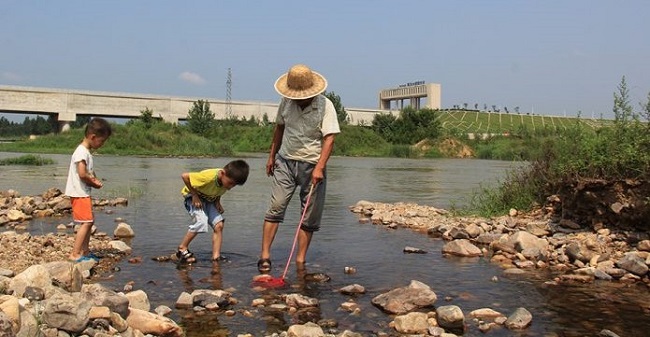
China has replenished 30 of rivers via the central route of the South-to-North Water Diversion Project.

China
A family at leisure on the central route of the Danjiangkou reservoir

The project, which began in April 2018 and is expected to take several decades to complete, is a state-run infrastructure programme to move 44.8 billion cubic metres of fresh water each year from the Yangtze River to China’s arid and industrialised northern territories via three canal systems.

The central system has so far been used to replenish several northern rivers with around 870 million cubic litres to fight water scarcity and environmental deterioration across the region. This route has alleviated water shortage in provinces and cities along its course, ensuring water users receive adequate water supply.

So far, the project has channeled 467 million cubic litres to Henan Province, along with 351 million cubic litres to Hebei Province and 47 million cubic litres to Tianjin Municipality.

Water scarcity has been identified as a problem affecting three rivers including the Baihe, Qinghe and Tuotuo, all of which have drawn supply from the diversion.

“As a major infrastructure project of national strategic importance, [the project] has not only guaranteed water supply in northern China, but also brought about huge ecological benefits,” the report said.

It added that in Henan Province, the project has replenished 18 rivers in 12 cities, including Zhengzhou, Nanyang and Jiaozuo, bringing “greater volumes of water in wetlands and reservoirs and improved water quality in the area”.

Official government figures estimate that the Xushui District grew by around 430,000 square metres since the project began, and that subsequently, the level of groundwater has risen by an average of 0.96 metres. The report concluded that as of 17 June, the central route has reach total inflows of 15 billion cubic metres at a rate of around 384 cubic metres per second.

Courtesy: The Source

India declines foreign aid for flood-ravaged state

0

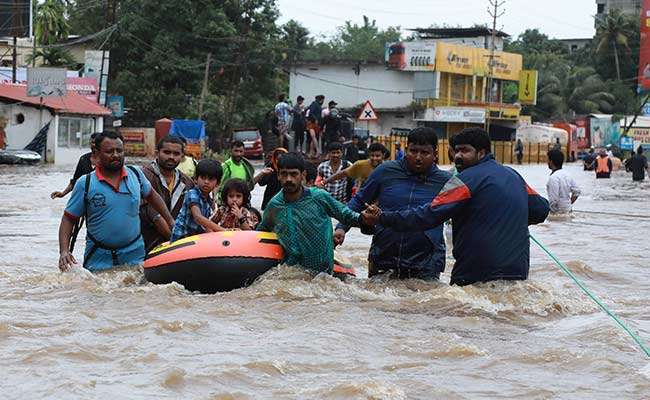
India will not accept relief assistance from foreign governments for the flood-ravaged state of Kerala, the government has said, following offers of aid from Qatar and the United Arab Emirates.

Kerala
Rescue operations in Kerala

The decision to decline foreign help drew criticism from the opposition which called for an end to the suffering of the people of the southern state hit by the worst flooding in a century, which has killed hundreds of people.

Prime Minister Narendra Modi’s government has announced assistance of six billion rupees ($85 million), compared with a request from the state for at least 20 billion rupees.

Modi has promised more aid and his government said late on Wednesday that would come through “domestic efforts”.

“The government of India deeply appreciates offers from several countries, including from foreign governments, to assist in relief and rehabilitation efforts after the tragic floods in Kerala,” the Ministry of External Affairs said in a statement.

“In line with the existing policy, the government is committed to meeting the requirements for relief and rehabilitation through domestic efforts.”

This week, the United Arab Emirates offered assistance of $100 million while Qatar offered $5 million.

Many people from Kerala live and work in the Gulf.

Torrential rain that began in Kerala on Aug. 8 killed 231 people, destroyed tens of thousands of homes, and washed away roads and bridges, leading to an estimated loss of at least 200 billion rupees ($2.85 billion).

The rain eased over the weekend as the focus of efforts turned to relief and rehabilitation from rescue.

The main opposition Congress party accused Modi of exacerbating the crisis by failing to come through with more aid and creating obstacles to foreign help.

“This decision is quite disappointing to the people of Kerala,” Congress leader and former Kerala Chief Minister Oommen Chandy wrote in a public letter to Modi.

“Rules should be such (that they) eradicate the sufferings of the people. If there exist any obstacle against the acceptance of foreign aid, kindly look into the matter seriously and bring suitable modifications.”

The foreign ministry said the government would welcome contributions to the Prime Minister’s Relief Fund and the Chief Minister’s Relief Fund from foundations, Indians living abroad and from people of Indian origin.

Kerala’s Finance Minister Thomas Isaac said on Twitter the central government should compensate the state for refusing foreign aid.

NESREA tasks producers on waste management

0

The National Environmental Standards and Regulations Enforcement Agency (NESREA) has urged producers to ensure that their process and post-consumption waste are properly managed.

Dr. Lawrence Anuka
Dr. Lawrence Anukam, Director-General, National Environmental Standards and Regulations Agency (NESREA)

The Lagos State Coordinator, NESREA, Mr Nosa Aigbedion, told the News Agency of Nigeria (NAN) on Thursday, August 23, 2018 in Lagos that proper disposal would ensure a cleaner and healthier environment.

Aigbedion said that there was need for producers to key into the Extended Producer Responsibility (EPR) programme being championed by NESREA.

He said that the EPR approach was a global best practice implemented successfully in several developed and emerging economies to deal with the environmental and health challenges of handling waste.

“The EPR, as a driving instrument, puts the responsibility on the producers to ensure that goods are not just produced, sent to the market, but that the post-consumption waste are also recovered from the public and recycled.

“We are looking at the possibility of a zero-to-landfill environment so that nothing valuable goes to the landfill in the name of waste.

“The EPR is a programme that makes the environment cleaner and healthier for all, which is the vision of the agency,” the coordinator said.

He commended the Nigeria Beverages Alliance (NBA) and the Electrical/Electronic Equipment Alliance for the progress made so far with prospective Producer Responsibility Organisations (PRO) in implementing the EPR programme.

Aigbedion urged manufacturers who have yet to key into the EPR provisions to do so, saying that it would soon be an instrument of enforcement.

“It is a win-win situation for everyone, as the environment will be cleaner and healthier and informal/formal jobs will be created in the EPR loop,” he said.

By Florence Onuegbu

Academy tasks journalists on science reporting

0

The Nigerian Academy of Science (NAS) has called for increased awareness creation on the benefits of science to facilitate support for its development and application in the society.

Prof-Mosto-Onuoha
Professor Kalu Mosto Onuoha, 18th president of the Nigerian Academy of Science (NAS)

The NAS Administrative Officer (Communications), Ms Mobolaji Dasaolu, made the call in a statement in Lagos on Thursday, August 23, 2018.

She said that such awareness informed the sustenance of the annual NAS Science Media Award established in 2010 to recognise outstanding science reporters.

“The yearly award, now in its 8th edition, seeks to promote excellence in science and science-related journalism.

“This year, the award is bigger and better as a result of collaboration with Vitafoam Nig. Plc.

“The two organisations seek to maximise the benefits of science and increase the awareness of such benefits for increased support for development and application of science.

“Entries are hereby invited for the NAS Science Award for outstanding science reporting for 2017. The award is open to all print and broadcast journalists who published science or science-related stories (health, environment, etc.) in 2017,’’ she said.

According to the official, the prize for each category consists of a plaque, money and gifts.

“Runner-up in each category wins a cash prize and a gift package from Vitafoam.

“The awards will be presented at a science award dinner on Oct. 23,” she said.

Dasaolu said that the award would open to all science journalists in Nigeria in the print and broadcast (television, radio, and online) media.

She said that interested journalists should submit three stories they published or aired from Jan. 1, 2017 to Dec. 31, 2017.

She said that the deadline for submission of entries would be Sept. 14.

“Entries for the print category should consist of a scanned copy of the original story (in PDF format) without any alteration to the content of the story published.

“Applicants should ensure that their PDF documents are clear and sharp,’’ she advised.

The official said that all entries including online journalists’ entries should include a clearly written and hyperlinked URL address.

“Screenshots of websites where stories are published are not accepted.

“TV entries should be uploaded to YouTube (www.youtube.com) and radio pieces to soundcloud (www.soundcloud.com). Applicants should provide the web links to their uploaded stories in the entry form.

“Each applicant is expected to provide a synopsis to the story submitted, 150-word biography and a 200-word piece explaining the motivation for the story on a separate sheet.

“All entries and accompanying documents should be submitted by email to mediaaward@nas.org.ng,” she said.

She advised interested journalists to download entry forms from the academy’s website: www.nas.org.ng.

By Chiazo Ogbolu

World leaders meet to discuss water crisis

0

World leaders, water and development experts, as well as other stakeholders are converging on Stockholm, Sweden, to find new, nature-based solutions to meet escalating global water crisis.

Torgny-Holmgren
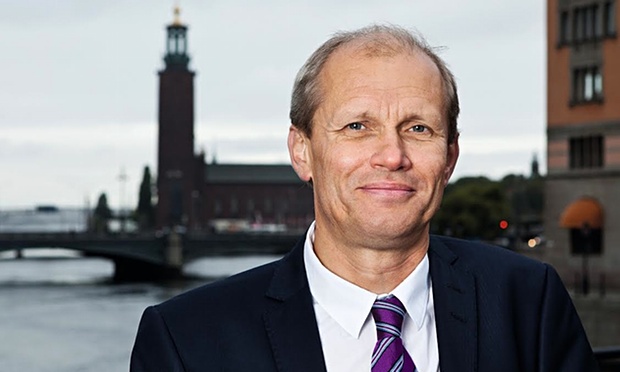
SIWI Executive Director, Torgny Holmgren. Photo credit: theguradian.co.uk

In a statement by Ms. Jens Berggren, Communications Director, Stockholm International Water Institute (SIWI), the event would be a wake-up call on the challenges that climate change, economic and population growth, and increasingly unpredictable weather and water patterns impose on global water security.

The 2018 World Water Week will be held from August 26 to 31, under the theme: “Water, Ecosystems and Human Development”, an issue of particular relevance given the past year’s many extreme weather events.

Berggren stated that the event would be a wake-up call on the challenges that climate change, economic and population growth, and increasingly unpredictable weather and water patterns impose on global water security.

“The UN expects that by 2025, 1.8 billion people will suffer from water scarcity, recent weather-related events also underline the critical role ecosystems play for human well-being and existence.

“Nature-based solutions as effective tools for human development will also be a focus of this year’s theme,’’ she said.

She added that no fewer than 3,300 participants from more than 130 countries will be attending the World Water Week, representing governments, private sector, multilateral organisations, civil society and academia.

Speakers at the opening session on Aug. 27 include Amina Mohammed, Deputy Secretary-General of the United Nations, and the 2018 Stockholm Water Prize Laureates Professors Mark van Loosdrecht and Bruce Rittmann.

SIWI is an international water institute working to solve global water challenges by improving how water is used and managed.

According to Berggren, group influences decision-makers, facilitates dialogue and builds knowledge in water issues, thereby contributing to a just, prosperous and sustainable future for all.

SIWI organises what is believed to be the world’s most important annual water and development meeting, the World Water Week, and it awards the Stockholm Water Prize and Stockholm Junior Water Prize.

The World Water Week brings together more than 3,500 participants from more than 130 countries representing governments, private sector, multilateral organisations, civil society and academia to shape joint solutions to global water challenges.

By Tosin Kolade