Home Blog Page 1804

Countries revive sustainable management of Mayombe forest

0

Angola, Congo, the Democratic Republic of the Congo and Gabon have renewed their commitment to revitalise the Mayombe Forest Transboundary Initiative. The Mayombe forest forms the southern-western margin of the Congo Basin’s tropical rainforest. It is shared between the Democratic Republic of the Congo (DRC), Angola, Congo and Gabon.
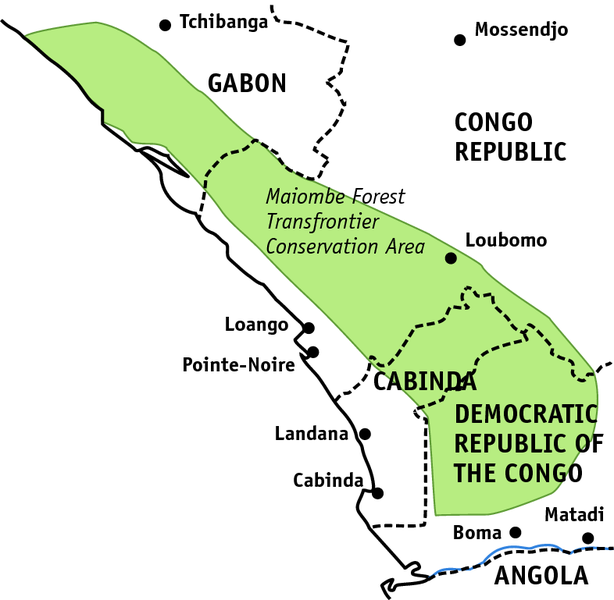
Mayombe forest
The Mayombe Forest Transboundary Initiative stretches across Angola, Congo, the Democratic Republic of the Congo and Gabon

The Mayombe forest has the largest distribution of a large variety of unique flora and fauna, including species of global importance such as the central chimpanzee, the western lowland gorilla, the forest elephant and many other species part of the Guineo-Congolian regional centre of endemism.

Despite its ecological importance, the southern part of Mayombe forest has been subjected to decades of intensive degradation, through the unsustainable use of natural resources. Communities around the forest rely on subsistence farming, small-scale husbandry, logging, poaching and fishing for their livelihood. The forest gets very little protection, which results in long-standing transboundary issues.

It’s against this backdrop that Angola, Congo, DR Congo and Gabon have agreed to cooperate to resolve these issues. The renewed commitment calls for the engagement of all stakeholders to discuss the way forward in the sustainable management and rehabilitation of the ecosystem’s integrity and biodiversity.

Since 2008, UN Environment and the International Union for Conservation of Nature (IUCN) have assisted Angola, Congo, and DR Congo to come up with a cooperation agreement for the management of the Mayombe forest transboundary ecosystem. This effort culminated in the development and approval of a transboundary management plan in 2013. Due to the lack of progress in the implementation of the plan, UN Environment brought together the parties involved during the 22nd United Nations Framework Convention on Climate Change, held in 2016 in Marrakesh (Morocco), to discuss the revitalisation of the initiative.

Pursuant to the recommendations of this first meeting, the four countries met again at the Global Environment Facility Council meeting held in Vietnam in July 2018 and agreed to:

  • officially admit Gabon to the Initiative
  • grant observer status to the Central African Forest Commission (COMIFAC)
  • task UN Environment with the revision of the current Memorandum of Understanding which will allow the admittance of Gabon and COMIFAC
  • allocate part of their Global Environment Facility STAR allocation towards the sustainable management of the Mayombe Forest Initiative
  • launch the revitalization of the initiative with the admission of Gabon in February 2019

According to the Head of UN Environment, Mr. Erik Solheim, this is a huge positive step.

Expressing his full satisfaction for this achievement, Mr. Jacques Denis TSANGA, President of the African Ministerial Conference of the Environment, Minister of Water and Forests in charge of Environment and Sustainable Development of Gabon, and Chair of the committee of Ministers on the Mayombe Forest Initiative, stated: “The desire to preserve a healthy environment for future generations is worthy. We have the responsibility to do so collectively and with the political will affirmed with our partners. At a moment when the Congo Basin has the same attention as the Amazon, we can only appreciate the convening power of UN Environment, which has managed to move us efficiently towards this huge step.”

On behalf of the Government of the Democratic Republic of the Congo, Dr. Amy Ambatobe Nyongolo, Minister of the Environment and Sustainable Development, added: “The Democratic Republic of Congo welcomes the work of the Committee of Ministers on the Mayombe Forest Transboundary Initiative, which took place in Niang, Vietnam. The results, achieved in such a short time, would not have been possible without the dynamism and persistence of UN Environment. We are grateful and count on your continued support.”
Congo approves four more experimental Ebola treatments as cases rise

0

Democratic Republic of Congo (DRC) has approved four more experimental treatments against the deadly Ebola virus, the health ministry said, as it races to contain an outbreak in its violence-torn east.

Oly Ilunga
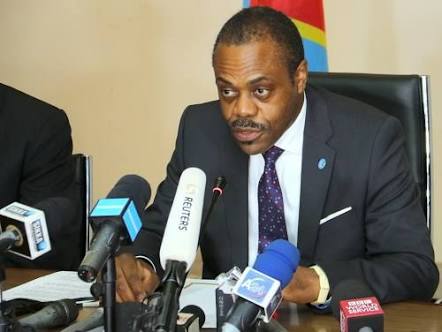
Oly Ilunga, the Congolese Minister of Health

Health authorities on Aug. 11, 2018 started administering the U.S.-developed mAb114 treatment to Ebola patients, the first time such a treatment had been used against an active outbreak.

The DRC health ministry said in a daily bulletin that the 10 patients who received mAb114 since Aug. 11 have experienced a “positive evolution”, but the outbreak has continued to grow.

The four additional treatments approved by Congo’s ethics committee are Remdesivir, made by Israel’s Gilead Sciences; ZMapp, an intravenous treatment made by San Diego’s Mapp Pharmaceutical; Japanese drug Favipiravir; and one referred to as “Regn3450 – 3471 – 3479”.

Remdesivir was administered to its first patient in the town of Beni on Tuesday, who is doing well,
the ministry said in its bulletin.

The ministry said six new cases and four new deaths have been confirmed from the haemmorhagic fever, which causes vomiting and severe diarrhea.

That brings the total number of deaths to 59 and confirmed cases to 75 since July.

Congo, whose heavily forested interior makes its a natural home for Ebola, is at the forefront of a global campaign to combat the virus, which killed more than 11,000 people when it swept through West Africa from 2013 to 2016.

The Central African country has experienced ten Ebola outbreaks since the virus was discovered in northern Congo in 1976, more than twice as many as any other country and 33 people died in a flare-up in the northwest that ended last month.

In addition, a vaccine manufactured by Merck, which proved effective against the earlier outbreak in
northwestern Congo, has been administered to 1,693 health workers and contacts of Ebola patients.

Insecurity in Congo’s eastern borderlands with Uganda has continued to complicate the response, with some contacts of Ebola patients located in so-called “red-zones”, which are off limits to emergency responders due to militia activity.

Instead, local health workers in those areas are monitoring the contacts and no Ebola cases have
yet been confirmed there.

Uganda opens Ebola treatment units at border with DRC

0

Uganda has opened two Ebola treatment units in the border districts with the Democratic Republic of Congo (DRC), a World Health Organisation (WHO) official said.

Yonas Woldemariam
Yonas Woldemariam, WHO Representative in Uganda

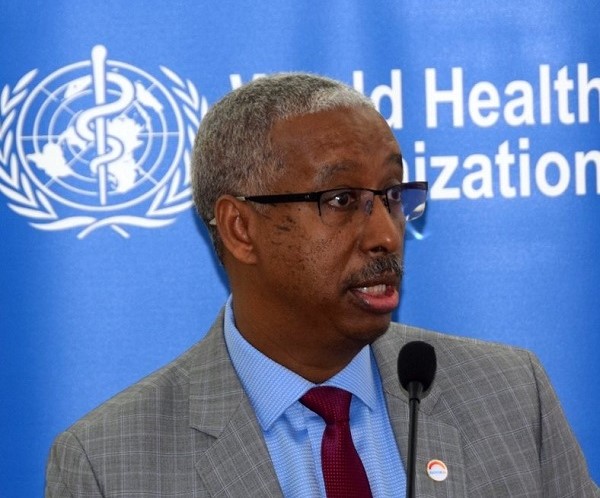
Yonas Woldemariam, WHO Representative in Uganda, told Xinhua that the two treatment units have been established in the western border districts of Kasese and Bundibugyo to respond to any deadly Ebola hemorrhagic fever alert case or outbreak.

He said the units are fully equipped and ready to manage any Ebola case in the east African country.

“Ebola Treatment Units are where patients can get the best care possible – with access to rehydration methods and protection from infecting their family and community,” said Woldemariam.

Although there is no confirmed Ebola case in Uganda, the country remains on high alert following an outbreak of the hemorrhagic fever in neighbouring DRC.

A WHO situation report dated Aug. 20 said of the 59 deaths from the hemorrhagic fever in the DRC, 32 were confirmed and 27 were probable.

The Ebola virus is highly contagious and can cause a range of symptoms including fever, vomiting, diarrhea, generalised pain and in many cases internal and external bleeding.

Mortality rates of Ebola fever, according to WHO, are high, with the human case  fatality rate ranging from 50 per cent to 89 per cent, depending on viral sub-type.

Stalling summer weather: From sunny days to heat waves, wildfires

0

Be it heavy downpours or super-hot spells, summer weather becomes more persistent in North America, Europe and parts of Asia. When those conditions stall for several days or weeks, they can turn into extremes: heatwaves resulting in droughts, health risks and wildfires; or relentless rainfall resulting in floods.

California wildfires
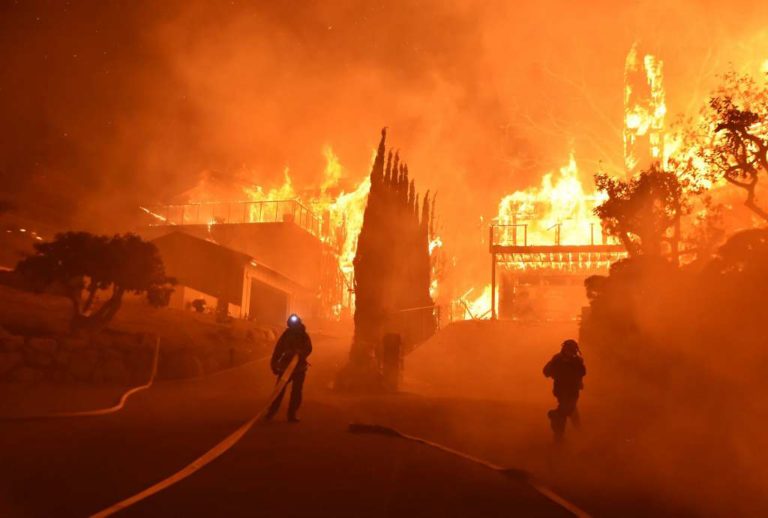
Firefighters work to put out raging flames in California. Photo credit: Ventura County Fire Department

A team of scientists now presents the first comprehensive review of research on summer weather stalling focusing on the influence of the disproportionally strong warming of the Arctic as caused by greenhouse-gas emissions from burning fossil fuels.

Evidence is mounting, they show, that we likely meddle with circulation patterns high up in the sky. These are affecting, in turn, regional and local weather patterns – with sometimes disastrous effects on the ground. This has been the case with the 2016 wildfire in Canada, another team of scientists show in a second study.

“Giant airstreams encircle our globe in the upper troposphere – we call them planetary waves,” explains Hans Joachim Schellnhuber, Director of the Potsdam Institute for Climate Impact Research (PIK) and co-author of the second paper. “Now evidence is mounting that humanity is messing with these enormous winds. Fueled by human-made greenhouse-gas emissions, global warming is probably distorting the natural patterns.”

Usually the waves, conveying chains of high- and low-pressure domains, travel eastwards between the equator and the North Pole. “Yet when they get trapped due to a subtle resonance mechanism,” says Schellnhuber, “they slow down so the weather in a given region gets stuck. Rains can grow into floods, sunny days into heat waves, and tinder-dry conditions into wildfires.”


Investigating the Arctic Factor and connecting the dots

“While it might not sound so bad to have more prolonged sunny episodes in summer, this is in fact a major climate risk,” says Dim Coumou from the Potsdam Institute for Climate Impact Research (PIK) and Vrije Universiteit Amsterdam, lead-author of the review paper and co-author of the wildfire case study. “We have rising temperatures due to human-caused global warming which intensifies heat waves and heavy rainfall, and on top of that we could get dynamical changes that make weather extremes even stronger – this is quite worrying.”

This summer is an impressive example of how stalling weather can impact societies: persistent hot and dry conditions in Western Europe, Russia and parts of the US threaten cereal yields in these breadbaskets.

Tons of studies have appeared on this topic in recent years, sometimes with seemingly conflicting results. For the paper now published in Nature Communications, an international team of scientists set out to review the existing research and tried to connect the dots, with a focus on the Arctic factor. Under global warming, the Arctic warms more than the rest of the Northern hemisphere. This reduces the temperature difference between the North Pole and the equator, yet this very difference is a main driving force for the airstreams.

“There are many studies now, and they point to a number of factors that could contribute to increased airstream stalling in the mid-latitudes – besides Arctic warming, there’s also the possibility of climate-change-induced shifting of the storm tracks, as well as changes in the tropical monsoons,” says Simon Wang from Utah State University in the US, a co-author of the review paper.

“Under global warming, the Indian summer monsoon rainfall will likely intensify and this will also influence the global airstreams and might ultimately contribute to more stalling weather patterns. All of these mechanisms do not work in isolation but interact,” says Wang. “There is strong evidence that winds associated with summer weather systems are weakening and this can interact with so-called amplified quasi-stationary waves. These combined effects point towards more persistent weather patterns, and hence more extreme weather.”


The case of the Canadian wildfire disaster

The wildfire in Canada’s Alberta region in 2016 is one stark example for the potentially disastrous impact of planetary-waves slow-down and the resulting summer-weather stalling. In a study now published in Scientific Reports, the other research team shows that indeed the blaze has been preceded by the trapping of a specific kind of airstreams in the region. In combination with a very strong El-Nino event this favored unusually dry and high-temperature conditions on the ground, entailing an increased fire hazard here.

It took two months before the officials eventually could declare the fire to be under control. This is said to be the costliest disaster in Canadian history with total damages reaching 4.7 billion Canadian Dollars.

“Clearly, the planetary wave pattern wasn’t the only cause for the fire – yet it was an additional important factor triggering a deplorable disaster,” says Vladimir Petoukhov from PIK, lead-author of the case study. “In fact, our analysis reveals that beyond that single event, actually from the 1980s on, planetary waves were a significant factor for wildfire risks in the region. Since it is possible to detect the wave patterns with a relatively long lead-time of ten days, we hope that our findings can help forest managers and fire forecasters in the future.”


A phenomenon that sounds funny but isn’t: “extreme extremes”

“Computer simulations generally support the observations and our theoretical understanding of the processes, so this seems pretty robust,” concludes Coumou. “However, the observed changes are typically more pronounced than those seen in climate models.”

So, either the simulations are too conservative, or the observed changes are strongly influenced by natural variability.

“Our review aims at identifying knowledge gaps and ways forward for future research,” says Coumou. “So, there’s still a lot to do, including machine learning and the use of big data. While we do not have certainty, all in all the state of research indicates that changes in airstreams can, together with other factors, lead to a phenomenon that sounds funny but isn’t: extreme extremes.”

UN remembers Kofi Annan

0

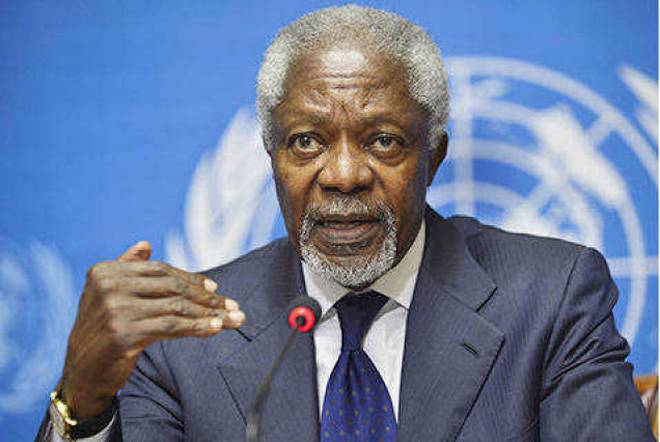
The Secretary-General of the UN, Antonio Guterres, and staff members remembered former Secretary-General Kofi Annan on Wednesday, August 22, 2018, describing him as a leader who put people at the centre of the UN work.

Kofi Annan
Kofi Annan

During a wreath-laying ceremony in New York, Guterres led staff members in paying respects to Annan, whom they described as the embodiment of the intergovernmental organisation that worked to improve the lives of men and women worldwide.

Kofi Annan died on Saturday at the age of 80 in Bern, Switzerland.

Annan, a mild-mannered diplomat from Ghana, rose through the UN system to become its seventh leader in January 1997, serving two consecutive five-year terms till December 2006.

“Kofi Annan’s years in office were an exciting time. He put forward new ideas. He brought new people into the United Nations family. He spoke passionately about our mission and role.

“He created a renewed sense of possibility both inside and outside our organisation about what the UN could do and be for the world’s people.

“His most defining features were his humanity and solidarity with those in need.

“He put people at the centre of the work of the United Nations and was able to turn compassion into action across the UN system,’’ Guterres said.

He listed some of the actions Annan took to include uniting world leaders to agree global targets on poverty and child mortality – linchpins of the landmark Millennium Development Goals.

“The former UN chief also joined with civil society and the healthcare injury to save lives from HIV and AIDS.

“As his successor noted, Annan also did not shy away from addressing challenging issues.

“Annan faced up to the grave errors made by the United Nations in the 1990s – in its response to the Rwanda genocide and the Srebrenica killings – by shining a light inside the UN.

“The reports he commissioned aimed to make sure such terrible mistakes are never repeated and set the international community on a new course in its response to mass atrocities,” Guterres said.

Guterres stated that the passing of his predecessor was “a personal loss’’ for many who worked in the UN system.

While the UN flag outside headquarters was flown at half-mast for three days following the announcement of Annan’s death, staff members have been filling a book of condolences with expressions of sympathy to his wife, Nane, and family.

Many UN personnel also have been sharing their memories of a man who they described as “wise yet humble, courteous and charming’’.

By Prudence Arobani

With political will, Nigeria can succeed in cleaning up Niger Delta – Babarinde

0

Nigeria has had its fair share of environmental degradation in the Niger Delta in form of gas flaring and oil spillage, no thanks to crude oil exploration activities by multinationals in the restive region. Pretoria, South Africa-based Nigerian civil engineer and environmentalist, Bola Babarinde, who is involved in the promotion of the Bluestream environmental management products, says that Bluestream can play a vital role in assisting the nation in cleaning up polluted areas and addressing the challenge environmental degradation, if given the opportunity. But he wants the authorities to adopt a political will to be able to do so

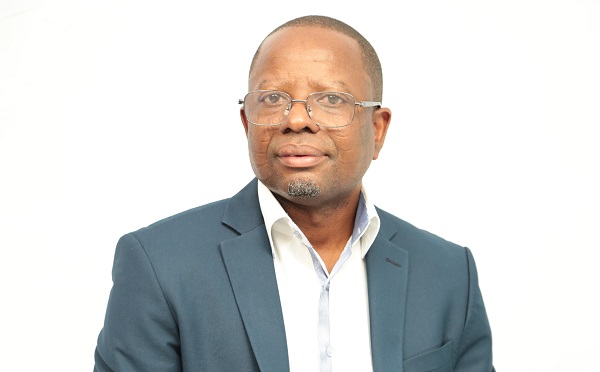
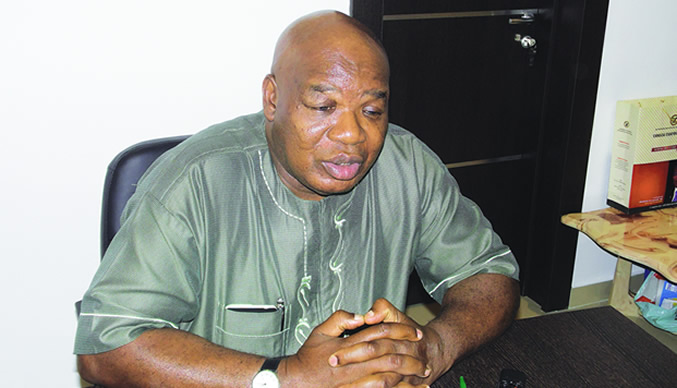
Bola Babarinde
Bola Babarinde

Tell us about yourself, the Bluestream products, and your involvement in the business 

My name is Bola Babarinde, an enginner and a business man with interest in construction, commodities, import/export, renewable energy and green solutions which assist our environment.

Bluestream products are mainly environmentally acceptable products which include but not limited to bio-degradable degreasers and cleaners and soil remediation. I am a director of Delta Partners, a company that brought the products to Nigeria from South Africa. We are in partnership with reputable companies as our Nigerian operators, such as Enquot Nigeria Limited, champions soil remediation sales and services while we are in discussion with Nigerian Clean services on sewage and cleaning services products.


What is the source of origin of these products, and how effective are they?

This is a South African invention and 100% green; very effective with testimonies from reputable international companies as clients. You can get more infomation on Bluestream website.


How environment friendly are your cleaners, degreasers and bio-digesters, in the light of the fact that some of these products are not without side effects upon application?

All our products range are natural microbial-based with great value to the environment. We can assure you of no side effect of any of our products, as they are specifically developed to avoid use of chemicals.


We’ve heard of cases of crop failures and other negative impacts after the application of products like weed killers as well as crop bio-fortification. How effective and safe are the Bluestream soil remediation products?

It is simple and safe to use Organic SoilFix Liquid because of their non-toxic, non-abrasive, non-carcinogenic and non-volatile. They are produced from a natural waste product from the cotton industry. Organic SoilFix contains over five billion CFU’s Colony Forming Units per gram.


Nigeria has in its oil-rich Niger Delta region been experiencing large scale environmental degradation because of reoccurring oil spillage. A United Nations Environment Programme (UNEP) report has recommended an extensive clean-up of polluted land, wetlands and water bodies. What is your impression of this situation, how can it be permanently resolved, and what role can Bluestream, through products such its biodegradable degreasers and cleaners, play in this regard?

This problem unfortunately has been a scourge for oil producing areas for so many years, and past governments showed little or no commitment for the clean-up which was rather unfortunate. There must be a political will to address this matter. There is also the issue of corruption where monies are voted for the clean-up but eventually end up in individual pockets. This should be addressed by the present Federal government in collaboration with relevant stakeholders.

There must be a renewed vigour to do the right thing for the people of Niger Delta, they deserve better. We may not be interested in dealing with government directly because of bureaucracy but we can work with our partner such as Enquot to assist in championing the project if we are approached. Government agencies are difficult to work with it due to complex bureaucracy. However, we are ready to assist if there is an enabling environment.


How affordable are your products, especially to small and growing businesses on the African continent?

The principal contributor to cost is insitu treatment of contaminated soil, which makes overall cost more than 50% cheaper compared to transporting the contaminated soil to treatment site and brought back after completion of treatment. In fact, we can save up to 75% of present cost of remediation method being adopted.


How long have you been in operation in Nigeria, and what projects have you undertaken in the country?

We are new in Nigeria, and we just signed an MOU with Enquot Nigeria Limited and undergoing product registration process with relevant government departments for approval. But I believe if there are opportunities Enquot will not hesitate to work on it as they are the sole representative for Soil Remediation Bluestream products in Nigeria.

West Africa moves to tackle vector-borne diseases

0

Bothered by the threat posed by vector-borne diseases to the socio-economic development of the region, West African countries have adopted a campaign by which to address the worrisome trend.

Aedes aegypti
The mosquito, a malaria vector

Vector-borne diseases, especially malaria, have continued to pose a health threat to the West African region, which is home to about 365 million people. High morbidity from malaria is said to be contributing to loss of productivity, which officials say has negatively impacted the region’s economy.

In an apparent recognition of this threat, the region has commenced moves towards establishing a West Africa Integrated Vector Management (WA-IVM) Programme which, according to the promoters, will strengthen vector control through increased inter-sectoral collaboration, capacity building and improved surveillance.

To kick off the process of establishing the WA-IVM Programme, a regional meeting of key stakeholders from Economic Community of West Africa States (ECOWAS) Member States was convened in Accra, Ghana from August 15 to 17, 2018 to discuss the modalities for the successful take-off of the programme.

Delegations comprised heads of health and environmental regulatory agencies, communicable disease managers and members of national ethics committees from Benin, Burkina Faso, Cabo Verde, Côte d’Ivoire, The Gambia, Ghana, Guinea Conakry, Liberia, Mali, Niger, Nigeria, Senegal, Sierra Leone and Togo. Representatives from NEPAD Agency, WAHO, Bill and Melinda Gates Foundation also graced the occasion.

Besides agreeing on the scope and approach for rolling out the WA-IVM Programme using malaria as a pathfinder disease and gene drive as pathfinder technology, participants likewise sought to identify needs and requirements of regulators and other stakeholders that will facilitate operationalisation of an IVM Programme in the ECOWAS region.

They also attempted to determine governance structure for the WA-IVMP, as well as consider for adoption a five-year workplan for the WA-IVM Programme.

At the close of discussions, delegated resolved that the WA-IVM programme be established with the aim of bringing together regulators from health and environment, and members of ethics committees to regulate vector management approaches on a collaborative platform.

While acknowledging that high level decisions have been made at the African Union and ECOWAS level on the need for the development and regulation of existing and emerging vector management approaches, the meeting agreed that the WA-IVM programme should develop necessary tools that can be used for regulating vector control approaches using gene drive as a pathfinder technology.

Considering the variation in technical expertise and capacity levels among Member States in the region, the gathering agreed that the WA-IVM programme will have a strong component of capacity strengthening as part of its activities. This will include training programmes and development of SOPs and guidelines.

The meeting also agreed on the overall governance structure which will in principle comprise of ECOWAS Ministerial Council on Health, WA-IVM Steering Committee, Technical Working Groups (TWGs) and a Secretariat.  The WAHO, on its part, will serve as the Secretariat of the WA-IVMP and NEPAD will support WAHO to fulfil this role.

Participants also considered and endorsed the WA-IVMP workplan for the period of 2018-2023, even as they called on WAHO and NEPAD Agency to support the operationalisation of the workplan.

The meeting further emphasised the importance of operationalising the regional platform and encouraged countries to strengthen their national IVM programmes which will serve as a foundation for the regional platform.

While noting the commendable progress that has been made in developing a regional platform for Medicines Regulatory Harmonisation (MRH), it was recommended that the WA-IVM process should play a catalytic role of strengthening the environmental and agricultural regulatory agencies at regional and continental level.

Participants also called for the preparation of a communication plan and messaging about the WA-IVM Programme and technologies, while incorporating public awareness programme activities in the work plan.

Seven years after attack, Abuja UN building yet to resurrect

0

Seven years after the UN building in Abuja was hit by insurgents in which 21 persons died, the reconstruction of the building has been shrouded in controversy.

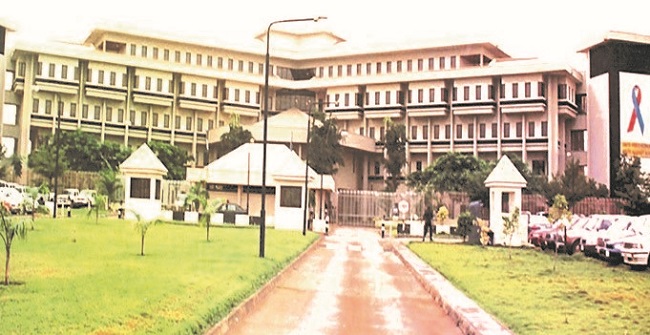
UN House Abuja
The UN House in Abuja before the attack

The building, located in the Central Business District of the Federal Capital Territory, Abuja, is home to all the UN agencies in Nigeria, many of which are still operating from different locations since the Aug. 26, 2011 attack.

On that day, at about 11 a.m., a car loaded with explosives broke through two security barriers and a driver detonated the bomb after crashing it into the UN reception area.

The bomb caused devastation to the building’s lower floors which is the headquarters for about 400 UN employees.

The then Minister of State for Foreign Affairs Viola Onwuliri, described the attack as “not attack on Nigeria but on the global community; an attack on the world.’’

Also, the then UN Secretary-General, Ban Ki-moon, described the attack as an “assault on those who devote themselves to helping others.”

Shortly after the attack, the Federal Government promised that it would renovate and reconstruct the building within the period of six months after the incident.

Similarly, four years after the bombing, the Federal Capital Territory Administration (FCTA), reassured Ki-moon, who was on a visit to Nigeria that the Federal Government would hand over the renovated UN building as promised.

Corroborating the Federal Government’s promise, Mr John Chukwu, the Permanent Secretary, FCTA, said that the UN had sorted out all grey areas at meetings with UN experts.

Further to this, in 2017, while signing FCTA/UN 2017 Annual Work Plan, FCT Minister, Muhammad Bello, also promised to complete the reconstruction and hand over the building before the next anniversary of the UN.

Bello, who described the signing ceremony as a very important milestone in the relationship between the FCTA and the UN, said that speedy reconstruction of the building would be recognition of the UN commitment to doing good works in the FCT.

He promised that adequate budgetary provisions would be made in the 2017 budget to accelerate the realisation of set targets and bridge the deficiency gaps in performance in the previous years.

He said that the Federal Government also approved N6, 972, 986, 898 billion for the contract for the provision of security equipment and associated infrastructure, including furnishing for UN building.

“The UN building was bombed in August 2011 by terrorists that almost destroyed the entire building as well as led to the loss of lives.

“At that time, as part of Nigeria’s commitment to the ideals of UN and the support and also as reciprocation of what the UN has done for this country over the years, the government decided to reconstruct the UN building,’’ he said.

He said that the contract was awarded to the main contractor that constructed the building – Julius Berger Nigeria Plc.

According to him, the scope of the contract is to provide the latest level of security parameter fencing that is capable of withstanding bomb blast as well as fortifying gates to the highest international standards.

He explained that it would also include the creation of three police posts including the installations of body scanners, baggage scanners as well as the installation of close circuit television across the internal and external portions of the building.

“So, all these will be done within a period of 13 months, hopefully by which time the UN will move to its office, the agencies in it will be able to operate from one location under fortified security that is up to the standard that the UN is used to,’’ he stated.

However, on June 20, President Muhammadu Buhari while signing the 2018 budget noted that lawmakers made cuts amounting to N347 billion in the allocations to 4,700 projects he submitted for consideration.

He observed that additional security measures for the UN building; the provision for rehabilitation and additional security measures for the UN building by the FCT was affected by the cut.

Buhari who expressed his displeasure said that the cut would make it impossible for the Federal Government to fulfill its commitment to the UN on the project.

But Mr Tony Odigie, Director, Public Building, Federal Capital Development Authority, said that what remained in the building was installation of security apparatus.

He said the contractor – Julius Berger Nigeria Plc. – had already moved into the site for the contract for the provision of security equipment and associated infrastructure, including furnishing for the building.

Odigie promised that FCDA was going “compress’’ the work, in order to meet the deadline.

Observers note that for almost seven years after the killing of some people and destruction of the building, the staff members of the UN have been operating in rented buildings Abuja.

They, therefore, call for urgent attention on the speedy completion of the building.

By Sadiya Hamza

Germany pledges up to €340m in farm aid after drought

0

The German Government will launch a special aid programme worth up to €340 million euros to help farmers after this summer’s drought massively damaged harvests, Agriculture Minister, Julia Kloeckner, said on Wednesday, August 22, 2018.

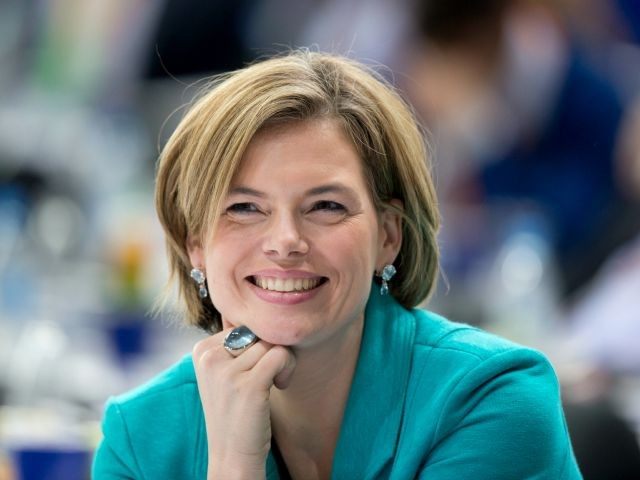
Julia Kloeckner
German Agriculture Minister, Julia Kloeckner

Kloeckner said she had agreed special federal government drought aid of between €150 million and €170 million ($172 million and $194 million) with German Finance Minister, Olaf Scholz.

Along with additional aid from German regional state governments, farms should receive a total of about €340 million in aid, Kloeckner said in a statement.

The association of German farmers DBV has called for around one billion euros in special aid to help farmers after huge crop losses this summer.

German crops wilted under the highest summer temperatures since 1881 and prolonged dryness.

EU wheat prices hit five-year highs in August on concern about supplies.

Germany’s 2018 grains harvest is likely to fall by about 22 per cent this year after the heatwave and drought, the DBV said on Wednesday.

Dairy farmers were especially suffering from reduced crops of feed grains, straw and hay, the DBV said.

Dairy farmers were being forced to reduce their herds because of high feed costs, sending more cattle to slaughter.

I declare this year’s period of dryness to be a weather event with a national impact,” Kloeckner said.

If the existence of farms is threatened, they will qualify for special aid, Kloeckner said. It was believed that the existence of about 10,000 farms was under threat, or about one in every 25 in Germany.

It is vital that farms facing closure receive aid as fast as possible, she added. Farms must have suffered a loss of earnings of at least 30 per cent.

Lagos opens new transfer loading stations to address waste disposal challenges

0

The Lagos State Government says it has opened two more Transfer Loading Stations (TLS) for effective waste management.

Babatunde Durosimi-Etti
The Lagos State Commissioner for Environment, Mr Babatunde Durosimi-Etti

Mr Adebola Shabi, the Special Adviser on Cleaner Lagos Initiative (CLI), told the News Agency of Nigeria (NAN) on Wednesday, August 22, 2018 that the two loading stations are located at Odaleke and Agunlejika areas of the state.

TLS is a building or processing site for waste before they are taken to the engineered landfills where waste materials are buried.

It is an integral part of the waste management treatment infrastructure chain.

Shabi said the recently created stations has increased the number of functional loading stations in the state to five.

According to him, TLS will hasten the turn-around time for waste collectors, thereby ensuring a cleaner Lagos.

“The government has reopened the landfill at Abule-Egba to enhance waste management.

“So, in the last two weeks, we have opened two loading stations and a landfill, and we are still looking for sites to open for more landfills in Igando and Isheri-Olofin areas.

“We are working to ensure that the environment is clean. If these five TLS are working efficiently, there will be no waste on the streets,” Shabi said.

Waste management, he said, was usually a population growth challenge, particularly with the tonnes of waste generated daily in Lagos State.

The special adviser disclosed that Lagos with a population of about 24 million, generates over 20,000 tonnes of waste on a daily basis.

“In the past, only Epe and Ewu Elepe landfills are functioning, and the distance from Lagos metropolis down to these landfills is far.

“When you talk about waste management law, you do not have to travel far because of the environmental and health impacts.

“By the time you allow trucks to travel far, leachate (liquid) from the waste drips on the roads which affect the asphalt and damage the roads.

“Also, the stench or odour that comes from the waste is not good for human health and so the transfer loading stations help to process the waste before being taken to the landfills,” Shabi said.

By Florence Onuegbu