A disagreement in the areas impacted by an oil leak on the Trans Ramos Pipeline within Shell’s oilfield at Aghoro communities in Bayelsa State has stalled a joint investigation of the spill.
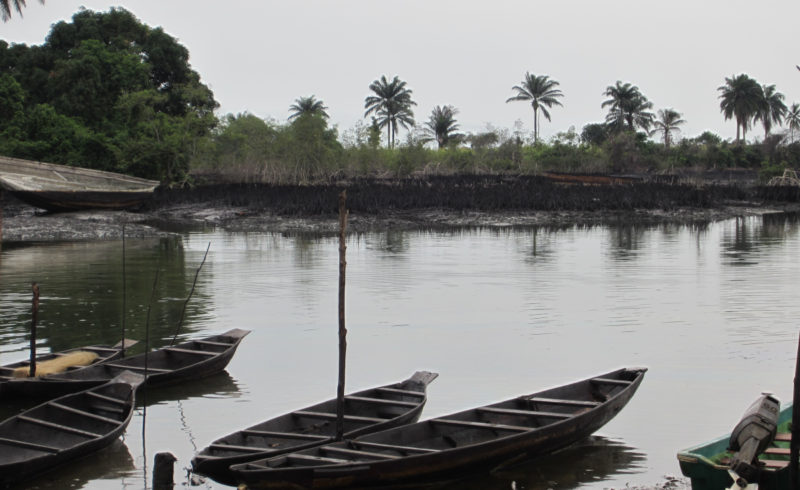
A water body in the Niger Delta polluted by crude oil
The News Agency of Nigeria (NAN) reports that the leak, which occurred on Thursday, May 17, 2018, discharged a yet-to-be ascertained volume of crude oil into the environment and polluted the river, farmlands and surroundings.
Shell said a Joint Investigative Visit (JIV) to ascertain the cause of the oil leak had been concluded but that the report was yet to be signed by all the parties.
Mr Bamidele Odugbesan, Media Relations Manager at SPDC, told NAN on Saturday, August 25, 2018 in Yenagoa, the state capital, that the joint investigation was conducted by the oil major, representatives of the host community, government and regulatory agencies.
Odugbesan, however, said that report of the JIV, which commenced early last month, was ready and awaiting signing by the communities but declined to give reasons for the delay in releasing the JIV report, adding that the oil firm had commenced clean up of impacted sites.
The JIV report is expected to unravel the cause of the spill, volume of oil discharged, and the area adversely impacted, and volume of oil recovered in the spill incident as well as serve as a basis to determine compensation.
NAN learnt that Shell and representatives of the host communities had a sharp disagreement on the size of areas affected by the spill and hence refused to sign the report, which had disrupted ongoing clean up of the site.
Mr Sunday Benjamin, Chairman, Community Development Committee, Aghoro 1, who participated in the JIV, said that the communities had argued that the spill had spread to wider areas and affected more places than the JIV covered.
“The cause of the stalemate is that Shell refused to accommodate satellite communities. They did not allow the JIV to be extensive. They excluded the satellite communities and fishing settlements.
“They only captured Aghoro 1 and 2, leaving other fishing settlements impacted by the crude oil that leaked into the waters. They recorded 33 acres for Aghoro 1 and 113 acres for Aghoro 2.
“We eventually signed our portion because we did not want delays in the process and our land affected was not much but Aghoro 2 people refused to sign that is why the JIV report is delayed.
“Everyone agreed that the spill was traced to ruptured pipeline on three points, due to corrosion on the Trans Ramos Pipeline,” Benjamin said.
Reacting to the development, Dr Peter Idabor, Director-General of the National Oil Spills Detection and Response Agency, said that the JIV was “inconclusive”, following the disagreements.
“From the feedback from our officers in Yenagoa, the JIV is inconclusive,” Idabor said.
The Director, Highways, Bridges and Designs in the Federal Ministry of Works, Mr Adetokunbo Sogbesan, said on Saturday, August 25, 2018 in Lagos said that the Carter Bridge is structurally okay and safe for use.
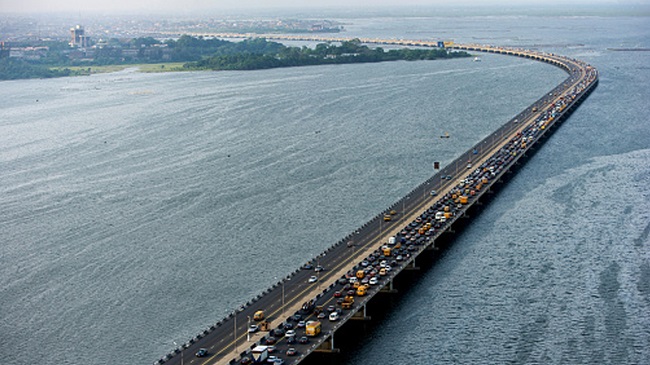
Third Mainland Bridge
The News Agency of Nigeria (NAN) reports that a portion of the outer walls of the bridge outbound Iddo link road was dented.
Sogbesan told journalists during an inspection of the bridge that some tests had been conducted and that the bridge is structurally okay and safe for use.
He said vehicles carrying excess load beyond the headwall of the bridge had knocked off outer slabs meant to beautify the bridge.
He explained that the beams of the bridge had hollows which were covered by slabs but that vehicles carrying loads beyond their headroom pulled off some outer covering of the bridge.
“We are here to allay the fears of Lagosians about the Carter Bridge. This bridge was commissioned in July 1958, that is, over 60 years ago.
“And it was constructed by Borini Prono Nigeria Ltd. The method of construction used is that the beams have hollows.
“The hollows are spaces. The structurally stability of the bridge both longitudinal and diagonal beams are structurally okay but for aesthetics measures the beams were covered with reinforced walls.
“It is the walls that are broken. We have been here before to examine and inspect the bridge and we are to confirm that structurally, the bridge is okay,” Sogbesan said.
Sogbesan also said that barricades would be put on Iddo link road where the problem occurred to ensure that only cars and buses use the road to avert damage to the bridge.
According to the director, the link road was originally built by Lagos State Government to allow cars and buses pass through the Third Mainland and Carter bridges to the Island.
Sogbesan warned all illegal occupants encroaching under the bridge to quit, saying they will soon be evacuated.
“All illegal occupants under this bridge must leave, the abuse on this bridge to stop.
“We will start enforcement immediately, we would issue notices and we are going to enforce it. We are going to evict every illegal occupant under the bridge. We don’t want abuses on the bridges again.
“We must move them out and we are going to collaborate with Lagos State,” he said.
Mr Gainrranco Albertazzi, Joint Managing Director, Borini Prono, who confirmed that the bridge was constructed by the firm in 1958, saidthe Carter Bridge was not damaged.
“It is only the damage done by a vehicle carrying some loads that should not have passed through the bridge, but the main beam is structurally intact.
“What has been touched is the cover which is of a small thickness which is not too important.
“More so, this first beam is only carrying the pedestrian lane, it is not carrying any vehicular traffic,” he also told journalists.
He said there was no cause for alarm as the bridge’s slab could easily be replaced.
He stressed the need to speed up the construction of the barricades to stop further damage beyond the slabs.
The Federal Controller of Works, Lagos State, Mr Adedamola Kuti, said a task force was being set up to dislodge illegal occupants under all the bridges in Lagos.
“We are going to evict illegal occupants of our infrastructure.”
While inspecting the Third Mainland Bridge, he said significant progress had been made on the testing of the expansion joints.
Kuti said: “We have gone very far, we have made appreciable progress as far as this investigative test is concerned.
“We have made substantial progress; our target is that tomorrow (Sunday) we will make the Third Mainland Bridge accessible.”
The News Agency of Nigeria (NAN) reports that workmen moved some equipment and censors on the bridge as they tested the expansion joints with security agents guarding the bridge on all sides.
However, youths and children used both carriageways on the Owonronsoki end of the bridge that has been barricaded to play football.
The 11.8km bridge was closed to traffic on Aug. 24 for investigative maintenance tests and it is expected to be reopened to traffic on Sunday, Aug. 26.
Chairman, Uvwie Local Government Area of Delta State, Mr Tega Onoyake, has warned residents in the area against their poor attitude toward the monthly environmental sanitation.
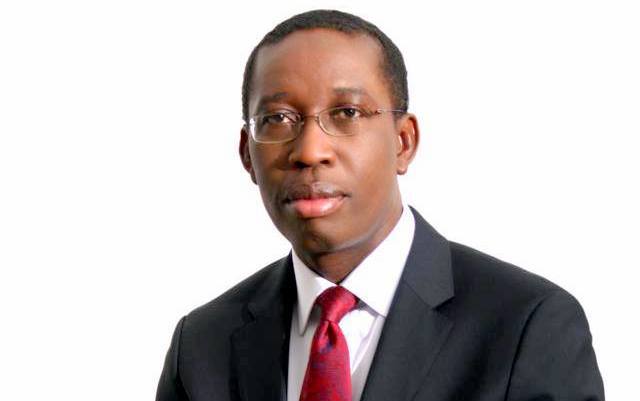
Governor Ifeanyi Okowa of Delta State
Onoyake gave the warning shortly after the sanitation exercise on Saturday, August 25, 2018 in Uvwie that lasted till 4 p.m.
The chairman, who expressed displeasure over the poor response of the people to the monthly exercise, said that, henceforth, defaulters would be penalised.
Onoyake, consequently, issued residents of Jakpa a two-day ultimatum to clean their environment or face the full wrath of the law.
He said a Special Task Force had been constituted to enforce the law with the support of Mobile Courts during the exercise.
“I am really disappointed with what I saw today. The residents see environmental hours as time to rest at home.
“I discover that from the 7 a.m to 10 a.m the commercial shops were locked. Just 10:05 a.m, all shops were reopened for the day’s activities leaving their environment dirty.
“If you refuse to clean your premises then the Special Task Force will do that for you. Then, you pay a huge fine to the Task Force or go to jail.
“We are giving the residents of Jakpa between now and Monday to clean their premises, failure by Tuesday the Special Task Force will come out fully and clear it, then they will be sanctioned,” he said.
The chairman said it was not the duty of the Council to clean the homes of the residents and appealed to them to change their attitude.
The Benue State Environmental Sanitation Agency (BENSESA) on Saturday, August 25, 2018 arrested no fewer than 500 Makurdi residents for allegedly defaulting in the state’s monthly sanitation, the News Agency of Nigeria (NAN) reports.
Benue State governor, Samuel Ortom
General Manager of BENSESA, Mr Andrew Chile, who confirmed the arrests, told NAN that the defaulters would be charged to the state’s Environmental Sanitation Court.
Chile lamented the poor attitude of residents to sanitation issues, warning that it would no longer be business as usual and that arresting, and prosecuting of offenders had commenced in full force.
He explained that the approach of ensuring clean environment adopted in the past did not yield positive results hence the need to introduce punitive measures such as heavy fines or imprisonment to serve as deterrents.
A NAN correspondent, who monitored the sanitation reported that some areas, including Wadata, North Bank, Wurukum, Kashim Ibrahim Way, Welfare Quarters, Kanshio, Barracks and Modern Market Roads, witnessed low turnout of residents.
However, at Gboko Road, High Level and George Akume Way, residents were seen clearing their surroundings and drainage channels while others were cutting over-grown weeds and grasses.
Speaking to NAN, two residents, Mr Tersoo Aho and Mr Mnena Vugh, who were seen participating in the cleaning, said they always used the period to engage in thorough cleaning of their surroundings.
Hawai’i University researchers report the unexpected discovery that the most common plastics emit traces of methane and ethylene when exposed to sunlight
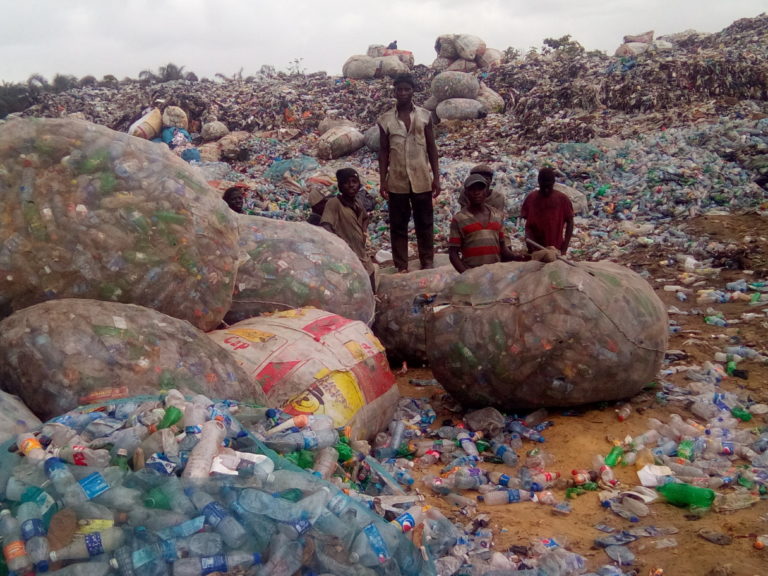
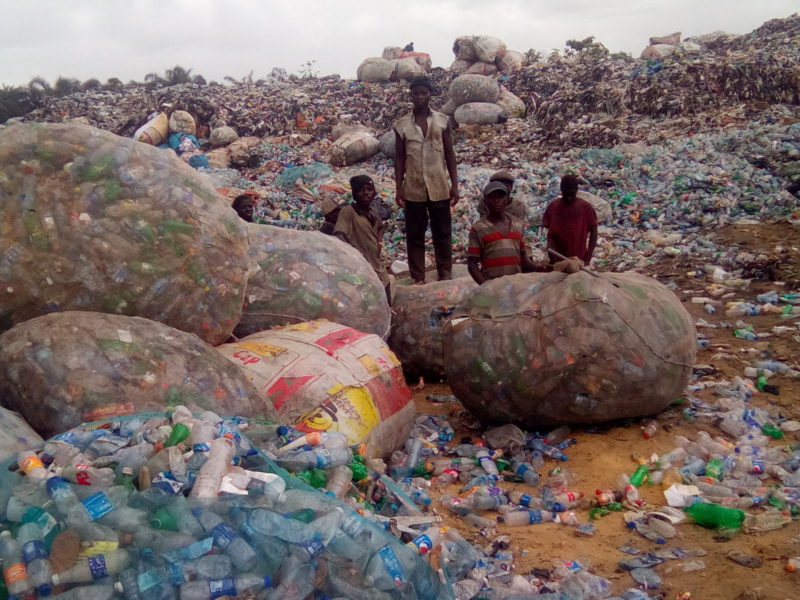
Plastic bottle scavengers and their wares at the Epe Landfill Site/EcoPark in Lagos, Nigeria
Authors of a study conducted at Hawai’i University recently reported another good reason to redouble global efforts to beat plastic pollution: as plastics decay, they emit traces of methane and ethylene, two powerful greenhouse gases, and the rate of emission increases with time.
The emissions occur when plastic materials are exposed to ambient solar radiation, whether in water or in the air, but in air, emission rates are much higher.
The researchers tested polycarbonate, acrylic, polypropylene, polyethylene terephthalate, polystyrene, high-density polyethylene and low-density polyethylene – materials used to make food storage, textiles, construction materials and various plastic goods.
“Low-density polyethylene emits these gases when incubated in air at rates about two times and 76 times higher than when incubated in water for methane and ethylene, respectively,” says the study.
“Our results show that plastics represent a heretofore unrecognised source of climate-relevant trace gases that are expected to increase as more plastic is produced and accumulated in the environment,” the study concludes.
Plastic bags are the most harmful
Ethylene is widely used in the chemical industry and its worldwide production (over 150 million tons in 2016) exceeds that of any other organic compound. Much of this production goes towards polyethylene. Polyethylene, used in shopping bags, is the most produced and discarded synthetic polymer globally and was found to be the most prolific emitter of methane and ethylene.
Over the past 50 years, polymer manufacturing has accelerated, and it’s estimated that over 8 billion tons of virgin plastic have been produced since 1950. Current annual production levels are expected to double in the next 20 years.
“Given the expected growth in plastic production worldwide, it is important for plastics manufacturers, as well governments wrestling to curb climate change, to understand the extent of methane and ethylene emissions from plastic and their impact on ecosystems,” says Niklas Hagelberg, a UN Environment climate change expert.
“Polyethylene, like other plastics, is not inert and is known to release additives and other degradation products into the environment throughout its lifetime,” says the Hawai’i study.
“For example, the additive bisphenol-A used in the manufacture of many plastic products is leached as plastics age, and hydrocarbon gases are produced during high-temperature decomposition (>202°C).
“These chemicals vary amongst different types of plastic and, once released, some can be toxic and have adverse effects on the environment and human health. Degradation processes not only affect the chemical integrity of the plastic but also ultimately results in the fragmentation of the polymer into smaller units increasing the surface area exposed to the elements.”
These findings provide additional fuel and legitimacy to the efforts spearheaded by UN Environment and its partners to fight plastic pollution. In 2017, UN Environment launched the campaign Beat Plastic Pollution – with its social media hashtag #BeatPlasticPollution – canalising the efforts of like-minded organisations, governments and countless local authorities towards a plastic-free environment.
Methane must not be ignored
Plastics aside, anthropogenic emissions of methane have led to more than a doubling of its atmospheric concentration since the 18th century. Methane emissions due to human activity come from agricultural sources such as livestock, soil management and rice production, and from the production and use of coal, oil and natural gas.
According to the Intergovernmental Panel on Climate Change, methane traps heat and warms the planet 86 times more than carbon dioxide over a 20-year horizon. Other sources indicate that methane, although far less prevalent, is a greenhouse gas 30 times more potent than carbon dioxide.
Research led by the University of Reading in the United Kingdom indicates that emissions of methane due to human activity have, to date, caused a warming effect which is about one-third of the warming effect due to carbon dioxide emissions – and 25 per cent higher than previous estimates. Methane emissions must therefore be addressed as part of the world’s efforts to curb global warming.
Kenya is said to have one of the most dynamic and innovative economies in sub-Saharan Africa. A decade after going through a food crisis and in the aftermath of the drought in 2016-2017, the country aims to achieve self-sufficiency in food products such as maize, tomato, cabbage, rice, beans, milk and meat. This clearly stated ambition of the Kenyan government has received support from the African Development Bank (AfDB), which sees food security as a catalyst for the growth and development of the country’s productive sectors.
Flourishing fruit and vegetable businesses are transforming lives in Kenya
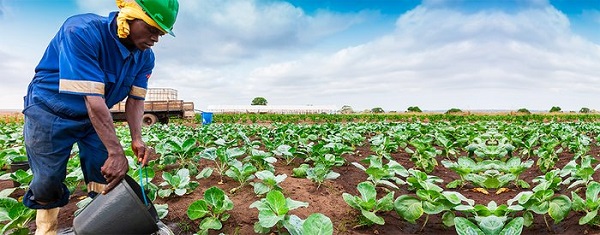
With a flourishing fruit and vegetable business and the ability to employ her own farm workers, Lucy is changing stereotypes about what Kenyan women can accomplish given the right support.
It’s been eight years since Lucy, a widow and mother of four, joined the Mbogoni irrigation programme, in the Tharaka Nithi County to start a small farm to grow maize, green beans and coffee.
Now, she is able to make a good income from her one-hectare plot. Despite the sudden loss of her husband following a road accident in 2016, she is confident about the future for her children, two of whom are at university, one in secondary school and the other in primary.
“I want to thank the small-scale horticulture development programme financed by the African Development Bank. The irrigation programme has meant that I could extend my irrigated land to three hectares and I now grow eight different crops – tomatoes, onions, hazelnuts, green beans, maize, cabbages, peppers and chillies – and have two cows and one banana and one mango grove,” Lucy told a visiting team from the bank in an interview last November.
Lucy employs two men to help her in her fields. She says that her tomato crop which she harvests twice a year, generates a net annual income of approximately KSH 600,000, about $5,800. At nearly KSH 1.2 million per annum, or $11,600, her mango crop, harvested once a year, is her main source of income. Green beans come third, with two harvests per year adding some KSH 150,000 ($1400) to her income.
Lucy’s story reflects the positive impact of the project on women’s lives. In all, 1,164 women-led households have benefited from this project. The women said that 29% of their agricultural incomes were spent on school fees (children in boarding or private schools), 20% on food, 17% on clothing, 14% on investment, 14% on home renovations and 6% on miscellaneous expenses.
Florence Mbeluha has a similar story. The 30-year-old mother recounted how the project transformed her life. She also farms a hectare of land which she rents in the area of the Kabaa irrigation programme in Machakos County, south-east of Nairobi, where her maize and green beans crops give her a net annual income of KSH 720,000 about $6,900. She uses part of this to pay for her child’s school fees.
Kenya has one of the most dynamic economies in sub-Saharan Africa. Ten years after a food crisis and in the aftermath of the severe drought of 2016-17, the country is aiming to achieve self-sufficiency in food products such as maize, tomato, cabbage, rice, beans, milk and meat. This ambition of the Kenyan Government found willing ears at the AfDB, which views food security as a direct catalyst of the growth and development of the country’s productive sectors.
Since launching its “Vision 2030” long-term development strategy in June 2008, which places special emphasis on agricultural development, the Kenyan Government has been working assiduously with the African Development Bank Group to combat food insecurity, especially in rural communities.
Today, more than 10 million Kenyans suffer food insecurity, mainly in the arid and semi-arid areas of the north of the country, and most of these people depend on food aid.
But, Kenya has immense areas of arable land with relatively abundant rainfall and a dense river system. Agriculture accounts for more than 35% of GDP and employs over 60% of the country’s active population. To escape the threat of famine or unemployment, though, large numbers of those living in rural areas move to the cities. The response of the African Development Bank has helped to improve life for more than two million Kenyans, especially in rural communities.
AfDB’s interventions combat poverty and improve the quality of life for local populations
Over the last 15 years, the African Development Bank has supported 10 operations and invested approximately $194 million in Kenya. One of these projects is a small-scale horticulture development project with a total cost of $27 million. The bank supported this project in order to contribute to reducing poverty and improving food security.
Through this project, 3,173 hectares of land have been irrigated, more than the 2886 hectares originally planned. A total of 100 women’s groups have received training and equipment to process agricultural products. And large numbers of farmers have been mobilised, organised and trained in a range of areas including crop production, livestock, marketing and the management of irrigation systems.
Two field visits have taken place per year in relation to this project which, as Gabriel Negatu, Director General of the AfDB’s Eastern Africa Regional Hub says, helped ensure its successful implementation: “Thanks to effective management of the resources allocated, the project achieved most of its objectives on schedule. Close co-operation with key ministries and other stakeholders enabled rapid and appropriate implementation of the project’s components and activities.”
Irrigation and infrastructure development have enabled the refurbishment of nine existing irrigation systems for small farmers over an area of more than 2886 hectares and benefited more than 5812 households – 40% of which are headed by women. Eight livestock watering points were built; eight water-consumers’ associations were established and registered, office buildings were constructed in rural areas with water and sanitation facilities and the programme’s access roads were repaired and environmental management was facilitated.
With support to farmers in production and marketing of their produce and financial services support, more than 100 farmers’ groups became engaged in horticultural production and marketing activities. Over 100 women’s groups were helped to successfully conduct various food processing activities and nine storage sheds and market sheds were built. In addition, many farmers received training in the production and marketing of horticultural crops. Farmers were also put in contact with different financial institutions in order to access credit facilities and purchase inputs.
Results beyond expectations, especially on women
Productivity of some of the crop varieties selected have exceeded expectations, ranging from 100% to 500%, depending on variety. This increase has been entirely due to the irrigation system, improved varieties, increased production capacity and the continuous training of farmers.
Average annual incomes of farmers have grown by more than 195% compared to the original target and continues to increase as new systems come into production.
In some areas, the benefits have spilled over into school enrolment rates, which have seen a considerable increase, as project beneficiaries have been able to afford children’s school fees, thanks to their increased earning power. Some beneficiaries have been able to build modern houses and create non-agricultural income-generating activities using agricultural produce.
But the most compelling impact of these changes has been their benefit to women.
Like Lucy and Florence, women of the Kathiga Gacheru irrigation programme, in Embu County, some 120 km north-east of Nairobi, owe their improved incomes and standard of living to the irrigation systems, training and support received as a result of the project.
Before the project, agriculture was highly dependent on rainfall. Those farmers surveyed admitted that in times of drought, they used to rely on the government and aid agencies for food aid. Now, thanks to the irrigation systems, the training they have received and other project inputs, this agricultural community has become self-sufficient in food. The programme has a total of 161 members from households in Embu County, including 23 families headed by women. Beatrice Njeru is one of these.
Njeru used to pump water from a nearby river to irrigate her farm. She could only grow tomatoes on one eighth of her land because of her difficulties in accessing water. Thanks to the project, she has extended her fields to two hectares and now has two cows and grows cabbages, papayas and tomatoes, as well as having mango, orange and banana groves. She also plants sugar cane for soil conservation and grass to feed the cows. In this way, she now earns KSH 1.5 million ($15,000) per year.
The Latin American & Caribbean Climate Week, which ended on Thursday, August 23, 2018, showcased groundbreaking action underway in the region to dramatically reduce greenhouse gas emissions and build resilience to the unavoidable impacts of climate change.
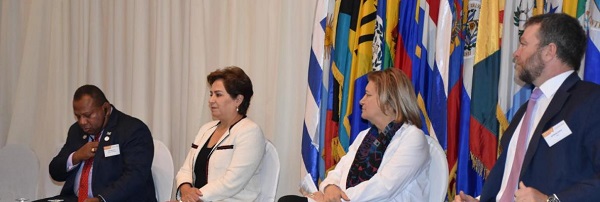
Delegates at the Latin American & Caribbean Climate Week in Montevideo, Uruguay
The event reached its apex with the high-level segment on Wednesday, which was opened by UN Climate Change Executive Secretary, Patricia Espinosa; Brazil’s Minister of Environment, Edson Duarte; and the country’s host, Uruguay’s Minister of Housing, Territorial Planning and Environment, Eneida de León.
Delegates attending the Climate Week in the old town of Montevideo, raised concerns that the funding levels announced in 2015 are not being achieved in line with the successful implementation of the Paris Climate Change Agreement.
The effects of this funding gap, the stated, would be felt acutely in a region that has so much to lose from the impacts of climate change. Brazil alone holds 20% of the known biodiversity species on the planet and has more than 50% of its area covered with native forests.
Uruguay’s Minister of Housing, Territorial Planning and Environment, Eneida de León used her keynote speech to underline this point further: “Our region is particularly vulnerable to the adverse effects of climate change, where the vast majority of loss and damage that we suffer is directly related to extreme weather events. Future projections are not encouraging. Paradoxically, developing countries are the ones that contribute least to climate change, and yet we suffer the greatest impacts.”
Yet despite this sobering reality check, there was still cause for optimism at the Climate Week. Brazil’s Minister of Environment, Edson Duarte, reported that his country has already achieved substantial reductions in greenhouse gas emissions. Specifically – statistics obtained by REDD+ – demonstrate that actions in the Brazilian Amazon now surpass six billion tons of CO2, equivalent to the emissions of a year and a half of the entire European Union.
Afterwards, Duarte hailed this year’s Talanoa Dialogue as the world’s main chance to generate the ambition necessary to secure a low-carbon future, saying, “The Brazilian government has initiated the Talanoa Brazil Dialogue, which, by strengthening trust among national actors and identifying where we are and where we want to go, aims to organize the country’s messages for the Talanoa Global Dialogue, which will take place at the Climate Conference in Poland later this year. We urge our brothers from Latin America and the Caribbean to make the same move, so that we can arrive in Poland with clear objectives.”
Effectively serving as a bold call to action ahead of the Ministerial Talanoa taking place at COP24 this December, such remarks show how the regional Climate Weeks have a vital role to play in bringing local actors together to shore-up climate action. As such, the Climate Weeks must become a mainstay of the climate action calendar – a point which was not lost on UN Climate Change Executive Secretary, Patricia Espinosa: “By tackling climate change we can tackle more than just the weather. We can address more than just numbers and statistics. We can create a better world. That’s why this Climate Week is so important. It’s a chance for us to hear about the challenges actors face and the specific work being done here to address them; solutions that might be applicable elsewhere.”
The Climate Week culminated in a regional edition of the Talanoa Dialogue, which was led by the Government of Uruguay and featured high-level Climate Champion, Inia Seruiratu, Fiji’s Minister for Agriculture, Rural & Maritime Development.
The event was orchestrated by the members of the Nairobi Framework Partnership: UN Climate Change, United Nations Development Programme, World Bank, African Development Bank Group, United Nations Environment, UNEP DTU Partnership, International Emissions Trading Association (IETA).
For the first time, scientists have directly observed definitive evidence of water ice on the moon’s surface, U.S. space agency NASA has said.
Moon surface
Most of the newly found water ice lies in the shadows of craters near the moon’s polar regions, where sunlight never reaches, and the warmest temperatures never reach above minus 250 degrees Fahrenheit (about minus 157 degrees Celsius), NASA said in a statement.
“These ice deposits are patchily distributed and could possibly be ancient,” the NASA said.
“At the southern pole, most of the ice is concentrated at lunar craters, while the northern pole’s ice is more widely, but sparsely spread,” NASA added.
Previous observations found possible signs of surface ice at the lunar south pole, but these could have been explained by other phenomena, such as unusually reflective lunar soil.
In the latest study, scientists used data from NASA’s Moon Mineralogy Mapper (M3) instrument to confirm the presence of solid ice on the moon.
M3 collected data that not only picked up the reflective properties of ice but was able to directly measure the distinctive way its molecules absorb infrared light, so as to differentiate between liquid water or vapor and solid ice.
“With enough ice sitting at the surface — within the top few millimetres — water would possibly be accessible as a resource for future expeditions to explore and even stay on the Moon, and potentially easier to access than the water detected beneath the Moon’s surface,” NASA said.
“Learning more about this ice, how it got there, and how it interacts with the larger lunar environment will be a key mission focus for NASA and commercial partners, as we endeavor to return to and explore our closest neighbor, the Moon,” NASA added.
The findings were published in the Proceedings of the National Academy of Sciences on Monday.
A doctor has become the first probable Ebola case in one of the eastern Democratic Republic of Congo’s “high insecurity zones” which are dogged by militia violence and hard to access, the World Health Organisation (WHO) said on Friday, August 24, 2018.
Peter Salama, WHO’s Deputy Director-General of Emergency Preparedness and Response
Since the outbreak erupted on Aug. 1, 103 confirmed and probable cases of Ebola have been identified in North Kivu and Ituri provinces, including 63 deaths, the health ministry said in an overnight update.
The doctor living in Oicha town in North Kivu has been re-hospitalised with Ebola symptoms after his wife was confirmed as having the disease when she traveled to the nearby city of Beni, Dr. Peter Salama, the World Health Organisation’s head of emergency operations, said.
Oicha is almost entirely surrounded by Allied Democratic Forces (ADF) Ugandan Islamist militia, there are “extremely serious security concerns”, he said. Aid workers, priests and government officials are held hostage in the area, he said.
The doctor’s initial test for Ebola – which causes vomiting, fever and diarrhoea – had been negative, but fresh results are awaited, Salama told Reuters.
So far 97 of the doctor’s contacts who may have been exposed to the virus have been identified, and vaccination has begun in the town, he added.
“So, for the first time really we have a confirmed case and contacts in an area of very high insecurity.
“It really was the problem we were anticipating and the problem at same time that we were dreading,” Salama told a news conference.
WHO and health experts reached Oicha with armed escort by MONUSCO troops this week, he said, adding: “We know from that incident now in Oicha we are going to have to operate in some very complex environments due to security and access concerns.”
In a further worrying development, angry youth burned down a health centre in another village, where vaccinations were under way, after learning of a death from Ebola, Salama said.
More than 2,900 people have been vaccinated against Ebola since the outbreak began, he said.
“We are at quite a pivotal moment in this outbreak in terms of the evolution of the outbreak epidemiologically and in terms of the response,” he said.
NAN reports it is the 10th outbreak to strike the DRC since 1976, when Ebola was first identified and named after a river in the north of the country.
The health ministry added that “four additional experimental therapeutic molecules” had been approved by its ethics committee for treating infected patients.
Their laboratory names are ZMapp; Remdesivir; Favipiravir; and Regn3450 – 3471 – 3479.
The drugs — which have not been licensed but undergone safety trials — add to a prototype treatment called mAb114, whose use was announced on Aug. 14.
The first therapeutic drug against the virus to be used in an active Ebola epidemic in the DRC, mAB114, has so far been given to 10 patients “who are responding positively,” the ministry said.
Developed in the United States, the prototype drug is a so-called single monoclonal antibody — a protein that binds on to a specific target of the virus and triggers the body’s immune system to destroy the invader.
The experimental treatments are being used alongside an unlicensed vaccine called rVSV-ZEBOV, which was shown to be safe and effective in previous trials in an Ebola epidemic in West Africa.
Immunisation with rVSV-ZEBOV has been given to 2,179 front-line health workers, the ministry said.
The WHO has expressed concern that the violence in the province Kivu — entailing militias who often fight for control of resources, including a notorious Ugandan rebel force called the ADF, — could hamper the fight against rolling back the disease.
The outbreak in eastern DRC was declared a week after WHO and the government hailed the end of a flareup in northwestern Equateur province, at the other end of the vast country, which killed 33 people.
The government has earmarked 43 million dollars to fight the latest scare.
Ebola is a highly contagious haemorrhagic fever caused by a virus which is believed to have a natural home in species of tropical bats.
It causes serious illness including vomiting, diarrhoea and in some cases internal and external bleeding. It is often fatal.
In the worst Ebola epidemic, the disease struck the West African states of Guinea, Liberia and Sierra Leone from 2013 to 2015, killing more than 11,300 people.
Burning fossil fuels is the largest contributor to the declining level of oxygen in the atmosphere, according to the latest research by Chinese scientists.
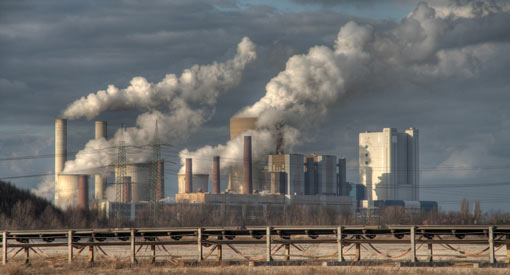
Fossil fuel combustion: A coal-fired power plant
Scientists from Lanzhou University in northwest China’s Gansu Province studied fossil fuel oxygen consumption, human and livestock respiration, and fire.
They found fossil fuel combustion comprised 60 to 80 per cent of total oxygen consumption over the past century.
It is estimated that the world’s oxygen concentration will drop from its current level of 20.946 per cent to 20.825 per cent as the annual atmospheric oxygen consumption increases sharply to 100 billion tonnes by 2100.
Huang Jianping, Director of the Research Team, appealed for focusing more on atmospheric oxygen changes as well as immediate and cooperative actions against the declining trend.
According to Jianping, although the oxygen deficit has not yet posed a clear threat to human health, it is foreseeable that the environment will significantly change if the trend continues.
“We must do more to promote the output of oxygen and reduce its consumption, such as by using more green energy.
“It is also pivotal to reverse this trend through the combined efforts and cooperation of all countries,” Jianping said.
The research findings have been published in the latest issue of Science Bulletin.