A retired Director of Education, Lagos State Public Service,
Mrs Adekunbi Olomola, has called for adequate maintenance of public
infrastructure to enhance their life span and sustenance.
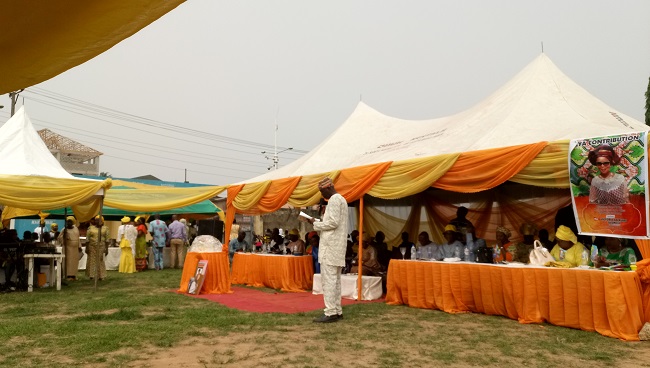
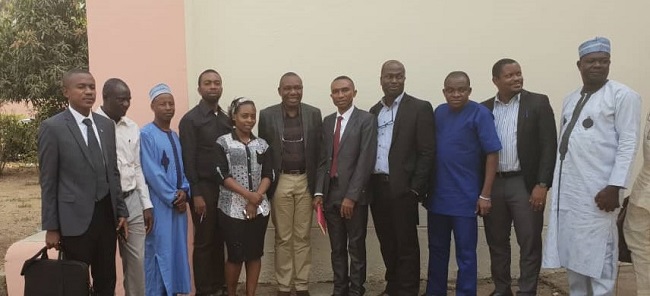
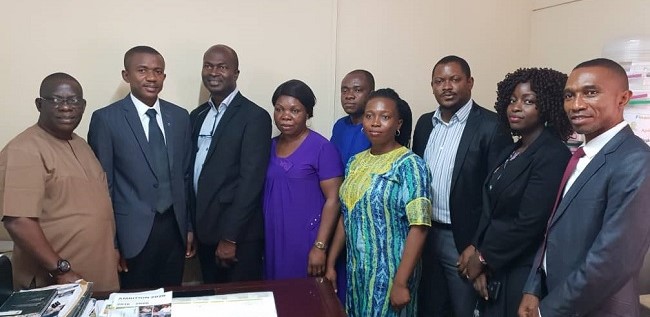
A scene during a ceremony to mark the Statutory Retirement and 60th Birthday of Mrs Victoria Adekunbi Olomola in Lagos
Olomola made the call on Tuesday, February 12, 2019 in Lagos
during her statutory retirement after 35 years in public service and 60th
birthday celebration.
She said lack of maintenance culture among Nigerians,
particularly in the public schools, was responsible for the dearth of
infrastructure facilities in the country.
According to her, government schools have got lots of
infrastructure, equipment and new projects, but lack the ability to monitor,
maintain and sustain them.
Olomola said: “Generally, we believed in new projects, which
is good; but what matters is their sustenance.
“If the Government Technical College will maintain and
sustain the existing equipment, machines and educational instruments, it will
go a long way to improve the educational development of the state.”
She, however, urged non-governmental organisations (NGOs)
and good spirited Nigerian to assist in the provision of more equipment and
facilities to aid educational development.
Mrs Olomola, a graphic artist and formerly Head of
Miscellaneous Department at the Government Technical College in Lagos, is the
widow of Dr Femi Olomola, the 21st President of the Nigerian Institute of Town
Planners (NITP), who passed on May 31, 2016 after a brief illness. He was aged
65.
In his remarks, Mr Olalade Olugbemi, the Principal,
Government Technical College, Lagos, enjoined civil servants in the public
schools to be more innovative, tolerance and emulate Olomola in the course of
discharging their duties.
Olugbemi said that the retiree, through the assistance of
Lions’ Club, Ikeja, created and restructured the school Printing and Graphic
Department and donated the first two sets of computers used by students in the
school.
The principal stressed the need to encourage and mentor the
students in their academic pursuit.
He said that the students only need support and
encouragement from the teachers, governments and organisations to bring their
creative minds to the fore.
Olugbemi said: “The retiree is a world changer in work
place. She built capacities for skills development.
“She motivated students through small scholarship scheme,
enhance them with weekend and holiday jobs so as to make them earn income
genuinely to progress their studies instead of begging or engaging in
inappropriate behaviours.”
The European Union is preparing for the trade in chemicals
against a “hard Brexit”. In the event of a UK exit from the EU
without contractual arrangements, companies threaten to disrupt existing supply
chains when using chemicals registered by UK companies under the European
Chemicals Regulation (REACH).
The European Parliament
In order to help companies to cope with such a situation,
the European Chemicals Agency (ECHA), which is responsible for the
implementation of the REACH Regulation at European level, has presented
concrete advice and support measures.
The REACH Regulation requires chemicals to be registered
with ECHA by a Union-based manufacturer, importer or representative in order to
be marketed in the Union. If UK registrants are no longer resident in the
Union as a result of an unregulated Brexit from one day to the next, their
registrations will lose their validity and their substances will no longer be
marketed in the Union.
A key element of ECHA’s assistance to this situation is the
establishment of a “Brexit transmission window” in the internet
access of the REACH registration system, which allows the companies concerned
from March 12 to March 29, 2019 to register as a precautionary measure to
transfer unregulated Brexits from a UK company to an EU-27 / EEA-based company
or its only representative. ECHA refers in a link to references from the
European Chemical Industry Association Cefic.
Among other things, this recommends a standard formulation
for a condition precedent that should be used in contracts for the designation
of sole representatives in the EU-27 / EEA countries, so that the transfer
takes effect only when the situation actually occurs.
The Federal Environment Ministry welcomes the
measures. With the Brexit transmission window, the European Chemicals
Agency ECHA provides a practical tool that can significantly mitigate the
consequences of an unregulated Brexit in the chemicals sector. The
companies concerned should take full advantage of ECHA’s assistance with their
UK counterparts to guard against disrupting their supply chains.
Germany and India want to cooperate more closely in
environmental and climate policy.
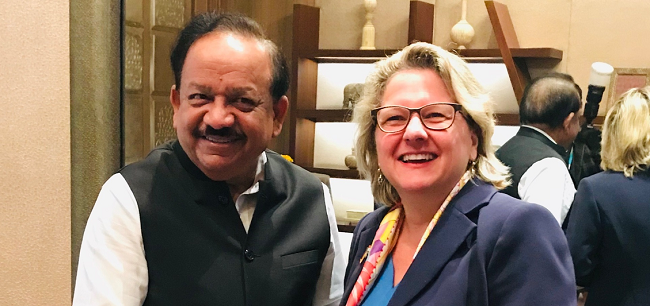
Svenja Schulze (right) and Harsh Vardhan
German Environment Minister, Svenja Schulze, and her Indian
counterpart, Harsh Vardhan, on Wednesday, February 13, 2019 in New Delhi struck
an agreement at the third German-Indian Environmental Forum.
Germany will support Indian climate protection projects with
an additional €35 million in the coming years. In
addition, both governments want to engage in the prevention of marine litter.
Schulze said: “We need India to solve the global
environmental problems. Whether it’s fighting climate change, fighting
littering the seas or protecting biodiversity, India is one of our key
partners.”
The third German-Indian Environmental Forum is themed:
“Cleaner Air, Greener Economy – cleaner air, greener
economy”. Both countries exchange ideas for solutions for good air
quality and for the development and expansion of the water and circular
economy. It also deals with climate and sustainability strategies for the
modernisation of economies.
Schulze and Vardhan agreed that funds from the International
Climate Initiative of the German Federal Ministry for the Environment should
provide an additional €35 million for sustainable forest projects, network
expansion and the storage of renewable energies. In addition, it was about
opportunities for cooperation in the disposal of waste that has previously reached
the sea.
Organisers of the Environmental Forum are the two Ministries
of the Environment, the Asia-Pacific Committee of German Business and the
Indian Federation of Industry and Commerce.
As part of the two-day visit, Schulze will also
visit the local green initiative “Green the map”, which recycles,
processes and provides environmental education for young people in Neu Dehli,
as well as the Siemens plant in Mumbai and the plant of the Indian company Tata
Steel.
The Nigeria Customs Service, Pangolin Conservation Guild
Nigeria and Nigerian Conservation Foundation (NFC) on Wednesday, February 13,
2019 called for stiffer penalties against poachers and those involved in
illicit trading of Pangolin.
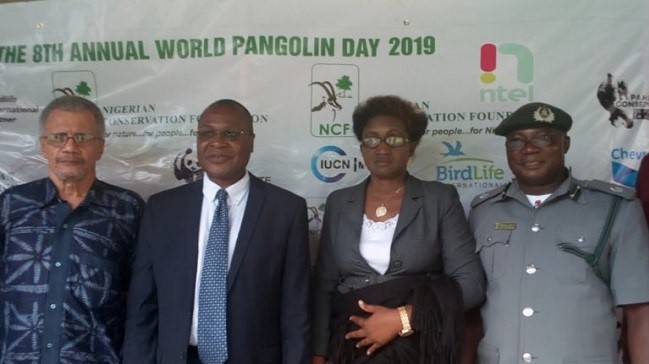
L-R: An environmentalist, Desmond Majekodunmi; Director-General and CEO of the Nigerian Conservation Foundation, Dr Muhtari aminu-Kano; Associate Professor, Parasitology/Ecology and Environmental Biology Unit, Department of Zoology, University of Ibadan, Dr Olajumoke Morenikeji; and Asst. Comptroller Mutalib Sule of the Nigeria Customs Service, at the 2019 World Pangolins Day event with theme as “Pangolins and Politics” in Lagos
They said at an event marking the 2019 World Pangolin Day in
Lagos that this would help protect Pangolin, an endangered mammal, from
going into extinction.
The event was organised by the NCF in collaboration with the
Pangolin Conservation Guild Nigeria with the theme: “Pangolins and Politics’’.
Pangolin is a harmless African and Asian mammal with body
covered with horny overlapping scales. It has small head with an elongated
snout.
It has a long stick tongue for catching ants and termites
and a tapering tail. It also has large protective keratin scales covering the
skin; they are the only known mammals with this feature.
Dr Olajumoke Morenikeji, an Associate Professor,
Parasitology/Ecology and Environmental Biology Unit, Department of Zoology,
University of Ibadan, said: “There are laws; there is the endangered species
act, but the major problem we have is the enforcement of the law.
“For example, if you are caught with an endangered species,
in the first instance, you pay N5 million from the endangered specie act.
“Second offence, you are not going to have the opportunity
to pay a fine because you will be jailed; if these laws are enforced, there
will be less poaching and less trafficking.
“So, to ensure the laws work, you must enforce them,’’ Morenikeji said.
Also, Dr Muhtari Aminu-Kano, the Director-General and CEO of
the NCF, said: “Pangolins live across parts of Nigeria, especially the
Savannah; now we have lost most of the pangolins.
“They are trafficked between countries and because of the
trafficking between Nigeria and Asia, they become more endangered.
“Pangolins from Nigeria and surrounding countries are
coming into Nigeria and being shipped abroad; that is giving Nigeria bad image
abroad and
“We need to stop that, not just for our image, but for our
ecosystem and for our future generations to benefit from this important and
useful animal.
“There has to be stricter enforcement of the law against
this act,” Aminu-Kano said.
He explained that pangolins are important to the
ecosystem.
“They are part of the food chain; they give us such service
which is unknown to us and they are in terrible danger because they are the
most trafficked mammal in the world.
“They are important animals; important to the food chain;
they eat termites and ants and a lot of them burrow under the soil.
“They are very important to the functioning of the
ecosystem; they are good for soil fertility, because of the burrowing they do
and the churning and turning over of soil.
“They are also very important as feeders on ants and
termites so they can stop them being pests in certain places,’’ the the
director-general said.
On the link between Pangolin and Politics, he said: “Pangolins
are big ‘money makers’, a kilogramme of pangolin scales costs $10,000 to N15,000
abroad.
“The Customs said today that last year alone, over 15,000
kilogrammes of pangolin scales were seized.
“This is not to talk of the ones that escaped attention and
actually went out; now that total amount of money is about 900,000,000 dollars
(nine hundred million U.S dollars).
“So, anywhere you talk of those million dollars in terms of
money you know politics is involved, people involved must be well connected and
influential.
“In order to stop that trade or do something about it, you
need to address that political dimension,’’ Aminu-Kano said.
According to him, ways of addressing it include strict and
better law enforcement because it’s giving Nigeria a bad image abroad; those
things are going out of our airports and our seaports.
“Also, the second thing is awareness and orientation among
people who sell it to this middle people who sell it abroad.
“Another thing we can do to address it is to provide
alternative livelihoods to the hunters that get it and bring it out to the
people.
“Also, through immigration, because most of the middle
people involved, the middlemen are actually Chinese who are coming into the
country.
“The porosity of our seaports and borders need to be checked
because that is the gateway through which we go out.
“The fact that customs seized these shipments usually buried
in other shipment of charcoal or logs of processed wood.
“Customs don’t have the facilities to lift every log in a
container to find out what is beneath it; we need to address that too,’’
Aminu-Kano said.
Also, Assistant Comptroller Mutalib Sule, Nigeria Customs
Service, Federation Operation Unit, Zone A, Ikeja, Lagos, highlighted some of
the challenges facing the service.
Sule said that NCS was facing a lot of difficulties in its
mission to seize and arrest culpable individuals in connection with “this
highly profitable illicit trade of pangolins”.
He listed the challenges to include dangerous terrains while
making arrests, resistance, attacks, poor reward system and lack of enforcement
of laws against trafficking as well as judicial system.
Solidaridad will partner with the Nigerian
government in its agricultural transformation agenda, the commitment made in its
Nationally Determined Contribution (NDC) in the Paris Climate Agreement as well
as achieving the objective of Sustainable Development Goals (SDGs) in the
country.
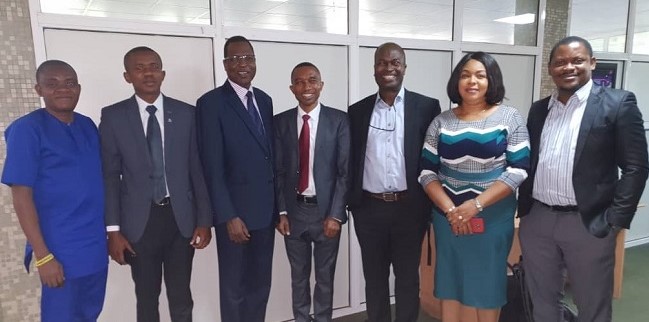
Group photo at the Department of Climate Change offices
This was disclosed in Abuja when the team
from Solidaridad West Africa led by Solidaridad Network Senior Climate
Specialist for Africa Dr. Samson Samuel Ogallah, paid a visit to the Federal
Ministry of Agriculture and Rural Development (FMARD) as well as the Department
of Climate Change and National REDD+ Secretariat, both under the Federal
Ministry of Environment).
According to Dr. Ogallah, Solidaridad will continue
to bring to bear in Nigeria and other African countries the organisation’s 50
years of global experience working in the development of profitable supply
chains, climate smart innovations, creating sustainable businesses and
livelihoods across 13 different agricultural and other non-agricultural
commodities working closely with smallholder farmers and producers for a change
that matters.
Director, Department of Climate Change (DCC),
Dr. Peter Tarfa, welcomed the team and recalled the successful partnership
between Solidaridad and the Federal Ministry of Environment through the
Department of Climate Change at an event held at the Nigerian Pavilion during
the United Nations Climate Change Conference (COP24) in Katowice, Poland.
He commended Solidaridad for its role in climate smart agriculture, helping farmers to increase productivity sustainably, adapt to climate change and addressing mitigation actions along the value chain. While promising the support of the department and working closely with the organisation, he called on Solidaridad to also consider its interventions in other commodities like cotton and groundnut in Nigeria in addition to oil palm, leather, fruits and vegetables and cocoa.
Group photo at the National REDD+ Secretariat
Solidaridad team was received by Dr. Moses
Ama and his team at the National REDD+ Secretariat. Dr. Ama, in his address,
stated that agriculture to date remains one of the major drivers of
deforestation in many developing countries and expressed optimism that Solidaridad’s
approach of doing business in the sector with its principle of “producing more
with less” will contribute to reversing these trends.
He added that investment in agriculture would be wasted without climate change considerations and welcomed the partnership between Solidaridad and the Nigeria REDD+ Secretariat. The UN-REDD+ programme is the United Nations collaborative initiative for Reducing Emissions from Deforestation and forest Degradation (REDD+) in developing nations. Dr. Ama also highlighted some of the interventions the Secretariat is currently undertaking including those supported by the Forest Carbon Partnership Facility (FCPF) of the World Bank in Ondo, Cross River and Nasarawa states, among others.
Group photo at the FMARD offices
At the Federal Ministry of Agriculture and Rural Development, the Deputy Director, Tree Crops, Mr. B.C. Ukatta, led his team in an interactive session held between Solidaridad and the ministry. Both teams underscored the importance of working collaboratively towards achieving self-sufficiency in palm oil and other agricultural commodities in Nigeria. He commended Solidaridad’s climate smart approaches to agricultural practices and helping smallholder farmers to escape poverty through its various interventions along the value and supply chain in the agriculture sector in the face of climate change and its impacts on agriculture while pledging their support to Solidaridad.
In Nigeria, Solidaridad in collaboration
with cocoa companies have trained over 27,000 farmers on Good Agricultural Practices
(GAP) in cocoa production and about 78% of the producers trained have adopted
GAP and there has been about 40% increase in productivity of producers under GAP,
disclosed Ogallah.
Solidaridad West Africa (SWA), he added, has
assisted over 5,000 smallholder cocoa farmers to become UTZ certified in
Nigeria.
“Under its Sustainable West Africa Palm Oil
Programme (SWAPP), Solidaridad has conducted studies on oil palm in Nigeria.
Strong awareness on sustainable climate smart oil palm production has also been
created among stakeholders in the sector and Solidaridad supported the National
interpretation process for Roundtable on Sustainable Palm oil (RSPO) Principles
and Criteria in Nigeria.
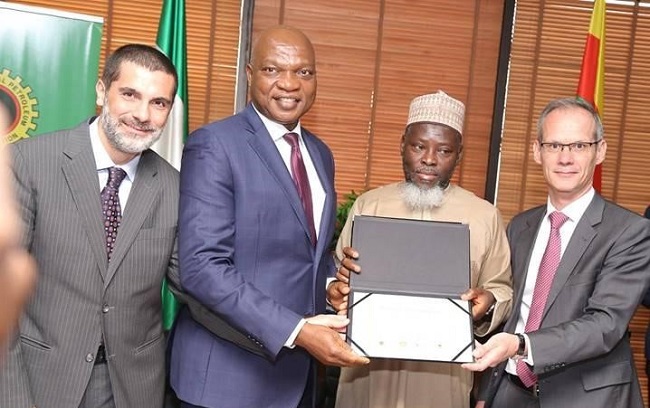
The Shell Petroleum Development Company of Nigeria Limited (SPDC) and its joint venture partners signed a Final Investment Decision (FID) agreement for a 300 million cubic feet of gas on Wednesday, February 13, 2019 in Abuja at a ceremony witnessed by the Managing Director of Total Exploration and Production Nigeria Limited, Mr. Nicholas Terraz, and the Managing Director of Nigeria Agip Oil Company Limited, Mr. Lorenzo Fiorillo. SPDC had announced taking FID last December on the Assa North Gas Development Project which is one of the Seven Critical Gas Development Projects of the Federal Government.
L-R: Managing Director, Nigeria Agip Oil Company, Lorenzo Fiorillo; Managing Director, The Shell Petroleum Development Company of Nigeria Limited and Country Chair, Shell Companies in Nigeria, Osagie Okunbor; Chief Operating Officer Upstream, Nigeria National Petroleum Corporation, Rabiu Bello; and Managing Director, Total Exploration and Production Nigeria, Nicholas Terraz, after signing the Final Investment Decision Charter for the 300 million Standard Cubic Feet of Gas Per Day Assa North Gas Development Project, in Abuja… on Wednesday
The project, located in south-eastern Imo State, aims to
position Nigeria as a regional hub for gas-based industries while complementing
Federal Government’s aspiration for gas sufficiency for domestic consumption,
power generation, and gas-based ammonia and urea fertilisers for farmers.
At peak production, the project is expected to produce 300 million
standard cubic feet of gas per day and will be treated at SPDC JV’s Gas
Processing Facility and distributed through the Obiafu-Obrikom-Oben pipeline
network.
Speaking at the FID agreement-signing ceremony, Group
Managing Director of the Nigeria National Petroleum Corporation (NNPC), Dr.
Maikanti Baru, described the project as a major investment towards fulfilling
the domestic gas aspiration of the Federal Government, adding that the
corporation was excited at the progress with the project and would provide the
needed support to ensure first gas production as soon as possible.
Baru, who was represented by NNPC Chief Operating Officer
Upstream, Mallam Rabiu Bello, said, “The NNPC Project Management Board would
work hard to ensure progress having provided the necessary approvals and
enablers.” He added that, on successful completion, the project would translate
into huge social-economic benefit to Nigerians.
Also speaking, Managing Director of SPDC and Country Chair,
Shell Companies in Nigeria, Mr. Osagie Okunbor, described the progress with the
FID as good news for the SPDC JV and Nigeria for the accelerated growth of the
domestic market and optimisation of SPDC’s onshore footprints.
Okunbor said, “The project is key to driving the Federal
Government of Nigeria’s ambition of marching away from a mono-economy through
diverse industrial growth. It is premier amongst the Seven Critical Gas
Projects initiative led by the Ministry of Petroleum and the Nigerian National
Petroleum Corporation (NNPC). Their integrated focus, support and drive were
instrumental to this investment decision.
“SPDC JV would continue to explore other areas of support
for the expansion of domestic gas supply and continue to make investments under
the right conditions.”
SPDC had earlier signed a Global Memorandum of Understanding
with the clusters of host communities of the Assa North project for community
development projects in addition to some other community initiatives already
executed by the company ahead of construction work.
SPDC is the operator of a Joint Venture involving NNPC,
which holds 55%; Shell 30%; Total Exploration and Production Nigeria
Limited (TEPNG)10%; and Nigeria Agip Oil Company Limited (NAOC) 5%.
Civil society groups under the aegis of the National
Biotechnology and Biosafety Consortium (NBBC) has said that the development of
the Pod-Borer Resistant Cowpea (PBR-Cowpea) is a confirmation of their
expertise in Nigeria to be able to provide a home-grown solution to pest and
diseases problems in agriculture.
Beans come in several shapes, sizes, colours and tastes
The group at a press conference on Wednesday, February 13,
2019 in Abuja said that those behind the call condemning the achievement of
Nigerian scientists “are enemies of the country who are bent on opening up the
country to unregulated GMOs and chemicals so as to make farming unattractive”.
Prof. Celestine Aguoru, President, NBBC, said that the
modification of beans would bring numerous benefits to the country.
He listed such benefits to include: reduction in the use of
dangerous chemicals, protection of Nigeria’s position as the largest producer
of beans, reduction in the spending of Nigeria’s foreign exchange in the
purchase of over 500,000 tons of beans annually from other countries, farmers
can now heave a sigh of relief from chemicals which they have to spray about 10
times for each beans season and that Nigeria is going to save a lot of foreign
exchange used in the importation of chemicals.
According to the Professor of Plant Science and
Biotechnology, other benefits include the fact that farmers health, water
bodies across the country and the environment will no longer suffer extreme
pollution from the chemicals used by farmers to keep Maruca at bay and that the
younger generation will now be attracted to farming knowing that a bumper
harvest is guaranteed.
“Today, beans from Nigeria is not accepted at the
international market due to heavy use of chemical on farms and in storage. This
development should worry any right-thinking Nigerian but some who have
constituted themselves into perpetual critics see nothing bad in that, they
want government to ban the GM beans.
“Nigeria has had enough of this draw back syndrome. What are
the duties of the over 15 agricultural research institutes all over the country
as well as the federal government owned and funded universities of agriculture,
faculties of agriculture, sciences, vet medicines and all the related units in
universities and the like?
“Their duties are simply to work on the improvement of our
crops, provide scientific solutions to challenges facing farmers and ensure
that crops which the country has comparative advantage in producing is enhanced
to the extent that we don’t have to lose that advantage,” he added.
Prof. Aguoru noted that, all over the world, countries that
have attained appreciable heights in their development strides had relied on
their universities, and science and technology institutions.
“The universities here have started living up to their
expectations, so the call by arm-chair activists should be seen as a serious
disservice to the nation. Would they prefer we stagnate our research and
development while other nations progress?
“We are also using this platform to call on the federal
government to ignore the call by the non-scientific activists to ban the GM
beans because it is safe and poses no proven harm to human or animals. We urge
the government to encourage these non-experts who turn around to criticise to
come together with us where government personnel shall be observers where
issues could be explained to those agitating.”
He urged government to increase budgetary allocations to
universities and research institutes to enable them undertake research that
meets national aspirations, “as we have seen in this case PBR Cowpea”.
“The achievement from ABU Zaria has shown clearly that the
need for a research and innovation funding for the country is long overdue. Government
needs to expedite action on it and make the fund a reality. At NBBC, we
have followed the various stages of this research and development in the PBR
cow pea and we could state as experts that there is nothing to worry about.
“It is high time, government commit quality resources to
research and development,” Aguoru stated.
Akinsoji Akinsola, National Coordinator, Real Life Global
Humanitarian Foundation, said that as responsible civil society groups they are
in support of any meaningful technology that will lessen the burden of stress
farmers go through.
Akinsola, the coordinator of over 76 NGOs, said that the
only way to make farming profitable in the country is to introduce
technologies. He hailed the scientists at IAR, ABU.
The NBBC is a body established to serve as a platform for
promoting constructive dialogue between the scientific community, government,
civil society groups, media, legal practitioners and the private sector. It aims
at providing an accurate information bank that represents national interest and
needs of biotechnology and biosafety experts.
The Lagos Waste Management Authority (LAWMA) says it is
planning to wind down the Olusosun Dumpsite and close it properly, being an
artificial hill.
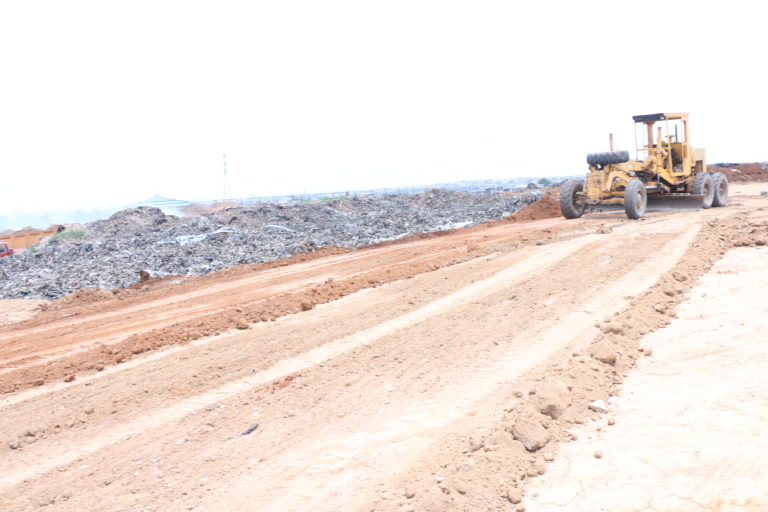
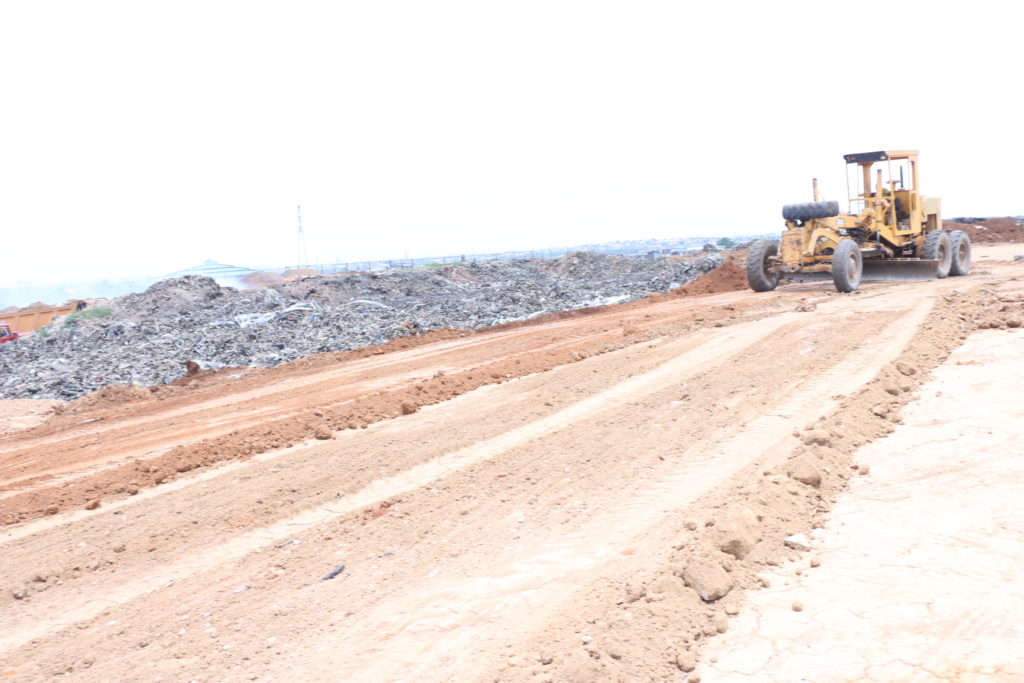
Capping at the Olusosun dumpsite in Lagos
Mr Ola Oresanya, the LAWMA Managing Director, dropped the
hint on Wednesday, February 13, 2019 in an interview with the News Agency of
Nigeria (NAN) in Lagos.
Oresanya said that the Olusosun Dumpsite was in its final
stage of closure, adding that the site must be properly covered.
“Olusosun was designed for 30 years. The site was purposely
designed by the World Bank and opened for business by December 1992.
“So, Olusosun is winding down now; and when the government
closed it temporarily, it was because of the fire disaster to allow stability
in the system.
“What we have just done now is to complete the closure plan
of Olusosun.
“We have to wind down the place and close it properly,
because it is an artificial hill that was created, using refuse,” LAWMA chief
said.
According to him, the agency will be using the refuse to
stabilise the slope so that the community will not run into trouble.
Oresanya said that the state government would determine what
the place would be used for in future.
“It can be used as a city golf course or a city green park.
“The use will be determined by the state government to the
benefit of the community, especially those who suffered the pains and
discomfort of building the mountain,” Oresanya said.
No fewer than 13.5 million Afghans across the war-torn and
poverty-stricken country are suffering from severe food insecurity, the United
Nations Assistance Mission in Afghanistan (UNAMA) said on Wednesday, February
13, 2019.
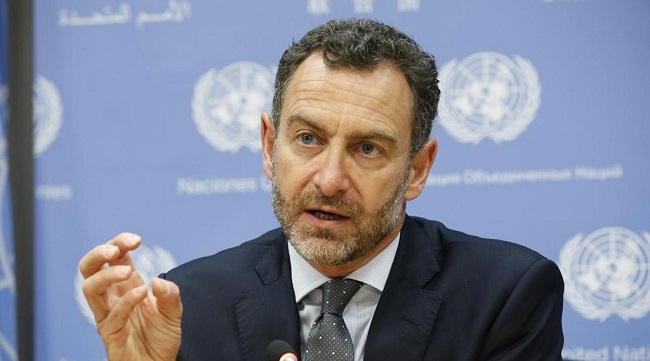
Toby Lanzer
According to UNAMA deputy chief Toby Lanzer, many of those
people have to survive on less than one meal a day.
He added that he could not underline the scope of the
emergency enough.
The UN classifies just under 10 million Afghans as living
under category 3 of food insecurity and 3.6 million as category 4, just one
step away from famine, he explained.
An estimated 34 million people live in Afghanistan.
The UN has five categories of food insecurity, with category
5 being famine.
In 2018 the World Food Programme helped some 5.5 million
people. This year they plan to assist 4.5 million people.
To get to that goal, the UN has asked for $612 million in
aid. Lanzer appealed to donors to donate early.
A long wait for funds, he said, would make it harder to fix
the problem, which in the in worse-case scenario meant “people die.’’
The UNAMA deputy head warned that even if the conflict came
to an end this year, the challenges the country faced would not immediately
end.
“Once you have peace, the real war begins,’’ Lanzer said
pointing to the war on poverty.
According to Lanzer, some 54 per cent of the country’s
population lives below the poverty line. “The people here do not live,
they survive,’’ Lanzer said.
People in Afghanistan suffer from years of continuous war, drought, weak economy and high rates of unemployment. U.S. representatives have been meeting representatives Taliban militants since July in an attempt to bring the conflict to an end.
The Federal Ministry of Information and Culture on Wednesday,
February 13, 2019 called for a workable National Action Plan to maximise and
effectively use underwater valuables for sustainable development.
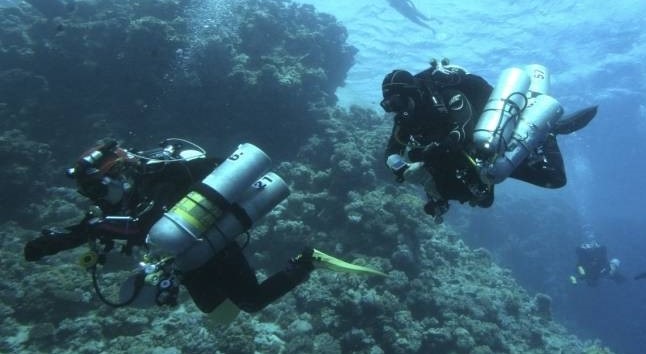
The convention seeks to protect all traces of human existence having cultural, historical and archaeological characters that cover the oceans floors
Ms Grace Isu Gekpe, Permanent Secretary of the ministry,
made the call at the National Sensitisation Workshop on the 2001 UNESCO
Convention for the Protection of the Underwater Cultural Heritage, which held
at the ECOWAS Commission, Abuja.
She explained that the convention seeks to protect all
traces of human existence having cultural, historical and archaeological
characters like shipwrecks, prehistoric arts works, treasures, sacrificial
sites and old ports that cover the oceans floors.
Gekpe added that as a country party to the convention,
Nigeria had the mandate to stop the illegal looting and pirating on its water.
“The Sustainable Development Goals 14, deals with
sustainable use of water resources and we are obligated to do this as a nation
by charting today, the best practices that will keep it in effective use for
the future.”
She said there was an urgent need for all stakeholders to
build up inventory and preserve the nation’s underwater cultural heritage as
well as resuscitate numerous historical events and project the sites for
tourism purpose.
She stressed the need for the National Assembly to harmonise
the relevant articles of the convention into national cultural legislation, to
serve as the framework for effective implementation of the convention.
Gekpe also enjoined the Nigerian Navy to be on the lookout
for pirates and commercial salvagers destroying historical and archaeological
evidences of cultural patrimony.
In the same vein, Prof. Abdulahi Maga, the Director,
Education, Science and Culture, ECOWAS, while commending the Federal Government
for ratifying the convention, assured that ECOWAS would assist to ensure that
her underwater heritage is secure.
Maga said that it was time for the African continent and
other cultural institutions to harness the potential in the underwater heritage
and protect it from pirates as well as other commercial enterprises.
The 2001 UNESCO Convention on the Protection of Underwater
Cultural Heritage was aimed at achieving heritage protection in respect of high
ethical and scientific standard as well as effective State Cooperation.
The convention brings protection to the same level as the
protection of land based sites and enables states’ parties to adopt a common
approach to preservation and ethical scientific management.