Home Blog Page 1705

Health workers who steal drugs culpable for deaths, says Ugandan minister

0

Minister of health, Dr. Jane Aceng, has said some of the deaths that happen in Uganda are as a result of health workers who steal drugs from government facilities.
Uganda health
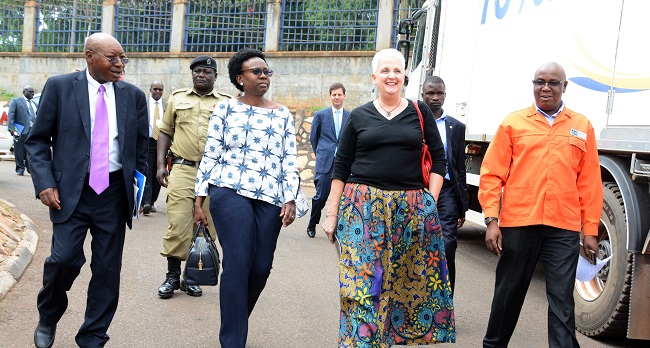
L-R: NMS board chair, Dr Jotham Musunguzi; health minister, Dr Ruth Acheng; American ambassador to Uganda, Deborah Malac; and NMS general manager, Moses Kamabare, on arrival for the launch of the NSM plus enterprise resource planning system at the stores headquarters in Entebbe

The minister made the remarks on Friday, February 15, 2019 during the launch of a $10.3 million Enterprise Resource Planning (ERP) system at the National Medical Stores (NMS) headquarters, Entebbe in Wakiso district.

The United States Agency for International Development (USAID) funded the five-year ERP system software that will be used by NMS to manage procurement, warehouse management and drug distribution.

The system will also help health facilities to manage daily businesses including accounting, procuring and ordering drugs from NMS and project management.

The disappointed minister said it was so sad and painful to see people die as a result of drug shortage, yet government procures them to save the lives of Ugandans only to be stolen at the health facilities.

“Government buys the drugs to treat Ugandans for free, but a lot have been getting lost at the health facilities by the custodians,” she said.

Dr. Aceng said her ministry would do what it takes to prosecute health workers who steal drugs and hold them accountable.

She said the ERP system is one of the measures they will get to know who has been robbing government drugs and causing unnecessary deaths of Ugandans.

“When a health worker steals drugs that are meant to save someone’s live, it causes drug stock outs in health facilities. The health worker directly sentences the patient to death. Now we have the system in place, and we need to know who is stealing the medicines and we shall deal with them accordingly,” she said.

She also advised the health workers to go back to their core code of ethics and standards of practice of saving people’s lives.

The US Ambassador to Uganda, Deborah Malac, reaffirmed the US government’s commitment to improving the supply chain system in Uganda.

Malac said that, over the years, the U.S. government has provided significant support to Uganda to improve health for thousands of people.

 She said that, last year, the U.S gave more than $500 million, making it the largest single donor to Uganda’s health system.

She disclosed that the fund has assisted more than 10 million Ugandans get tested for HIV, contributed to the largest-ever distribution of insecticide treated bed nets in the world and more than 700,000 women have safe deliveries in health facilities.

The ambassador said the launch of the ERP was the latest milestone demonstrating the strong partnership between Uganda, US and other stakeholders to accelerate Uganda’s progress towards an effective and sustainable supply chain system.

“An efficient and effective supply chain is a component for providing Ugandans access to quality health care in order to lead a healthy and productive life,” Malac said.

Malac said her government was impressed with the way NMS has managed $27 million commodities that they provided over two years to fill the important gap in antiretroviral (ARVS) drugs.

She however noted that getting drugs to over one million Ugandans living with HIV/AIDS in many health facilities across the country is a formidable challenge that calls for better health systems.

“These drugs are a matter of life and death for the people who need them and no matter how different the logistics, we must succeed in delivering them,” she added.

Malac said the ERP system would provide a viable solution for improving the public sector’s over all transparency, accountability, forecasting and management of health supplies.

 She tasked the NMS staff to manage the system well in order to benefit Ugandans and do its intended purpose.

“Managing this new system is not a matter of simply installing new software on some computers, it is an entirely new way of doing business which requires changing organisational processes and managing the change throughout the supply chain,” she said.

She commended the ministry of finance for its commitment in financing the health sector and the local government which she said plays a critical role in the supply chain cycle and puts the drugs and commodities into the patient’s hands.

 She however asked the Ugandan government to increase its funding for health sector.

The NMS general Manager, Moses Kamabare, said the system would eliminate the use of paper work and saving health facilities huge amount of money they have been spending in delivering hard copies of their drugs and other medical supplies orders.

Kamabare said the ERP system will also help health actors including the health in-charges to monitors drugs right from the manufactures, to the NMS stores and delivery of drugs to their respective health centers.

“Because the health in-charges will be able to see the supply chain from the manufacturers, to our stores, to the time when the drugs are loaded to truck to their areas, it will wipe out the negative mentality that NMS were supplying empty boxes to health centers and drugs that the health centers did not ask for,” he said.

Dr. Diana Atwine, the ministry of health’s permanent secretary, said the system would silence politicians who always claim that government is doing nothing towards improving the health of Ugandans.

“Health is one of the of leading agendas politicians use to discredit government. The ERP system launch is timely as we near election campaigns, politicians will have nothing to say about the poor health service delivery as this system will help us to tract, monitor, account to the people and increase transparency,” she said. 

The launch was attended by the NMS Chairman of the Board, Dr. Jotham Musinguzi; the Kabarole district health officer, Dr. Richard Mugahi; and former Mbarara municipality MP, Dr. Medard Bitekyerezo, among others.

By Hope Mafaranga
IUCN’s Andersen to replace Solheim at UNEP

0

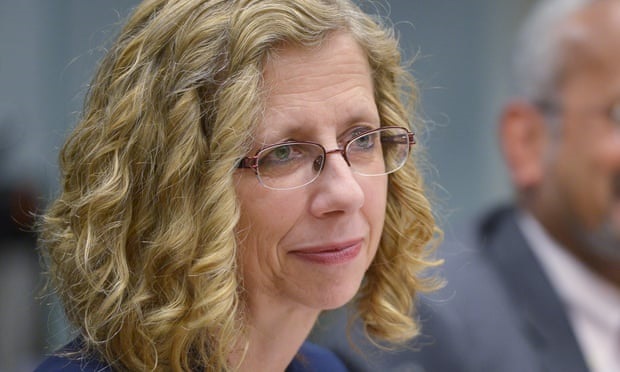
The UN secretary-general has picked the Danish economist and environmentalist, Inger Andersen, as its new environment chief, according to a letter seen by Agence France-Presse, turning the page on a scandal over expenses that rocked the UN agency.

Inger Andersen
Inger Andersen of the IUCN. Photo credit: Mandel Ngan/AFP/Getty Images

Andersen, who heads the International Union for Conservation of Nature (IUCN), a union of governmental and non-governmental bodies around the world, is set to succeed Erik Solheim of Norway, who resigned in November amid an outcry over his huge travel expenses.

The UN deputy secretary general, Amina Mohammed, told a meeting of ambassadors on Thursday, February 14, 2019 that her boss, António Guterres, had chosen Andersen.

Her nomination as head of the Nairobi-based UN environment programme (UNEP) will be submitted to the general assembly for approval.

Andersen, 60, has also served as the World Bank vice-president for the Middle East and north Africa and worked at the UN for 15 years on water and environment issues.

If confirmed as expected, Andersen will take the helm at UNEP after Solheim’s scandal-racked tenure.

A UN audit last year found Solheim had spent nearly $500,000 (£390,000) on travel over 22 months at a time when the world body is struggling with shrinking budgets.

His globetrotting raised accusations that he showed little regard for the environment and efforts to reduce carbon emissions generated by air travel.

The audit found that UNEP had a “culture of scant regard for internal controls and existing rules”, with Solheim taking too many trips to Paris and Oslo and spending little time at the Nairobi headquarters.

The findings prompted some donors to withhold funding to UNEP.

Andersen’s nomination comes amid a push by Guterres to appoint more women to senior UN posts. The UN chief is also preparing a major climate summit in September to push for international action to confront global warming.

Courtesy: The Guardian of London

Group flays impending EU, Vietnam timber trade deal

0

A looming trade agreement on tropical timber involving the European Union and Vietnam is being resisted by a civil society group, which insists that the Southeast Asian country must first clean up its act.

Timber Trade
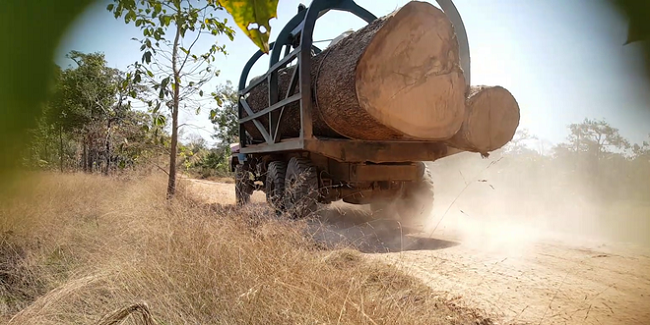
A truck ferrying timber product

Though Vietnam has banned logging in its own forests, Vietnamese loggers are allegedly crossing the border and plundering national parks in Cambodia.

Amid reported growing opposition to the deal among members of the European Parliament, the EU International Trade Committee will on Tuesday, February 19, 2019 debate the agreement, and the European Parliament will be voting on it in March.

The campaigners insist that the EU must not conclude a trade agreement with Vietnam if Vietnamese traffickers are laundering illegal timber from Cambodia.

“The EU is working on a trade deal that would effectively let Vietnam launder the timber it has been stealing from Cambodia and export it to Europe unhindered,” says Reinhard Behrend of the Rainforest Rescue, a not-for-profit outfit.

“We want EU policymakers to know that countless Europeans don’t want timber from Vietnam and Cambodia,” he adds.

The EU is one of the largest markets for tropical timber and wood products. It has been estimated that more than half of that timber has been felled illegally.

In 2003, the EU drew up the Forest Law Enforcement, Governance and Trade (FLEGT) Action Plan. A part of FLEGT is the EU Timber Regulation. Voluntary Partnership Agreements (VPA), which are concluded between individual countries and the EU, are a central pillar of FLEGT.

VPAs essentially stipulate that source countries guarantee that the timber they export has been legally sourced. The EU, in turn, eliminates import inspections.

This requires source countries to revise their forest laws, put monitoring in place, strengthen forest management and fight corruption. The VPA negotiations include representatives of NGOs and local communities.

The EU is currently negotiating with numerous countries. Negotiations with nine countries are still in early stages, while talks with Ghana, Liberia, Cameroon, the Central African Republic and the Republic of Congo have progressed rather far. At present, Indonesia is the only country to issue FLEGT licenses.

But, according to environmentalists, the FLEGT Action Plan and VPAs have serious flaws.

“’Legal’ timber is not necessarily legitimate. Legal logging is often devastating for rainforests and violates the rights of indigenous people. Many experts do not consider logging in the tropics to be sustainable in any form, and therefore advocate a ban on tropical timber imports.

“The exporting nations see the trade agreements as a means to sell more timber and wood products to the EU, thus increasing pressure on their forests. A thriving market can also create incentives for criminals.

“FLEGT and VPAs govern trade only with the EU, not with third countries. While many countries, including the US, Canada, Australia and China, are taking action against illegal logging and timber trafficking, criminals are still finding plenty of wiggle room,” states Behrend. The Rainforest Rescue has meanwhile taken up a campaign against an EU seal for timber trade with Vietnam.

Bill Gates donates $15m to global GMOs campaign

0

The Gates Foundation is said to be funding a campaign to “end world hunger” by promoting genetically modified organism (GMO) technology. The organisation has reportedly hired 400 “science ambassadors” to influence agricultural policy in 35 countries.

Bill Gates
Bill Gates of the the Bill and Melinda Gates Foundation

According to an article published by the Organic Consumers Association (OCA), the Bill and Melinda Gates Foundation has in the last four years donated a total of $15 million to two global campaigns aimed at “ending world hunger” by expanding the use of GMO technology.

The first, called the “Alliance for Science,” was created in 2014 with the intention of “depolarising” the GMO debate, the OCA disclosed in the publication, adding that the second, called “Ceres2030,” was created in 2018 to help the United Nations achieve its goal of “zero hunger by 2030.”

Both campaigns are headquartered at Cornell University.

The Alliance for Science has reportedly received $12 million from the Gates Foundation so far, while Ceres2030 was founded with a $3 million grant in October 2018.

The funds for the Alliance for Science will be used “to ensure broad access to agricultural innovation, especially among small farmers in developing nations,” says a Cornell University press release.

The Alliance for Science is said to have hired nearly 400 “science advocates” to “champion evidence-based agricultural policies” (aka share the gospel of GMOs) in 35 countries.

“The situation is increasingly urgent, with many countries at critical junctures in determining whether plant science can help deliver food security and reduce the environmental damage caused by agriculture,” said Alliance for Science director Sarah Evanega.

“We must be sure that science-based solutions don’t bypass the poor.”

The Alliance has reportedly built a network of more than 9,000 “science allies” representing more than half the world’s countries and every U.S. state, the release says.

Last fall, the Gates Foundation helped start another campaign at Cornell called “Ceres2030”, named after the Roman goddess of agriculture.

The “non-profit” campaign will advise the United Nations on which policies and investments to make in order to achieve its goal of “zero hunger by 2030.”

Several of Ceres2030’s board members are said to have links to Big Ag, points out Jonathan Latham, cofounder of the Bioscience Resource Project. Chief among them are:

  1. Ronnie Coffman, secretary of the International Service for the Acquisition of Agri-biotech Applications, an agribusiness lobby group for GMOs based at Cornell.
  2. Prabhu Pingali, a cornell professor who conspired with Monsanto executive Eric Sachs and PR executive Beth Anne Mumford to place into scientific literature “subjects chosen for their influence on public policy.”

“Based on internal emails obtained from Cornell via the Freedom Of Information Act, the nonprofit US Right To Know concluded that “The Cornell Alliance for Science is a PR Campaign for the Agrichemical Industry” which uses Cornell’s name as cover,” Latham writes.

Images: De-risking sustainable off-grid lighting

0

A collaboration involving the United Nations Development Programme (UNDP) Country Office and the Global Environment Facility (GEF) is supporting the government of Nigeria to develop a project titled: “De-risking Sustainable Off-grid Lighting Solutions in Nigeria”.

The aim of the initiative is to promote private sector investment in sustainable off-grid lighting technologies by establishing a sound policy environment that facilitates the creation of a self-functioning and sustainable market in Nigeria.

At a daylong validation workshop in Abuja on Thursday, February 14, 2019, stakeholders were presented an overview of the Project Document wherein they (the experts) provided inputs into the project design in the bid to finalise the document .

De-risking off-grid lighting
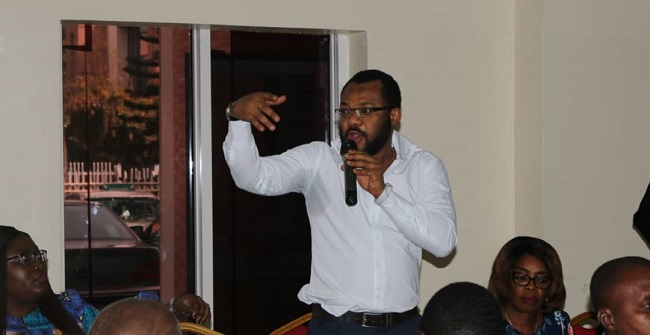
Segun Adaju of Consistent Energy (speaking) and Etiosa Uyigue of Community Research and Development Centre, during the workshop
De-risking off-grid lighting
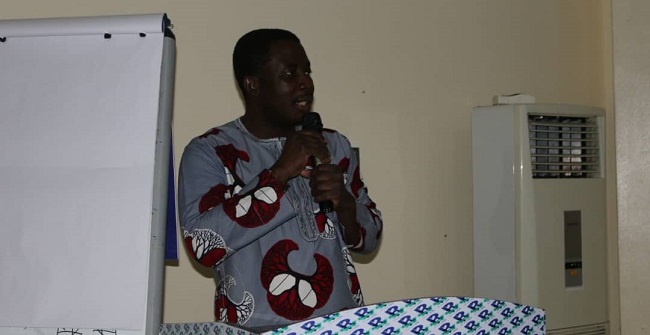
Muyiwa Odele of the UNDP delivering an opening speech
De-risking off-grid lighting
Sanju Deenapanray, a consultant to the project, addressing the gathering
De-risking off-grid lighting
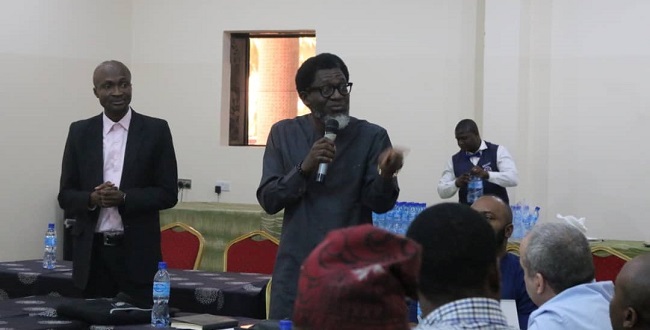
A participant making a contribution
De-risking off-grid lighting
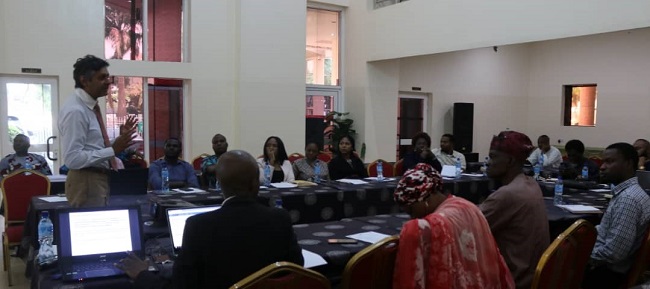
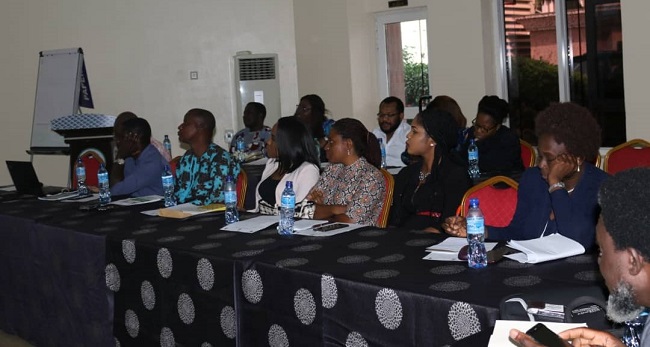
A view of participants at the workshop
De-risking off-grid lighting
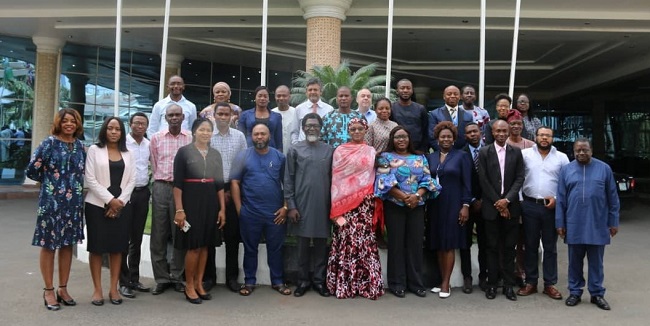
Group photo of participants at the workshop

Hunger on the rise in Africa, UN report reveals

0

Hunger is on the rise in Africa mainly due to difficult global economic conditions, adverse climatic conditions due to El Nino and soaring staple food prices, according to a new report published by the UN.

Giovanie Biha
ECA’s Deputy Executive Secretary, Giovanie Biha

The 2018 Africa Regional Overview of Food Security and Nutrition Report was jointly published by the UN Economic Commission for Africa (ECA) and the UN Food and Agriculture Organisation (FAO) on Thursday, February 14, 2019 in Addis Ababa, Ethiopia.

The report revealed that the prevalence of undernourishment continues to rise in Africa and now affects 20 per cent of the population on the continent, more than in any other region.

According to the report, there are 821 million undernourished people in the world, some 257 million of them currently living in Africa, of which 237 million in sub-Saharan Africa and 20 million in Northern Africa.

“Compared to 2015, there are 34.5 million more undernourished people in Africa,” the report indicated.

Nearly half of the increase is due to the rise in the number of undernourished people in West Africa, while another third is from Eastern Africa, the report disclosed.

The report also indicated that food insecurity in some African countries has been worsened by conflict, often exacerbated by adverse weather, which has left millions of people in need of urgent humanitarian food assistance.

According to ECA’s Deputy Executive Secretary, Giovanie Biha, “the report sounds alarm bells for the continent.”

“At this rate, Africa does not seem to be on track to achieve the Sustainable Development Goals (SDGs) target number 2, which is zero hunger,” Biha said.

“African economies grew at impressive rates often exceeding five per cent over the past decade spanning from 2004 to 2014.

“However, poverty and hunger are still hanging in as significant economic growth has not been integrated and inclusive,’’ Biha said.

In order to achieve the SDGs by 2030, Africa needs to enact reforms that would help build resilience, and raise potential growth and its inclusiveness, she said. 

$900m worth of Pangolin seizures made in Nigeria in 2018

0

The Nigeria Customs Service (NCS) says that more than $900 million worth of Pangolin for illicit trading were seized in Nigeria in 2018.

pangolins
The Pangolin

Asst. Comptroller Mutalib Sule of the NCS, Federal Operations Unit, Zone A, Ikeja, Lagos, made the disclosure at an event to mark the 2019 World Pangolin Day on Wednesday, February 13, 2019 in Lagos.

The event, which was organised by the Nigerian Conservation Foundation, Lekki, Lagos, in collaboration with the Pangolin Conservation Guild of Nigeria had “Pangolins and Politics’’ as its theme.

Pangolin is an endangered African and Asian mammal with body covered with horny overlapping scales. It has a small head with an elongated snout.

It has a long sticky tongue for catching ants and termites and a tapering tail; it also has large protective keratin scales covering the skin. Pangolin is the only known mammals with this feature.

“The summary of Pangolin seizure by the FOU Zone A under my superintendent in the year 2018 is 14,833 metric tonnes.

“My study across the world revealed that this is the highest seizure of Pangolin in the world.

“Japan came a distant second having made a seizure of 7.100kg of Pangolin in the same year with the estimated value of $450, 000.

“Going by this, Nigeria’s seizure under my watch cannot be less than $900,000,000 million or even more,’’ Sule said.

The assistant comptroller-general of NCS said that people engaged in illicit trade of Pangolins because of the benefits.

“Roasted pangolin scales are believed to cure cancer, relieve palsy and even stimulate breast milk.

“Pangolins are hunted for food, for use in traditional medicines and as fashion accessories; it is considered a delicacy in China, Vietnam and other parts of South East Asia.

“The scales are prized $3,000 per kilogram, while the meat is $300 per kilogram; live pangolin attracts $1,000. Based on current black-market prize, a kilogramme of pangolin is sold at $15,000.

“The mouth-watering price of the illicit trade largely accounted for the business to boom and attract international attention. About 10,000 Pangolins are poached every year.’’

According to Sule, the NCS has been working hard to curtail this act.

“On Feb. 12, 2018, the FOU patrol team led by my humble self went to a building located along Allen Avenue and confiscated 54 sacks of pangolin scale and 218 pieces of elephant tusks.

“The Pangolin weighed 2001kg, while the elephant gave us 343kg; a Chinese citizen was apprehended in connection with it and taken to court by customs for prosecution.

“On March 3, another Chinese was arrested at a location off Toyin Street; 329 sacks of pangolin were discovered and evacuated; the sacks gave us 8.492 metric tonnes.

“A second visit there gave us 78 sacks of pangolin of 1,771 metric tonnes; also, on July 22, 2018, around Lekki area of Lagos, 21 sacks of pangolin and 4 pieces of elephant tusks were found stashed in a shop.

“On Aug. 11 of the same year, we swooped on the den of some Chinese nationals suspected to be engaging in the illicit trade; 10 sacks of pangolin were found and evacuated; these gave us give us 738 metric tonnes,’’ he said.

He noted the need stop the poaching and trading of Pangolins because it will affect the ecosystem and make the animals go into extinction, especially as it is a rare species of mammal.

Sule also highlighted that some of the challenges that the NCS face in its mission to seize and arrest culpable individuals in connection with this highly profitable illicit trade of pangolins.

According to the assistant comptroller general, the challenges include dangerous terrains while making arrests, resistance, attacks, poor reward system and lack of enforcement of laws against trafficking as well as the judicial system.

By Grace Alegba and Vivian Ihechu

NiMet announces further deterioration in visibility over Nigeria

0

The Nigerian Meteorological Agency (NiMet) has announced that there will be a further deterioration of horizontal visibility over most parts of the country in coming days.

Sani Marshi
Director-General/Chief Executive Officer of NiMet, Prof. Sani Mashi

NiMet disclosed this in a weather alert by Mrs Olaniyan Olumide, Assistant General Manager, NiMet’s Central Forecast Office, on Thursday, February 14, 2019 in Abuja.

Olumide said that visibility had slightly improved over the northern parts of the country due to the southward propagation of dust into the Central and the Southern cities.

She explained that the dust plume currently being observed over the southern Chad and Niger Republic was expected to propagate into the country in the next few hours.

“A further deterioration of the horizontal visibilities to values below one to two kilometres over the northern parts of the country with possibilities of visibility less than 1000m (1km), especially over the North-eastern cities is expected.

“The horizontal visibility over the central states in dust haze condition is still poor with visibility ranging from one to five kilometres.

“Some cities over these regions are still expected to have visibility less than 1000m (1Km) with no significant change expected in coming days over the region,” she said.

Olumide further disclosed that the visibility over the southern region was currently ranging between 3000m to 5000m in hazy condition.

She added that poorer visibility had been reported over the coast and places close to water bodies, especially in the early morning due to fog with no significant change to be expected in coming days.

“Road users are still advised to exercise caution and avoid over speeding, especially during early morning period when horizontal visibility is impaired by fog, mist or dust haze.

“Flight disruptions are also likely during this period, especially over the North eastern airports, she said.

Olumide also warned on the health effect of the weather, while calling for protection against the adverse weather.

“Dust particles are well known for their potential to cause respiratory and cardiovascular health problems. These can also irritate eyes, throat and skin.

“People allergic to dust are advised to take necessary precautions and seek medical advice if experiencing increased symptoms,” she said. 

By Sumaila Ogbaje

Kenya to host maiden African protected areas congress in November

0

Kenya will in November 2019 host the inaugural Pan African Protected Areas Congress to discuss the continent’s protected areas like wildlife sanctuaries, forests, wetlands and marine ecosystem, officials said on Thursday, February 14.

Margaret Mwakima
Margaret Mwakima

Margaret Mwakima, Principal Secretary in the State Department of Wildlife, said the meeting, which is to be held in Nairobi from November 18 to 23, would be attended by more than 2,000 delegates.

“The congress will be attended by senior government officials, researchers, donors and business leaders and will focus on African-led solutions to challenges facing our biodiversity,” said Mwakima.

She noted that Africa’s biodiversity hotspots are grappling with threats linked to climate change, human encroachment and invasive species, hence undermining their ability to unlock benefits to local communities.

“We are the cradle of biodiversity and wildlife and the November congress will chart a new roadmap to enhance protection of these natural treasures that are the bedrock of our sustainability agenda,” said Mwakima.

She said that delegates would discuss harmonisation of policies and legislation to strengthen the war against illegal trade in wildlife products in Africa.

The principal secretary said that Kenya was keen to tap into expertise from other African countries during the November congress to address conservation challenges like habitat loss.

“As a country, we are losing our large mammals at a high rate and are keen to learn from models that have worked in other African countries to reverse this trend,” said Mwakima.

John Waithaka, Chairman of Kenya Wildlife Service, said that Kenya had developed innovative strategies to reverse loss of marine and terrestrial ecosystems that were key to accelerating green growth.

“The congress will provide an opportunity for us to showcase biodiversity conservation programmes that have worked and can be replicated elsewhere in the continent,” said Waithaka.

Shell invites bid for new FPSO in Bonga

0

Shell Nigeria Exploration and Production Company (SNEPCo) has announced Invitation to Tender (ITT) to contractors for the development of the Bonga South West Aparo (BSWA) oil field.

Bayo Ojulari
SNEPCo Managing Director, Bayo Ojulari

Bamidele Odugbesan, Shell Spokesman, said in a statement on Thursday, February 14, 2019 in Lagos that the project’s initial phase includes a new Floating, Production, Storage and Offloading (FPSO) vessel, over 20 deep-water wells and related subsea infrastructure.

According to Odugbesan, the field lies across Oil Mining Leases 118, 132 and 140, about 15km southwest of the existing Bonga Main FPSO.

“The ITT is for engineering, procurement and construction contracts for the 150,000 barrels per day project in the Gulf of Guinea.

“This is a new vista for deep offshore oil and gas exploration in Nigeria based on a revised commercial framework embraced by government and the project investors.

SNEPCo’s Managing Director, Bayo Ojulari, said the Nigeria National Petroleum Corporation (NNPC) and its Unit partners were revising the terms of the OML 118 Production Sharing Contract.

Ojulari said, “SNEPCo has concluded OML 118 negotiations with the NNPC. We now have a clear commercial framework, supported by the government and project investors, toward a potential Bonga South West Aparo Final Investment Decision (FID).”

Ojulari described the conclusion of the commercial framework as a key milestone for the project and the development of Nigeria’s deep-water oil and gas industry.

“The new framework marks the start of the second generation of deep-offshore exploration and development, not just for SNEPCo but for all players in Nigeria’s deep water.

“This is a model that we see being replicated in the industry to further unleash Nigeria’s potential in deep-water exploration,” he said.

On the estimated project cost, SNEPCo’s General Manager for BSWA, Adam Bradley, said: “The release of ITT will allow ourselves, government and investing parties to understand the actual costs for the initial phases which we expect will be very competitive.”

By Yuñus Yusuf