Home Blog Page 1704

Government investigates alleged trafficking of pangolin scales, ivory tusks

0

The Nigerian government has initiated investigations into the seizure by the Vietnamese Customs Service‎ of over 2,500 kilogrammes of pangolin scales and 600 kilogrammes of ivory tusks. Also being investigated are seizures by the Hong Kong Custom Service of 8,200 kilogrammes of pangolin scales and 2,000 kilogrammes of ivory said to have originated from the Apapa seaport in Lagos.
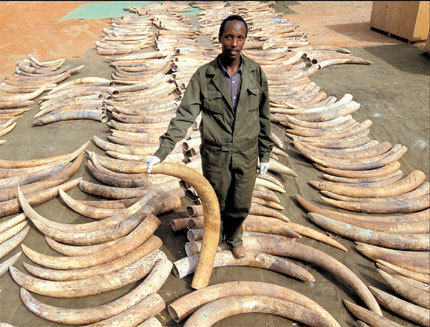
Ivory trafficking
Ivory trafficking. Photo credit: girlegirlarmy.com

Minister of Environment, Suleiman Hassan Zarma, made this known while reacting to media reports on the seized items which are said to have high market values especially for the use of the pangolin scales as medicinal ingredients in parts of Asia, especially China.

“‎The ministry has initiated the investigation of the reported illegal trade by communicating officially with the Vietnamese and Hong Kong CITES Management Authority with a view of furnishing us with the documents that will be forwarded to the Nigerian Customs Service and INTERPOL for further investigation,” stated the minister.

CITES implies the Convention on International Trade in Endangered Species of Wild Fauna and Flora. It is an international agreement between governments, which Nigeria is a party to. Its aim is to ensure that international trade in specimens of wild animals and plants does not threaten their survival.

According to Zarma, a land surveyor, it was rather unsettling when he received the information that the Vietnamese Customs made the discovery in concealed containers declared as consigning knocked wood by the Vietnamese company – VIC Thanh Binh Import-Export Company Limited with office address at Lien Hong Commune, Dan Phuong District, Hanoi.

“More disturbing is the fact that Nigeria was mentioned as the source despite our laudable conservation efforts which informed our leading the war against illegal wildlife trade in the West African region,” Zarma stated.

He opined that the source could not have been Nigeria as the pangolin is close to extinction in the country, adding that the elephant population in Nigeria, besides being under strict conservation regimes, would not be able to provide such high volume of ivory.

“Nigeria is being used as a transit route for illegal wildlife trade and the image of our nation is being tarnished globally,” he lamented.

Reiterating the country’s commitment to the fight against illegal wildlife trade, the minister noted that Nigeria signed and ratified the CITES in 1974 and, to give municipal credence to the convention, the country promulgated the Endangered Species (Control of International Trade and Traffic) Decree No.11 in 1985, now enacted as the Endangered Species Act 2016.

While stating that ‎pangolin and elephants are highly protected and endangered species and listed on Appendix I of CITES as well as on Schedule I of the National Endangered Species Act, 2016, the minister however observed that ‎export of wild fauna and flora from Nigeria are covered by CITES Permit/Certificates.

“CITES is the pre-eminent global legal instrument for regulating international trade in wild animals and plant and has the objective of ensuring that International trade in wild fauna and flora does not compromise the protection of endangered species, hence the illegal trade in this species and its derivatives are absolutely prohibited,” he said.

Zarma, therefore, reaffirmed the ministry’s role as focal point of CITES implementation and its commitment to conserve wild species which he observed are now almost driven into extinction due to over exploitation, habitat change and illicit trafficking.

“It is in view of the above that there has not been any case of illegal wildlife trade from Nigeria as a source country. However, globalisation allows and encourages international trade which traffickers have exploited and exposed us to some of these unwholesome practices which we frown at as a nation and defender of endangered species,” concluded the minister.
Women worst-hit by impact of climate change – Experts

0

Experts have called for concerted efforts from the international communities, regional bodies and other stakeholders to manage risks of climate change on women.

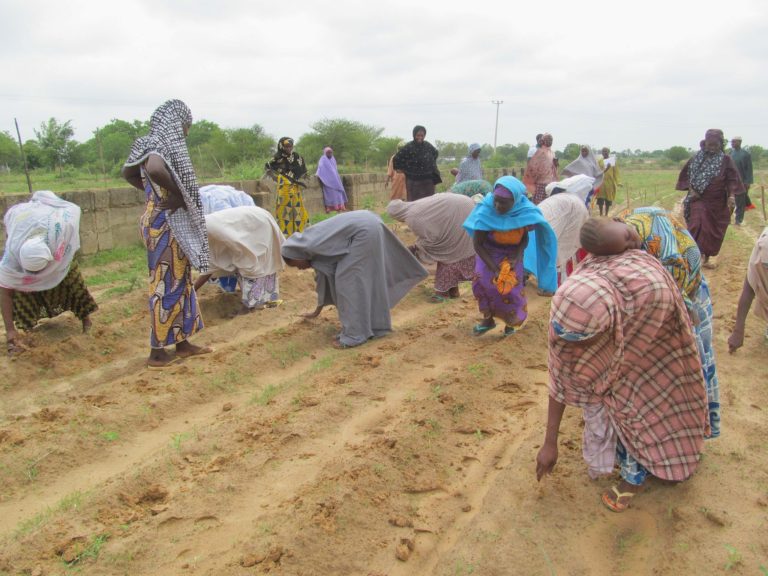
Women farmers
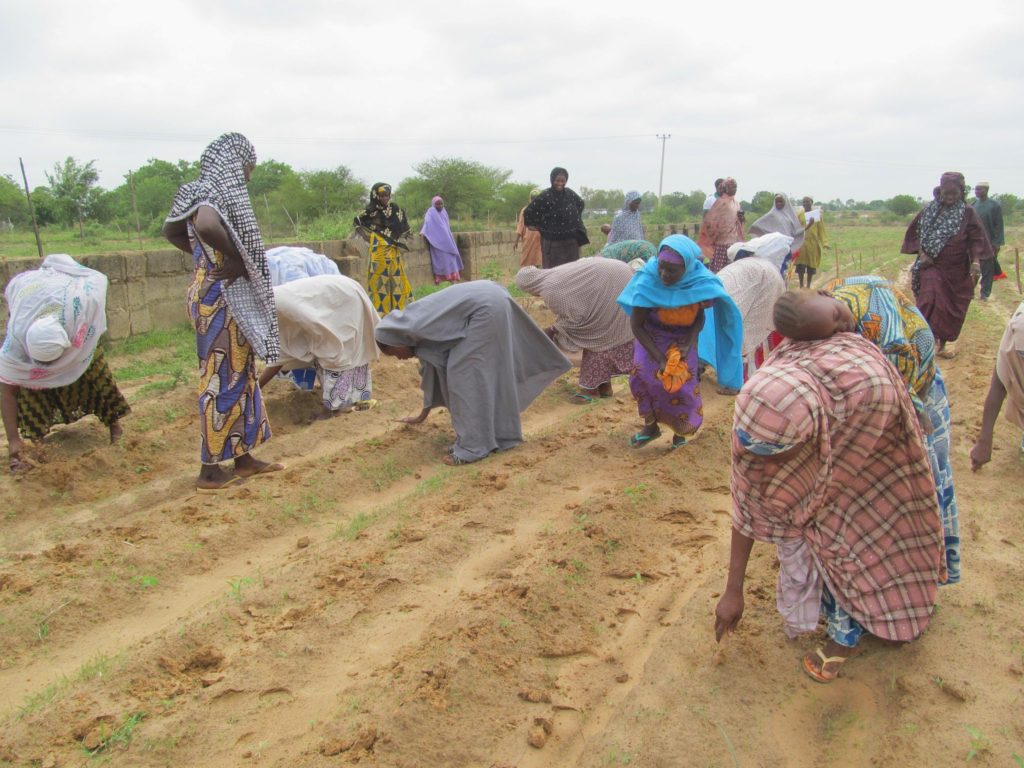
Climate change impacts on smallholder and subsistence women farmers

They made the call at a session on “Addressing the Gender Dimensions of Climate Change and Security’’ at the Planetary Security Conference at the Hague.

The experts insisted that the impact of climate change to water, peace and security on women was evident in the loss of livelihoods and dignity.

According to them, climate change has been recognised as a defining threat to peace in the 21st Century, as increasingly demonstrated by ground level realities.

Ms Amanda Kron, Project Coordinator for Climate Change and Security, UN Environment Programme, said that climate change impacts on smallholder and subsistence women farmers, compounded by environmental and physical processes affecting production at all levels.

Kron said that through rising temperature and changes in rainfall patterns, men now migrate in search of pastures for their cattles, making women to take the lead in the homes.

She added that there was the need for gender-specific interventions when it comes to mitigating impact of climate change, saying that women and men react differently to water scarcity and its uses.

“These impacts are expected to disproportionately affect the welfare of the poor in rural areas, such as female-headed households and with limited access to land and modern agricultural inputs rises conflict.’’

Kron called for continuous research, advocacy and data availability to manage challenges that women faced toward understanding areas of intervention.

Also, Ms Shaza Suleiman, Programme Specialist, Peace and Security, UN Women, said rural areas still account for almost half of the world’s population and about 70 per cent of the developing world’s poor people.

Suleiman noted that major impacts of climate change in rural areas were being felt through impacts on water supply, food security and agricultural incomes.

She said that less than 20 per cent of landholders were women, making them to play a disproportionate role in agriculture.

According to her, on an average, women make up around 43 per cent of the agricultural labour force in developing countries but have not been duly recognised for the work they have done.

Suleiman added that protecting women’s right to land and cash crops was key to promoting their economic empowerment, saying this could be achieved through statutory and customary laws.

“Legal protection of women’s rights can help to transform natural resources to economic opportunities, a lack of rights to land is a major significant barrier to resilience in times of climate change conflicts.’’ he said.

Also, Mr Thomas Ritzer, UN Department of Political Affairs, said that women played a major role in key production, while about 80 per cent of food produced in developing countries were by women.

According to Ritzer, such efforts is compounded during and after conflict, saying reduced access to land affects livelihoods and empowerment opportunities.

“As a result of the impact of conflict, there is reduced access to land due to insecurity or damages to local resources, destruction or looting of agricultural infrastructure, lack of availability of agricultural extension inputs.

“In female-headed households with multiple children, the loss of economic power and livestock due to conflict can have a direct impact on malnutrition and overall wellbeing,’’ he said.

Ritzer stressed that data availability would help in knowing what specific areas of intervention would be addressed.

The high-level conference was organised by the Planetary Security Initiative, supported by the Free Press Unlimited and the Clingendael Institute.

The conference’s thematic focus includes contribution of land and climate policies to peace, urban risks and instability, Geopolitics of energy transition.

Iraq, Lake Chad, Mali and the Caribbean Small Island Developing States are spotlight regions to illustrate possible ways forward in addressing these themes.

By Tosin Kolade

Women urged to invest in waste management business

0

An expert in waste management, Mrs Sade Nubi, has called on women at various levels to embrace and invest in the waste management business to add value to their livelihood.

Waste disposal
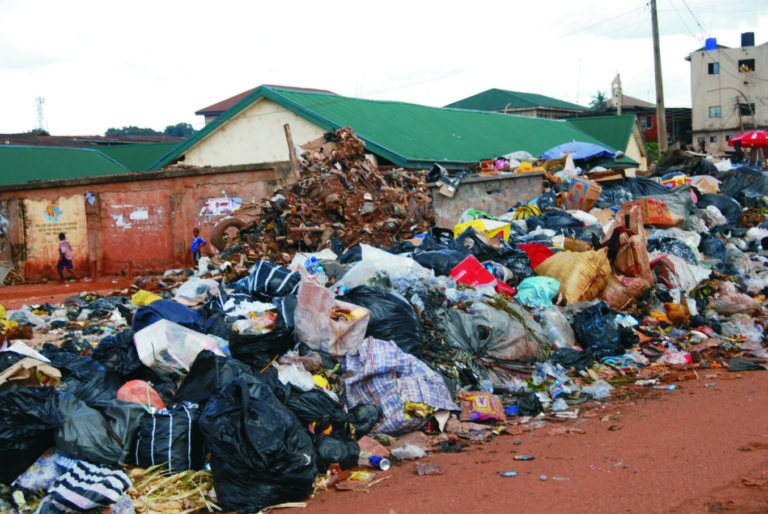
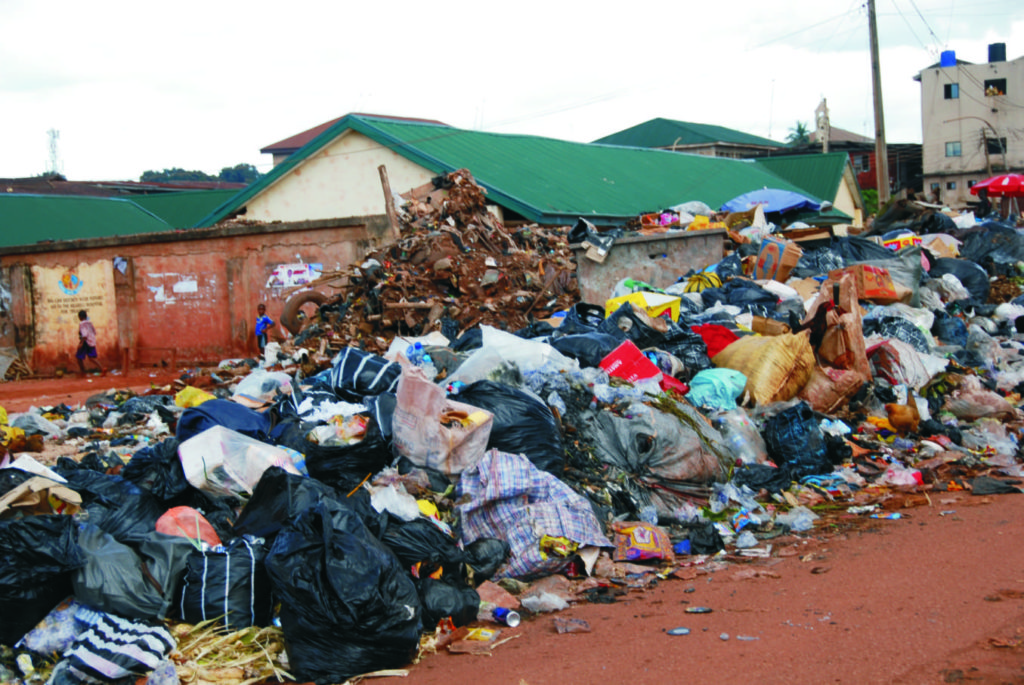
Waste disposal and management has posed a major challenge to authorities in Lagos and other major cities in Nigeria

Nubi, an engineer with Works and Physical Planning Department of the University of Lagos (UNILAG), made the call in an interview with the News Agency of Nigeria (NAN) Lagos on Wednesday, February 20, 2019.

“I would gladly say yes, women can partake in waste management business.

“It is not a business only for men; women can partake and even be more successful because it deserves attention.

“The woman just needs to understand the business chain and decide what aspect she wants. Waste management business can involve collection and disposal, sorting, treatment (recycling).

“Presently we have women in the different sectors. Some women who can afford a compactor work with government under the PPP (Public Private Partnership) scheme.

“They collect waste from households, commercial areas and then dispose of at designated dumpsites or landfill,’’ Nubi said.

She also said that other women working on a smaller scale were mostly involved in recycling which include recycling of Polyethylene Terephthalate (PET), plastics, paper, cans, nylons, glass, textile and bricks, wood and metals.

The recycling involves sorting of waste at the dumpsite or buying already-sorted materials and then they bale and send to the bigger recycling companies.

Others add more value by washing, crushing and pelletising before selling to the companies needing for raw materials.

Nubi also said that more women were going into up cycling. We now find women who make great and beautiful furniture from old used tyres and other recyclable materials.

“I can proudly say I have been in the waste management business for over seven years by managing the University of Lagos waste and generating revenue from recycling. At our sorting centre, we have a ratio of one male to two females.

“Gender activities play an important role in environmental household waste management. The results also show that more women, rather than men, handle household waste.

“More women use the business to also support the family as waste recycling in Nigeria is an untapped business which is very viable and lucrative,’’ she said.

A kilogramme of polythene is sold for N30 to N50, depending on the location of supply.

Nubi advised that those interested could get registered, certified to be licensed and get permit. 

By Okuanwan Offiong

UN appoints legal luminary, Joy Ezeilo, member of Civil Society Advisory Board

0

The United Nations has appointed Prof Joy Ezeilo as a member of seven distinguished experts to serve on the newly established Civil Society Advisory Board on prevention of sexual exploitation and abuse.

Prof. Joy Ezeilo
Prof. Joy Ezeilo

Ezeilo confirmed the appointment in a telephone interview with the News Agency of Nigeria (NAN) in Enugu on Wednesday, February 20, 2019.

Ezeilo, who is the Dean, Faculty of Law of the University of Nigeria, Nsukka (UNN) said the UN Secretary General, Antonio Guterres made the announcement in New York on Tuesday.

She listed other members of the committee to include Ms Rosa Freeman from the United Kingdom, Mr Pablo de Grieff from Colombia and Ms Adrijana Hanusic Becirovic from Bosnia Herzegovina.

Other members are Dr Najat Maalla M’jid from Morocco, Mr Vitit Muntarbhorn from Thailand and Mr Muna Ndulo from Zambia.

The functions of the board include advising the Secretary-General on ways to strengthen preventive measures and accountability mechanisms to address sexual exploitation and abuse.

The advisory board will also foster closer interaction with civil society and external experts and organisations as part of UN efforts to combat sexual exploitation and abuse.

Members of the board will serve in their personal capacity and will not receive any compensation or remuneration.

Prof Ezeilo is also the National Chairperson, Sexual Assault Referral Network Nigeria and was a member Board of Trustees for the UN Trust Fund for Victims of Trafficking from 2013 to 2016.

How weather affects Nigeria’s electoral processes, by environmentalist

0

An environmentalist, Mr Toyin Oshaniwa, has said that weather could play a fast one on the electoral process in Nigeria.

Oshaniwa, founder of Nature Cares Resources Centre, a not-for-profit organisation, said in Lagos on Wednesday, February 20, 2019 that the year’s electoral process had in one way or another sparked surprises due to weather conditions.

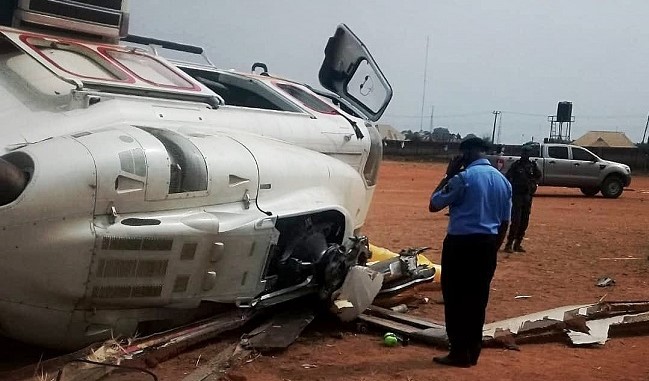
Helicopter crash
Owners of the helicopter that crash landed with Vice-President Yemi Osinbajo onboard attributed the accident to unusual weather conditions

He said that these conditions had been affecting lives, properties and might have stimulated election violence and instability in Nigeria.

According to him, some scenarios include the crash landing of Vice President Yemi Osinbajo’s chopper and the postponement of the Feb. 16 elections.

“An old saying goes that nature does not really care about man but that it is the sole responsibility or duty of man to care for nature or its environment.

“The 2019 election process has in one way or the other sparked surprises due to weather conditions that might have cost loss of lives and properties.

“Bad weather conditions may even stimulate election violence and instability in the country.

“Good case studies of weather interference in electoral processes include the instance that the INEC chairman ascribed to the Feb. 16 postponed elections to ‘bad weather and sabotage’.

“Also, the helicopter crash of Feb. 2 with the Vice-President Osinbajo inside and the Accident Investigation Bureau (AIB) said it was due to a `blown out’, meaning, chopper landed on a dry, sandy environment.

“The owners of the chopper also said that unusual weather conditions caused the crash,” he said.

Oshaniwa, however, lamented the dispositions of political parties and candidates who had shown no sign or commitment to address the “wicked” environmental related challenges.

He said: “Most political parties and their candidates did not mention in their various manifestos what specifics they will apply to address the wicked environmental related challenges in Nigeria.

“Such as waste management, deforestation, annual flooding, climate change, disease epidemic, water scarcity and many others.

“What they have focused on is elements of environmental nexus in their various debates and meetings, centered on food security (herders and farmers clashes).

“Of cause, that has strengthened the concept of `Farmers Manifesto’ during political rallies.”

Oshaniwa also said that 2019 elections in Nigeria stimulated the generation of datas, ideas, information and concepts that showed socio-economic situations of the nation.

“However, not much on ecological situations. The basis is due to lack of `Ecological Literacy’ in Nigeria.  Ecological perspectives are missing; ecology has become an unimportant subject to history.

“Politics, economics and society and so forth, have resulted in a generation of Ecological Yahoos, without a clue about nature or environment,” he said.

He urged Nigerians to raise a voice for the protection and conservation of nature because a nation without natural resources would soon plunge back to darkness.

By Itohan Abara-Laserian

AfDB commences electricity cooperative feasibility studies in Nigeria, Ethiopia

0

The African Development Bank (AfDB) has kicked off a feasibility study to explore the potential of electricity cooperative business models in Nigeria and Ethiopia. The effort is said to be part of the bank’s goal of achieving universal electricity access across Africa by 2025. Currently, power shortages diminish the region’s GDP growth by 2-4% per year, holding back job creation and poverty reduction efforts.

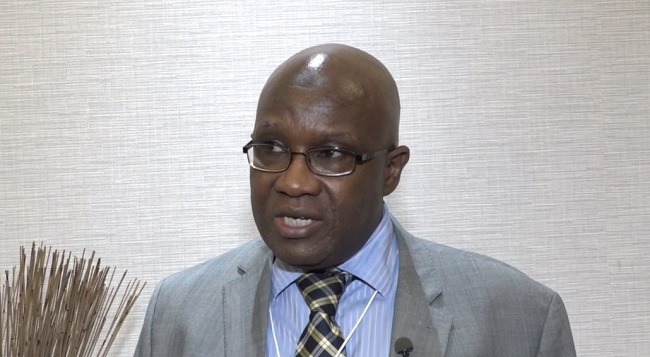
Batchi Baldeh
Batchi Baldeh, AfDB’s Director of Power Systems Development

The study, funded by the South-South Cooperation Trust Fund, will be conducted by the National Rural Electric Cooperative Association (NRECA) International over three months. NRECA will consider regulatory, legal, technical and socio-economic factors that impact the creation of electric cooperatives in the two nations.

Electricity cooperatives are tax-exempt businesses set up and owned by the consumers who benefit from the services provided in generation, transmission and/or distribution. They are used in many parts of the world to provide last mile connections to rural areas through grid extensions and cooperative enterprises. Where successful, they also improve rural electrification, while creating sustainable businesses.

Speaking at the kick-off meeting, Batchi Baldeh, the bank’s Director of Power Systems Development, thanked the South-South Cooperation Trust Fund for financing the initiative.

“This study is timely and aligned with the bank’s New Deal for Energy in Africa. We look forward to working with NRECA International to execute the study, and to leverage its extensive experience in electricity cooperative business models to pave the way for the implementation of transformational projects across Africa,” he said.

Underscoring the importance of government cooperation and commitment, he added that the cooperatives rely on strong partnerships among governments, rural/local communities and development partners for implementation and success.

“We selected Nigeria and Ethiopia following dialogue with their respective ministers of energy during the bank’s Africa Energy Market Place held in July 2018, where they expressed their governments’ commitment to improve rural access through established models. We rely on this cooperation to explore this innovative model of delivering our High 5 to light up and power Africa,” said Baldeh.

Findings of the study will be delivered in May this year. They will inform the viability of plans to pilot the model in the selected countries.

Corals need 9 to 12 yrs to fully recover from bleaching, study finds

0

Corals need nine to 12 years to fully recover following large environmental disturbances such as mass bleaching and storm damage, researchers from Australia’s Southern Cross University said in a paper published on Wednesday, February 20, 2019.

Coral reef
Coral reef

Corals are marine invertebrates within the class Anthozoa of the phylum Cnidaria.

They typically live in compact colonies of many identical individual polyps.

Corals species include the important reef builders that inhabit tropical oceans and secrete calcium carbonate to form a hard skeleton.

The study, conducted in the West Pacific Palau archipelago, between Australia and Japan, was able to collect long-term monitoring data as the reefs were not impacted by large-scale disturbances for 14 years.

However, the study is allowing the researchers to identify how reefs recover.

“Coral reefs are declining worldwide as a direct result of human influences.

“But unlike many reefs around the world, Palau’s reefs have been fortunate to experience over 14 years free from mass disturbance,’’ the study’s lead author Marine Gouezo said.

Palau’s 315 reefs suffered from a mass bleaching event in 1998 when an El Nino phase destroyed nearly 50 per cent of the corals.

By 2001 over 80 per cent of the reefs around Palau only had 0 to 5 per cent Acropora, a small polyp stony coral responsible for building the calcium carbonate substructure that supports the reef.

The Palauan reefs then experienced no major disturbance until two Category 5 typhoons in 2012 and 2013 inflicted an average 60 per cent loss in live coral cover along its eastern reefs.

Researchers then found that, while the rates of recovery differed among coral groups, “larval connectivity and juvenile coral density were prominent drivers of recovery for fast-growing Acropora.”

Rice farmers flag-off 2019 dry season farming

0

The Rice Farmers Association of Nigeria (RIFAN) on Wednesday, February 20, 2019 flagged-off its multi-billion-naira 2019 dry season rice farming.

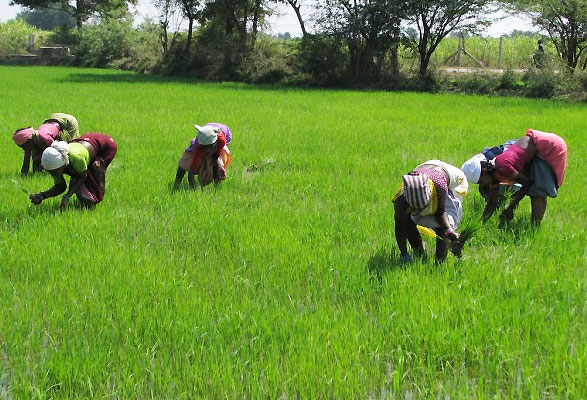
rice-farming
Rice farming

RIFAN President, Aminu Goroyo, told the News Agency of Nigeria (NAN) during the flag-off in Abuja that the project was executed under the Central Bank on Nigeria (CBN) Anchor Borrowers Programme (ABP).

The president, however, said that the association was working out the fund modalities with the bank.

He said that the planting would commence simultaneously in the 774 local government areas of the 36 states of the federation and FCT.

Goroyo said that each state and the FCT would commence distribution of high breed seeds and farm inputs to over 700,000 participating farmers that were expected to cultivate 570,000 hectares of land.

“To this end, for easy cultivation and good harvesting, 52 registered input suppliers, 20 service providers and 450 private extension officers will be involved.

“The programme, being a technology-driven process, will ensure that all aspects of the farming are involved.

“This 2019 dry season farming is in strict compliance with the use of only irrigable land with adequate irrigation facilities under the supervision of extension agents.”

Goroyo said that the CBN had expressed its willingness to continue to give necessary assistance to RIFAN because of its success story in rice production.

He said that most farmers are enthusiastic about the dry season farming because they were sure of high yields.

Goroyo stressed that the federal government decision to ban rice importation was another source of encouragement as it had started yielding the desired result.

“Nigerians are now consuming made in Nigeria rice, and aside that, the volume of rice smuggled into the country has reduced to 5 per cent and farmers are now getting dividends and value for their efforts,” he said.

The RIFAN president recalled that rice production in Nigeria has increased from 5.5 million tonnes in 2015 to 5.8 million tonnes by end of 2017.

He, therefore, challenged the beneficiaries not to default in their loan repayments because it would help to grow the economy.

“It has become a must to grow the nation’s economy and feed this country; the population is growing at a high proportion and when you pay back your loan, farmers will be on land to farm and feed.

The APB was launched by President Muhammadu Buhari on November 17, 2015 to create a link between anchor companies involved in the processing and small holder farmers of the required key agricultural commodities and address the country’s food deficit.

Saint Lucia ratifies Minamata Convention, Parties prepare for COP3

0

The Government of Saint Lucia has deposited its instrument of accession, thereby becoming the most recent Party to the Minamata Convention.

The Eastern Caribbean island nation made the deposit on Wednesday, January 23, 2019, to bring to 102 the number of Parties to the mercury pact.

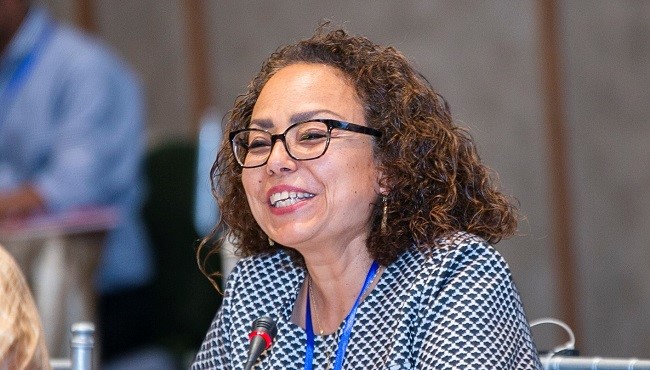
Rossana Silva Repetto
Rossana Silva Repetto, Executive Secretary, Minamata Convention on Mercury. Photo credit: IISD Reporting Services

Meanwhile, ahead of the Third Meeting of the Conference of the Parties (COP3) to the Minamata Convention, submissions for the COP on releases, waste, contaminates sites and effectiveness evaluation were received on Friday, February 15, 2019, the Convention has disclosed. It added that other submissions are due by May 31, 2019.

At its second meeting, the Conference of the Parties agreed on several action items to effectively implement the Minamata Convention and prepare for COP3, to be held in Geneva, Switzerland from November 25 to 29, 2019. In some areas, submissions are invited by parties and other stakeholders, while in other areas submissions are expected through the members of the Bureau of the Conference of the Parties.

Submissions have so far been made on topics such as “Mercury Releases to land and water”, “Mercury waste thresholds”, “Guidance on the management of contaminated sites”, and “Effectiveness evaluation”.

Submissions were received from governments of Argentina, Costa Rica, European Union and its Member States, Mauritius, Montenegro, Norway, Chile, Jamaica, Japan, Sweden, Uruguay and Switzerland.

Submission were received from organisations like the Natural Resources Defense Council (NRDC); Ms. Melissa Barbanell, International Council on Mining and Metals; Natural Resources Defense Council (NRDC); International POPs Elimination Network (IPEN); Prof. Svetoslava Todorova, Syracuse University; and World Health Organisation (WHO).

Nigeria on Thursday, February 1, 2018 deposited its instrument of ratification, thereby becoming the 88th Party to the Minamata Convention.

The Minamata Convention on Mercury (“Minamata Convention”) is an international environmental convention for global community to work collaboratively against mercury pollution. It aims at achieving environmentally sound mercury management throughout its life cycle. The Convention was adopted at the diplomatic conferences held in Minamata City and Kumamoto City in October 2013.

The 1st Conference of the Parties to the Minamata Convention (COP1), which gathered governments, intergovernmental and non-governmental organisations from around the world, held in Geneva, Switzerland from September 24 to 29, 2017.

The mercury accord entered into force on Thursday, May 18, 2017 after having garnered the required 50 ratifications.

Nigerians urged to plant four trees to replace one

0

Prof. Haruna Ayuba of the Nasarawa State University, Keffi, has called on Nigerians to plant a minimum of four trees to replace one, in order to manage the impact of climate change.

Haruna Ayuba
Prof. Haruna Ayuba

Ayuba, a Professor of Environmental Science, made the call on the sidelines of the Planetary Security Conference at The Hague, Netherlands on Tuesday, February 19, 2019.

He said that issues of climate change were evident with Lake Chad receding, in addition to environmental degradation and drought among others, while urging the Nigerian government to begin to take local solutions on climate change.

According to him, everyone has a huge role to play in ending the environmental impact of climate change, saying people ought to learn to plant trees whenever they have a reason to cut one.

“Environmental issues in Nigeria started when the country started talking about the Lake Chad recession from 25,000 square kilometres to less than 3,000 square kilometres.

“Anytime it comes to climate change, we are asked to think globally but act locally so at the local level, it can start with the individuals and when it comes to environmental problems, every person has a part to play.

“If you cut a tree, why can’t you plant four for instance, that is one way, because the trees and our forests serve as carbon sink, they absolve the atmospheric carbon-dioxide, that is what they feed on and they give us oxygen.’’

He said that Nigerian government could upscale that by implementing afforestation programmes and commended efforts of the government in its Great Green Wall initiative.

According to him, the initiative, if backed up with commitment, will go a long way to promoting environmental sustainability.

He stressed that the need for investment in bio-fuels and renewable energy, saying Nigeria could no longer depend on Kainji Dam for its electricity, adding that the water level had reduced extensively.

“Countries of the world are moving into smart solutions into technologies that are renewable, we have solar, wind, and all of these can be harnessed to provide energy for our population in Nigeria.’’

Ayuba also called on the Federal Government to step up its game by moving away from paying lip service through unending meetings and workshops in translating them into development.

The professor said in the 70s, Nigeria introduced large scale dams which led to loss of water, saying countries like Israel which had very little water around the Maghreb, had only 20 millimetres of rainfalls and it is managed.

“The food they are producing in the Maghreb, we cannot produce them in the Lake Chad, even though we have 600 millimetres of rainfall, “it is a big challenge’’.

“The little one we have, we mismanaged them through large scale dams, even small holder farmers have begun to buy generators to pump these water and the result is that the lake has receded and the water level is so low, now you have serious humanitarian crises, coupled with the terrorism that we have experienced over the last decade.’’

The high-level conference is organised by the Planetary Security Initiative, supported by Free Press Unlimited and the Clingendael Institute.

The conference thematic focus includes contribution of land and climate policies to peace, urban risks and instability, geopolitics of energy transition.

The Lake Chad, Mali, Iraq, and the Caribbean Small Island Developing States will be the spotlight during the conference to illustrate possible ways forward in addressing the themes.

By Tosin Kolade