Home Blog Page 1703

Centre launched for climate action monitoring in the Caribbean

0

Ten countries from the English-speaking Caribbean region convened at St. George’s University in Grenada from February 5 to 6, 2019 to discuss a new model of cooperation for measuring, reporting and verifying (MRV) climate action.
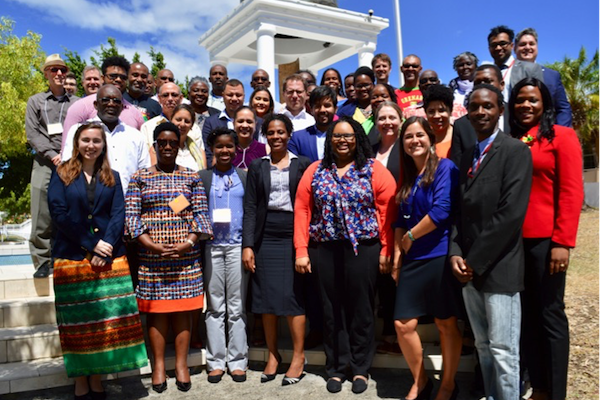
CCMRVH Group Grenada
Participants at the meeting to discuss MRV in St. George’s, Grenada. Photo credit: GHG Management Institute

The meeting started with a stark call to action, delivered by Damiano Borgogno of the United Nations Development Programme (UNDP) who said: “You cannot control what you cannot measure.”

Countries must be able to measure and track emissions to make informed decisions that result in climate change action, he said. Borgogno urged for enhancing Paris Agreement transparency processes in the region, noting that the Caribbean can lead others in working towards meeting the world’s 1.5°C climate target.

This meeting marked the formal launch of the Caribbean Measurement, Reporting and Verification “MRV” Hub, a unique collaborative technical institution where countries in the region can share expertise to foster regional excellence and generate stronger policy-relevant carbon accounting. The MRV Hub provides a mechanism through which country experts will function as a true learning, mentoring and resource-sharing technical cooperative.

Carlos Fuller, International and Regional Liaison Officer of the Caribbean Community Climate Change Centre (CCCCC), remarked: “This is a great initiative that will create the critical mass of regional expertise to monitor and track the Caribbean’s contribution in addressing climate change.”

During its initial phase, the Hub is supported by numerous international and regional organisations including the Greenhouse Gas Management Institute, the United Nations Framework Convention on Climate Change, the Windward Islands Research and Education Foundation, St. George’s University, UNDP, the UN Environment, and with support from the International Climate Initiative (IKI) of the Federal Ministry for the Environment, Nature Conservation and Nuclear Safety.

Hugh Sealy, from the MRV Hub, encouraged countries “with a cooperative model, two plus two will equal 10 in our region.”

“Our goal is to improve domestic policy making, create efficiencies in climate action and become instrumental for the successful implementation of climate plans, the cornerstone of the Paris Agreement,” said Mr. Borgogno.

Courtesy: GHG Management Institute
Experts seek to de-risk $13.2m GEF-UNDP off-grid power scheme

0

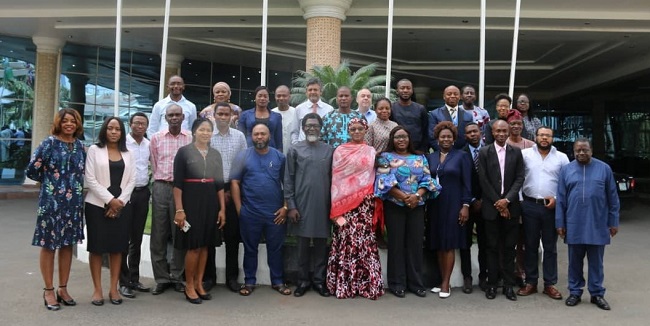
Steps to ensure that a proposed off-grid electricity project is less likely to involve a financial loss moved towards a conclusive phase recently in Abuja, where stakeholders met to validate the project document.

De-risking off-grid lighting
Group photo of participants at the workshop

Participants at the daylong workshop on Thursday, February 14, 2019 were presented an overview of the Project Document wherein they provided inputs into the project design in the bid to finalise the document.

Titled: “De-risking Sustainable Off-grid Lighting Solutions in Nigeria”, the project is a collaboration involving the United Nations Development Programme (UNDP) Country Office and the Global Environment Facility (GEF), who are supporting the government of Nigeria to actualise the dream.

It is being financed via a $2.64 million GEF grant and $10.6 million of co-financing from the UNDP, government institutions, multi-lateral institutions, and private sector players. The Rural Electrification Agency (REA) is the national implementing partner.

The aim of the initiative is to promote private sector investment in sustainable off-grid lighting technologies by establishing a sound policy environment that facilitates the creation of a self-functioning and sustainable market in Nigeria.

The project Concept has already been approved by the GEF Secretariat and is presently at the Preparation & Endorsement stage. Afterwards, the project will enter a five-year (from 2019 to 2024) implementation phase.

It features three components: Policy derisking of off-grid lighting solutions, Financial derisking of off-grid lighting solutions, Knowledge management and scale-up strategy.

Along the line, changes were made to the project design, such that proposed outputs such as support to establishing a Lighting Transition Fund and support to a kerosene subsidy transition strategy were eliminated. One of the reasons given for the adjustment is that assessments showed that rural households now used little and increasingly less kerosene for lighting purposes, as they were turning to dry-battery powered hand-held torches and standalone generators.

According to a team of project consultants comprising Etiosa Uyigue, Ejiro Joyce Olive-Igbuzor and Sanju Deenapanray, risks (and cost of capital and cost of electricity) can be reduced and/or transferred using a combination of policy derisking and financial derisking instruments.

They listed barriers to the deployment of off-grid rural electrification to include: Power market, Social acceptance, Technology and hardware, Digital platform and Telecoms sector, Developer and energy service providers, Payment and User Credit, Financing.

“One of the critical elements or ingredients that this election will be framed around is the issue of power.  So, what we are hoping is that whatever it is that we agree as a project here today will contribute in no small way to finding a lasting solution to the issue of power deficit in the country,” said Muyiwa Odele of the UNDP in an opening message.

Firm says water deal with local authorities may delay Kenyan oil project

0

A firm, Tullow Oil, handling Kenya’s only oil project, says a deal with local Kenyan authorities that will allow it to pump water to pressurise the project for a final green light may take a while.

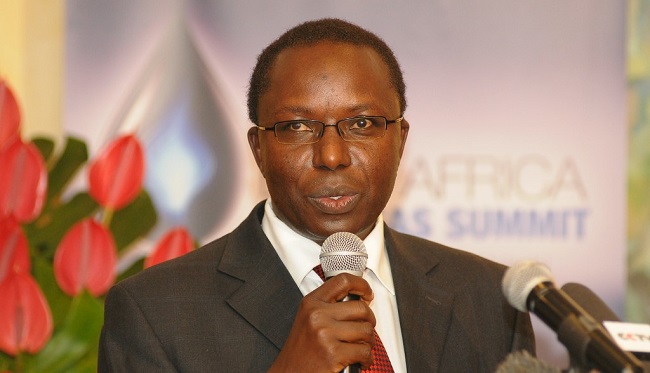
Martin Mbogo
Martin Mbogo

Tullow’s Kenya Managing Director, Martin Mbogo, said on Friday, February 22, 2019 in Nairobi that the deal might delay the project until the third quarter of 2019.

Mbogo said Tullow, with partners Total and Africa Oil, were working towards a final investment decision (FID) by year-end and had hoped the water deal would be reached by mid-year.

“I would probably realistically put it more for Q3 in terms of landing that agreement,” Mbogo told Reuters, referring to the deal organising the way Tullow can tap a body of water straddling two counties in northwestern Kenya.

“(It’s) one of those things we absolutely need before we can get to FID.”

Tullow estimates that Kenya’s onshore fields in Turkana province hold 560 million barrels of oil and expects them to produce up to 100,000 barrels per day from 2022.

Another milestone to pass is land acquisition for infrastructure around the oil fields and the 820 km pipeline to the Indian Ocean for which it plans to send out construction tenders within weeks.

The government recently gazetted land it wants to buy in order to lease it to the oil partners.

Having clarity on land acquisition and pipeline tariffs is crucial to reach a final investment decision on the $2.9 billion project, which Tullow wants to make money at $50 a barrel.

“There is good but slower than expected progress on the land issue,” Mbogo said.

This week, the Kenyan government together with Tullow approached potential buyers of Kenya’s low-sulphur crude, including Asian refiners like India’s Reliance, independent oil groups and majors such as Royal Dutch Shell.

There will be further such meetings during International Petroleum week in London next week to see whether buyers are willing to pay a premium to Brent crude for Kenyan oil.

The government has an option to buy up to 20 per cent in both the fields and the pipeline, which Tullow expects it to exercise at least in part before the final investment decision.

Kenya has mooted floating its national oil company as holder of such a stake on the Nairobi and London bourses. The oil ministry was not immediately available for comment on this.

Obaseki inaugurates Ewu, Ibore gully erosion remediation work

0

Gov. Godwin Obaseki of Edo State has urged communities in the state to always raise alarm when erosion and other forms of natural disasters threaten their environment.

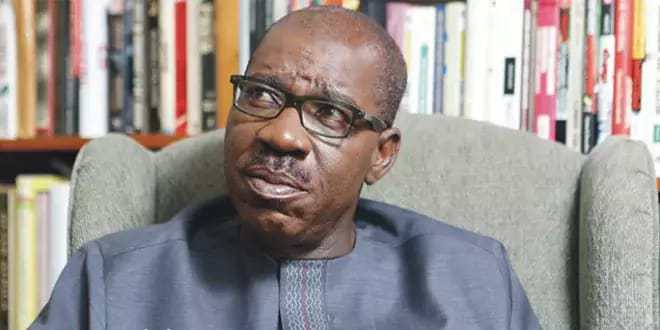
Godwin-Obaseki
Governor Godwin Obaseki of Edo State

The governor said this during the official inauguration and inspection of remediation work on Ewu and Ibore gully erosion sites in Esan Central Local Government Area of the state on Thursday, February 21, 2019.

The remediation work is being done by the Nigeria Erosion and Watershed Management Project (NEWMAP).

Obaseki said that gully erosions were mostly caused by human activities and urged communities to take steps to identify them for quick government intervention.

“If the communities have alerted government on time, the threat to their environment could have been prevented and unnecessary loss of lives and huge financial costs avoided,” he said.

He said that the remediation work marked the end of trauma, uncertainty, loss of lives and property in the two communities and a beginning of environmental and waste management.

The governor also assured people of Ugbalo community, close to Ibore community that work would commence to address their flooding challenge.

Obaseki said the next plan for the council was economic empowerment of youths through technical education and revitalisation of Ewu Flour Mill to provide jobs.

Earlier, Commissioner for Environment and Sustainability, Mrs Omoua Oni-Okpaku, said that the two sites were among numerous others ongoing in the state and assured that they would be completed as scheduled.

She called on the communities to cooperate with contractors handling the project to ensure completion of ongoing Phase II.

In his remarks, Onojie of Ewu, HRH Rasaq Ojiefo III, appreciated the project, saying lives had been lost particularly during the rainy season.

“We thank you our governor, the contractors and everyone working on the success of the project.

“Over 10 youths have died because of this gully before this work commenced,” he said.

Similarly, spokesman for Ibore, Mr Theophilus Okoh, praised the governor for fulfillment of his electioneering promise in 2016.

By Joy Odigie

Botswana considers allowing big game hunting, culling elephants

0

Botswana, home to almost a third of Africa’s elephants, is considering lifting a ban on big game hunting, to combat what the government says is growing conflict between humans and wildlife.

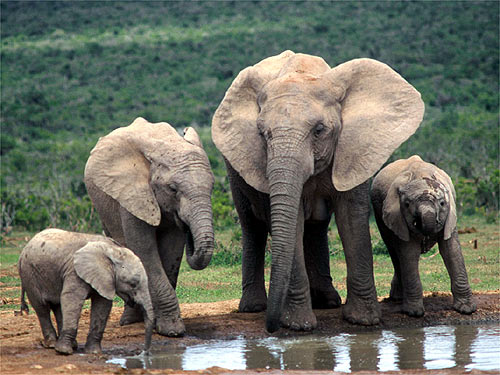
Sumatran elephants
Elephants

Conservationists estimate the southern African country has about 130,000 elephants, however some lawmakers say it is much higher and causes problems for small-scale farmers.

A committee appointed by President Mokgweetsi Masisi to review the 2014 hunting ban handed a report on the matter to Masisi on Thursday, February 21, 2019.

“We recommend a legal framework that will enable the growth of a safari hunting industry.

“We also manage the country’s elephant population within the historic range,’’ Frans Van Der Westhuizen, who chaired the committee that also called for “regular but limited” elephant culling, said.

Masisi set up the committee in June 2018 to consider the ban imposed by former president Ian Khama after surveys showed declining wildlife populations in the north.

Botswana, the size of France and mostly arid, has a population of around 2.3 million people and vast tracts of remote wilderness that make it a magnet for foreign tourists who want to view wildlife.

Masisi said he would present the report to his cabinet before deciding.

World’s largest bee rediscovered after 38 yrs

0

Last seen in 1981 and thought to be extinct, the world’s largest bee, Wallace’s Giant Bee, has been confirmed alive in the wilderness of Indonesia by an international team of scientists and conservationists.

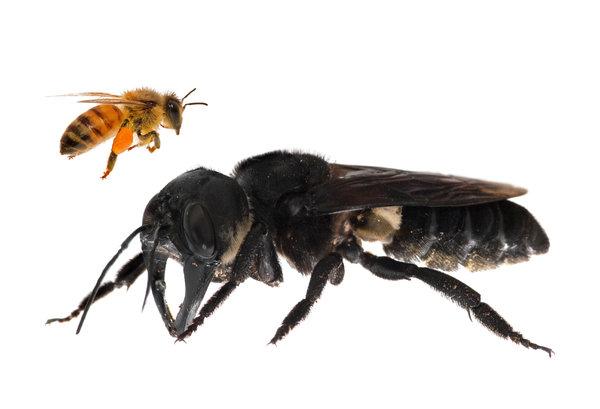
Wallace’s Giant Bee
Wallace’s Giant Bee, the world’s largest bee

According to a statement published by the University of Sydney on Friday, February 22, 2019, the search team successfully rediscovered the species in January in the North Moluccas, an island cluster in Indonesia.

With a wingspan of six centimeters and a body the size of a human thumb, the bee, formally known as Megachile pluto, was first discovered by English entomologist Alfred Russel Wallace in 1859 and was not observed again until 1981.

Biologists know little about the bee giants except that they have unusually large mandibles to scrape together balls of tree resin and wood to fortify their nests, and that they are relatively solitary animals.

After its last appearance, this “Goliath of bees’’ had remained elusive to scientists despite several expeditions trying to find it.

Before the latest rediscovery, scientists had feared the species was already extinct due to drastic deforestation in its habitat as Indonesia lost 15 per cent of the tree cover between 2001 and 2017, according to Global Forest Watch.

“Amid such a well-documented global decline in insect diversity, it’s wonderful to discover that his iconic species is still hanging on,’’ said Simon Robson, a member of the search team and a biologist at the University of Sydney.

924,000 square metres of Nigerian land degraded daily

0

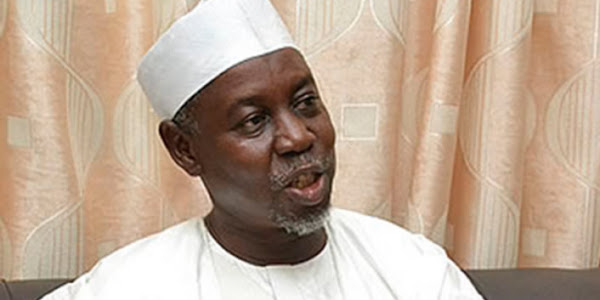
Minister of Environment, Alhaji Suleiman Zarma, says there is an urgent need to recover and conserve the country’s land as 924,000 square metres is lost to degradation daily, while the population keeps growing.

Alhaji Suleiman Hassan Zarma
Alhaji Suleiman Hassan Zarma, Minister of Environment

Zarma said this in a statement issued by Mrs Pauline Sule, the Head of the Press and Public Relations Unit, National Agency for the Great Green Wall (NAGGW) on Thursday, February 21, 2019.

The minister, who was on a familiarisation tour to the agency, however, assured that, through the NAGGW, the Federal Government was committed to the transformation of the dry land for the benefit of affected communities in conserving and protecting the lands.

He advised the agency to have a strong synergy with consultants and ensure that trees that were planted must be nurtured to maturity before leaving the site.

“Also engage the services of forest guards in order to safeguard the trees,” he said.

Dr Bukar Hassan, the Director-General of the agency, expressed his gratitude to the minister and commended him for finding time out of his tight schedule to visit.

He said that about 22,500 square metres of the degraded land in the dry region was targeted for rehabilitation for agricultural activities, adding that the livelihood of more than 40 million people would be improved by 2030.

He said that the agency was working hard toward actualising its major objectives.

“Our objectives include developing and promoting sustainable agricultural and water management practices, and ecological restoration of degraded ecosystem using appropriate techniques and technology.

“We also aim at improving information sharing and cooperation among stakeholders and encouraging scientific knowledge on desertification and drought.”

By Ebere Agozie

Scientific body launches programme to boost research management

0

The Nairobi-based African Academy of Sciences (AAS) on Thursday, February 21, 2019 launched a programme to boost management of research that addresses the continent’s development needs.

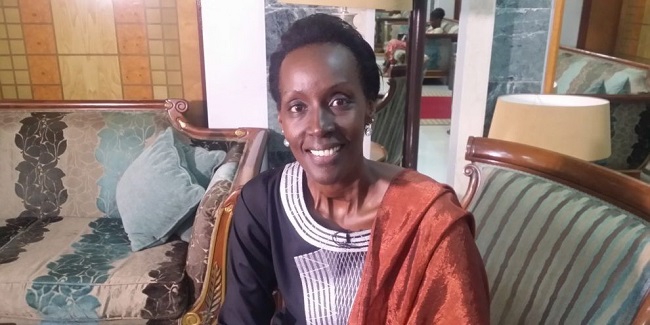
Allen Mukhwana
Allen Mukhwana

A statement from AAS said the Research Management Programme in Africa (ReMPro Africa) will strengthen capacity of institutions to manage cutting edge research and innovations.

“It is a response to the critical gaps that were identified in building the continent’s research and development ecosystems that support a vibrant research culture and leadership,” said AAS.

“The overall goal of ReMPro Africa is to address systematic challenges at African institutions in creating and sustaining enabling research environments for the flourishing of research,” it added.

The announcement of the new research management programme for Africa was made during a stakeholder’s workshop attended by policymakers, funders and heads of research institutions from the continent.

Experts said that managerial skills among researchers in Africa are key to ensure their findings are dispensed in a timely manner to create positive impact in the society.

Allen Mukhwana, the Coordinator of ReMPro Africa, said that prudent management of research will have a positive impact on Africa’s sustainability agenda.

“The AAS recognises that the business of doing research is all-encompassing and creating a conducive environment in Africa is essential to maximise research output and impact on sustainable development goals (SDGs),” said Mukhwana.

She revealed that ReMPro would focus on four key major themes that include leadership, sustainable funding mechanisms, best practices and capacity building. 

Africa requires bold leadership to eradicate Ebola – ECA

0

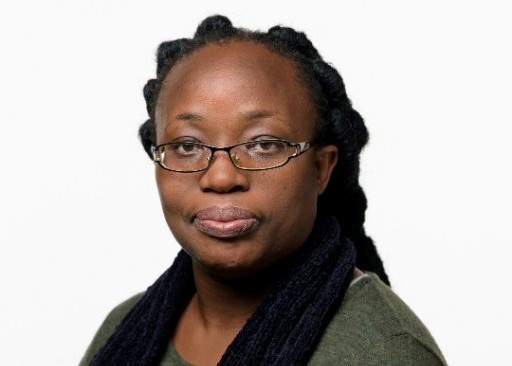
The UN Economic Commission for Africa (ECA) says eradicating the Ebola Virus Disease (EVD) from Africa requires bold leadership at different tiers of government and society.

Giovanie Biha
ECA’s Deputy Executive Secretary, Giovanie Biha

Ms Giovani Biha, the Deputy Executive Director, said this in Addis Ababa, Ethiopia, at a meeting to share information with member States on EVD, preparedness, vaccines and therapeutics.

A statement issued by the Communications Section, ECA, on Thursday, February 21, 2019 said the meeting was called by the African Union Commission (AUC), the Africa Centres for Disease Control and Prevention (ADCDP), and the World Health Organisation (WHO).

The meeting has as its theme: “Facts not Fear”.

Biha said a committed political leadership, institutional strengthening, investments in health systems, community health and awareness were all crucial to the eradication of the disease from the continent.

She said that in line with the Addis Ababa Action Agenda the continent needs to mobilise adequate resources for strong and resilient health systems.

“Strategic partnerships, including the role of the private sector, are also critical for a coordinated multi-sectoral response to health challenges in Africa,” she told participants.

According to her, Africa cannot build strong and resilient health systems without adequately investing in hard and soft health infrastructure, including provision of right numbers of health personnel both in the urban and rural areas.

This view, she said, was well articulated in the ECA’s joint publication with GBC Health and the Aliko Dangote Foundation on Healthcare and Economic Growth in Africa.

She added that the ECA was committed to Africa’s health within the broad framework of economic and social development.

“As a premier knowledge institution, we are building on our unique position and privilege to bring global solutions to Africa’s challenges, including Ebola and taking local solutions to the continent.

“Within this mandate, we are equal to the task by providing technical and advisory support to member States informed by policy and analytic research.”

Mr Thomas Quartey, the AUC Deputy Chairperson, said the disproportionate burden of disease faced by Africa, coupled with inadequate health systems, including the shortage of health personnel, remained a major challenge.

“Overcoming these challenges requires collective efforts both for Africa as a continent and our partners to build the Africa we want as articulated in the Agenda 2063.”

He also said that diseases were borderless and to succeed, Africa must adopt an integrated and comprehensive approach to the health problems it was facing.

He gave the assurance that the AUC was strongly committed to creating the synergy needed to maximise the impact of its interventions for disease control and prevention in Africa.

Dr Amir Aman, Ethiopia’s Health Minister and Chair of the Governing Board, ADCDP, said the meeting was an excellent opportunity for member States and partners to share important and latest information on Ebola.

“If we are to save lives by preventing disease outbreaks, we have to share crucial information because without a healthy population we cannot move the continent forward.”

Dr John Nkengasong, Director, ADCDP, said stopping Ebola was everyone’s business.

“We have the tools to fight Ebola, but we have to do it jointly,” he said.

The main objective of the meeting was to share experiences in EVD preparedness and response plans, discuss the latest development on EVD vaccines and drugs.

It was also to provide information about research and development of new EVD and other outbreak vaccines and drugs.

At the end of the meeting, member States are expected to have a common understanding about the current state of EVD vaccines and drugs, including evidence and practical considerations for their use.

By Folasade Akpan

Nigeria among leaders in renewable energy – Fashola

0

The Minister of Power, Works and Housing, Mr Babatunde Fashola, says Nigeria is a continental and global leader in renewable energy.

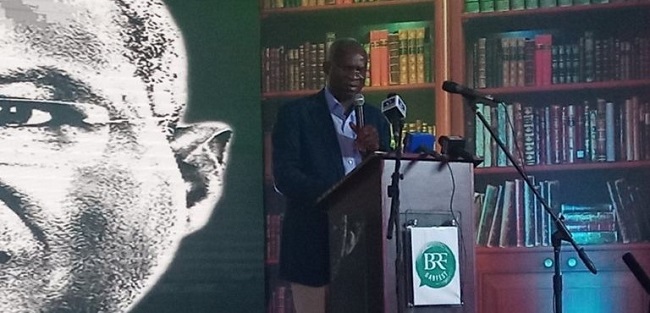
Babatunde Fashola
Babatunde Raji Fashola at the event in Lagos

Fashola made the assertion on Thursday, February 21, 2019 in Lagos during the second edition of the annual BRF Gabfest, tagged “BRF2GABFEST” organised by some youth groups in his honour.

The programme had its theme as: “Where Are the Jobs?’’

Renewable energy is an energy resource that is replaced rapidly by a natural process such as power generated from the sun or from the wind.

According to Fashola, the establishment of some powerful hydro electricity projects attests to this feat.

“This may sound strange to some of you but over 30 to 40 years ago, Nigeria saw the opportunity in renewable energy and committed to large scale renewable energy projects like the Kainji and Jebba hydro electricity projects.

“Hydro power is renewable energy, don’t miss that.

“So, what is now fanciful that is being sold today is solar as a renewable form of energy, but Nigeria has not been a back player in renewable energy.

“We have been a leader in the continent.

“There are very few countries that have the kind of facilities we have in Kainji, Jebba and Shiroro and we are contemplating an even bigger one at the Mambilla and we have six small hydrograph projects that we will soon procure.’’

The minister explained that renewable and solar energy were usually interchanged but that they don’t mean the same thing.

According to him, solar energy is just one form of renewable energy.

He said that the ministry was already spearheading projects to be powered by solar energy.

“My ministry already has cause to ensure that before the end of this year, our two buildings are powered by solar.

“We have done the procurement we are just waiting for approvals to start so the entire building will be totally run on solar power but that is not the only thing we are working on.’’

He also said some solar based works were ongoing in the Sabo Garage in Kano, a location in Ondo and also in Ibadan as well as a completed one at Iponri.

“The footprint of solar is expanding.

“What we are doing is to enable businesses to connect to opportunities, so, the Ministry of Power, Works and Housing is not using power to do business, but we are effectively using data using service providers to come and deliver this project.

“There is an economy and opportunity here for you.

“And we have about 300 locations nationwide where we are still hoping to see more investors; if you want to follow up on those opportunities, go to the website of the Rural Electrification Agency; they are the focal agency for driving our solar energy.

Fashola said the ministry was also in nine universities developing independent power plants.

According to him, seven of them are solar and the maintenance will be part of the continuous training of the students in the university when the projects are finished.

By Grace Alegba and Vivian Ihechu