The North East Commodity Association (NECAS) has flagged off
the NECAS/CBN/BOA, Anchor Borrowers’ Programme (ABP) dry season rice farming,
targeting 55,000 farmers across the six states.
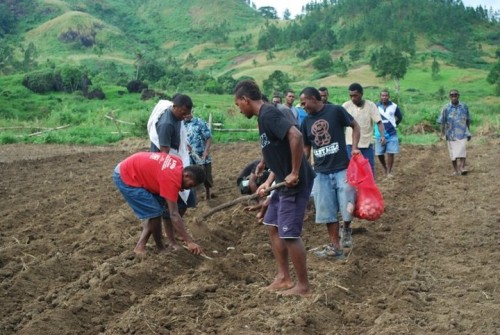
Youths involved in farming. Photo credit: smeonline.biz
Alhaji Sadiq Deware, the National President, NECAS, told the
News Agency of Nigeria (NAN) in Abuja on Tuesday, February 26, 2019 that the
association had also opened 50,000 hectares demonstration farm across the six
states.
The states are Taraba, Bauchi, Gombe, Adamawa, Yobe and
Borno, according to Deware.
He said that the association had also started the distribution
of cashless dry season farm inputs to the 55,000 beneficiaries of the 2019
RIFAN/CBN/BOA ABP.
“It is a cashless project that will provide farmers the
needed inputs, which comprise improved seedlings, water pumps, chemicals and services
such as land preparation.
“Under the project, mechanised services will also be made
available to farmers,’’ he said.
Deware said that the programme entailed allocation of one or
two hectares of land to each farmer depending on his capacity, adding that a
hectare would be cultivated at the cost of N203, 000.
“Before now, the size of each farm had been captured and an
identity card was issued to each of the beneficiaries of the project for easy
identification and documentation to enable them to access the required
support.’’
Deware said that the project was a modified version of the
ABP aimed at strengthening efforts to attain bumper rice harvests through
mechanised farming.
“We believe that the mechanised farming will lead to bumper
rice harvests that will bring about a fall in the price of paddy rice in the
country thereby engendering self-sufficiency in rice production as well as
boost exports,’’ the official said.
According to him, under the new initiative, the Central Bank
of Nigeria (CBN) has modified the programme to facilitate its direct relations
with RIFAN so as to ensure timely disbursement and full repayment of ABP loans,
unlike what obtained in the past.
The CBN recently formed strategic partnership with
Agricultural Commodity Associations in the country, with the aim of expanding
the implementation of the ABP.
Indonesia has engaged aircraft, troops and volunteers to
curb the fire that has razed forest and plantation areas in several regencies
in Sumatra’s Riau province, a local official said on Tuesday, February 26, 2019.
Head of Provincial Disaster Mitigation Office, Edwar Sanger,
said areas gutted by fire since January has reached 1,136 hectares.
Sanger said most of the hotspots were detected in Riau
coastal regencies of Dumai, Bengkalis, Rokan Hilir, Rupat Island and Indragiri
Hilir.
“We are engaging our maximum capacity to extinguish fires in
those spots at present,’’ he added.
Due to the thickening smoke haze in Rupat island, schools
are closed as of Tuesday as the visibility has worsened to 100 meters at
present, he said.
Head of Riau provincial Public Health Service, Dr Yohanes,
said the number of residents who suffered from respiratory and diseases related
to the forest and plantation fire since January has reached 1,753 as of Sunday.
“We give them additional dietary such as biscuit to
strengthen their resiliencies,’’ he said earlier.
To curb the raging fire in Riau province, Indonesian air
forces have sent a Casa 212 plane tasked to create artificial rain to help
extinguish the fire.
The Indonesian military has also deployed troops, with
helicopters, to the affected areas.
The forest fire is an annual man-made issue in western Indonesian
provinces that host palm oil and pulp industries.
Most of the fires were incited by people or
plantation firms to open more land for their cultivation areas.
Germany has unveiled a joint climate protection project by
the hospitality industry as well as wholesale and foreign trade, which is
funded by the Federal Environment Ministry (BMU) as part of its climate
protection campaign.
German Environment Minister, Svenja Schulze
According to Environment Minister, Svenja Schulze, its aim
is to show companies in the sectors, through climate and energy campaigns by
the respective associations, concrete ways to save energy, save costs and contribute
to climate protection.
President of the Federal Association of Wholesale, Foreign
Trade, Services (BGA), Dr. med. Holger Bingmann and Ingrid Hartges,
Managing Director of the German Hotel and Restaurant Association (DEHOGA
Bundesverband), presented their ideas on Tuesday, February 26, 2019 in Berlin.
Schulze said: “Trade and industry are important
partners in fulfilling our climate protection goals. It is therefore all
the more important that the experiences of associations and companies are
exchanged in sustainable and energy-efficient projects, thus creating synergy
effects for climate protection and competitiveness.
“Therefore, I am particularly pleased that a
cross-association cooperation between DEHOGA and BGA has succeeded. That
should make school. The energy and climate campaigns of both associations
can also contribute to anchoring climate protection more firmly in the
executive boards of companies and their business policies. That’s exactly
what we buff.”
The DEHOGA Federal Association has already successfully carried out an energy campaign with the support of the BMU, reaching 222,000 companies in the hospitality industry. As part of the joint project, DEHOGA will further develop its energy campaign and pass on its experience to the BGA, which is rebuilding its climate campaign. The BGA energy efficiency campaign will reach around 125,000 companies.
The campaigns are intended as a central information, communication and network platform for individual and state associations as well as member companies to provide competent assistance and tools for energy efficiency measures.
The approval of BT Cowpea for eventual commercial cultivation in Nigeria has been described as “a development that answers the important issue of the production, availability and accessibility of quality seeds in the Seed Value Chain, which includes scientists, researchers, farmers and industry.”
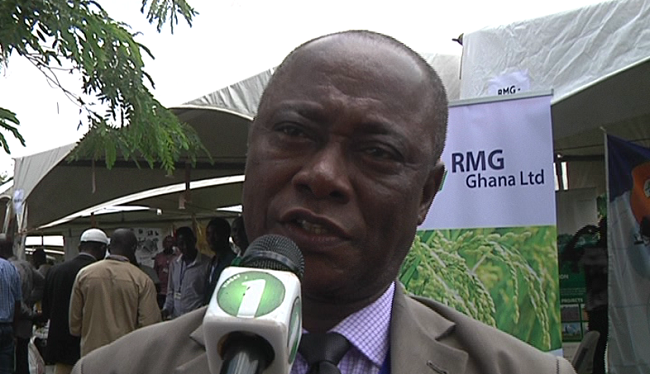
Thomas Havor, President of the National Seed Traders Association of Ghana (NASTAG)
In an interview, the President of the National Seed Traders Association of Ghana (NASTAG), Thomas Havor, said, “The availability of quality seeds is crucial because, the seed – ‘as in certified breeder and foundational seeds’ – is the starting point in effective agriculture, which is a precondition for food security.”
He explained that BT cowpea has been developed
to specifically resist the “Maruca” pest, which destroys yields by boring the
pods. Mr. Havor added that “this has become possible because of the scientific
tool of biotechnology, which has a critical role to play in the development of
quality seeds.”
About quality seeds in Ghana, he noted that
“insufficient quality seeds for farmers to cultivate is what has been
undermining the country’s food security status,” and supported his assertion
with statistics that pointed to the seed sector’s poor performance over the
years.
From 2010 to 2016 seed production for the
six major food crops namely: maize, rice, cowpea, sorghum, groundnut and
soyabean dwindled significantly. For instance, while the total national seed
requirement for maize has been 22,500 metric tonnes, in 2010 the country
produced just 4, 243 metric tonnes and production went down till in 2016 the
county was able to produce only 1, 682.2 metric tonnes of maize.
In 2017, seed production begun to pick up for
all the major crops and maize for example went up to 4,454 metric tonnes and in
2018 production increased to 8425, almost doubling that of the previous year.
Mr. Havor attributed this development to the
Planting for Food and Jobs Initiative, but said, “Despite this increase, there
is a huge room for improvement as this increase is still way below the national
requirement.”
He blamed the low production of quality breeder and foundational seeds on insufficient breeder seeds from researchers, which he said was “because institutions like the Grains and Legumes Development Board are severely under resourced, with weak linkage among the actors and limited infrastructure for haulage, processing, storage and packaging.”
Additionally, “there is also a high level of contamination of seeds, low promotion and publicity of seeds produced, and lack of low interest rate credit facilities for farmers,” Mr. Havor said.
He observed that the situation was further
compounded by factors including socio-economic and climate issues. “Mass urbanisation
has completely taken over urban farm lands, which served as the bread basket
for major cities like Accra; too much spraying of crops with chemicals to
destroy pests and diseases, and climate change effects such as erratic rainfall
and droughts as well as invasive alien pests.”
Mr. Havor said these reasons have made the need
to use biotechnology in agriculture more urgent now than ever before. “We need
seeds that are robust and can withstand the impacts of these problems,” he
stated, adding: “For instance, now, we need crops that are diseases and pests
resistant, drought tolerant and with the potential for very high yields per
small land acreages.”
He was confident of Ghana’s potential to
produce abundant quality seeds for both national use and export to other
countries in the sub-region, especially where conflicts and natural disasters
have destroyed the seed base.
“This is possible,” he said, “because Ghana
already has in place relevant policies like the Ghana Seed Policy, which seeks
to streamline the seed sector and make provision for the use of biotechnology
to address issues of low yields, climate impacts, diseases and pests among
other things to promote agriculture.”
Mr. Havor, commended Nigeria for making
significant progress in the development of the BT cowpea to alleviate the
suffering of farmers, saying, “It will sustain the production of this very
important food security crop across the sub-region.” He was happy with Ghana’s
progress in BT cowpea and said, “It will revive the hope of farmers like me who
cultivate cowpea.”
Mr. Havor hinted that NASTAG was collaborating with key national stakeholders to build a vibrant seed industry in Ghana along government established policies, and further develop the capacity of members to produce quality seeds and promote their use. NASTAG is also in the process of developing a Directory of Certified Seed Producers in Ghana aimed at cleaning up the seed sector and will contain a catalogue of crop varieties released over the years.
A Research Scientist with the Biotechnology
Nuclear Agricultural Research Institute (BNARI) of the Ghana Atomic Energy
Commission (GAEC), Daniel Osei Ofosu, thinks “the approval of BT Cowpea by
Nigeria means Ghanaian farmers will lose out on this huge market.” But he also
believed that “all is not lost as the country is in the advanced stages of
introducing the same trait in the Nigerian cowpea in farmer preferred varieties
in Ghana.”
Mr. Ofosu agreed with Mr. Havor on the need
to clean up and strengthen Ghana’s seed sector, saying, “Looking ahead, our
seed sector will need to be strengthened, so that fake seeds are not sold to
farmers when the improved seeds become available.”
A Senior Advisor to the Ghana Programme for
Biosafety Systems (PBS), Prof. Walter Alhassan, says what has happened in
Nigeria is going to simplify the approval process for Ghana, because it is the
same event and type of cowpea that has been assessed and approved.
In an interview, he said people should not
be worried that once Nigeria releases the BT Cowpea, it will spread to their
countries through regional trade, “because by that time the product will have
gone through all the necessary safety checks.” But Prof. Alhassan pointed out
that “for this to happen, the Biosafety Laws for West Africa that have been
pending for the past 10 years, will first have to be harmonised.”
Regarding Ghana’s BT cowpea, Prof. Alhassan
said once the National Biosafety Authority (NBA) receives and processes
applications for its commercial release, “the NBA’s immediate focus will be on production
of quality seeds by the research instructions and private seed growers, in addition
to training farmers to properly manage the new crop varieties.”
The Director of Crop Services at the
Ministry of Food and Agriculture, Osei Akoto, who also spoke on the issue in an
interview, said, “Since the Biosafety Act is in place and the National
Biosafety Authority is functioning, the process for developing and trading in
GMOs will be streamlined and handled appropriately.”
The Principal Programme Officer of the African
Biosafety Network of Expertise (ABNE) of the New Partnership for Africa’s
Development (NEPAD), Samuel Timpo, sees the development in Nigeria as a signal
for Ghana to beginning answering questions such as: “How will major national
research institutions like the CSIR position themselves to be producers of
quality and quantity breeder seeds for Ghanaian farmers, so that Ghana will be
in-charge her own seed sector?”
Cowpea or “black eye beans” is considered
the most important food grain legume in sub-Saharan Africa, and a major source
of protein, iron and fiber. The crop is also a good source of quality fodder
for livestock and is grown on over 12.5 million hectares and provides cash
income for families. However, cowpea production faces lots of challenges such
as infestation by the insect pod bearer, which alone causes yield losses as
high as 80 %, ineffectiveness of spraying, low per hectare yields, and poor
agronomic practices.
To effectively address these challenges,
the PBR Cowpea Project was initiated to develop and distribute to farmers
preferred and locally adapted pod borer resistant cowpea varieties in sub-Saharan
Africa.” The project was started in Purdue University, Indiana, USA, in 1997,
and subsequently, the African Agricultural Technology Foundation (AATF)
obtained the technology royalty free. This means even though farmers will of
necessity have to purchase seeds for each round of cultivation, they will do so
from a nationally generated seed stock.
Blast fishing, a rather peculiar method of fishing that entails the use of explosives to stun or kill schools of fish for easy collection, is bothering environmentalists, who say that the act portends grave danger to the surrounding ecosystem.
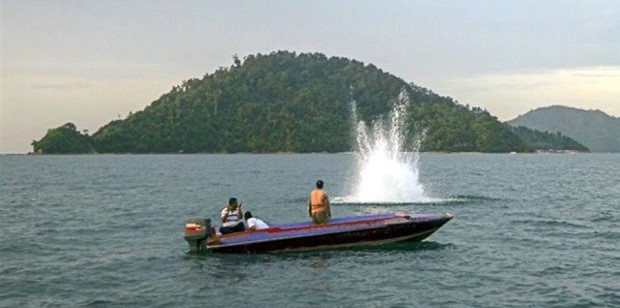
Fish bombing
Apart from destroying the underlying habitat that supports
the fish, the explosion from fish bombing or dynamite fishing – as the act
is also referred to – has been described as an escalating threat to coral
reefs, and to the people who depend on them for their livelihoods.
“It destroys fish habitats among reefs already threatened by
overfishing and climate change. Blast fishing is an extremely short-sighted
fishing method because it destroys the coral reef on which fisherfolk depend,”
said Jerker Tamelander, head of the Coral Reef Unit at UN Environment.
“It is also extremely dangerous to the fisherfolk themselves
because bombs can explode prematurely,” he said.
Not only do the bombs kill all marine life around them,
repeated bombings shatter the dead sub-structure of the coral and create dead
zones that destroy biodiversity and ecosystems by removing the main life
support system for many species, according to the UN body.
It adds that the practice is illegal worldwide, but it
persists due to the challenges of detecting, responding and catching the
perpetrators.
In Sabah, a Malaysian state in the northern part of the
island of Borneo, action is said to be urgently needed there.
“Blast fishing in the past years has badly affected the
marine ecosystems,” said Terence Lim of Sabah and a founding member of “Stop
Fish Bombing!”, a Hong Kong-based non-governmental organisation “If this is
left unchecked we will not only lose the ability to produce wild fish stock but
it will dramatically effect the tourism industry which now generates the second
highest revenue for Sabah.”
George Woodman, also a founding member of Stop Fish Bombing!,
recalls that his first experience of fish bombing in Sabah was in 1994 during
an underwater survey of the area’s renowned coral reefs.
“It’s not so much something you hear, but something you feel.
At a range of a few kilometres, a fish bomb going off feels like you’ve been
kicked in the chest by a horse,” he said.
Over the course of the four-month survey carried out by
divers, his team experienced was seemed like an extremely destructive fishing
practice a few times a week.
Stop Fish Bombing! has collaborated with Californian tech
company ShotSpotter to adapt their gunshot location technology to detect fish
bombs underwater.
“Fortunately, we now have the technology to detect and
locate fish bombs as they happen and publish this information on tablets and
phones for access by everyone,” said Woodman.
The use of this acoustic sensing and location technology,
combined with existing and emerging surveillance and monitoring systems, offers
the possibility of building an effective global detection system and thus an
opportunity to suppress or even eradicate fish bombing within a short time.
This project was registered as a voluntary commitment by the
State Government of Sabah as part of a Community of Ocean Action (CoA)
formed following the United Nations Oceans Conference in 2017.
“I’m delighted to be involved as part of a team of dedicated
scientists, engineers, media professionals, conservationists, politicians and
others who have put their efforts into developing solutions,” said Woodman.
Unfortunately, techniques for restoring reefs are still in
their infancy, and are not cost-effective alternatives, so prevention is the
only reasonable option.
“Fish bombing is the poster child of destructive
fishing. Everyone understands that it’s illegal and that it needs to stop:
this is the first step on the way to stopping it,” he adds.
The Indonesian military deployed an aircraft to create
artificial rain on Monday, February 25, 2019 as thick smog, caused by forest
fires, forced schools to close on Sumatra Island, officials said.
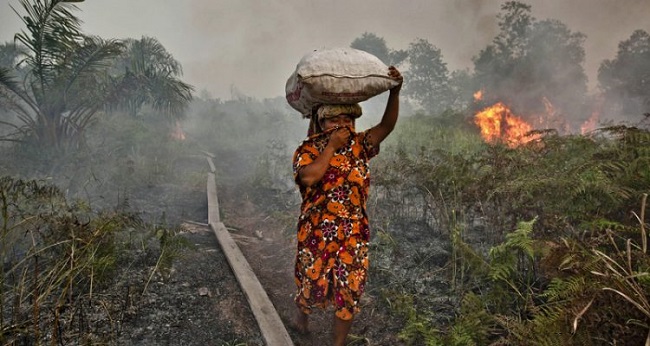
Indonesian forest fire
“The plane can carry tons of salt to be used in
cloud-seeding,’’ said Edwar Sanger, the Head of the Civil Protection Agency in
Riau province on Sumatra.
Haze has blanketed parts of Riau, forcing schools to send
students’ home as pollution reached hazardous levels on Monday, Antara news
agency reported.
Visibility in Rupat sub-district was as low as 100 metres,
local official Hanafi was quoted as saying by Antara.
Forest fires are an annual hazard in Indonesia and the
resulting haze often affects neighbouring Singapore, Malaysia and Thailand,
driving air pollution to hazardous levels.
A study by researchers from Harvard and Columbia
University’s found that more than 100,000 people in South-East Asia might have
died prematurely in 2015 as a result of forest fires in Indonesia.
The research attributed premature deaths in adults to breathing
high levels of carbon-based particulates.
The Indonesian government put the death toll from the 2015
forest fires at 24.
The World Bank estimated economic losses as a
result of the fires at $16 billion.
More than two-thirds of Germans are in favour of a complete
ban on advertising for tobacco products, a study released on Monday, February 25,
2019 showed.
According to scientists, tobacco smoking is dangerous to health
Sixty-nine per cent of respondents to a survey commissioned
by the German Insurance Association said they would favour a ban, while only 27
per cent said they were against it.
A slightly smaller majority of 58 per cent said they would
welcome a ban on alcohol advertising, with 36 per cent of respondents against
it.
A majority of 75 per cent said they would welcome higher taxes
on tobacco and 59 per cent said the same for alcohol.
The survey included a representative sample of 1,003 people
over the age of 18, who were interviewed by the Forsa research institute
between Feb. 4 and Feb. 8.
In Germany, a debate about advertising harmful substances
has been continuing apace for several years.
Under the previous government of Chancellor Angela Merkel,
an attempt to enshrine a ban on tobacco advertising in law failed due to
opposition from her conservative bloc.
The UN Population Fund (UNFPA) has urged strategic stakeholders to strive more to safeguard women and girls from Gender-Based Violence (GBV) and other harmful practices.
The girl child: The UNFPA seeks safeguard of women and girls from gender-based violence
The fund made the call in a statement issued by Mrs Kori
Habib, the Media and Communication Specialist of UNFPA Nigeria, on Monday,
February 25, 2019 in Abuja.
She stated that the appeal became necessary following
growing cases of Violence Against Women and Girls (VAWG) reported recently in
the public domain.
The statement reiterated UNFPA’s Zero Tolerance for GBV and
Harmful Practices, adding: “UNFPA commends government at all levels, civil
society organisations and other development partners on their efforts which
enabled the enactment of 2015 Violence Against Person’s Prohibition (VAPP) Act,
its passing into law across some states.”
The agency also used the opportunity to assure the federal
and state governments of its continued advocacy and support for the enactment
and domestication of the required laws, noting its readiness to
support capacity building of front-line response providers such as law
enforcement agents and the judiciary to help end the scourge.
UNFPA also stated that it would engage key stakeholders in
awareness campaigns and for sustainable data management, adding that notable
cases of VAWG that caught public attention included the 13-year-old Ochanya
Ogbaje, who was allegedly raped to death by a father and son in Benue in 2018.
Another notable case it cited was that of a popular blogger,
Ms Linda Ikeji, who was allegedly drugged and raped in Lagos recently, as well
as the reported story of Gift Alonge, who suffered countless incidences of
sexual assault and defilement in the hands of her biological father.
UNFPA equally mentioned the case of a young woman who was
brutalised by a group of young men in Benin City through the insertion of
pepper in her private part, stressing that “all these cases of violence and the
countless number of unreported cases, are symptoms of a larger malaise, which
require urgent national attention.
“UNFPA appeals to all states in Nigeria to domesticate and
enforce the VAPP Act.
“UNFPA also calls on relevant actors to take advantage of
the VAPP Act to address the scourge of violence against women and girls in
Nigeria.”
The Coordinator, Coalition of Non-Governmental Organisations (NGOs), Dr Odigha Odigha, says that the group has started introducing viable options of livelihood to Cross River State communities to ensure forest preservation.
Odigha Odigha delivering a speech after being decorated with the 2003 Goldman Prize in San Francisco, California
Odigha made the disclosure in an interview with the News Agency of Nigeria (NAN) on Sunday, February 24, 2019 in Lagos.
According to him, the alternatives are means of empowering
the communities that are dependent on forest resources in the area for their
livelihood.
“Most communities in Cross River make a living from the
forest.
“To get them to help in preserving the forest, alternative
means of livelihood have to be provided for them.
“The environmental NGOs working in the areas have to put
heads together to find a way of getting the communities to help in preserving
the forest.
“In collaboration with the communities, we have to look for
the alternatives in honey and beekeeping, mushroom farming and fuel-efficient stoves,’’
he said.
Odigha said that the Cross River forest is rich in varieties of plants that produce high quality honey in the country.
He said the NGOs were assisting and encouraging the
communities in bee farming in terms of training, logistics and finance.
The coordinator said that there were over 25 edible
mushrooms in the Cross River forests, and the groups were empowering people to
have mushroom farms.
He said that the NGOs were empowering the communities to be
able to produce mushrooms at such a commercial level that they would feed the
country and also export.
Odigha said that the groups were also tapping into fuel efficient stoves to reduce drastically the communities’ dependent on firewood for cooking.
According to him, the coalition’s efforts in that regard
have yielded positive results as firewood that will normally last for one week
can now be used for over a month.
The coordinator lamented that the government had not been
forthcoming on the issue of environment and forest preservation.
Odigha, however, said that the coalition, with the help of international donor agencies, had been able to reduce the harm done to the environment through mishandling of the various forest resources in the area.
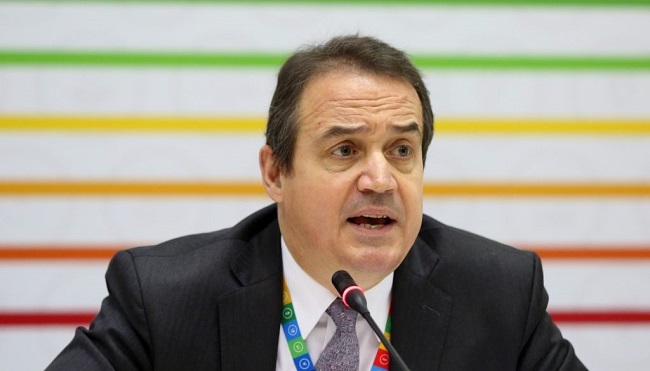
The Board of the Green Climate Fund (GCF) has selected
Yannick Glemarec to be its new Executive Director. The Board made the
merit-based selection decision at its 22nd meeting at the GCF headquarters in
Songdo, Republic of Korea, following an extensive global recruitment process.
Yannick Glemarec
Glemarec will lead the Secretariat of the world’s leading
fund supporting climate action in developing countries.
Glemarec brings 30 years of international experience in
climate change, development, finance and their interrelationships. He served as
UN Assistant Secretary-General and Deputy Executive Director for Policy and
Programme in UN Women from 2015 to 2018. Before joining UN Women, he was the
Executive Coordinator of the UN Multi-Partner Trust Fund Office in New York
from 2013 to 2015.
Previously, he served as the United Nations Development Programme
(UNDP) Executive Coordinator for the Global Environment Facility (GEF) in New
York from 2007 to 2012. Earlier, he worked with UNDP in increasingly senior
development and environment programme positions in Switzerland, Viet Nam, China
and Bangladesh. He holds a PhD from the University of Paris in Environment
Sciences, and two master’s degrees in Hydrology and in Business Administration.
Board Co-Chair Nagmeldin Goutbi Elhassan Mahmoud, from
Sudan, said: “We are delighted to select Yannick Glemarec as our next Executive
Director. His strong experience and skills will provide GCF with the leadership
needed to take us through a successful replenishment, and to increase our
climate impact in developing countries.”
Fellow Co-Chair Josceline Wheatley, from the United Kingdom,
said: “Yannick was selected from a highly qualified pool of applicants for the
position. His experience and dynamism greatly impressed the Board, and we are
delighted to nominate him to lead the Secretariat.”
Speaking after the Board announcement, Glemarec said: “I am
honoured by the Board members’ decision, and look forward to working together
with the Board, Secretariat, and our partners to make a real impact in the
fight against climate change.”
The GCF was established to support low-emissions and
climate-resilient development in developing countries. It is part of the
financial mechanism of the United Nations Framework Convention on Climate
Change (UNFCCC), and serves the Paris Agreement.