Home Blog Page 1701

Scientists urge countries to protect peatlands as part of climate strategies

0

Countries have been urged to protect vulnerable wetland ecosystems as part of their climate strategies, and to learn from each other’s experiences to sustainably manage them. Tropical peatlands are one of the main carbon sinks in the planet, but are under threat from activities such as agriculture, infrastructures and mining.
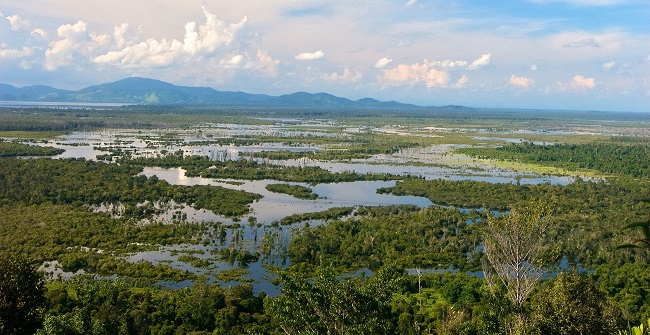
Peatlands
Peatlands

The message is forms the kernel of a research published in a special issue of the Springer journal Mitigation and Adaptation Strategies for Global Change. It presents nine papers from Indonesia, the Congo basin and the Peruvian Amazon, offering new insights to help policy-makers balance development, climate and conservation goals.

Titled: “Tropical peatlands under siege: the need for evidence-based policies and strategies”, the study was led by the Centre for International Forestry Research (CIFOR) in collaboration with the US Forest Service and with USAID’s support.

“Peatlands present us with a golden opportunity to confront climate change, but we need policy-makers and scientists to work hand-in-hand in the creation of sound strategies,” says Centre for International Forestry Research principal scientist, Daniel Murdiyarso, on behalf of the other Guest Editors Erik Lilleskovand Randy Kolka of the US Forest Service.

“It is also vital that countries exchange knowledge to avoid tripping over the same stone twice when it comes to peatland conservation and management,” he adds.

Tropical peatlands in Southeast Asia continue to be converted at an alarming rate – particularly in Indonesia, where peatland development for oil palm and pulpwood took off in the 80’s. Peatlands in the Amazon and Congo Basin are a lot less degraded, but they might follow the same unsustainable pathway if they do not take action, warn researchers.

The document explores how lessons learned from Indonesia can inform policies to protect relatively intact peatlands in Peru and the Republic of Congo, noting that in these three regions alone peat swamp forests cover a total of 50 million hectares and store up to 3,000 tons of carbon per hectare. Scientists emphasize the need for strong policies that protect peatlands from hydrocarbon mining and infrastructure development and call on countries to exchange practical knowledge before it is too late.

The research has other policy implications. For example, the papers identify drivers of conversion and can be used to refine emission factors – essential to quantifying greenhouse gas emissions from the degradation of peatlands. “The data reported in this special issue enriches existing information, including the emission factors in the Wetland Supplement of the IPCC guidelines,” notes the document.

Studies also unravel peatland hydrology – vital to restoring drained ecosystems – and investigate better ways of modeling and remotely monitoring water regimens. All this knowledge could be harnessed by national bodies such as the Indonesian Peatland Restoration Agency, tasked with restoring more than two million hectares of degraded peat swamp forests by 2020.

For authors, a deeper understanding of peatland characteristics is important for countries to deliver on both national priorities and global climate goals. For instance, through evidence-based REDD+ programmes and nationally appropriate mitigation actions (NAMAs).

“Policies that recognise peatlands as a unique and yet vulnerable ecosystem type at the national level, alongside an appropriate valuation of their ability to store carbon over long periods of time, could up their chances of remaining carbon sinks rather than becoming major sources of greenhouse gases,” conclude the authors of the synthesis of the nine papers published in the issue.


Former coal lobbyist confirmed as US’ top environmental official

0

The US Senate on Thursday, February 28, 2019 approved former coal lobbyist Andrew Wheeler to head the Environmental Protection Agency by a vote of 52 to 47, elevating a veteran of Washington political and industry circles who has advanced President Trump’s push to rollback Obama-era environmental regulations.

Andrew Wheeler
Environmental Protection Agency Acting Administrator Andrew Wheeler. Photo credit: Reuters/Ting Shen

Wheeler, who began his career at EPA during the 1990s but spent years on Capitol Hill before heading to the private sector, has won praise from Republicans for his deregulatory agenda but criticism from Democrats for his refusal to act on climate change and several public health priorities.

He has been running the agency since Trump’s first administrator, Scott Pruitt, stepped down in July amid multiple scandals surrounding his management and spending practices. Trump said in November that he intended to nominate Wheeler for the top job, saying he had done a “fantastic job” in his interim role.

At his confirmation hearing in January, Wheeler highlighted dozens of significant rules that the EPA has begun to roll back during the past two years, and he made clear to lawmakers that he intended to continue the Trump administration’s reversal of environmental regulations.

“Through our deregulatory actions, the Trump administration has proven that burdensome federal regulations are not necessary to drive environmental progress,” Wheeler said at the time. “Certainty, and the innovation that thrives in a climate of certainty, are key to progress.”

Despite the litany of rollbacks, the EPA under Wheeler also has rolled out initiatives aimed at reducing lead exposures around the country and providing oversight for a class of unregulated, long-lasting chemicals known as perfluoroalkyl and polyfluoroalkyl compounds, or PFAS, that pose serious health risks to millions of Americans. But the agency has yet to take definitive regulatory action on those proposals.

One Republican, Sen. Susan Collins of Maine, voted against Wheeler’s confirmation Thursday on the grounds that he had worked to water down federal rules curbing greenhouse gas pollution from power plants, as well as weaken fuel standards for the nation’s cars and pickup trucks.

“I believe that Mr. Wheeler, unlike Scott Pruitt, understands the mission of the EPA and acts in accordance with ethical standards; however, the policies he has supported as Acting Administrator are not in the best interest of our environment and public health, particularly given the threat of climate change to our nation,” Collins, who supported Wheeler’s confirmation as deputy EPA administrator last year, said in a statement.

Courtesy: The Washington Post

American scientists devise ‘greener’ way to recycle plastic bottles

0

American scientists have developed what appears to be a more effective and greener way to recycle the single-use plastics made from a common polyester material.

Plastic pollution
Plastic pollution

The greener way to recycle could help protect oceans from plastic waste by jumpstarting the recycled plastics market.

The researchers from the U.S. National Renewable Energy Laboratory (NREL) combined reclaimed polyethylene terephthalate (PET) with molecules derived from waste plant biomass to produce two types of fiber-reinforced plastics.

The fiber-reinforced plastics are two to three times more valuable than the original PET, according to the study published on Wednesday in the journal Joule.

PET is a strong, light-weight and water-resistant material widely used in beverage bottles, clothing and carpet.

It is recyclable but tends to have a lower value than the original and can only be reproduced once or twice.

“Standard PET recycling today is essentially ‘downcycling,’’ said the paper’s senior author Gregg Beckham with NREL.

The new process “upcycles” PET into long-lifetime, high-value composite materials that would be used in car parts, wind turbine blades or surfboards, said Beckham.

Although still in a lab stage, the researchers predicted that the composite product would require 57 per cent less energy than the current recycling process and would emit 40 per cent fewer greenhouse gases than standard fiber-reinforced plastics production.

But the researchers still have to test the process for scalability to determine how well it might fare in a manufacturing setting, according to the study. 

China to aid control of desertification in eight countries

0

China plans to help control desertification along artery roads in eight Central Asian and African countries, said Zhang Jianlong, Director of the National Forestry and Grassland Administration.

Ibrahim Thiaw
Ibrahim Thiaw, Executive Director of the UNCCD

Jianlong said this at a UN Convention to Combat Desertification (UNCCD) meeting held in Guiyang, capital of southwest China’s Guizhou Province.

Discussions are underway as China expects the Secretariat of the UNCCD to apply for the Chinese investment of about $2 million within the country’s fund to support South-South cooperation, said Jianlong.

China is also compiling a list of desertification technologies and demands for Belt and Road countries as part of its efforts to promote international prevention and treatment of desertification, Jianlong said.

China has achieved remarkable progress in desertification control over the years by launching major ecological projects, including the Three North Shelterbelt Project (or Sanbei Shelter-forest Project) and the project of turning marginal farmland into forests.

A recent NASA research shows that China and India account for one-third of the Earth’s greening during the past two decades, an area equivalent to the Amazon rainforest.

“The economic loss due to land degradation is estimated at $1.3 billion a day.

“Every minute, 23 hectares of land are being degraded,” said UNCCD’s Executive Secretary Ibrahim Thiaw.

Thiaw called for worldwide efforts to conquer the “cancer of the Earth” that is affecting more than 1.5 billion people worldwide.

Established in 1994, the UNCCD aims to improve the living conditions for people in dryland and achieve a land-degradation-neutral world consistent with the UN’s 2030 Agenda for Sustainable Development.

Why planning services should be rebranded, by expert

0

President, Association of Town Planning Consultants of Nigeria (ATOPCON), Mr Olaide Afolabi, has called for rebranding of the town planning services and products to enhance the practice of the profession.

Lekwa Ezutah
President of the Nigerian Institute of Town Planners (NITP), Mr Lekwa Ezutah

Afolabi, who made the call in an interview with the News Agency of Nigeria (NAN) in Lagos on Wednesday, February 27, 2019, said that there was need for operators in the profession to evolve new ways of delivering their professional services.

Afolabi said that the world was evolving new technologies being invented on daily basis, saying that the profession must not be left out.

According to him, operators in the town planning profession need to be orientated and rebranded starting from their technological approach to the profession down to the way they render the services.

“We should seek ways in which technology can be fully incorporated into the profession, as the world is technologically-driven, and we cannot be left behind.

“The approach of some town planners to the profession sometime degrades it and this can affect the status of the profession before the public.

“We can provide our professional services in a new way that would lead to great improvement in images and integrity before the general public, clients and other professional colleagues.

“This can be done without compromising the ethical standards and code of conduct of the profession,’’ the town planner said.

He, however, suggested that town planners should specialise in some aspects of the profession for proficiency of operation.

Afolabi said that concentrating on one or two segments of the profession would help the planners to be more competent.

He listed various town planning divisions like the master plans, regional plans, urban plans and subdivision layout for excised villages as some of the areas a town planning firm or individual could specialise.

“Some town planning firms combine virtually all the planning segments and claims to be rendering services in all.

“In most cases, the firm may not be competent in any, due to lack specialisation.

“This becomes imperative for a town planner to pick a particular area and specialise in it for efficient delivery,’’ Afolabi said. 

By Lilian Okoro

Children living near green space less likely to develop mental health disorders – Study

0

Children who grow up near green space have up to 55 per cent less risk of developing various mental disorders later in life, a Danish study suggested.

Lufasi 1
Children at a nature park in Lagos

The study was published in the journal Proceedings of the National Academy of Sciences of the U.S. of America.

Based on satellite data from 1985 to 2013, researchers from Aarhus University mapped the presence of green space around the childhood homes of almost one million Danes from birth to the age of 10.

And this data was compared with the risk of developing one of 16 different mental disorders in adulthood.

Risk for subsequent mental illness for those, who lived with the lowest level of green space during childhood was up to 55 per cent higher across various disorders compared with those who lived with the highest level of green space, said the study.

“Green space throughout childhood is, therefore, extremely important,” said lead researcher, Kristine Engemann, a postdoctoral fellow in the Department of Bioscience and the National Centre for Register-based Research at Aarhus University.

As of 2018, 55 per cent of the world’s population was living in urban areas, and the proportion is expected to increase to 68 per cent by 2050, according to the 2018 Revision of World Urbanisation Prospects.

The prospect was produced by the Population Division of the UN Department of Economic and Social Affairs. In view of the growing urban population as well as the ever-increasing stress of urban life, the researchers suggested that integrating natural environments into urban planning is a promising approach to improving mental health and reducing the rising global burden of psychiatric disorders. 

Methyl bromide use for crop pest control acceptable in Nigeria – NAQS

0

The Nigerian Agricultural Quarantine Service (NAQS) has denied claim by the National Agency for Food and Drug Administration and Control (NAFDAC) that methyl bromide for crop pest control has been phased out.

Methyl Bromide
Methyl Bromide

Dr Vincent Isegbe, Director-General of NAQS, in a statement on Tuesday, February 27, 2019 in Abuja said that the use of the agro-chemical, methyl bromide, was still permissible for controlled quarantine.

Methyl bromide is an odorless, colorless gas used to control a wide variety of pests in agriculture and shipping, including fungi, weeds, insects, nematodes (or roundworms), and rodents. Agricultural growers inject methyl bromide about two feet into the ground to sterilise the soil before crops are planted.

NAFDAC recently issued warning that the use of the agro-chemical for pest control had been banned.

“For the avoidance of doubt and in the interest of all stakeholders, we wish to state that the use of methyl bromide is allowed for controlled quarantine use due to lack of suitable alternatives.

‘’Especially where specific request for its use is made.

“The public may wish to note that NAFDAC regulates chemicals generally but their specific use in phytosanitary treatment is the statutory responsibility of NAQS.

“It is the NAQS responsibility as the National Plant Protection Organisation (NPPO) for Nigeria under the International Plant Protection Convention (IPPC) guidelines.

“Only NAQS can make a public pronouncement on the use of methyl bromide for phytosanitary treatment of agro-produce in Nigeria.

“For instance, Mexico as a nation specifically requests the use of methyl bromide in the treatment of Hibiscus shipments to their country.

“A trade that yielded over $35 million for Nigeria within nine months in 2017 alone.

“Furthermore, under the International Standard for Phytosanitary Measures (ISPM) 15, the use of methyl bromide for the treatment of solid wood packaging materials in international trade is allowed,’’ he said.

The D-G said that all agro-chemicals were potentially harmful if not used safely, adding that the major concern regarding its use was its effect on climate change, specifically on the depletion of the ozone layer.

“Nonetheless, the Montreal Protocol provides exemption for individual countries on its usage based on special quota system.

He, however, advised the farmers that the healthy use of methyl bromide for control of agricultural pest remained permissible in Nigeria especially, for the export of Hibiscus to Mexico.

“Therefore, farmers of agricultural commodities, exporters, designated warehouse managers, the EU and the general public should note that NAQS will not permit the use of Methyl bromide indiscriminately.

“Any possible announcement of a change in the regime of the use of methyl bromide for agricultural pest control in the future will henceforth emanate from NAQS.”

By Kudirat Musa

Solar energy is the cheapest way to light up Africa, says expert

0

The Executive Director of Power Smart, Mr Deji Sura, says solar energy is the cheapest means to light up Africa and an uninterrupted power supply to homes.

ADB-rooftop solar
Rooftop solar power panels

Sura, who disclosed this in an interview with the News Agency of Nigeria (NAN) in Abuja, said mobile phones, which had been widely successful in Africa, changed the demand for power consumption in Africa.

“The mobile phone revolution is forcing millions of poor Africans to demand for electricity as more people now depend on their mobile phones to contact relatives, obtain general news and information.

“Small towns and villages that were not considered a priority by governments now have a huge demand for electricity,’’ he said.

According to him, thousands of villages in Africa are so remote and too spread apart that it will take decades and billions of investments in dollars to take electricity to all corners.

He noted that what Africa needed now was an alternative that was cheap, easy to deploy, decentralised and effective enough to provide electricity to millions of people in the shortest possible time.

The executive director said solar power was abundant and free because most of Africa sits on the earth’s equator which makes the sun’s radiation reach many parts of the continent including the remotest parts.

Sura also called on the government to adopt a more rational approach in order to make effective use of the energy from the sun.

He, however, urged the government to synergise with solar energy entrepreneurs, either by subsidising photovoltaic panels or enforcing favourable legislation to improve production of more solar panels.

He said that government could further accelerate the adoption of solar power by going into partnership with real estate agencies.

“Take a look at the housing project in Kaduna, more real estate agencies can also start modelling after government’s initial projects,’’ he said.

Sura, therefore, advised clients on the installation of photovoltaic panels on the rooftops of newly built homes.’’

By Tolu Dada

CIFOR, FOERDIA renew collaborative relationship

0

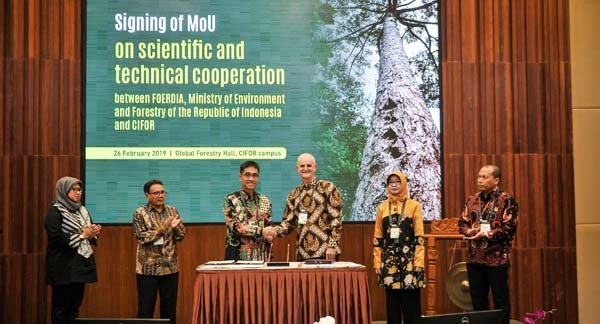
The long history between the Forestry and Environmental Research Development and Innovation Agency of the Government of Indonesia (FOERDIA)and the Centre for International Forestry Research (CIFOR) stretches back to 1997, when the two organisations began their partnership, and now a new chapter is added.

CIFOR and FOERDIA
CIFOR Director General Robert Nasi and FOERDIA Director General Agus Justianto sign the MoU

On Tuesday, February 26, 2019 at the CIFOR Bogor campus, CIFOR Director General Robert Nasi and FOERDIA Director General Agus Justianto signed a new Memorandum of Understanding between the two organisations, certifying and extending the relationship.

“CIFOR and FOERDIA have a long history of working together, starting in 1997 in the Bulungan Research Forest. This renewed Memorandum of Understanding is a confirmation of our joint interest in sustainable forest management in Indonesia and a crucial step in our long-lasting partnership,” said Nasi. “I look forward to our continued joint effort to give Indonesia forests the prominent role they should play in contributing to the achievement of national objectives and of the Sustainable Development Goals.”

Justiano followed up with keynote remarks on behalf of Indonesian Minister of Environment and Forestry, who was scheduled to attend.

“I expect both of parties will mobilise science into action and also translate international movements for people’s welfare,” he said on Minister Nurabaya’s behalf.

The MOU will cement CIFOR and FOERDIA’s ongoing cooperation in several areas, including sustainable forest management, forest and tree-based value chains, and social forestry.

FOERDIA is government research and development agency affiliated with the Indonesian Ministry of Environment and Forestry and is responsible for designing and formulating environmentally related technical policies, plans, programmes. CIFOR is an international, non-profit, forestry research organisation based in Bogor and part of the CGIAR research group.

ITPC interim secretariat office opens at CIFOR

The International Tropical Peatlands Center (ITPC) is one step closer to ensuring that policy makers, practitioners and communities have access to sound, credible and legitimate information, analyses, and other tools needed to design and implement conservation and sustainable management of tropical peatlands, after the official opening of the ITPC interim secretariat.

During the MOU signing, the two director generals cut the ribbon on the new office, which is located on CIFOR’s Bogor Campus.

The ITPC interim secretariat oversees making connections and setting up the framework to launch officially launch ITPC later this year. The ITPC will serve as a cooperative go-to space for leading-edge scientific research into strategies, practices and policies to support tropical peatlands management.

The event also included a brown bag discussion, “Social forestry and forestland tenure in Indonesia: Four years of challenges (2015-2018),” which featured experts discussing the challenges, current situation and next steps for social forestry in Indonesia.

Don warns farmers against cultivation with early rain

0

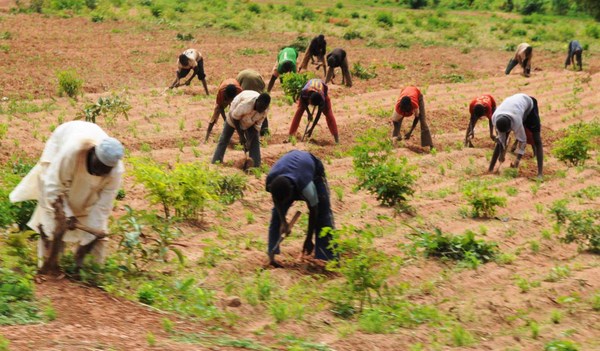
A lecturer in the Department of Crop Science, University of Nigeria, Nsukka, Prof. Michael Uguru, has warned farmers in Nsukka and its environs not to begin cultivation with the early rains in the year.

Farming
Farming

Uguru, who gave the warning in an interview with the News Agency of Nigeria (NAN) in Nsukka on Tuesday, February 26, 2019, said that it was a great risk for any farmer to go into cultivation for the new farming season without having a water reservoir in his farm.

“Farmers should not start planting crops because of Monday night rain unless the farmer has stored water in tanks in his farm to water crops if it did not rain very soon.

“Without water, planted crops may roast in the ground or have stunted growth because of heat,’’ the don said.

“The warning has become necessary as some farmers in the past suffered losses, when their crops roasted crops because they rushed into planting without allowing rain to penetrate deeply into the soil.

“Crops need water to grow well and yield good harvest.

“If you have stored water in your farm, you can go ahead and start planting, even if the rain did not fall very soon, you can use your stored water to water your crops,” he said.

He urged farmers, who did not store water to use the period of the early rain to clear the bush and do other pre-planting work until the rains set in fully.

Uguru said that for Nigeria to achieve food security, farmers must have access to water irrigation in their farms across the federation.

He added that water irrigation would enable farmers to engage in all season farming in the country.

“For Nigeria to achieve food security and export more food items to other countries, farmers must have access to water irrigation.

“With irrigation, a farmer will longer depend on rainfall to plant crops but can plant and harvest in all seasons.

“As water is very important to human being so also it is important to the crops,” Uguru said.

By Hilary Akalugwu