Home Blog Page 1700

Indigenous peoples select representatives to UNFCCC Facilitative Working Group

0

The names of seven Indigenous Peoples’ representatives from all regions of the world were on Thursday, February 28, 2019 submitted to the United Nations Framework Convention on Climate Change (UNFCCC) to serve as members of the Facilitative Working Group for the Local Communities and Indigenous Peoples Platform. The Platform will focus on the role of Traditional Knowledge in mitigating Climate Change.
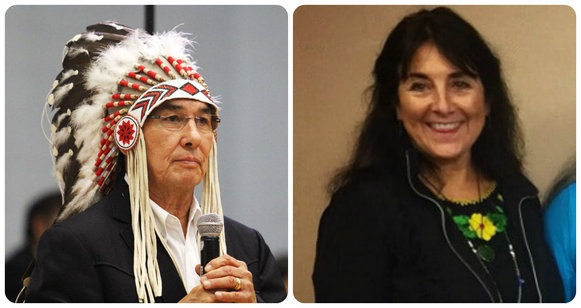
Grand Chief Wilton Littlechild and Andrea Carmen

Andrea Carmen, Yaqui Nation, Executive Director of the International Indian Treaty Council was the representative selected by consensus of the Tribal Nations and Indigenous Peoples organisations from North America (US and Canada) involved in work on Climate Change at the UN. Grand Chief Wilton “Willie” Littlechild, Ermineskin Cree Nation, Treaty 6 Territory, was selected by consensus as her alternate.

The Facilitative Working Group (FWG) was established by the UNFCCC 24th Conference of the Parties of the UN Framework Convention on Climate Change (UNFCCC COP24) on December 15, 2018 in Katowice, Poland after three years of intensive debate among Indigenous Peoples and State Parties. Its role will be to develop a structure and work plan for the Local Communities and Indigenous Peoples Platform (LCIPP or “The Platform”). This was hailed by Indigenous Peoples as a historic advance for the recognition of their rights, traditional knowledge, and participation in the UNFCCC and the global discussions on climate change.

The Platform is intended to implement operative paragraph 135 of the Paris Decision, adopted in December 2015 at COP 21, which “Recognises the need to strengthen knowledge, technologies, practices and efforts of local communities and indigenous peoples related to addressing and responding to climate change, and establishes a platform for exchange of experiences and sharing of best practices on mitigation and adaptation in a holistic and integrated manner.”

The Parties decided on the establishment of a Facilitative Working Group (FWG) comprised of seven Indigenous Peoples representatives and seven representatives selected by States (Countries). Three or more seats will be held open for representatives of “local communities” when they seek to engage in this body. The FWG is mandated to develop the work plan for the Platform according to its three functions outlined in Decision 2/CP.23: (1) strengthening and sharing of traditional knowledge; (2) supporting Parties and Indigenous Peoples capacity and engagement in the UNFCCC; and (3) climate change policies and actions.

Each of the seven geo-cultural regions of Indigenous Peoples were charged with selecting and submitting the names of one representative and one alternate. Indigenous Peoples’ Nations, organisations and Networks from North America that have been engaged in the UNFCCC process formed a selection committee made up of the following members: National Congress of American Indians (NCAI), International Indian Treaty Council (IITC), Indigenous Environmental Network (IEN), Native American Rights Fund (NARF), Haudenosaunee External Relations Committee, Dene Nation, Assembly of First Nations (AFN), Indigenous Peoples Major Group on Sustainable Development, and Indigenous Climate Action (ICA).

Andrea Carmen has over 30 years of direct experience working in the international arena, including at the United Nations, Organisation of American States (OAS) and the UNFCCC. During this time, she has consistently worked to defend the rights of Indigenous Peoples from all regions, working within the UN and with Indigenous communities. Her comprehensive application package included nominations and support letters from Indigenous Peoples’ organisations, Treaty Councils, cultural leaders, Tribal Nation governments and student organisations and clearly spoke to her extensive expertise and ability to carry out the tasks required for the advancement of the FWG.

Grand Chief Wilton Littlechild of Treaty 6 in Western Canada, and International Chief of Treaty 6, 7, and 8, also brings a wealth of expertise, skills, and wisdom to the Facilitative Working Group. His background includes serving as the Rapporteur and North America Indigenous expert for the first six years of the UN Permanent Forum and serving as the Chairperson for two sessions and Vice Chair for four years on the UN Expert Mechanism on the Rights of Indigenous Peoples among many other notable accomplishments. He is currently working with an Indigenous Wisdom Advisory Panel which meets with a Scientific Advisory Panel that advises the Minister of the Environment in Alberta, Canada.

In the development of a proposed work plan for this process, the North America Indigenous participants stressed the importance of providing adequate financing for the participation of traditional knowledge holders and practitioners in the Platform, as well as ensuring a strong rights framework for the protection of traditional knowledge and practices.

The first activities of the Platform will take place in 2019 beginning with the first meeting of the Facilitative Working Group scheduled for June 2019 in Bonn, Germany, and will include a thematic discussion on enhancing the participation of Local Communities and Indigenous Peoples.


Government advised against implementation of coal power generation policy

0

An ecologist, Mr David Michael, has urged the Federal Government not to implement coal power generation policy because it is against Nationally Determined Contributions (NDCs) efforts on emissions reduction.

coal-plant
A power plant fired by coal

Michael, the Executive Director, Global Initiative for Food Security and Ecosystem Preservation, an NGO, gave the advice in an interview with the News Agency of Nigeria (NAN) in Abuja on Friday, March 1, 2019.

Nationally Determined Contributions (NDCs) are at the heart of the Paris Agreement on Climate Change and the achievement of these long-term goals.

NDCs embody efforts by each country to reduce national emissions and adapt to the impacts of climate change.

The executive director said that the Ministry of Power, Works and Housing must jettison the idea of coal power generation as “this is going against the Nationally Determined Contributions.’’

“However, the solution to our energy poverty especially in rural areas remains through solar and other forms of renewable energy,’’ he said.

“Global Initiative for Food Security and Ecosystem Preservation congratulates President Muhammadu Buhari on his victory at the polls. We also sincerely appreciate the commitment shown so far by Mr President to the ratification of the Paris Agreement.

“As an organisation that is concerned about the adverse effects of climate change on our populace, we entreat Mr President to intensify the implementation strategies and policies of government to achieve the targets of 2030,’’ Michael said.

He urged government to implement policies that would build resilience of farmers to respond to climate change challenges by ensuring climate insurance and climate smart agriculture.

According to him, it should work towards total removal of fuel subsidy and implementation of a carbon fee and dividend policy in the country.

By Deji Abdulwahab

Waste management concerns as first rainfall floods Abuja

0

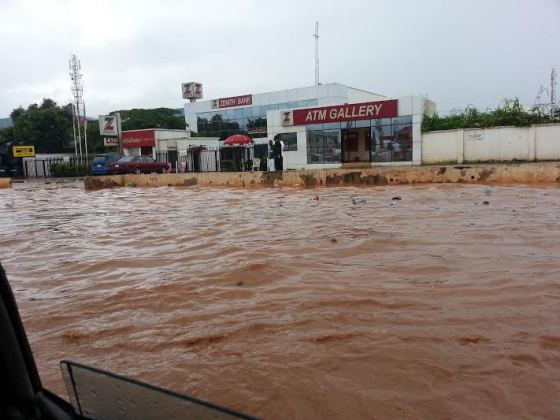
Some residents of Abuja have raised alarm over the damage caused by flooding after the first rainfall on Friday, March 1, 2019.

Abuja flood
A flooded road in Abuja after a heavy downpour

After the first rainfall in Abuja, some residents of the Federal Housing (FHA) in Lugbe woke up to find their roads and homes flooded with their property floating.

A resident, Miss Chika Okeke, who narrated her ordeal, said that she had been rendered homeless.

“The rain started around 3 a.m. and before I knew, it my whole house was flooded.

“I was still mopping up the water in the bedroom only for me to enter the sitting room and the kitchen to find my property floating on water.

“My property has been destroyed now and I don’t know what to do.

“The rain caught everybody unawares and all the houses in my area were affected,’’ she added.

Also, in Lugbe, other residents complained about the poor maintenance of refuse disposal system in the area thereby blocking the drainage resulting to flooding.

They called for proper waste disposal system to tackle the problem when the rainy season fully sets in.

Mrs Chioma Ejekwu, another resident, said, “Everywhere you look there is waste because people throw rubbish on the roads and in the drainage.’’

“The rain water then carries the waste into the streets, blocking people’s paths and drainages.

“We have environmental workers who burn the dumping sites every two weeks which is too long because the dustbins would have already too full.’’

Ibrahim Usman, a waste disposal official, said that some residents, who do not want to pay the waste disposal agency, usually threw the waste inside drainages.

“Some people still throw their waste anywhere they feel like and that is the reason we have so much waste on the road after the rains.”

Mr Joshua Ayodele, a civil servant, however called on the government to institute harsher punishment for those who do not dispose their waste properly and provide a better waste disposal system.

“If they don’t burn the waste every day, rains will continue to push it out and people will be stepping on waste as they walk.

“The government needs to provide a proper system for disposing waste in the area the way it is done in the city centre.

“Those who also dispose of waste indiscriminately should be fined or punished to act as a deterrent to others who want to do the same,’’ he added. 

By Ebere Agozie and Ebunam Vivian

Nanotechnology gives humans potential for super vision

0

A Sino-U.S. joint research project has enhanced the vision of mice by using nanotechnology to make them see infrared light and visible light, which could lead to applications for humans to have infrared vision in the future.

Infrared vision
Infrared vision. Photo credit: National Geographic Society

The research was led by Xue Tian and Bao Jin of the University of Science and Technology of China and Han Gang of the University of Massachusetts Medical School.

The results were published in the international science journal of Cell.

According to Jin, humans and other mammals are limited to seeing a visible light range, but infrared radiation with wavelengths shorter or longer than the range of visible light cannot be perceived by human eyes.

The scientists injected nanoparticles into mice’s eyes, giving them infrared vision for up to 10 weeks, as the nanoparticles can absorb infrared light and convert it into green coloured visible light.

Jin said the researchers believe they can fine tune the bio-integrated technology so that it suits human eyes, and the injection process has little side effects.

The technology can not only generate super vision but also provide a therapeutic solution in human red colour vision deficits.

Currently, infrared technology relies on detectors and cameras with outside power sources to obtain infrared images, as people, animals and objects emit infrared light as they give off heat.

The new nanotechnology has potential application in a number of fields including security and military operations, according to the scientists. 

Australia experienced hottest summer on record, weather bureau says

0

Australia has just sweltered through its hottest summer on record, the country’s Bureau of Meteorology (BoM) said on Friday, March 1, 2019.

Melbourne
Melbourne, Australia

“The starkest feature of this summer was the record warmth,” the bureau said in a weather report.

The national average temperature from December to the end of February was 2.14 degrees Celsius above average, easily beating the previous record of 1.28 degrees Celsius above average in summer 2012 and 2013.

The long-term national average is 27.5 degrees Celsius, which is a reference point used as a baseline for determining temperature anomalies.

“For the country as a whole it is the warmest summer on record for mean, maximum and minimum temperatures,” the BoM said.

January was the hottest month since records began, with mean temperature across the country exceeding 30 degrees Celsius for the first time.

Australia saw its third-hottest year on record in 2018, during which it experienced a massive drought.

The bureau said very low rainfall had accompanied the latest summer’s record heat.

“At the national scale, each month was notably dry, and total summer rainfall was 32 per cent below average, the lowest for summer since 1982 and 1983,” the BoM added.

In “a summer of extremes,” Australia has experienced severe weather including massive floods, damaging bush fires and worsening drought, which is still ongoing in parts of the country.

GCF approves $100m solar scheme for Nigeria

0

The Green Climate Fund (GCF) has approved the Solar IPP Support Programme for Nigeria, which is expected to benefit no less than one million households in the country.

Green Climate Fund
A group of delegates at the 22nd Meeting of the Green Climate Fund Board in Songdo, South Korea

The $100 million project forms part of the nine new climate resilience and low emission projects totaling $440 million that were endorsed at the 22nd meeting of the GCF Board that ended on Thursday, February 28, 2019 in Songdo, South Korea.

According to sources, the Nigerian project will “reduce or avoid 476,487t CO2 eq on an annual basis, and 9,529,739 t CO2 eq. over the life of the programme”. The programme is also expected to reduce the perceived risks of investing in the Nigerian renewable energy sector and catalyse private sector investment in the area, through a commercial tranche, on a best effort basis.

At the meeting that saw the selection of Yannick Glemarec as its new Executive Director, the GCF took steps to strengthen operations, reinforce standards and close policy gaps. The meeting also approved the selection of nine new project partners to become Accredited Entities to GCF.

Co-Chair, Nagmeldin Goutbi Elhassan Mahmoud, said: “We have taken a series of positive decisions at this Board meeting that set us on a path for a successful and ambitious replenishment of GCF, in particular the selection of Yannick Glemarec as our new Executive Director.”

Co-Chair, Josceline Wheatley, stated: “The Board has worked together in a positive spirit this week to expand our portfolio, improve our governance, and strengthen GCF’s operations.”

Javier Manzanares, Executive Director ad interim, noted: “GCF now has a $5 billion portfolio in 97 countries supporting low-emission, climate-resilient development. With decisions to ensure better governance, new project approvals, and a reinforced readiness programme, this Board meeting has left us in great shape for our first replenishment.”

The nine new project approvals bring GCF’s portfolio to a total of 102 projects and programmes, committing $5 billion of GCF resources for climate action in 97 developing countries. Including co-financing, the portfolio channels $17.7 billion in climate finance through its network of 84 Accredited Entities. The new approvals include the first REDD+ results-based payments to be financed, relating to the Brazilian Amazon.

Providing readiness support to build the capacity of developing countries is a key part of GCF’s activities. The Board took note of the evaluation of the Readiness and Preparatory Support Programme by the Independent Evaluation Unit and adopted a work programme and budget that builds upon the evaluation findings and recommendations and provides $122.5 million for 2019 for a new phase of readiness support to developing countries.

Ahead of a pledging conference for the first replenishment of GCF later this year, the Board meeting also moved to complete the policies and standards that guide GCF’s climate activities. New investment criteria indicators will strengthen the implementation of the investment framework, whilst a policy on cancellation and restructuring of projects will further reinforce the good management of its portfolio of projects.

The Board also welcomed recommendations from the Independent Evaluation Unit on how to improve the Results Management Framework, as well as a management response and action plan. The adoption of a policy on protection from sexual exploitation, sexual abuse and sexual harassment, together with guidelines and procedures for the Independent Redress Mechanism ensures that GCF remains at the forefront of international efforts on safeguards and standards.

The 22nd GCF Board meeting approved the following projects and programmes:

  • FP100 – $96.5 million for REDD+ results-based payments for results achieved by Brazil in the Amazon biome in 2014 and 2015 with UNDP
  • FP101 – $8.0 million for Resilient Rural Belize (Be-Resilient) with IFAD
  • FP102 – $29.6 million for Mali solar rural electrification project with BOAD
  • FP103 – $18.8 million for Promotion of Climate-Friendly Cooking: Kenya and Senegal with GIZ
  • FP104 – $100 million for Nigeria Solar IPP Support Programme with AFC
  • FP105 – $69.6 million for BOAD Climate Finance Facility to Scale Up Solar Energy Investments in Francophone West Africa LDCs in Benin, Burkina Faso, Guinea-Bissau, Mali, the Niger, and Togo with BOAD
  • FP106 – $100 million for Embedded Generation Investment Programme (EGIP) in South Africa with DBSA

The following projects were also approved under the Simplified Approval Process (SAP):

  • SAP005 – $9.0 million for Enhanced climate resilience of rural communities in central and north Benin through the implementation of ecosystem-based adaptation (EbA) in forest and agricultural landscapes with UN Environment
  • SAP006 – $8.9 million for Building resilience of communities living in landscapes threatened under climate change through an ecosystems-based adaptation approach in Namibia with EIF

The GCF Board also approved the accreditation application of the following entities:

  • Alternative Energy Promotion Centre (AEPC) based in Nepal
  • Environmental Project Implementation Unit (EPIU) of the Ministry of Nature Protection of the Republic of Armenia
  • Fondo Mexicano para la Conservación de la Naturaleza A.C. (FMCN) based in Mexico
  • National Fund for Environment and Climate (FNEC) of Benin
  • Pacific Community (SPC) based in New Caledonia
  • JS Bank Limited (JS Bank) based in Pakistan
  • Attijariwafa Bank (AWB) based in Morocco
  • Macquarie Alternative Assets Management Limited (MAAML) based in Australia
  • Luxembourg Agency for Development Cooperation (LuxDev) based in Luxembourg

Don’t be deceived by early rains, NiMet advises farmers

0

The Nigerian Meteorological Agency (NiMet) has advised farmers to ignore the current early rainfall across the country and not start early planting.

women-engaged-in-dry-season-rice-farming-through-irrigation
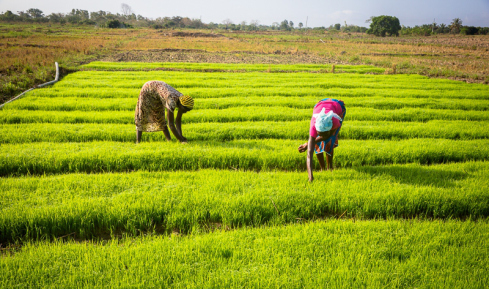
Women in engaged in dry season rice farming through irrigation

Mr Zakariyau Abdulrasheed, General Manager, NiMet’s Network Services, gave the warning in an interview with the News Agency of Nigeria (NAN) on Thursday, February 28, 2019 in Abuja.

Abdulrasheed said that the agency, in its 2019 Seasonal Rainfall Prediction (SRP), had issued an early warning to farmers and others who depended on rainfall for other uses, to be guided accordingly with the early start of rains.

He said that the agency still stood by what it had predicted, adding that NiMet would continue to monitor the climate and inform the public on any new developments.

“In our seasonal rainfall prediction, we predicted that there would be late on set of rains in many parts of the country.

“We still stand by that prediction and we are advising farmers to adhere strictly to the early warning to avoid losses.

“The rain you are having now, especially around the North central, is weather variations that occurs from time to time.

“It is the fluctuations of Inter-Tropical Discontinuity (ITD) northwards.

“This is not an onset of growing season; therefore, farmers are advised to be patient because we predicted that rainy season would commence in April.

“If there is going to be any change, we will inform the stakeholders and the general public about any new finding,” he said.

NiMet had predicted lower-than-normal rainfall over most parts of Nigeria in 2019 with an expected late start of rains in the north.

It also predicted that the south-eastern zone and the coastal areas would experience the normal onset of rains.

By Sumaila Ogbaje

Group expresses concern over GMO governance in Zambia

0

The Lusaka-based Zambia Alliance for Agroecology and Biodiversity (ZAAB) is worried about some aspects of genetically-modified organism (GMO) governance in the country, particularly those relating to importation of processed GMO food products on one hand and, on the other, the ongoing policy amendments to change the country position on production of live GMO crops. ZAAB lists inherent grey areas and urges the authorities to act

GMOs
GMOs

Importation of processed GMO food products and the limitation to public participation

The NBA is working hard to ensure food products are regulated and go through the correct licensing processes.

The ability of the public to object to these imported products, as per their legislated rights, is however extremely constrained. For citizens to participate in the pubic consultation process and object to GMO food imports, they must physically visit the NBA offices in Lusaka, and are then allowed to view only the non-confidential elements of the application dossier. The application details may not be copied electronically or distributed to those not in the capital city. Objections based on scientific analysis, submitted within the 30-day window, are then considered by the NBA scientific advisory board.

The admired position and legacy of Late president Mwanawasa was that all citizens, and the nation, have a right to be protected and fully engage in GMO decision making processes. This was not limited to those privileged and able to compile scientific objections. It also included consumers concerned about social, economic, cultural and ethical issues. It considered market gaps, or opportunities to instead protect Zambia’s market and enhance value addition and support local livelihoods.

For importers to simply publish an advert in two newspapers and submit an application dossier to the NBA offices – that is only accessible to an elite minority in Lusaka – does not constitute public consultation. This argument is backed up by the fact that the NBA has never received a scientifically considered objection to an application. Given public opinion, the lack of objections does not reflect the wishes of the Zambia public. It instead reflects the inaccessibility and limitations of the public consultation process.

Many citizens have recently been horrified to find out that GMO processed products are entering Zambia and that the ACT facilitates this. The public have a right to a broad and accessible consultation process, to effectively engage in decision making on GMO products. If public consultation processes cannot be duly filled, then perhaps the products should not be imported, and Zambia’s non-GMO market protected, and local diversified production and processes supported instead?

Ongoing policy review processes and national concerns, that are unaddressed by the Ministry of Higher Education and related authorities

In September 2017, the NBA/MoHE held an exclusive initial consultation process on a new draft of the national biosafety policy, in collaboration with COMESA and NEPAD. In December 2018, another exclusive meeting was held, in collaboration with Gates funded ANBE, to develop regulations for the release of LIVE GMOs in Zambia. I.E. the production of GMO crops. ZAAB fully appreciates that ministries update policies from time to time and that stakeholders have been promised national consultation on this matter.

However, if the Ministry of Higher Education and the NBA are indeed neutral in their policy position, then why are they allowing pro-GMO institutions to help craft Zambia’s new national policy and regulations – that in draft are written to favour the promotion, of GMOs? The ABNE is funded by the Gates foundation that has spent millions of dollars trying to develop GM crops and smooth the regulatory environment for the introduction of GMOs across Africa. The ABNE may be the advisory body to the Africa Union, of which Zambia is a part, but this does not mean that as citizens we should just accept their role in writing national policies that are meant to protect and uphold sovereign interest.

The NBA has shot back at ZAAB and other CSOs for objecting to the ABNE and Gates influence in national policy development, arguing that it made economic sense to use experts available to it through the continental body, despite their well-known pro-GMO position. We remain opposed to this biased interference in national legislation drafting.

If the Ministry of Higher Education does not have the financial resources to draw on local expertise to craft its policy documents, then it does not have the financial resources to manage live production, adequate nation-wide testing, control export and imports, or contamination of seed and local food systems. It cannot deal with long term ecological, social and health impacts; loss of biodiversity, further malnutrition and soil infertility. It certainly does not have financial resources to compensate the economic opportunity costs of changing Zambia’s advantageous NO-GMO position.

The primary element within the current National Biosafety Policy of 2003, is its basis on the precautionary principle, and directive for strong liability and redress. These are the two major aspects of the national legislation that will be weakened if amendments are approved.

Until then, GMO producers (biotech industry) will not apply for license in Zambia, because they do not want to be held accountable for the negative consequences or contamination arising from their technology. Industry have made this clear and hence why they want policy changed.

The ABNE is a key service provider within the Programme for Biosafety Systems and the Agriculture Biosafety Support Project, launched by the United States to fight back against the strong precautionary stance taken by African countries in the development of the Cartagena Protocol (something that Zambia proudly stood by). These high-profile projects of the US aim to align African and Asian policy environments with the USA goals: the widespread adoption and acceptance of GM food from the US, enabling dumping of GM food onto local markets and control of African agriculture production. The International Services for the Acquisition of Agriculture-biotech Applications (ISAAA) recently quoted in media and known for their unsubstantiated statistics to boast of adoption of GMOs around the world, are part of this same US-backed project, funded also by private sector itself.

ZAAB wants policy makers to recall where Zambia’s GMO history comes from. As far as the people of Zambia are concerned, Zambia remains a No-GMO country. The NBA mentioned that this was the “old position”. For this position to change though, requires the citizens of Zambia to firstly, demand for this change. It is not for multinational seed and agrochemical companies or pro-GMO policy lobby bodies to enable this change.

ZAAB appreciates that the NBA are working hard to increase public communication mechanisms despite minimal public funding. We recognise that the MoHE has assured the public of consultation prior to policy changes; and applaud decision makers working to ensure this happens in a genuine manner. However, we remain with extremely concerned citizens who ask why given economic constraints, the Ministry is going ahead with developing regulations that will fundamentally change Zambia’s GMO position, and accepting support from pro-GMO policy lobby groups in the policy re-drafting phases. It is well documented that global GM crop production has primarily benefited transnational corporations and the wealthy, rather than the poor and hungry of the world.

We again appeal to the Ministry of Higher Education, the NBA and related decision makers to uphold the best interests of Zambia’s people, as well as its economy; to implement commitments to diversify the agriculture sector and enable the realisation human rights for all.


Germany decorates schools for commitment to sustainability, climate protection

0

Parliamentary State Secretary at Germany’s Federal Ministry for the Environment, Rita Schwarzelühr-Sutter, has honoured schools with outstanding “student companies” for their commitment to sustainability and climate protection.

Rita Schwarzelühr-Sutter

The award is part of the education project tagged: “StartGreen @ School”, which supports the foundation of sustainable student companies. The project is funded by the National Climate Initiative of the Federal Ministry for the Environment with a sum of €940,000.

She recently handed over certificates to three successful schools in Berlin, Hamburg and Frankfurt / Oder under the initiative.

Schwarzelühr-Sutter said: “The founding of a student company demonstrates commitment and responsibility among the students and is a valuable experience and preparation for their future working life. If these student companies then also protect the climate and the environment, there are only winners. The young people become important multipliers and learn in practice how sustainability and successful business go together.”

The award and certificate handover took place on Wednesday, February 27, 2019 at the 9th International Student Company Fair.

The following schools and projects were awarded:

  • The Johannes-Schule-Berlin, with the company ArtisFeria, which offers break-time fairtrade products, snacks and coffee as well as cocoa from Peruvian Fairtrade cooperatives
  • The district school Walddörfer in Hamburg with the student company “The Green Collective”, which sold in a cooperating nature school in the course drawn plants and produced their agricultural products
  • The Konrad-Wachsmann-Oberstufenzentrum in Frankfurt / Oder with the student company X-Mix, which offers smoothies and soups as a break catering

According to the organisers, the student companies are not real business enterprises, but school projects that provide insights into professional life. The goal is that the students learn to plan and produce independently and to sell the created products at the same time or also to offer services.

The StartGreen @ School project, which was funded by the national climate protection initiative, was honoured in 2017 by the Federal Ministry of Education and Research and the German UNESCO Commission as an “outstanding” educational initiative.

Through the services offered by StartGreen @ School, the participating teachers and pupils can experience how they can combine and realise innovative climate protection projects and start-up ideas, thereby helping to shape their immediate living environment in a participatory manner. Through concrete action they also experience a high degree of self-efficacy. They learn that they can contribute to the transformation of the economy and thus contribute to achieving the climate protection goals. Through networking, young people are motivated to start a sustainable business after school.

StartGreen @ School is a joint project in which the Borderstep Institute for Innovation and Sustainability, the Institute Futur of the FU Berlin and BildungsCent eV are involved in addition to UnternehmensGrün eV (joint management). It runs until September 30, 2019.

Names of two very destructive typhoons delisted

0

Two typhoon names – Mangosteen and Rumbia – have been retired, due to the significant damage they caused in 2018, by a typhoon committee.

Typhoon Rumbia
Typhoon Rumbia making a landfall

The Typhoon Committee, an intergovernmental body under the Economic and Social Commission for Asia and Pacific (ESCAP) and the World Meteorological Organisation (WMO), made the decision at the ongoing 51st session on Thursday, February 28, 2019 in Guangzhou, the capital city of southern China’s Guangdong province.

Mangosteen and Rumbia, the 22nd and 18th named storms, caused extensive destruction in the Asia-Pacific region in 2018.

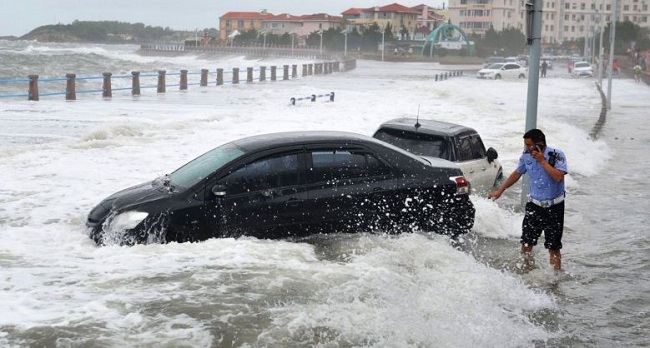
In China, coastal provinces, including Shandong suffered from severe floods after Typhoon Rumbia.

At least 3.8 million people were affected, with six dead and 15 missing.

The committee started to name tropical cyclones in the northwestern Pacific and the South China Sea since 2000.

Each of the 14 members of the committee, including Cambodia, the Chinese mainland, Thailand, the Republic of Korea, the Democratic People’s Republic of Korea, Hong Kong and Japan submitted 10 names.

Thailand and Malaysia who picked the names Mangosteen and Rumbia are able to offer new typhoon names in the next session.

Three new names submitted by Japan and Hong Kong to replace removed names in 2017 have been approved in the session.

The Typhoon Committee has removed 45 typhoon names within the northwestern Pacific and the South China Sea.