Home Blog Page 1699

World Wildlife Day: UN beams searchlight on wildlife trafficking in Nigeria

0

In celebrating the 2019 World Wildlife Day, the United Nations Office of Drugs and Crime (UNODC) has restated its commitment to addressing the worrisome global wildlife trafficking, especially as it concerns Nigeria.
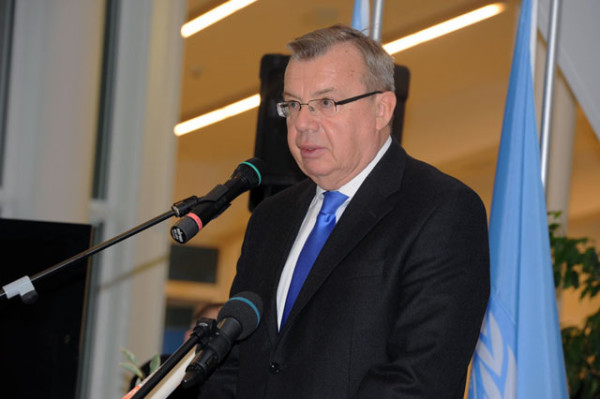
Yury Fedotov
Yury Fedotov, Executive Director, United Nations Office on Drugs and Crime (UNODC)

In a statement endorsed by its spokesperson in the Nigeria Country Office, Sylvester Atere, the UN body fears that Nigeria risks evolving rapidly into a transit hub for illicit wildlife products, including pangolins, elephant tusks and other protected species, destined for countries in Asia as well as Europe, the Middle East and North and South America.

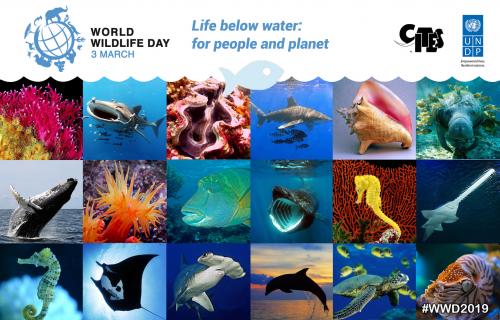
The World Wildlife Day is celebrated yearly on March 3 and the 2019 version has “Life below water: for people and planet” as its theme. It is a day dedicated by the international community to raise awareness of the world’s wild animals and plants, as well as review actions as individuals, communities and governments aimed to protect the planet’s wildlife and to collectively find solutions to inherent challenges.

According to the UN body, tackling the phenomenon is complex and requires the cooperation of multiple stakeholders within and beyond Nigeria, including Customs, Police and National Environmental Standards and Regulations Enforcement Agency (NESRA), as well as the World Customs Organisation, Interpol and the CITES secretariat.

“Building up the specialised detection and investigation capabilities within the relevant law enforcement agencies takes time and is resource intensive. Bringing the legal framework into full compliance with CITES requirements is another challenge. Moreover, understanding fully the role of transnational organised crime in the illicit trade of wildlife and forestry products is crucial both from a policy and operational perspective,” it says in the statement.

Late January this year, over $8 million worth of elephant tusks and pangolin scales were reportedly confiscated by Hong Kong customs from a shipping container coming from Nigeria, making it the biggest seizure of pangolin scales, by value and weight, ever in the city.

Another incident in October 2018 led Vietnamese authorities to intercept more than eight metric tons of pangolin scales and ivory, also arriving from Nigeria.

Disturbed by the news, the Minister of Environment in Nigeria, Suleiman Hassan Zarma, stated: “It was very unsettling when information was received that the Vietnamese Customs made the discovery in concealed containers declared as ‘consigning knocked wood’. More disturbing is the fact that Nigeria was mentioned as the source in spite of our laudable conservation efforts which informed our leading the war against Illegal Wildlife Trade in the West African Region.”

Over the past 12 months, a total of 25 tons of ivory and pangolin scales were seized in Asia which allegedly originated from Nigeria, while 13 tons of pangolin scales were seized in Nigeria. This marks a sharp increase from the almost eight tons of pangolin scales seized by States parties to the Convention on International Trade in Endangered Species of Wild Fauna and Flora (CITES) in 2016 and 2017.

Pangolins are believed to be the world’s most trafficked mammal and are being hunted for various purposes, including for food, traditional medicines, fashion accessories and are considered a delicacy in many parts of Asia.

While international trade in pangolins was banned in 2017, after the animal received the highest level of protection against illegal trading by CITES, high demand for such products in Asia continue to make it a very profitable illicit business for wildlife traffickers.

According to the UNODC World Wildlife Crime Report (2016), whole pangolins in Nigeria can range in price from $7 to $15 while their scales alone would sell for as much as $250 per pangolin in the destination markets.

Pangolins smuggled to Asia are unlikely to originate from Nigeria as the species is near extinction in the country, say observers.

With a view to assisting countries in this urgent endeavour, the UNODC launched in 2014 its Global Programme for Combating Wildlife and Forest Crime, which is designed to support States to more effectively prevent, identify, investigate, prosecute and adjudicate wildlife and forest crime.

UNODC says it has so far provided support to more than 40 Member States, conducted research to better understand trends and patterns of wildlife crime and developed tools, such as a Guide on Drafting Legislation to Combat Wildlife Crime.

As a member of the International Consortiumon Combating Wildlife Crime (ICCWC) – a collaborative effort of five intergovernmental organisations – UNODC says it also supports Member States in assessing the effectiveness of their preventive and criminal justice responses, drawing on ICCWC Toolkit and ICCWC Indicator Framework for Combating Wildlife andForest Crime.
CITES, UNDP, FAO celebrate World Wildlife Day and ‘Life below Water’

0

High-level representatives from UN member states and international organisations gathered on Friday, March 1, 2019 at the United Nations Headquarters in New York to celebrate the UN World Wildlife Day under the theme “Life below water: for people and planet”.

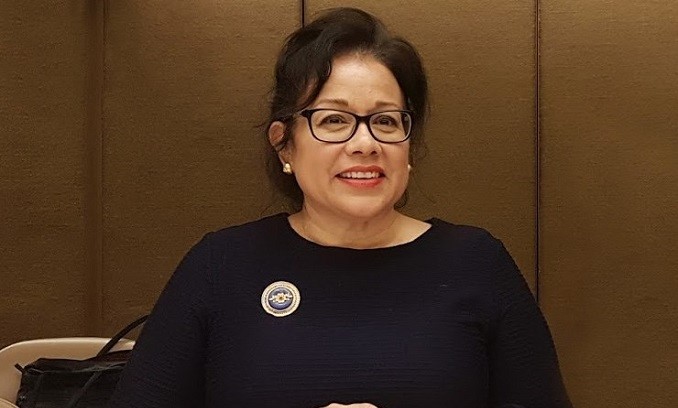
Ms. Ivonne Higuero CITES
CITES Secretary-General, Ivonne Higuero

The benefits of marine and coastal resources are enormous. Over three billion people depend on these resources for their livelihoods globally. The market value of marine and coastal resources and related industries is estimated at $3 trillion per year, about 5% of global GDP. Alarmingly, despite its critical importance, life below water faces many threats, amongst them an area of primary concern for CITES, which is their unsustainable exploitation for international trade. Over 30% of commercially exploited marine fish stocks are overfished.

Jointly organised by the Secretariat of the Convention on International Trade in Endangered Species of Wild Fauna and Flora (CITES), the United Nations Development Programme (UNDP), the event was attended by senior government officials, international organisations dealing with fisheries such as the Food and Agriculture Organisation (FAO), conservation leaders, the private sector, celebrity advocates and youth representatives.

The UN Secretary-General provided a message for World Wildlife Day 2019.

The speakers and expert panelists shared with the audience their experiences and views on the crucial contributions of life below water to sustainable development as well as the challenges faced in ensuring its conservation and sustainable use, while highlighting solutions to address them.

World Wildlife Day 2019, which falls on 3 March, focuses on marine species and aligns closely with the Sustainable Development Goal 14 – Life below water. It is an opportunity to raise awareness about the breathtaking diversity of marine wildlife, the benefits it brings to our everyday lives as well as ways to ensure that it can continue to do so for generations to come.

CITES Secretary-General, Ivonne Higuero, said: “This is the first World Wildlife Day that focuses on life below water. We are all striving to achieve the same objective of sustainability: for people and planet – where wildlife, be it terrestrial or marine, can thrive in the wild while also benefiting people. We, here at CITES, will continue to work tirelessly to ensure international trade in CITES-listed marine species is legal, sustainable and traceable for people, planet and prosperity.”

“Some five to 12 million tonnes of plastic now enter the ocean every year, threatening the health of countless species – from the smallest zooplankton to the largest whales.  90% of large predators have already been taken out of the ocean by overfishing, some 30% of fish stocks are overexploited, and over 500 hypoxic areas have become ‘dead zones’ uninhabitable for most species,” said UNDP Administrator, Achim Steiner. “To reverse this, a literal ‘sea change’ is required in how we manage both ocean and land-based activities, across sectors ranging from fisheries to agriculture to waste management.”

FAO Assistant-Director General, Fisheries and Aquaculture, Árni M. Mathiesen, said: “FAO welcomes the decision to focus on marine species at this year’s World Wildlife Day, as it builds on international recognition of the importance of conserving and sustainably using life under water. FAO and CITES continue to work jointly on CITES species listings, supporting countries and ensuring that decisions complement established fisheries management approaches worldwide.”

As part of the World Wildlife Day activities, the CITES Secretariat and UNDP partnered with the Jackson Hole WILD to organise the Living Oceans Film Showcase focusing on marine species. The Film Showcase aims is to galvanise the power of media to inspire wonder, catalyse change and move the dial on the conservation and sustainable use of marine species and highlight inspiring solutions.

CITES and UNDP also partnered with the International Fund for Animal Welfare to organise an international youth art contest as an effort to engage school-aged children and help them build a sense of connection with the marine world.

Winners of the Living Oceans Film Showcase and the youth art contest were announced during the high-level event at the UN Headquarters.

World Wildlife Day: Winners of ‘Living Oceans Showcase’ announced

0

Jackson Hole WILD, the CITES Secretariat and UNDP announced on Friday, March 1, 2019 the winners of the World Wildlife Day 2019 Living Oceans Showcase. Captivating stories about marine species will now hit the big screen and your mobile devices as the world celebrates World Wildlife Day 2019 under the theme “Life below water: for people and planet”.

World Wildlife Day 2019

Ocean and marine wildlife have captured the imagination of humans almost since the beginning of civilisation – and the rich bounty the ocean provides has sustained human development throughout the ages. Despite their importance for sustainable development, marine species are facing many threats and need our immediate attention if we want to ensure that they can continue to fulfill their important and multiple roles during our lifetimes and for future generations.

To emphasise the importance of this issue, Jackson Hole Wild, the CITES Secretariat and UNDP have come together once again to organise a film showcase for World Wildlife Day. This year, they put the world’s marine species under the spotlight to highlight the problems we are facing and the ideas we can use to tackle them.

These stories went beyond simply being visually mesmerising and engaging. They show the challenges facing these iconic species, including destructive fishing practices, climate change and pollution, and they feature the front-line heroes and the solutions that are necessary if we are going to be able to reduce the threats to the species and the oceans where they live.

The film showcase attracted more than 235 entries, and they were reviewed by 65 preliminary judges to determine the 25 finalists. The short list then was passed on to the final judging panel, which selected the winners from among the 25 finalists.

CITES Secretary-General Ivonne Higuero said: “We are immensely grateful to all the filmmakers for submitting their wonderful works of cinematography. By using the power of media, we can catalyse deeper understanding of the importance of life below water and the chances to ensure the sustainable use of marine species.

“CITES provides a safety net for our threatened marine life and it has a long history of regulating international trade in marine species to ensure that this trade does not threaten their survival. On this World Wildlife Day, let’s recognise the positive contributions that life below water makes to our everyday lives and – no matter who we are or where we are – make conscious decisions to ensure that it can continue to do so for generations to come.”

Jackson Hole WILD Executive Director Lisa Samford said: “It is not enough to just care about nature. Our aim is to inspire action necessary to restore and protect the planet’s essential resources. These films do precisely that.”

Andrew Hudson, Head of UNDP Water and Ocean Governance Programme, said: “Global efforts to increase awareness and catalyse new investments in marine conservation depend on powerful, evidence-based advocacy campaigns. This year’s winners of the Living Oceans Film Showcase demonstrate the power of film to touch our hearts and minds and move us to greater action.”

World Wildlife Day focusing on marine species for the first time

0

The United Nations World Wildlife Day (WWD) 2019 being celebrated on Sunday, March 3, is for the first time in history focusing on marine species.

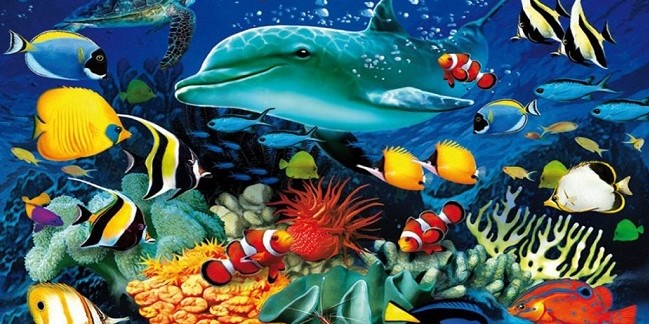
Marine wildlife
Marine wildlife

This is following the decision of the Secretariat of the Convention on International Trade in Endangered Species of Wild Fauna and Flora (CITES) and the United Nations Development Programme (UNDP), who are working in partnership to facilitate the global celebration of the WWD 2019, which has “Life below water: for people and planet” as its theme.

The WWD 2019 aligns closely with the Sustainable Development Goal 14 – Life below water, which focuses on marine species and, according to the UN, is an opportunity to highlight the critical issues and values of marine wildlife to our everyday lives. The occasion is also celebrating successful initiatives to conserve and sustainably manage these species, and to scale up support for future initiatives.

Abdoulaye Mar Dieye, UN Assistant Secretary General and Director of UNDP’s Bureau for Policy and Programme, notes: “Oceans regulate our climate, produce half the oxygen we breathe, provide nourishment for 3+ billion people, and absorb 30% of carbon dioxide released into the atmosphere and fully 90% of the heat from climate change. To ensure that oceans and marine species are preserved and protected, nature-based solutions that bring together public, private and civil society partners need to be replicated and scaled-up.”

David Morgan, Officer-in-Charge of the CITES Secretariat, said: “All whales and dolphins, all marine turtles, all seahorses, many coral species, and more and more shark species have been put under the protection by CITES – the world’s wildlife trade regulator.

For marine species, CITES is at the interface between sustainable use and international trade for fisheries, working to ensure that trade in marine species listed under the Convention is legal, sustainable and traceable. CITES plays a well-targeted role in advancing implementation of SDG 14 with trade-related measures combined with effective compliance procedures.”

WWD 2019 is being marked by a series of events and media activities around the world, including a high-level event that held at the UN Headquarters in New York on Friday, March 1.

As part of these activities, CITES and UNDP also partnered with the Jackson Hole Wildlife Film Festival to organise an international film showcase focusing on marine species – “Living Oceans Film Showcase”. The Film Showcase helps to raise global awareness of the importance of life below water to everyday lives, explore the critical challenges facing marine ecosystems, and highlight inspiring solutions.

The International Fund for Animal Welfare is also hosting a youth art contest to engage school-aged children and help them build a sense of connection with the marine world.

WWD: Flagship yearly event dedicated to wildlife

0

World Wildlife Day has now become the most important global annual event dedicated to wildlife.

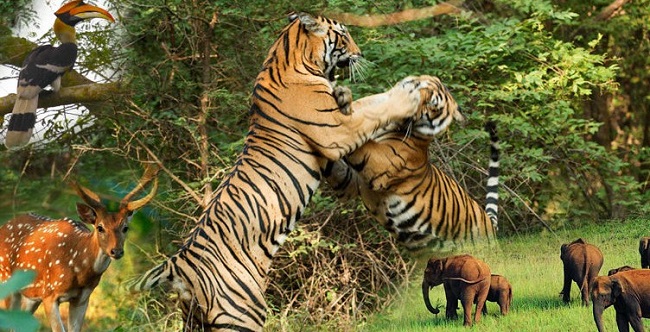
Wildlife
Wildlife

The 2019 World Wildlife Day is being celebrated under the theme “Life below water: for people and planet”, which aligns with goal 14 of UN Sustainable Development Goals.

The ocean contains nearly 200,000 identified species, but actual numbers may be in the millions. Globally, the market value of marine and coastal resources and industries is estimated at $3 trillion per year, about 5% of global GDP. Over three billion people depend on marine and coastal biodiversity for their livelihoods.

Marine wildlife has sustained human civilization and development for millennia, from providing food and nourishment, to material for handicraft and construction. It has also enriched our lives culturally, spiritually, and recreationally in different ways.

The capacity of life below water to provide these services is severely impacted, as our planet’s oceans and the species that live within it are under assault from an onslaught of threats. As much as 40% of the ocean is now heavily affected by the most significant and direct threat of over exploitation of marine species as well as other threats such as pollution, loss of coastal habitats and climate change.

These threats have a strong impact on the lives and livelihoods of those who depend on marine ecosystem services, particularly women and men in coastal communities.

Indian power plant: World Bank Group not above the law, court rules

0

In a historic 7-1 decision, the U.S. Supreme Court decided on Wednesday, February 27, 2019 in Jam v. International Finance Corporation (IFC) that international organisations like the World Bank Group can be sued in U.S. courts.

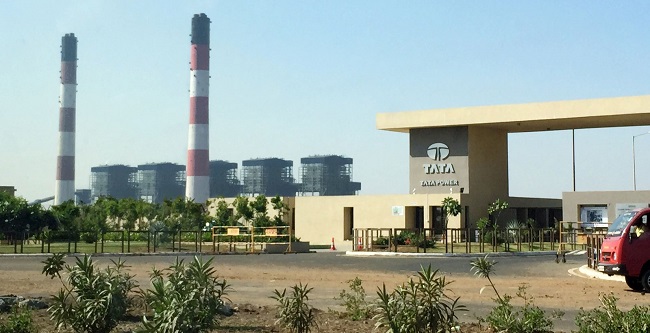
Tata Mundra Ultra Mega power
The IFC-financed Tata Mundra Ultra Mega coal-fired power plant in India

The Court’s decision is said to mark a defining moment for the IFC – the arm of the World Bank Group that lends to the private sector. For years, the IFC has operated as if it were “above the law,” at times pursuing questionable lending projects that seem to inflict serious human rights abuses on local communities, and then appearing to leave the communities to fend for themselves.

International organisations like the IFC have long claimed they are entitled to “absolute” immunity, even as they engage in commercial activities, like the coal-fired power plant at the heart of this case.

Because the relevant statute only gives the IFC the same immunity as foreign governments, and foreign governments do not have absolute immunity in U.S. courts when they engage in commercial activities, the Supreme Court rejected this position: “The International Finance Corporation is therefore not absolutely immune from suit.”

The case involves an IFC-financed power plant in Gujarat, India – the Tata Mundra Ultra Mega coal-fired power plant. The plaintiffs are members of local fishing and farming communities whose livelihoods, air quality, and drinking water have allegedly been devastated by the project. They allege that the IFC and the project developers knew about these risks in advance but nevertheless chose to push forward with the project without proper protections in place.

The plaintiffs originally tried to raise their concerns through the IFC’s internal grievance mechanism, but when the IFC’s leadership ignored the grievance body’s conclusions, they reluctantly filed suit in the United States as a last resort. EarthRights International represents the plaintiffs, along with the Stanford Law School Supreme Court Litigation Clinic.

The IFC is headquartered in Washington, DC, along with the rest of the World Bank Group, because the U.S. government is believed to be the largest shareholder in the organisations. The U.S. government has long supported the plaintiffs’ interpretation of the law: that international organisations can be sued for their commercial activities or for causing injuries in the United States. The U.S. Departments of Justice and State submitted an amicus curiae brief in support of the plaintiffs’ position, as did members of Congress from both parties.

The IFC argued that allowing it to be sued would be disastrous, but the Supreme Court, in an opinion by Chief Justice John Roberts, found these concerns to be “inflated.” The Court noted that, unlike many international organisations, the IFC’s founding members did not grant the organisation absolute immunity in its charter.

The case is Docket No. 17-1011. Justice Brett Kavanaugh recused himself, because he was on the U.S. Court of Appeals for the D.C. Circuit when the case was heard there. Justice Stephen Breyer was the sole dissenter, arguing that a “broad exposure to liability” for international organisations runs counter to Congress’ original purpose in providing immunity.

Now that the Supreme Court has established that the World Bank Group can be sued, the case will return to the lower courts for further litigation.

Another case against the IFC is also expected to proceed in the U.S. District Court for the State of Delaware. The case, Juana Doe et al v. IFC, involves IFC projects that have been linked to murders, torture, and other violence by paramilitary groups and death squads in Honduras. EarthRights International represents the plaintiffs, whose identities are kept anonymous to protect them from retaliation.

“We are extremely happy with the decision of the Supreme Court of US. This is a huge victory for the people of Mundra in particular and other places in general, where World Bank’s faulty investments are wrecking communities and environment. This is major step towards holding World Bank accountable for the negative impacts their investments are causing,” said Dr. Bharat Patel, the head of fishworkers’ rights group MASS, one of the plaintiffs in the case.

“We are delighted with this judgment. This is a victory of all who have fought for a more accountable World Bank since the past many decades world over and has fought valiant struggles against Bank funded projects on the ground, exposing the monumental human and environmental costs of their lending. This judgment will strengthen communities’ efforts to hold the Bank accountable and is a step in the direction of bringing accountability in financial institutions,” disclosed Joe Athialy, Executive Director of the Centre for Financial Accountability, India.

“Immunity from all legal accountability does not further the development goals of international organisations. It simply leads them to be careless, which is what happened here. Just like every other institution, from governments to corporations, the possibility of accountability will encourage these organisations to protect people and the environment,” stated Marco Simons, General Counsel, EarthRights International.

“The commercial activities of international organisations such as the IFC can have a significant impact on lives of Americans and others around the world. We welcome today’s decision,” said Prof. Jeffrey Fisher, Co-Director, Stanford Law School Supreme Court Litigation Clinic.

Iceberg twice the size of NYC set to break off from Antarctic ice shelf

0

Cracks growing across Antarctica’s Brunt ice shelf are set to release an iceberg twice the size of New York City.

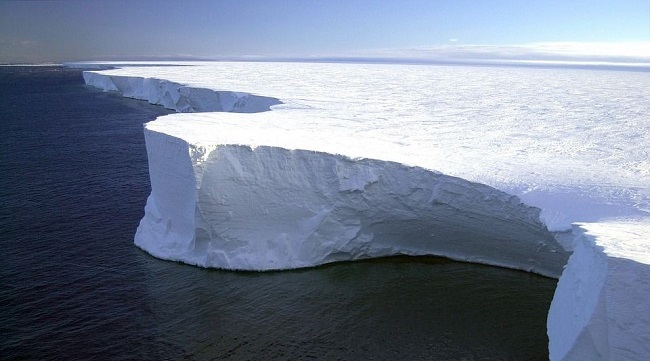
Antarctic iceberg
Antarctic iceberg

NASA Earth Observatory has released before and after images, taken 30 years apart, showing a massive difference in the Antarctic Brunt ice shelf.

One crack along part of the ice shelf, which first appeared in October 2016, has continued to grow eastward.

The images also show a rift, which has previously been stable for 35 years, has started accelerating northward as fast as 4 kilometres per year.

Joe MacGregor, a glaciologist at NASA’s Goddard Space Flight Centre, said: “The near-term future of Brunt Ice Shelf likely depends on where the existing rifts merge relative to the McDonald Ice Rumples. If they merge upstream (south) of the McDonald Ice Rumples, then it’s possible that the ice shelf will be destabilised.”

The growing cracks have prompted safety concerns for people working on the shelf, particularly researchers at the British Antarctic Survey’s Halley Station.

Chris Shuman, NASA/UMBC glaciologist, said: “We don’t have a clear picture of what drives the shelf’s periods of advance and retreat through calving. The likely future loss of the ice on the other side of the Halloween Crack suggests that more instability is possible, with associated risk to Halley VIa.”

This follows a report which found that Antarctica is losing six times more ice mass annually now than 40 years ago. The study used updated drainage inventory, ice thickness and ice velocity data for 176 basins draining the Antarctic Ice Sheet from 1979 to 2017.

View the images from NASA here.

Courtesy: Climate Action

Buhari asked to implement low carbon economy

0

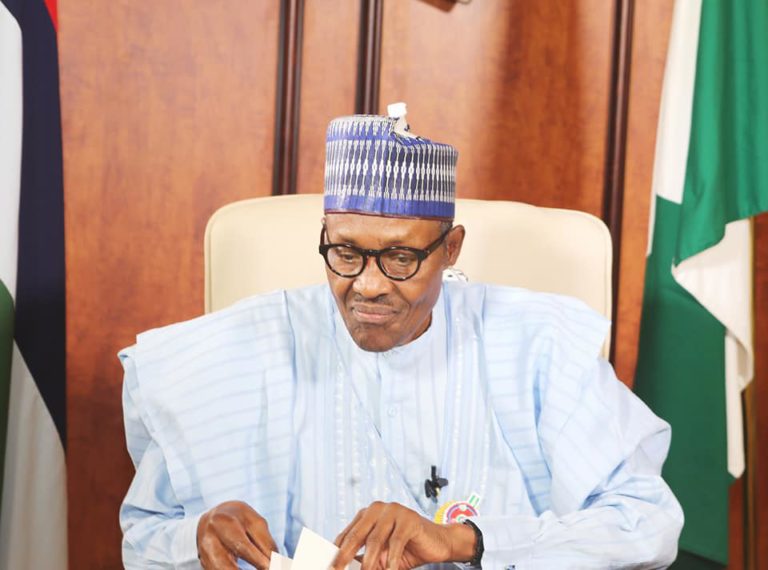
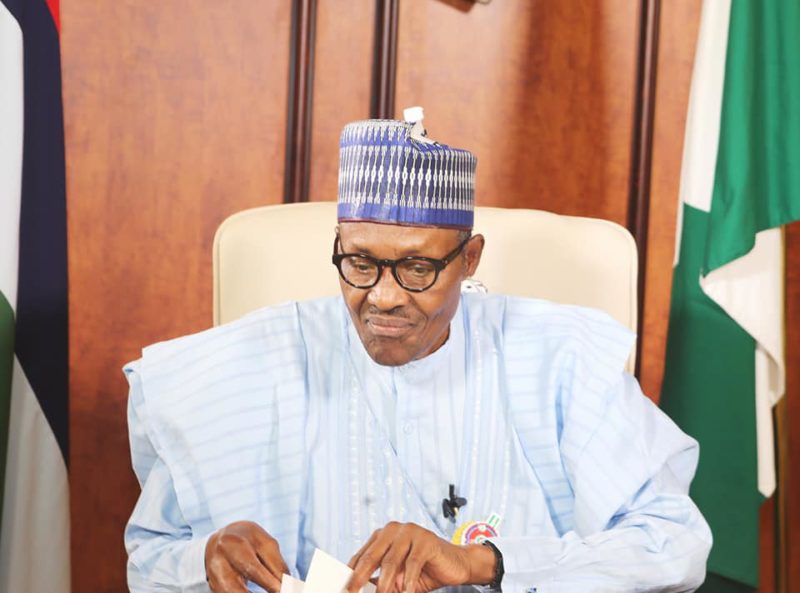
An ecologist, Mr Richard Inyamkume, has advised re-elected President Muhammadu Buhari to implement low carbon economy to transit from a largely fossil fuel driven economy to a circular, clean and sustainable economy by 2023.

Muhammadu Buhari
President Muhammadu Buhari

Inyamkume, the Executive Director, Ambassadors of Dialogue, Climate and Reintegration, an NGO, gave the advice in an interview with the News Agency of Nigeria (NAN) in Abuja on Friday, March 1, 2019.

“President Buhari will have to usher Nigeria into a `Low Carbon Economy’ that supports transitioning from a largely fossil fuel driven economy to a circular, clean and sustainable economy by 2023.

“A clean economy will translate to having more green jobs, safer cities and sustainable food, as well as power production.

“Nigeria needs to go into aggressive reforestation nationwide, beginning from grassroots to federal levels, to address poor vegetation cover that is already threatening extinct species and biodiversity,’’ he said.

The ecologist also urged Buhari to prioritise low and zero carbon emitting industrial and transport systems, as well as energy for domestic use.

“Buhari’s administration ought to be watchful about water and sanitation need sat grassroots, which over time have become issues of crucial importance and national concern.

“If the new administration of President Muhammadu Buhari can prioritise low carbon initiatives and green growth, it will be winning the wrestling against climate change.

“It will also leave behind the highest ecological legacy for the next generation,’’ he said.

The executive director, who expressed delight over the re-election of Buhari, described his victory at the polls as well deserved.

“May God continue to give him the wisdom and strength to lead and conduct the affairs of our great nation in such a dignified and honourable manner that will take us to the next level.

“We sincerely appreciate the president for his previous commitments towards fighting climate change, environmental degradation and resource depletion.

“This was done through various specialised Ministries, Departments and Agencies of government,’’ he said.

Inyamkume also commended the president’s outstanding roles in collaborating with international institutions and governments towards achieving possible climate change reversal, globally.

“As an ecologist and climate advocate, my main concern is how Nigeria will improve on climate change response approach or strategy that will better serve adaptation needs of its teeming population of over 170 million citizens.

“These people are directly or indirectly at risk of extermination if adequate and prompt care is not taken,’’ he said.

According to him, at the moment, a substantial number of Nigerians have been adversely impacted by climate change mostly women and children.

“With my experience in the northeast region, particularly around the Lake Chad Basin, the magnitude of climate impact on people is intense and exposure is likely to increase in the coming years if nothing is done to support community and individual adaptation capacity.

“It becomes imperative that the new administration of President Muhammadu Buhari will continue working to ensure that critical environmental concerns are addressed with utmost seriousness.

“This will guarantee speedy rehabilitation of environmental health services nationwide,’’ he said.

By Deji Abdulwahab

Amazon forest faces climate change threat despite higher rainfall variability

0

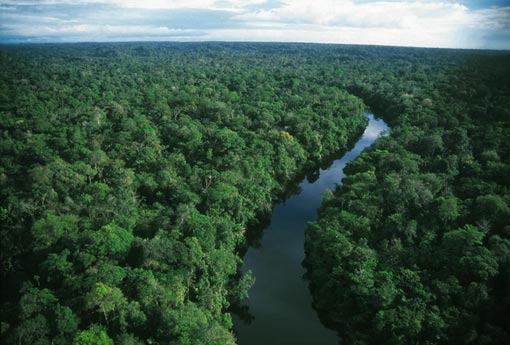
The Amazon rainforest has evolved over millions of years and even through ice ages. Yet today, human influences and global climate change put this huge ecosystem at risk of large-scale dieback – with major consequences for its capability as a global CO2 sink.

Amazon rainforest
The Amazon rainforest

New research published in Nature Geoscience now reveals a key player in shaping the resilience of the Amazon and finds that regions with generally higher rainfall variability are more resilient to current and future climate disturbances. However, despite this “training effect”, the Amazon rainforest might not be able to keep up with the pace of ongoing climate change, the study shows.

“Considering the vital importance of the Amazon rainforest for our climate and biodiversity, it is astounding how much we still don’t know about its ability to adapt to changing environments through the ages,” lead author Catrin Ciemer from the Potsdam Institute for Climate Impact Research (PIK) says.

With ongoing global warming there will probably be a higher frequency of droughts in the Amazon basin, which might increase tree mortality and fire risks.

“We set to uncover a mechanism that increases the ecosystem’s resilience. It turns out that regions of the Amazon rainforest that were exposed to more variable rainfall conditions seem to be equipped with a higher ability to resist to and recover from climatic disturbances.”

Mapping out more vulnerable regions by combining nonlinear dynamics analysis with state-of-the-art observations

Covering about two thirds of South America, the Amazon rainforest is the largest continuous rainforest on earth, with an unparalleled biodiversity of plants and animals. Vast amounts of carbon are stored in the forest’s biomass, making the Amazon rainforest the most important terrestrial CO2 sink. Based on precipitation and tree cover data in the Brazilian Amazon basin, the researchers constructed so-called potential landscapes to characterise the rainfall regimes where the ecosystems remain stable and identify critical thresholds beyond which vegetation might switch from forest to savanna.

“The detection of this so far hidden dynamic stability behaviour was mainly based on combining modern techniques of nonlinear dynamics analysis with state-of-the-art observations,” says Jürgen Kurths, co-author and co-chair of the PIK research department for Complexity Science. 

“We develop and apply advanced mathematical approaches to investigate real-world problems that have tremendous impacts on people all over the planet – the Amazon rainforest is of great relevance for global carbon and water cycles and interacts with a number of other critical elements of the Earth system,” explains co-author Marina Hirota from the Federal University of Santa Catarina in Brazil.

“Our approach allows us to map out which regions are comparably more vulnerable to future precipitation changes,” says co-author Ricarda Winkelmann, co-leader of PIK FutureLab on “Earth Resilience in the Anthropocene”. Less “trained” regions which aren’t used to frequent changes in rainfall will be especially affected.

“Our analysis shows that in a business-as-usual greenhouse gas emission scenario, a large coherent region in the southern Amazon might be at risk of transitioning from forest to savanna.”

The question is, how much change can the Amazon forest cope with? It turns out that while the Amazon is an ancient ecosystem with the ability to adapt over long time-scales, it might not be able to keep up with the pace of ongoing climate change.

Current forest policy of Brazil can make resilience obsolete: “No way to adapt to a chainsaw”

Climate change is not the only major stressor of the Amazon rainforest. “Humans interfere on a yet more immediate level with the Amazon,” says Niklas Boers, coauthor of the study.

Large-scale forest clearance, primarily to convert land into pasture for cattle and cropland, is already a serious threat to the rainforest. Even if some regions in the Amazon are better equipped to cope with climate change due to the training effect, the current forest policies of Brazil and other countries can make any resilience capability of the rainforest obsolete.

“With or without resilience to climate disturbances, there is no way to adapt to a chainsaw,” adds Boers. 

Ghanaian leader, actress to open Africa Climate Week

0

President of Ghana, Nana Akufo-Addo, Ghanaian actress and television personality, Joselyn Dumas, as well as COP24 President, Michał Kurtyka, are scheduled to formally open the Africa Climate Week on Wednesday, March 20, 2019 in Accra.

Nana Akufo-Addo
President Nana Akufo-Addo of Ghana

The curtain-raising ceremony will introduce a series of discussions throughout the course of the day that will feature prominent leaders, seeking to unlock barriers around enhanced national climate ambition, as well as issues relating to carbon pricing and markets.

The event is said to have so far attracted upwards of 1,500 registrations – far surpassing previous attendance figures and hinting at the renewed significance of the Climate Weeks in relation to driving regional action to implement the Paris Agreement. 

The Climate Week will attract Ministers, policymakers, and non-Party stakeholders from businesses, community initiatives, financial institutions, and city municipalities across the African continent, disclosed the UN Climate Change Secretariat.

The UN body adds that the Accra event will act as a focal point for actors to showcase groundbreaking solutions to climate change. For example, a Pitch Hub and Knowledge Corner – located in the heart of the Convention Center – will provide a stage for specialists from non-governmental organisations (NGOs) and climate change initiatives to share ideas with attendees.

Meanwhile, the youth will enjoy a strong presence at the Climate Week – leading on several side events to highlight youth-led initiatives and will also convene a climate march to coincide with Wednesday’s high-level segment.

Africa is being severely impacted by climate change. From floods in the Lake Victoria basin to drought in Somalia, to environmental degradation in the Sahel region, climate change is a threat to continued economic growth and to livelihoods of vulnerable populations across the continent, says the UN body. However, while Africa is one of the lowest contributors to global emissions, it is leading the way by mitigating and adapting to climate impacts through climate action initiatives – examples of which will be displayed at the conference centre.

The upcoming Africa Climate Week in Accra is said to be the first “Regional Climate Week” to be hosted in 2019. It will be followed by the Latin America and the Caribbean and Asia-Pacific Climate Weeks. Collectively, these Climate Weeks will serve as critical stepping stones in the lead-up to the UN Secretary-General’s Climate Action Summit in New York in September 2019.

Africa Climate Week is being co-convened by UN Climate Change, UN Environment, the West African Development Bank, UN Development Programme, World Bank Group, African Development Bank Group, and International Renewable Energy Agency, in collaboration with Climate Technology Centre & Network, UN Food and Agriculture, United Nations Economic Commission for Africa, West African Alliance, Adaptation Fund and Climate and Clean Air Coalition.  Other participating organizations include UN Global Climate Action, IRENA, UN Global Compact, WBCSD, ICLEI, Climate Resilience Network, CDP, SLOCAT, Global Covenant of Mayors for Climate & Energy, UN-Habitat, Nature4Climate, ICC, Global ABC, CIFOR, UCLG Africa, CIAT-CCAFS, ECREEE, and UN Volunteers.