Home Blog Page 1695

Edo installs 1.5KVA solar power boxes in 100 rural schools

0

Gov. Godwin Obaseki of Edo State says his administration has commenced the installation of 1.5KVA solar power boxes across 100 rural schools in the state.
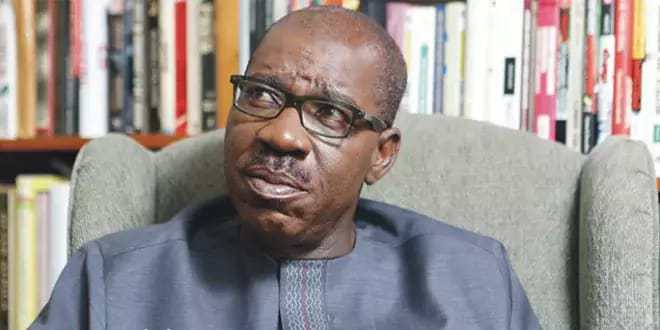
Godwin-Obaseki
Governor Godwin Obaseki of Edo State

Mr Crusoe Osagie, Special Adviser to the Governor on Media and Communication Strategy, who made the disclosure on Sunday, March 10, 2019 in Benin City, the state capital, said the solar power boxes were developed by Green Fusion Energy Ltd.

He said Green Fusion Energy Ltd was a company owned by youths that emerged from innovation and business grooming at the Edo Innovation Hub in the state.

According to him, the installation of the solar boxes in rural schools across the state is a fulfillment of Obaseki’s pledge to the team after they impressed him during a pitch competition.

“The solar boxes are being installed in 100 schools under the State Universal Basic Education Board (SUBEB) by Green Fusion engineers.

“Fifty other youths are undergoing training in different communities where the boxes are being installed,” he said in a statement.

Osagie said the Senior Special Assistant to the Governor on Skills Development and Job Creation, Mrs Ukinebo Dare, had noted that the installation had been completed in Aibotise Primary School in Etsako West Local Government Area (LGA).

She also said that installation was ongoing in Agbomoba Primary School, Agbomoba; and Abesi Primary School in Ovia South West LGA.

“Other beneficiary schools include Aleye Primary School, Etsako Central LGA, Akugbe Primary School, Etsako Central LGA, Efolo Primary School, Akoko Edo LGA, Afekunu Primary School, Akoko Edo LGA, Agbanehumu Primary School, Akoko Edo LGA.

“The rest are Abe Primary School, Orhionmwon LGA; Akengbuda Primary school, Urora in Ikpoba-Okha LGA; Akugbe Primary School, Ikpoba-Okha LGA; Adolor Primary School, Evboro; Binidodogha Primary School, Ovia South West LGA, and Aden River Primary School, Ovia South West LGA.”

The Special Adviser added that the Obaseki-led administration set up Edo Innovation Hub to attend to the yearnings of technology innovators in the state.

He said the hub was also to provide opportunities for youths to co-create and develop solutions to local problems.

By Joy Odigie
Fight against Ebola in Congo hinges on development aid – WHO

0

The fight against Congo’s Ebola outbreak could fail unless the overall living situation in affected areas is improved, a senior World Health Organisation (WHO) official says on Sunday, March 10, 2019.

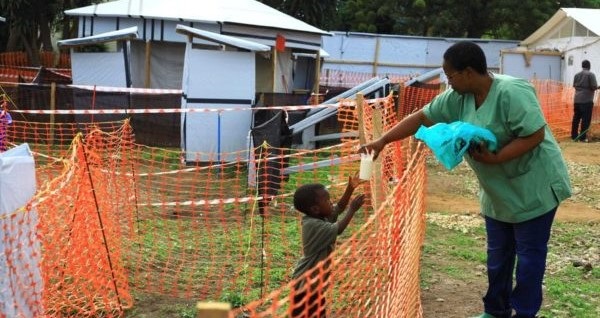
Ebola victim
A health worker feeds a boy suspected of having the Ebola virus

“In parallel to efforts to rein in the deadly virus, it is necessary to build up local infrastructure now instead of after the outbreak,’’ the WHO’s Ebola operations chief Michel Yao told dpa.

The Canadian’s comments came in reaction to an analysis by the medical aid group Doctors without Borders (MSF), which had declared the current Ebola strategy in Congo a failure.

According to the analysis, in areas where armed groups have been fighting for decades, people suspect health workers of having political motives and too few patients are brought to clinics.

“There is also frustration about money being spent on this outbreak rather than on malaria. We want a contract of confidence with the local population.

“If we don’t gain the heart of the population we will not succeed,’’ Yao said, calling for rapid development aid.

The WHO has started helping with small projects such as missing water pumps in health centres.

The UN health agency is also pushing other organisations such as the World Bank to implement bigger projects now rather than later.

In addition, the WHO is trying to accommodate local traditions when it comes to visiting patients and burying the dead.

According to the Health Ministry, over the past seven months, over 900 people have been infected and over 570 of them have died from the virus that causes bleeding and fever.

Protesting climate activists douse Downing Street in fake blood

0

Climate change activists poured fake blood across the road at the gates to Downing Street Saturday, March 9, 2019 to highlight their campaign against government policies.

Fake blood
Climate change rebellion protesters pour fake blood on road outside Downing Street

The Downing Street is the site of the British prime minister’s residence in London.

Extinction Rebellion said the protest saw its activists “break the law today in a symbolic act of civil disobedience to rebel against this toxic system that is killing people.’’

“Government must act on the climate and ecological crisis now,’’ it said on Twitter following the event in central London, while several protests – apparently without the fake blood took place in other British cities.

“Life on Earth is dying. We believe it is our duty to act,’’ the group tweeted.

“Together, let’s unite and insist our governments take action for us, our children and all life!’’ the group said.

Extinction Rebellion was launched in 2018 by several environmental groups.

It wants the British government to “tell the truth about the climate and wider ecological emergency, reverse inconsistent policies and work alongside the media to communicate with citizens.’’

It urged the government to enact legally binding policy measures to reduce carbon emissions to net zero by 2025 and set up a national citizen’s assembly to oversee changes in environmental policy.

Zambia’s no-GMO position has not changed, says group

0

The Zambia Alliance for Agroecology and Biodiversity (ZAAB) has said that, contrary to a recent publication claiming otherwise, the country’s no-GMO position has not changed and that no legislative changes have taken place.

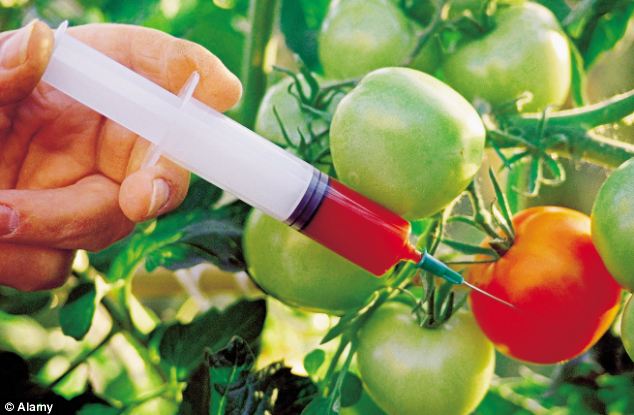
GMO
Critics fear genetically modified foods can cause environmental harm and damage human health. Photo credit: dailymail.co.uk

According to the organisation, genetic modification of living organisms and the production of genetically-modified (GM) crops remains prohibited in Zambia.

ZAAB disclosed that the said publication, which gave the impression that the ban on GMO food in Zambia had been lifted, was misleading and deliberately intended to give a false impression that the Southern African nation had changed its stand on genetically-modified organisms (GMOs).

It said in a statement made available to EnviroNews: “The Minister of Health responded to questions in the National Assembly on February 27, 2019, with some open-ended comments related to the safety of consuming food products containing GMOs. These statements have now been picked up by the international Pro-GMO Public Relations (PR) groups that are publishing with triumph that Zambia has changed its position on GMOs. This is false, fake news, generated and pushed by the biotech industry.

“An initial Pro-GMO PR article was published internationally by The Genetic Literacy Project with fake news on Zambia on March 4, 2019. Those who look a little below the surface see that this ‘project’ is funded by ‘a front group that works with Monsanto on PR projects without disclosing those ties’. It is the same family of biotech promoters, as those funding the African Biodiversity Network of Experts (ABNE), who are supporting the Zambia Ministry of Higher Education (MoHE) and NBA, to draft the new guidelines for live release of GMOs.”

According to the National Biosafety Authority (NBA), by presence of the Biosafety Act 2010, imported food containing processed products of GM crops are allowed into Zambia as long as they go through a strict application and safety testing process by the NBA, full public consultation processes are upheld, and final products are labelled.

ZAAB stated that 31 CSOs, farmer and consumer groups wrote to the MoHE and copied all other relevant ministries in December 2018, “raising serious objection to the bias interference in Zambia’s legislative drafting processes, and resultant undermining of human rights”.

“Many Zambians are horrified by the NBA announcements that even some licenced GMO containing food products are sold in Zambia. Many of these are unlabelled and the authority lacks necessary capacity to control this. The country certainly does not have the capacity to regulate the release of live GMOs, nor cover the opportunity costs of lost export agriculture markets, long term public health bills and destruction of the farming sector to the power of corporate control.

“CSOs, research institutions, concerned consumers, farmers and churches, continue to call on Government to protect Zambia’s people, their health, environment and the national economy,” ZAAB said.

Cause of explosion at Nembe Creek Oilfields still unknown – Government

0

The cause of the March 1, 2019 explosion from Oil Well No.7 within Nembe Creek oilfields remains unknown as the investigation into the incident enters day two, the Federal Government says.

Oil field explosion
An oil field explosion

The National Oil Spills Detection and Response Agency (NOSDRA) said on Friday, March 8 that it had commenced investigations into the explosion located within OML 29 operated by Aiteo Eastern Exploration.

An explosion from an oil well within the oil block on March 1 ignited a fire which Aiteo officials said was put off on March 2, had already discharged crude oil and gas into the environment.

NOSDRA’s Director-General, Dr Peter Idabor, had told NAN in a telephone interview that a Joint Investigative Visit (JIV) had been scheduled for Thursday to ascertain the possible cause of the incident.

The volume of crude oil and gas discharged into the surrounding environment arising from the explosion is yet to be ascertained

Idabor explained that the JIV, a statutory probe of leak incidents in the oil and gas sector would determine the cause of the explosion, the volume of oil leakage as well assess damage to the environment.

He said that a JIV report signed by representatives of the community, NOSDRA, Bayelsa Government and the oil firm who participated in the investigation was expected at the end of the probe.

A member of the joint investigative team, who spoke to a NAN correspondent from the Nembe Creek field, said that the team was yet to arrive at a conclusion on the cause of the blast.

“The JIV is still ongoing; it was not rounded up as we progressed with physical inspections on Thursday without arriving at the probable cause from physical examinations.

“There appears the need for a more detailed and technical assessment to understand the primary cause of the incident prior to explosion that is more visible at moment on the riser.

“The investigation therefore requires further details and is still open,” Donald Egba, a community representative on the JIV, said.

However, a statement signed by Management of the oil firm made available by its Public Relations Manager, Mr Ndiana-Abasi Mathew on March 2, confirmed that there was no human casualty.

Aiteo, an indigenous oil and gas exploration and production firm, pledged that investigation into the incident was of utmost priority.

It said that the explosion did not affect the 97 km Nembe Creek Trunk Line (NCTL) which was shut down on Feb. 28 prior to the incident.

However, fears that oil export would be affected by the outage of the 150,000 barrels per day capacity export line were allayed as the JIV team member who spoke to NAN said that the facility had been restarted.

“The NCTL from our findings at the field is up and running as the incident did not in any way have links with the pipeline.”

Shell Petroleum Development Company in 2015 divested its equity in OML 29 and transferred its interest in the oil block including NCTL for $1.7 billion to Aiteo.

By Nathan Nkwakama

Women’s Day: Experts seek more participation of women in waste management

0

Some experts on environmental management have called for gender balance in all aspects of human endeavours to enable them to contribute to the economic and structural development of the country, especially in managing waste.

Bilikiss Adebiyi Abiola
Women in waste management: Mrs Bilikiss Adebiyi-Abiola

In separate interviews with the News Agency of Nigeria (NAN) on Friday, March 8, 2019 in Lagos, they also canvassed for deliberate policy steps that would encourage women to freely express themselves, as they spoke against the backdrop of the 2019 International Women’s Day.

Mrs Sade Nubi, an environmental engineer with the Department of Works and Physical Planning, University of Lagos (UNILAG), called on women to take up responsibilities, including waste-to-wealth initiative, to enable them to contribute more efficiently to their communities.

“Women are the first creator of waste and there is need for more orientation, for them, on how to reduce waste. About 75 per cent of the workforce in recycling and waste management is women,” she said.

Nubi explained that women were also directly in charge of domestic waste and were involved, more, in the management of waste; from generation, sorting, transportation, recycling to final disposal.

She said that, by this, women made great contribution by ensuring prevention and waste reduction in their homes.

The expert noted that up-cycling was prominent where by women used waste in a creative and unique way, including art works from nylon and plastics as well as furniture form used tyre.

She also called on women to be empowered for them pursue their dreams, adding that they should see waste management as a vocation that could create wealth.

On her part, Mrs Modinat Adebayo, a recycling supervisor at the UNILAG recycling centre, said she trained her children to become graduates of the recycling business.

Adebayo said she was born into the waste sorting and recycling business, adding she had been in the business all her life.

She called on the people, particularly women, not to look down on waste and recycling business.

“I grew up seeing my mother thrived in the waste business. I learnt from her, earned my living and trained my four children who are now graduates, from waste business.

“I urge the government to provide more sorting and recycling hubs to enable women grow in the sector,” Adebayo said. 

By Edith Oku-Offiong

Women’s Day: Access to water crucial to emancipating women – AWWASHNet

0

As the world commemorates the 2019 International Women’s Day, the Africa Women Water, Sanitation and Hygiene Network (AWWASHNET) has urged women and gender rights groups to continue challenging water privatisation plans in the country including the Public Private Partnership (PPP) plans spearheaded by the Lagos State Government.

Gender
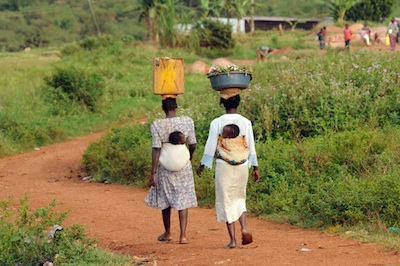
According to gender roles, women are responsible for domestic chores, including food production, cooking, cleaning, caring for the children, and fetching water. Photo credit: projecthavehope.org

The theme for this year’s International Women Day is #BalanceforBetter, and encourages governments to celebrate women’s achievement and address bias to their achieving their full potentials.

AWWASHNet in a statement issued in Lagos on Friday, March 8, 2019, said that commodification of water is the singular most subtle way of disenfranchising women of their right to life and predisposes those who cannot afford costs associated with rate hikes that come with privatisation to unhygienic conditions and ill-health.

AWWASHNet Coordinator, Veronica Nwanya, said: “This year’s International Women Day theme is apt and reinforces our conviction that at government levels of policy-making women are not left in the lurch. Water privatization is anti-women the bias that this commemoration is intended to confront.”

Nwanya insisted that subjecting a free gift of nature to the whims of for-profit entities will only cause many women to resort to unwholesome sources that have been linked with cholera, dysentery and other water-borne diseases.

“In policy formulation especially as it concerns a lifesaver and sustainer that water represents, we expect government to take into consideration the importance of gender-specifics. Women should be involved and consulted. Unfortunately, in current plans that is what is missing, or else government will not talk of privatising water.”

Women’s Day: UNODC flays gender-related killings in Africa

0

As the world celebrates the 2019 International Women’s Day, the United Nations Office on Drugs and Crime (UNODC) Nigeria office draws attention to the disproportionally high risk of women and girls in Africa to fall victim to gender-related homicide.  

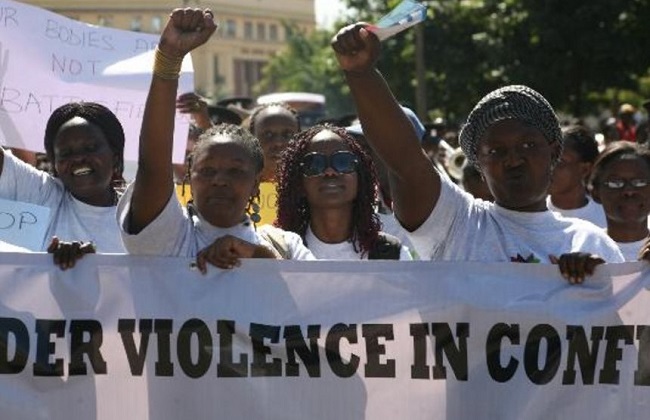
Gender homicide
Women during a procession for a campaign against rape and gender violence

A recent UNODC report on gender-related killing of women and girls found that, globally, a staggering 87,000 women were intentionally killed in 2017. Even more worrying is that 60% of these killings were perpetrated by intimate partners or family members including parents, children or any other member of their family.

“While the vast majority of homicide victims are men, women continue to pay the highest price as a result of gender inequality, discrimination and negative stereotypes. They are also the most likely to be killed by intimate partners and family,” said UNODC Executive Director, Yury Fedotov, at the launch of the report in late 2018.

This is particularly true for African women and girls who are not only more likely to become victims of homicide than their peers in other regions of the world, as they are also most likely to suffer death from the hands of an intimate partner or a family member.

Out of the total of 50,000 women killed in 2017 by their current or former partners or by any family member, 19,000 were African. This makes Africa the region where women run the greatest risk of being killed by people they normally should be able to trust the most. In addition, they are vulnerable to honour, sorcery and witchcraft-related killings.

The lack of reliable data on homicides in Africa is said to be a strong obstacle to fully understand the trends and scope of gender-related killings as well as the links with other forms of violence. Implementing the International Classification of Crime for Statistical Purposes (ICCS) constitutes a step for States to better collect and analyse data on gender-related killings, says UNODC.

The UN body wants States to ratify and implement the Convention on the Elimination of All Forms of Discrimination against Women as well as its protocols and other international treaties protecting women’s rights, including the United Nations Convention against Transnational Organised Crime (UNTOC). In order to assist Member States in the effective implementation of these treaties, UNODC said it supported the development of the Model Strategies and Practical Measures on the Elimination of Violence against Women in the Field of Crime Prevention and Criminal Justice.

UNODC also provides assistance to countries in strengthening women and girls’ access to justice, by supporting the development of domestic legislation that protects the rights of women and girls, training criminal justice practitioners in the application of relevant laws and building the capacity of women to serve at all levels of the criminal justice system.

United Nations Secretary General, António Guterres, stated, “Not until the half of our population represented by women and girls can live free from fear, violence and everyday insecurity, can we truly say we live in a fair and equal world.”

Women’s Day: A call for gender integration in Nigeria’s development pathway

0

Chair, Gender Thematic Group, Climate and Sustainable Development Network of Nigeria (CSDevNet), Elizabeth Jeiyol, advocates concerted efforts at building smart solutions that go beyond acknowledging the gender gaps to addressing the needs of men and women equally

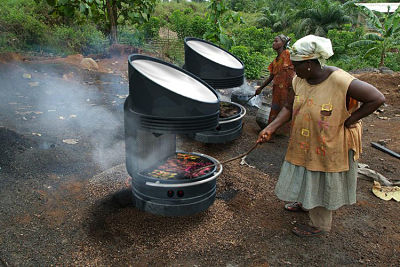
solar grill stove
A solar grill stove in use by rural women

March 8 was set aside in 1977 by the United Nations’ General Assembly through a resolution proclaiming it as the UN Day for Women’s Rights and International Peace. The purpose of this day is to recognise the fact that securing peace and social progress and the full enjoyment of human rights and fundamental freedoms require the active participation, equality and development of women to the strengthening of international peace and security.

For the women of the world, the symbolism of International Women’s Day has a wider meaning as it is seen as an occasion to review how far women have come in their struggle for equality, peace and development. It is also an opportunity to unite, network and mobilise for meaningful change.

This year’s theme for International Women’s Day, “Think Equal, Build Smart, Innovate for Change”, addresses infrastructure, systems and frameworks that have been constructed largely in line with a male-defined culture.

CSDevNet believes this year’s theme represents an invitation to find innovative ways of reimagining and rebuilding Nigeria so that it works for everyone. Having Nigerian women decision-makers in areas like urban design, transport and public services will increase women’s access, prevent harassment and violence, and improve the quality of life in Nigeria.

Three years into the Sustainable Development Goals (SDGs), Nigerian women’s rights and access to land, credit and education are still limited not only due to legal discrimination, but because more subtle barriers such as their workload, mobility and low bargaining position in the household and community prevent them from taking advantage of their legal rights. These problems affect their children and households without a male head are at special risk of impoverishment with no capacity to immunise their children or know how to help them survive.

Millions of Nigerian women can be extricated from the relentless cycle of extreme poverty, hunger, high child mortality rate and poor maternal health if we all make efforts to ensure that women’s and girls’ needs and experiences are integrated at the very inception of our governance processes and innovative technologies.

CSDevNet advocates concerted efforts at building smart solutions that go beyond acknowledging the gender gaps to addressing the needs of men and women equally. Nigeria urgently requires innovations that disrupt business as usual, paying attention to how and by whom technology is used and accessed, and ensuring that women and girls play a decisive role in emerging industries.

Achieving a gender-equal Nigeria requires social innovations that work for both women and men and leaves no one behind. From urban planning that focuses on community safety to e-learning platforms that take classrooms to women and girls, affordable and quality childcare centres, and technology shaped by women, innovation can take the race for gender equality to its finishing line by 2030.

On this International Women’s Day, CSDevNet is calling on the government and people of Nigeria to make conscious efforts at involving women and girls in processes that shape policies, services and infrastructure that impact all our lives. Let us all support women and girls who are breaking down barriers to create a better world for everyone.

Women’s Day: Women crucial in tobacco control – ERA

0

As the world commemorates the 2019 International Women’s Day, the Environmental Rights Action/Friends of the Earth Nigeria (ERA/FoEN) has urged women and gender rights groups across the country to support the federal government’s current tobacco control efforts and calls for speedy approval of the Regulations for full enforcement of the National Tobacco Control Act, 2015.

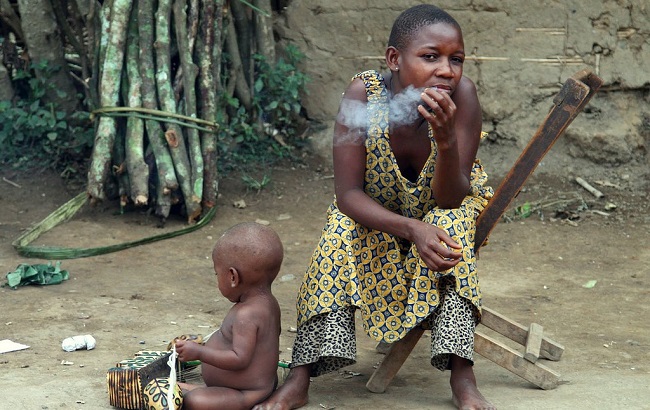
Female smoker
A young breast-feeding mother smoking: The WHO says 20% of the world’s more than a billion smokers are women

The theme for this year’s International Women Day is #BalanceforBetter, and serves as call-to-action for governments to celebrate women’s achievement and addressing bias.

ERA/FoEN believes the tobacco menace is the number one militating factor to women reaching their full potentials in life. The groups says it supports tobacco control efforts that will address the growing number of young women getting addicted to tobacco and its debilitating impact on their health and progress in life.

According to the World Health Organisation (WHO), 20% of the world’s more than a billion smokers are women and are more vulnerable to the dangers of tobacco and its ugly effects ranging from female-specific cancers, high mortality rate, compromised pregnancy etc.

In the WHO report “Women and health: today’s evidence, tomorrow’s agenda”, mention is made about the influence of tobacco advertising targeting girls, with some of the most dominant themes depicting glamour, sophistication, style, luxury, romance and sex, among other strategies all aimed at wooing them into smoking.

ERA/FoEN Project Coordinator, Oluchi Joy Robert, said: “As we mark this global event, the outgoing 8th National Assembly owes Nigerian women the gift of approving the Regulations as this will not only save women that are currently addicted to smoking, but also dissuade young girls from getting lured into taking up this dangerous habit.

“To stand up against the deadly attractions of the tobacco industry, women are crucial. Tobacco-free women are healthy women and only healthy women can reach their full potentials.”