Home Blog Page 1696

How women lead the way in adapting to climate change, by EJN

0

With the world marking the 2019 International Women’s Day on Friday, March 8, the Internews’ Earth Journalism Network (EJN) takes stock of some of its best women’s-focused reporting over the past year
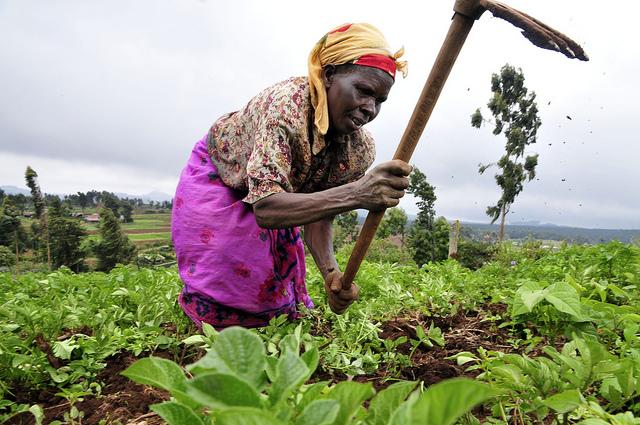
Woman farmer
A woman farmer: Women are said to be more vulnerable to the effects of climate change because they are more than proportionally dependent on natural resources that are threatened. Photo credit: ng.boell.org

The stories produced cover a wide range, from looking at how women are being excluded from climate change discussions in the Himalayan region to how women in the remote terraced hills of Nepal are working to rejuvenate their land and their economies through carbon credits offered to private emitters in Europe.

There are other positive stories of female-led adaptation. In India, women from the Dongria tribe are leading an initiative to revive heirloom seeds in an effort to create a climate-resilient food system. And in the coastal state of Odisha along the Bay of Bengal, women are raising their voices through a women’s federation where they share how weather-related disasters are impacting their livelihoods and discuss solutions. Reviving old recipes and farming traditions is the focus of this three-part series from EJN grantee, Amrita Gupta. While a report out of Indonesia explores how Dayak women farmers in East Kalimantan are surviving the impacts of palm oil.

Every March 8, the world celebrates International Women’s Day to mark progress toward gender equality but, in many places, particularly in climate-vulnerable communities in the Philippines, indigenous women suffer from tremendous poverty and discrimination and women broadly find themselves at increased risk of sexual violence and abuse following natural disasters. EJN’s Content Coordinator for the Philippines and the Pacific writes about the challenges facing vulnerable women in the region and how more support is needed to help them build climate-resilient communities.

Also in the Philippines, EJN’s 2019 media grantee, the Centre for Women’s Resources, produced a report assessing the challenges currently confronting the country’s women. It found that economic uncertainties have limited women’s opportunities and made them vulnerable to abuses. The number of women working in agriculture has also declined dramatically in the past 10 years due to land rights issues and poverty, with one in three women shifting to another form of work, the report notes.

CWR, a Philippines-based non-profit research and training institute for women, produces the report, known as “Ulat Lila” or Purple Report, each year ahead of International Women’s Day in an effort to present its recent research and spark discussion among women in different sectors. With support from EJN, CWR is currently working on a digital storytelling project, #HerStoryOurStory, that aims to raise awareness of environmental issues among young journalists and widen the space to talk about and report on gender-based violence in times of disaster and environmental change.

According to the EJN, it has worked hard to try and ensure a good gender balance amongst the journalists it trains. In 2018 a total of 1,198 of the journalists trained by EJN and its grantees were women, making up around 55% of the total trainees.

Outcry over planned release of GM maize in South Africa

0

The African Centre for Biodiversity (ACB) has said that it will object plans to commercially release three genetically-modified (GM) maize seed varieties in South Africa.

GM-Maize
The ACB is resisting the commercialisation of genetically modified (GM) maize seed varieties

American agricultural chemicals firm, Dow AgroSciences, has lodged applications for commercial release of three GM maize seed varieties genetically engineered to withstand the controversial war chemical, 2,4 D. These involve stacked events involving glyphosate, glufosinate, 2,4 D and an insect resistant trait and the single trait event.

The applications were reportedly made to the South African authorities, and the deadline for objections has been fixed for Monday, April 1, 2019.

But the ACB, a research and advocacy organisation, has kicked against the development, saying that it is potentially damaging to human health and the environment.

It said: “The commercialisation of 2,4-D tolerant GM crops is predicted to lead to a 30-fold rise in 2,4-D pesticide use. A synthetic auxin (plant hormone), 2,4-D is a war chemical that has long been linked to wide-ranging toxicity, including cancers, birth defects and reproductive toxicity.

“We find it totally unacceptable that farm workers, farmers and consumers will be exposed to more and cocktails of chemicals in this war against nature and evolutionary biology. These toxic chemicals will further pollute water and soils and load our staple food with even more novel and risky genes and toxic chemical residues.

“This is even more disturbing in an era where mega-mergers such as those between Dow and Dupont in the agribusiness sector are conferring increasing power to an oligarchy of global seed and agrochemical producers.

“We have previously alerted the South African public that commercial releases were imminent. We will be preparing strong objections to all three applications.”

Women’s Day: Time to scale up meaningful action – Andersen

0

Director General of the International Union for Conservation of Nature (IUCN), Inger Andersen, in a statement to observe the International Women’s Day 2019, says that the organisation’s “Gender Equality and Women’s Empowerment Policy” ensures that gender equality and women’s empowerment are systematically and comprehensively recognised, addressed and accounted for in IUCN projects.

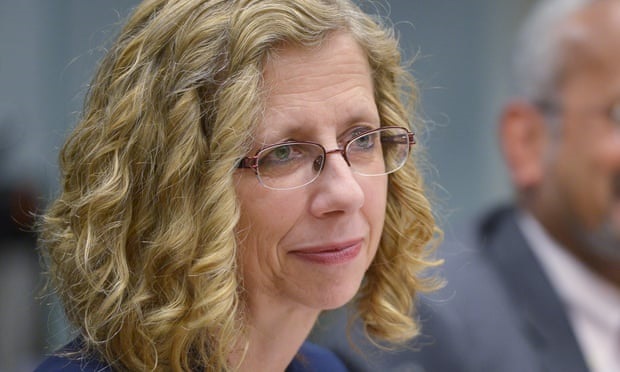
Inger Andersen
Inger Andersen of the IUCN. Photo credit: Mandel Ngan/AFP/Getty Images

We are all fighters in the global battle for gender equality. And as we fast approach International Women’s Day we should rightly celebrate our successes, while also highlighting the areas where the world urgently needs more progress.

#MeToo swept across global headlines last year, putting a spotlight on the inequalities women face in the workplace and in their livelihoods. This is a spotlight that must continue broadening to shine on more aspects of women’s lives, including in the environmental sphere. Women account for 80% of people displaced by climate change and are made more vulnerable when dry seasons affect crops, waters recede and firewood disappears, forcing women to work harder to feed and care for their families. In India’s Brahmaputra Valley, girls drop out of school during floods because they need to spend more time collecting fuel and water from the river. Meanwhile, IUCN research published in 2015 and supported by UN Women showed that just 12% of 881 environmental ministries – for instance fisheries ministries or forestry ministries – in 193 UN member states are run by women.

Last December, the World Economic Forum’s Global Gender Gap Report shockingly revealed that economic equality between men and women will take 202 years to achieve, with political equality 108 years away if progress continues to inch forward at its current pace. The rate of change varies hugely between regions, with South Asia projected to close the overall gender gap within 70 years, and progress in East Asia and the Pacific lagging almost a century behind at 171 years.

At IUCN, we insist that women represent 3.5 billion solutions to our most pressing global challenges. Data tells us that women matter – and gender equality matters – when it comes to conserving and protecting our environment. For instance,studies of the forestry and fisheries sectors demonstrate that the empowerment of women in local resource decision-making can lead to better governance and conservation.

The time for slow, business-as-usual progress is indeed up: this year, as the environmental community looks towards the post-2020 global biodiversity framework, the Union will draw on the ideas and energy of IUCN Members to define an ambitious and gender-responsive conservation action agenda at the IUCN World Conservation Congress, to be held in June 2020.

As the world’s largest and most diverse environmental network, IUCN has long believed in the meaningful, equal and substantive participation of women and men towards achieving sustainable development. With a Programme that touches more than 150 countries and a diverse State and civil society membership across all corners of our earth, IUCN is a catalyst for action and change. We are an important vehicle through which women’s empowerment and gender equality can advance.

This is why we recently updated the IUCN Gender Equality and Women’s Empowerment Policy. The policy ensures that gender equality and women’s empowerment are systematically and comprehensively recognised, addressed and accounted for in IUCN projects and that the IUCN project portfolio is improved through a gender-responsive approach.

The International Women’s Day is not just a day, a week, or even a year. It should be embedded in our daily lives, for its values are what we must all live by.

The call is clear: now is the time to scale up meaningful action. As Malala Yousafzai asked about the education and empowerment of girls just two months ago: “What will the next 10 years look like? That’s up to all of us.”

She’s right. With knowledge comes the absolute obligation to act. Movements like #MeToo are a spotlight trained on women’s – and men’s – rights. We must grab the opportunity to shine it everywhere and bring us closer to the gender equality the world so urgently needs.

Germany opens competence centre for climate protection

0

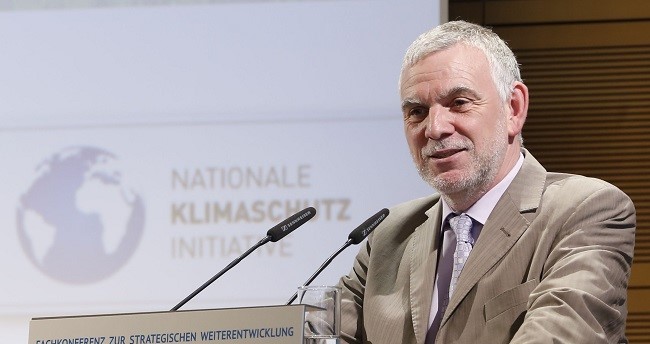
Germany’s Federal Environment Ministry will open a competence centre for climate protection in energy-intensive industries (KEI) in Cottbus later this year. This was announced by State Secretary Jochen Flasbarth during the kick-off meeting at the Brandenburg Technical University Cottbus-Senftenberg (BTU) in Cottbus.

Jochen Flasbarth
Jochen Flasbarth

Brandenburg’s Minister of Economic Affairs Jörg Steinbach, BTU President Christiane Hipp, Cottbus Mayor Holger Kelch and representatives of associations and other institutions also took part in the kick-off meeting. A total of €2 million is earmarked for the construction of the centre in the federal budget this year.

State Secretary Jochen Flasbarth said: “With the establishment of the Competence Centre in Cottbus, we are demonstrating that we take the necessary structural change in Lusatia just as seriously as the coalition exit. Converting the industry climate neutral in the medium to long term is a national and international mammoth task. Ideas and innovations for this conversion will come from Cottbus in the future. That’s why we need the support of the country, the region and the city. In this way, Lusatia can make an important contribution to the climate-friendly development of Germany as an industrial location and profit from it itself.”

The establishment of the competence centre for climate protection in energy-intensive industries (KEI) is entrusted to the gGmbH Future – Environment Society (ZUG) founded by the Federal Ministry for the Environment.

The idea for the Competence Centre is a result of the dialogue with the energy-intensive sectors, which the Federal Ministry for the Environment leads with companies and associations to implement the climate protection goals in the industrial sector. It is intended to promote the decarbonisation of energy-intensive processes in close cooperation with research institutions, industry and international institutions.

The research needs are to be identified, research clusters formed, and financing options identified and developed. Within the framework of knowledge platforms and exchanges of experience nationally and internationally, the KEI is to participate as a source of ideas for the transition from research and development to the market introduction of innovative climate protection technologies.

In addition, it is planned to entrust the centre of excellence with the involvement of the Federal Environmental Agency in Dessau with the implementation of the planned funding program for decarbonisation in industry, for which funds are also provided in the federal budget.

The KEI focuses on energy-intensive industries such as steel, cement, lime, parts of the chemical industry and non-ferrous metallurgy, where not only energy-related greenhouse gas emissions, but also technically and physically conditioned process emissions that are difficult to avoid play a role.

In order to achieve the goal of a far-reaching greenhouse gas neutrality in line with the objectives of the Climate Action Plan 2050 in these sectors, it is necessary to make leaps and bounds and thus to reorganise entire process chains and processes. The findings will also be usable in other industries.

UN confirms COP25 date

0

The Conference of the Parties (COP) of the United Nations Framework Convention on Climate Change (UNFCCC) decided at its 24th Session in December 2018 in Katowice, Poland that the 25th Session (COP25) would take place in Chile. It then requested the Bureau to decide on the dates of the sessions.

Santiago
Santiago, Chile. Photo credit: kuoni.co.uk

The Bureau met on Thursday, March 7, 2019 and decided that COP25 / CMP15 / CMA2 will take place from December 2 to 13, 2019 in Santiago, the Chilean capital.

While CMP15 implies the 15th session of the Meeting of the Parties to the Protocol Kyoto, CMA2 is the 2nd session of the Conference of the Parties serving as the meeting of the parties for the Paris Agreement.

The pre-sessional period will be from November 25 to December 1, 2019 and the the exact venue will be announced soon, according to the UN Climate Change Secretariat.

Chile took over from Brazil to host the COP. Brazil withdrew from hosting after its new president, Jair Bolsonaro, said on his campaign that he might pull out of the Paris Agreement.

Costa Rica, a firm favourite rumoured to host COP25, reportedly withdrew from holding the event over costs but it was announced that it will be hosting the pre-COP.

Carolina Schmidt, Environment Minister in Chile, told COP24: “We are delighted to tell you that for COP25, we will be working with Costa Rica.”

Women’s Day: When smart tech will work for women – Thiaw

0

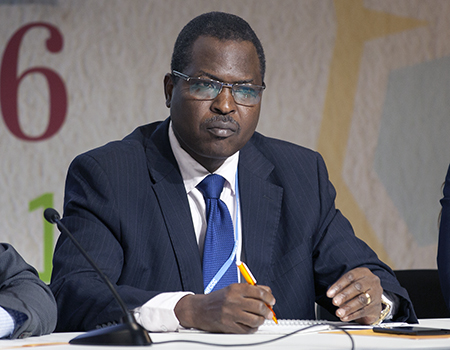
In the context of the International Women’s Day and the UN’s focus on Science and Technology that enhances gender equality, innovation for change, and is smart, Ibrahim Thiaw, Under Secretary General of the United Nations and Executive Secretary, UN Convention to Combat Desertification (UNCCD), says in this treatise that smart tech will only work for women when the fundamentals for its uptake are in place

Ibrahim Thiaw
Ibrahim Thiaw, Executive Secretary of the UNCCD

Science and technology offer exciting pathways for rural women to tackle the challenges they face daily. Innovative solutions for rural women can, for example, reduce their workload, raise food production and increase their participation in the paid labour market. But even the very best innovative, gender-appropriate technology makes no sense without access to other critical resources, especially secure land rights, which women in rural areas need to flourish.

Land degradation and drought affect, at least, 169 countries. The poorest rural communities experience the severest impacts. For instance, women in areas affected by desertification, easily spend four times longer each day collecting water, fuelwood and fodder. Moreover, these impacts have very different effects on men and women. In the parts of Eritrea impacted most by desertification, for example, the working hours for women exceed those of men by up to 30 hours per week.

Clearly, poor rural women would benefit the most from new ways of working on the land. Therefore, technology and innovation must benefit women and men equally for it to work well for society. Even more so at a time when technology is becoming critical to manage the growing threats of desertification, land degradation and drought. In Turkey, for instance, farmers can get information on when to plant in real time, using an application installed on a mobile phone.

However, in most part of the world, the adoption rates of technology are especially low among rural women, possibly because very often technologies are not developed with rural women land users in mind. For example, a wheelbarrow can reduce the time spent on water transport by 60 percent. But its weight and bulk makes it physically difficult for most African women to use.

The demand for technology design that meets rural women’s specific needs is great. But developing appropriate technology is not enough, if the pre-requisites for technology uptake, in particular access to land, credit and education, are not in place. Today, a web of laws and customs in half the countries on the planet undermine women’s ability to own, manage, and inherit the land they farm.

In nearly many developing countries, laws do not guarantee the same inheritance rights for women and men. In many more countries, with gender equitable laws, local customs and practices that leave widows landless are tolerated. For instance, a 2011 study carried out in Zambia shows that when a male head of household dies, the widow only gets, on average, one-third of the area she farmed before. The impact of such changes on the world’s roughly 258 million widows and the 584 million children who depend on them is significant. It leaves us all worse off.

Globally, women own less land and have less secure rights over land than men. Secure access to land increases women’s economic security, but it has far greater benefits for society more generally. Women who own or inherit land also control the decisions that impact their land, such as the uptake of new technology.

study in Rwanda shows that recipients of land certificates are twice as likely to increase their investment in soil conservation relative to others. And, if women got formal land rights, they were more likely to engage in soil conservation. Initiatives that benefit rural women do not stop at the household or local levels. At scale, such investments have a huge global impact.

If women all over the world had the same access as men to resources for agricultural production, they could increase yields on their farms by 20 to 30 percent. This could raise the total agricultural output in developing countries substantially at national scales, and reduce the number of undernourished people in the world by 12 to 17 percent.

If we want to tackle the underlying causes of gender inequality, to build smart and innovate for change, then technology is good. Innovative, gender appropriate technology is better. But these will have little impact if the pre-requisites for its uptake by women, in particular access to land, credit and education, are non-existent.

Group seeks review of remediation techniques for Ogoni cleanup

0

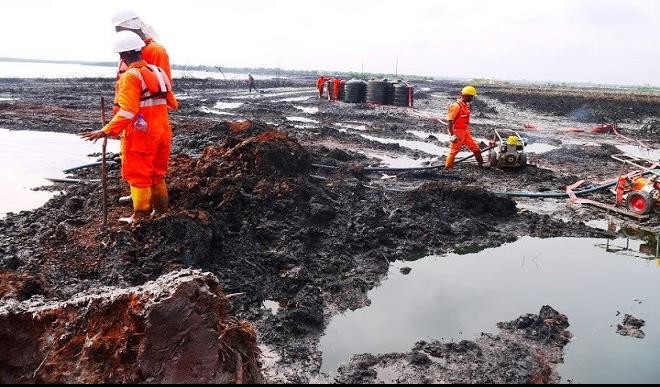
A non-governmental organisation (NGO), the Civil Society Legislative Advocacy Centre (CISLAC), has appealed to the Federal Government to revisit the United Nations Environment Programme (UNEP) report on Ogoniland to facilitate speedy cleanup and remediation of the land.

Ogoniland cleanup
Ogoniland cleanup

Mr Kolawole Banwo, CISLAC Programme Manager on Environment and Conservation of Nature, who made the appeal at a Media Engagement with newsmen on Thursday, March 7, 2019 in Lagos, said that the fatalities occasioned by pollution in the Niger Delta, particularly Ogoni, had called for serious attention to save lives and property.

According to him, there is need to re-visit and, where necessary, remediate identified sites.

“We are already eight years behind after the report itself was first launched in 2011 and 63 years late after the first oil spill happened in Oloibiri in 1953.

“The Federal Government flagged-off the remediation of contaminated sites in Ogoniland in 2016.

“But, since then, not much has been done in that direction. The wellbeing of the people in Ogoni and the Niger Delta at large is to say the least pathetic.

“Life expectancy has dropped to 40 years, livelihoods destroyed, inhabitants consume contaminated water 900 times above the World Health Organisation (WHO) standards.

“Festival of funerals in the region has become very worrisome, all due to pollution and exposure to environmental hazards.

“This calls for the urgent need to review the remediation techniques, repair, maintain and decommission non-producing facilities,” he said.

Contributing, Mr Salaudeen Hashim, Programme Manager, Defence and Security of CISLAC, attributed the slow pace of cleanup and remedial exercise at Ogoni Land to weak institutional and regulatory framework.

Hashim said that companies’ collusion, bad governance and corruption were the other factors which needed to be addressed to record significant result from the situation in Ogoniland.

He urged the government to intensify more efforts in ensuring effective institutional and regulatory framework for the region.

Hashim enjoined the Ogoni Communities to take proactive stance against theft and illegal refining.

He said: “The Ogoni Community is exposed to petroleum hydrocarbons in outdoor air and drinking water, sometimes at elevated concentrations.

“Hydrocarbon contamination is found in water taken from 28 wells at 10 communities adjacent to contaminated sites; and without adequate regulation framework in tackling the menace, it will continue to multiply.” 

By Lilian Okoro

How to curb plastic pollution, by environmentalist

0

An environmentalist, Ms Gloria Bulus, has stressed the need to curb the menace of plastic pollution in drainage and waterways for a safer environment.

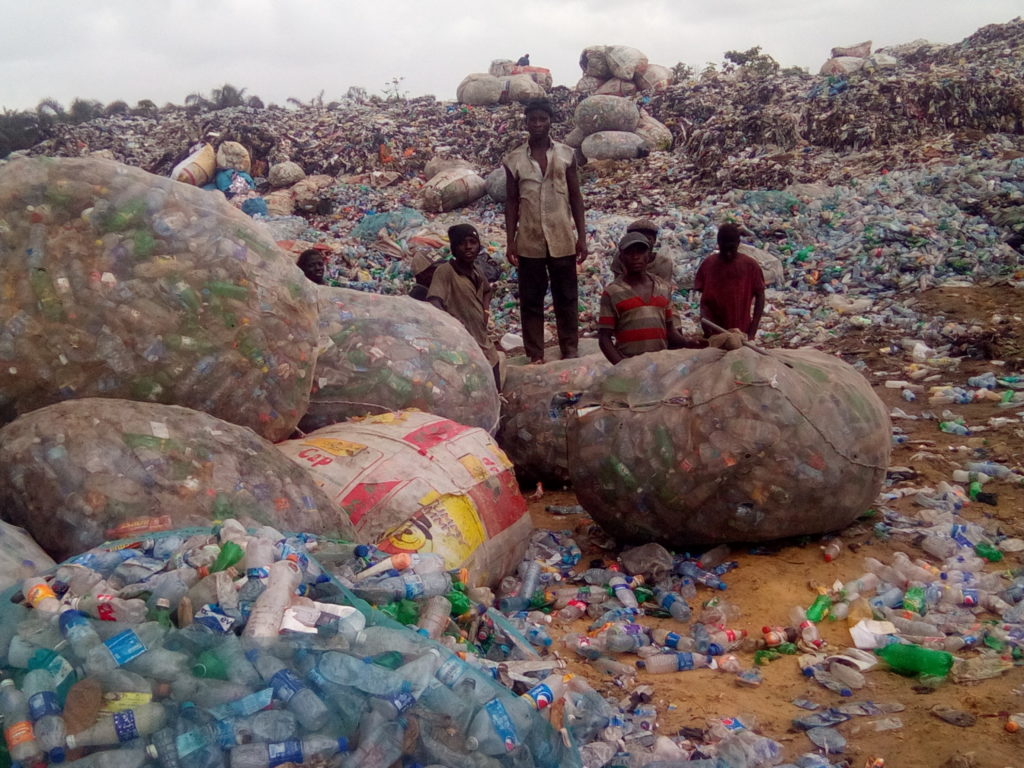
Plastic bottle scavengers
Plastic bottle scavengers and their wares at the Epe Landfill Site/EcoPark in Lagos, Nigeria

Bulus, the founder of Bridge-That-Gap Initiative, highlighted means of curtailing plastic pollution in an interview with the News Agency of Nigeria (NAN) on Thursday, March 7, 2019 in Lagos.

The expert said that it was pertinent for Nigerians to be environmental conscious and take personal responsibility if the country would be plastic pollution free.

“We must first create a consciousness for environmental protection and a culture of understanding the implications of not protecting our environment.

“It is the responsibility of everyone both young, old, different classes and backgrounds to reduce plastics in our waterways.

“We must also reduce the use of plastics and plastic waste by applying the four Rs principle through Reuse, Refuse, Remove, and Recycle to beat plastic pollution.

“To reuse, we must avoid single-use plastic bags.

“Reusable shopping bags are advisable. Instead of buying water in plastic bottles, invest in a water filter and reusable water bottles.

“To refuse, we must reject straws and disposable cups, plates and cutleries etc. and to remove, we must pick up plastic trash in our surroundings and dispose properly.

“We must engage in recycling plastics. There are very beautiful innovative products that plastics can be made into,” she said.

Bulus called for the strengthening of environmental laws, stressing the negative effects of continuous plastic pollution on the environment.

“We must strengthen our laws to address plastic waste in our waterways and make them enforceable to curb plastic pollution.

“Awareness on the negative implications of plastics pollution should be on the front burner of advocacy efforts, if we are serious about beating pollution.

“Plastics are non-biodegradable and contain toxic pollutants that damage the environment causing land, water, and air pollution.

“The breakdown of biodegradable plastics releases methane, a very powerful greenhouse gas that contributes significantly to global warming.

“Researches have shown that it takes hundreds or even thousands of years for plastic to break down, hence the damage to the environment is long-lasting.

“Plastics get into our drainage systems and block them, making some places more susceptible to flooding during the rainy season.

“It also contaminates freshwater systems, farmlands etc,” Bulus said.

By Mercy Omoike

Experts advocate study of climate change in secondary schools

0

Some experts have advocated for the promotion of study of geography at the secondary school level for Nigerians to have knowledge about climate change early.

Dr Peter Tarfa
Dr Peter Tarfa, Director, Department of Climate Change (DCC) in the Federal Ministry of Environment

The experts made the call during separate interviews with the News Agency of Nigeria (NAN) in Ibadan, Oyo State, on Thursday, March 7, 2019.

Mr Tolu Afolayan, the Director, GIS Konsult, Centre for Agricultural Development and Sustainable Development (CEADESE), Federal University of Agriculture, Abeokuta, underscored the need to have adequate knowledge on Geographic Information Science (GIS).

Afolayan said that promoting the knowledge on GIS through the study of geography at the secondary school level would help Nigerians to know how to mitigate effects of climate change early.

“Geography education presents an entry point in secondary schools to fortify youths with information and technology needed to survive present day challenges of climate change as well as fortify and prepare students for sustainable development.

“In the secondary school, GIS is a topic under geography, and we are working with the Association of Nigerian Geographers to raise mentors to work with teachers and there is so much progress we are seeing now.

“We have mentors in six regions and all of us have reached out to students,’’ the director said.

According to him, one of the most exciting things is the impact of GIS across the regions as students are now thinking of societal problems and ways of solving them.

Afolayan said that successive governments and curriculum developers had ignored the role of geography in furthering sustainable development among the newer generations, adding that they had also relegated its relevance.

“The situation is now so bad that some schools opt to teach other subjects that are thought to be in demand for successful careers in place of geography.

“And students are disenfranchised because teachers seem to merely copy out the basic facts to them which they memorise and regurgitate just to pass school examinations,’’ Afolayan said.

According to him, GIS Konsult has embarked on innovative ways to change the narrative such as its collaboration with the University of Ibadan to promote sustainable development.

Afolayan added that it also partnered with Association of Nigerian Geographers, teachers of geography in secondary schools and state ministry of education on a project called “GEOHACKTHON’’.

According to him, the project is an innovative technology road map that will encourage the development of solutions required in various fields through geography.

Dr John Oyedepo, also of CEADESE, said that there had been series of innovation and cutting-edge technology in farming using GIS such as precision farming and supplemental irrigation farming.

“There are ways to helping the farmers and one of the things we are doing is Climate Information System by which we will be able to forecast when the rain will stabilise.

“And then we can tell the farmers the time to plant and when there is going to be drought or excessive rainfall at a particular time,’’ Oyedepo said.

According to him, all of these are hinged on information system which is encapsulated by Geographic Information System.

“Another thing that we do apart from helping farmers to forecast is that from meteorological satellite, we are able to download information every 15 minutes and we can predict through the information the weather situation,’’ he said.

Oyedepo said that the use of precision farming technique would salvage farmers from impending losses because of climate change and ensure food sufficiency for the country.

By Ibukun Emiola

Expert advocates master plan for Nigerian ports

0

The General Manager, Special Duties of the Nigerian Ports Authority (NPA) Capt. Ihenacho Ebubeogu, has stressed the need for a Port Master Plan to cover the maritime industrial environment.

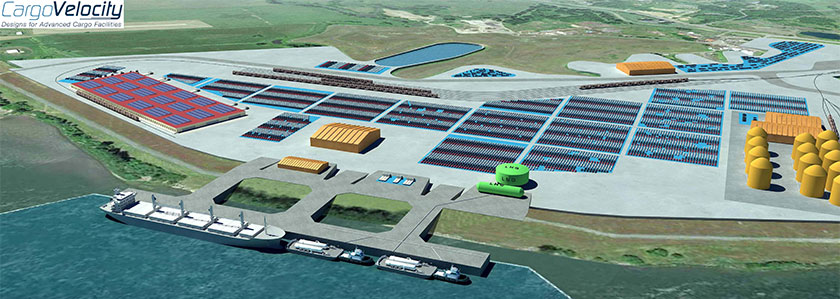
Seaport master planning
Seaport master planning. Photo credit: Cargo Velocity

Ebubeogu said this during a Strategy Group Meeting organised by the Chamber of Shipping to facilitate the Ease of Doing Business in Nigerian Ports held in Lagos on Wednesday, March 6, 2019.

He said community interference on government right of way had been hindering the development of the Western ports.

According to him, the port in Port Harcourt and railway line to Enugu were constructed following the discovery of coal in Enugu.

“Presently our investigation shows that some people have built houses on the rail line.

“As we are building ports, we should not consider port plan but port master plan because a port plan only covers the jurisdiction of the port, while a port master plan is planned to consider the port and its maritime industrial environment.

“If NPA had a master plan, the whole of Creek Road in Apapa will have been added to the port environment because port master plan is to regulate the tenancy in that particular environment.

“If Creek Road had been included in the port master plan, there is no way tank farms can be very close to the port.

“Issue of customs mounting various checkpoints is affecting Ease of Doing Business because time is money,” Ebubeogu said.

He said that there was need to develop the deep seaports while the existing ports should be designated as transhipment ports and improve on Inland Container Depots (ICDs) to revive shipping business in the country.

Ebubeogu said that it was important to look at port infrastructure such as channel, the port itself and the geographical area the port would cover for importation and exportation of goods and services.

Also speaking, retired Rear Adm. Dele Ezeoba, said that there was need to renew the waterways for safe passage and ensure good navigation all year round.

He said that there should be availability of integrated communication system which would allow for local and prompt reporting of incidences at sea.

“If a ship in our waters has an accident, the first place that gets a message is International Maritime Bureau (IMB) in Singapore and the IMB will now call Lagos.

“What could have become a simple misunderstanding between two people is translated to piracy and that has consequential effect on the cost of doing business in Nigeria.

“To stop the issue of piracy in Nigeria, we need to improve safety awareness by seafarers. From experience, we have come to realise that no thief will go to steal in a place he doesn’t know,” Ezeoba said.

He said that nine of 10 reported cases of piracy in our waters had an insider information.

According to him, there should be a well articulated security, communication and enhanced welfare of the crew of vessels and standard global practices to improve professionalism.

Ezeoba said that Nigerian security agencies, including the NIgerian Maritime Administration and Safety Agency (NIMASA), had synergies in improving the security operations on the waterways through surveillance, response initiative and enforcement.

The President, Nigerian Chamber of Shipping (NCS), Mr Andy Isichei, said that underutilisation of Western ports had negative impact on the economy as a result of constant gridlock on the port access road.

Isichei said the constant gridlock on ports access road had constituted a danger to public infrastructure when the bridges had turn to parking lot.

He attributed the gridlock on port road to many cargoes designated to western ports and inefficiency of the water channels of Eastern ports which could not accommodate bigger vessels.

In his contribution, the former Director, Center for Logistics and Transport Studies, University of Port-Harcourt, Prof. Osi Akpoghomeh, said that inefficient port system had accumulated the congestion on the sea as well as the land.

Akpoghomeh urged the Federal Government to improve on road infrastructure to stop the constant traffic.

By Aisha Cole