Home Blog Page 1694

Number of UN officials killed in Ethiopian Airlines crash rises to 21

0

The number of UN officials killed in the Ethiopian Airlines that crashed on Sunday, March 10, 2019 has risen to 21 from the initial 19 reported by the global intergovernmental organisation.
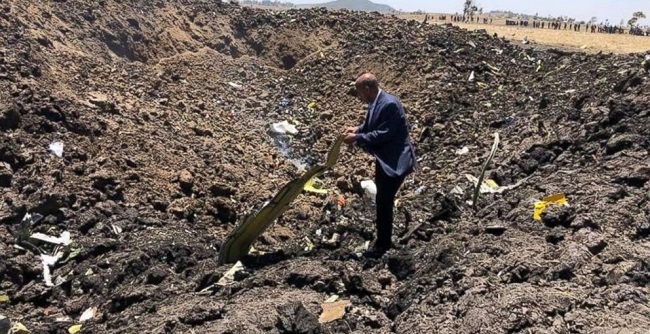
Ethiopian Airlines crash
The site where an Ethiopian Airlines flight crashed on March, 10, 2019.

The UN headquarters, in an update on Monday, said the World Food Programme (WFP) lost seven officials as against the six reported on Sunday while the Office of the High Commissioner on Refugees (UNHCR) lost three officials, as against the two earlier reported.

The International Telecommunications Union lost two officials in the ill-fated Ethiopian airplane, which crashed shortly after take-off from Addis Ababa, killing the 157 people on board.

The Food and Agriculture Organisation (FAO), International Organisation for Migration (IOM) in South Sudan, World Bank and UN Assistance Mission in Somalia (UNSOM) each lost one staff member.

Six members of staff from the UN Office in Nairobi (UNON) also died.

Amb. Abiodun Bashua, a retired Nigerian career diplomat, who was until his death, working on contract with the UN Economic Commission for Africa, also died in the crash, alongside Canada-based Nigerian professor at Carleton University, Pius Adesanmi.

The Spokesperson for the UN Secretary-General, Mr Stephane Dujarric, said the 21 UN personnel were “confirmed as being on the ET 302 flight. The numbers are valid of now and may change later.”

UN flags flew at half-mast around the world on Monday to honour the more than 150 people killed in the ill-fated Ethiopian airplane.

The UN Secretary-General Antonio Guterres, while leading tributes to UN workers who died in the crash, at the UN headquarters in New York, stressed the need to keep “their spirit of service alive”.

Guterres said it was “a sad day for many around the world, and for the UN in particular.”

A global tragedy has hit close to home and the United Nations is united in grief,” he said.

Guterres extended his “deepest condolences” to the relatives and loved ones of all those who died.

“Our colleagues were women and men, junior professionals and seasoned officials, hailing from all corners of the globe and with a wide range of expertise,” he said.

The secretary-general added: “They all had one thing in common. A spirit to serve the people of the world and make it a better place overall.

“Let us honour the memory of our colleagues, by keeping their spirit of service alive.”

A minute of silence was observed in honour of the dead.

The President of the General Assembly, Maria Fernanda Espinosa, on Monday, passed on “heartfelt thoughts” to all friends and families of the victims.

“This is a popular route for many fighting for the good of Africa,” she said.

“My heartfelt thoughts are with the friends and families of those affected by the devastating crash,” Espinosa added.

In Nairobi, where Ethiopian Airlines flight 302 was bound, UN Office in Nairobi (UNON) Acting Director-General, Maimunah Mohd Sharif, spoke of her “great sadness and shock”.

“The United Nations and its Member States have suffered a huge loss. We are working closely with authorities to gather further information.

“We join the international community in mourning the loss of so many lives, including those countries who have also lost citizens in this devastating crash,” Sharif wrote in a statement.

The top UNON official said that the staff observed a moment silence in the Kenyan capital on Monday morning to remember “our colleagues and friends” who had died.

A similar tribute was held at the UN in Geneva (UNOG), where Director-General Michael Møller spoke of his “profound shock” at the news.

Extending his sympathies to the victims’ families and friends, Møller said that several staff counsellors were on their way to Nairobi from different UN organisations in Geneva.

On Sunday, the Executive Director of WFP David Beasley said each of those “willing to travel and work far from their homes and loved ones, to help make the world a better place to live.”

According to figures released by the airline, citizens from more than 35 nationalities were involved in the accident, which involved a Boeing 737 airliner bound for the Kenyan capital, Nairobi.

Kenya suffered the heaviest loss, with 32 nationals on board the plane, followed by 18 Canadians and nine Ethiopians.

On Monday, as Ethiopia observed a day of national mourning, investigators announced that they had recovered the aircraft’s black box.

After taking off at 8.44a.m. local time on Sunday, the jet lost contact with air traffic control at Bole International Airport in Addis Ababa, crashing six minutes into its flight.

The fatal crash marked the second time that a new Boeing 737 Max-8 plane had gone down in five months, the first being off the coast of Indonesia, in October 2018.

By Prudence Arobani

Technology, gateway for meaningful economic growth – Surveyor-General

The Surveyor- General of the Federation, Mr Ebisintei Awudu, says no nation achieves meaningful development without full recognition of the benefits of technology in driving economic growth.

Ebisintei Awudu
Surveyor-General of the Federation, Mr Ebisintei Awudu

Awudu said this on Tuesday, March 12, 2019 in Abuja when delegates from the National Association of Polytechnics Students (NAPS) visited him in his office.

According to him, the limit of technology is the limit of one’s imagination, but technology is the domain of science and technology and should not be despised.

“It is important for us to understand the place of technology in moving our economy forward.

“We cannot go far if we do not give the right attention to technical education as a nation.

“Without technology every other thing is like sinking sand but when you take technology and apply it you will be on top of the world,” he said.

He called on the polytechnic students to remain focused as those who finished well were making their marks in the society.

“Do not see yourself as if you have missed it for going to the polytechnic, when you know what you are doing you command respect and regard, “surveyor-general said.

Awudu pointed out that technicians are agents of change that the country needs, saying that more attention should be given to collages of education and polytechnics.

The Senior Special Assistant to the Office of National Vice President, NAPS, Mr Hussain Ebony, said the delegates were on the visit to appreciate the surveyor-general for his support and good work.

He said that the surveyor-general has made a voyage in the leadership industry with a class of touch.

According to him, the surveyor-general is one of the most professionals whose efficiency, knowledge, diligence and professionalism have become another definition of standard in the leadership industry.

The surveyor-general was given an award of excellence by NAPS in recognition of his good works. 

By Uche Bibilari

UNEA-4: How world can transform way of life – UN

0

Because mankind has reached the planet’s limits and grown at the expense of nature, there is an urgent need to transform the way he lives.

UNEA-4
Opening plenary of the Fourth UN Environment Assembly (UNEA-4) in Nairobi on Monday, March 11, 2019

Acting Executive Director of UN Environment, Joyce Msuya, who made this submission at the opening plenary of the Fourth UN Environment Assembly in Nairobi on Monday, March 11, 2019, stated that the world should urgently act by moving speedily to a low carbon, green economy that, by 2050, reduces fossil fuel use by 80%.

Similarly, she urges the world to be kinder to the environment in how it produces food by reducing the environmental impact of food production by two-thirds.

Also, Msuya underlined the need to achieve a near-zero waste economy by 2050, saying that “circularity must be the driving force of the future we want”.

According to her, compelling science has laid out the urgency with which the world must act.

Her words: “Last year, the Intergovernmental Panel on Climate Change released a report saying that we must quickly and drastically reduce our climate-warming emissions. A few weeks later, UN Environment’s Emissions Gap Report concluded that, in order to avoid a rise of more than 1.5°C in global temperatures, we need to step up climate action five times.”

Welcoming participants to the conference, she acknowledged the fact that “there are many examples of people, governments, enterprises and civil society that are not willing to wait to change our collective future”.

“In Cameroon, farmers use solar-powered driers to dry cassava crop. This means they can store what they produce for longer and get a better price in the market. In the Philippines, a textiles startup collects waste and transforms them into footwear and fashion accessories.

“And in Sri Lanka, affordable electric conversion kits aim to transform the iconic tuk tuk. So, we’re not starting from scratch. These innovations challenge the very basis of how we treat our planet. We can no longer grow now and clean up later. We have reached the planet’s limits and we have the power to do so,” Msuya said.

Minister of Environment for Estonia and President of UNEA-4, Siim Kissler, disclosed that his vision is to scale-up the efforts to overcome common environmental- and health-related challenges in a balanced and integrated manner through identifying and developing innovative solutions.

In the light of these challenges, there is an urgent need to act on sustainable and efficient resource management; international environmental data and engagement of civil society, citizens, private sector and academia, he added.

His words: “Two billion people worldwide lack access to solid waste collection services. Some 64 million people are directly affected by uncontrolled dumping and open burning at dumpsites. Eight million tons of plastics enter the ocean every year. In the draft ministerial declaration, I am asking Member States to define ambitious national targets for reducing waste generation, increasing the reuse of products and recycling of waste and to significantly reduce single-use plastic products by 2030.

“The world needs openly accessible data, information, analysis, knowledge and science to better inform and guide what needs to be done to achieve sustainability across all environmental dimensions. With the ministerial declaration, I am asking UNEP to develop a global environmental data strategy by 2025 and Member States to improve national environmental monitoring systems and technologies. Not only are data filling knowledge gaps, data can also be a source of economic benefits which cannot be left unnoticed.

“Finally, our efforts must benefit people. An outcome from this Assembly must speak to each country and inspire citizens to become more aware of the challenges and solutions to the health of our planet and embark on more sustainable lifestyles. We need to find innovative solutions for environmental challenges through different approaches to sustainable consumption and production, inspiring nations, private sector players and individuals.

“In conclusion, this Environment Assembly embodies the notion that challenges are best addressed and opportunities realised when the community of nations and citizens of the world join forces to promote economic prosperity, social equity, and environmental sustainability in a holistic manner.”

Urgent action needed to tackle chemical pollution, says UN

0

Countries will not meet the internationally agreed goal to minimise the adverse impacts of chemicals and waste by 2020, meaning that urgent action is required to reduce further damage to human health and economies, according to a UN report released on Monday, March 11, 2019.

Chemical pollution
Chemical pollution

The second “Global Chemicals Outlook”, presented during the UN Environment Assembly in Nairobi, finds that the current chemical production capacity of 2.3 billion tonnes, valued at $5 trillion annually, is projected to double by 2030.

Despite commitments to maximise the benefits and minimise the impacts of this industry, hazardous chemicals continue to be released to the environment in large quantities. They are ubiquitous in air, water and soil, food and humans. The world must take advantage of the many solutions that already exist and are highlighted in the report.

“Whether the growth in chemicals becomes a net positive or a net negative for humanity depends on how we manage the chemicals challenge,” said Joyce Msuya, Acting Executive Director of UN Environment. “What is clear is that we must do much more, together.”

The report finds that while international treaties and voluntary instruments have reduced the risks of some chemicals and wastes, progress has been uneven and implementation gaps remain. For example, as of 2018, more than 120 countries had not implemented the Globally Harmonised System of Classification and Labelling of Chemicals.

The World Health Organisation (WHO) estimated the burden of disease from selected chemicals at 1.6 million lives in 2016, which is likely an underestimate. Chemical pollution also threatens a range of ecosystem services.

Conversely, the benefits of action to minimise adverse impacts have been estimated in the high tens of billions of United States dollars annually.

“The findings of the second Global Chemicals Outlook are very important for developing countries,” said David Kapindula, a member of the report’s steering committee, from the Zambia Environmental Management Agency. “They highlight the uneven implementation of chemicals and waste management and point to opportunities for enhanced knowledge sharing, capacity development and innovative financing.”

From pharmaceuticals to plant protection, chemicals play an important role in modern society and in achieving the goals of the 2030 Agenda for Sustainable Development.

Driven by economic development, population dynamics and other global megatrends, the chemicals market across a range of industry sectors is growing.

For example, the chemicals market in the construction sector is expected to grow by 6.2 per cent annually, between 2018 and 2023.

Meanwhile, chemical production and consumption is shifting to emerging economies, in particular China. The Asia-Pacific region is projected to account for more than two-thirds of global sales by 2030. Cross-border e-commerce is growing at 25 per cent annually.

Pesticides have been found to negatively impact pollinators, excess use of phosphorous and nitrogen in agriculture continues to contribute to ocean dead zone and chemicals used in sunscreens put pressure on coral reef ecosystems. Studies also indicate that releases of some antimicrobials, heavy metals and disinfectants contribute to antimicrobial resistance.

Solutions exist, however. Global Chemicals Outlook II finds that governments are taking regulatory action on many chemicals. Frontrunner companies are advancing standards beyond compliance and sustainable supply chain management. Consumers are driving demand for safer products and production.

Industry and entrepreneurs are developing green and sustainable chemistry innovations. Scientists are filling data gaps. Universities are reforming the way chemistry is taught. Management approaches – from chemical hazard assessment to risk management and life cycle analysis – are advancing.

Opportunities exist for key influencers such as investors, producers, retailers, academics and ministers to scale up these initiatives. This would not only protect human health and the environment, but also deliver economic benefits in the high tens of billions of United States dollars annually.

The development of a future global platform for the sound management of chemicals and waste beyond 2020 provides a window of opportunity. As the report highlights, this framework needs to bring together all relevant sectors and stakeholders and foster collaborative, ambitious action.

Given the critical role of the sound management of chemicals and waste in halting biodiversity loss, facilitating access to clean energy and achieving other Sustainable Development Goals and targets, opportunities exist to create synergies with these and other international policy agendas.

IITA develops rapid multiplication technology to solve cassava problems

0

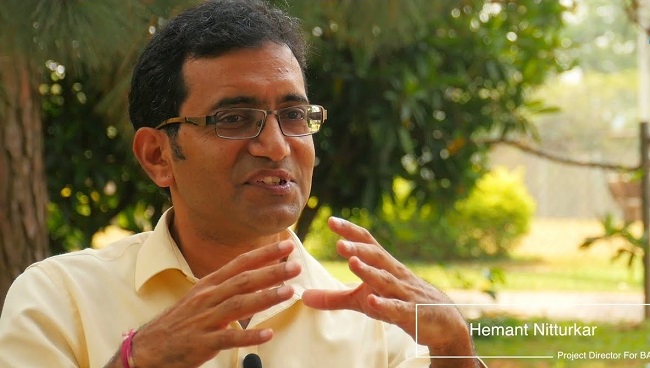
The International Institute of Tropical Agriculture (IITA) has developed a revolutionary rapid multiplication technology to tackle cassava problems in Nigeria under its Building an Economically Sustainable, Integrated Cassava Seed System (BASICS).

Hemant Nitturkar
BASICS Project Director, Dr Hemant Nitturkar

The BASICS Project Director, Dr Hemant Nitturkar, said this at the 2019 annual planning review meeting of BASICS at the IITA, Ibadan, Oyo State, on Monday, March 11, 2019.

Nitturkar said the technology was also known as Semi Autotrophic Hydroponics (SAH).

He said that the institute had also established an IITA “Go seed and Umudike seeds” at the National Root, Crops, Research Institute (NRCRI) as a place to obtain certified breeder and foundation seeds.

“This opens up a huge entrepreneurial opportunity for Nigerian youths to act as seed entrepreneurs to supply improved seeds and advise to cassava farmers.

“This will help farmers, processors and the nation at large, as less than 10 tonnes per hectare current yield of cassava per annum is not sustainable.

“Nigeria should double this, and BASICS is working in that direction,” he said.

Nitturkar said that the theme was chosen to bring the stakeholders focus on spreading the word about the importance of widespread adoption of improved seeds and what BASICS had done to foster a sustainable seed system.

“Unless there is a sustained, widespread demand for certified seeds from vast number of farmers, all the work at commercial seed levels will come to a naught.

“So, communication to strengthen demand side to complement the supply side development is the need of the hour,” he said.

According to him, the purpose of BASICS project is to develop a sustainable cassava seed value chain in Nigeria characterised by commercial production and dissemination of cassava planting material.

He said that the project envisaged benefits to farmers and the industry were higher returns from the use of clean planting material of superior stem quality that were made accessible to farmers at the right time and at an appropriate price.

The Director-General, National Agriculture Seeds Council (NASC), Dr Philip Ojo, said that the impact of BASICS had been overwhelming as the reports received daily from the field were encouraging.

“Production of certified cassava seeds has multiplied tremendously from 10,091 bundles in 2017 to 55,639 bundles in 2018; the use and need to use certified seeds is gradually becoming institutionalised.

“The Cassava Seed Tracker (CST) has revolutionised our certification systems and presently been dovetailed at the NASC end to become the national seed tracker which will encompass all crops,” he said.

Ojo said that the NASC as a sub unit of the quality team was aspiring to build on the success recorded so far, to maximise the gains of the CST.

He said that it would achieve this by sensitising marketers and processors to latch on the CST, organising seed fairs that would sensitise, popularise certified cassava seeds.

The D-G added that NASC would also kick-start the private certification programme which was still currently stalled by the passage of the amended Seed Act.

By Chidinma Ewunonu-Aluko

World Bank to help Sri Lankan farmers tackle climate change

0

The World Bank on Monday, March 11, 2019 approved $125 million loan for Sri Lanka to help small farmers improve productivity and tackle climate change, local media reported.

Idah Pswarayi-Riddihough
World Bank Country Director for Maldives, Nepal and Sri Lanka, Idah Pswarayi-Riddihough

The World Bank Country Director for Maldives, Nepal and Sri Lanka, Idah Pswarayi-Riddihough, said this in Colombo.

The programme will benefit more than 470,000 small farmers in six provinces in the dry zone of the country, selected for being most exposed to climate impacts, a statement from the World Bank said.

Sri Lanka is particularly vulnerable to climate-related natural disasters such as floods and droughts with hundreds of people killed in recent years.

“Innovation, including the introduction of improved crop varieties, cropping patterns, water resources management, among others, can help farmers adapt to changing climate and improve their incomes and livelihoods.” Pswarayi-Riddihough said.

The project will ensure that all farmers obtain adequate access to training and research.

Agriculture in is one of the worst-affected sectors by climate change in Sri Lanka.

Agriculture contributes about 7.7 per cent to the country’s economy and employs 27 per cent of the population, more than 38 per cent of which are women.

19 UN officials perished in ill-fated Ethiopian airplane crash

0

No fewer than 19 United Nations officials were aboard the Ethiopian airplane that crashed on Sunday, March 10, 2018 , the UN Department of Safety and Security in Kenya, has said.

Ethiopian Airlines crash
The site where an Ethiopian Airlines flight crashed on March, 10, 2019.

The World Food Programme (WFP) lost six staff, the Office of the High Commissioner on Refugees (UNHCR) lost two, as did the International Telecommunications Union (ITU).

The Food and Agriculture Organisation (FAO), International Organisation for Migration (IOM) in South Sudan, World Bank and UN Assistance Mission in Somalia (UNSOM) each lost one staff member.

Six staff from the UN Office in Nairobi (UNON) were also tragically killed.

Amb. Abiodun Bashua, a retired Nigerian career ambassador, who was until his death working on contract with the United Nations Economic Commission of Africa (UNECA), also died in the crash, alongside Canada-based Nigerian professor at Carleton University, Pius Adesanmi.

As a mark of respect IOM said it would “fly its flag at half-mast at its offices on Monday, as will the UN and its agencies”.

The Ethiopian Airlines flight crashed shortly after take-off from the capital Addis Ababa on Sunday, killing more than 150 people on board.

The UN Secretary-General António Guterres said in a statement that he was “deeply saddened at the tragic loss of lives”, as reports emerged that UN staff were also among the dead.

The Boeing airliner bound for the Kenyan capital, Nairobi, took off at 8:44 a.m. local time, losing contact with air traffic control at the Bole International Airport in Addis Ababa, just six minutes later, according to news reports.

The plane was reportedly carrying passengers from more than 35 different countries.

The cause of the disaster is not yet known, although weather conditions were reportedly good and the plane went down in a field near Bishoftu, around 35 miles southeast of the capital.

The UN chief conveyed his “heartfelt sympathies and solidarity to the victims’ families and loved ones, including those of United Nations staff members, as well as sincere condolences to the Government and people of Ethiopia”.

The UN is in contact with the Ethiopian authorities and “working closely with them to establish the details of United Nations personnel who lost their lives in this tragedy” the Secretary-General stated.

The disaster happened on the eve of the UN Environment Assembly when Heads of State, environment ministers and thousands of others will convene for five days in the Kenyan capital.

Many senior UN officials took to Social Media to express their condolences and sadness.

On Twitter, José Graziano da Silva, Director General of the Food and Agriculture Organisation (FAO,) sent his “heartfelt condolences and sympathies to the bereaved families”, saying that one FAO staff member was among the victims.

Executive Director of the World Food Programme (WFP) David Beasley tweeted that “the WFP family mourns today”, revealing that WFP staff were also among those on board the flight.

“We will do all that is humanly possible to help the families at this painful time. Please keep them in your thoughts and prayers”, he said.

Houlin Zhao, ITU Secretary General tweeted his “sincere condolences to the families and friends of those who lost their lives in the plane crash”.

Noting that two ITU staff were on the flight, he said: “Our colleagues in Addis are providing support to their families during this difficult time.”

“All of us at UNICEF mourn the tragic loss of our UN colleagues and all those who died in the Ethiopian Airlines crash today.

“May they rest in peace. Our thoughts are with their families and loved ones”, Henrietta Fore, Executive Director of the UN Children’s Fund, tweeted.

On behalf of the UN Human Settlements Programme (UN-Habitat), whose Headquarters are in Nairobi, Executive Director Maimunah Sharif tweeted her “deepest condolences and prayers to the Great Nation of Ethiopia and to the families of the passengers and crew members who lost their lives in this tragedy.

“May they rest in eternal peace,” Sharif said.

High Commissioner for Refugees Filippo Grandi issued a condolence statement saying: “UNHCR has suffered today a huge loss”.

IOM Director-General António Vitorino issued a statement expressing his deep sadness over the 157 lives lost, “including a young IOM staff member Anne-Katrin Feigl”, who “was en route to a training course in Nairobi as part of her role as a Junior Professional Officer”.

Catherine Northing, Chief of the IOM Mission in Sudan where Feigl worked, called her “an extremely valued colleague and popular staff member, committed and professional”, saying “her tragic passing has left a big hole and we will all miss her greatly”.

By Prudence Arobani

UN chief mourns Ethiopian Airlines crash victims

0

UN Secretary-General, Antonio Guterres, has expressed sadness at the tragic loss of lives in the Ethiopian Airlines crash on Sunday near Addis Ababa.

Ethiopian Airlines crash
The site where an Ethiopian Airlines flight crashed on March, 10, 2019.

In a statement in New York by Mr Stephane Dujarric, his spokesman, Guterres conveyed his heartfelt sympathies and solidarity to the victims’ families and loved ones.

He also conveyed his sincere condolences to the United Nations staff members as well as the Government and people of Ethiopia.

“The United Nations is in contact with the Ethiopian authorities and working closely with them to establish the details of United Nations personnel who lost their lives in this tragedy,” the statement said.

The Boeing 737-800 crashed in Bishoftu, shortly after take-off from Bole International Airport.

According to government reports, 149 passengers and eight crew members were believed to be on flight ET302 from Addis Ababa to Nairobi.

Two Nigerians – Prof. Pius Adesanmi and Amb. Biodun Bashua – were reported to be aboard the ill-fated airplane.

By Prudence Arobani

Leaders gather for UNEA-4 in Nairobi, UN regrets air incident

0

Over 4,700 heads of state, ministers, business leaders, senior UN officials and civil society representatives are gathering in Nairobi, Kenya for a meeting of the world’s top body on the environment, where they will take decisions that move global societies to a more sustainable path.

Joyce Msuya
UN Environment Acting Executive Director, Joyce Msuya

The fourth UN Environment Assembly (UNEA-4) runs from Monday, March 11 to Friday, 15, 2019 under the theme: “Innovative Solutions for Environmental Challenges and Sustainable Consumption and Production”.

It is said to be the biggest gathering in the Assembly’s short history, with attendance almost double the last event in December 2017. Prominent world leaders will attend, including the Presidents of France and Kenya, Emmanuel Macron and Uhuru Kenyatta, and CEOs from major corporations.

As delegates come to Nairobi for the Assembly, the UN body has expressed regret over the air incident on Sunday, March 10.

“The UN Environment is deeply saddened by the news of the Ethiopian Airlines accident. Our thoughts and prayers are with the families of those affected. We are following developments closely,” it said in a statement made available to EnviroNews.

Bold decisions and outcomes are expected as the delegates negotiate late into the night over five days.  Resolutions are on the table to push harder for sustainable consumption and production patterns, commit to the protection of the marine environment from plastic pollution, reduce food waste, and advance technological innovation that combats climate change, and reduces resource use and biodiversity loss.

The Assembly’s status as the only UN body outside the General Assembly where all member states convene, and its power to bring together all sectors, means that the global environmental agenda is defined here. Decisions have a profound impact on the goals of the Paris Agreement and the 2030 Agenda for Sustainable Development, as well as paving the way towards the UN Climate Change Summit 2019 and impacting the overall UN agenda.

Ahead of the meeting, UN Environment’s Acting Executive Director, Joyce Msuya, appealed to nations to step up and start delivering real change.

“Time is running short. We are past pledging and politicking. We are past commitments with little accountability. What’s at stake is life, and society, as the majority of us know it and enjoy it today,” she wrote in a policy letter.

UN Environment background report for the Assembly, which serves as a basis for defining problems and laying out new action areas, makes a strong case for urgent action. The report puts the value of lost ecosystem services between 1995 and 2011 at $4 trillion to $20 trillion; shows how agricultural practices are putting increasing pressure on the environment, costing an estimated $3 trillion per year, and estimates pollution-related costs at $4.6 trillion annually.

“As never before, the time to act is now,” said President of the UN Environment Assembly and Minister of Environment of Estonia, Siim Kiisler. “We know we can build more sustainable, prosperous and inclusive societies with sustainable consumption and production patterns that address our environmental challenges and leave no one behind. But we will need to create the enabling conditions for this to happen. And we will need to do things differently.”

The Assembly will also see new research launched by UN Environment, including the latest edition of the world’s only comprehensive global scan of the environment: “Global Environment Outlook 6”, which was produced by 252 scientists and experts from over 70 countries. The International Resource Panel’s “Global Resources Outlook”, meanwhile, takes stock of material extraction, including the future outlook and recommendations on how to use natural resources more sustainably.

“It’s clear that we need to transform the way our economies work, and the way we value the things that we consume,” said Msuya. “The goal is to break the link between growth and increased resource use and end our throwaway culture.”

The Assembly is not just about the resolutions and science. Side events and exhibits provide the opportunity for attendees to form partnerships and make deals that benefit people and the environment.

The Sustainable Innovation Expo acts as an innovation hub, with over 40 environmental technologies and innovations on display.

The One Planet Summit – co-organised by the governments of France and Kenya, and the World Bank – is also being held around the edges of the Assembly, focusing on Africa’s environmental challenges.

The UN Science-Policy-Business Forum, convened in advance of the UN Environment Assembly, launched initiatives on using big data, machine learning, and green technology startups, to solve major environmental problems.

Aiteo fixes leak, restarts 150,000 bpd Nembe Creek Oil Export pipeline

0

The Nembe Creek Trunk Line (NCTL) resumed normal operations on Thursday, March 7, 2019 following the plugging of a leak which necessitated the shutdown of the facility on Feb. 28.

Nembe Creek Trunk Line
The Nembe Creek Trunk Line (NCTL) has resumed normal operations

A spokesperson for Aiteo Eastern Exploration and Production the operator of the 97 km NCTL, Mr Masade Odianosen, told the News Agency of Nigeria (NAN) on Sunday, March 10 that the facility “is up and running’’.

The development has allayed fears of a major disruption of oil export on the export pipeline that evacuates up to 150,000 barrels of crude daily to the Bonny Oil Export Terminal.

The Aiteo spokesperson said that the NCTL was restarted while the joint investigation of the March 1 explosion from Oil Well No.7 within Nembe Creek oilfields, a totally unrelated incident to the NCTL was in progress.

The official explained that the NCTL was not in operation when the explosion from an oil well within the OML 29 oil block occurred.

The National Oil Spills Detection and Response Agency (NOSDRA) had said on Friday, March 8 that it had commenced investigations into the explosion located within OML 29 operated by Aiteo Eastern Exploration.

The blast ignited a fire which Aiteo officials said was put off on March 2, had already discharged crude oil and gas into the environment with no loss of lives recorded.

The volume of crude oil and gas discharged into the surrounding environment arising from the explosion is yet to be ascertained.

Dr Peter Idabor, the Director-General of NOSDRA, also confirmed that a Joint Investigative Visit (JIV) had been convened by the operator.

The D-G explained that the JIV, a statutory probe of leak incidents in the oil and gas sector would determine the cause of the explosion, the volume of oil leakage as well as assess damage to the environment.

He said that a JIV report signed by representatives of the community, NOSDRA, Bayelsa Government and the oil firm who participated in the investigation was expected at the end of the probe.

The Aiteo official said that the JIV team was yet to arrive at a conclusion on the cause of the blast.

“The JIV is still ongoing; it was not rounded up as we progressed with physical inspections without arriving at the probable cause from physical examinations.

“There appears the need for a more detailed and technical assessment to understand the primary cause of the incident prior to explosion that is more visible at moment on the riser.

“The investigation therefore requires further details and is still open,” Odianosen said.

However, a statement from Odianosen on March 2, confirmed that there was no human casualty.

Aiteo pledged that investigation into the incident was of utmost priority.

It said that the explosion did not affect the 97 km Nembe Creek Trunk Line (NCTL) which was shut down on Feb. 28 prior to the incident.

“The NCTL from our findings at the field is up and running as the incident did not in any way have links with the pipeline,” Aiteo said.

Shell Petroleum Development Company in 2015 divested its equity in OML 29 and transferred its interest in the oil block including NCTL for $1.7 billion to Aiteo. 

By Nathan Nkwakama