Home Blog Page 1693

World Bank lauds Nigeria’s erosion, watershed management project

0

The World Bank on Thursday, March 14, 2019 commended the staff and management of Nigeria Erosion and Watershed Management Project (NEWMAP) for effectively executing the project to make it a success story in the country.
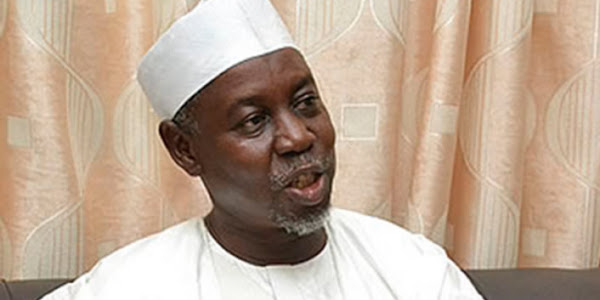
Alhaji Suleiman Hassan Zarma
Alhaji Suleiman Hassan Zarma, Minister of Environment

Mrs Maria Savaf, the Bank’s Practice Manager, Department of Environment, made the commendation in Abuja when she made a maiden visit to the Minister of Environment, Alhaji Suleiman Zarma.

NEWMAP is a World Bank supported project launched in 2012 aimed at reducing the vulnerability of soil erosion in targeted catchment areas in the country.

Savaf, who led the World Bank team to brief the minister on NEWMAP and West Africa Coastal Areas Management Programme, attributed NEWMAP feat to its staff hard work.

According to her, the World Bank and Ministry of Environment have long time partnership.

“As World Bank, if we want to give example of what we do in the environment in West Africa, we will give example of NEWMAP as success story,’’ Savaf said.

She sought for the Federal Government’s legal support to facilitate additional financing for NEWMAP project.

“Going forward, the whole last year was very hard to get additional financing for NEWMAP and then one thing, may be, we will make a request on some helps to move it forward.

“Because up till now, additional financing has not been declared effected because we are still waiting for legal opinion.

“May be, this is something that I have to request the minister to talk to the Ministers of Justice and Finance to enable us start working on additional financing,’’ World Bank official said.

She also commended the Federal Government for including NEWMAP its 2019 National Budget proposal, urging the government to make its counterpart funding available to aid the implementation of the project.

Savaf said that the Bank had secured fund to conduct a preparatory study to prioritise plans for the nation’s coastal areas management programme.

Responding, Zarma, who thanked the World Bank for investing on the people and the nation’s environment, said that NEWMAP had gone a long way in addressing ecological problems in the country.

The Deputy Governor of Anambra State, Dr Nkem Okeke, commended the World Bank for executing NEWMAP in his state.

Okeke restated the state government’s commitment to explore every opportunity to check gully erosion in the state.

By Deji Abdulwahab
NEMA to partner NYSC on disaster management

The National Emergency Management Agency has advocated a closer collaboration with the National Youth Service Corps (NYSC) on disaster management in the zone.

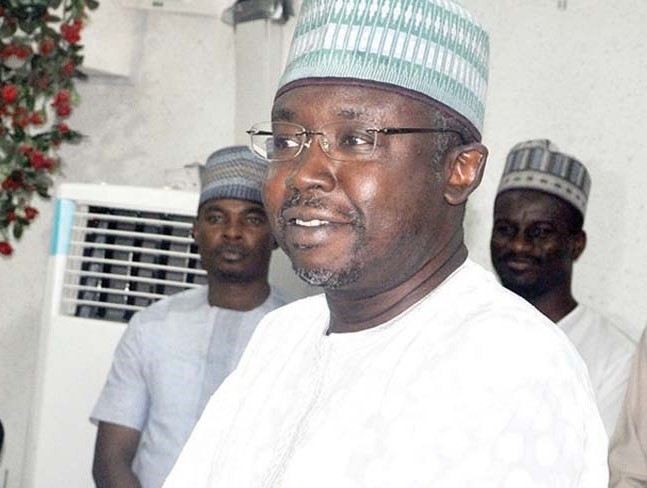
Mustapha Maihaja
Mustapha Maihaja, Director General, NEMA

Mr Fred Anusim, the NEMA Acting Zonal Coordinator, South East Zone, made this known when he paid a courtesy visit to the NYSC Coordinator in Enugu State, Alhaji Ahmed Ikaka, on Wednesday, March 13, 2019.

Anusim said that disaster management was everyone’s business and as such, the NYSC which was instituted in all the states in the federation would be engaged in training students on disaster management.

“My coming is to familiarize with you and see how to strengthen the existing relationship so that synergy will continue.

“Since NYSC operates in all the Local Government Areas, they will be instrumental in helping to train students in primary schools as we already have a curriculum on disaster management in primary schools.

“There is the need to be abreast of issues of disaster all over the world due to climate changes that has brought with it certain ecological changes as well as the means of managing the situation,” he noted.

The acting zonal coordinator expressed concern about the security challenges in the North East Zone of the country adding that no one could predict the end product of human disaster they were currently facing.

Responding, the NYSC Coordinator in the state, Ikaka said that the easiest way to succeed in risk management was to engage NYSC because corps members were in all parts of the country.

He further assured NEMA that NYSC would be readily available to play the role the agency wanted it to play to curtail any form of disaster in the zone.

He thanked the Zonal Coordinator and his team for taking NYSC as a worthy partner in progress.

Global school strikes for climate action planned in 1,600 cities

0

Youths around the world plan to skip school on Friday, March 15, 2019 to demand action on climate change in over 1,600 cities and towns in no fewer than 100 countries, organisers said on Thursday.

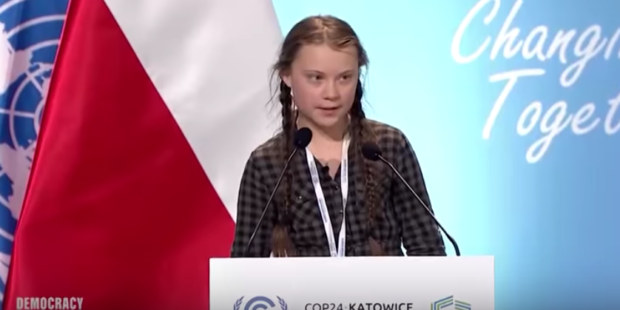
Greta Thunberg
Greta Thunberg

Swedish teen environmental campaigner, Greta Thunberg, who inspired the worldwide protests, has been nominated for Nobel Peace Prize by three Norwegian opposition politicians.

Thunberg has staged a weekly protest outside parliament in Stockholm since August 2018, that has spread and inspired pupil demonstrations calling for climate action around the world under the #FridaysForFuture slogan.

“We have nominated Greta because the climate threat is perhaps the main factor for war and conflict.

“The massive movement that Greta has launched is a very important contribution to peace,’’ Freddy Ovstegard of the Socialist Left Party, told Oslo daily, VG.

Thunberg said on Twitter that she was “honoured and very grateful’’.

She also tweeted: “1,659 places in 105 countries. Tomorrow we school strike for our future. And, we will continue to do so for as long as it takes.

“Adults are more than welcome to join us. Unite behind the science’’.

Friday’s first protests were set for outside town halls and national parliaments in countries spanning from Australia to Vanuatu in the South Pacific.

As at Thursday, 209 protests were planned in France, 195 in Germany, 178 in Italy, 158 in the U.S., 123 in Sweden, and 107 in Britain.

Thunberg, 16, has addressed world leaders at the World Economic Forum in Davos, Switzerland, as well as the UN climate conference held last year in Katowice, Poland.

The Norwegian Nobel Committee said in February that it had registered 304 nominations for this year’s peace prize. 

Scientists carry out research on roots, tubers, banana seeds to improve yield

0

Some scientists from the International Institute of Tropical Agriculture (IITA) in Ibadan, International Potato Centre in Peru and others are presently carrying out research on some crops to improve yield.

The crops are Roots, Tubers and Banana (RTB) seeds.

Nteranya Sanginga
Dr Nteranya Sanginga, Director General of the IITA

Dr Andrade-Piedra Jorge, Head of the research programme “RTB Cross Crop Cluster (CC.21)’’, said this on Thursday, March 14, 2019 at the programme’s annual review and planting meeting at the IITA.

The he meeting has as its title: “Improving Small Holder Access to Healthy RTB Planting Materials and New Varieties’’.

Jorge said that climate change was one of the major drivers of seed degeneration and had a direct impact on RTB seed systems.

The scientist said that seed degeneration had resulted to poor seed quality as well as decrease in yield.

According to him, the scientists are applying network analysis to understand complex seed networks and recommend strategies for more efficient dissemination of improved varieties and healthy planting materials.

He said that more applied research was being done by the IITA team which demonstrated a method of how to produce virus-free cassava plants.

“The team also described a method to exchange, manage in-vitro elite germplasm to combat Cassava Brown Streak Disease (CBSD) and Cassava Mosaic Disease (CMD) in Eastern and Southern Africa.

“The scientists are also working with a group of 12 talented young scientists, who are improving their capacities on RTB seed systems.

“This group is publishing all the way from peer-reviewed articles to blogs and its becoming a key force for our cluster by testing the toolbox for RTB seed systems under field conditions,” he said.

Also speaking, a Yam Scientist at IITA, Dr Maroya Norbert, said his team was working to develop a seed yam system that would help farmers to get more cleanly planting materials as well as obtain maximum yield.

“We have a system where we planted yam using its vine instead of tubers and it yielded more, we have identified five seed yam producers in Nigeria using vine to plant.

“We also have a system where we can plant, get clean seed yam in a container that we can even export from Nigeria, we tested the varieties in the farmers’ fields, and it worked out.

“The technology will surely help us to improve yam production in Nigeria,” he said.

A Research Fellow from Ecuador, Mr Navarrete Israel, said there was the need to improve potato seed availability in Ecuador.

“This issue and many others are what we are working to address,” he said. 

By Chidinma Ewunonu-Aluko

REDD+ doesn’t reduce emissions, group insists

0

The much-vaunted initiative that entails mitigating climate change through reducing net emissions of greenhouse gases through enhanced forest management has once again come under criticism.

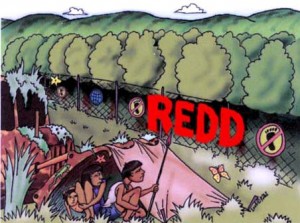
REDD
According to Swift Foundation, REDD+ schemes have denied indigenous peoples their territorial and legal rights

REDD+, which stands for countries’ efforts to  reduce emissions from deforestation and forest degradation, and foster conservation, sustainable management of forests, and enhancement of forest carbon stocks, was first negotiated in 2005 by the United Nations Framework Convention on Climate Change (UNFCCC) at its 11th session of the Conference of the Parties to the Convention (COP11).

But in an open letter by Swift Foundation and made available to EnviroNews on Wednesday, March 13, 2019, the organisation says that REDD does not incentivise protection of forests and biodiversity, as forests can qualify as an offset while being clear-cut and replanted as monocultures.

“This means that REDD does not reduce emissions, but rather enables polluters to continue to increase greenhouse gas emissions, with particularly acute impacts on communities where those polluters are located,” writes Sonja Swift, on behalf of the Swift Foundation staff and board of directors.

The grant-giving organisation, in the letter written in response to the almost half a billion-dollar commitment signed by 17 philanthropies during the Climate Summit in San Francisco, California, on September 11, 2018, said that it opposes carbon trading programmes.

The correspondence further reads: “We explicitly and resolutely reject carbon trading schemes of any kind and consider these agendas to be false solutions. This includes REDD+ and/or by any name including: carbon pricing, cap and trade programmes, carbon tax when used to create further infrastructure for carbon trading schemes, forest offsets, and California’s proposed Tropical Forest Standard. We agree with grant partners that it would be far more effective to focus on stopping subsidies that go toward agribusiness and extractive energy industries.

“REDD schemes have already caused divisiveness, land grabbing and violence. One of the core issues is that in the majority of researched cases in which REDD has been implemented, the results have been negative for the community due to noncompliance with FPIC. In other words, REDD schemes have denied Indigenous Peoples their territorial and legal rights, leading to food insecurity, illegal land grabs, the increase of monoculture farming, and invasive stakeholders.

“Swift Foundation board and staff simply do not support this kind of greenwash of extractivism and privatisation of Nature. Forests are alive, they are more than just ‘carbon’. To avoid ecological collapse, we must definitively halt further extraction; cut emissions at the source; leave fossil fuels and rare earth minerals in the ground and in the oceans; shut down the Canadian Tar Sands; stop pipelines destined to transport Tar Sands and fracked oil; stop fossil fuel subsidies, including agribusiness subsidies for agrofuels, and cease carbon and biodiversity offset projects that continue to allow polluters to pollute.

“Providing extractive industries the option to buy offsets through carbon trading rather than cutting emissions at the source does nothing to address climate change, and only further imperils our children’s future and the future of Life on Earth.

“Core to our role as a foundation is discernment, through listening and ideally also through accountability to our partners, such that we do not perpetuate ineffective or harmful initiatives through our funding. We believe we must work with urgency, while also slowing down enough to support those that protect their own cultural and intellectual diversity.

“For Swift Foundation, this means supporting grassroots leadership on the frontlines, while also showing more active leadership among our own institutions in disrupting false solutions to climate change. We recognise this as a pivotal moment in history when there is no more time for distractions or compromises, and we invite other foundations to join us in clarifying their own approaches to addressing the critical role of Indigenous Peoples in protecting and sustaining living forests.”

The organisation submitted however that community forest management based on customary traditional knowledge “is the most effective way of protecting forests”.

“An important first step is resolving outstanding land tenure issues. This work must be done in strict accordance with the United Nations Declaration on the Rights of Indigenous Peoples (UNDRIP), human rights jurisprudence and Free Prior and Informed Consent (FPIC).

“Many studies have shown that land managed by Indigenous Peoples with strong land tenure has significantly lower rates of deforestation than land under other governance systems, including protected areas.

“Supporting Indigenous Peoples’ rights to their territory means investing in processes of governance and collective leadershipthat engage communities to manage their territories in ways that reflect their priorities and worldview.

“This work is not a “quick fix” for carbon (dioxide) sequestration, but rather involves years of long-term partnerships that build up relationships and create resilient and inclusive models of community management in which diverse actors play a role.”

LAWMA to restore Lagos cleanliness

0

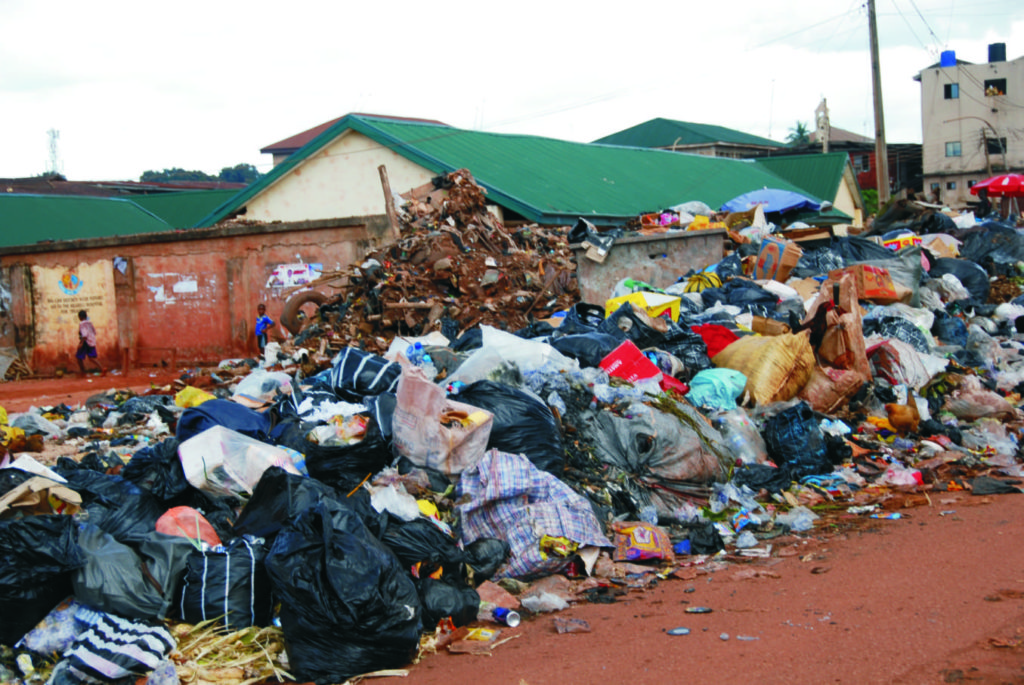
The Lagos Waste Management Authority (LAWMA) says it is working with its blueprint towards restoring Lagos to its former status of the cleanest cities in Nigeria.

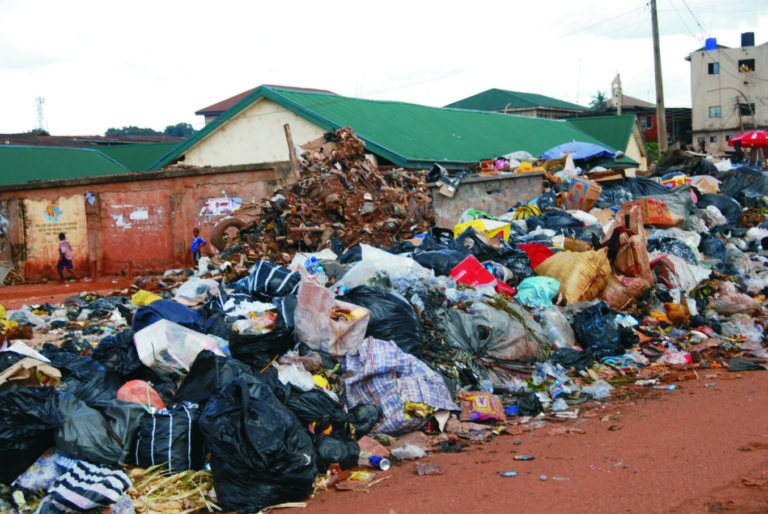
Waste disposal
Waste disposal and management has posed a major challenge to authorities in Lagos and other major cities in Nigeria

The Public Relations Officer of LAWMA, Mr Obinna Onyenali, said on Wednesday, March 13, 2019 in Lagos that the agency was committed to ensuring that the city becomes clean again.

“The Authority has a blueprint to achieving this objective.

“So far, that template is what we are looking at right now and it is to take us to that level where Lagosians will be proud of the city,” he said in a statement.

Onyenali urged residents in the state to embrace the habit of proper waste disposal, which he said would go a long way in establishing a cleaner and healthier Lagos.

He enjoined the people to imbibe the culture of waste containerisation to ensure environmental sustainability and cleanliness.

He told them to go back to the old habit of bagging their wastes and waiting for the PSPs to evacuate them.

The PRO said that such a habit had over time proven to be effective in curtailing rising cases of dump sites seen in the metropolis.

“What we want Lagosians to do right now is to go back to that habit of 2015, where households had their own containers in front of their houses,” he said.

Onyenali said that the waste managers, otherwise known as the Private Sector Participants (PSP operators) had been empowered to visit tenements and collect their wastes at least once in a week.

He urged residents to contact LAWMA whereby their assigned PSPs did not show up, for appropriate measures to be taken to address the service gap.

“I want Lagosians to expect that the PSPs will always come and pick their wastes at the appointed time as we have assured.

“If the PSPs are not meeting up with expectations, LAWMA is there to respond.”

By Florence Onuegbu

Why Africa must be wary of Big Polluters in Africa Climate Week

0

Sriram Madhusoodanan of Corporate Accountability and Philip Jakpor of Environmental Rights Action/Friends of the Earth Nigeria in this preview of the Africa Climate Week holding next week in the Ghanaian capital city of Accra, call on Africa’s leadership to be wary of the schemes the fossil fuel industry is trying to push through

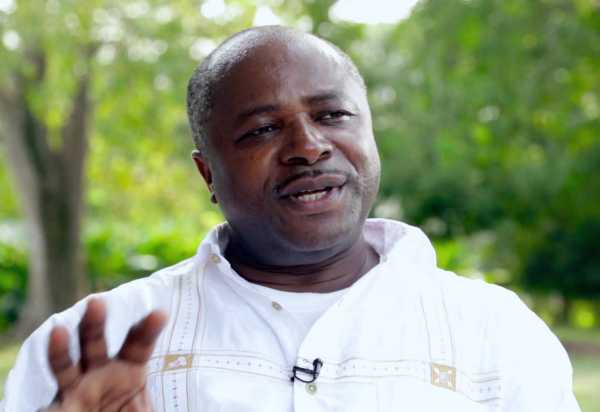
Sriram Madhusoodanan
Philip Jakpor
Philip Jakpor

You would never invite the arsonist who set fire to your house to put it out by adding more kerosene. So why are Big Polluters (that, for decades, have derailed progress to address the climate crisis) and their dangerous distractions such as market mechanisms poised to be front and centre during the upcoming Africa Climate Week?

Despite agreement that climate change is threatening life on Earth, there is a massive chasm between actions needed to address this crisis and the dangerous schemes the fossil fuel industry — with governments in the Global North in its pocket — is pushing. For decades, the international climate policy process — from high-level negotiations to regional climate weeks — has failed people because it has been consistently manipulated by Big Polluters. Their influence has even seeped through the halls of the UN, pushing dangerous, ineffective schemes while blocking the way to real, transformative solutions. This corrosive influence led in large part to COP24 failing to make the progress demanded by peoples movements and organisations from over 130 countries.

As dignitaries, civil society, and celebrities gather for Africa Climate Week in Accra, the Ghanian capital, government delegates have an opportunity to challenge the propaganda coming from the very entities that have long fueled and profiteered from this crisis.

Africa Climate Week is a critical opportunity for leaders to stand alongside people around the world and realign climate policy with the needs of people and the planet, not polluting corporations responsible for this crisis. And yet, history repeats itself. Fossil fuel trade associations like the International Emissions Trading Association (IETA) are official sponsors of the meeting, ready to promoteineffective, destructive ploys like carbon markets as magic “solutions” to the climate crisis.

These carbon pricing schemes — putting a price on carbon and regulating it through markets (i.e., commodifying the air we breathe) — have long been pushed by corporations and Global North countries as a fail-safe for the planet. But carbon markets fail miserably on this count and are accompanied by devastating human rights violations.

Human rights and environmental injustices are well-documented by communities who live near these so-called “clean development” projects. It is Indigenous peoples, small-scale farmers, forest peoples, youth, communities of color and women who are most impacted by these schemes. For example: Kenya Forest Service guards have violently evicted the Sengwer Indigenous people in the Embobut Forest due to pressures from voluntary international offset schemes that provide financial incentives for forest preservation. In Nigeria, a court found that Shell’s gas flaring denied the Iwerekhan community’s’ right to a “pollution-free” and “poison-free” area. What’s more, Shell has — for decades — failed to honour government-imposed deadlines. At the same time, Shell has tried to claim carbon offset credits for ending gas flaring, the very practice it has refused to end.

The historical irony is not lost on us. The fossil fuel industry is pushing self-serving schemes rooted in the colonialism and environmental racism that is at the core of extraction that doesn’t keep fossil fuels in the ground. Carbon markets allow for business as usual for polluting corporations and countries, leaving the Global South to offset emissions and endure the impacts.

As if that weren’t insult enough, these schemes have also failed in the UK, the EU, Canada, Australia, and California in the US. But despite the documented global failures of carbon market schemes, Big Polluters and IETA are seeking to make them the centerpiece of climate policy at upcoming milestones, including Ghana’s Africa Climate Week, thinking that the rest of the world won’t notice their failures.

If polluting countries and corporations are successful, ineffectual interventions — like carbon markets — become central to the global response to climate change. The result: soaring emissions, lives lost, hundreds of millions of people displaced and species extinction.

Instead of permitting the very actors that fuelled the climate crisis to advance their own agenda, it is time governments embody true climate leadership by embracing the meaningful solutions communities on the frontlines of climate change already have. That can start next week in Ghana on the road to COP25. The solutions are feasible and affordable, and they work. They include pacts to keep fossil fuels in the ground in the Global North immediately, with a phase-out for the Global South; finance and technology transfer; a total and just transition to community-led renewable energy; and a singular focus on keeping Big Polluters out of climate policy-making.

On behalf of the people of the world: We call for Africa’s leadership in rejecting the dangerous schemes the fossil fuel industry is trying to push. The world looks to Africa for its leadership.

2019 Anchor Borrowers Programme targets 100,000 cotton farmers nationwide

0

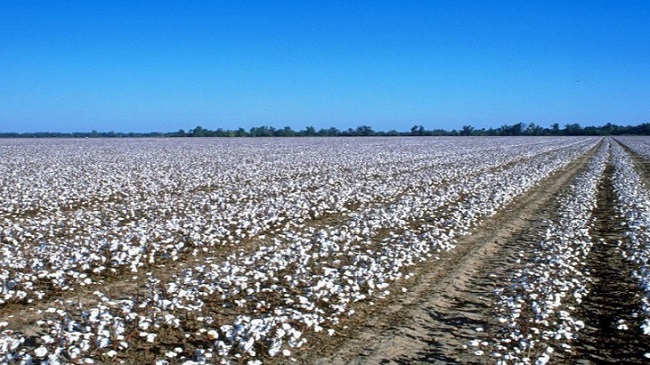
The Federal Government has said that the Central Bank of Nigeria’s (CBN’s) Anchor Borrowers Programme (ABP) for 2019 is targeting 100,000 cotton farmers across the country.

Cotton farm
A cotton farm

Hajiya A’isha Abubakar, the Minister of State for Industry, Trade and Investment, disclosed this on Wednesday, March 13, 2019 in Zaria, Kaduna State, at a one-day Stakeholders Forum on Good Cotton Seed Production to Enhance the Cotton Value Chain in Niger

The theme of the forum was: “Increasing the Production of Good Quality Cotton Seed for Sustainable Growth of Nigeria’s Cotton, Textile and Garment Sector”.

The minister, who was represented by Mrs Omololu Opeewe, the Director, Commodities and Products Inspectorate Department (CPID), said that the Federal Government placed much emphasis on how to improve cotton production in Nigeria.

She said that it was in furtherance of its economic diversification agenda, that the Federal Government developed the Cotton Textile and Garment (CTG) policy.

She said that the primary aim of the policy was to boost local production and the processing of cotton.

Abubakar explained that in implementing the policy, the ministry had over time engaged relevant Ministries, Departments and Agencies (MDAs) and other stakeholders to design and develop specific programmes and projects for the CTG sub-sector.

“Presently, the ministry is working with NACOTAN to facilitate access to the anchor borrowers programme of the CBN.

“The strategy is to increase cotton production and link it to a ready market to achieve self-sufficiency and create jobs.

“In this respect, it is proposed that a minimum of 100,000 farmers with two hectares each are expected to participate in the 2019 wet season of the anchor borrowers’ programme.

“On this note, a target yield of 1.5 metric tons per hectare, 300,000 metric tons of seed cotton will be processed by the ginning companies, while 114,000 metric tons of cotton lint will be available to the textile mills,” the minister stated.

The minister observed that the Institute for Agricultural Research (IAR) would play an important role through the provision of good quality planting seeds.

She said that the National Agricultural Extension, Research and Liaison Service (NAERLS) would provide training for the cotton farmers to supplement the actualisation of the aforementioned target.

Earlier in an address, the Director, IAR, Prof. Ibrahim Umar-Abubakar, noted that cotton was one of the most important commercial and industrial crops in Nigeria.

According to him, the growth of Nigeria’s economy depends on the contribution of agriculture to GDP and the growth of agriculture largely depends on cotton.

“In this country there are many cities that owe their growth to cotton; you cannot mention the growth of Kaduna, Kano, Lagos without mentioning cotton or textiles.

“There are satellite towns like Funtua, Gusau and others.

“Cotton is so versatile that it affects the lives of an average Nigerian, be you a farmer of cotton or a textile, garment or ginnery worker or even if you are in the business of marketing cotton or cotton seeds.

“Cotton is so important it affects one of the fundamental human needs. As humans, we need food, we need shelter, we need clothing – these are fundamental human needs.

“And cotton has successfully fulfilled one, which is clothing, and it is even into shelter now.

“Most of the emergency shelters produced for Internally Displaced Persons are now made from cotton; we use trampoline and several other cotton materials,” the IAR director said.

Umar-Abubakar said that when people talked about cotton, they only thought of brocade, super Hollandaise, English wax and so on, arguing that “these are not all, we use cotton in various ways such as in making blankets.

“Even if we are going to specialise in the production of blankets alone, we will make a name globally.

“Rugs, carpets and prayer mats, you can imagine the amount of foreign exchange being used annually to import such products, especially prayer mats from Saudi Arabia,” the IAR director said.

The forum drew participants from the cotton farming areas and beyond.

By Mohammed Lawal

Water Day: Raising awareness on water poverty, inclusion of marginalised persons

0

The Hope Spring Water Charity Foundation is partnering with Sustainable Waste Africa Initiative (SAWI) and Media for Community Change (MFCC) in Abuja to sensitise women and other stakeholders on the need to involve the marginalised people when making plans for water, sanitation and hygiene (WASH).

People with Disability
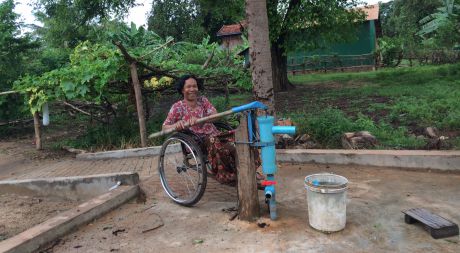
The theme for 2019 World Water Day is geared towards encouraging people and organisations to consider the marginalised groups such as People with Disability (PWD)

The event will hold on Friday, March 22, 2019 to commemorate the year’s World Water Day, which is aimed at highlighting the importance of water around the world using a variety of events.

The theme for 2019 World Water Day is “Leave No One Behind”, and it is geared towards encouraging people and organisations to consider the marginalised groups such as People with Disability (PWD), the elderly, women and children and other groups that are often overlooked or discriminated against when planning WASH initiatives.

Programme coordinator for the event, Adesuwa Obasuyi, said in a statement: “Hope Spring Water Charity Foundation has taken it upon itself to mark the World Water Day 2019 by embarking on a Road/Market Walk to amplify the voice of world’s poorest and most marginalised groups in a quest for inclusive development in the WASH sector as any crisis in this sector has a huge impact on human development.

“Hope Spring Water Charity Foundation will build upon the successes of her previous projects to pass across the key message that access to water is a fundamental human right, and no one should be left behind. The walk further aims to highlight water related challenges Nigerians face such as water scarcity, water pollution, inadequate water supply and poor sanitation and hygiene as well as increase commitment from politicians/government to improve the water situation and make it accessible to everyone.”

Hope Spring Water’s Country Director, Temple Oraeki, stated that the campaign couldn’t have come at a better time.

His words: “Following recent signing of the disability bill into law by the Federal Government, the sensitisation walk will serve as a call to action for the government to lead by example in non-discrimination of PWD by providing inclusive WASH facilities across Nigeria.”

He called on other NGOs, CSOs, the private sector and other stakeholders in the WASH sector to join the campaign to amplify the voice of the marginalised people and raise awareness on the problems that such people face in getting access to water.

The group lists some of it recent projects to include the drilling of boreholes in local communities within Abuja and the “WASH Run” that brought together over 500 persons across the FCT and Lagos. It was carried out in partnership with WaterAid Nigeria, Action Against Hunger, Sustainable Africa Waste Initiative, AimCare Nigeria, Media for Community Change, and Federal Ministry of Water Resources, to spotlight the challenges of water poverty in Nigeria.

Government approves €64.75m for Kano water project

0

The Federal Executive Council (FEC) on Wednesday, March 13, 2019 approved the sum of €64.75 million to improve water supply in Kano State

Abdullahi Ganduje
Gov. Abdullahi Ganduje of Kano State

Hajia Zainab Ahmed, the Minister of Finance, disclosed this while briefing State House correspondents after the FEC meeting presided over by President Muhammadu Buhari at the Presidential Villa in Abuja.

She said that the project, which would be executed by the Kano State Government, would improve the living conditions of the people of the state.

“Today at the FEC meeting, we got an approval for a facility in the sum of €64,750,000 for a National Urban Water sector reform project in Kano State.

“The project is to improve the living conditions of up to 1.5 million people in the greater urban area of Kano by improving access to quality water, and also we are seeking to increase the financial viability of the Water Board by increasing its revenue and enhancing its governance framework.

“The project is to rehabilitate and build infrastructure needed to increase access to water services to the population in greater Kano and to help improve key sector reforms to ensure the sustainability of the project.

“The Kano State Ministry of Water Resources through its State Project Management Committee is to implement the project.

“The funding is a facility to the Federal Government of Nigeria; the Federal Government of Nigeria will be on lending to Kano State at the same terms and conditions,’’ she said.

The minister said that the funding was from the French Development Agency with an interest rate of 1.02 per cent, a repayment period of 20 years and a seven-year moratorium period.

According to her, there is also a fee of 0.25 per cent for appraisal and a commitment fee of 0.25 per cent.

Ahmed said that the low-cost facility with a seven-year moratorium was meant to provide good quality drinking water to up to 1.5 million people in greater Kano.

No fewer than 28 ministers attended the meeting which was the first since after the Presidential, National Assembly, Governorship and State Houses of Assembly elections.

Vice President Yemi Osinbajo; Secretary to the Government of the Federation (SGF), Boss Mustapha; Chief of Staff to the President, Abba Kyari; Head of Service, Winifred Oyo-Ita; and the National Security Adviser (NSA), Babagana Monguno, were also in attendance.

By Chijioke Okoronkwo