26 C
Lagos
Monday, February 23, 2026
Home Blog Page 1925

Rapid disaster response saves Côte d’Ivoire from toxic dump tragedy

0

Early intervention and strong political will to fight against environmental hazards have helped Côte d’Ivoire avert what would have been a damaging toxic dumping tragedy, says a United Nations Environment Programme (UNEP) audit report.
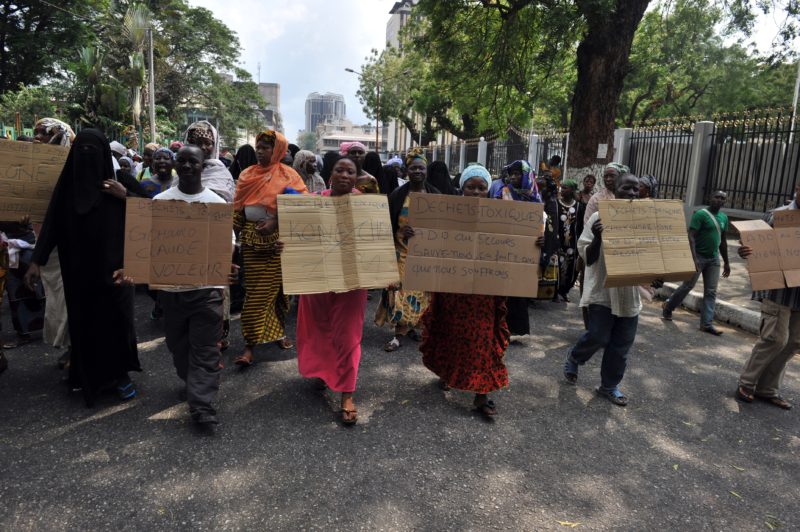
Probo Koala
Public protest against the Probo Koala waste dump in Abidjan, Côte d’Ivoire in 2006

The audit report, presented on Wednesday, January 31, 2018 at the Bamako Convention COP2 assembly in Abidjan, lauded the timely intervention of the Ivorian government with measures to mitigate what would have been the worst environmental disaster in the country.

“It is reassuring to see that, with early intervention and strong political will, a disaster like the chemical contamination incident in Côte d’Ivoire can be mitigated over time,” UN Environment Deputy Executive Director, Ibrahim Thiaw, said.

“This independent and scientific environmental audit of the sites gives us access to a vault of best practices and pitfalls of the disaster response, and allows us to learn from a tragedy like this,” he added.

The UNEP regional director for Africa, Juliette Biao Koudenoukpo, noted that though there was general lethargy in most African countries to implement the Bamako Convention on preventing Africa from becoming the dumping ground for toxic waster, the example from Côte d’Ivoire shows that innovative pathways can bring lasting solutions once there is a clear political will.

“We are proud of the measures put in place by the government of Côte d’Ivoire to fight against toxic waste dumping and environmental pollution,” she noted.

It will be recalled that national and international civil society organisations decried the illegal dumping of toxic waste in and around Abidjan, Côte d’Ivoire, six years ago by a multinational company, Trafigura.

Different organisations had published reports including documentation of various illnesses people in the areas where such dumping were taking place have been suffering from as a result of the dumping of toxic waste in their communities.

But the good news is that the Ivorian government reacted promptly to ward off what experts say would have been the worst environmental disaster in the entire West Africa.

The UN Environment thus conducted an independent audit of the sites affected by the 2006 waste dumping from the Probo Koala in various parts of Abidjan, Côte d’Ivoire.

According to the audit, multiple innovative actions were put in place just on time by the government.

The audit noted that, in reality on August 19, 2006, the Probo Koala, chartered by shipping firm Trafigura, offloaded 528 cubic metres of liquid waste in the port of Abidjan. The waste was then transferred onto tanker trucks operated by a local contractor and dumped in 12 different locations around Abidjan.

Hours after the dumping, residents reported being overwhelmed by a strong smell and experiencing detrimental health effects such as respiratory difficulties and skin irritations.

As a precautionary measure, the Ivorian government ordered the closure of schools in affected areas and the destruction of fruits and vegetables grown near dumping sites.

Livestock raised in proximity to some sites was also culled while fishing was banned in the bays of the Ébrié Lagoon.

In other measures the government provided medical assistance and facilities to over 100,000  people affected just weeks immediately following the dumping.

A series of clean-ups began in September 2006 and saw the sites excavated and the toxic materials shipped to France for incineration.

In the following years, several further clean-up and remediation activities were conducted by various actors including the Ivorian government.

According to the audit report, the swift mitigation measures taken by the Ivorian government paid off.

In January 2017, UN Environment conducted a follow-up mission to carry out complementary sampling and to fill specific analytical gaps and to corroborate initial findings from the laboratory analysis.

In both missions, the UN experts were joined in the field by three experts from the Ivorian Anti-Pollution Centre (CIAPOL).

The results obtained showed that none of the dumping sites had contamination exceeding the limits set by the Government of Côte d’Ivoire for remediation.

As a result, none of these sites requires additional intervention, even when gauged against Dutch intervention values, which are among the most commonly used guidelines for contaminated site management and remediation worldwide.

It also showed that elevated levels of chromium were observed in soil and water at the site in Agboville where maize that was potentially, and indirectly, impacted by the Probo Koala wastes was deposited.

As a result, the UN Environment recommended further assessment and close monitoring of the Agboville site and the continuation of restrictions imposed on public access to the facility, as well as the erection of signs to warn the public against harvesting grass or vegetables from the premises.

It also calls for due diligence for the decommissioning of the Akouédo municipal waste disposal site, which has long been earmarked for closure.

In the meantime, UN Environment recommends consideration of land use restrictions, in particular for agriculture on the site.

Based on the contamination levels at the Koumassi site, UN Environment calls for a comprehensive environmental assessment of the area to be undertaken as a basis for an action plan to mitigate impacts on public health.

It further urges the government to ensure that workers are provided with personal protection equipment and trained on occupational health.

Courtesy: PAMACC News Agency
2017 was hottest year on record for world’s oceans

0

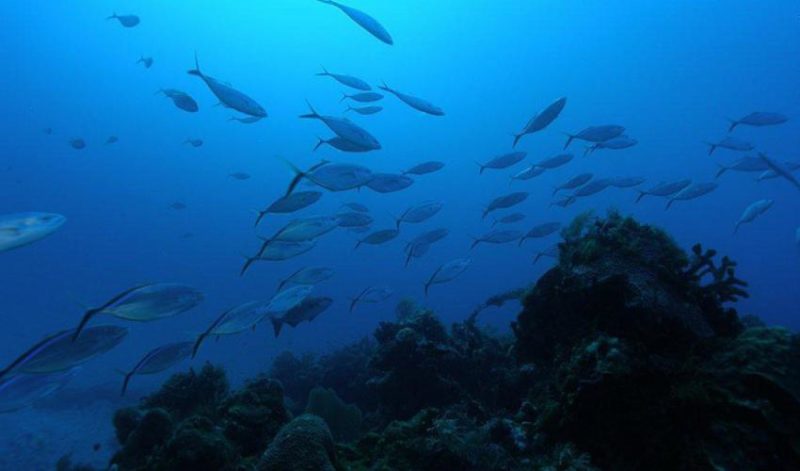
The year 2017 was the hottest year ever recorded for the world’s oceans, according to a study by the Institute of Atmospheric Physics of the Chinese Academy of Sciences (IAP CAS).

ocean
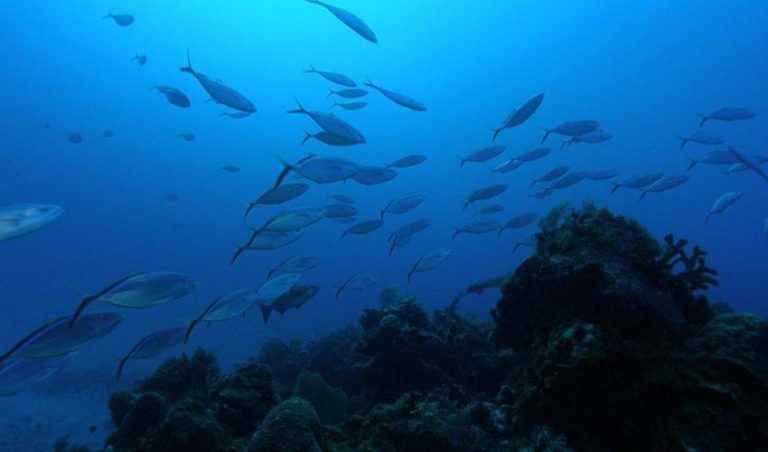
The ocean plays many roles in the climate process

The study shows that ocean warming in 2017 has occurred in most parts of the world, even though the Atlantic and the oceans of the southern hemisphere (south of 30°) have been more impacted by this phenomenon.

The ocean plays many roles in the climate process. As a carbon pump, it absorbs about a third of the world’s CO₂ (carbon dioxide) emissions. It is also a thermal buffer: it stores huge quantities of heat which it then transports according to its movements, currents and its depths.

It is partly because of the ocean that climate change has not accelerated further than it has today and global average temperature rise of the atmosphere is not higher than it is. IAP CAS researchers say that more than 90% of Earth’s climate-related heat is absorbed by the oceans.

The results of the new study partly reiterate the November 2017 World Meteorological Organisation’s provisional publication which said: “Global sea surface temperatures are on track to be among the three highest on record. Global ocean heat content in 2017 to date has been at or near record high levels.”

The Atlantic and Southern hemisphere oceans (south of 30°) have been warmer than the Pacific and Indian oceans. The Atlantic Ocean (north of 30°) and the Southern Ocean experienced higher temperature rises than the period 1981-2010.

Rising ocean temperatures have serious consequences. For example, water expands when it is warmer, adding to sea-level rise. Sea levels rose by 1.7 mm in 2017. Warmer seas also mean less oxygen for the ocean, coral reef bleaching and the melting of land and sea ice.

Paris goals crucial to saving California’s vegetation

0

Fully implementing the Paris Climate Change Agreement is crucial to protecting California’s natural vegetation, nearly half of which is at risk from the impacts of rising global average temperatures. This is the key finding of a new study from University of California Davis.

big-sur-california
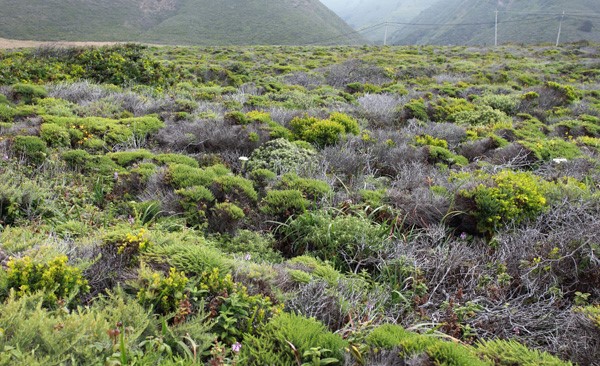
Coastal vegetation in Big Sur, California. Photo credit: Mongabay.com

The central goal of the Paris Agreement is to hold the global average temperature rise to well below 2 degrees Celsius (3.6 degrees F), and as close as possible to 1.5 degrees C (2.7 degrees F). Global greenhouse gas emissions, primarily caused by the burning of fossil fuels and deforestation, are currently on the rise and need to peak as soon as possible and then rapidly decline in order to prevent the worst impacts of climate change, which include more droughts, flooding and wildfires.

The study projects that, at current greenhouse gas emission rates, more than 50 % of the vegetation in southwestern California, the Central Valley and Sierra Nevada mountains will be impacted by 2100, including 68 % of the lands surrounding Los Angeles and San Diego.

“About 45-56 % of all the natural vegetation in the state is at risk,” said lead author James Thorne, a research scientist with the Department of Environmental Science and Policy at UC Davis. “If we reduce the rate to Paris Accord targets, those numbers are lowered to between 21 and 28% of the lands at risk.”

Vegetation has many important functions for humans, including protecting valuable water resources. As vegetation is destroyed, watersheds are damaged, which serve as vital freshwater resources.

The report is only a conservative estimate, as it only examines direct climate exposure. Natural vegetation can suffer high rates of mortality when subjected to climatic events that are the indirect product of climate change, such as drought.

Even in the study’s most conservative estimate, if total emissions remain at present rates, the amount of impacted land doubles to more than 50%.

Referring the map pictures above, UC Davis researcher Thorne said. “This is the map of where we live. The natural landscapes that make up California provide the water, clean air and other natural benefits for all the people who live here. They provide the sanctuary for California’s high biodiversity that is globally ranked. This map portrays the level of climate risk to all of those things. In some cases, the transformation may be quite dramatic and visible, as is the case with wildfire and beetle outbreaks. In other cases, it might not be dramatically visible but will have impacts, nevertheless.”

These are some of the highlights from the report:

  • Urban region impact: At current rates of greenhouse gas emissions, 68 % of the lands surrounding Los Angeles and San Diego will be impacted by climate stress 2100.
  • Valuable ecosystems left vulnerable: the Sierra Nevada, a particularly important region for natural ecosystem services, is left 62% climatically exposed under current emission trajectories models.
  • 25% of vegetation already at risk: If emissions are cut now, about a quarter of state’s vegetation will still be climate stressed by 2100.
  • Marginal lands forecast low productivity: The failure to achieve the objectives of the Paris Climate Agreement will result in 24-28% more of California’s natural lands becoming climatically marginal by remaining on the current emission trajectory

Renewables overtake coal in supplying European electricity

0

A new analysis by Sandbag and Agora Energiewende shows that the European Union generated more electricity from renewable sources such as wind, solar and biomass than coal in 2017, with renewables accounting for over 30% of Europe’s electricity for the first time.

Matthias Buck
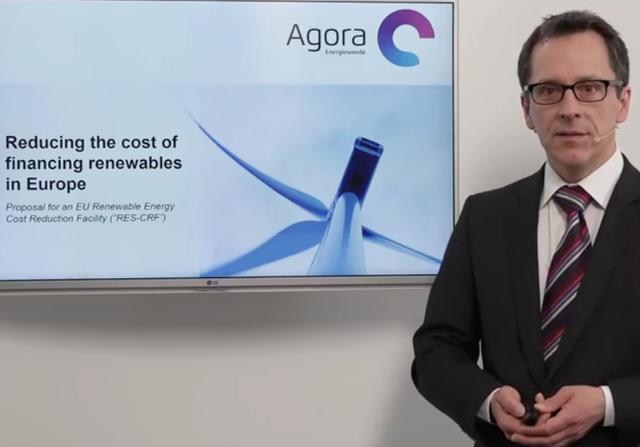
Matthias Buck, Director of European Energy Policy, Agora Energiewende

Wind, solar and biomass generation surpassing coal is “incredible progress”, says the report, not least because coal power generation was more than twice that of wind, solar and biomass just five years ago.

The study, titled: “European Power Sector in 2017”, suggests that Germany and the United Kingdom are leading the onward march of renewable technologies as both have contributed to 56% of the growth in renewables in the past three years (2014-2017).

“EU renewables growth has been increasingly reliant on the success story of wind in Germany, the UK and Denmark, which has been inspiring. If all countries in Europe engage in this, 35% renewable energy by 2030 is entirely possible. Solar deployment in particular is still surprisingly low, and needs to respond to the massive falls in costs,” said Matthias Buck, Director of European Energy Policy, Agora Energiewende.

The growing share of renewables in the continent’s energy mix is set to further bolster global climate action in line with the central goal of the Paris Agreement, which is to keep the rise in global average temperatures well below 2 degrees Celsius and as close as possible to 1.5 degrees. Power generation from renewable sources is crucial to reducing carbon emissions and achieving the temperature goal.

The study notes that good wind conditions and huge investment into wind plants led to a massive 19% increase in wind generation in 2017 – two-thirds of this was in Germany and the UK. However, solar power generation grew only by 8% despite huge recent price falls.

Wind, solar and biomass rose to 20.9% of the EU electricity mix, up from just 9.7% in 2010, and represents an average growth of 1.7 percentage points per year. The report projects that renewables could provide a third of Europe’s electricity in 2018, and by 2020 renewables may account for 36% of Europe’s power demand – up from 20% in 2010.

The report also takes a closer look at the uneven nature of decarbonisation across Europe, since the lion’s share of the recent gains was mainly due to Germany and the UK. The remaining 26 EU countries 43% of the renewables growth from 2014 to 2017, whilst they had 58% of the growth from 2011 to 2014.

The report also highlights how individual companies are increasingly leading the transition to a low-carbon economy. For instance, EDF announced plans to scale up renewable generation and build 30 gigawatts of solar in France from 2020 to 2035. Ørsted (previously Dong) announced in February 2017 that they would phase out coal by 2023.

Eurelectric, an association representing the interests of the power industry in Europe, announced in a vision statement last month that it will actively pursue efforts to become carbon-neutral well before mid-century.

UNESCO, Nigeria partner to launch project on Lake Chad depletion

0

The UN Educational, Scientific, Cultural Organisation (UNESCO) on Wednesday, January 31, 2018 said it is partnering with the Federal Government of Nigeria to use scientific and cultural methods to restore the Lake Chad basin.

lake chad
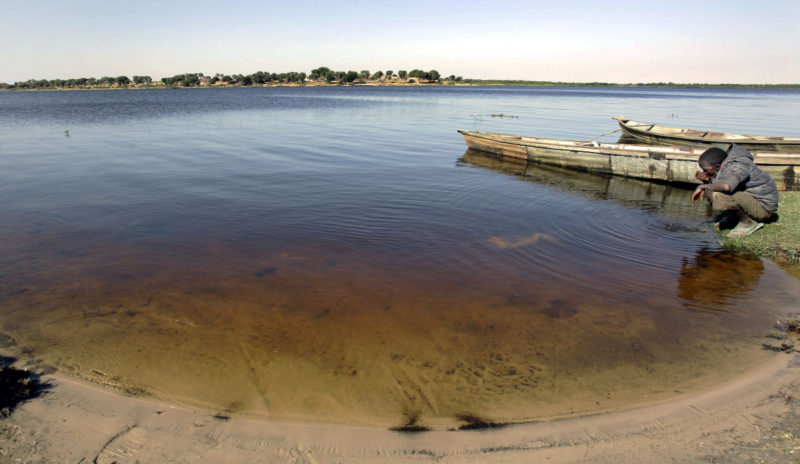
Scientists say the Lake Chad, that borders Nigeria and some other countries, has shrunken by 95 percent over the past 50 years. They have also linked the Boko Haram insurgency to the lake’s situation. Photo credit: AP/Christophe Ena

The partnership will be done through the Ministry of Water Resources to launch BIOPALT, a project targeted at scientifically and culturally restoring the basin.

Dr Osuji Otu, the National Programme Officer for Sciences of UNESCO, disclosed this in an interview with the News Agency of Nigeria (NAN) in Abuja.

BIOPALT project aims to strengthen the capacities of the member states of the Lake Chad Basin Commission – Cameroon, Chad, Congo, Niger and Nigeria – for three years.

The project is to safeguard and sustainably manage the hydrological, biological and cultural resources of the Lake Chad basin across their borders in order to support poverty reduction and promote peace.

“Presently we are having consultation with partners which is aimed at launching BIOPALT in Feb. 15 and 16.

“This is a Lake Chad project that restores the depleted basin using scientific and cultural methods to restore peace in Lake Chad as well as sustainable development within the basin.

“The BIOPALT is the launching of the special project funded by African Development Bank which will last for three years and benefiting five countries – Chad, Nigel, Cameroon, Nigeria and Congo.

“It has been launched in other countries. Once it is launched here, we can start the project implementation within the Lake Chad basin for the next three years,” Otu said.

According to him, the consultation meeting involves lots of partners working together toward the implementation of the project when it is launched.

NAN reports that the restoration of the Lake Chad basin became necessary following discussions between President Muhammadu Buhari and UNESCO’s former Director General, Ms Irina Bokova in August 2016.

The discussion was on issues of mutual interest toward attaining the Sustainable Development Goals (SDGs) by 2030 and to reflect on the future of the lake.

At that time, President Buhari called for UNESCO’s assistance to organise an international conference to reflect on the future of the Lake and support the preservation of the surrounding environment.

Buhari in Dec. 2017 approved the conference to be hosted in Abuja with the objective of creating global awareness on the socio-economic and environmental challenges arising from the shrinkage of the Lake Chad.

Other concerns to be discussed at the conference are threat to livelihoods including insecurity with a view to developing a comprehensive programme for action to save the lake from extinction.

The conference is expected to also discuss and develop consensus on the different options to restore Lake Chad, including the Inter-Basin Water Transfer project from the Ubangi River in Central Africa to the Lake Chad.

By Ijeoma Ndubisi

Hong Kong votes to impose domestic ivory ban by 2021

0

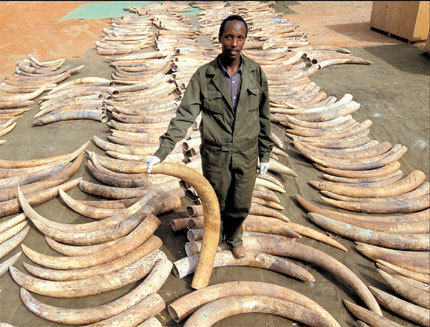
The Hong Kong Legislative Council on Wednesday, January 31, 2018 voted to pass a bill that will end local ivory trade in Hong Kong, with no compensation for ivory dealers, and an increase of maximum penalties for wildlife crimes of up to 10 years imprisonment.

Ivory trafficking
Ivory trafficking. Photo credit: girlegirlarmy.com

This decision will bring to a close a trade that had once brought the city notoriety as the world’s foremost supplier of worked ivory products in the 1970s and 1980s.

“Today’s decision is another milestone for the conservation of elephants, and should serve as further encouragement for governments in the region to put an end to the domestic ivory markets that fuel the poaching crisis,” said James Compton, TRAFFIC’s Senior Programme Director, Asia Pacific. “Hong Kong’s legislators should be congratulated for choosing to stand on the right side of history.”

However, concerns remain that the closure of Hong Kong’s ivory markets will be implemented in phases between now and 2021. With immediate effect, the amended law will ban the trade in elephant trophies, while an end to ivory imports and exports will follow three months after the law comes into effect. Commercial trade of ivory within the territory can continue until the end of 2021, after which all ivory trading will cease, with the exception of the antiques trade in ivory carved before the year 1925.

This leaves a gap of four years between the closure of ivory markets in Hong Kong and mainland China, with the latter having shut down all of its registered ivory outlets at the end of 2017.

“Hong Kong and mainland China’s ivory markets have long been closely linked, but the disparity in policies between them could lead to the perception of Hong Kong as an open store in the midst of a curfew,” said Tom Milliken, TRAFFIC’s Elephant and Rhino Programme Leader. “Close regulation and monitoring is essential to prevent any laundering of ivory to the still open markets in Hong Kong, which would seriously undermine efforts in mainland China to implement its ivory trade ban.”

TRAFFIC’s recently published report Closing Strategy: ending ivory trade in Hong Kong encouraged the Hong Kong SAR Government to implement measures to elevate its capacity to tackle ivory trafficking, including co-operation with other law enforcement agencies, especially in mainland China, to boost investigation and real-time intelligence sharing.

“It is more important than ever to remain vigilant of illegal trade activities on both Hong Kong and mainland China,” said Compton. “Authorities should take advantage the passage of this bill, which imparts the full force of the law to support enforcement actions in Hong Kong.”

TRAFFIC’s recent report also recommended a rapid implementation of an ivory ban alongside measures to improve oversight, record-keeping and transparency of the trade in registered ivory, of which latest figures from the government suggests there are still 64 tonnes remaining in the territory. Measures include the need for labelling of ivory products and display of licence notices to be strictly enforced to minimise confusion for consumers about the legitimacy of ivory products and outlets. Active monitoring of the trade is encouraged with monthly reporting of transactions by licensed ivory dealers, as well as increased transparency through annual publishing of data from the government on Hong Kong’s remaining ivory stockpiles.

Punjab government’s ban on sale of toxic pesticides lauded

0

The Department of Agriculture and Farmers Welfare of the government of Punjab on Tuesday, January 30, 2018 issued directions to discontinue the sale of 20 pesticides (insecticides) which are harmful to health of humans and environment with immediate effect. It also directed not to issue any fresh licenses for these pesticides.

Chandra Bhushan
Chandra Bhushan, Deputy Director General, Centre for Science and Environment (CSE)

Centre for Science and Environment (CSE) has welcomed this move and urged similar necessary action by the central government.

Expressing CSE’s reaction to this move, Chandra Bhushan, deputy director general of the New Delhi-based think tank, said: “We are pleased to know about this much needed step. If a state like Punjab, which is a high pesticide user state and dependent on pesticides, acts in the interest of public health, it is incumbent on the Central government to take necessary steps to eliminate sale of highly toxic pesticides in the entire country.”

The pesticides banned in Punjab include Phosphamidion, Methomyl, Phorate, Triazophos and Monocrotophos,  which are considered class I pesticides by the World Health Organisation (WHO), and are further categorised into extremely hazardous (class Ia) and highly hazardous (class Ib) to human health. Many of these are banned in several countries. For example, Phosphamidon is banned in 49 countries, Phorate in 37, Triazophos in 40 and Monocrotophos is banned in 60 countries.

But India still allows use of these five along with several other class I pesticides. The Ministry of Agriculture and Farmer’s Welfare, based on a 2015 review by the Anupam Verma Committee, through an order of December 2016, planned to ban only three out of these five and that too, starting from 2021.

“We must address the issue of class I pesticides. These account for about 30 per cent of the total insecticide use in our country. The government action in this regard has been largely inadequate so far,” points out Amit Khurana, senior programme manager, Food Safety and Toxins team, CSE.

In the wake of ill-effects of pesticides and deaths related to it in our country, CSE has been advocating for a ban on class I pesticides and a pesticide management bill which fills gaps in laws and strengthens enforcement.

Millions of children in crisis zones face ‘bleak future,’ UN warns

0

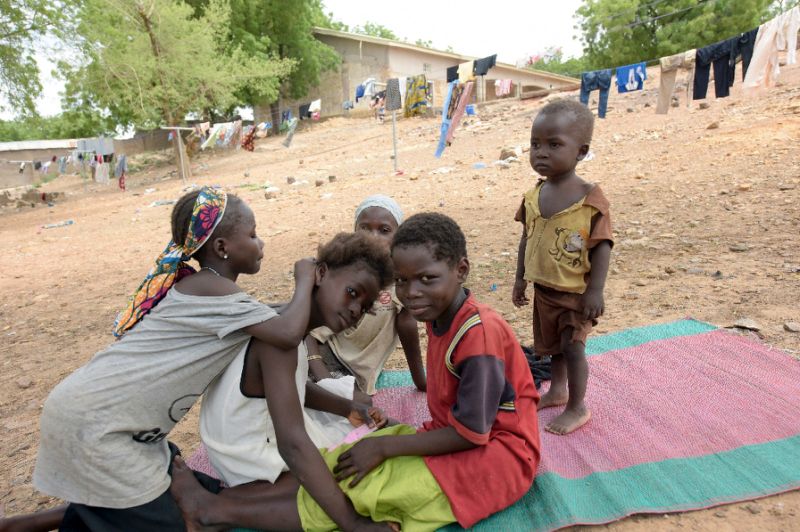
Children are the most vulnerable when conflict or disaster causes the collapse of essential services such as healthcare and unless the international community takes urgent action to protect and provide life-saving assistance to them, “they face an increasingly bleak future,” the United Nations Children’s Fund (UNICEF) warned Tuesday, January 30, 2018 while launching a $3.6 billion emergency appeal.

Children
Displaced children in a camp in Nigeria. Photo credit: Yahoo News

According to UNICEF, approximately 48 million children across 51 countries are caught up in war zones, natural disasters and other dire emergencies that continue to deepen in complexity, bringing new waves of violence, displacement and disruption into their lives.

Children cannot wait for wars to be brought to an end, with crises threatening the immediate survival and long term future of children and young people on a catastrophic scale,” said UNICEF’s Director of Emergency Programmes, Manuel Fontaine, citing the devastating impact on children living amid years-long or cyclical violence in countries like the Democratic Republic of Congo, Iraq, Nigeria, South Sudan, Syria and Yemen, among others

UNICEF said that almost one in four children live in a country affected by conflict or disaster and has therefore set aside about 84 per cent of its appeal (over $3 billion) these zones.

Destruction of schools, hospitals and health and sanitation systems due to violence has meant that the spread of water-borne diseases is now one of the greatest threats to children’s lives in crises.

Girls and women face additional threats, as they often fulfil the role of collecting water for their families in dangerous situations.

“(Some) 117 million people living through emergencies lack access to safe water and in many countries affected by conflict, more children die from diseases caused by unclean water and poor sanitation than from direct violence,” said Mr. Fontaine.

“Without access to safe water and sanitation, children fall ill, and are often unable to be treated as hospitals and health centres either do not function or are overcrowded. The threat is even greater as millions of children face life-threatening levels of malnutrition, making them more susceptible to water-borne diseases like cholera, creating a vicious cycle of undernutrition and disease,” he added

The largest chunk of UNICEF’s 2018 appeal, amounting to $1.3 billion is earmarked for supporting nearly seven million Syrian children both inside the war-torn country – where the conflict will soon enter its eight year – as well as those forced to become refugees outside its borders.

Globally, the UN agency aims to reach 35.7 million people with access to safe water, 8.9 million children with formal or non-formal basic education, 10 million children with immunisation against measles, 3.9 million children with psychosocial support, and 4.2 million children with treatment for severe acute malnutrition.

As the leading humanitarian agency on water, sanitation and hygiene in emergencies, UNICEF provided over half of the emergency water, sanitation and hygiene services in humanitarian crises around the world. It also helped hospitals and medical centres treat deadly diseases and repaired water and sanitation systems.

In the first 10 months of 2017, UNICEF provided almost 30 million people with access to safe water, 13.6 million children with vaccination against measles, 5.5 million children with some form of education, 2.5 million children with treatment for severe acute malnutrition and 2.8 million children with psycho-social support.

States, regions lead on Paris climate ambition

0

report released on Monday, January 29, 2018 by the Under2 Coalition showcases how member jurisdictions around the world are developing world-leading policies to accelerate global climate action. The Climate Group acts as secretariat to the Under2Coalition.

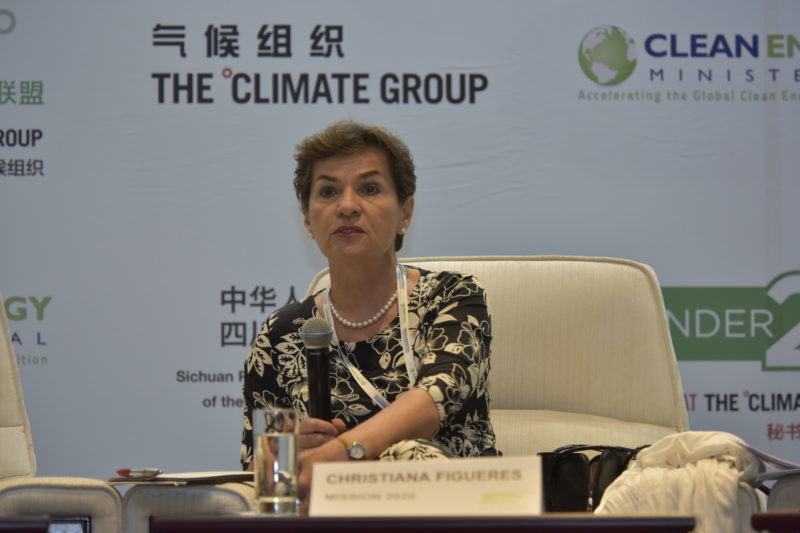
Christiana Figueres
Christiana Figueres, Global Ambassador for the Under2 Coalition

Under2 Coalition highlights – 2017” summarises the last 12 months of activity from the pioneering Coalition, which now encompasses 205 governments representing more than 1.3 billion people and almost 40% of the global economy, who have committed to reduce greenhouse gas (GHG) emissions by 2050.

The report shows how the voice of state and regional governments is growing ever more powerful through Coalition activities – in particular at the COP23 global climate talks, where Christiana Figueres, former Executive Secretary of the UNFCCC, was appointed Global Ambassador for the Under2 Coalition.

“In 2018, the Under2 Coalition is positioned to both contribute to direct emissions reductions and to support and inspire more ambitious climate goals from national governments,” says Tim Ash Vie, Director, Under2 Coalition Secretariat, The Climate Group. “It is a fundamental tenet of the Under2 Coalition that while national governments negotiated the Paris Agreement, state and regional leaders are central to delivering the goal of limiting global temperature increase to less than 2 degrees Celsius.”

The Under2 Coalition is also helping developing and emerging states and regions share their experiences thanks to the Future Fund, which helps governments speak with a unified voice during international climate gatherings.

However, “we also know that if we are to close the ‘emissions gap’, the level of ambition must step up in the next year,” underlines Tim Ash Vie. This is why this year’s Annual General Meeting will be held alongside the Global Climate Action Summit in California, which takes place on September 12-14 in San Francisco, to showcase the Coalition’s successes and continue to inspire other governments to follow this path.

The Under2 Coalition will also play a pivotal role during Climate Week NYC 2018, which will be held on September 24-30 in New York City. Celebrating its 10th anniversary, this leading global climate platform will be a key milestone to ramp up national climate pledges before 2020, when the Paris Agreement will need to increase its ambition to deliver an under 2°C world.

We disposed 17,440 tonnes of waste in 2017, says Jigawa EPA

0

The Jigawa State Environmental Protection Agency (JISEPA) says it collected and disposed 17,440 tonnes of waste across the 26 Local Government Areas of the state in 2017.

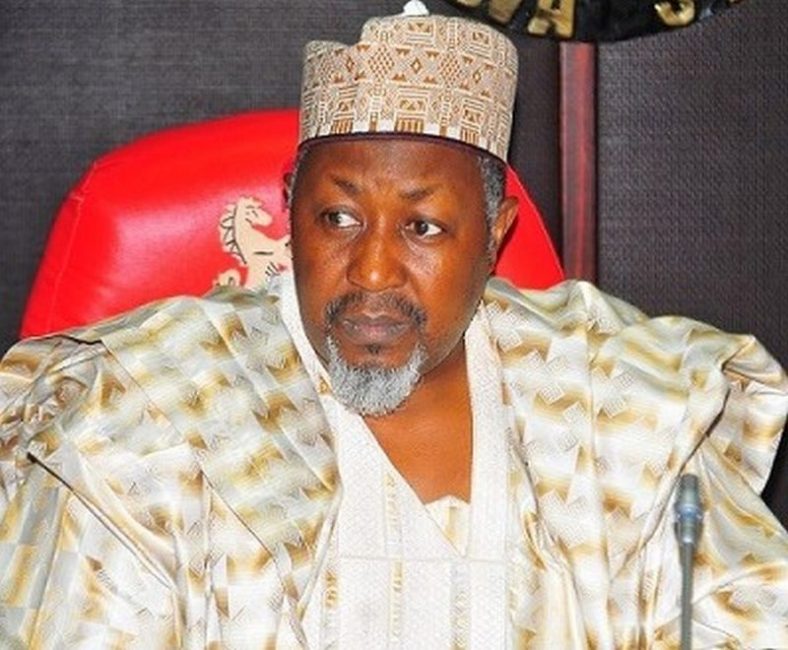
Mohammed-Badaru-Abubakar
Mohammed Badaru Abubakar, Governor of Jigawa State

Acting Managing Director of JISEPA, Alhaji Umar Amadu, said this in an interview with News Agency of Nigerian (NAN) in Dutse, the state capital, on Tuesday, January 30, 2018.

Amadu said that the exercise was part of the proactive measures put in place by the state government to promote effective waste management and sanitation in urban and rural communities.

He said that the policy was also aimed at improving public health and hygiene in the state.

“The exercise involved collection of refuse from streets and markets as well as clearance of drainage channels and cutting of grasses in boarding schools,’’ he said.

The acting managing director said that the agency would continue to sensitise the public to the need to always keep their surroundings clean and imbibe good sanitary habits.

Amadu urged the people to cooperate with the agency in its efforts to keep the state clean, while desisting from arbitrary dumping of waste in residential areas and waterways.

He commended the state government for its support to agency.

“We really thank the state government for providing us with all the needed equipment, manpower and logistics for the smooth conduct of our assignment.

“We are assuring the people that we will continue to do our best to ensure that the residents live in a good and healthy environment,” he added.

NAN recalls that the agency reportedly collected and disposed 26,420 tonnes of waste across the state in 2016.

×