27 C
Lagos
Monday, February 23, 2026
Home Blog Page 1924

Investors asked to align portfolios with Paris Agreement

0

Greater ambition to divest from fossil fuel investments and consistent climate action is needed from the global investor community to accelerate the move towards a low-carbon economy and a climate-resilient future, top UN officials said at a major investor summit in New York this week.
Investors
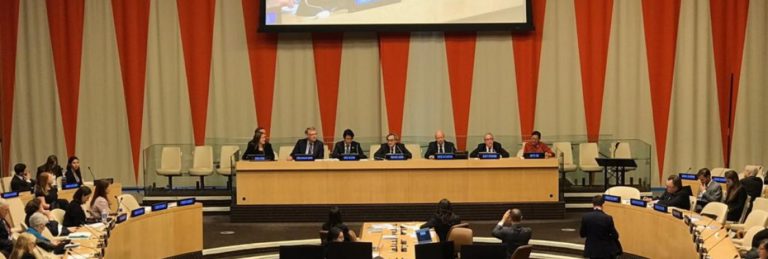
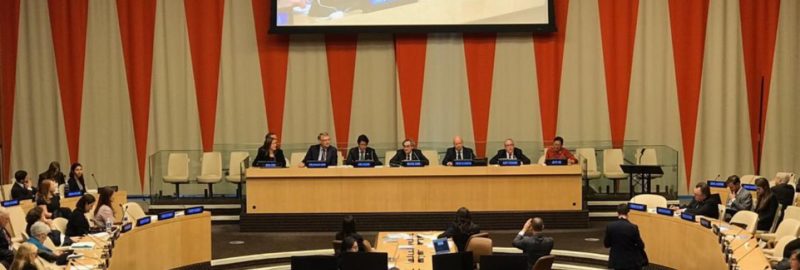
Delegates at the forum

More than 450 investor, company and capital market leaders convened at the Investor Summit on Climate Risk on Wednesday, January 31, 2018 to map out the next steps for increased action on climate change.

“While we see divestment from fossil fuel assets at more than $5 trillion, last year, the global community invested another £825 billion in fossil fuel use. Once again, your voice and the actions you take will speed the pace with which countries improve the consistency and alignment of their approach,” said United Nations Deputy Secretary General, Amina Mohammed.

Stressing the significance of the Paris Climate Change Agreement as a vehicle for transformation, Ms. Mohammed said the agreement provided a roadmap for ambitious and cooperative global action, bringing various stakeholders together and generating momentum to reduce greenhouse gas emissions. Bold action is now needed by policy makers, regulators and the market to ensure that the Paris Agreement goals are realized and to address the growing barriers to sustainable development.

“Divesting from carbon intensive assets and aligning with the goals of the Paris Agreement is a complex realignment. Your voices need to be clear with regulators, central bankers, finance ministers, board rooms and C-suites for the gathering momentum to continue to gather pace and to become a truly global phenomenon,” she said.

United Nations Climate Change Executive Secretary, Patricia Espinosa, also underlined the importance of investors in accelerating the flow of finance for global climate action. “Governments need to know that the financial element to achieving the goals of the Paris Agreement is going to be delivered. It cannot only be public money. There is a major role for investors to play,” she said.

In parallel to the key role of national governments, local governments and cities and provinces in reducing carbon emissions, stronger climate action is required by the private sector and investors to achieve the central goal of the Paris Agreement, which is to limit the rise of global average temperatures to well below 2 degrees Celsius and as close as possible to 1.5 degrees above pre-industrial levels.


Concrete Climate Action Announcements Made at the New York Investor Summit

In a move to guide investors worldwide to increase investments in low-carbon technologies, a diverse group of investors and seven partner organizations –Asia Investor Group on Climate Change, CDP, Ceres, Investor Group on Climate Change, Institutional Investors Group on Climate Change, Principles for Responsible Investment and UNEP Finance Initiative – joined hands to launch the Investor Agenda at the Summit.

The agenda is designed for the global investor community to accelerate and scale up the actions that are critical to tackling climate change and achieving the Paris Agreement goals. It will identify actions that investors can take in four key areas: Investment, Corporate Engagement, Investment Disclosure and Policy Advocacy.

Other concrete announcements made at the Summit added to the growing momentum of global investors taking advantage of the opportunities offered by the transition to a low-carbon economy. For example, New York State Comptroller Thomas P. DiNapoli announced a $2 billion increase to the New York State Common Retirement Fund’s low emissions equities index at the Investor Summit on Climate Risk in New York, raising the fund’s sustainable investment portfolio to $7 billion.

The Fund –  the third largest public pension fund in the US with estimated assets of over $200 billion – has an index that excludes or reduces holdings in the worst carbon emitters and shifts investments to lower emitting corporations. The latest announcement is aimed at boosting investments in to companies that are working towards lowering their global greenhouse gas emissions.

Recently, New York City Comptroller Scott Stringer said the City would take steps to divest its pension funds from fossil fuels. La Caisse de dépôt et placement du Québec (CDPQ), Canada’s second largest pension fund, also committed to increasing its low-carbon investments by 50% by 2020, representing more than $8 billion in new investment. And, in Europe, AXA, the world’s largest insurer, set a target to reach $14.7 billion in low-carbon investments by 2020.
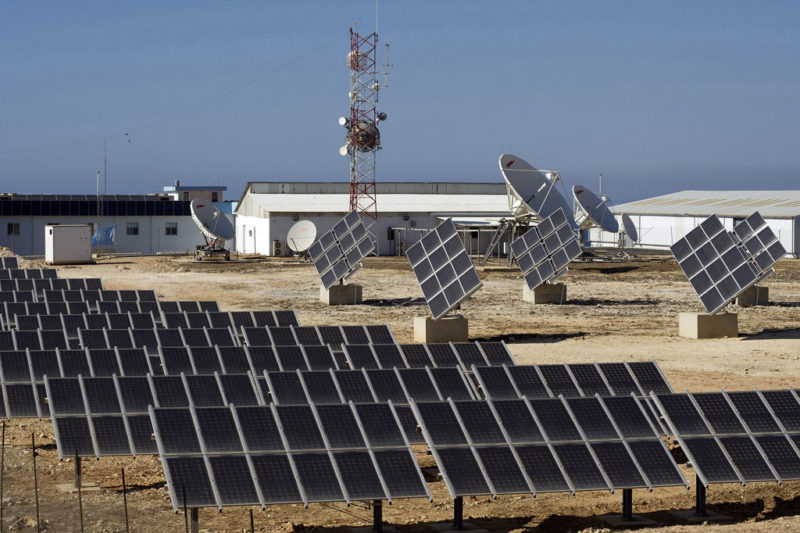
UN, partners provide clean energy to refugees

0

The United Nations, together with partner organisations and governments, says it is helping refugees use clean energy for cooking, lighting and communicating by providing access to funding for such facilities in refugee camps.

unifil
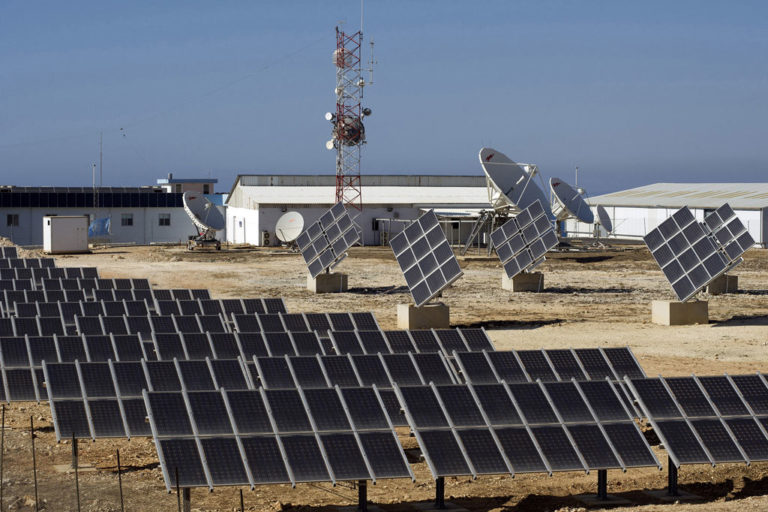
Renewable energy: A Solar Energy System at the United Nations Interim Force in Lebanon (UNIFIL). Photo credit: UNIFIL

Above all, deploying clean cook stoves that do not rely on dirty energy is an essential component of meeting emissions goals worldwide and is an important measure to protect the health of refugees. In addition, clean cook stoves prevent deforestation which occurs when refugees collect firewood. And clean energy – notably solar – is cheaper to use than fossil fuels.

“Energy providers don’t tend to think of refugees as potential energy consumers, but the opportunities to build a relationship with them are huge,” says Mattia Vianello, one of the authors of “Prices, Products and Priorities: Meeting Refugees’ Energy Needs in Burkina Faso and Kenya”, a recent survey by the Moving Energy Initiative (MEI) focused on the benefits of clean energy for refugees.

The UN’s Safe Access to Fuels and Energy (SAFE) Program, launched in 2014, brings sustainable fuels and efficient cooking solutions to refugee camps and impoverished communities around the world.

In the first two years alone, the programme provided some 175,000 refugees in 10 countries with 150,000 with solar-powered lanterns and installed 2,000 solar-powered street lights in households and communal areas.

According to the report by MEI, a significant number of refugees desire cleaner and more efficient energy technologies, but many lack the financial resources required.

UN Works With Private Sector to Build Solar-Powered Camp

The United Nations High Commissioner for Refugees (UNHCR) is helping to improve the quality of life for refugees and to lower global greenhouse gas emissions by bringing sustainable energy access to displaced persons through partnerships with the private sector, while saving money with solar technology. Last year, UNHCR and the IKEA Foundation partnered to launch the first solar-powered refugee camp in Jordan.

The 2-megawatt plant will produce 3.6 million kilowatt-hours per year, saving 2,370 tons of CO2 emissions – equivalent to the carbon sequestered by 65,568 tree seedlings grown for 10 years.

“The world’s first solar farm in a refugee camp signals a paradigm shift in how the humanitarian sector supports displaced populations. UNHCR Jordan will save millions of dollars, while reducing carbon emissions and improving living conditions for some of the world’s most vulnerable children and families”, says Per Heggenes, CEO of the IKEA Foundation.

Sunken Iranian oil tanker to remain on ocean floor

0

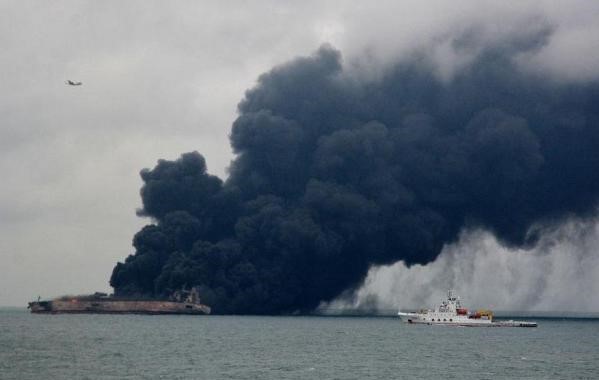
An Iranian tanker that sank following a deadly collision in December in the East China Sea is likely to remain at the bottom of the ocean, Chinese officials said on Thursday, February 1, 2018.

Sanchi-oil-tanker
The Iranian tanker sank following a deadly collision in December in the East China Sea

Report says the oil tanker, named Sanchi, is currently lying at the sea bed about 150 metres below the surface, some 300 kilometres east of Shanghai.

“In spite of having burned at the surface for about a week before exploding and sinking, Sanchi still holds some of the condensate it had been carrying, which is a type of fuel more flammable than crude oil.

“There was also engine oil on board, Zhi Guanglu, director of the Transportation Ministry’s emergency office, said.

Zhi said that due to the tanker’s position, weight, water currents and temperature, it is unlikely that it will be lifted to the surface.

He, however,  said that the Chinese Government might send divers “if the conditions allow.”

“No more bodies have been found,’’ the official said.

Of the tanker’s 32 crew members, of whom 30 were Iranians and two were Bangladeshis, three bodies were found in December.

A media report said all crew members had been declared dead by the Iranian authorities.

“The oil slick on the water surface measured about 30 square kilometres on Jan. 28,’’ Huo Chuanlin, deputy director of environmental protection at the State Oceanic Administration, said after covering some 332 square km a week before.

Jin Zuowen, head of the Chinese Coast Guard’s department of marine environmental protection, said some of the oil had been cleaned up, but some had dispersed.

Mixed reactions trail increase in tolls on Lekki-Ajah Road, Ikoyi Link Bridge

0

Some motorists and passengers  plying the Lekki-Ajah Highway in Lagos State on Thursday,February 1, 2018 expressed mixed feelings over the increase in the tolls  at Lekki and Ikoyi Link Bridge Toll Plazas by the by the Lekki Concession Company Limited (LCC) .

Lekki Road toll plaza
The Lekki-Ajah Road toll plaza

The News Agency of Nigeria (NAN) reports that the company had last Monday announced an upward review of toll fees adding that they would take effect from Feb. 1.

The LCC said that the increment was due to current economic and business realities that had impacted on the cost of servicing the company’s loan obligations.

It said that it took the decision following an “extensive consultations held with stakeholders in the Eti-Osa/Lekki-Epe Expressway of Lagos State.”

NAN reports that commercial buses and motorcycles plying the axis now pay N100 as against N80 on each trip while those with e-tag now pay N90.

Saloon cars and tricycles now pay N200 per trip as against the former N120, those with e-tag pay N180; SUVs, mini-vans, light pick-up trucks now pay N400 and N360 for those with e-tag.

Every non-commercial bus with maximum capacity of 26 seats pays N1,000 and N900 with e-tag; and motorcycles with 200cc capacity and above  now pay N200 and N180 for those with e-tag.

The state government initially halted the proposed tariff increase on Dec. 5, 2017.

Some of the road users told the News Agency of Nigeria (NAN) that the increase would increase hardship while others believed the increase was in line with current economic realities.

Mrs Jane Alichi, an interior decorator in Ikoyi, appealed to the state government to consider the economic situation in the country and look for other avenues to absorb the cost.

“Government should help the masses. They should be making deliberate efforts to cushion the effect of the economic hardship now,” she said.

A civil servant who lives on the Lekki-Ajah axis, Mr Ehijimeto Modu, appealed to the state government to improve the efficiency of the alternative route for motorists.

“They (government) should fulfil their promise to people who live on the axis that they will create alternative routes on the Lekki-Epe Expressway.

“They have left the alternative route ineffective to force all of us to be using the toll gate. Now they have increased the toll, it is not fair at all,” he told NAN.

An ICT expert in Lekki, Mrs Unera Markus urged government to consider the wages of road users before embarking on increment of the tolls.

“They used our tax to construct that road, so what is the operational cost they are talking about?

“Have they increased salaries? They just want to punish the masses,” she told NAN.

Miss Bibi Chuka, a student of the Lagos State Polytechnic said that the increase would result in hike in transportation fares on the axis.

“In Lagos State of today, transportation cost is already high. I am not in support of the increase because transporters will use that as an excuse to charge more,” she said.

However, an engineer, Mr Gbenga Akinlolu, said that any increase that would guarantee efficiency of service delivery was good.

“The margin of the increase should not be much considering the kind of services they render.

“The current economic realities call for a review. The services they render on the axis are enormous such that if your vehicle breaks down the LCC personnel assist you.

“They also provide security and those accompanying services come at a cost.

“I expected them to consult with the transporters and other stakeholders before the review,” Akinlolu said.

By Grace Alegba

Images: Faces at the Bamako Convention COP2

0

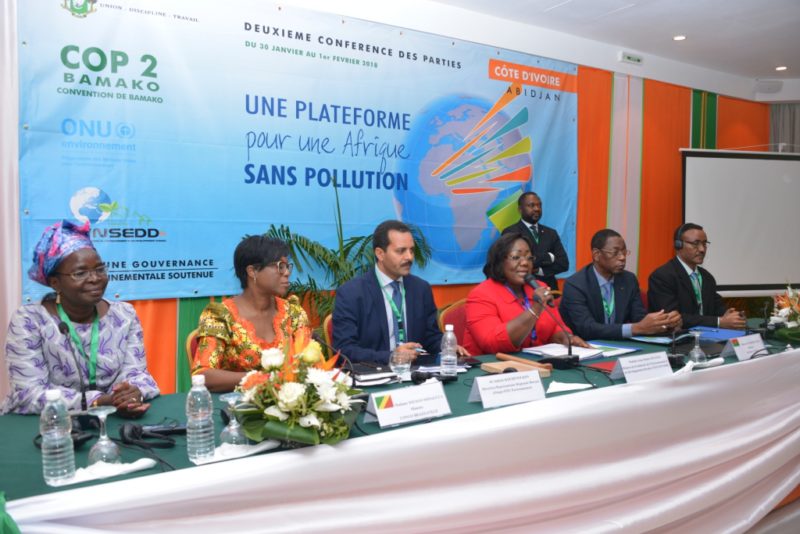
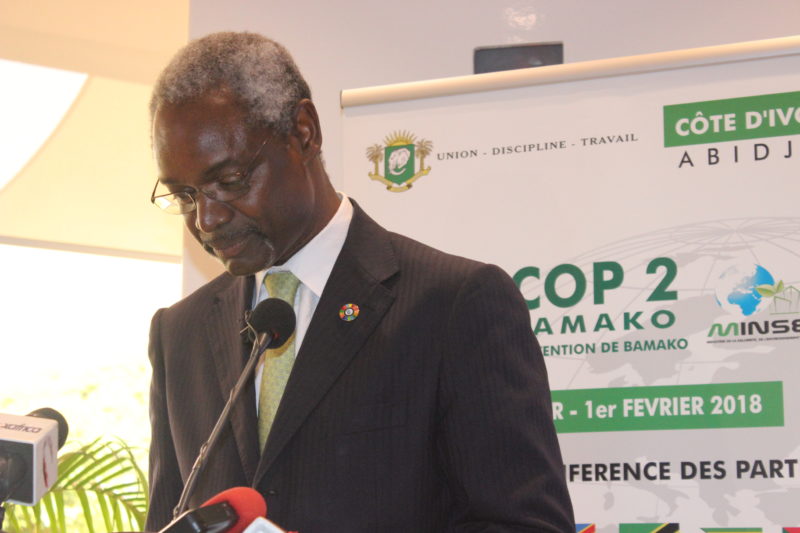
The Second Session of the Conference of the Parties to the Bamako Convention (COP2) held from Tuesday, January 30 to Thursday, February 1, 2018 in Abidjan, the capital city of Cote d’Ivoire.

The conference had “The Bamako Convention: a platform for a pollution-free Africa” as its theme.

COP2 provided a platform for African nations to discuss ways and means of ensuring that the continent rids itself of hazardous wastes and contribute to the achievement of a pollution-free planet.

The Convention is a treaty of African nations prohibiting the importation of any hazardous (including radioactive) waste into the continent.

The Bamako Convention, which came into force in 1998,  is a response to Article 11 of the Basel convention which encourages parties to enter into bilateral, multilateral and regional agreements on Hazardous Waste to help achieve the objectives of the convention.

Nigeria is yet to ratify the treaty.

Mrs. Keita M'Bo
Mrs. Keita M’Bo, Minister of Environment of Mali and former president of the Bamako Convention Bureau
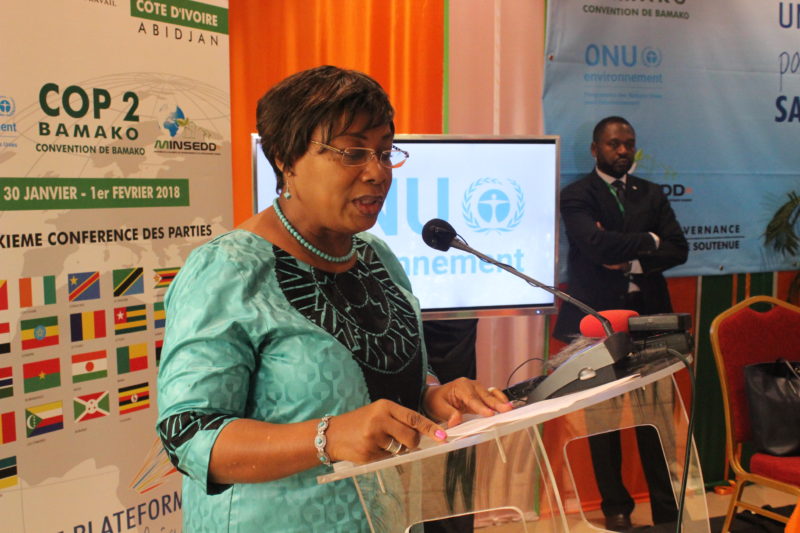
Anne Désirée Ouloto
Host Minister and Ivoirian Minister for Public Health, Environment and Sustainable Development, Mme Anne Désirée Ouloto, speaking during a session at the COP
Ibrahim Thiaw
Ibrahim Thiaw, Deputy Executive Director of UN Environment
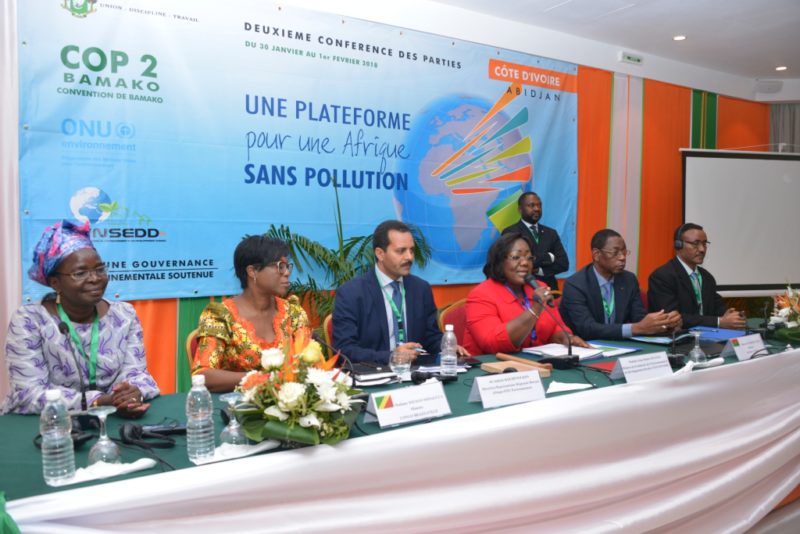
Bamako Convention COP2
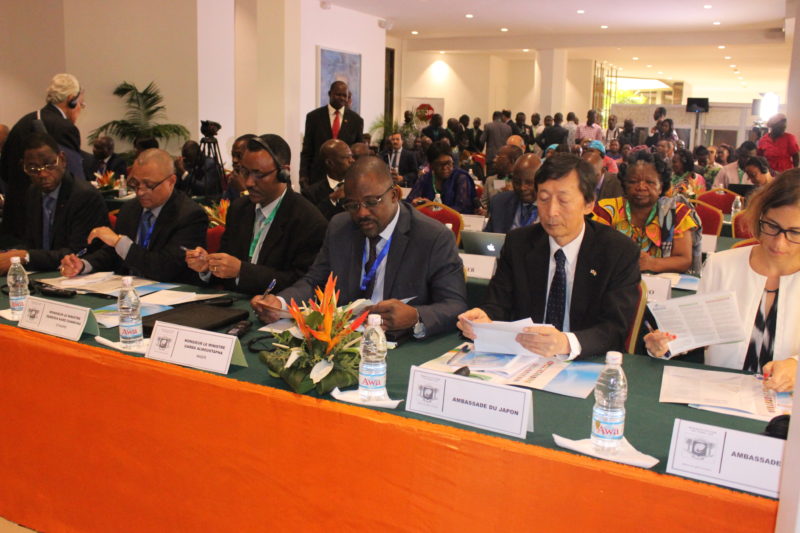
A view of delegates at the COP

Governments urged to make Nigeria a low carbon society

0

An ecologist, Mr Habib Omotosho, has urged the federal, state and local governments to incorporate climate change issues into their annual budgets to actualise plans to evolve low carbon society.

Ibrahim Usman Jibril
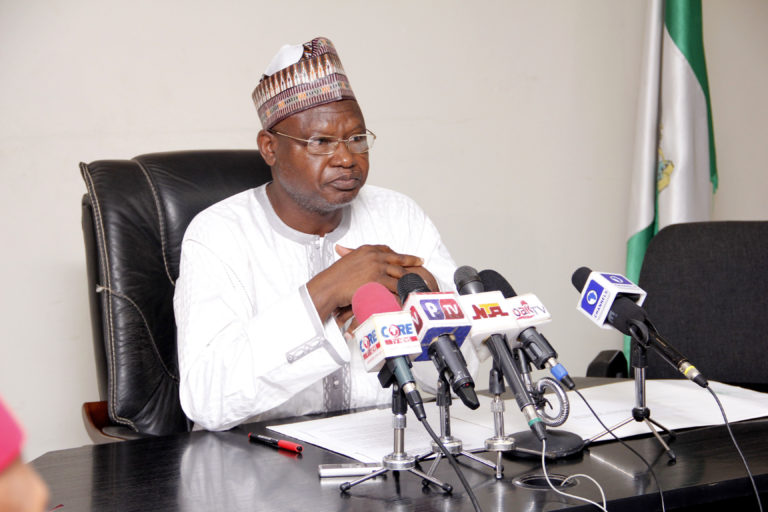
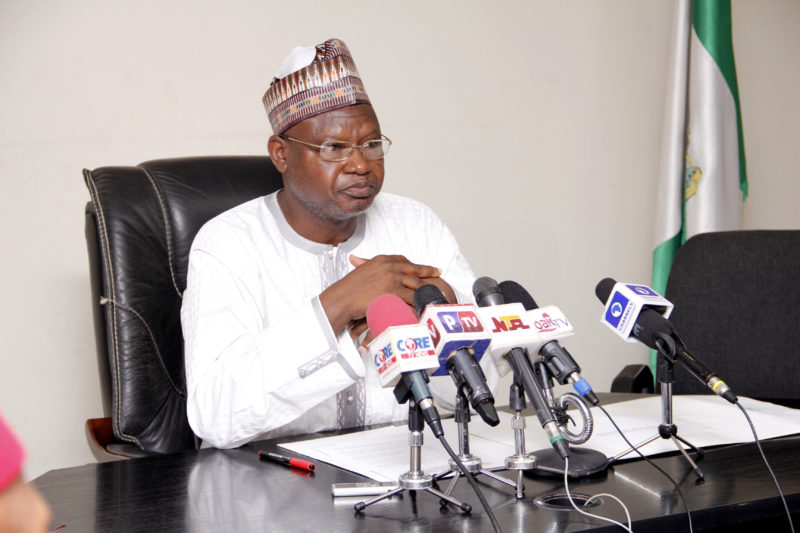
Environment Minister of State, Ibrahim Usman Jibril

Omotosho, who is the National Coordinator, Environmental Advancement Initiative, an NGO, gave the advice in an interview with News Agency of Nigeria (NAN) in Abuja on Thursday, February 1, 2018.

He said that the government at all levels needed to prioritise investments in low-carbon energy projects, particularly in the areas of cooking modes, transportation modes and clean energy options.

“To this end, private sector investments should be encouraged for the production and distribution of clean cooking technologies, low carbon travel options, such as bicycles, hybrid cars, tricycles and other low carbon or non-carbon emitting energy options.

“Nigeria has a huge economic potential; a brilliant climate and environment future that cannot be left to be ravaged by the adverse effect of climate change,’’ he said.

Omotosho also urged the government and relevant stakeholders to implement structured policies and strategies aimed at achieving low carbon growth in the country.

He said that the government and people of Nigeria should promote the evolution of green, healthy and sustainable environment which supported food and livestock production as well as clean energy production.

By Deji Abdulwahab

Prevalence of health challenges blamed on poor human waste disposal

0

An environmentalist, Mr Bassey Ating, has blamed prevalence of certain health challenges in the country on the poor disposal of human waste in some neighbourhoods.

Human waste disposal
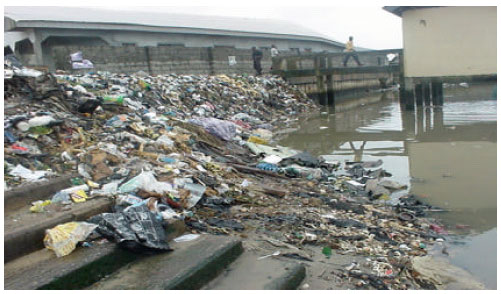
Disposal of human waste into a water body

Ating, the Programme Coordinator, Wise Administration of Terrestrial Environment and Resources (WATER), made the declaration in an interview with News Agency of Nigeria (NAN) in Abuja on Friday, February 1, 2018.

He urged Nigerians to desist from open defecation, saying that poor disposal of human waste was one of the major threats to human health.

He said that people were also exposed to health hazards when inhaling the odour emitting from decomposing substances in their surroundings.

“Poor disposal of human waste and other toxic materials such as lead acid, asbestos products and expired paints, among others, could be a threat to human health.

“If these substances are not disposed of properly, I mean when left in the open, close to populated areas or people’s homes, they can spread diseases easily,’’ he said.

The programme coordinator said that improper disposal of toxic products could also result in the release of dangerous materials into the environment.

Ating underscored the need to stamp out open defecation in the country, saying that exposure to human excreta was very hazardous, as bacteria, viruses and parasites were often found in human waste.

He said that when people or animals defecated in the open, flies and other pests fed on the faeces and transmitted germs to the people by perching on their food substances.

He also said that faeces left in the open could be washed by rainwater into wells, streams and other sources of water which people drank.

The environmentalist particularly bemoaned the dearth of toilets or latrines in some urban centres across the country.

He, however, said that tangible efforts should always be made to keep indoor and outdoor toilet facilities clean and free from germs to avoid the spread of diseases.

“The bottom-line is that bad waste management practices can result in land and air pollution.

“This can cause respiratory problems and other adverse health effects, as contaminants are absorbed from the lungs into other parts of the body,’’ he said.

Besides, Ating said that with the increase in population and the rising demand for food and other essentials, there had been a sharp rise in the amount of waste being generated daily by households.

“The waste is ultimately thrown into municipal waste collection centres, from where it is collected by the area waste managers to be deposited at waste landfills and dumpsites.

“If the waste management and disposal system of a neighbourhood is defective, it can cause serious problems in the health of the residents and their environment,’’ he said.

He, therefore, urged stakeholders in the environment and government at all levels to re-introduce monthly environmental sanitation exercise across the nation.

By Okon Okon

UNICEF, NOA partner NYSC to tackle malnutrition in Kaduna

0

The National Orientation Agency (NOA) in collaboration with the UN Children’s Educational Fund (UNICEF) is partnering with the National Youth Service Corps (NYSC) to tackle malnutrition in Kaduna State.

Pernille Ironside
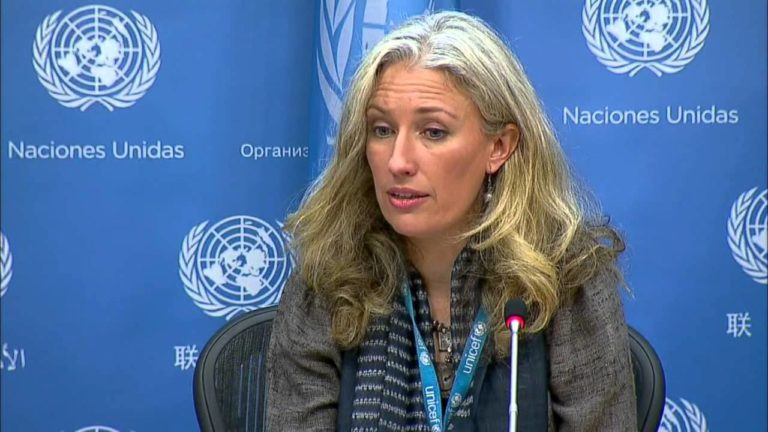
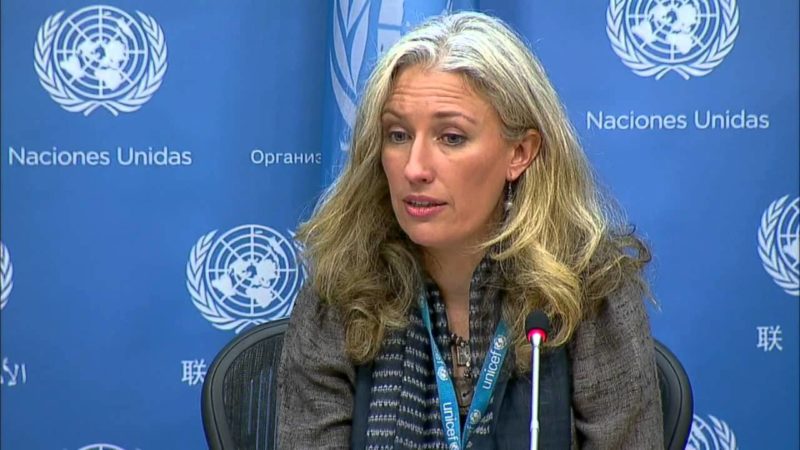
UNICEF Nigeria Acting Representative, Pernille Ironside

Malam Lawal Haruna, the NOA Deputy Director in the state, who is UNICEF’s focal person in the agency, disclosed this to the News Agency of Nigeria (NAN) in Kaduna on Thursday, February 1, 2018.

Haruna said with the partnership, corps members serving in Kaduna State would be mobilised and trained to promote maternal, adolescent, infant and young child feeding to reduce maternal and child malnutrition.

He said the corps members would be trained on basic concept of nutrition and would be educated on the nutritional status of women and children across the communities where they would carry out their primary assignments.

Haruna said they would equally be trained as drama facilitators and would be supported to identify stakeholders and community volunteers they could work with in entrenching good nutritional habits in Kaduna communities.

According to him, the corps members will play a key role of identifying and mobilising community members, and community volunteers for the promotion of adequate maternal, adolescent, infant and young child feeding practice.

“They will also be expected to divide the community volunteers into drama groups, and train the volunteers on how to use drama to mobilise and improve community members’ knowledge on good nutrition,” he said.

Haruna said the activity would be carried out in 10 selected local government areas of the state namely – Jaba, Jema’a, Kaduna North, Kaduna South, Kachia, Igabi, Chikun, Kajuru and Makarfi and Lere.

The NOA boss said mobilising the corps members was crucial to winning the war against malnutrition in the state, stressing that the youths had always been the arrow head of progressive change in societies.

“This is because the youths are very energetic and form the engine room for any progressive movement as the most vibrant and active segment of the society and on whose shoulders lay the future of every society.

“We have already addressed about 1, 000 corps members currently in camp on the issue and they are enthusiastic to participate as facilitators in promoting good maternal adolescent, infant and young child feeding.

“We will be meeting them at zonal levels to give them drama orientation for effective community engagement through Theatre for Development (TFD) and other dialogue sessions,’’ Haruna said.

UNICEF Nutrition Specialist, Kaduna Field Office, Chinwe Ezeife, said working with the corps members would help to  curb the prevalence of malnutrition and reduce maternal and child deaths.

“Early initiation of breastfeeding in Kaduna State is 38.6 per cent, while practice of exclusive breastfeeding is as low as 6.2 per cent and a minimum dietary diversity of 44.5 per cent.

“These, among other factors were responsible for the high level of underweight children under the age of five, which stood at 34 per cent and stunted children at 37 per cent.

“If nothing is done, eight per cent of under-five children in the state are more likely to die of severe acute malnutrition before their fifth birthday,” she said.

Ezeife expressed optimism that much would be achieved with the corps members on board in promoting good nutritional habit as part of their national service in their various communities of primary assignment.

By Philip Yatai

Group wants government to provide improved seedlings for smallholder farmers

0

A non-governmental organisation (NGO), Promotion for the Human Rights, on Thursday, February 1, 2018 urged the Federal Government to provide improved cassava and yam seedlings to smallholder farmers across the country.

Fadama
Smallholder farmers

Williams Ozase, president of the organisation, made the call in an interview with the News Agency of Nigeria (NAN) in Abuja.

He said that if the farmers were provided with improved seedlings, it would boost cassava and yam production in the country.

He said that the strategy would also facilitate efforts to boost the food security of the country.

Ozase said that after harvests, part of the yield could be reserved as seedlings for the next cropping season.

“Through this way, the farmers can slowly improve the quality of their varieties. Good seed selection is also vital to efforts to control plant pests and diseases,’’ he said.

Besides, Ozase said that the agricultural institutes should produce high-yielding seedlings and make them available to farmers’ cooperative societies for distribution to farmers.

He said that the cooperative societies could easily reach smallholder farmers in the rural areas, adding that the arrangement would stimulate efforts to boost agricultural production in the country.

He stressed that pragmatic efforts should be made by all the stakeholders in the agricultural sector to enhance agricultural production in order to boost the food security of the country.

Ozase urged the Federal Government to step up its plans to diversify the nation’s economy via agriculture by investing more resources in the development of agriculture, agribusiness and value chains.

He also urged the government to provide processing and storage facilities for farm produce, saying that the venture would boost agricultural production significantly.

“The government should also develop technologies through sustained research and distribute them to farmers, while building the farmers’ capacity in modern crop growing skills,’’ he said.

He said that agriculture remained the only panacea for the country’s economic problems.

By Vivian Emoni

NEITI seeks National Assembly partnership on transparency

0

The Nigeria Extractive Industries Transparency Initiative (NEITI) has renewed its appeal to the National Assembly to use the findings of its audit reports to push for wider reforms in the oil and gas industry.

Waziri-Adio
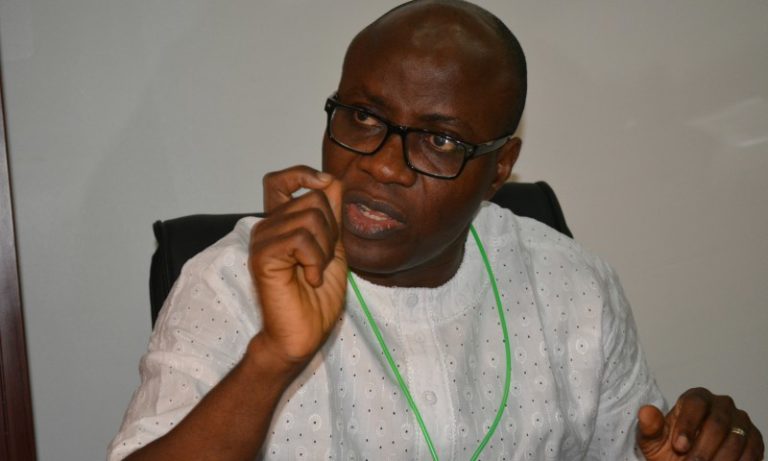
Executive Secretary of NEITI, Waziri Adio

The NEITI Executive Secretary, Waziri Adio, made the appeal in Abuja while receiving the members of the House of Representatives’ Committee on Petroleum Upstream who were on monitoring and oversight visit to the NEITI Secretariat.

Adio explained that NEITI reports contain detailed information and data on company payments and government receipts as well as the process lapses and remedial actions required in the industry.

“We see the parliament as important partners not just because we are answerable to you and we need you to approve our budget but because our reports can and should be inputs to your important work,” he said.

Adio expressed concerns that several reports with far-reaching recommendations have been placed in the public domain with clear challenges of implementation. He urged the National Assembly to study the reports as important documents that would aid their oversight representative and law-making responsibilities.

He commended the National Assembly for the passage of the Petroleum Industry Governance Bill, noting that the development is in support of the mandate of NEITI, fundamental to strengthening reforms in the industry and key to promoting investments and better revenue generation.

The Executive Secretary told the legislators that NEITI’s decision to develop a new strategic plan to cover the period from 2017 to 2021 was to deepen openness and shape positively the overall governance of the sector through policy engagement, thought leadership and inter agency collaboration. He identified funding, manual data collection and human capacity development as major challenges.

Chairman of the House of Representatives Committee on Petroleum Upstream, Victor Nwokolo, expressed satisfaction over the impact of NEITI’s intervention in pushing for reforms in the extractive industries.

Nwokolo commended NEITI for its professionalism in the discharge of its mandate. He advised the Executive Secretary to consider as a priority the need for NEITI to work more closely with the National Assembly to advance transparency and accountability in the industry.

He explained that the visit was to review NEITI’s level of implementation of the 2017 Budget and appraise the implementation of Extractive Industries Transparency Initiative (EITI) in Nigeria in the last one year.

Nwokolo reaffirmed the commitment of his Committee to support NEITI in the discharge of its mandate.

×