The military has promised to assist the Abuja Environmental Protection Board (AEPB) to enforce its laws aimed at promoting clean environment in the Federal Capital Territory.
Nigerian military personnel
The Commanding Officer, 7 Guard Battalion, Abuja, Lt.-Col. Mukhtar Daroda, said this in a statement in Abuja on Tuesday, February 13, 2018.
Daroda made the promise in a statement by Muktar Ibrahim, Head, Public Relations and Outreach Unit of AEPB, and made available to the News Agency of Nigeria (NAN).
‘‘On the issue of enforcement of its laws and problems being faced by the board in clearing illegal structures and preventing criminal activities, the military is ready to assist the board,’’ Daroda said.
The commanding officer gave assurance that the military was determined to give its support to the board at all times whenever its services were required.
He noted that the board alone would not be able to tackle the environmental challenges in the FCT without the support of the security agencies.
‘‘We will support the board to build on the existing relationship and ensure that waste management problem is tackled effectively in the military barracks and FCT suburbs as well.
‘‘I feel so much concerned over the increasing problem of waste management in the barracks due to increasing population of between 800 and 1,000 households in the area.
‘‘I am calling on AEPB to undertake an assessment of the prevailing situation in the barracks.
‘‘Also, the board should give its advice accordingly on what to do to ensure a clean and safe environment for soldiers and their wards,’’ he said.
Daroda, however, advised the board to notify the military when moving to volatile areas, so as to provide its officials the needed security for their operations.
He said the military escort was important to protect the staff of the board from hooligans who engage themselves in nefarious activities.
The Japan International Cooperation Agency (JICA) has signed a loan agreement with the African Development Fund (ADF) designed to provide an Official Development Assistance (ODA) loan to the tune of ¥73.601 billion (approx. $700.9 million). The loan is part of Japan’s contribution to the African Development Fund’s Fourteenth Replenishment (ADF-14). This is the first JICA loan provided to the ADF, a part of the African Development Bank (AfDB) Group.
Japan’s Ambassador to Côte d’Ivoire, Hiroshi Kawamura (left), with President of the African Development Bank (AfDB) Group, Akinwumi Adesina, during the signing of the loan agreement in Abidjan, Côte d’Ivoire
The loan will provide the ADF with resources to support recipient countries during the ADF-14 period (January 1, 2017 to December 31, 2019), and contribute to economic growth as well as poverty alleviation in Africa’s least developed countries.
President of the AfDB Group, Akinwumi Adesina, acknowledged the landmark event and expressed the bank’s gratitude and appreciation to the Government of Japan.
Signing the Notes of Exchange, Adesina said, “Thanks to Japan and its Government for keeping a promise. One often hears about many international pledges of development cooperation remaining unfilled. I would like to commend the full accomplishment of Japan’s commitments to Africa’s development. With its $700-million loan, which came on top of $328 million in the form of a grant, Japan has significantly contributed to the ADF commitment capacity for the period 2017-2019.”
Adesina stated that Japan was a longstanding development partner for Africa, with a significant portion of its aid commitments to the continent channeled through the AfDB. “Japan is the second-largest contributor to the ADF in cumulative terms, and it has increased its contributions significantly over time.”
Also speaking on the occasion, Japan’s Ambassador to Côte d’Ivoire, Hiroshi Kawamura, said he was glad to sign the accord to bolster Africa’s socio-economic development. “Our contributions to the ADF-14 replenishment will allow the Government of Japan to increase its contributions to 7.3%, against 6.7% for the ADF-13,” he stated.
Kawamura added: “We hope the loans and grants will be used effectively to improve economic and social conditions of less privileged people in Africa. Also, the reason of our meeting today would further contribute to accelerating the Tokyo International Conference on African Development (TICAD).”
The Japan International Cooperation Agency (JICA) Chief Representative in Côte d’Ivoire, Tsutomu Iimura, said his institution fully adheres to the AfDB’s High 5s. “There is no limit in the potential collaboration and synergies between the two institutions.” Iimura expressed the hope that JICA’s projects and contributions to ADF-14 would bolster the bank’s capacity to carry out the objectives of the High 5s in countries where support is most needed.
Co-signing the accord for the AfDB, Acting Vice-President for Finance, Hassatou N’Sele, thanked the Japanese Government and its people for “exceptional support” to the ADF-14 replenishment, noting that, “These investments by Japan will make a difference in the lives of many Africans. Japan is one of the African Development Bank’s most privileged partners. Your various financial instruments will help us meet our development goals”.
The African Development Fund is part of the AfDB Group and provides support primarily to least developed and poor countries in the form of very long-term, low-interest financing. In contrast, the AfDB, which is the other arm of the AfDB Group, provides financing to middle-income countries in Africa.
Since its inception in 1972, the ADF has conventionally received subscriptions in the form of grants from donor countries, including Japan, as a source of funding to achieve its development mandate. During the negotiations of its fourteenth replenishment, the ADF offered donor countries the opportunity to include concessional loans within subscriptions to the Fund for the very first time.
JICA also provides private sector development support through projects under Enhanced Private Sector Assistance for Africa (EPSA), which the Government of Japan and the AfDB launched as a strategy for support in Africa in July 2005. It is JICA’s policy to maintain its relationship with the AfDB Group as an important development partner contributing to economic growth and poverty alleviation in Africa.
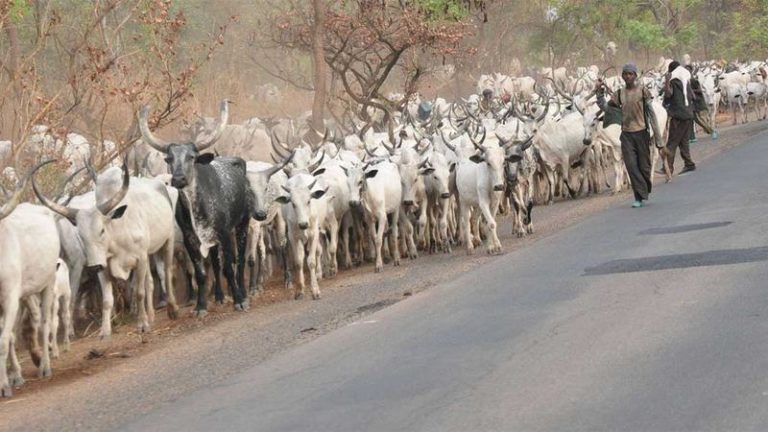
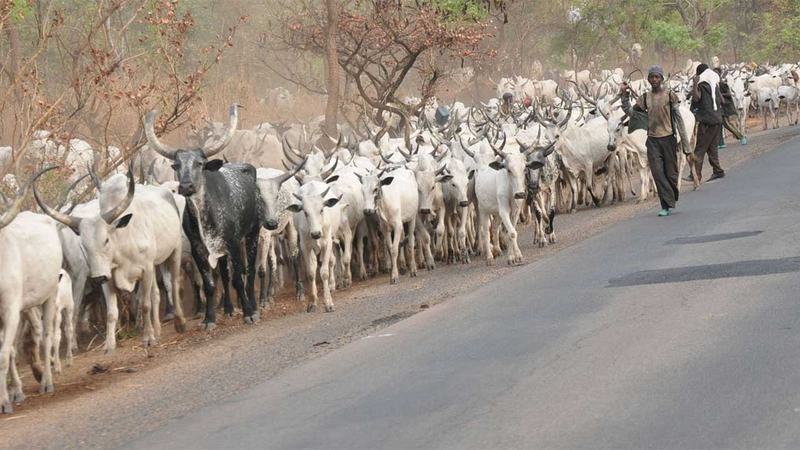
Stakeholders at a symposium in Benin City on the way out of the ongoing clashes between herdsmen and farmers in the country have rejected the Federal Government planned cattle colonies in favour of ranches, which is said to be the vogue in most parts of the world.
Herdsmen
They said that the recent attacks on farmers by armed herdsmen leading to colossal loss of lives also require urgent solution from the federal and state governments, using all available security apparatus.
The stakeholders’ position is contained in a communiqué issued at the close of the symposium held on Monday, February 12, 2018 courtesy of the Correspondents Chapel of the Edo State Council of the Nigerian Union of Journalists (NUJ).
Initially scheduled to be a public lecture with the title “Sustainable Agriculture as panacea to the herdsmen attacks on crop farmers in Nigeria”, threats to the guest lecturer’s life however forced the organisers to change the event to a symposium.
This, the organisers also said, was to allow for wider and robust ventilation of ideas because of the sensitive nature of the current herdsmen/farmers crisis.
In all, speaker after speaker acknowledged the fact that there has been a long standing relationship between farmers and Fulani herdsmen until the recent worrisome incidents of unprovoked attacks on farmers.
They agreed that these unwarranted attacks have caused colossal losses to farmers in particular and Nigerians in general.
They said that the topic was apt and timely, adding that Fulani herdsmen migration is attributable to climate change, and thus requires scientific solution.
“Notwithstanding, it is a truism that the basic fundamental of all economies is agriculture, nay sustainable arable cropping nationwide. If there is no urgent solution in sight, the needed growth and development may become a mirage,” said a speaker.
The stakeholders who commended the Edo State Government’s initiative through the ban on night grazing, adding that there should be an improved modern security strategy at mitigating these attacks.
In conclusion, the stakeholders agreed that, rather than having cattle colonies, cattle ranching appears to be the obvious way to go if the present crisis is to be sustainably addressed.
“If this is done with the use of fodder to feed the cows, the need for nomadism will not only be resolved by the additional benefit of creating a crop of farmers for grass production, it will be a win-win solution to all stakeholders,” submitted another speaker.
They called on governments at all levels to provide appropriate infrastructural support to livestock farmers and crop farmers as incentives to practice commercial large scale/sustainable agriculture.
They said that, as a matter of urgency, the Federal Government, through livestock development centres in each of the 36 states and the FCT, should be a model of excellence instead of the cattle colony, grazing reserve or estate currently being proposed by the Minister of Agriculture and Rural Development, Chief Audu Ogbeh.
Earlier, at the symposium, Governor Godwin Obaseki of Edo State admonished farmers and residents not to be deterred by activities of some bad eggs among nomadic herdsmen, declaring that not all herders are killers.
The Edo governor said: “Not all herdsmen are killers. Some of them are doing genuine business. We should not allow the bad herdsmen activities scare us from our farms.
“In every society, you have the good, bad and ugly; and there have always been Fulani herdsmen since we were kids. That is what we are seeing now.”
Obaseki, who said his administration has stepped up plans to address the menace of herdsmen/farmers clash, added that part of the plan is the banning of night crazing and arms carrying herdsmen in the state.
Represented by the Special Adviser on Food Security and Agriculture, Mr. Joe Okoje, Obaseki disclosed that a seven-man committee which includes Divisional Police Officers (DPOs), DSS has been inaugurated across the 18 local government areas of the state to address the menace.
In an address welcoming stakeholders, the Chairman of the Correspondent Chapel, Mrs. Nefishetu Yakubu, said: “If we must help government of the day to achieve its quest to diversify the economy through agriculture, then we must begin by first proffering solutions to the herdsmen attack on arable crops farmers.”
The State Comptroller, Prisons, Mr. Amadin Osayande, who was present, said: “As custodian offenders, we have no herder as inmate in our custody.”
Osayande, who described himself as a part-time farmer, said his farm was set on fire last year by marauding herdsmen.
He expressed concern over the carrying of arms by herders, adding that “when there’s food insecurity, there will be hunger”.
Also, an Associate Professor in the Faculty of Agriculture, Ambrose Ali University, Dr. Agharese Osifo, submitted that a word such as “Livestock Development Centre” should be used by the Federal Government instead of “Cattle Colony”.
According to him, colony should not be a sectional thing because Nigeria is a multi-ethnic country.
The event was chaired by a farmer, Owere Dickson Imasogie, while the Edo State Police Commissioner, MF Johnson Kokumo, and Apostle Mrs Deb’rah Osagiede, were prsent as guests. Archbishop Margaret Benson Idahosa, Comrade Peter Esele and Dr Felix Omobude, the National President of the PFN, sent representatives.
They are worlds apart: one in a place famous for its ecological diversity, the other for its watches and chocolate. But, now, Galapagos (Ecuador) and Geneva (Switzerland) airports have something special in common – they both recently became carbon neutral under the Airport Carbon Accreditation (ACA) programme.
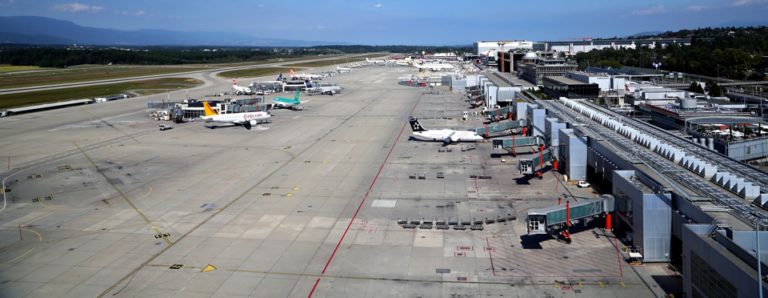
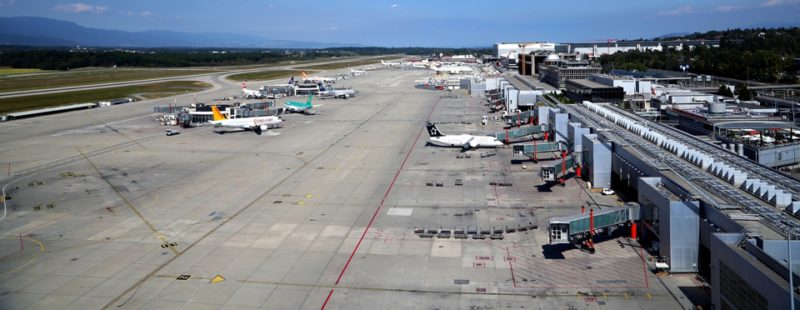
Geneva Airport, Switzerland
Their achievement brings to 37 the number of airports certified as carbon neutral for emissions under their control. In total, 211 airports are signed up and certified at one of the four levels certified by ACA.
“This really sends a message to the wider world that carbon management is a valid consideration for every business no matter where they are located,” said Angela Gittens, Director General, Airports Council International (ACI World). The ACA programme was launched by ACI Europe in 2009.
In addition to reducing their carbon footprint through energy efficiency measures and use of renewable energy, these airports invested in carbon offsets funding biomass and efficient cook-stove projects, issued under the United Nation’s Clean Development Mechanism and the Gold Standard.
“An impressive 3.2 billion air passengers now travel through airports certified at one of the four levels of Airport Carbon Accreditation – a testament to how much the programme has helped mobilise airport operators towards addressing their carbon footprints,” said Ms. Gittens in recognising the achievements of the two newest carbon-neutral airports.
The Intergovernmental Panel on Climate Change (IPCC) has estimated that aviation accounts for two percent of global greenhouse gas emissions. Of that, airport operations account for up to five percent.
“It is a great honour for us to receive this certification at Level 3+ Neutrality as the first airport in Latin America and the Caribbean,” Jorge Rosillo, General Manager, Galápagos Ecological Airport, Ecuador.
The ACA programme has four levels of accreditation covering all stages of airport emissions management: mapping, reduction, optimisation and neutrality (called the 3+ Level under the programme).
“We take pride in being able to say that we have delivered on the commitment we made last year, to reduce the net emissions under our control to zero,” said André Schneider, General Manager, Geneva Airport. “Now that we have reached to Level 3+ of Airport Carbon Accreditation, we intend to continue our work on the various environmental aspects of our operations with the same zeal.”
Airports can address their CO2 emissions in a variety of ways, such as by adopting energy efficiency measures, switching to green energy sources, investing in hybrid, electric or gas-powered service vehicles, encouraging employees, passengers and visitors to use public transport, working with airlines and air traffic management to reduce runway taxiing times and implement green landing processes.
“The work airports are doing should inspire others to measure their emissions, reduce what they can and offset the rest,” said Niclas Svenningsen, who oversees the UN Climate Change’s Climate Neutral Now initiative, of which ACI is a partner.
Airport Carbon Accreditation is an independent, voluntary programme administered by consultancy WSP and overseen by an advisory board including representatives from UN Climate Change, International Civil Aviation Organization, UN Environment, European Commission, European Civil Aviation Conference, EUROCONTROL and Manchester Metropolitan University.
There are now 10 airports in Africa certified at one of the four levels of Airport Carbon Accreditation, 41 in Asia-Pacific, 118 in Europe, eight in Latin-America and the Caribbean and 34 in North America.
In the critical year for the implementation of the New Urban Agenda and the Paris Agreement, local and other subnational leaders are inviting national governments to a series of dialogues designed to strengthen national climate plans.
The initiative was spearheaded by Mayor of Quito, Mauricio Rodas
The “Cities and Regions Talanoa Dialogues”, facilitated by ICLEI – Local Governments for Sustainability with Global Covenant of Mayors for Climate & Energy and UN-Habitat as special partners, are expected to take place in around 40 countries worldwide – representing half of the world’s population – as part of a wider, global exercise called Talanoa Dialogue. The initiative was presented on Friday, February 9, 2018 at the 9th World Urban Forum, in Kuala Lumpur.
The initiative builds upon the Bonn-Fiji Commitment of Local and Regional Leaders adopted at the UN Climate Change Conference (COP23) in November 2017 and will be implemented in collaboration with the UN Climate Change Secretariat and the Fijian Government, which oversee the global climate negotiations process until the next UN Climate Change Conference in Katowice, Poland in December 2018.
The initiative also follows a Call for Vertical Integration of Local Authorities in national climate investment plans issued by the Global Covenant of Mayors at the One Planet Summit last December. Spearheaded by Mayor of Quito, Mauricio Rodas, in collaboration with the Mayors of Buenos Aires, Medellin, Mexico City and Sevilla, the effort underlines the need to provide pathways for active participation and engagement of sub-national governments in the formulation of national climate investment plans in line with the Paris Agreement (NDC Investment Plans) and accelerated tracks for sub-sovereign financing for Latin American cities.
The Talanoa Dialogue is viewed as a major global push to bring more stakeholder engagement on board towards achieving the 1.5-degree target in the 2015 Paris Agreement. Talanoa is a traditional word used in Fiji to describe an inclusive and transparent dialogue and decisionmaking process.
The process was launched by the COP23 Presidency of Fiji and is designed to take stock of and strengthen national climate plans – commonly referred to as Nationally Determined Contributions – or NDCs. Only a third of NDCs are on track for implementation and, even if they were fully implemented, recent estimates by UN Environment project a global warming of over 3°C by end of century.
Urban communities contribute up to 70% of energy-related global greenhouse gas emissions and they are among the most vulnerable hotspots for climate change impacts. Current commitments by local and regional governments have the potential to reduce emissions by 5-15 gigatons by 2020 to 2030. However, only around 60% countries have some sort of urban perspective in their national plans, according to UN Habitat figures.
The official decision adopted at COP23 encouraged national dialogues to take place at the country level, involving key stakeholder groups such as local and regional governments as well as civil society. The outcomes of such dialogues are then to be submitted through an official portal set up by UNFCCC, feeding into the next wave of negotiations.
ICLEI – lead of the Local Governments and Municipal Authorities Constituency at UN climate negotiations and on behalf of the Global Task Force of Local and Regional Governments – and partners are taking the initiative, with a view to delivering and advancing national climate plans through effective multilevel governance, a vision shared in spirit by the New Urban Agenda adopted in 2016. The year-round process is expected to take place in around 40 countries with the engagement of more than 15 networks and partners of local and regional governments. The dialogues will enable a more active engagement of ministries of urbanisation, housing, public works, or their equivalent as appropriate, who have not been as adequately involved in the national and global climate efforts so far.
Maimunah Sharif, Executive Director of UN-Habitat, said: “Local and regional leaders can help nations bridge national urban development and climate policy as interconnected strategic priorities. Building on my support to the Fijian government as an island mayor to the success of COP23, I am delighted to announce Cities and Regions Multilevel Talanoa Dialogues as a timely opportunity to bring urban community and relevant ministries into the climate effort.”
Patricia Espinosa, UNFCCC Executive Secretary: “Local and regional governments have become a powerful catalyst towards ever higher climate action. Their participation in the Talanoa Dialogue will be a key driver towards the New Urban Agenda and the accelerating global efforts to deliver the Paris Agreement at speed and at scale.”
Maroš Šefčovič, Vice-President of the European Commission and Co-Chair of the GCoM: “The engagement of cities and regions, both in Europe and globally, is crucial to implement the Paris Agreement on Climate Change. Local and regional governments show leadership and determination to turn the ambition of a low-carbon economy and society into a reality. In Europe, under the leadership of my colleague Commissioner Cretu, we have set up a framework for multilevel cooperation between Member States, subnational regions, urban authorities, the European Commission and other partners. It delivers results. I am confident that the multilevel dialogues that are launched today at the global level will equally deliver concrete, tangible results. Because concrete results is what we need in the months ahead.”
Mauricio Rodas, Mayor of Quito, Member of ICLEI Global Executive Committee and Board of the GCoM: “This initiative demonstrates of the dynamism of local and regional governments on climate. These dialogues will contribute to our call for action on enhanced access to climate finance by cities and regions through vertical integration, launched at the One Planet Summit in December 2017.As the host city of HABITATIII and leader on climate, Quito is committed to contribute in these efforts.”
Nazhat Shameem Khan, Chief Negotiator of Fijian COP23 Presidency: “This proactive initiative reflects on the true spirit of Talanoa Dialogue and is a perfect response to a transparent, inclusive and ambitious grand coalition proposed by Fijian government on climate action. I congratulate ICLEI and its partners for taking this bold step forward and look forward to their concrete action proposals to the climate negotiations throughout the year.”
Gino Van Begin, ICLEI Secretary General: “The Bonn-Fiji Commitment adopted by hundreds of local and regional leaders at COP23 played an instrumental role in designing Talanoa Dialogues as an inclusive process. Through this process, ICLEI will be happy to collaborate with all the partners to bring every city and region actively into the national and global climate action and enhance collaboration between all levels and of governments to advance the Paris Agreement.”
The international business community began this month discussions on how to raise ambition to tackle climate change so that the key objectives of the Paris Climate Change Agreement and those of the UN’s Sustainable Development Goals can be met.
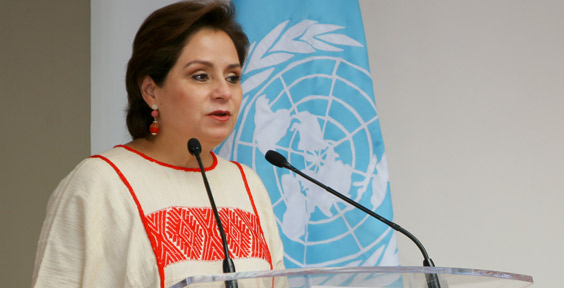
Patricia Espinosa, Executive Secretary of the UNFCCC
The International Chamber of Commerce (ICC) – in its capacity as the United Nations Climate Change Focal Point for business and industry – convened a workshop on the “Talanoa Dialogue” – an international conversation involving all countries other stakeholders, including business, investors, cities, regions and civil society.
The workshop – the first of its kind – brought together a number of high-level government representatives leading the UN climate process, members of ICC’s Commission on Environment and Energy and other private sector stakeholders. ICC has represented business in the UN climate deliberations since 1993.
The workshop aimed to discuss what business should expect from the Talanoa Dialogue and what the private sector can in turn contribute to the process.
The three main takeaways from the event were:
Business participation is essential to reaching global climate goals
A wide coalition of business should be brought into the Talanoa Dialogue
Climate action not only makes solid business sense, it’s the right thing to do
According the International Chamber of Commerce, the continued momentum from business sends a clear signal to governments that they can, and should, move further and faster on their national climate strategies.
In countries where business has had the opportunity to provide inputs on national climate action plans (Nationally Determined Contribution, or “NDCs”), the process can already be seen to have benefitted from such engagement.
To ensure that the international community is successful in achieving the long-term goals of the Paris Agreement, it is imperative that business be recognized and involved in policy assessment, design and implementation.
The Talanoa Dialogue, previously referred to as the Facilitative Dialogue, is named after the Fijian tradition of inclusive, participatory and transparent decision-making and is aimed at determining how collective action can move the global climate agenda forward. It is a year-long process of discussions, consultations, events and expert inputs that will culminate at this year’s 24th Conference of Parties (COP24) in Katowice, Poland from December 3 to 14, 2018.
The Talanoa Dialogue portal is now open and ICC will be preparing a submission before the first deadline of April 2, 2018.
The Senate on Tuesday, February 13, 2018 in Abuja urged the Federal Government to ban importation of palm oil into the country in order to protect local production as well as encourage farmers.
Packed palm oil in retail store
This followed the unanimous adoption of a motion entitled: “Urgent Need to Halt the Importation of Palm Oil and its Allied Products to Protect Palm Oil Industry in Nigeria.’’
In a lead debate, the sponsor of the motion, Sen. Francis Alimikhena (Edo-APC), decried importation of palm produce into the country.
Alimikhena expressed concern that importation of palm kernel and allied palm products are threats to Federal Government’s campaign on diversification of the economy through increased agricultural production and exports.
He said that Nigeria imported about 450, 000 tonnes of palm oil to the tune of N116.3 billion in 2017.
“Nigeria was the world leading producer of palm oil at independence, but unfortunately, Indonesia and Malaysia have overtaken us and we are now importing palm oil.
“Malaysia which is widely believed to have collected its first seedlings from Nigeria some decades ago, is now exporting palm oil products to us.
“The government must reverse this trend with copious investments in the local palm industry and the protection of local producers from unnecessary imports,’’ Alimikhena said.
While acknowledging that Nigeria is endowed with the land and manpower to boost palm oil production, the lawmaker emphasised that the focus should be directed toward returning to pre-independence status in palm oil production.
“We have no business importing palm kernel or any oil palm product from any country.
“At independence, agriculture was the mainstay of Nigeria’s economy. More than 70 per cent of the population was engaged in agriculture.
“Apart from various food crops produced in the country, Nigeria was a major producer of palm oil/kernel, cocoa, groundnut and rubber.
“But following the discovery of crude oil in commercial quantity in the 70s, agriculture was neglected,’’ Alimikhena said.
He added that the importation of the product was harming the local palm industry and depleting foreign reserve.
“This is also threatening the viability of the industry into which many Nigerians have sunk huge sums of money in support of the government’s export promotion drive.
“If the palm industry is fully developed, it will guarantee mass employment and boost our foreign exchange earnings,’’ he added.
Contributing, Sen. Theodore Orji (Abia-PDP) said there was need to establish a special fund to encourage local production of palm oil in the country.
He also expressed concern that many oil production plants in the country were moribund.
According to Orji, palm oil used to be a major income earner for the country, but unfortunately many plants are dead.
On his part, Sen. Jibrin Barau(Kano-APC) called for introduction of policies that would be targeted at encouraging local production of cash crops.
Sen. Rabiu Kwankwaso (Kano-APC) also urged the Federal Government to ban importation of cash crops that can be produced locally.
“Also there is need for the Committee on Agriculture and Rural Development to invite the Nigerian Institute for Oil Palm Research (NIFOR) on why it has failed to deliver on its mandate,’’ Kwankwaso said.
In his remarks, the Deputy Senate President, Ike Ekweremadu, said that the importance of reviving the country’s palm oil industry cannot be overemphasised.
“There is need for this sector to be properly positioned to play its role as one of the major income earners for the country.
“When the palm oil sector is revived, it will boost employment,’’ Ekweremadu said.
North Americans may be more vulnerable than previously thought to irritating and potentially dangerous infections with two different types of tiny but tenacious eye worms, according to two studies published on Monday, February 12, 2018 in the American Journal of Tropical Medicine and Hygiene.
The worms are less than 1.27cm long
In one study, scientists from the United States Centres for Disease Control and Prevention (CDC) reported the case of an American woman based in Oregun who represents the first known instance in the world of a human infection with Thelazia gulosa, a type of eye worm found throughout the northern United States and southern Canada – but previously seen only in cattle. These eye worms are spread by flies that feed on the tears that lubricate the eyeball.
“Cases of eye worm parasitic infections are rare in the USA, and this case turned out to be a species of the Thelazia that had never been reported in humans,” said Dr Richard Bradbury, the lead author of the study who works with the CDC’s Division of Parasitic Diseases and Malaria. “Previously, it was thought that there were only two different species of these (Thelazia) eye worms that infected humans worldwide. Now, we have to add Thelazia gulosa, a third one to the list.”
Bradbury said the infection in the Oregon woman presented as a typical eye worm infestation. The woman first reported sensing an irritant in her left eye. About a week later, she removed a small, translucent worm. According to the study, a total of 14 worms – all less than half an inch long – were extracted from the woman’s conjunctiva and the surface of her eye over a two-week period before her symptoms ceased.
Physicians focused treatment on removing the eye worms with small, tweezer-like forceps or irrigation of the infected eye. Authors note that in Asia and Europe, a subcutaneous dose of the anti-parasitic drug ivermectin has been used to cure human infections.
Eye worms, technically known as Thelazia, are found in a variety of animals – including cats, dogs, and wild carnivores like foxes. They are transmitted by different types of flies. Bradbury said most of the time, people who get these eye worms experience inflammation and the sensation that there is some type of foreign body in the eye. He said symptoms typically resolve, as they did for the Oregon woman, after the worms are removed. But he noted that occasionally, the worms will migrate across the surface of the eye and cause scarring of the cornea and even blindness.
Human infections with eye worms are most often seen in the elderly or in young children, given that both patient groups “may be less able to keep flies away from their faces.” The researchers suspect the woman encountered face flies, which also feed on eye secretions, while horseback riding and fishing in a coastal area of Oregon where cattle farming is common.
Several of the worms from the Oregon case were sent to the CDC’s parasitic disease reference laboratory, where examination identified them as cattle eye worms, which are spread by a type of fly known as face flies.
“We immediately thought it could be Thelazia californiensis because that is the only species that was known to infect humans in the U.S.,” said Bradbury. “It was only after we looked more carefully that we realized some differences in anatomy that meant it could not be T. californiensis. We had to go back to papers published in German back in 1928 to help identify this worm as Thelazia gulosa.”
“This case report underscores the importance of the public health work done by CDC’s parasitic diseases reference laboratory in diagnosing parasitic diseases in the United States and around the world,” said ASTMH President Regina Rabinovich, MD, MPH. “Their depth of expertise is unmatched and invaluable in the fight against parasitic diseases.”
Another species of eye worm on the move Meanwhile, another species of the Thelazia eye worm previously known to infect humans, Thelazia callipaeda, originating from Asia, has spread across Europe, where it is transmitted by a common fruit fly, Phortica variegata.
While Thelazia callipaeda has yet to be found in North America, scientists from the Department of Veterinary Medicine at the University of Bari, Italy, demonstrated in a separate study that fruit flies isolated in upstate New York are capable of carrying this eye worm species.
“We’re not sure of the exact distribution of these fruit flies in North America, but their presence in upstate New York suggests this geographic area is potentially suitable for spreading the eye worms that cause human infections in Europe and Asia,” said Domenico Otranto, the study’s lead author.
Otranto said that 12 years ago researchers correctly predicted the spread of this type of eye worm from southern Europe to many other geographical areas of Europe based on the same evidence gathered in the New York study: the presence of fruit flies that can carry the parasite.
A volcano on the Indonesian resort island of Bali erupted days after authorities lowered its alert level one notch, an official said on Tuesday, February 13, 2018.
A volcanic eruption
The spokesman for the National Disaster Management Agency, Sutopo Nugroho, said Mount Agung spewed grey ash 1,500 metres into the atmosphere.
Nugroho, however, said that there were no casualties.
On Saturday, authorities lowered the volcano’s warning level one notch from the highest level after a steady decrease in activity.
The exclusion zone was reduced from 6 kilometres to 4 kilometres, allowing thousands of people who had stayed in temporary shelters to return home.
“But about 15,000 evacuees remained in the shelters, too afraid to return to their homes near the volcano,’’ Sutopo said.
Authorities raised the warning alert to the highest level on Nov. 22 and ordered the evacuation of people living nearby following two days of eruptions.
The 3,031-metre Mount Agung’s last deadly eruptions occurred in 1963 and 1964, during which 1,200 people were killed.
Report says Indonesia sits on the so-called Pacific Ring of Fire, an area known for seismic upheavals and volcanic eruptions.
A bundle of initiatives aimed at ensuring prudent and sustainable development of the renewable energy sector in Nigeria have been unfolded.
Vice President of Nigeria, Prof Yemi Osinbajo, inaugurated the NiRER in 2017
Plagued by irregular power supply, the country sees a way out of the current imbroglio in renewable energy (RE). Indeed, the Federal Government says it aims to make reliable electricity available to 75% of the population by 2020, and 90% by 2030, with at least a 10% share of RE by 2025. Recent technological and institutional innovations and cost reductions, according to stakeholders, have made off-grid development a viable option for meeting the electricity demand in the country.
The Nigeria Renewable Energy Roundtable (NiRER), rolling out its activities and workplan for the year on Monday, February 12, 2018, said that it would immediately set up a regular RE Business Dialogue platform with RE companies and the Rural Electrification Agency (REA) to fine-tune the NiRER action plan.
The product of a collaboration involving the Federal Ministry of Power, Works and Housing; the Federal Ministry of Science and Technology (through the Energy Commission of Nigeria); and the National Economic Summit Group (NESG), the NiRER is an action-oriented partnership of relevant stakeholders, that are committed to resolving the issues and bottleneck to expand the renewable energy markets in Nigeria, both on-grid and off-grid.
NiRER noted that, besides designing an investment template with REA to attract high-quality solar companies to invest in off-grid projects, it likewise intends lining up five solar companies for commencement of installations of 500 SME solutions.
The body noted further that it would meeting with Bankers’ Committee and Banks’ Sustainability Group to agree process for Ease of Doing RE Business, agree on a RE investments training for banks to improve their risk assessment capacity, and agree financing instruments with national and international development banks, together with Renewable Energy Association of Nigeria (REAN).
NiRER also intends to mandate the DBN (Development Bank of Nigeria) to commit 25% of its lending to RE, while designing a template of how SMEs can replace generators with solar kit by accessing the MSME Fund from the Central Bank of Nigeria, using their assets as collateral and getting insurance from REEEP (USAID/Winrock).
NiRER further plans to:
agree with the Nigerian Electricity Regulatory Commission (NERC) to allow Mini Grids up to 5 MW to operate without licencing procedure, based on NERC’s capacity allocated by the Electric Power Sector Reform Act (EPSRA 2005)
agree with the Ministry of Finance to give Tax Breaks and Customs Facilitation given the role that RE plays in reviving local economies and thus increasing tax revenues from real economy
agree with Nigerian Investment Promotion Council (NIPC) to reinstate the RE sector under pioneer status for certain concessions and benefits
together with NESG, REA and REAN, to upscale donor support for large-scale training programme for RE technicians, based on the already existing plans developed by the Nigerian Energy Support Programme (NESG) supported by the GIZ
stop sub-standard RE products from proliferating in Nigeria
meet with the Nigerian Governors Forum to get states to adopt the new National Building Energy Efficiency Code (BEEC)
initially follow the recommendations of the Power Sector Recovery Plan 2017, for RE to increase on the grid
The NiRER was formally inaugurated on June 20, 2017 by the then Acting President, Prof. Yemi Osinbajo, at the State House, Abuja.
The NiRER is structured around four working groups, to cover specific areas in the renewable energy value chain, such as Investment & Business Environment; Finance; Training, Quality Control & Utilisation; and Communication & Advocacy.