25.7 C
Lagos
Tuesday, December 30, 2025
Home Blog Page 1868

UNESCO, partners working for peace, sustainable management of Lake Chad

0

The United Nations Educational Scientific and Cultural Organisation (UNESCO) says it will collaborate with partners to ensure the foundations of peace are built on sustainable management of resources of the Lake Chad Basin (LCB).

Ydo Yao
Ydo Yao

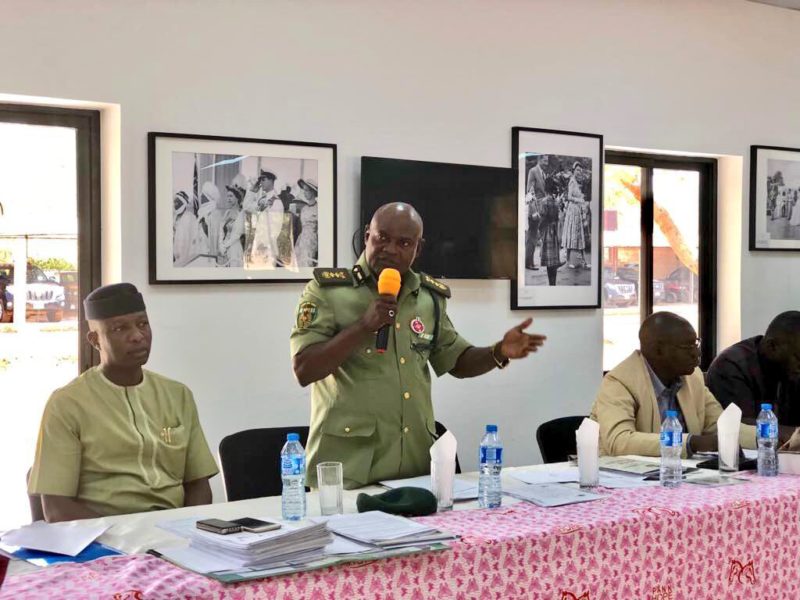
Mr Ydo Yao, the Director of UNESCO, Nigeria said this during the National Consultation Workshop on the Biosphere and Heritage of Lake Chad (BIOPALT) Project in Abuja.

BIOPALT is a project anchored by UNESCO and the Lake Chad Basin Commission targeted at promoting peace in the LCB through the sustainable management of its natural resources.

Yao, who was represented by Mr Saidou Jallow, the Senior Programme Specialist Education, recalled that UNESCO’s preamble constitution was based on sustaining peace among nations.

According to Yao, LCB over time has been threatened by conflicts and insecurity.

“The preamble of the UNESCO constitution states that since wars begin in the minds of men, it is in the minds of men that the defences of peace must be constructed.

“UNESCO and its partners will combine their efforts to ensure that the foundations of peace are built on sustainable management and equitable sharing of the natural resources of the LCB.

“This will also respect the cultures and endogenous practices of the basin,” Yao said.

The director said that the process of the project tagged: Scientific and Cultural Diplomacy began in 2013 in collaboration with the Lake Chad Basin Commission (LCBC).

He said that it aimed at having an overview of the state of relevant knowledge in the management of the natural resources of the LCB among other issues.

Yao said the previous project on the LCB resolved that the LCB could be included in the World Cultural Heritage List and be proposed as trans-boundary biosphere reserve for countries sharing the lake.

He expressed delight that the conclusions of the initial project were being realised, adding that the ongoing project will succeed with more efforts from partners.

The director said the current project was in line with the Sustainable Development Goals (SDGs) of 2030 and the 2063 African Union vision aimed at promoting the region.

Yao said that the project was centred on four pillars while the organisation would synergise with partners to ensure the restoration of the LCB.

“The project has four pillars; study, training and awareness raising, restoring ecosystems and evaluating and disseminating the results of the project.”

Yao said Nigeria’s role among other countries sharing border  with the LCB was very important owing to the activities surrounding the lake.

“Nigeria in this project is very important because it hosts most of the refugees from the LCB, environmental refugees, the detention and security issues all are from Nigeria.

“Nigeria is interested in ensuring that sustainable peace, development is realised in the LCB.”

Mr Abubakar Iliya, a representative from the Presidency on the LCB restoration, said issues about the lake were at the heart of the government.

Iliya recalled that concerns about the lake prompted President Muhammadu Buhari to approve Nigeria’s hosting of an international conference on the depleted basin at the end of 2017.

He, however, urged UNESCO and participants to come up with resolutions that would be of benefit to the conference expected to hold by Feb. 26 to Fed. 28.

NAN reports that the restoration of the Lake Chad basin became necessary following discussions between President Muhammadu Buhari and UNESCO’s former Director General, Ms Irina Bokova in August 2016.

The discussion was on issues of mutual interest toward attaining the Sustainable Development Goals (SDGs) by 2030 and to reflect on the future of the lake.

Buhari called for UNESCO’s assistance to organise an international conference to reflect on the future of the Lake and support the preservation of the surrounding environment.

In Dec. 2017, he approved the conference to be hosted in Abuja with the objective of creating global awareness on the socio-economic and environmental challenges arising from the shrinkage of the Lake Chad.

By Emmanuel Umekwe and Ijeoma Ndubisi

Expert clamours use of clean energy for cooking

0

The immediate-past Chairman of the Abuja Chapter of Nigerian Environmental Society (NES), Mr Akinrele Olusegun, on Thursday, February 15, 2018 advised Nigerians to use alternative, clean energy systems for their cooking.

A woman cooking with a fuel efficient wood stove

Olusegun gave the advice in a telephone interview with News Agency of Nigeria (NAN) in Abuja.

“Nigerians should use the available clean energy sources to meet their cooking needs,’’ he said.

He decried the constant felling of trees for fuelwood, saying that the practice must not be allowed to continue because of its devastating consequences on the environment.

According to him, charcoal production and uses have reached an alarming rate across the country.

“Charcoal production in Nigeria is having devastating ecological and environmental effects; the Ministry of Environment, NES and some non-governmental organisations (NGOs) have been particularly concerned.

“The most common effect of charcoal production is deforestation, which has seriously affected our forests.

“We are understudying some innovations that can give more alternatives to fuelwood and discourage people from using charcoal and other kinds of fuelwood.

“The NES is bringing back the culture of planting trees, especially economic trees, by educating rural dwellers on the menace of deforestation so as to restore our
forests,’’ he said.

He stressed that many citizens did not respect laws prohibiting indiscriminate felling of trees but warned that anybody caught would be prosecuted in accordance with the laws.

Besides, Olusegun urged the government at all levels to improve the funding of environmental agencies, while cautioning environmental experts and researchers against embezzling funds meant for environmental projects.

Mrs Zainab Sanusi, a charcoal seller in Karu, told NAN that although she was aware of the negative effect of the business on the environment, she had no other choice than to continue with the charcoal trade as her means of livelihood.

She recalled that the start-up capital for the charcoal trade was what she could only afford when she was planning to start a business.

“The business is paying my bills because more people are patronising me regularly, especially those who cannot afford the high cost of gas and kerosene nowadays,’’ she said.

By Uwumarogie Peter

Appeal court rules Nigerians cannot pursue Shell spill claim in England

0

The Court of Appeal in London ruled on Wednesday, February 14, 2018 that two Nigerian communities cannot pursue Royal Dutch Shell in English courts over oil spills in Nigeria’s Delta region.

NETHERLANDS-NIGERIA-COURT-ENVIRONMENT-SHELL
Two of the four Nigerian farmers (Chief Fidelis A. Oguru-Oruma (left) and Eric Dooh) sit in the law courts in The Hague on October 11, 2012. The four farmers take on Shell in a Dutch court, accusing the oil giant of destroying their livelihoods in a case that could set a precedent for global environmental responsibility. Photo credit: AFP / ANP / ROBIN UTRECHT

The split decision upheld a High Court ruling in 2017 that was a setback to attempts to hold British multinationals liable at home for their subsidiaries’ actions abroad.

The court rejected the appeal from law firm Leigh Day on behalf of Nigeria’s Bille and Ogale communities, and upheld a ruling that English courts do not have jurisdiction over claims against Shell’s Nigerian subsidiary Shell Petroleum Development Company (SPDC).

SPDC is jointly operated with the Nigerian government.

Shell said the court “rightly upheld” the earlier ruling, and said Nigeria’s “well-developed justice system” was the correct place for the claims.

Leigh Day said the two Nigerian communities intended to bring the case to Britain’s Supreme Court.

“We are hopeful that the Supreme Court will grant permission to appeal and will come to a different view,” Leigh Day partner Daniel Leader said.

NAN reports that n 2012 the European Court of Justice ruled that Shell parent companies “…in fact exercised decisive influence over their joint subsidiary’s conduct”; Shell Petroleum NV v. European Commission (2012) at para 51.

Further, in 2015 the Dutch Court of Appeal ruled that “Considering the foreseeable serious consequences of oil spills to the local environment from a potential spill source, it cannot be ruled out from the outset that the parent company may be expected in such a case to take an interest in preventing spills…”

The communities appealed against the ruling.

Day is representing over 40,000 Nigerian from two communities (the Ogale Community and the Bille Community) in claims against Royal Dutch Shell plc (RDS) and its Nigerian subsidiary, the Shell Petroleum Development Company of Nigeria (SPDC).

Both communities allege that they have suffered systematic and ongoing oil pollution for years because of Shell’s operations.

Shell does not dispute that both communities have been severely polluted by its oil, or that it has yet to clean up the oil.

However, in November 2016, Shell sought to block the claims in London on the grounds the London-based parent company, Royal Dutch Shell, was not legally responsible for the pollution caused by its Nigerian subsidiary and that it was open to the communities to seek redress through the Nigerian courts.

By contrast, the claimants argued that Royal Dutch Shell exercised significant direction and control over it’s Nigerian subsidiary and was, therefore, liable for its systematic pollution of Ogale and Bille.

Sokoto donates land to Dangote to establish rice mill

0

Governor Aminu Tambuwal of Sokoto State on Wednesday, February 14, 2018 promised to handover 27 hectares of land for immediate establishment of Dangote Rice Mill in the state as the company prepares for production this year.

Aminu-Tambuwal
Governor Aminu Tambuwal of Sokoto State

Tambuwal stated this when he received a delegation from Dangote Industries Limited led by Mansur Ahmed, Director, Stakeholder Relations and Corporate Communications in Sokoto.

The governor pledged his administration’s full support towards ensuring the success of the factory.

“By next Friday, Feb. 16, payment of compensation to land owners will commence while Certificate of Occupancy (C-of-O) will be handed to you next week,’’ Tambuwal assured the delegation.

He expressed optimism that the establishment of Dangote Rice Mill which is located at Runji Village in Kware Local Government Area, would enhance economic activities in the state.

The governor stressed that his administration had been wooing investors from within and outside the country.

He commended the Chairman,Dangote Group of Companies, Alhaji Aliko Dangote, for his support to immunisation exercise and other humanitarian projects in the state and the nation at large.

Speaking earlier, Ahmad said that the machines and other factory facilities for the mill would soon arrive Lagos Port.

Ahmad said that 5,000 out growers were engaged and at present they secured 2,000 metric tonnes of raw rice stored in their warehouse.

According to him, under out grower scheme, farmers were provided with inputs and the company served as the off taker under the arrangement.

He said the factory would process 32 metric tonnes of rice per hour and has the combined capacity of processing 250, 000 metric tonnes per year.

Ahmad said construction, installations and production would commence in six months period adding that the visit was to urge the governor to hasten the processes.

By Habibu Harisu

Lagos commits to reducing housing shortfall

0

The Lagos State Commissioner for Housing, Mr Gbolahan Lawal, on Wednesday, February 14, 2018 reiterated the commitment of the state government to creating an enabling environment for economic growth through massive housing construction across the state.

Estate
Observers say Nigeria’s housing deficit is far in excess of 17 million. Photo credit: lagos.all.biz

Lawal gave the assurance during an inspection tour of some housing estates in Odo Onasa/Odo Ayandelu and Agbowa, both in Ikorodu division.

He said that Odo Onasa/Odo Ayandelu Housing Estate, which comprises 660 housing units, would soon be completed.

The commissioner said that two water treatment plants and a general sewage disposal were also being constructed to serve the estate.

He said that the ChoisCity Estate in Agbowa had been completed and would soon be allocated to the homeowners at an affordable price.

Lawal said that more housing units would still be constructed in the estate in future.

According to him, many housing units in other estates across the state will soon be ready for allocation to first-time homeowners under the Rent-To-Own or Rental Housing Policies of the state government.

“Our target is to construct 20,000 housing units in the state by the year 2020.

“The major focus is to ensure that Lagos residents have access to affordable housing units that are convenient, safe and within employment areas.

“It is also to reduce the housing deficit of the state which stands at about 2.5 million,” he said.

Lawal attributed the inability to meet the housing needs of Lagosians to the daily influx of people into Lagos.

He enjoined residents to always pay their taxes regularly to enable the government to meet its target in the provision of housing and other essential infrastructure in the state.

By Lilian.Chukwu

1,000 students protest in Kathmandu against increasing air pollution

0

Nearly 1,000 students took to the streets of Nepal’s capital Kathmandu on Wednesday, February 14, 2018 demanding cleaner air and pollution free environment.

Nepal
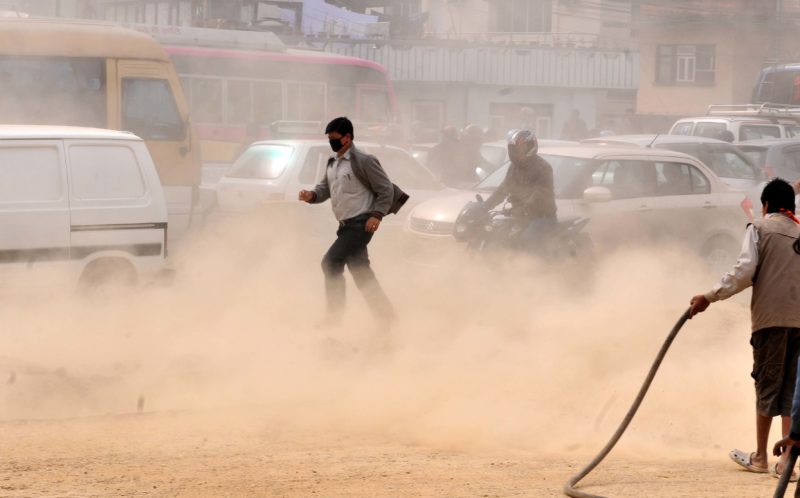
Air pollution and traffic congestion in Nepal

As part of the week-long Campaign for Clean Air Rights “Maskmandu,” youths and students participated in the symbolic protest in Ratnapark to raise awareness about alarming air pollution issue.

Putting masks and carrying colorful placards, they chanted slogans like “We don’t want maskmandu.”

“Kathmandu is dying” and “I love my lungs” among others while some even slept on the main street.

This is the third edition of the campaign launched by a non-governmental organization Clean Energy Nepal with the theme “Me,” or “Myself,” which focuses on the slogan “I love my lungs.”

According to the organiser, the main aim of “Maskmandu” is to create public awareness about the ongoing pollution of Kathmandu Valley and to exert pressure on stakeholders to take concrete action immediately.

Rajan Thapa, an official from Clean Energy Nepal, told Xinhua on the spot that “Kathmandu, the city of temples, has turned into ‘Maskmandu’ today as people are unable to walk on streets without masks.

“Our only will is to see Kathmandu as the beautiful Kathmandu, free from pollution.”

Air quality in the Himalayan country is often regarded as the worst in the world while Nepal is ranked at the bottom among the 180 countries surveyed in terms of air-quality globally.

Kathmandu valley has been facing severe air pollution in the past few years due to smoke emission from vehicles, industries, brick kilns and increasing haphazard road expansion projects.

“We, public are suffering a lot due to increasing pollution, be it several lungs related diseases or even deaths.

“We want our voices to be heard by the government so have come together to protest,” Samikchya KC, a graduate level student at Kathmandu Forestry College, told Xinhua.

National Park Service to equip officers for effective park patrols

0

The Nigeria National Park Service says it is working tirelessly to strengthen and equip its officers for effective park patrols.

FMEnv Retreat
The Conservator-General, National Parks Service, Alhaji Ibrahim Goni

Alhaji Ibrahim Goni, the Conservator-General of the service, made the disclosure in an interview with News Agency of Nigeria in Abuja on Wednesday, February 14, 2018.

Goni noted that the service had obsolete and low calibre firearms and ammunition and required, as an immediate measure, light arms and ammunition for effective park operations.

He said that the officers would undergo Para-military training to prepare and equip them with operational standards toward discharging their duties effectively.

‘‘We are working in collaboration with the Nigerian Army, the Directorate of State Services (DSS) and the Nigeria Police Force in fighting insurgency, banditry and cattle rustling in the park.

‘‘The officers are to be strengthened with advanced military training and in the handling of light arms and ammunition.

‘‘This will help reduce the constant conflicts between the park staff and cattle grazers in the park as a result of the lack of designated cattle routes and functional grazing reserves, which had led to death of many staff and others getting maimed.’’

Goni said that the service would continue to protect the parks from the people of the communities that are trespassing for farming and other human activities.

‘‘These encroachments threaten the conservation of the parks, especially Cross River, Gashaka-Gumti and Kainji Lake National Parks,’’ he said.

He said that the service would construct and rehabilitate rangers’ barracks and access roads, for accommodation and safe custody of operational equipment.

‘‘We will rehabilitate access roads to ease park surveillance and anti-poaching patrol to boost wildlife viewing, and enhance park monitoring and evaluation.

‘‘The surveillance will help us to identify challenges and proffer solutions,’’ he said.

He said that for Nigeria to achieve environmental sustainability, a firm alliance must be established among all stakeholders.

‘‘These communities around our parks should know that our parks are deliberately reserved and conserved for specific reasons.

‘‘Both nationally and internationally, specific areas are protected by the government for the benefit of the environment.

‘‘No nation today is self-sufficient, however, the lower income countries must be helped to develop sustainable environments.’’

Goni said that global and shared resources, especially the atmosphere, oceans and ecosystems, could only be managed on the basis of common purpose and resolve.

The conservator-general said that the service remained committed to achieving her mandate as enshrined in Act 46 Cap 65 Laws of the Federation of Nigeria (LFN) 2010 as amended.

By Ebere Agozie

IFAD-CASP to address climate change challenges in rural areas

0

Climate Adaptation and Agribusiness Support Programme (CASP), a programme of International Food and Agriculture Development (IFAD), says it will address climate change challenges in rural areas to improve food production.

Ogbeh
Minister of Agriculture and Rural Development, Chief Audu Ogbeh

Mr Abdullahi Surajo, the Communication Officer of IFAD-CASP, said this on Wednesday, February 14, 2018 in an interview with News Agency of Nigeria (NAN) in Abuja.

Surajo said that IFAD, in conjunction with the Federal Ministry of Agriculture and Rural Development, had developed a concept that would improve food production in rural areas, with a special focus on tackling climate change challenges via CASP.

He said that programme was conceived because of the problems created by climate change, low rainfall, droughts, floods and low crop production.

He said that the problems had impacted negatively on the development and sustainability of cash and food crop production in the country.

“Nigeria is an agrarian state with more than 60 to 70 per cent of its population living in rural areas; these people are mostly farmers who engage in subsistence farming to take care of their needs and their families.

“The goal of CASP is reduced rural poverty, increased food security and accelerated economic growth on a sustainable basis.

“The programme’s development objective is increased incomes, enhanced food security and reduced vulnerability of smallholder farmers, particularly women and youth, in the participating states,” he said.

The communication officer said that CASP was initiated to consolidate on the feats of the Community Based Agricultural and Rural Development Project (CBARDP), while making use of the lessons learnt from the previous project in the current programme.

He said that the objective of CASP was to economically empower poor farmers in the rural areas, who were vulnerable to the challenges of climate change and financially incapacitated to enhance their living standards through agriculture.

Surajo said that CASP was implemented in seven states in the northern part of Nigeria, adding that the states were Kebbi, Sokoto, Zamfara, Katsina, Jigawa, Borno and Yobe.

“The programme, which covers a total of 727 village areas, also involves 207 village areas and 520 new village areas across 104 local government areas in the seven northern states.

“However, the programme’s target groups that are moderately poor and productive core poor households, who represent over 90 per cent of the population in the states

By Kudirat Ronke

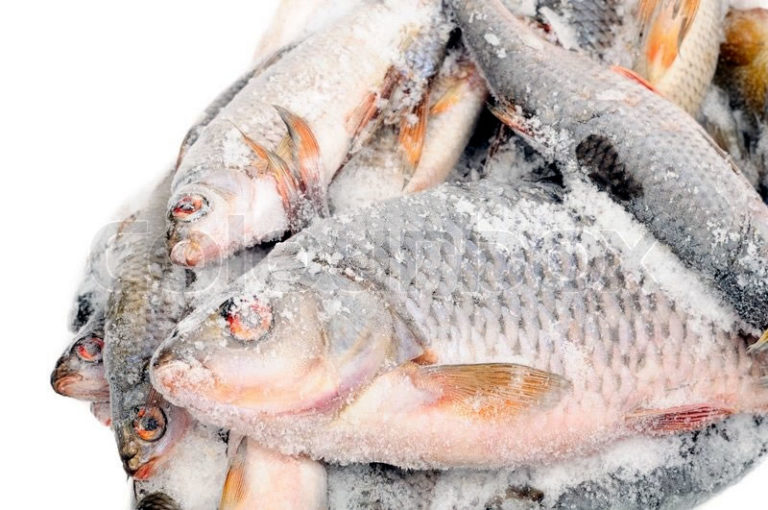
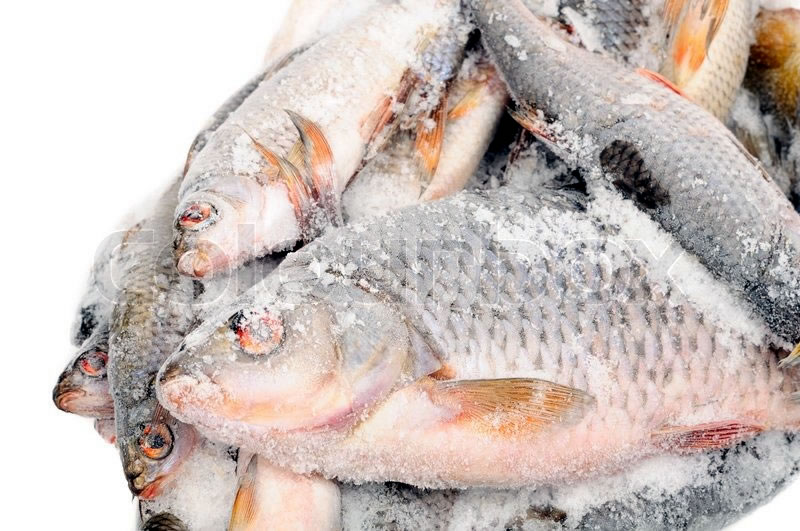
Don urges fish importation ban to save $700m yearly

0

A university lecturer,  Dr Aderonke Lawal-Are, on Wednesday, February 14, 2018 told the Federal Government to ban the importation of frozen fish, to save some $700 million spent annually on fish importation.

Frozen fish
Frozen fish

Dr Lawal-Are, an associate professor in the Department of Marine Science, University of Lagos, Akoka, made the call in an interview with a correspondent of the News Agency of Nigeria (NAN) in Lagos.

She said that banning the importation of the product would save needed foreign exchange and boost the fish farming sector of the economy.

She argued that Nigeria stood a chance of being the largest exporter of fish if government would do the needful.

“I see Nigeria as a large exporter of the commodity in the nearest future and to achieve this, the government must put a ban on the importation of fish, just as a ban was placed on the importation of some other food items.”

The lecturer stressed that exporting fish would give noticeable boost to the wobbling economy and attract more Nigerians into fish farming.

“This ban will help Nigeria to look inward and whatever we produce, we eat.”

Lawal-Are identified poor research and inadequate funding as some of the major problems facing the fish farming industry.

“ There is a gap in funding researches to improve the variants of cultured fish produced in the country.

“We have few researches in aqua-culture, hence the catfish is the most common cultured fish in the Nigerian fishery industry.”

She advised government and the private investor to invest in canning and fish processing technologies as practiced in countries with advanced fishery technologies.

“Canning and processing of fish produce should be encouraged, to avoid waste of aquatic produce and in turn create export value,” the teacher said.

By Mercy Okhiade

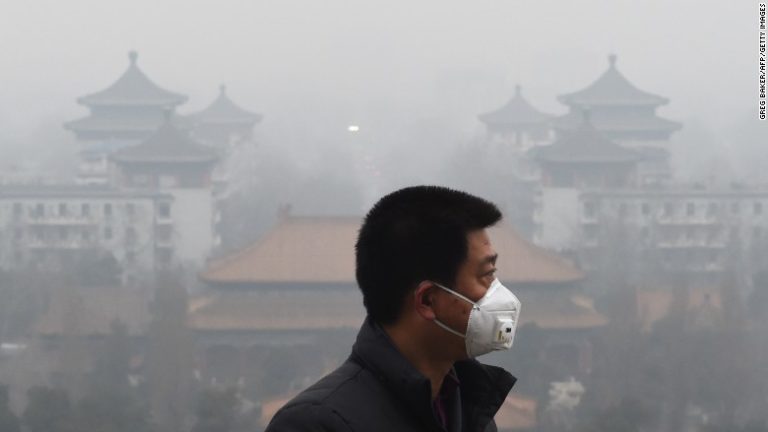
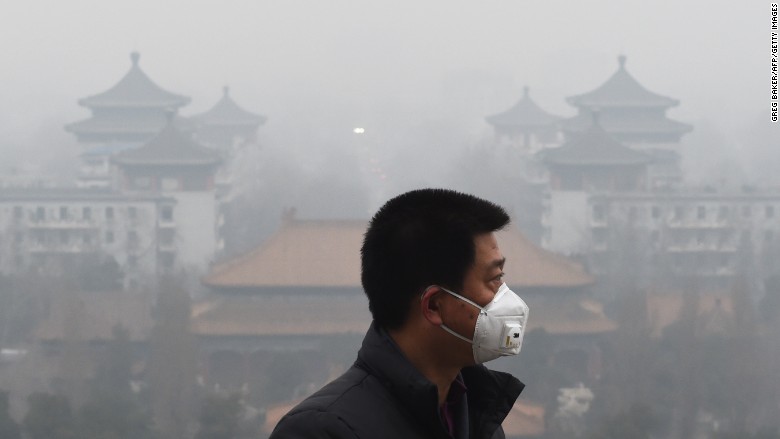
China expects heavy air pollution during Lunar New Year

0

Some regions of China could suffer heavy pollution because of fireworks and unfavourable weather conditions during Lunar New Year celebrations.

China pollution
Air pollution in China

This condition will be so in spite of a ban on firecrackers in more than 400 cities, the Ministry of Environmental Protection warned on Wednesday, February 14, 2018.

“Some regions are likely to see heavy or even severe air pollution because of intense fireworks and firecrackers,” said the ministry in a statement late on Tuesday.

Lunar, or Chinese New Year, which starts on Feb. 15 this year, is China’s most important holiday.

Families and revellers traditionally celebrate with several nights of fireworks and firecrackers. The cacophony is believed to drive away bad spirits and usher in an auspicious start to the year.

More than 400 cities across China, though, have banned fireworks since last year to curb air pollution during the 15-day holiday and reducing deadly accidents, which are common.

Smog-prone northern China, including the capital city of Beijing, is expected to see heavy pollution from Thursday through Saturday, said the environment ministry.

Severe air pollution is also likely in Heilongjiang and Liaoning province in the northeastern China, Anhui and Zhejiang provinces in the east, Sichuan and Xinjiang region in the west, and also some regions in southern China, it said.

Industrial plants would typically be ordered to cut production during days of heavy smog, though most factories would have already closed for the holidays.

Some businesses will extend the holiday until March 3, although the official holiday period lasts through Feb. 21.

×