Home Blog Page 1853

Why government suspended land allocations in Abuja

0

Land and landed properties are one of the most valuable assets to possess. They are among the few assets with the probability to increase significantly in value with little time. The fact that land appreciates faster in the cities is the main reason we have a steady increase in the number of landowners registering their land in Abuja.

Abuja
The Abuja city gate

Abuja, being the capital of Nigeria, is a very strategic place to acquire landed property. The opportunities associated with it can’t be overestimated as properties appreciate quickly in this part of Nigeria. This fact alone is evident in the number of new buildings springing up in areas that were hitherto labelled as Abuja suburb.

Evidently, lots of Nigerians are aware that owning a property in Abuja is one of the most certain ways to increase wealth. As a result, Abuja witnessed a surge in the purchase of lands both in the city and suburbs.

The uncontrollable surge in the acquisition of land especially in its suburb birthed some social issues like: double allocation, court cases involving land, no supporting infrastructures in place, compensation issues, and revocation by the government.

These and many other reasons led to the indefinite suspension of land allocation in the city of Abuja. Each of the reasons will be highlighted sequentially in the following sections.


Double allocations

While it is a standard practice for any land acquisition and development firms ensure that the first person who makes payment get the proper document acknowledging the change of ownership, greedy land agents with the help of their associate took advantage of buyer’s naivety to sell the same land to multiple people. This, in turn, leads to disagreement among multiple owners and unavoidable court cases.


Court cases

The aforementioned and many other reasons are why we have so many land-related cases in Abuja court. This problem is compounded by the bureaucratic delays common to Nigerian courts.

In order to accelerate the speed at which court cases are solved, the present minister of FCT, Abuja established the Land Use Allocation Committee (LAUAC). The bulkiness of the cases also overwhelmed this new body.


Compensation issues

The exploding number of court cases involving land issues undoubtedly resulted in compensation and outside the court settlement for some parties. Yet, some were adamant to abide by the terms.


Revocations carried by past governments

While this is a general practice in most parts of the country, the government also failed to hold up to its end of the bargain in most situations involving compensation of the parties whose ancestral land were taken for state development or any other purpose.


No supporting infrastructures in place

As stated earlier, land acquisition was higher in the suburbs. Lots of people were acquiring land in places where basic infrastructures have not been provided for by the state. Majority of those places have no accessible roads, provision for electricity and sewer lines. To curb haphazard growth veering from the city’s footprint they had to stop allocation of land.

By Editorial Staff at Rural Homes Ltd (Karmo Market Developer)

Young African geologists seek to unlock potential of groundwater

0

Five African early career research scientists took to stage at the 41st Water Engineering and Development Centre’s (WEDC) International Conference at the Egerton University in Kenya to showcase ongoing research achievements so far under a project to unlock the potential of groundwater for the poor.

Egerton University Nakuru
The Egerton University, Nakuru, Kenya hosted the 41st Water Engineering and Development Centre’s (WEDC) International Conference

Drawn from Kenya, Uganda, Malawi and Ethiopia, the young researchers discussed some of the complex social science, physical science and practical issues, given their experience in two research areas namely: “Gro for GooD”, through which scientists are developing a ground water risk management in Kenya, and the “Hidden Crisis”, which is unravelling current failures for future success in rural groundwater supply.

“Am not shy to say that it is my first time to participate in a research of this magnitude,” said Willy Sasaka, Assistant Hydrogeologist from the Rural Focus Company, which is coordinating the Gro4GooD research in Kenya.

Guided by scientists from the University of Nairobi, Oxford University, the Jomo Kenyatta University of Agriculture and Technology, and the University of Barcelona, the research project has led to discovery of two paleochannels in Kenya’s Kwale County, which is the main source of groundwater that drives the tourism industry along Diani beach, serves residents of Ukunda, and supports a large scale irrigated sugarcane farming initiative in Kwale among others.

Sasaka made his presentation alongside his colleague, Suleiman Mwakuria, who explained how the scientists have been able to involve the local community in the research, including students who help in reading rain gauges, among other things.

Patrick Makuluni, a geologist from Malawi, talked about functionality and failures of boreholes in his country, showcasing slides to show how scientists have been able to identify reasons why boreholes fail soon after they have been sunk.

“Millions of pounds of investment by water users, charities and tax-payers are wasted each year by water points failing soon after construction,” he told delegates at an event organised by the Rural Water Supply Network (RWSN) on the sidelines of the WEDC conference. “Getting a more complete understanding of how to keep water flowing from boreholes will reduce waste and improve water services for Africa’s poorest communities,” said Makuluni.

So far, the Malawi study, through which the scientists dismantled 50 functioning and dead boreholes to examine the underlying causes of failure, has already come up with preliminary findings.

“We found out that one of the causes of borehole failure was vandalism,” said Makuluni. Other boreholes were abandoned due to poor water quality, some due to poor maintenance; others were silted, while in some cases there were governance problems.

However, the young scientist noted that the researchers are yet to do data analysis, compile results, make reports and disseminate the findings.

Yehualaeshet Tadesse, young female scientists from Ethiopia presented a similar case, but focusing on social causes for poorly functioning water pumps in her country.

In Ethiopia, 170 water pumps in nine districts were surveyed in the first phase of the research project, where it was found that lack of village level operation and maintenance skilled manpower was one of the contributing factors for water pump failure.

“We also found out that water pumps located in areas with alternative water sources such as springs, streams, private water scheme were poorly maintained,” said Tadesse.

She pointed out that pumps on non-communal land were often neglected, and as well, communities with limited finance and savings did not manage their boreholes well.

In Uganda, Joseph Okullo from Makerere University talked about rainfall variability, and how it affected groundwater in his country.

“Rainfall chloride concentration was interestingly found to be higher during drier season,” he told the WEDC delegates.

The 41st WEDC International Conference is co-hosted with Egerton University, on Egerton main campus (near Nakuru) in Kenya between July 9 and 13, 2018. The conference is a valued and respected platform for reflection, debate and exchange of knowledge and ideas that are rooted in practice.

Courtesy: PAMACC News Agency

Communities urged to engage in organic farming to minimise soil erosion

0

The Oyo State Commissioner for Agriculture, Natural Resources and Rural Development, Mr Oyewole Oyewumi, has called on erosion-prone communities to engage in organic farming to minimise soil erosion.

organic fertiliser
Organic fertiliser

Oyewumi gave the advice at the ongoing National Organic Agriculture Business Summit (NOABS) 2018 on Thursday, July 12, 2018 in Lagos.

The summit is themed: “Organic Agriculture: Abundant Opportunities for Health and Hospitality Businesses”.

Organic farming is a method of crop and livestock production that involves much more than choosing not to use pesticides, inorganic fertilisers, genetically modified organisms, antibiotics and growth hormones.

It however provides an alternative care that promotes the health and meets the behavioural needs of livestock.

The commissioner said that organic agriculture can reduce soil erosion by 50 per cent. Besides, he said organic agriculture was of great importance to human, animal, agro-production ecosystems, the environment, the farming community and society because of its ability to keep the soil intact.

Oyewumi, who was represented by Mrs Fadekemi Akande, the Programme Manager, Oyo State Agriculture Development Authority (ADP), said the primary goal of organic agriculture was to optimise the health and productivity of interdependent communities of soil life.

According to Oyewumi, organic farming promotes healthy soil, which is rich in micro nutrients used for decades to grow crops.

He added that it had been found to support a substantial level of wildlife interaction by preserving the ecosystem and ground water.

“Organic grown foods are tastier, healthier and free from harmful chemical, artificial flavours and preservatives which pose risk to diseases linked to cancers, foetal abnormalities, among others.

“Ultimately, organic agriculture helps combat global warming by capturing atmospheric carbon dioxide (CO2) and incorporating (sequestering) it into the soil,” he said.

Oyewumi said that switching to organic farming could reduce production cost by over 25 per cent when compared with the cost of conventional farming.

By Itohan Abara-Laserian

Oil industry activities threaten 6.5m fishermen, says Bassey

0

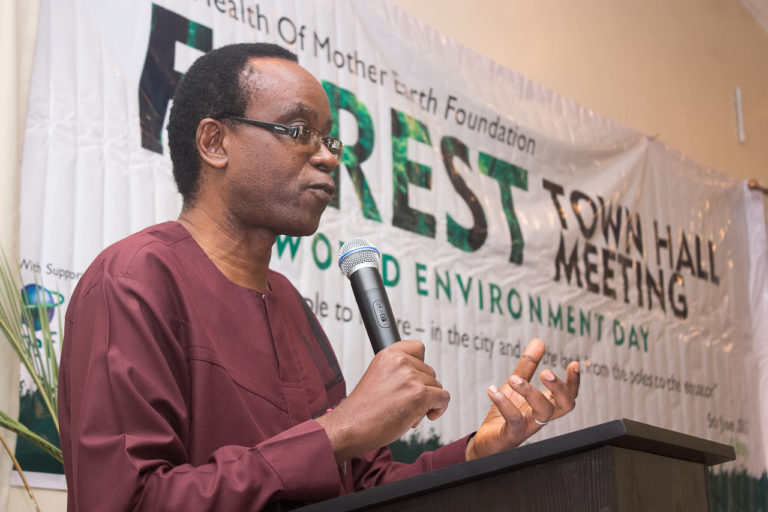
Oil industry activities are threatening the livelihood of over 6.5 million people engaged in fishing-related activities in the Niger Delta, according to an environmentalist, Nnimmo Bassey.

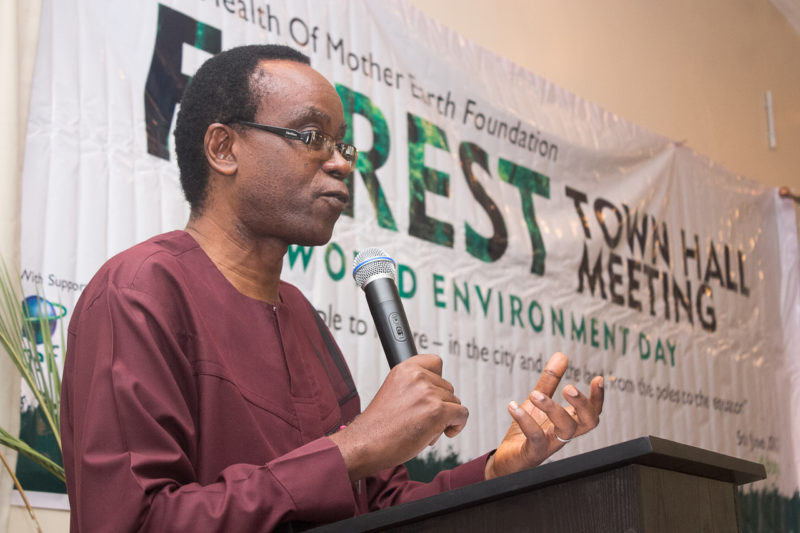
Nnimmo Bassey- Forest Town Hall
Nnimmo Bassey

Bassey said this at a conference with the theme: “Key Indices for Visionary Leadership, Good Governance and Sustainable Development in Bayelsa State” on Thursday, July 12, 2018 in Yenagoa, the state capital.

The conference was organised by G24 Embasara Foundation, a pan-Ijaw group committed to new leadership and governance initiative in Bayelsa and Ijaw land.

Delivering a paper on theme, the environmentalist said the debilitating impact of oil and gas exploration and production had distorted the biodiversity of the region.

He noted that the environment of the region had suffered adverse degradation due to the weakness of regulatory institutions among other factors.

Bassey stressed the need for the re-ordering of priorities and the adoption of new approaches to environmental sustainability by the political leadership.

“Oil production depletes environmental resources. For every barrel of oil, there is over 13 barrels of toxic effluents that come from the oil wells and nobody gives account of these wastes, which the oil firms discharge into the environment.

“How has the 13 per cent derivation accruing to the oil-producing states been utilised? What we see is that the resources are used to develop the urban centres, while the rural areas are left behind to wallow in abject poverty.

“The attitude of our leaders in the Niger Delta region has made the environmental component of the Petroleum Industry Bill to be at the background, rather than in the forefront.

“We have about 6.5 million people involved in fishing-related activities threatened by the oil industry, which employs some 5,000 people.

“Our leaders should think of the jobs of the majority and channel resources to developing renewable energy.”

According to him, there is no future for fossil fuels since the world has developed cars that run without oil.

Bassey, therefore, urged the Niger Delta people to change their attitude and refrain from pipeline vandalism, oil theft and illegal oil refining which further pollute and degrade their environment.

In their comments, some stakeholders at the conference expressed concern over poor leadership by public office holders in the state over the years.

They underscored the need for a review of the process of appointment into leadership positions to make public office holders answerable and accountable to the people.

In a remark, a former state Commissioner for Environment, Mr. Iniruo Wills, called for the development of an Ijaw nation code of ethics, leadership and governance which prospective political office holders must subscribe to.

Wills also advocated for building leadership capacity to prepare Ijaw people for leadership positions.

In his remark, the Chairman of the occasion, Amba Ambaiowei, said that members of the group were worried about the under-development in Ijawland, noting that the people lacked basic amenities.

He described the G24 Embasara Foundation as non-partisan, adding that the group was determined to ensure that persons who had shown poor leadership qualities were imposed on the people.

Ambaiowei, a former Commissioner for Education and Labour in the old Rivers State, said the group would scrutinise the competences of Ijaw people seeking public offices.

By Nathan Nwakamma

Farmers, herdsmen welcome government’s ranching plan across 10 states

0

The All Farmers Association of Nigeria (AFAN) and the Miyetti Allah Cattle Breeders Association of Nigeria (MACBAN) have welcome the Federal Government’s ranching plan across 10 states.

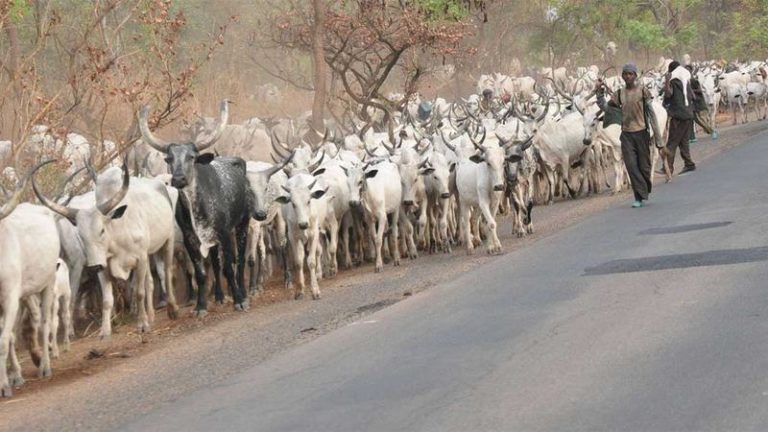
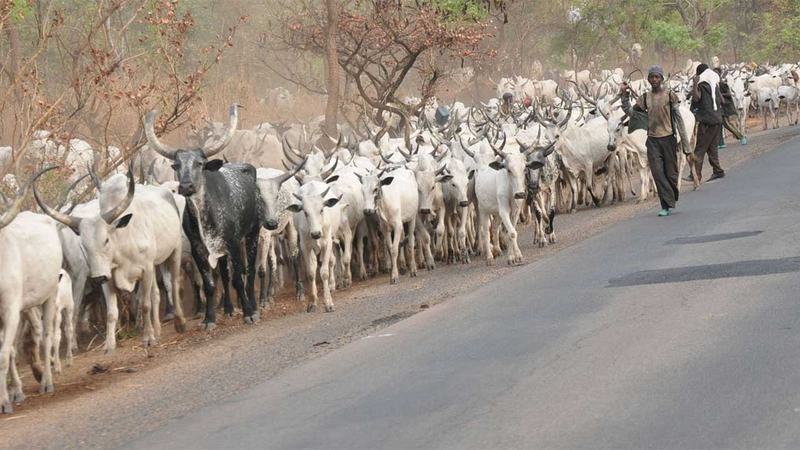
Herdsmen
Herdsmen

They hailed the plan in Abuja on Thursday, July 12, 2018 while briefing journalists at the end of a National Executive Council (NEC) meeting between the associations.

Speaking at the briefing, the National President of AFAN, Alhaji Kabir Ibrahim, said that it would be a step in the right direction if herdsmen were carried along in the planned establishment of the ranches.

“We welcome the idea of ranch development with input from the end-user and are amenable to sitting down with experts to add value to government’s effort.

“End-users means the herders, people who have the livestock that needs to be ranched, sit with them, find out the best ways then do a ranch.

“So, before you ranch, talk to the people, look at their idiosyncrasies, put them together, then you have a ranch that will work perfectly.

“But my sense as a business man is that ranch is a business decision, whoever wants to come in will pay a price after negotiations, then, the ranch will work as a single whole.

“That is what we should do in Nigeria. The government cannot do ranches all over the place for all of the people who have ranches in Nigeria, no way.

The National Secretary of MACBAN, Baba Othman Ngelzarma, said the association would never support or be part of any criminal activity in any part of the country.

He said the association would support government’s decisions targeted at ending the conflicts between farmers and herdsmen nationwide.

“We will never support, and we will never condone any criminality so we are in line with what the president of AFAN has said and we are in line with any policy of the Federal Government that will bring to an end of these crises in Nigeria.

The News Agency of Nigeria (NAN) reports that a 14-man committee drawn from AFAN and MACBAN was formed to fashion out ways for sustainable peace between herders and farmers.

NAN recalls that the Federal Government at its National Economic Council (NEC) meeting had approved the establishment of 94 ranches in 10 states prone to herdsmen/farmers clashes.

Making film production climate neutral

0

Bosque de Niebla has become the first documentary film to compensate the unavoidable greenhouse gas emissions caused by its production by making use of United Nations-certified carbon reduction credits.

Bosque de Niebla
A scene from “Bosque de Niebla”

The film industry has a major role to play in promoting global climate action by raising awareness for the issue. At the same time, the industry has a considerable carbon footprint due to greenhouse gases emitted from travel to sets around the world, generators, and intense set lighting.

“When we learned that we could compensate with carbon credits, we were curious to know how much we had polluted. We had an epiphany when we realized that the production process we had was already consciously sustainable. For example, only natural light was used in the scenes of the film, the electricity we used for equipment was generated by solar panels, we harvested some of our food, used dry toilets, and water was heated with sustainable wood.” says Carlos Sosa, the Director General of Viento del Norte Cine, which produced the documentary.

“Compensation of emissions was a logical next step,” he added.

The film Bosque de Niebla, directed by Mónica Álvarez Franco and released in 2017, tells the story of a small community in the Mexican state of Veracruz, located in a “Bosque de Niebla”, which means cloud forest in Spanish. The inhabitants live in harmony with nature by adapting the needs of their community, including food and education, to fit cooperate with their precious surroundings.

Produced by Viento del Norte Cine, the film follows the three-step Climate Neutral Now method of measuring emissions, reducing them as much as possible, and then compensating for the unavoidable emissions using UN certified emissions reduction credits (CERs) via the UN’s Climate Neutral Now initiative.

Climate neutrality is not necessarily about zero emissions. Instead, it is about reducing current emissions to the point where we reach a balance between our emissions and the absorptive capacity of the Earth.

CERs come from projects registered under the UN’s Clean Development Mechanism. They include projects in developing countries which provide a credit for each tonne of greenhouse gas reduced or avoided. The 8,100 CER projects and programmes in 111 countries range from clean cookstoves and water purification projects to wind power and large industrial gases projects.

Niclas Svenningsen, Manager of Global Climate Action at UN Climate Change, also welcomes the addition of films to CNNs projetcs saying, “We are happy to have the first climate neutral movie as part of the Climate Neutral Now initiative. Bosque de Niebla has proved that successful films can not only tell about climate change issues and sustainability but also can be sustainable themselves.”

In a nod the potential for future films to go climate neutral, he adds that “We hope that this great example will serve as inspiration to the whole film industry.”

Leading firms to decarbonise products, services

0

Many of the world’s biggest companies plan to decarbonise at least half of their products and services within the next 10 years, a new survey shows, thereby making a valuable contribution to fighting climate change.

Dexter Galvin
Dexter Galvin, Global Director of Corporations & Supply Chains at CDP

Conducted by Science-Based Targets (SBTi) – an initiative to help companies determine a pathway for reducing their emissions – the YouGov survey of global corporations found that more than half of executives (52%) that participated in the survey expect to make at least 50% of their products and services low carbon by 2028.

The companies surveyed have already set, or are committed to set, science-based targets to cut their greenhouse gas (GHG) emissions in line with the rates required by the Paris Climate Change Agreement to keep global warming well below 2°C.

Of the companies polled, nearly one in five (19%) predict that their products will be close to 100% low carbon within a decade. The survey defined low-carbon as “causing only a relatively small net release of CO2 into the atmosphere”.

“It is clear that many corporates are taking a lead by adopting science-based targets to create low carbon products and services and reduce their emissions. The fact that one in five executives with science-based targets expect 100% of their products and services to be low carbon within a decade is remarkable – and suggests a tipping point is in reach,” said Dexter Galvin, Global Director of Corporations & Supply Chains at CDP, one of the Science-Based Targets initiative partners.

“This study shows that companies putting science at the heart of their environmental ambitions are already feeling the benefits. A science-based target should be part of every company roadmap. Those without one will struggle to see around the next corner, posing material risk to their business, while losing significant ground to their competitors,” he added.

The 185 responding companies are based in 37 countries, including Dutch telecom company KPN, retailer Lidl Belgium, Japanese building materials manufacturer LIXIL Group, American logistics real estate company Prologis and Dutch technology giant Royal Philips.

This year, Anand Mahindra, Chairman of the Mahindra Group, has called on companies worldwide to commit to the Science Based Targets initiative ahead of the Global Climate Action Summit hosted in California in September 2018. The summit will be co-chaired by the UN’s top climate change official, Patricia Espinosa.

When asked to select up to three factors from a list, 65% of respondents chose environmental factors as one of the biggest trends affecting business growth in the next five years, second only to technological change (88%) and ahead of economic policy (59%).

Moreover, in total, only 79% of the companies surveyed said brand reputation is one of the biggest benefits of setting science-based targets, while 63% said the commitment helps to drive innovation.

Nearly a third (29%) claimed that science-based targets deliver bottom line savings to their business.

“By anchoring targets in science, companies are able to move beyond incremental improvements and focus on what’s necessary to reduce greenhouse gas emissions at the scale that is needed,” said Kevin Rabinovitch, Global Vice President Sustainability at Mars, one of 114 companies to have their targets independently approved by the Science Based Targets initiative. “If every company, community and government set science-based targets the cumulative result would enable us to live within the planet’s boundaries.

Other partners in the initiative include the United Nations Global Compact (UN Global Compact), World Resources Institute (WRI) and the World Wide Fund for Nature (WWF).

Over 420 major corporations have already set, or committed to set, a science-based target. They span 38 countries and represent over 880 megatonnes in annual greenhouse gas emissions, equivalent to the annual CO2 emissions from 218 coal-fired power plants.

Zero Emission Vehicle Challenge launched

0

Ahead of the Global Climate Action Summit in San Francisco in September 2018, states, regions, cities and international businesses groups and other NGOs are urging the rapid adoption of electric vehicles around the world to decarbonise the transport sector.

Sustainable transport
Sustainable transport: Achieveing zero emission from electric cars

A new “Zero Emission Vehicle (ZEV) Challenge” has been launched by The Climate Group and C40 Cities to bring global purchasing power for electric and other clean vehicles together.

The transport sector is a major source of greenhouse gas emissions, and with emissions form the sector projected to steeply grow under a business as usual scenario, ground-breaking solutions are needed to progress towards climate neutrality. Electric vehicles, powered by clean, renewable energy, have strong potential to help fight both air pollution and climate change.

“It is time to talk about the endgame for the combustion engine and speed up the move from vehicles whose emissions pose health risks and a growing contribution to climate change,” Helen Clarkson, the CEO of The Climate Group, said at an event in New York against the backdrop of a Generation 2 electric Formula-E racing car. “We want automotive companies to do more to help us get there”.

With support from the State of California, New York City, EDF Energy, LeasePlan and Unilever, as well as the cities of Paris, Los Angeles, London Milan, Rome, Copenhagen, Pittsburgh, Mexico City, Medellin and the regions of Australian Capital Territory and Navarra, the ZEV challenge will see states, regions, cities and international business use their purchasing and policy influence to massively accelerate the adoption of electric vehicles around the world.

“Zero emission vehicles are the way to go,” said California Governor Edmund G. Brown Jr. “They’re good for people’s health, they’re good for the air and they’re good for helping to stop the catastrophic increase in global warming.”

The zero emissions leaders are urging the global auto industry to commit to accelerating the manufacture of electric vehicles and step up production to satisfy the growing demand. This marks the first time some of the world’s largest states, regions, cities and businesses are uniting to show the global auto industry the full scale of demand that already exists for electric vehicles. The initiative brings together existing world leading programs, which up to now have been focused on separate sectors, to amplify their collective purchasing power and influence on the market.


THE ASKS

  • Auto sector – Automakers are being asked to signal their willingness to work towards an endgame for combustion engine vehicles, and in the meantime, commit to a ZEV percentage of sales by 2025.
  • Businesses – more multinational businesses are being challenged to join EV100, the lead business commitment to fleet electrification by 2030 and charging infrastructure, run by The Climate Group.
  • States and regions – are called upon to join a new Under2 Coalition ZEV initiative, run in close cooperation with the ZEV Alliance, focused on procurement, infrastructure and policy.
  • Cities – some of the largest cities in the world are also backing this call.

GMO: Biosafety agency urges retailers to formalise dealings or face prosecution

0

Director General/CEO of the National Biosafety Management Agency (NBMA), Dr. Rufus Ebegba, has advised retailers across the country who sell products that contain genetically modified organisms (GMOs) to formalise their dealings or face the wrath of the law.

NBMA
DG/CEO of NBMA, Dr Rufus Ebegba (centre); with Acting Director, Finance and Administration, Dr Rebecca Oamen; and Director, Environmental Biosafety and General Release, Ms Chinyere Nzeduru, during the meeting in Abuja

Dr Ebegba, who gave the advice in a meeting with representatives of retail store owners in Abuja on Wednesday, July 11, 2018, said they would do well to get permits for their businesses so that trading activities will not be disrupted as acquiring permit can only avoid disruption of their businesses.

He said, “NBMA law empowers it to shut down stores either super or mini that deals with GMOs without permit from the appropriate authority and the agency has the authority to impound and destroy such products while owners of such stores are prosecuted.”

He described the meeting with the retailer s as not first of its kind, and that it would set the motion for strict enforcement of non-compliance as actions will be taken by penalising those that fail to comply with the regulatory law.

He said: “Let me use this avenue to categorically say that the agency was not established to stop GMOs and their by-products, but to ensure that whatever product results from the practice of modern biotechnology is safe for human health and the environment.”

Director, Environmental Biosafety and General Release, NBMA, Ms. Nzeduru C.V, while addressing the representatives of the retailers, advised them to acquire the needed permit before trading on GM products. She underlined the need to know the interested gene of insert for safety to human health and environment.

She added that conditions for permit must also be reached before such permit could be granted. The process involved, she said, include completion of application form, payment and undertaking of risk assessment to ascertain its safety.

Head, Biosafety Enforcement and Operations Department, Mrs. Hauwa Tahir Ahmed, on her part, encouraged the representatives to always follow due process in trading GM products. She stated that the agency has the power to prosecute erring stores dealing in GM products, adding that it is likewise empowered to visit stores to verify the status of GM dealings and to ascertain their permits.

Legal Adviser, Mrs. Nkeiru Onyilofor Ajar, said failure to comply with the law would result in prosecution as stipulated in the NBMA law. She added that the right information should always be given as penalties are attached to false information. She also reinstated that the agency has the authority to seal up any store dealing in GM products without permit from the appropriate authority.

Representative of the National Agency for Food, Drugs Administration and Control (NAFDAC), Mrs. Kadiri Haleemat, urged the retailers to formalise their dealings as this will ease business. She added that there is a need for constant communication between them and the agency.

How CODE is mainstreaming advocacy communication for citizen engagement in governance

0

At a time when many researchers lament the deterioration in the quality of democracy and accountability in Nigeria, part of the reason governance has failed is lack of committed advocates. The central question is what is advocacy and how can advocacy enhance the performance of political establishments in Nigeria?

CODE
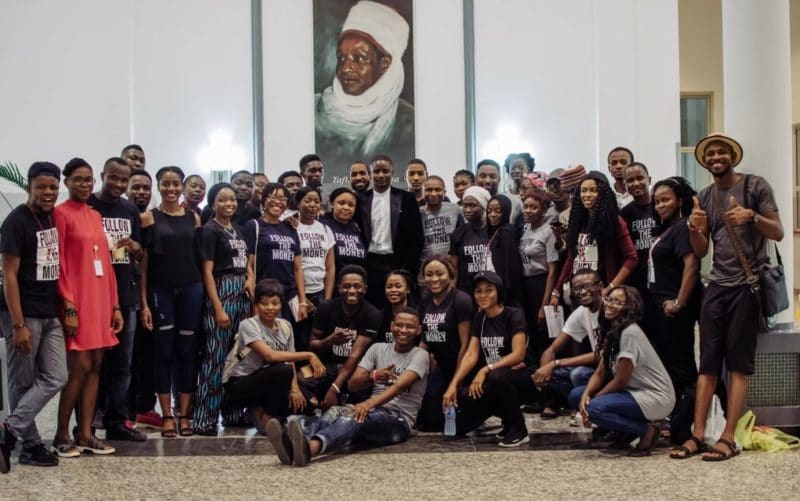
A cross-section of CODE Team after an event in Abuja. Photo credit: CODE/KC Nwakalor

In democracies, development agenda do not fall from heaven. They are neither dictated by any holy code nor an exclusive reserve of any politician, no matter how “powerful”. In fact, problems or matters bordering on governance are generated from our environment. They are uncountable ranging from: out-of-school children, rural banditry and farmer-herdsmen clashes to infrastructural deficits and rising figures of poverty. But how does an issue receive the attention of policymakers at the expense of others?

Just like microeconomics, every development agenda has an opportunity cost. The notion of opportunity cost plays a crucial part in attempts to ensure that scarce resources are allocated efficiently. Technically, this is the bedrock of governance – making best choices in the face of limited or scarce resources. This article is about how citizens can participate and ensure that social issues receive due attention of legislators and policymakers in the face of competing needs and declining state revenues.

Theoretically, leaders should be proactive in responding to social issues because they control or supervise government apparatuses or agencies. These agencies are, by design and mandate, created for collection of public data, or more fashionably, intelligence gathering. Collection of important public data can be achieved using a complex combination of professional approaches and techniques. For instance, in Peace and Conflict Management, a notable technique often deployed is Early Warning Systems (EWS). EWS enable experts, preferably a multi-disciplinary team, to function in proper diagnosis, detection and treatment of social conflicts. A multi-disciplinary team among many functions serves for collaboration; participation and presentation of alternative voices in searching for solutions to social problems.

The practice of public input in policy making and legislation is sweeping across countries in the world, courtesy of Open Government revolution. Closed governments confer a degree of secrecy and dysfunctionality in the ways they organise and run institutions. Evidence suggests that, deliberately or inadvertently, closed governments accommodate unresponsiveness and inefficiency in public service. Therefore, as a measure, citizens are constantly required to agitate (raise alarm) on lapses, inadequacies or discrepancies to attract the attention of bureaucrats. If so, how can citizens effectively exert their voices on legislative processes; public policy and governance in general?

Citizen engagement (CE) is the bullet. It is a concept as old as humanity. Whether formally enshrined in documents such as the Magna Carta and the Code Napolean, or manifested informally at local levels, the concept of citizen engagement is thoroughly global. Kin-based societies from Nigeria (the Igbos in the Southeastern geopolitical zone); East Africa; to the Amazonian rainforest have traditionally made decisions by consensus and persuasion rather than by top-down diktat. Drawing on the World Bank and recent literatures in governance, citizen engagement is defined as the “two-way interaction between citizens and governments or the private sector that give citizens a stake in decision-making, with the objective of improving development outcomes.”

The spectrum of citizen engagement, as defined includes government sharing information with citizens, and citizens drawing on this information to take action and communicate, including providing feedback to government, both solicited and unsolicited. Key to CE is the responsiveness of government to citizen voice. While the scope of CE includes consultation, collaboration, participation and empowerment, we need a two-way interaction. CE requires transparent and effective mechanisms by governments for responding to citizen voice. The end game is to improve the accountability of governments and service providers, thus closing the feedback loop. But this is not without its complexities.

To begin with, is CE a science or an art? As a science, CE is designed to collaborate with government officials in solving specific problems in the society. As a science, it is logical; systematic and employs empirical techniques, both quantitative and qualitative data, if solutions/interventions must be evidence-based. Furthermore, as an art, CE depends on intuition and perception. It requires deliberate; creative and specific information generation and dissemination.

From the foregoing, out of the typologies of communication frequently encountered in the development context, the one that most emboldens CE is advocacy communication. Advocacy Communication influences change at the public or policy level and promote issues related to development practice. Specifically, it is used to raise awareness on hot development issues; use communication methods and media to influence specific audiences and support intended changes.

Now, to optimise CE, a critical mass of informed citizens must emerge who are skilled in advocacy communication. Comparatively, more than policymakers, citizens know where the problem lies in the communities because they are usually the victims of leadership failure who lack access to potable water, their children learn under unsafe situations and who lack electricity. Nevertheless, for citizens to engage meaningfully, they are expected to creatively communicate (advocacy communication) and call the attention of elected/appointed officials to issues of concern order to trigger appropriate response or intervention.

Connected Development (CODE) understands the potency and power of speaking up – drawing the attention of decision-makers to important issues of development concern and influencing solutions. CODE targets actions and messages at decision makers in support of specific legislations e.g. #AmendUBEAct – seeks to extend the right to free education from nine years (pry 1 – JSS 3) to 12 years (Pry 1 – SSS 3). This is partly necessitated by the worrisome figures of out-of-school children and the growing poverty statistics in Nigeria. Advocacy aims at winning support from others to create conducive environment for implementing a development agenda. Through advocacy, CODE has amplified local problems to national levels and negotiated desirable changes in rural communities, states and entire nation.

To sustain democratic gains, citizens are reminded and enjoined on the potency and wonders of citizen engagement through one of the vehicles – advocacy communication. There is nothing like a neutral public policy. Every policy is designed to favour groups or interests. If so, against government repressiveness, citizens must unite, persevere and continue engagement. How can we abandon governance and legislative processes to politicians who only fight for elections rather than for generations? There are so many issues that currently require government attention, eg #ReformPoliceNG and #EndSARS, which are aimed at reforming a policing agency perceived to be brutish boorish and thuggish in Nigeria. Let us continue to engage officials more creatively.

By Ani Nwachukwu Agwu (Rural Development Specialist) and Chambers Umezulike (Development Governance Expert), Abuja