Home Blog Page 1852

Erosion ravages Lagos shoreline, NCF seeks government intervention

0

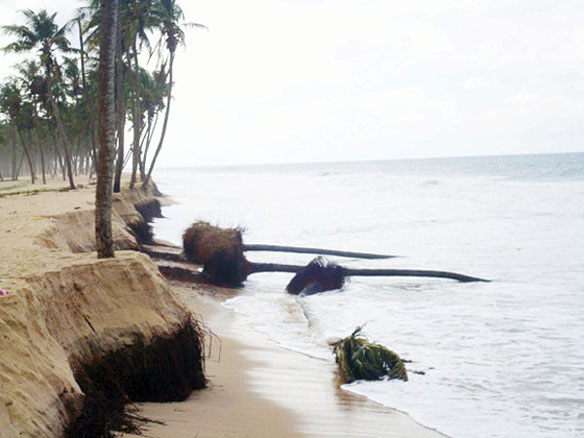
The Lekki Conservation Centre, head offices of the Nigerian Conservation Foundation (NCF), appears to be among numerous structures and choice real estate under threat in the Lekki-Victoria Island axis as the raging Atlantic Ocean mercilessly eats away the hapless Lagos coastline.

coastal erosion

DSC_7989

Lekki coastal erosion
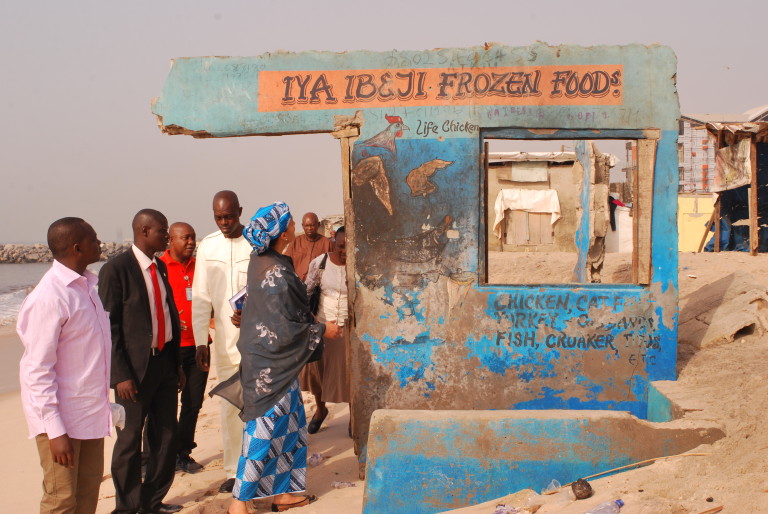
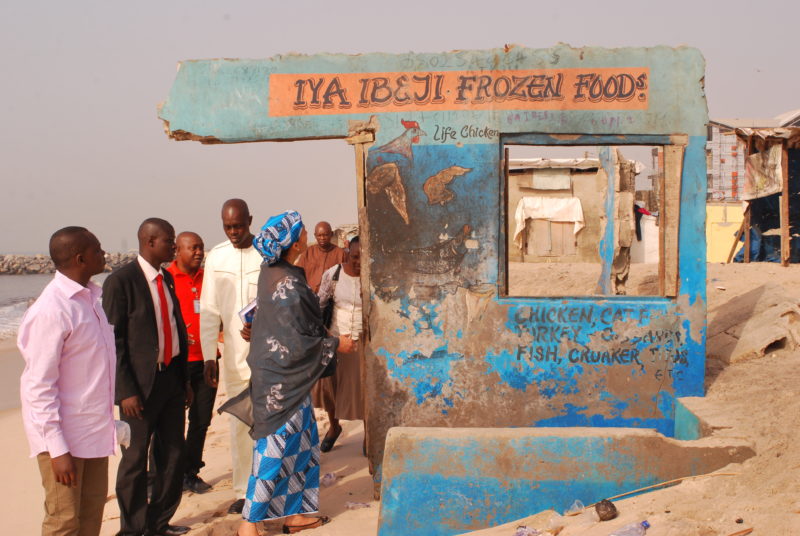
Images of coastal erosion in Lagos: Coconut trees fall and die as choice recreational beaches get eroded. Former Environment Minister, Amina Mohammed, beside the remains of a structure and community  destroyed by coastal erosion at Alpha Beach, Lekki


Alarmed, officials of the NCF on Friday, July 13, 2018 appealed to the Federal Government to save the Lagos shoreline from being wiped out by coastline erosion.

NCF made the call at a media conference in Lagos on the dangers of a fast-eastward ocean current eating up several metres of land daily on the Lekki-Victoria Island axis.

NCF’s chairman, Chief Ede Dafinone, said several coastal communities had been washed away and that if nothing was done, the axis would be underwater by 2030 and the whole of Lagos by 2050.

According to him, the problem of coastline erosion started during the colonial era when groins were created to protect the wharf at nearby Apapa.

He said the impact caused a backlash on the Lekki axis, causing an overflow of the Bar Beach, but that the Eko Atlantic City Project later protected the Bar Beach, but forcing the problem further downstream.

He said the Lagos State Government began the construction of groins around the Eko Atlantic City and Bar Beach towards Elegushi Beach to solve the problem.

He explained that the state government had taken the initiative to erect over 15 groins that effectively protected and replenished the coast for up to 14 kilometres.

“It costs about N1 billion to construct one groin and Lagos States Government’s inability to continue the project in the last 18 months suggested that they were overwhelmed by the problem,” he said.

While making a video presentation, Dr Joseph Onoja, NCF Director, Technical Programmes, said that, by mid-2011, the Eko Atlantic Project protected the Beach but that the problem moved eastward between 2015 and 2016.

He, therefore, stressed the need for the Federal Government to urgently move in to protect the shorelines to ward off the fast ocean currents worsened by climate change and other human activities.

“It took only 24 hours for a whole community to be wiped off in Kuramo Beach. Other countries are protecting their shorelines and we in Nigeria must do same,” he warned.

Director General of NCF, Dr Muhtari Aminu-Kano, appealed to the Lagos State Government and the Federal Government to protect the shorelines as far as the Escravos to avert disaster.

“The immediate solution is for Lagos to take the groins construction all the way to Escravos.

“We are appealing to the managers of the ecological funds to look in the area of these shorelines in Lagos,” he said.
Huge iceberg drifts close to Greenland village, causing fears of a tsunami

0

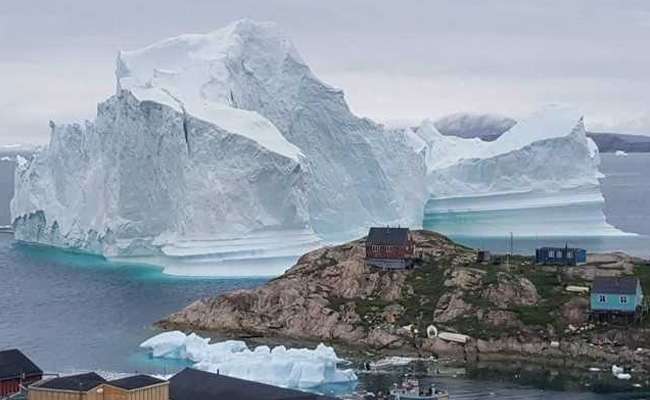
An iceberg, the size of a hill has drifted close to a tiny village on the western coast of Greenland, causing fear that it could swamp the settlement with a tsunami if it calves.

greenland-iceberg
The iceberg towers over houses

The iceberg towers over houses on a promontory in the village of Innaarsuit but it is grounded and has not moved overnight, state broadcaster KNR reported.

A danger zone close to the coast has been evacuated and people have been moved further up a steep slope where the settlement lies, a Greenland Police Spokesman told the Media.

“We can feel the concern among the residents.

“We are used to big icebergs, but we haven’t seen such a big one before,’’ Susanna Eliassen, a member of the village council in Innaarsuit, told KNR.

The government and police are on high alert and have moved a search-and-rescue (SAR) helicopter closer to the remote village with about 170 inhabitants.

Last summer, four people died after waves swamped a settlement in northwestern Greenland.

Biosafety agency partners Customs, others to tackle unauthorised GMOs

0

The National Biosafety Management Agency (NBMA) says it is collaborating with Nigeria Customs Service, Nigeria Police Force and other relevant stakeholders to tackle unauthorised Genetically Modified Organism (GMOs) in the country.

Rufus Ebegba biosafety
Dr Rufus Ebegba, D-G of the National Biosafety Management Agency (NBMA), making his presentation

The Director-General of NBMA, Dr Rufus Ebegba, said this at a sensitisation meeting with journalists in Abuja on Friday, July 13, 2018.

Ebegba said that the agency had signed Memoranda of Understanding (MoU) with some of the agencies to assist it in efforts to enforce biosafety management laws across the country.

“As part of efforts to expand our monitoring and surveillance, the agency has signed various MoU with some sister agencies such as Voice of Nigeria, Standards Organisation of Nigeria, Nigeria Agricultural Quarantine Service, and National Seed Council.

“We are in the process of completing the MoU with Nigerian Customs Service, Varietal Release Committee and the Department of Veterinary and Pest Control Services of the Federal Ministry of Agriculture,” he said.

The director-general said that NBMA had also partnered with other organisations, locally and internationally, in its efforts to achieve its mandate of safeguarding human health and the environment.

“As part of our partnership efforts, we have interacted with INTERPOL and they gave us some working equipment to further enhance our work.

“We are also working very closely with the Nigerian Customs through the Nigerian Integrated Customs Information System, which would allow the agency to get prior notification before GMOs are imported into the country.

“This system will give the agency first-hand information whenever any seed or grain that is genetically modified is being brought into the country,” he said.

Besides, Ebegbe said that the agency would ensure that GMO products that had adverse effects on humans and the environment would not be allowed into the Nigerian markets.

In a related development, Mr Tope Akinsola, the National Coordinator, Real Life Global Humanitarian Foundation, an NGO, led a protest march to NBMA’s corporate headquarters in Abuja.

He advised the Federal Government not to condemn GMO products and called on the agency to promote biotechnology applications because of the benefits.

He said that as the population of the country kept increasing, the government should embrace agricultural biotechnology to boost food production in efforts to feed the nation.

By Deji Abdulwahab

Kwara targets 105,000 houses under water initiative

0

The Kwara State Government says 105,000 houses in Ilorin will be connected under its tertiary water reticulation initiative.

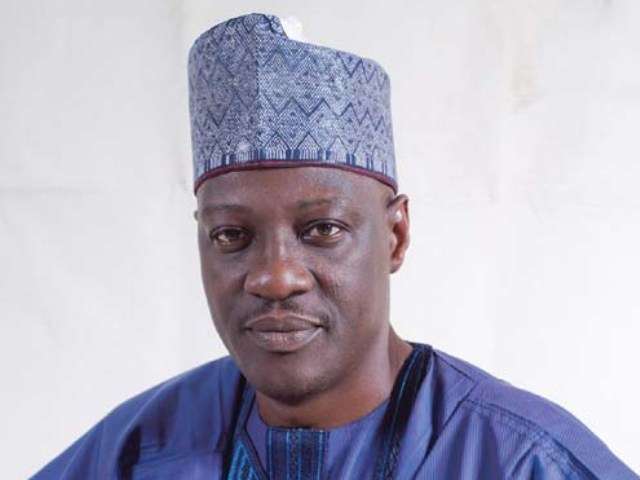
Abdulfatah Ahmed
Governor Abdulfatah Ahmed of Kwara State

Prof.  Suleiman Adeyemi, the consultant in charge of the water reticulation project, made this known on Friday, July 13, 2018 in Ilorin, the state capital, while briefing newsmen on the status of the initiative.

He said N6.54 billion was spent on both the primary and secondary reticulation project, while N1.9 billion was budgeted for the tertiary reticulation.

Adeyemi listed the achievements of the project to include doubling the treatment capacity from 27,000 sqm to 105, 000 per day and construction of 4, 900per hour high and low lift pump.

He also cited the construction of 39 km new transmission, 44.15 km of principal distribution network and 26.75 km of secondary and tertiary distribution network.

The consultant, however, appealed to the people of the state to cooperate with the government in its effort to make water available in all the nooks and crannies of the state.

He added that the water project was not limited to Ilorin alone, adding that the project was going on in all the three senatorial districts of the state.

Adeyemi added that the various water works across the state were also undergoing rehabilitation to make water available to the people.

By Abiodun Esan

Waste recycling, efficient way to make society green, says planner

0

President, Association of Town Planning Consultants of Nigeria (ATOPCON), Mr Olaide Afolabi, says waste recycling is an efficient source of revenue generation and means to make the society green.

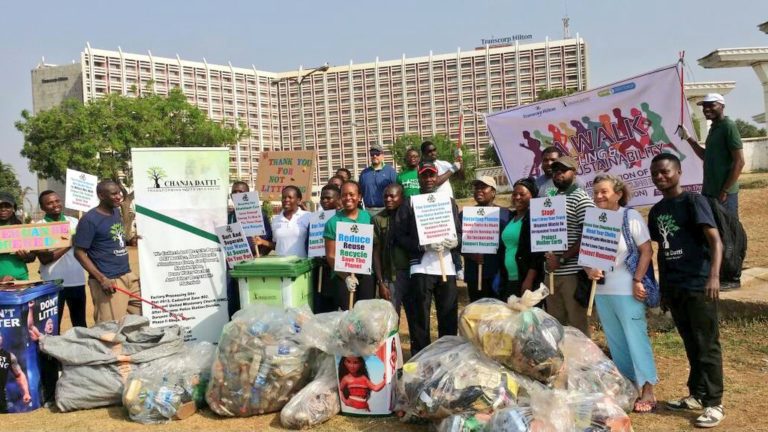
Global Recycling Day
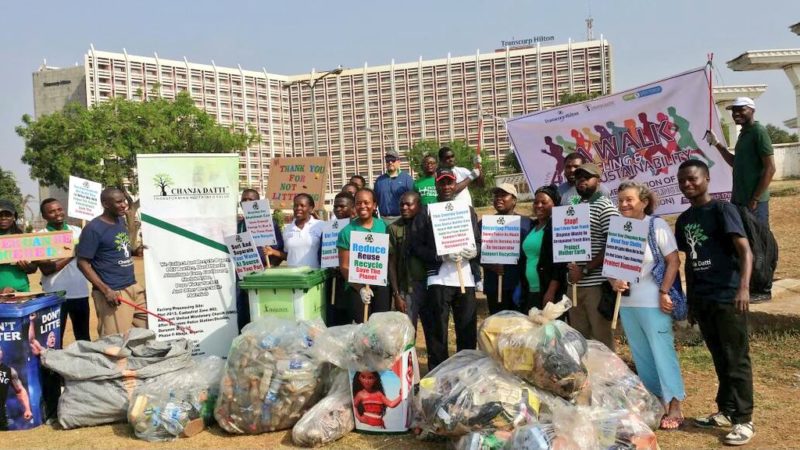
Participants at the Global Recycling Day event in Abuja

Afolabi made the submission in an interview with the News Agency of Nigeria (NAN) in Lagos on Friday, July 13, 2018.

He said that most of the materials and waste products that cause flooding in the country could be recycled.

According to him, some the waste materials that could not be recycled constitute hazards to the environment and should be banned from usage in the country.

He said that some countries had prohibited the usage of nylon and other materials that constitute hazards to the environment.

“Such decision should be taken in Nigeria because nylon constitutes about 70 per cent of residues that block the water canals, thereby causing flood.

“All drainage channels in the state have been blocked with recyclable residues.

Flood is a human-caused disaster which could be controlled if people become conscious of their environment,” he said.

Afolabi said that people would generate income if they could start sorting their wastes, especially the “PET bottles” papers, nylons, cans, among others, saying there were many resource merchants to buy them.

He said that most of the recycled items were exported by the resource merchants because many industries had not tapped from the use of recycled items.

“There are many ways recycled items can be used; they can be reused in the same industry that produced them and be used in the construction of buildings.

“For instance, somebody constructed three bedrooms using ‘PET bottles’ in Kaduna State, while another used the same PET bottles for the construction of school library,” he said.

Afolabi said these materials were available locally, wondering why people still lived in shanty buildings without proper planning, with poor indoor air quality and lack of network of drains.

“Even, where these facilities are available, how many people can afford to buy or rent such accommodation due to the high cost of construction?

“We have to be most conscious about the environment, especially as regards construction.

“For instance, how many of the so-called estates coming up in Lagos or even the Eko Atlantic are Green enough?

“Is there any estate in Nigeria today that runs solely on solar, inverter or wind turbine without a single generator? How many households in Nigeria today sort their wastes?’’ he asked.

The ATOPCON President urged government to encourage recycling of all kinds of waste products, saying that was a source of income and a major way to check the causative factors of flooding in the country.

By Lilian Okoro

Government promises to complete all abandoned water projects

0

The Director, Irrigation and Drainage, Federal Ministry of Water Resources, Dr Elijah Aderibigbe, has assured that the Federal Government will complete all abandoned water projects in the country.

suleiman adamu kazaure
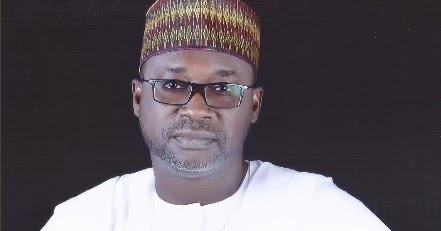
Suleiman Adamu Kazaure, Water Resources Minister

Aderibigbe told the News Agency of Nigeria (NAN) in Abuja on Friday, July 13, 2018 that the step was necessary to see that previous investments in the sector would not be a waste.

According to him, huge sums of money have been invested in some projects, as their completion would be beneficial to all Nigerians.

He, however, noted that some projects had been phased out, as completing them would amount to economic waste, saying the present hectares in the country stood at 70,000.

‘‘The present administration is continuing from where the previous administration stopped, this means that we are not embarking on any new project for now.

‘‘We are looking at those projects that are near completion, we are looking at those ones that were abandoned and had reached advanced stages.

‘‘We are revisiting them; the Federal Government is providing money.

‘‘We have called the contractors back to site, so that the benefits will be enjoyed by all Nigerians, especially where the projects are sited.’’

The director said schemes such as the Mamu-Akwa in Anambra State and Sabke Irrigation project in Katsina State had been completed and handed over to the primary users through the river basins.

He said efforts were ongoing to convert the schemes in two sources of energy and to also see that issues of sustainability when it comes to operation and maintenance were settled.

According to Aderibigbe, the Shagari Irrigation project in Sokoto State is almost completed.

He said that some projects that were abandoned since the time of Petroleum Trust Fund (PTF) were being resuscitated to see that Nigerians benefit from the water infrastructure.

He commended the Federal Executive Council (FEC) for giving its blessings toward meeting the Revised Estimated Total Cost need for some abandoned projects through priority of attention.

He said irrigated agriculture practice was fast becoming an important sector in the economy.

According to him, this is not surprising because most of the populace rely on agriculture and agro-related activities for their livelihoods.

He, however, added that other benefits of irrigated agriculture include the value chain addition through marketing and transportation in food production.

‘‘The benefits are enormous, even under a farmer, many would be employed when irrigated agriculture works,’’ he added.

He urged Nigerians to take ownership of all water utilities, saying participatory irrigation concept would help to promote sustainability of projects.

He director advised the Water Users Association to play a huge role in maintaining water facilities.

By Tosin Kolade

Uncontrolled desertification can affect food security – Environmentalist

0

An Environmentalist, Mr Gafar Odubote, has said that desertification, if not controlled, can negatively impact Nigeria’s food security.

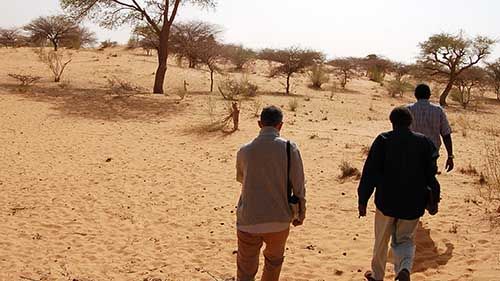
Desertification in Nigeria

Odubote, the Public Relations Manager of Let’s Do It Nigeria, made this known in an interview with the News Agency of Nigeria (NAN) in Lagos on Friday, July 13, 2018.

The expert said the impact of desertification was multifaceted but bordered more on the nation’s food security status.

“Desertification affects our ecosystem; from plants, animals and even humans. It will plague food security and result into famine if not checked,’’ he said.

Odubote also attributed other causes of the growing desertification in the country to deforestation and drought.

“Desertification is an offshoot of deforestation, which is most times human-induced with incessant felling of trees without replanting.

“Deforestation and incessant burning of bushes impact our environment negatively and leads to desertification.

“The issue of drought is also closely linked to the encroachment of desertification on the environment.

“The government must also come up with adequate irrigation system to help fight the spread of desertification,’’ Odubote said.

He appealed to the government to engage stakeholders and come up with strategies to curtail further encroachment of desertification.

“The government needs to come up with a plan and engage stakeholders across the country and mostly in the affected Northern region.

“The government must come up with a legal framework that advocates planting of trees across the country to curtail the spread of desertification.

“The legal framework is very important. If there is no legal framework, deforestation will gradually lead to a full-blown desertification encroachment in Nigeria.

“This legal framework must also be enforced to curtail the spread of desertification,’’ he said.

By Mercy Okhiade

Landmark varsity, FIIRO collaborate to accelerate agro-industrial revolution

0

The Landmark University, Omu-Aran in Kwara State, says its Memorandum of Understanding (MOU) with the Federal Institute of Industrial Research, Oshodi (FIIRO) is to upscale agrarian and industrial revolution toward revamping Nigeria’s economy.

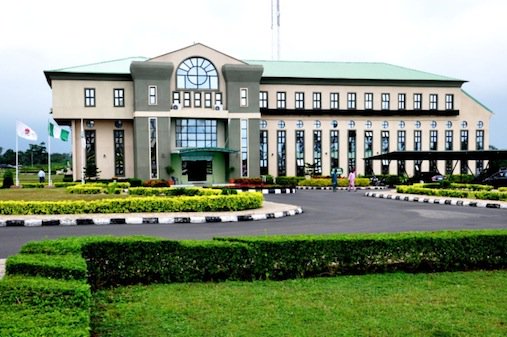
Landmark University
Landmark University
Landmark University
Landmark University

Prof. Adeniyi Olayanju, the Vice-Chancellor of the university, made the remarks on Friday, July 13, 2018 in Omu-Aran at the signing of the MOU, commemorating the institution’s 5th convocation.

Olayanju said that the MOU, which had been formally ratified, was saddled with the responsibility of accelerating industrial revolution in Nigeria using agriculture as a veritable tool.

He expressed optimism that the MoU would serve as one of the springboards for the actualisation of the university’s visionary path toward the nation’s growth and development.

The vice-chancellor described FIIRO as a professional body with the broad mandate of accelerating industrialisation in Nigeria.

He said that the institute has over the years developed technologies that promote the ideals of entrepreneurship development, adding that the Landmark would benefit immensely from such laudable breakthrough.

Olayanju, who likened the MoU to a marriage of agricultural and industrial revolution, said that it remained the panacea for revitalising the nation’s economy.

According to him, the only way to remain relevant is to be committed to continuous improvement.

“Having FIIRO, as we have entered the 8th year as a university, marks a new beginning for us,” he said.

Commenting, Prof. (Mrs) Gloria Eelemo, the Director-General of FIIRO, said that signing of the MoU was very symbolic and a unifying factor for both institutions.

Eelemo expressed the hope that the Mou would give birth to products that would be of benefit to mankind, particularly in Nigeria.

“There are some MoUs you sign and are left on the shelf, but with the calibre of energetic workers that you have here, I am quite sure this will not be the case.

“FIIRO is very proud of the vice-chancellor because he is one of our own and that is why we are here to support him,” she said.

By Yinusa Ishola

Japan struggles to restore water to flood-hit towns

0

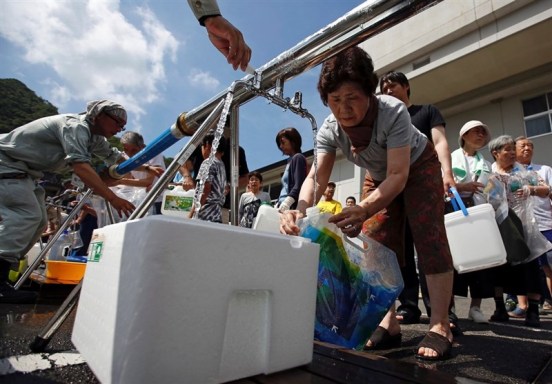
Municipal Workers in Western Japan struggled on Friday, July 13, 2018 to restore water supplies, a week after floods caused by a record downpour killed more than 200 people in the worst such disaster in 36 years.

Japan
Japan is fixing water supply related challenges issues after the flooding

Communities that grappled with rising floodwaters now find themselves battling scorching summer temperatures, well above 30 degrees Celsius (86°F), as foul-smelling garbage piles up in mud-splattered streets.

“We need the water supply back,’’ said Hiroshi Oka, 40, a resident helping to clean up the Mabi district in one of the hardest-hit areas, the city of Kurashiki, where more than 200,000 households have gone without water for a week.

“What we are getting is a thin stream of water and we can’t flush toilets or wash our hands,” he added, standing over a 20-litre (4.4-gallon) plastic tank that was only partly filled after almost four hours of waiting.

Water has been restored to some parts of the district, a city official told Reuters, but he did not know when normal operations would resume, as engineers were trying to locate pipeline ruptures.

More than 70,000 military, police and firefighters have fanned out to tackle the aftermath of the floods.

There have been 204 deaths, the government said, with dozens missing.

Large piles of tatami straw mats, chairs and bookcases could be seen all over Mabi.

The smell of leaded gasoline, mixed with a sour smell of mud and debris, filled the air.

The weather has fuelled concerns that residents, many still in temporary evacuation centres, may suffer heat stroke or illness as hygiene levels deteriorate.

Shizuo Yoshimoto, a doctor making the rounds at evacuation centres, said an urgent challenge was to bring necessary drugs to patients with diabetes and high blood pressure, who were forced from their homes or whose clinics are closed.

“There are quite a few cases where patients are unable to get drugs.

“So, one issue is how to maintain treatment for those with chronic illness. Another is acute illness, as heatstroke is on the rise,’’ he said.

Public broadcasters, NHK, has spread advice on coping with high temperatures and maintain hygiene, such as a video tutorial on how to make a diaper from a towel and plastic shopping bag.

Chief Cabinet Secretary, Yoshihide Suga, urged people in flood-hit areas to guard against thunderstorms.

“People still need to be aware of the possibility of further landslides,’’ he told reporters.

Severe weather has increasingly battered Japan in recent years, including similar floods last year that killed dozens of people, raising questions about the impact of global warming.

Prime Minister Shinzo Abe, who cancelled a scheduled overseas trip to deal with the rescue effort, visited Kurashiki on Thursday and said he aimed to visit other flood-damaged areas on Friday and over the weekend.

WFP provides $126m food aid to 16 Nigerian states

0

The World Food Programme (WFP) says it has spent $126 million to provide food aid in various forms to 1.2 million people in 16 northern Nigerian states since 2017.

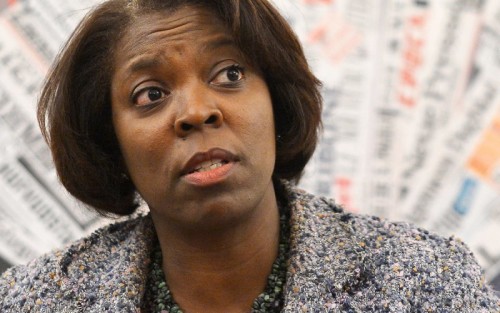
Ertharin Cousin
Ertharin Cousin, executive director of the World Food Programme. Photo credit: thedailybeast.com

Ms. Ingermarie Vennize, the World Food Programme’s Head of Communication in Nigeria, said this on Friday, July 13, 2018 when she paid a courtesy call on the Managing Director of the News Agency of Nigeria (NAN), Mr Bayo Onanuga in Abuja.

She identified the sates as Katsina, Kaduna, Taraba, Zamfara, Sokoto, Kano, Yobe, Borno, Adamawa, and Bauchi.

Others are Benue, Gombe, Jigawa, Kebbi, Plateau and Niger.

She added that the programme planned to meet its target of providing food assistance to 1.5 million of the most food insecure and vulnerable people in northeast Nigeria.

“As at this moment, WFP is providing food and cash assistance to more than 1.2 million people,’’ she said.

According to Vennize, the number of people affected by insurgency has increased as more than 20,000 have returned to the area from neighbouring countries.

She said that the programme’s activities in the affected states had increased, especially from June to September, when stored food would have dwindled.

She said that owing to the development, WFP required 49 million dollars to sustain its life-saving support until the end of 2018.

“WFP is able to carry out the exercise by mopping up assistance from the government of countries that are friendly to Nigeria.

“We also provide nutritional support to pregnant women to prevent unnecessary mother and child death,’’ she added.

The official said further that WFP also provided support to mostly the vulnerable in the society and in the areas ravaged by the Boko Haram insurgency for the people to engage in agricultural activities wherever they could or engage in income-generating activities wherever possible.

The head of communication further said that the programme was providing preventative nutrition assistance to children of six to 23 months old, and to children with moderate or acute malnutrition that were of between 24 and 59 months old.

She said that pregnant and lactating women also received preventative nutrition assistance integrated with cash or in-kind food support.

Vennize, however, said that in areas where people returned en masse, livelihood support interventions were made to contribute to early recovery and help reduce reliance on food assistance.

She pledged that the programme would not relent in its efforts at providing food assistance to people affected by terrorism.

“WFP started its presence in Nigeria in 2016 upon the request of the Federal Government to assist in the crisis in Borno, Yobe and Adamawa states, as a result of insurgency,” she said.

Vennize, however, said she was pleased with the Federal Government’s efforts at ensuring that some affected families returned to their homes.

She expressed confidence that once internally displaced persons were returned to their homes, agricultural activities would be revived, and food production enhanced.

Responding, Onanuga expressed appreciation for the programme’s efforts in Nigeria, which he said, dated back to the pre-insurgency period.

He said, “WFP is not a new programme in Nigeria.

“I appreciate the efforts of your programme for providing for Nigerians, who are frustrated as a result of the activities of the insurgents,” he said.

In his response, NAN’s Edtor-in-Chief, Mr Yusuf Zango, assured the WFP official of the agency’s readiness to collaborate with WFP in its efforts to better the lives of Nigerians.

By Okon Okon