Ahead of the Global Climate Action Summit in San Francisco in September 2018, states, regions, cities and international businesses groups and other NGOs are urging the rapid adoption of electric vehicles around the world to decarbonise the transport sector.
Sustainable transport: Achieveing zero emission from electric cars
A new “Zero Emission Vehicle (ZEV) Challenge” has been launched by The Climate Group and C40 Cities to bring global purchasing power for electric and other clean vehicles together.
The transport sector is a major source of greenhouse gas emissions, and with emissions form the sector projected to steeply grow under a business as usual scenario, ground-breaking solutions are needed to progress towards climate neutrality. Electric vehicles, powered by clean, renewable energy, have strong potential to help fight both air pollution and climate change.
“It is time to talk about the endgame for the combustion engine and speed up the move from vehicles whose emissions pose health risks and a growing contribution to climate change,” Helen Clarkson, the CEO of The Climate Group, said at an event in New York against the backdrop of a Generation 2 electric Formula-E racing car. “We want automotive companies to do more to help us get there”.
With support from the State of California, New York City, EDF Energy, LeasePlan and Unilever, as well as the cities of Paris, Los Angeles, London Milan, Rome, Copenhagen, Pittsburgh, Mexico City, Medellin and the regions of Australian Capital Territory and Navarra, the ZEV challenge will see states, regions, cities and international business use their purchasing and policy influence to massively accelerate the adoption of electric vehicles around the world.
“Zero emission vehicles are the way to go,” said California Governor Edmund G. Brown Jr. “They’re good for people’s health, they’re good for the air and they’re good for helping to stop the catastrophic increase in global warming.”
The zero emissions leaders are urging the global auto industry to commit to accelerating the manufacture of electric vehicles and step up production to satisfy the growing demand. This marks the first time some of the world’s largest states, regions, cities and businesses are uniting to show the global auto industry the full scale of demand that already exists for electric vehicles. The initiative brings together existing world leading programs, which up to now have been focused on separate sectors, to amplify their collective purchasing power and influence on the market.
THE ASKS
Auto sector – Automakers are being asked to signal their willingness to work towards an endgame for combustion engine vehicles, and in the meantime, commit to a ZEV percentage of sales by 2025.
Businesses – more multinational businesses are being challenged to join EV100, the lead business commitment to fleet electrification by 2030 and charging infrastructure, run by The Climate Group.
States and regions – are called upon to join a new Under2 Coalition ZEV initiative, run in close cooperation with the ZEV Alliance, focused on procurement, infrastructure and policy.
Cities – some of the largest cities in the world are also backing this call.
Director General/CEO of the National Biosafety Management Agency (NBMA), Dr. Rufus Ebegba, has advised retailers across the country who sell products that contain genetically modified organisms (GMOs) to formalise their dealings or face the wrath of the law.
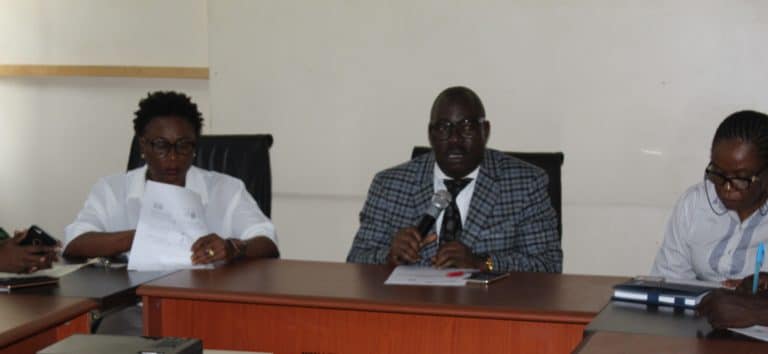
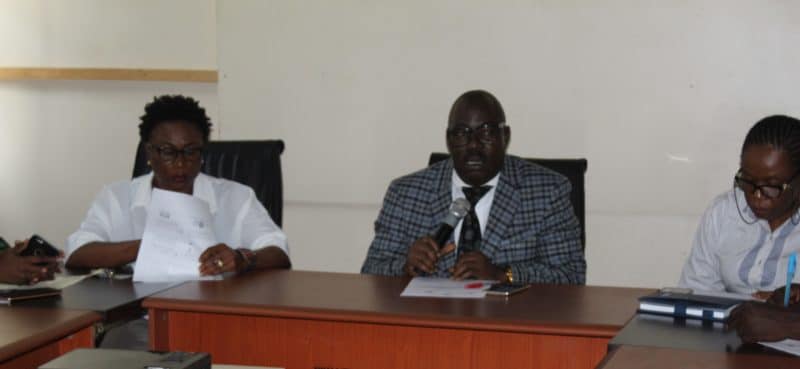
DG/CEO of NBMA, Dr Rufus Ebegba (centre); with Acting Director, Finance and Administration, Dr Rebecca Oamen; and Director, Environmental Biosafety and General Release, Ms Chinyere Nzeduru, during the meeting in Abuja
Dr Ebegba, who gave the advice in a meeting with representatives of retail store owners in Abuja on Wednesday, July 11, 2018, said they would do well to get permits for their businesses so that trading activities will not be disrupted as acquiring permit can only avoid disruption of their businesses.
He said, “NBMA law empowers it to shut down stores either super or mini that deals with GMOs without permit from the appropriate authority and the agency has the authority to impound and destroy such products while owners of such stores are prosecuted.”
He described the meeting with the retailer s as not first of its kind, and that it would set the motion for strict enforcement of non-compliance as actions will be taken by penalising those that fail to comply with the regulatory law.
He said: “Let me use this avenue to categorically say that the agency was not established to stop GMOs and their by-products, but to ensure that whatever product results from the practice of modern biotechnology is safe for human health and the environment.”
Director, Environmental Biosafety and General Release, NBMA, Ms. Nzeduru C.V, while addressing the representatives of the retailers, advised them to acquire the needed permit before trading on GM products. She underlined the need to know the interested gene of insert for safety to human health and environment.
She added that conditions for permit must also be reached before such permit could be granted. The process involved, she said, include completion of application form, payment and undertaking of risk assessment to ascertain its safety.
Head, Biosafety Enforcement and Operations Department, Mrs. Hauwa Tahir Ahmed, on her part, encouraged the representatives to always follow due process in trading GM products. She stated that the agency has the power to prosecute erring stores dealing in GM products, adding that it is likewise empowered to visit stores to verify the status of GM dealings and to ascertain their permits.
Legal Adviser, Mrs. Nkeiru Onyilofor Ajar, said failure to comply with the law would result in prosecution as stipulated in the NBMA law. She added that the right information should always be given as penalties are attached to false information. She also reinstated that the agency has the authority to seal up any store dealing in GM products without permit from the appropriate authority.
Representative of the National Agency for Food, Drugs Administration and Control (NAFDAC), Mrs. Kadiri Haleemat, urged the retailers to formalise their dealings as this will ease business. She added that there is a need for constant communication between them and the agency.
At a time when many researchers lament the deterioration in the quality of democracy and accountability in Nigeria, part of the reason governance has failed is lack of committed advocates. The central question is what is advocacy and how can advocacy enhance the performance of political establishments in Nigeria?
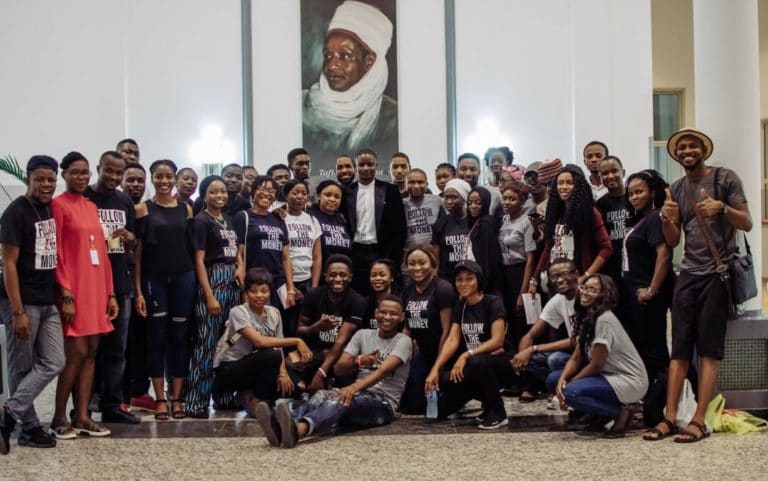
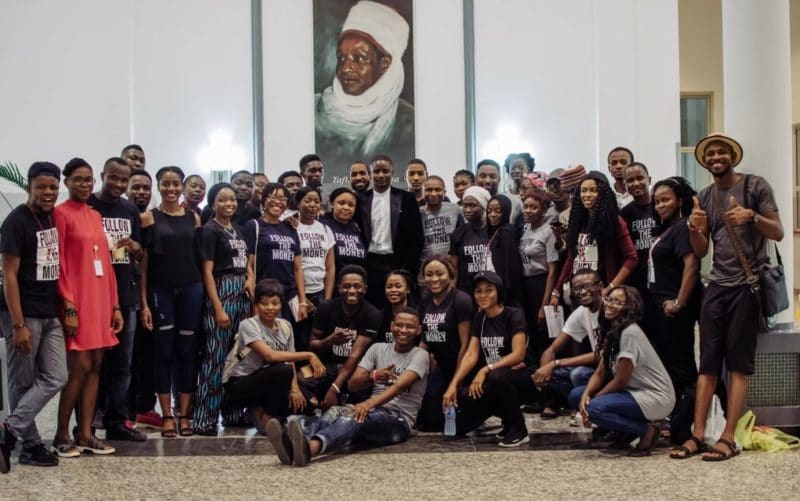
A cross-section of CODE Team after an event in Abuja. Photo credit: CODE/KC Nwakalor
In democracies, development agenda do not fall from heaven. They are neither dictated by any holy code nor an exclusive reserve of any politician, no matter how “powerful”. In fact, problems or matters bordering on governance are generated from our environment. They are uncountable ranging from: out-of-school children, rural banditry and farmer-herdsmen clashes to infrastructural deficits and rising figures of poverty. But how does an issue receive the attention of policymakers at the expense of others?
Just like microeconomics, every development agenda has an opportunity cost. The notion of opportunity cost plays a crucial part in attempts to ensure that scarce resources are allocated efficiently. Technically, this is the bedrock of governance – making best choices in the face of limited or scarce resources. This article is about how citizens can participate and ensure that social issues receive due attention of legislators and policymakers in the face of competing needs and declining state revenues.
Theoretically, leaders should be proactive in responding to social issues because they control or supervise government apparatuses or agencies. These agencies are, by design and mandate, created for collection of public data, or more fashionably, intelligence gathering. Collection of important public data can be achieved using a complex combination of professional approaches and techniques. For instance, in Peace and Conflict Management, a notable technique often deployed is Early Warning Systems (EWS). EWS enable experts, preferably a multi-disciplinary team, to function in proper diagnosis, detection and treatment of social conflicts. A multi-disciplinary team among many functions serves for collaboration; participation and presentation of alternative voices in searching for solutions to social problems.
The practice of public input in policy making and legislation is sweeping across countries in the world, courtesy of Open Government revolution. Closed governments confer a degree of secrecy and dysfunctionality in the ways they organise and run institutions. Evidence suggests that, deliberately or inadvertently, closed governments accommodate unresponsiveness and inefficiency in public service. Therefore, as a measure, citizens are constantly required to agitate (raise alarm) on lapses, inadequacies or discrepancies to attract the attention of bureaucrats. If so, how can citizens effectively exert their voices on legislative processes; public policy and governance in general?
Citizen engagement (CE) is the bullet. It is a concept as old as humanity. Whether formally enshrined in documents such as the Magna Carta and the Code Napolean, or manifested informally at local levels, the concept of citizen engagement is thoroughly global. Kin-based societies from Nigeria (the Igbos in the Southeastern geopolitical zone); East Africa; to the Amazonian rainforest have traditionally made decisions by consensus and persuasion rather than by top-down diktat. Drawing on the World Bank and recent literatures in governance, citizen engagement is defined as the “two-way interaction between citizens and governments or the private sector that give citizens a stake in decision-making, with the objective of improving development outcomes.”
The spectrum of citizen engagement, as defined includes government sharing information with citizens, and citizens drawing on this information to take action and communicate, including providing feedback to government, both solicited and unsolicited. Key to CE is the responsiveness of government to citizen voice. While the scope of CE includes consultation, collaboration, participation and empowerment, we need a two-way interaction. CE requires transparent and effective mechanisms by governments for responding to citizen voice. The end game is to improve the accountability of governments and service providers, thus closing the feedback loop. But this is not without its complexities.
To begin with, is CE a science or an art? As a science, CE is designed to collaborate with government officials in solving specific problems in the society. As a science, it is logical; systematic and employs empirical techniques, both quantitative and qualitative data, if solutions/interventions must be evidence-based. Furthermore, as an art, CE depends on intuition and perception. It requires deliberate; creative and specific information generation and dissemination.
From the foregoing, out of the typologies of communication frequently encountered in the development context, the one that most emboldens CE is advocacy communication. Advocacy Communication influences change at the public or policy level and promote issues related to development practice. Specifically, it is used to raise awareness on hot development issues; use communication methods and media to influence specific audiences and support intended changes.
Now, to optimise CE, a critical mass of informed citizens must emerge who are skilled in advocacy communication. Comparatively, more than policymakers, citizens know where the problem lies in the communities because they are usually the victims of leadership failure who lack access to potable water, their children learn under unsafe situations and who lack electricity. Nevertheless, for citizens to engage meaningfully, they are expected to creatively communicate (advocacy communication) and call the attention of elected/appointed officials to issues of concern order to trigger appropriate response or intervention.
Connected Development (CODE) understands the potency and power of speaking up – drawing the attention of decision-makers to important issues of development concern and influencing solutions. CODE targets actions and messages at decision makers in support of specific legislations e.g. #AmendUBEAct – seeks to extend the right to free education from nine years (pry 1 – JSS 3) to 12 years (Pry 1 – SSS 3). This is partly necessitated by the worrisome figures of out-of-school children and the growing poverty statistics in Nigeria. Advocacy aims at winning support from others to create conducive environment for implementing a development agenda. Through advocacy, CODE has amplified local problems to national levels and negotiated desirable changes in rural communities, states and entire nation.
To sustain democratic gains, citizens are reminded and enjoined on the potency and wonders of citizen engagement through one of the vehicles – advocacy communication. There is nothing like a neutral public policy. Every policy is designed to favour groups or interests. If so, against government repressiveness, citizens must unite, persevere and continue engagement. How can we abandon governance and legislative processes to politicians who only fight for elections rather than for generations? There are so many issues that currently require government attention, eg #ReformPoliceNG and #EndSARS, which are aimed at reforming a policing agency perceived to be brutish boorish and thuggish in Nigeria. Let us continue to engage officials more creatively.
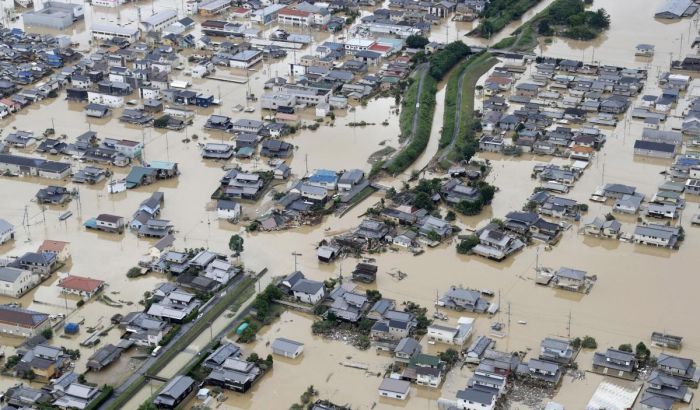
Heavy rainfall events setting ever new records have been increasing strikingly in the past 30 years.
Flood in Japan. Heavy rainfall events have increased in the past 30 years
While before 1980, multi-decadal fluctuations in extreme rainfall events are explained by natural variability, a team of scientists of the Potsdam Institute for Climate Impact Research detected a clear upward trend in the past few decades towards more unprecedented daily rainfall events. They find the worldwide increase to be consistent with rising global temperatures which are caused by greenhouse-gas emissions from burning fossil fuels. Short-term torrential rains can lead to high-impact floodings.
Extreme rainfall in Pakistan 2010 caused devastating flooding which killed hundreds and lead to a cholera outbreak. Other examples of record-breaking precipitation events in the period studied include rainstorms in Texas in the US, 2010, which caused dozens of flash-floods. And no less than three so-called “once-in-a-century” flooding events in Germany all happened in just a couple of years, starting 1997.
“In all of these places, the amount of rain pouring down in one day broke local records – and while each of these individual events has been caused by a number of different factors, we find a clear overall upward trend for these unprecedented hazards,” says lead-author Jascha Lehmann.
The average increase is 12 percent globally – but 56 percent in South East Asia
An advanced statistical analysis of rainfall data from the years 1901 to 2010 derived from thousands of weather stations around the globe shows that over 1980-2010 there were 12 percent more of these events than expected in a stationary climate, a scenario without global warming. “Due to the upward trend, the worldwide increase of record-breaking daily rainfall events in the very last year of the studied period reaches even 26 percent,” Lehmann adds.
The record-breaking anomaly has distinct patterns across Earth’s continents with generally wet regions seeing an over-proportional increase and drier regions less so. In South East Asian countries, the observed increase in record-breaking rainfall events is as high as 56 percent, in Europe 31 percent, in the central US 24 percent. In contrast, some regions experienced a significant decrease of record-breaking daily rainfall events. In the Mediterranean, the reduction is 27 percent, and in the Western US 21 percent. Both regions are at risk of severe droughts.
The link to climate change: warmer air can hold more water
While a statistical analysis of course cannot provide direct physical cause-effect relations, the scientists compared their findings to existing knowledge about how much more water can be stored in the atmosphere when temperatures rise, as given by the well-known Clausius-Clapeyron equation. This additional moisture can be released during short-term heavy rainfall events. The scientists show that the observed increase in unprecedented heavy rainfall events generally fits with this thermodynamically expected increase under global warming.
“One out of 10 record-breaking rainfall events observed globally in the past 30 years can only be explained if the long-term warming is taken into account,” says co-author, Dim Coumou. “For the last year studied, 2010, it is even one event out of four, as the trend is upward.”
Up to now, studies could add up to only medium confidence on how human induced greenhouse gases have contributed to changes in heavy precipitation events at the global and regional scale. The new analysis now helps to fill this research gap. Building on previous work on extreme precipitation, it is the first to study worldwide observational data of record-breaking daily rainfall events in this context.
“The recent upward trend is worrying”
The scientists considered that the quality of historic weather data differs from one place to another. For instance, rainfall measurements from the Sahara Desert are scarce which inhibits making any conclusions for this region. Other regions like Europe or the US are well covered with rainfall measurements stretching back over a century which enables the authors to draw conclusions with high levels of confidence.
“The pronounced recent increase in record-breaking rainfall events is of course worrying,” Coumou concludes. “Yet since it is consistent with human-caused global warming, it can also be curbed if greenhouse gas emissions from fossil fuels are substantially reduced.”
Stefan Rahmstorf, Earth System Analysis research domain co-chair at the Potsdam Institute for Climate Impact Research (PIK) and Professor at the University of Potsdam, said: “Our Earth is once again being hit by extreme weather, including extreme heat with wildfires in California and devastating floods of rain in Japan. Based on the laws of physics, due to global warming we must expect more frequent and worse heat waves as well as extreme precipitation events.
“Weather data already show a significant worldwide increase in both types of events in recent decades. Climate researchers have warned about this for a long time. This trend can only be halted if the Paris Agreement for stabilising our climate is rapidly and fully implemented.”
The United Nations Food and Agriculture Organisation (FAO) and World Food Programme (WFP) on Wednesday, July 12, 2018 established joint support to augment food production for conflict-affected people in the northeast.
Suffyan Koroma, FAO Representative in Nigeria
WFP Representative in Nigeria, Myrta Kaulard, and the FAO counterpart, Suffyan Koroma, made this known in a statement issued in Abuja by Ms IngerMarie Vennize, the Head of Communication of WFP Nigeria.
The representatives said that the support sought to provide seeds and fertilisers to improve on food production in the 2018 rainy season and meet household needs till harvest time in September.
According to them, FAO and WFP are supporting around 600,000 conflict-affected persons in Borno, Adamawa and Yobe states in northeast Nigeria during the rainy season.
Kaulard said: ‘‘Families in northeast Nigeria have been affected by conflict for nine years, and many have gone through terrible times.
‘‘We need to work harder and together to put people back on the track of self-reliance, to rebuild their livelihoods and to restore their dignity.
‘‘This joint assistance by FAO and WFP is a step in that direction.”
Koroma said “FAO is assisting both the growing number of farmers who have returned to their villages to resume production, as well as the many still forced to live in camps.
“In addition, we are expanding our farmer field school and savings and loans programmes in the region to strengthen both farming skills and access to finance for agri-business development.”
Kaulard and Koroma said that WFP still provides life-saving support to 67,000 people who live in Rann town in Borno.
Meanwhile, FAO provided seeds and fertilisers to households in Rann, who had access to land and who through a community-based assessment, proved capable of growing food.
They noted that the households consisted of families who sought refuge in Rann, as well as the host population.
“Farmers in Rann and in more than 30 other locations can plant maize, sorghum, millet and cowpeas following the distributions.
‘‘In most places, they also received sesame, groundnuts, sweet pepper and watermelon seed for income generation.’’
They noted that FAO would assist one million people to become more food secure through farming in the rainy season that span from June to September.
They also said that the organisation would distribute disease and drought-tolerant varieties of crop seed and fertiliser using a kit system.
‘‘In Kit 1, FAO is distributing maize, millet or sorghum alongside cowpea seed and fertiliser. Kits 2 and 3 are solely for women-headed households and contain vegetable and cash crop seed, respectively.
‘‘The vegetable kit features okra and amaranth, a green leafy vegetable, income-boosting groundnut and sesame, relished by women for their good market prices, round out Kit 3.
‘‘WFP provides cash assistance to 1.2 million insecure and vulnerable people every month, distribute specialised food to 200,000 children and 150, 000 pregnant or breastfeeding women, to prevent malnutrition.’’
They said although FAO requested $31. 5million to assist farmers recover from impact of conflict in 2018, 13. $2 million had been received with balance of $18. 3 million left.
They, however, said that WFP required $49 million to continue lifesaving support until the end of 2018, in the bid to assist the most food insecure and vulnerable Nigerians.
A humanitarian organisation, Medecins Sans Frontieres (MSF), has decried the pathetic state of newly-arrived displaced persons in Pulka, Gwoza Local Government Council of Borno State.
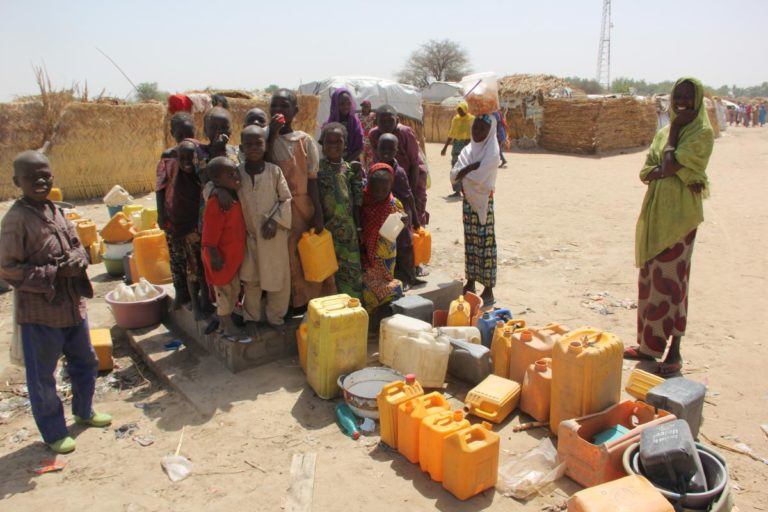
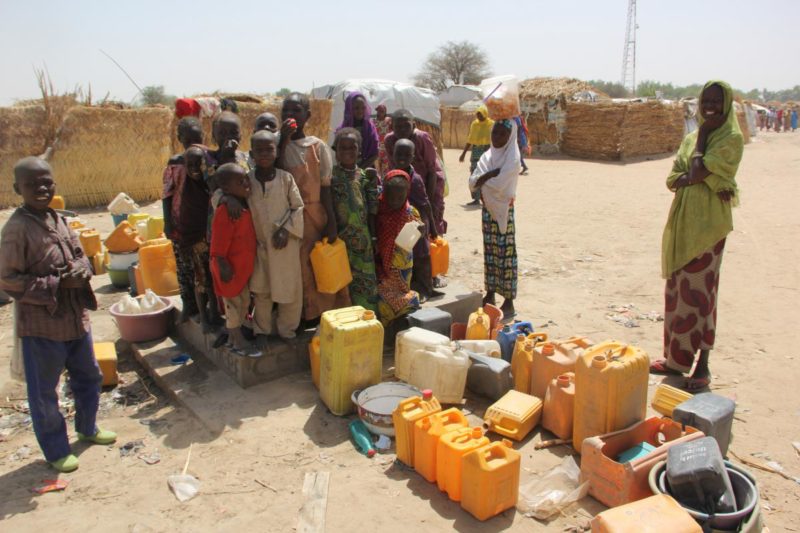
Internally Displaced Persons queuing up for water at a IDPs camp. Photo credit: WHO/CE.Onuekwe
MSF, otherwise called Doctors without Borders, expressed concern over lack of shelter and portable water to over 5,000 displaced persons, who recently arrived the town from the fringes of Sambisa Forest and Lake Chad Basin.
The organisation called for immediate intervention to ease their sufferings.
MSF’s Head of Mission, Luis Eguiluz, told the News Agency of Nigeria (NAN) on telephone that urgent measures were necessary to avert outbreak of diseases in the area.
Eguiluz said that hundreds of displaced persons who fled the fighting between the military and Boko Haram insurgents were staying in the open due to lack of shelter.
He noted that the high influx of new arrival of displaced persons compounded the sanitary condition in the area.
Eguiluz added that the displaced persons relied on the few water points and toilets, a situation which might result to outbreak of diseases due to poor hygiene and sanitation.
“More than 5, 000 women and children stay in the open with no shelter, food or clean water.
“The situation is a source of concern as hundreds of people come to the town daily. The temporary shelters in the camp could not cater for them.
“With rain, lack of food, water and poor sanitation, the situation could result to outbreak of cholera, eye and other diseases,” he said.
Eguiluz called on government and humanitarian organisations to scale up activities to control the situation.
The MSF’s official said that the organisation was providing maternity, emergency surgeries, nutrition treatment and other health services to over 60, 000 displaced persons in the area.
He disclosed that the organisation was also providing health interventions in Ngala, Rann, Monguno, Damaturu, Banki and Gwoza local government areas of Borno.
He added that MSF had set up treatment centres to control cholera and Lassa fever in Bauchi and Ebonyi states.
According to MSF’s fact sheet, the organisation had been running a hospital in Pulka since the end of 2016; providing primary and secondary healthcare, maternal care, mental health services and nutritional support for malnourished children.
The statistics indicated that MSF conducted about 13, 000 outpatient consultations and treated more than 1,550 malnourished children in 11 locations in Adamawa, Borno and Yobe states.
Reacting, Mr Bahir Garga, the North-East Zonal Coordinator, National Emergency Management Agency (NEMA), said the organisation was working with humanitarian organisations to control the situation.
Garga disclosed that the agency had concluded assessment exercise on the food needs of the newly-arrived displaced persons in Pulka and Ngoshe communities.
“We are assiduously working in collaboration with Borno State Emergency Management Agency (SEMA) to support the displaced persons.
“So far, we have conducted assessment of the food needs, and other aspect of shelter, protection, water and sanitation will be assessed,” he said.
According to him, the agency in partnership with the United Nations (UN) and other organisations were working to address the humanitarian crisis caused by the Boko Haram insurgency in the North-East.
The Global Environmental Facility Small Grant Programme (GEF-SGP) has provided solar panels to supply electricity to eight classrooms in Government Secondary School (GSS), Yaba in Abaji Area Council in the Federal Capital Territory (FCT).
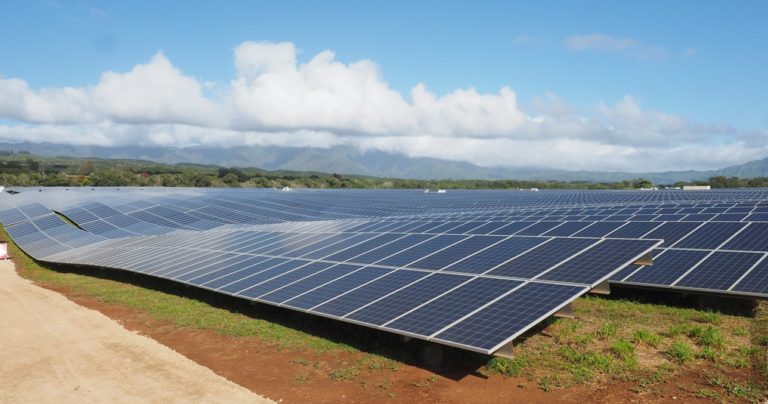
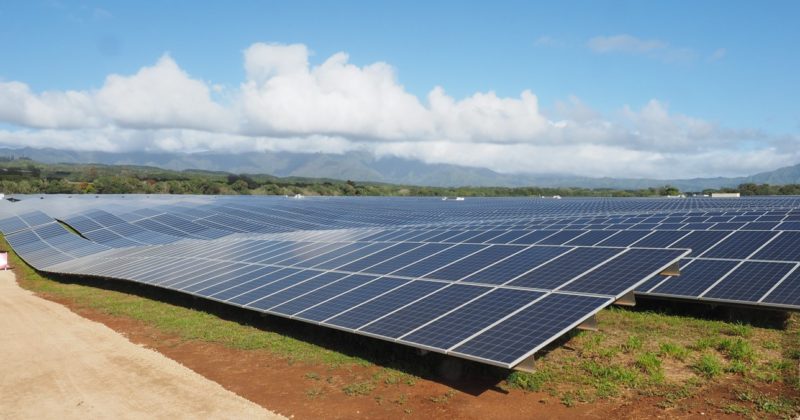
Renewable energy: Solar panels
Mr David Michael, an official of GEF-SGP, said this on Wednesday, July 11, 2018 when he paid a monitoring and evaluation visit to the school, saying that this action was to address effects of climate change in the area.
The News Agency of Nigeria (NAN) reports that Michael is the Executive Director, Global Initiative for Food Security and Ecosystem Preservation, the implementing NGO of the GEF-SGP.
“As part of capacity building of students to address climate change in FCT schools, GEF Small Grant Programme has powered eight classrooms in GSS Yaba, in Abaji Area Council,’’ Michael said.
He said that the move was triggered by absence of electricity in Yaba town.
Michael recalled that when the NGO, in collaboration with GEF officials, visited the school to establish an Environmental Club, it discovered that the boarding school had no electricity supply.
“We decided to power eight classrooms with solar so that the students can read and do their assignments at night instead of using candles and lanterns,’’ he said.
The executive director underscored the need for the country to break free from the use of generators and lanterns and embrace renewable energy.
Responding, the principal of the school, Mr Abdulsalam Ismail, thanked GEF SGP for providing the school with solar facility and promised to sustain its usage for the students’ benefit.
GEF-SGP, which is being implemented by the United Nations Development Programme (UNDP) in Nigeria, focused its attention on the campaign on environmental management.
NAN also reports that GEF-SGP had been supporting pollution-related projects with over $150,000 to support efforts to address pollution, including plastic pollution.
Launched in 2009, GEF-SGP supports non-governmental and community-based organisations in Nigeria in efforts to protect the environment, while generating sustainable livelihoods for poor and marginalised people in developing countries.
GEF-SGP is implemented by UNDP on behalf of GEF and executed by the United Nations Office for Project Services (UNOPS).
With its presence in over 25 states, GEF-SGP has executed more than 110 community-based projects, while supporting projects that would maintain equilibrium between human needs and environmental conditions.
The Consul General of Switzerland in Lagos says the Consulate will continue to strongly support sustainable organic sector development in Africa.
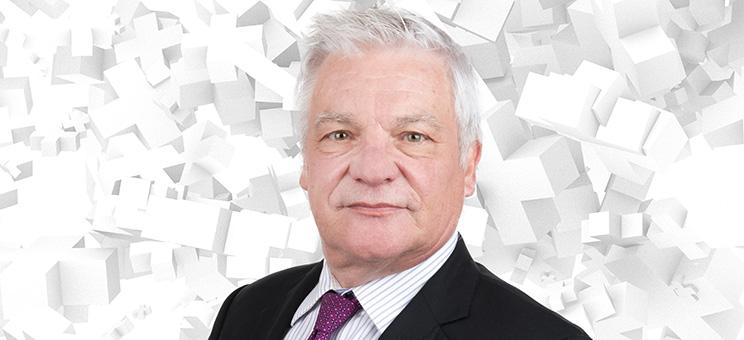
Yves Nicolet
Yves Nicolet, Consul General, represented by Mrs Ngozi Anyanso, said this at the 3rd National Organic Agriculture Business Summit, 2018 organised by the Ecological Organic Agriculture (EOA) Initiative in Nigeria in collaboration with the Lagos State Ministry of Agriculture.
The summit’s theme is: “Organic Agriculture: Abundant Opportunities for Health and Hospitality Businesses”.
He said the Consulate would support development that embraces holistic production systems, sustains the health of humans and the ecosystems and relies on ecological processes, biodiversity and cycles adapted to local conditions.
“Switzerland is very concerned about healthy agricultural development that can be sufficient for the whole population.
“We are committed to supporting the implementation of the AU declaration on organic farming in Africa and the EOA initiative as a continental initiative supports farmers, practitioners and policy makers alike.
“This commitment extends to designing effective and efficient technologies, practices and strategies to improve welfare and livelihood in a healthy environment that contribute to food security and poverty alleviation.”
According to him, this continental initiative holds noticeable promise for increasing the productivity of Africa’s smallholder farms with consequent positive impacts on food security and ecological sustainability.
“We recognise the need for stronger partners with resilient institutional structures for EOA initiative to be mainstreamed by 2025 into national policies and programmes.
“We also encourage and acknowledge efforts and results achieved by Nigeria in engaging more partners in order to spread out EOA nationwide.”
Dr Olugbenga AdeOluwa, the Country Coordinator of EOA, said that the overall goal of the EOA Action Plan was to mainstream ecological organic agriculture into national agricultural production systems by 2025.
AdeOluwa said that the aim of the summit was to improve collaboration among stakeholders and increase knowledge on organic agricultural practices, and to enhance the promotion of organic agricultural practices in Nigeria.
“Organic agriculture reduces cost of production in the long term due to non-use of synthetic fertiliser, pesticides and herbicides.
“Organic farming controls pests through the natural way called biological pest control, the procedure which utilises living organisms to control pests rather than hazardous pesticides.
“It has higher nutritional value, and food free of unhealthy elements, organic fruits and vegetables, taste even better, and moreover, the shelve life of organic produce is longer than those from the conventional system.”
He said that research had discovered that organically produced meat processes better combination of Omega 3 and 6 fatty acids which are good for heart conditions.
“It also helps lessen the greenhouse effect through the fact that it promotes the retention of carbon of the soil,” he said.
The Kogi State Government says it is doing everything possible to ensure that the embankment project along River Niger in Lokoja, the state capital, becomes a reality, to check the re-occurrence of flood, reminiscence of the 2012 flood in the state.
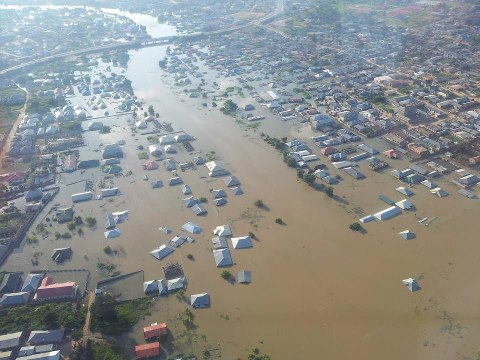
Flooded parts of Lokoja in Kogi State in 2012.
The Commissioner for Environment and Natural Resources, Mr Sanusi Yahaya, said this on Wednesday, July 11, 2018 while inspecting the level of work on the project in Lokoja.
He expressed satisfaction on the progress of work on the project so far, noting, “They have made a lot of progress with the funds released to them.”
Yahaya expressed optimism that the project, when completed, would prevent flooding in the state capital and its environs.
“This project is very dear to the governor, Alhaji Yahaya Bello, because we can’t predict the seasonal rainfall.
“We don’t want to experience the kind of devastating flood we had in 2012, that is why we are working hard to ensure that this project is delivered as soon as possible.
“It is a joint project between the Federal Government and the state and millions of naira have been spent on this project.”
He noted that the length of the lower retaining wall of the embankment had been completed up to the Marine Police Junction, hoping that the sand filling would be done as soon as the issue of access is addressed.
‘’Some shades will have to give way for trucks to come in and the higher retaining wall and dressing of sand filling will be done.’’
Briefing the commissioner, the site engineer, Aliyu Taofiq, assured that every effort was being done, assiduously, to ensure the completion of the project and delivered in October.
He explained that the level of work done so far had helped in pushing the water backward, saying it would go a long way in preventing flooding.
Taofiq however urged the government to ensure the immediate evacuation of the road side traders operating around the river bank to enable the company handling the project move in equipment without further delay.
The News Agency of Nigeria (NAN) reports that Lokoja and many local government areas in the state suffered devastating effect of flood seven years ago, which destroyed many property worth millions of naira.
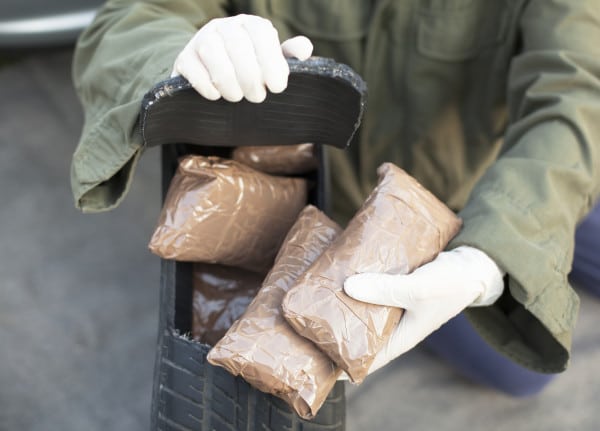
To tackle drug trafficking activities of organised crime groups operating in Nigeria and Ghana, simultaneous intelligence-led counter-narcotics operations targeting the movement of drugs were undertaken in both countries, supported by two United Nations Office on Drugs and Crime (UNODC) led projects, namely “CRIMJUST” and “Response to Drugs and Organised Crime in Nigeria”, both being funded by the European Union.
Drug trafficking
The joint operation was conducted between the Drug Law Enforcement agencies in Ghana, namely Narcotics Control Board (NACOB), Ghana Police Service-Drug Law Enforcement Unit (DLEU) and Nigeria’s National Drug Law Enforcement Agency (NDLEA).
The operation involved two periods of activities over the past two months, with a total duration of 15 days, code-named “Operation Eagle”. The operation reportedly resulted in the arrest of 22 suspects, the seizure of substantial quantities of drugs, namely: 15.7 kg cocaine, 9.21 kg heroin, 8.17 kg methamphetamines, 596.338 kg cannabis, 4 kg of khat, 267 tramadol pills (225 mg) and $22,000 cash.
In addition, the operational effort also generated knowledge and intelligence related with other forms of organised crime namely: the identification of 20 potential victims of human trafficking; circulation of travel documents for potential use in illicit activities; movement of high value assets linked to money laundering; tax evasion modalities; new methods of drug concealment and suspected cyber-related offences.
Some 129 law enforcement personnel were involved in the operation. Following detailed analysis and planning, law enforcement actions against drug trafficking and related organised crimes were intensified at key cross border points of both countries comprising land borders and airports, including postal and courier services.
To respond to the illicit activities of criminal groups that are not limited by national boundaries, both countries enhanced the responses through this actions in this joint operation to detect, seize, arrest and prosecute those involved in the trafficking of drugs and related organised crimes. The interception of illicit drug consignments bound to Europe, USA and Asia, either directly or via transit zones in Ghana and Nigeria was one of the main objectives to boost enforcement responses. Throughout the operation, UNODC supported the planning processes, as well as the deployment of liaison officers that facilitated real-time information exchanges and coordination between both countries.
Based on the lessons learnt from the pilot joint-operation, it reinforced the need to align actions and share intelligence between both countries to tackle the clandestine operations of organised criminal groups to enhance the efficiency of law enforcement responses. The operation is said to have demonstrated that working in close partnership among law enforcement agencies has proven to be highly effective in generating operational results and intelligence dividends. The organisers expect that this type of operation will be replicated and expanded soon.
The CRIMJUST Project funded by European Union Cocaine Route Programme, UNODC and its partners (INTERPOL and Transparency International) aim to assist Member States to enhance their capacity and integrity of criminal justice institutions to detect, investigate, prosecute and adjudicate illicit cocaine trafficking cases, and to foster cooperation at the interregional level for effective action to tackle drug trafficking and related organised crime.
The UNODC implemented and European Union funded project “Response to Drugs and Related Organised Crime in Nigeria” commenced in 2013 and has been working closely with counterparts with the objective of supporting the Nigerian Government “in its efforts in fighting drug production, trafficking and use and improved access to quality drug prevention, treatment and care services in Nigeria.”