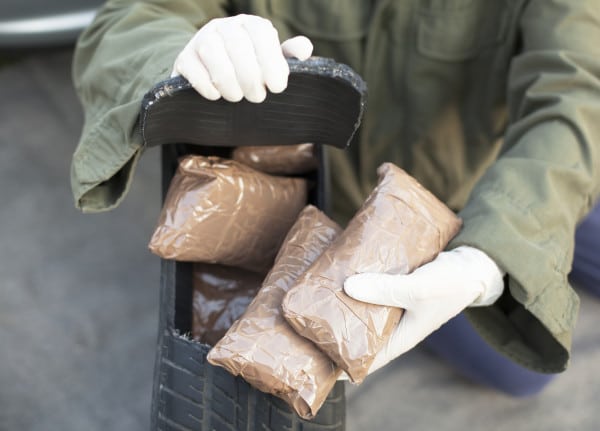
To tackle drug trafficking activities of organised crime groups operating in Nigeria and Ghana, simultaneous intelligence-led counter-narcotics operations targeting the movement of drugs were undertaken in both countries, supported by two United Nations Office on Drugs and Crime (UNODC) led projects, namely “CRIMJUST” and “Response to Drugs and Organised Crime in Nigeria”, both being funded by the European Union.
Drug trafficking
The joint operation was conducted between the Drug Law Enforcement agencies in Ghana, namely Narcotics Control Board (NACOB), Ghana Police Service-Drug Law Enforcement Unit (DLEU) and Nigeria’s National Drug Law Enforcement Agency (NDLEA).
The operation involved two periods of activities over the past two months, with a total duration of 15 days, code-named “Operation Eagle”. The operation reportedly resulted in the arrest of 22 suspects, the seizure of substantial quantities of drugs, namely: 15.7 kg cocaine, 9.21 kg heroin, 8.17 kg methamphetamines, 596.338 kg cannabis, 4 kg of khat, 267 tramadol pills (225 mg) and $22,000 cash.
In addition, the operational effort also generated knowledge and intelligence related with other forms of organised crime namely: the identification of 20 potential victims of human trafficking; circulation of travel documents for potential use in illicit activities; movement of high value assets linked to money laundering; tax evasion modalities; new methods of drug concealment and suspected cyber-related offences.
Some 129 law enforcement personnel were involved in the operation. Following detailed analysis and planning, law enforcement actions against drug trafficking and related organised crimes were intensified at key cross border points of both countries comprising land borders and airports, including postal and courier services.
To respond to the illicit activities of criminal groups that are not limited by national boundaries, both countries enhanced the responses through this actions in this joint operation to detect, seize, arrest and prosecute those involved in the trafficking of drugs and related organised crimes. The interception of illicit drug consignments bound to Europe, USA and Asia, either directly or via transit zones in Ghana and Nigeria was one of the main objectives to boost enforcement responses. Throughout the operation, UNODC supported the planning processes, as well as the deployment of liaison officers that facilitated real-time information exchanges and coordination between both countries.
Based on the lessons learnt from the pilot joint-operation, it reinforced the need to align actions and share intelligence between both countries to tackle the clandestine operations of organised criminal groups to enhance the efficiency of law enforcement responses. The operation is said to have demonstrated that working in close partnership among law enforcement agencies has proven to be highly effective in generating operational results and intelligence dividends. The organisers expect that this type of operation will be replicated and expanded soon.
The CRIMJUST Project funded by European Union Cocaine Route Programme, UNODC and its partners (INTERPOL and Transparency International) aim to assist Member States to enhance their capacity and integrity of criminal justice institutions to detect, investigate, prosecute and adjudicate illicit cocaine trafficking cases, and to foster cooperation at the interregional level for effective action to tackle drug trafficking and related organised crime.
The UNODC implemented and European Union funded project “Response to Drugs and Related Organised Crime in Nigeria” commenced in 2013 and has been working closely with counterparts with the objective of supporting the Nigerian Government “in its efforts in fighting drug production, trafficking and use and improved access to quality drug prevention, treatment and care services in Nigeria.”
The World Meteorological Organisation (WMO) has said that high impact weather, including extreme heat and disastrous precipitation, marked the early part of summer in the northern hemisphere.
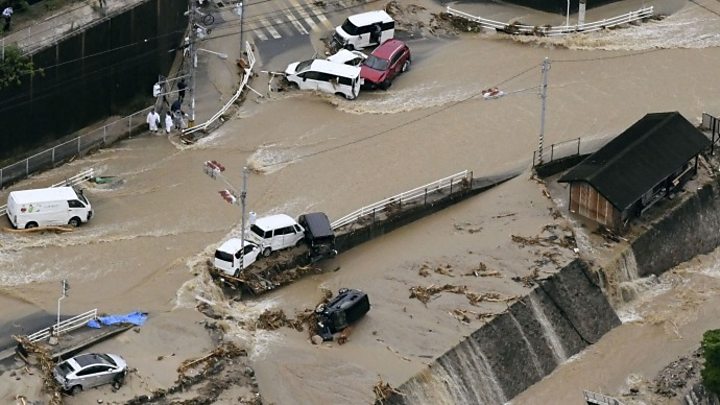
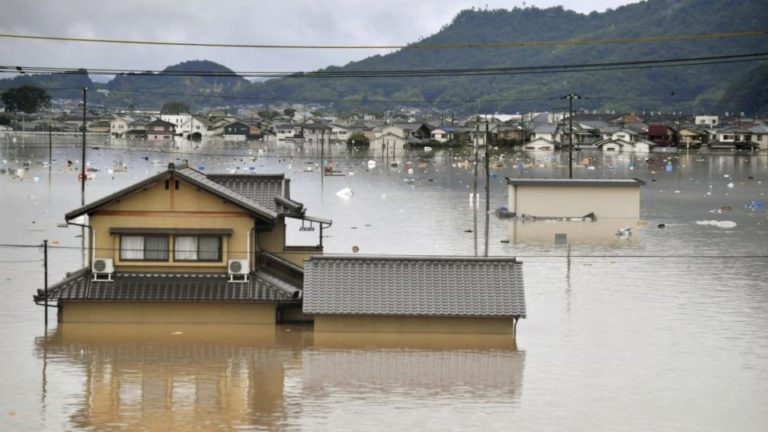
Japan has suffered the worst flooding and landslide in decades. Photo credit: BBC.com
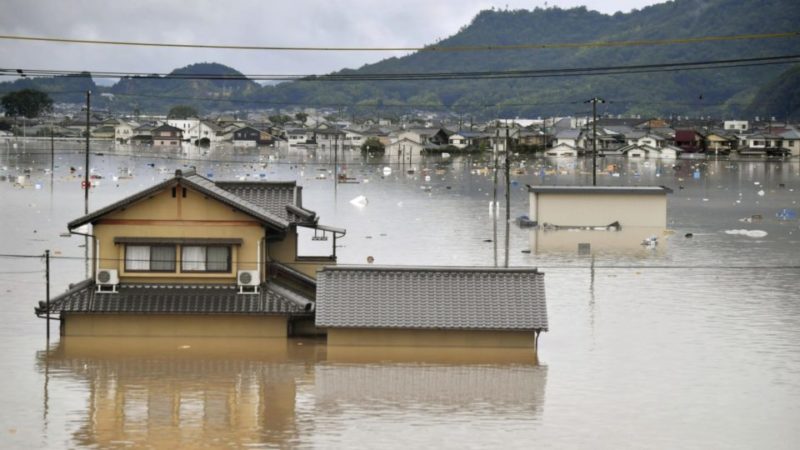
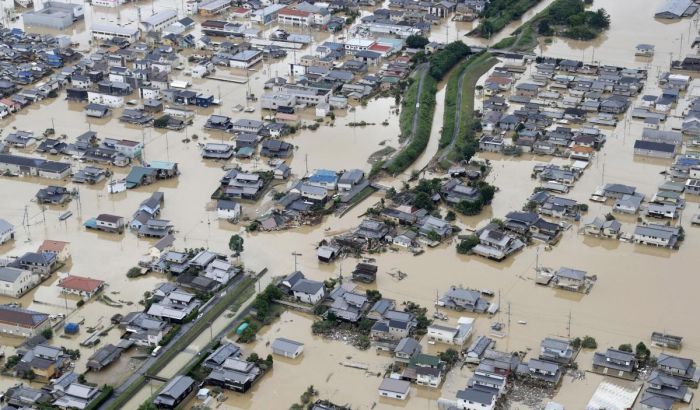
Japan has suffered the worst flooding and landslide in decades, with many daily rainfall records broken. According to official government figures on Tuesday, July 10, 2018, more than 150 people have lost their lives and the casualty toll is expected to rise. Around 10,000 houses have been destroyed and/or inundated houses.
Between June 28 and July 8, there was extraordinary heavy rainfall caused by huge amount of water vapor provided by a stationary rainy front in addition to damp air remaining from Typhoon Prapiroon. West Japan and Hokkaido experienced record precipitation during the period, according to the Japan Meteorological Agency (JMA).
Total precipitation at many observation sites reached two-to four times mean monthly precipitation for July. For instance, 1,800 mm of rain fell in Shikoku, 1,200 mm in Tokai, 900 mm in North Kyushu, 600 mm in Kinki, and 500 mm in Chugoku. This triggered many landslides, inundations and flood events.
Japan is one of the world’s best prepared countries for disaster risk reduction and disaster management. JMA issued emergency warnings in advance targeting as many as 11 prefectures in the country to alert people to the significant likelihood of catastrophes. The emergency warning system was launched by JMA in 2013, based on lessons from the major tsunami caused by the 2011 Great East Japan Earthquake. In addition, JMA dispatched its experts as the JMA Emergency Task Team or JETT, to local governments in the region to best support this multi-hazard disaster prevention activities. It set up a web portal dedicated to the heavy rain event.
Typhoon Maria
On July 10, Typhoon Maria is impacting the southern Japanese Ryukyu Islands. Northern Taiwan is bracing itself for winds of 175 km/h and gusts of 250 km/h (the equivalent of a category 3 hurricane on the Saffir Simpson scale). China’s National Meteorological Centre issued red warning of typhoon in the morning. Typhoon Maria is expected to move towards west by north at the speed of 30 kilometres per hour, skim over northern Taiwan Island on the early morning of July 11, and make landfall in the coastal regions from Fuqing, Fujian to Cangnan, Zhejiang on the morning of July 11. After landing, it will continue to move towards northwest.
Extreme and unusual temperatures
On June 28, Quriyat, just south of Muscat, on the coast of Oman, recorded a 24-hour minimum temperature of 42.6°C, meaning that the coolest overnight temperature did not drop below. Although highest “low” temperature is not currently monitored as a category in the WMO Weather and Climate Extremes Archive, it is believed to be the highest such temperature ever recorded by a thermometer.
Ouargla, in Algeria’s Sahara Desert, reported a maximum temperature of 51. °C on July 5. It is likely that this is the highest reliable temperature ever recorded in Algeria. WMO’s Weather and Climate Extremes Archive currently lists Kebili, Tunisia, as being Africa’s highest temperature with 55°C recorded in July 1931. However, there have been questions about the reliability of colonial era temperature records in Africa.
The station of Furnace Creek in Death Valley national park in California, USA, recorded a temperature of 52.0°C on July 8. The station holds the record for the highest recorded temperature on Earth at 56.7°C (134°F), on July 10, 1913.
Other parts of California were also gripped by extreme heat. Downtown Los Angeles set a new monthly July minimum overnight record of 26.1°C on July 7. Chino, near Los Angeles, saw a record temperature of 48.9°C (120°F). Burbank Airport set a new absolute record of 45.6°C (114°F) on July 6, beating 45°C in 1971, and Van Nuys Airport saw a record temperature of 47.2°C (117°C), according to the US National Weather Service.
In Canada, a heatwave combined with high humidity in the province of Quebec contributed to dozens of deaths, especially among the vulnerable and elderly.
At the same time, parts of Eastern Canada saw a brief return of wintery weather, with snow in parts of Newfoundland and Cape Breton (Nova Scotia), and temperatures of -1C, in St John’s and Halifax. Winter weather this late in the year is rare, this being the first since 1996.
Western Siberian Hydromet Centre of Russia issued a storm warning due temperatures of more than 30°C for more than five days, expected to last between July 9 and 16. This creates high risks of wildfires as well as of power supply, transportation, and utility services disruptions and drowning of people escaping the heat in water.
Krasnoyarsk Region reports daily anomalies of 7°C above average, with fires already impacting about 80,000 hectares of forest.
Drought and heat in parts of Europe
In Europe, WMO’s Regional Climate Centre on Climate Monitoring, operated by the German Weather Service, DWD, issued a Climate Watch advisory with guidance on drought and above normal temperatures valid until July 23. The guidance product, used by National Meteorological Services to issue national warnings and forecasts, referred to a continuation of the drought situation and above-normal temperatures for northern Europe (from Ireland to the Baltic States and southern Scandinavia). The weekly temperature anomalies are forecasted with up to +3 – +6°C. The probability that precipitation will be below the lower tercile is more than 70%. This drought may be accompanied by water scarcity, local thunderstorms, risks of wildfires and harvest losses, it said.
For some parts of northern Europe, June was one of the driest, warmest on record.
After an unusually warm June, the heatwave in the United Kingdom continued into July. On July 10, the UK’s Met Office said that somewhere in the UK had topped 28°C or above for the 16th consecutive day.
Temperatures were exceptionally high over large parts of northern Siberia in June 2018. They were also well above average over much of the USA, central Canada and North Africa, and over the Middle East and northern China.
The contiguous USA had 3rd hottest June on record. But many parts of the country had well above average minimum overnight temperatures.
Relationship with Climate Change
Episodes of extreme heat and precipitation are increasing because of climate change. Although it is not possible to attribute the individual extreme events of June and July to climate change, they are compatible with the general long-term trend due to rising concentrations of greenhouse gases.
Many recent studies have found that the probability of the extreme event has been influenced by human activity, either directly or indirectly. Of a set of 131 studies published between 2011 and 2016 in the Bulletin of the American Meteorological Society, 65% found that the event’s probability was significantly affected by anthropogenic activities.
It has been more difficult to identify anthropogenic influence in the attribution of precipitation extremes. Whilst some studies have found that the probability of some extreme precipitation events was increased, most often indirectly, by climate change, for many other studies the results have been inconclusive. This is because the underlying long-term climate signal in extreme precipitation is less clear than it is for temperature and, because extreme precipitation events typically occur on shorter spatial scales than extreme temperature events. At present, attribution studies are mostly carried out in research mode in peer-reviewed literature.
As the world celebrates the 2018 World Population Day on July 11 with the theme: “Family Planning is a Human Right”, the Development Communications (DevComs) Network says it supports the promotion and mainstreaming of information and service delivery on family planning as one of the key strategies to control the continuous population growth in Nigeria.
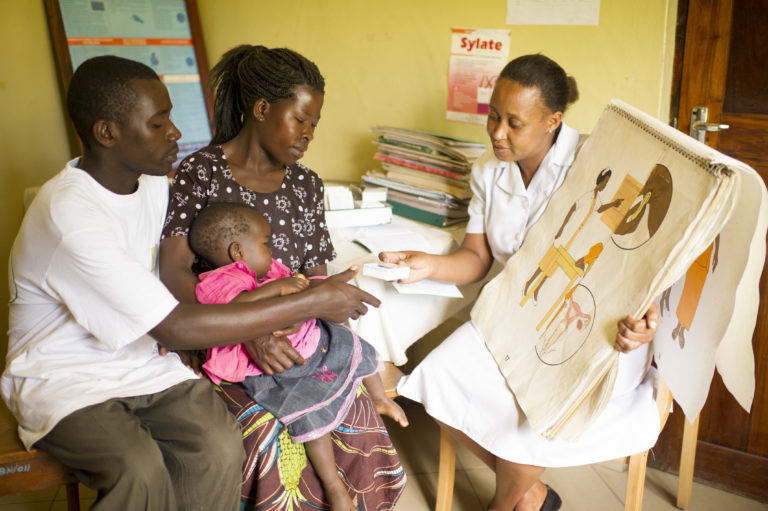
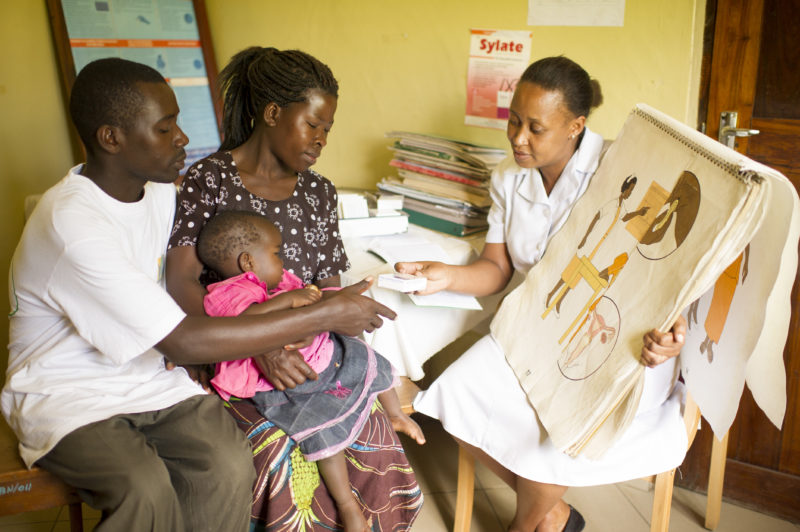
A couple receiving family planning counselling. Photo credit: Sala Lewis, champions4choice.org
This, adds the group, is especially important for marginalised groups and people in hard-to-reach areas across the country.
“The celebration would also not be complete without recognising Nigerian women who bear the brunt of death and infirmities due to complications in pregnancy and childbirth. With Nigeria’s population growing at an unsustainable rate for national development, we support all efforts to address the in-balance in the country’s development and the current population of 198 million people, with urban population growing at an average annual growth rate of about 6.5 per cent,” stresses DevComs Network in a statement.
According to United Nations Population Fund (UNFPA), family planning is the information, means and methods that allow individuals to decide when to have children.
Individuals, including women, youths and adolescents right to contraceptive information and services is grounded in basic human rights, notes DevComs, pointing out that the obligation for right to health means that health care services must be available in sufficient quantity; accessible in ways that are non-discriminatory and ensure that services can be accessed physically and financially; acceptable in the sense of being respectful of the culture of individuals; and of good quality.
Akin Jimoh, Programme Director at DevComs, asserts: “Women, youths and adolescents in Nigeria must be provided services that are accessible, available, and acceptable to prevent unplanned pregnancies most of which ends in procurement of unsafe abortion, one of the contributors to maternal deaths in the country.
“It is important to establish Youth Friendly Centres dedicated to providing sexual and reproductive health services that meet young people at their point of need rather than resorting to practices that endangers their lives. These should operate based on elements of full, free, and informed choice with citizens having access to information on all methods of contraceptives (temporary and permanent) and have the right to make decision about what service to uptake without coercion and barriers.
“Family planning is a wise investment for national development though with a number of differentials in level of acceptance across the country, that needs to be further enhanced for the benefits of Nigerians. It is very important that government at all levels should ensure the availability of family planning commodities and consumables to advance access to a major means of addressing the country’s population debacle. Government should realise that without contraceptive products there will not be a programme to save the lives of women, children and others who need it. Government should be accountable for ensuring that the supply of contraceptives products and consumables are available at the point of need for every prospective user.
“All stakeholders need to collaborate to make up for the unmet needs among target groups which, according to the World Health Organisation (WHO), is high among adolescents, migrants, urban slum dwellers, refugees and women in postpartum period. Health workers have a key role to play in making reproductive and sexual health service available to those who need it. From when an adolescent walk through the door of a clinic, to when he/she leaves, the services provided, good or bad, might shape the future of such individual.”
The full agenda for the Latin America and Caribbean Climate Week 2018 (LACCW2018) was released on Tuesday, July 10, 2018. It is being convened from August 20 to 23 in Montevideo, Uruguay.
Tomasz Chruszczow, Special Envoy for Climate Change from Poland, alongside numerous delegates, will participate in the event
The event – which lands three weeks ahead of both the Global Climate Action Summit in California and New York Climate Week – will be instrumental in demonstrating that there is genuine international support for stepping-up climate action by mobilising actors across the Latin America & Caribbean region.
UN Climate Change Executive Secretary, Patricia Espinosa, will participate in the event, alongside the High-Level Climate Champions, H.E. Minister Inia Seruiratu from Fiji and Mr. Tomasz Chruszczow, Special Envoy for Climate Change from Poland, as well as city and business leaders.
“Now more than ever we need action on climate change – here in the Latin America & Caribbean region and throughout the world. Let us then take advantage of this opportunity to make real and meaningful progress towards completing the rules of the Paris Agreement,” Espinosa said.
The theme of LACCW2018 is “Climate Action for Sustainable Development: Driving Change in Latin America and the Caribbean”. The high-level segment that takes place on Wednesday, August 22 will bring together the business community and focus on areas, such as: visions for NDC enhancement and implementation; challenges and opportunities for cities in the Latin America & Caribbean region; the role of transport for sustainable development and climate action; and climate finance.
Other highlights at the event include the Latin America Carbon Forum and a technical session on the cross-linkages between markets and the Sustainable Development Goals.
Owing to the political significance of the upcoming Talanoa Dialogue this year, LACCW2018 will host its very own “regional Talanoa” and explore strategies for accelerating global climate action, including by realigning finance flows in the Asia Pacific region consistent with a pathway towards low greenhouse gas emission and climate-resilient development for the implementation of the Paris Agreement.
LACCW2018 follows-on from the success of Africa Climate Week (ACW2018) hosted in Nairobi earlier this year and also the Asia Pacific Climate Week, which is currently underway in Singapore.
The goal of these Climate Weeks is to support the implementation of countries’ Nationally Determined Contributions (NDCs) under the Paris Agreement and climate action to deliver on the Sustainable Development Goals. In so doing, they will bring together diverse array of international stakeholders in the public and private sectors around the common goal of enhancing climate action.
The Executive Secretary of the Abidjan Convention has said that the Canary Current Large Marine Ecosystem (CCLME) project has a unique strategic combination of fisheries and ecosystem governance frameworks and will through governance reforms, investments and management programmes, enable the participating countries to address priority transboundary concerns on declining fisheries, associated biodiversity and water quality.
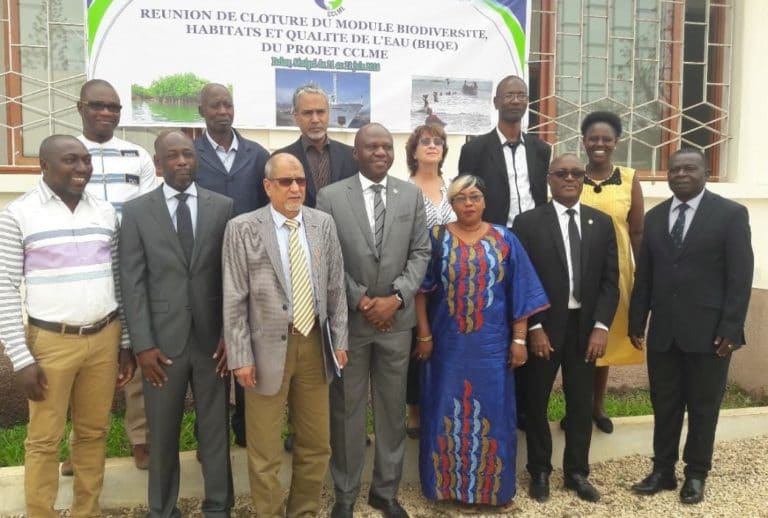
Abou Bamba, Executive Secretary, Abidjan Convention, with other dignitaries at the forum
Abou Bamba further disclosed that the CCLME project is being executed by the Food and Agriculture Organisation of the United Nations (FAO) and the United Nations Environment Programme (UNEP) in a combined effort to reverse the degradation of the project ecosystem caused by over-fishing, habitat modification and changes in water quality by adoption of an ecosystem-based management approach.
Speaking at the closing meeting of the biodiversity, habitats and water quality modules of CCLME project and presentation of the achievements of the CCLME modules to stakeholders held at the Centre de Suivi Ecologique (CSE) in Fann, in the Senegalese capital of Dakar, the Abidjan Convention boss noted that the current phase of the CCLME project would be operational in the seven participating countries namely: Cape Verde, Guinea, Guinea Bissau, Mauritania, Morocco, Senegal and The Gambia.
The project, according to him, is funded by the Global Environment Facility (GEF) together with co-financing from participating countries and other partners and is open for co-funding and collaboration with parties interested in contributing to ecosystem management of the Canary Current region.
In what he described as a usual family meeting of member countries, Bamba disclosed that the project is being characterised by a major, nutrient-rich up-welling of deep, cold oceanic waters off the Canary Islands, which stimulates high biological productivity that results in an abundance of both pelagic and demersal fishery resources.
The up-welling progresses in easterly and southerly directions, while gradually dispersing over the continental shelf off Morocco, Mauritania, Senegal, the Gambia, Guinea-Bissau, Guinea and, to a lesser extent, Sierra Leone, as well as around the Cape Verde islands.
The overall objective of the CCLME project is to secure global environmental benefits by protecting the ecosystem from degradation caused by over-fishing and pollution.
According to Bamba, CCLME provides vital food and economic resources for coastal populations bordering the Large Marine Ecosystem and for much of West Africa and provides one of the largest fishing productions in Africa. Its coastal area also provides important goods and services to coastal countries, including critical habitats for fish, wood from mangroves and spaces coastal and marine ecosystems for agriculture, aquaculture, urban development, tourism and transport. He pointed out.
The CCLME project, he said, presents originality due to its strategic approach combining the fisheries and governance in ecosystem management, with the aim to enable participating countries to address priority trans-boundary problems of declining fisheries, associated threats to biodiversity and water quality through governance reforms, investment and management programmes. According to him, it will also promote cooperation among countries, while project partners will monitor the CCLME state based on the scientific results.
All member countries are committed to working together in the CCLME project to fight against the trend of degradation the large Canary marine ecosystem is facing through overfishing, habitat changes and changes in water quality, and adopting an ecosystem approach.
“Component 3 of the project promotes the strengthening of basic knowledge, capabilities and policies necessary for trans-boundary assessment, management of habitats, biodiversity and water quality which are essential for fishing. Three results are expected at this component; the reduction of knowledge gaps in relation to critical habitats, biodiversity and water quality for the purposes of the TDA and the Strategic Action Plan in which is the design activities of this basic geo-referenced data,” he concluded.
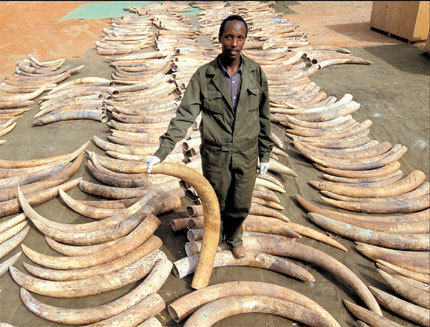
Illegal ivory, including from recently poached elephants, is being sold widely throughout Europe, the global citizens movement Avaaz said on Tuesday, July 10, 2018, calling on the European Union to implement a complete ban on the ivory trade.
In a study, which was funded by small donations from over 50,000 Avaaz members worldwide, over 100 ivory items purchased in 10 EU countries were carbon tested at Oxford University to determine their age, which determines whether their sale was legal or not.
Almost 20 per cent of the samples were found to have come from elephants killed after 1989, when a global ivory trade ban went into effect.
Three-quarters of the items tested were also found to be from after 1947, a date after which ivory products can only be sold with government-issued certificates, which none of them had.
“This bombshell evidence proves beyond doubt that illegal ivory is being sold across Europe.
“It must spark the end of this bloody trade. Every day the sale of these trinkets continues is a day closer to wiping out majestic elephants forever,’’ Avaaz campaign director Bert Wander said.
European Environment Commissioner Karmenu Vella was set to meet Avaaz representatives to discuss the study.
The European Commission has said it did not have enough evidence that current laws were ineffective in stopping illegal ivory trade in Europe.
Japan struggled on Tuesday, July 10, 2018 to restore utilities after its worst weather disaster in 36 years killed 155 people, with survivors facing health risks from broiling temperatures and a lack of water, while rescuers kept up a grim search for victims.
A flood neighbourhood in Japan
Torrential rain unleashed floods and landslides in western Japan last week, bringing death and destruction, especially to neighborhoods built decades ago near steep slopes.
The government said 67 people are missing.
Prime Minister Shinzo Abe cancelled an overseas trip to cope with the disaster, which at one point forced several million from their homes.
Power had been restored to all but 3,500 households but more than 200,000 people remain without water under scorching sun, with temperatures hitting 33 Celsius in some of the hardest-hit areas, such as the city of Kurashiki.
“There have been requests for setting up air-conditioners due to rising temperatures above 30 degrees today, and at the same time we need to restore lifelines,” Finance Minister Taro Aso told newsmen after a cabinet meeting.
Roads caked in dried mud threw up clouds of dust when rescue vehicles or other cars drove by.
Stunned survivors recounted narrow escapes.
“It was close. If we had been five minutes later, we would not have made it,” said Yusuke Suwa, who fled by car with his wife early on Saturday when an evacuation order came after midnight.
“It was dark, and we could not see clearly what was happening, although we knew water was running outside. We did not realise it was becoming such a big deal.”
A quarter of flood-prone Mabi district of Kurashiki, sandwiched between two rivers, was inundated after a levee crumbled under the force of the torrent.
The government has set aside ¥70 billion ($631 million) in infrastructure funds with ¥350 billion ($3.15 billion) in reserve, Aso said, adding that an extra budget would be considered if needed.
“When necessary amounts firm up … we would consider an extra budget later on if these funds prove insufficient.”
Japan issues weather warnings early, but its dense population means that almost every bit of usable land, including some flood plains, is built on in the mostly mountainous country, leaving it prone to disasters.
Some residents of Mabi had shrugged off the warnings given the area’s history of floods.
“We had evacuation orders before and nothing happened, so I just thought this was going to be the same,” said Kenji Ishii, 57, who stayed at home with his wife and son.
But they were soon marooned by rising flood waters and a military boat had to pluck them from the second floor of their house, where they had taken refuge.
Most of the deaths in Hiroshima, one of the hardest hit prefectures, were from landslides in areas where homes had been built up against steep slopes, beginning in the 1970s, said Takashi Tsuchida, a civil engineering professor at Hiroshima University.
“People have been living for 40 to 50 years in an area that had latent risk, but decades went by without disaster,” he said.
“But intense rainfall has become more frequent, and the hidden vulnerability has become apparent,” he said, adding that people live in many such dangerous areas.
Though the weather has cleared up, the disaster goes on.
A new evacuation order went out on Tuesday in a part of Hiroshima after a river blocked by debris overflowed its banks, affecting 23,000 people.
Another storm, Typhoon Maria, was bearing down on outlying islands in the Okinawa chain but it had weakened from a super-typhoon and was not expected to have any impact on Japan’s four main islands.
The Climate Adaptation and Agribusiness Support Programme (CASP) has signed Memorandum of Understanding (MoU) with International Centre for Agricultural Research in the Dry Areas (ICARDA) on sustainable land management activities in seven states.
Minister of Agriculture and Rural Development, Chief Audu Ogbeh
Mr Abdullahi Surajo, the Communication Officer of IFAD-CASP, made this known via a statement on Tuesday, July 10, 2018 in Abuja.
NAN reports that the MoU was signed by CASP National Programme Coordinator, Muhammad Lawal Idah and the ICARDA Director General Aly Abousabaa and it would last till July 31, 2019.
He said that MoU was signed to establish an effective collaboration on Soil and Water Conservation (SWC) and water harvesting adaptation techniques in the rainfed production systems and technology packages.
“It aimed at supporting sustainable climate resilience agriculture in the seven participating states of Borno, Jigawa, Katsina, Kebbi, Sokoto, Yobe and Zamfara.
“CASP also aims at mainstreaming climate change adaptation measures through a landscape rehabilitation approach focused on sustainable land management, encompassing soil erosion control, water harvesting and soil and water conservation in the CASP areas.”
According to him, demonstration sites will be established to show innovative techniques to mitigate land degradation and to rehabilitate degraded land.
“Communities would be encouraged to implement the landscape rehabilitation interventions that will be identified by means of Participatory Land Use Mapping exercises.
“ICARDA on the other hand has been working and delivering positive results towards sustainable livelihood improvement in dry areas globally.
“CASP and ICARDA will work together in Nigeria to identify and implement location specific, effective and innovative SWC and water harvesting adaptation practices.
“The ICARDA scientists will provide specific guidance and training including support of demonstrations at farmers’ fields,’’ he said.
Surajo added that other key areas to be identified include: development of improved cereals/legumes seeds (dryland and tropical crops), technology packages to improve crop yields and the health and sustainability of farming systems.
“It will also improve increase water use efficiency in agriculture and measures to combat land degradation and desertification.
“CASP is determined to ensure that farmers are provided with the necessary tools, knowledge, and skills to mitigate climate impacts on agriculture.
“We want to make agriculture, climate smart and climate resilient,” he said.
Japanese Chief Cabinet Secretary, Yoshihide Suga, on Tuesday, July 10, 2018 said floods in Japan, caused by heavy rains, left 134 people dead, while 88 are missing.
Flood in Japan
As of Monday night, 126 people were considered dead; over 60 were believed to be missing.
“As far as we know, 134 people have died.
“Ten people are officially listed as missing. At the same time, it has been impossible to confirm the security and location of 78 others,’’ Suga told a news conference.
According to the cabinet secretary, the authorities have received about 100 alerts from witnesses who said they saw floodwater washing away a car with people inside.
“To aid the damaged areas, ¥2 billion (about $18 million) has been allocated,’’ Suga added.
Heavy rain poured down on the southwest and centre of Japan earlier this month, causing flooding and landslides.
About 1,800 people were evacuated from the affected areas by Monday night, over 11,000 people were staying in special shelters. Power was cut in over 20,000 households.
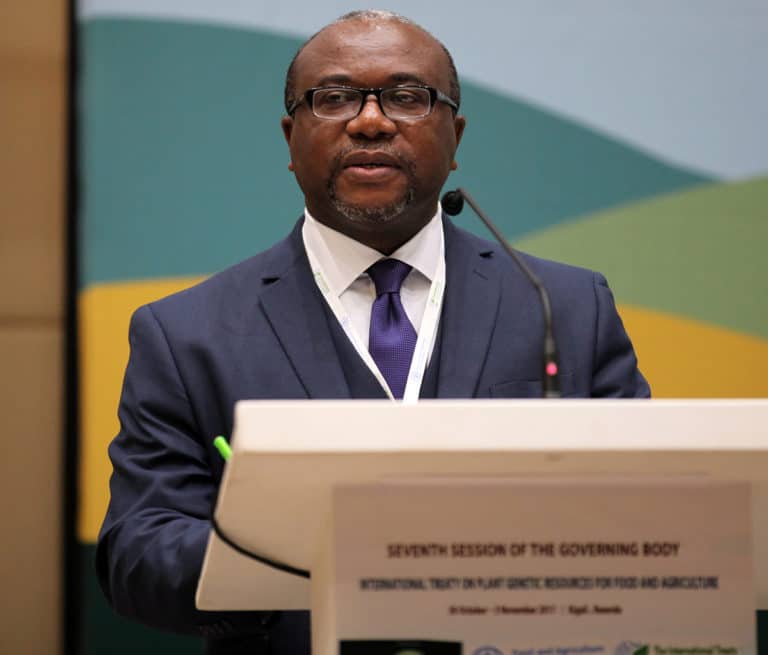
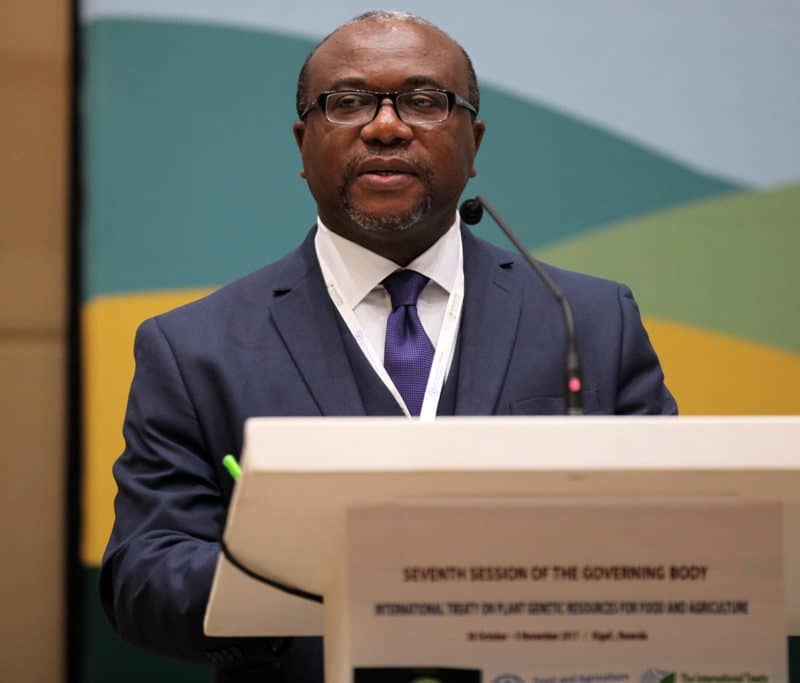
Dr Kent Nnadozie, Secretary of the International Treaty
The CBD, its Nagoya Protocol on Access and Benefit-Sharing and the International Treaty all form part of the international regime on access and benefit-sharing and share objectives related to the conservation and sustainable use of biodiversity and the sharing of the benefits arising out of the use of genetic resources. The three global agreements also all recognise the important role of communities in conserving and sustainably using biodiversity.
The Nagoya Protocol recognises the special nature of genetic resources for food and agriculture and the International Treaty addresses the specific features of plant genetic resources for food and agriculture. The Secretariats of the International Treaty and the CBD have been working together to ensure that mutually supportive implementation of these instruments supports enhanced access to genetic resources and the sharing of benefits arising from their use, which will in turn contribute to economic development, innovation and research. The MoC signed today renews and enhances collaborative efforts to this end.
Dr Cristiana Paşca Palmer, Executive Secretary of the Convention on Biological Diversity, said: “I believe that the partnership between the International Treaty and the Convention on Biological Diversity is an outstanding model of cooperation for a common goal.
“The achievements under the Nagoya Protocol will strengthen the implementation of the Treaty, while the Treaty’s successes will support the CBD in the accomplishment of its mandate. I thus could not be more pleased with our cooperation to date and I look forward to many more opportunities for us to work together in the future.”
Dr Kent Nnadozie, Secretary of the International Treaty, said: “Building on the strong and long-standing partnership with the Convention, this agreement will further expand our collaborative efforts to provide better services and support to governments and other stakeholders towards the achievement of our common objectives.
“It will also help mainstream biodiversity into existing programs and policies, and further reinforce the continuing dialogue between environment and agriculture, based on the development of concrete interfaces between the two sectors.”
The MoC includes the development of synergies between the International Treaty’s Global Information System and the CBD’s Access and Benefit-sharing Clearing-House; a joint initiative for on-farm conservation; work on sustainable use of plant genetic resources for food and agriculture and protected areas; and the promotion of the importance of biodiversity and plant genetic resources for food and agriculture for food security and nutrition under a changing climate.
As part of the MoC, the two secretariats will work together in undertaking and promoting workshops, seminars and other events; and, in the coordination of technical assistance at the international, regional, sub-regional and national levels.
Dr Nnadozie said: “I am particularly pleased with the success of our close collaboration to date, which should serve as a model for better coordination and collaboration between the stakeholders of the respective agreements at the national level.”
Dr Paşca Palmer said: “This partnership has already led to concrete activities and tangible results and in this new phase I would like to demonstrate how our collaboration creates new value and brings these results to governments in a practical way.”