Home Blog Page 1856

CBD, International Treaty commit to sustainable use of biodiversity

0

A Memorandum of Cooperation (MoC) that will enhance cooperation between the Secretariats of the Convention on Biological Diversity (CBD) and the FAO International Treaty on Plant Genetic Resources for Food and Agriculture (the International Treaty) was signed on Monday, July 9, 2018 on the margins of the second meeting of the CBD’s Subsidiary Body on Implementation, being held in Montreal, Canada. The MoC focuses on collaborative activities between the two organisations in plant genetic resources for food and agriculture.
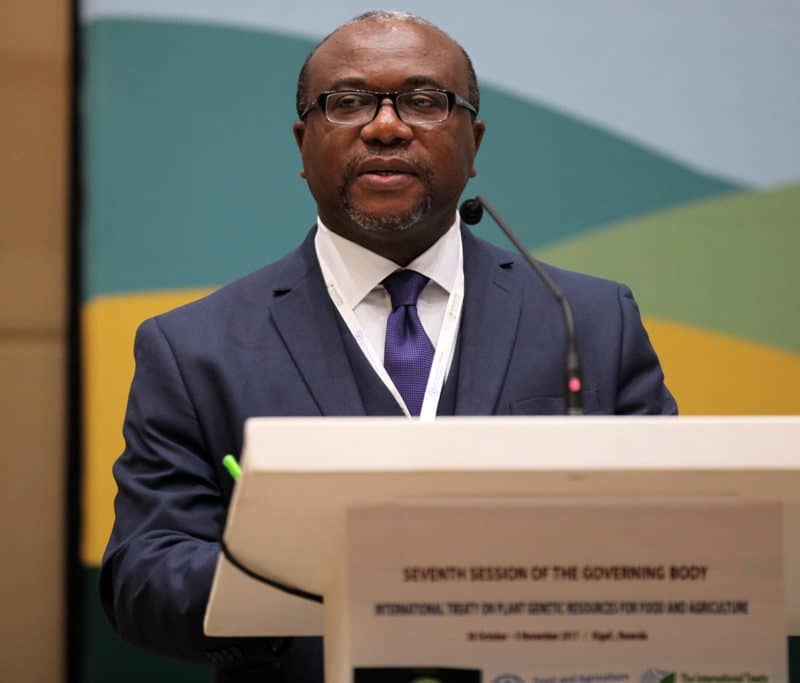
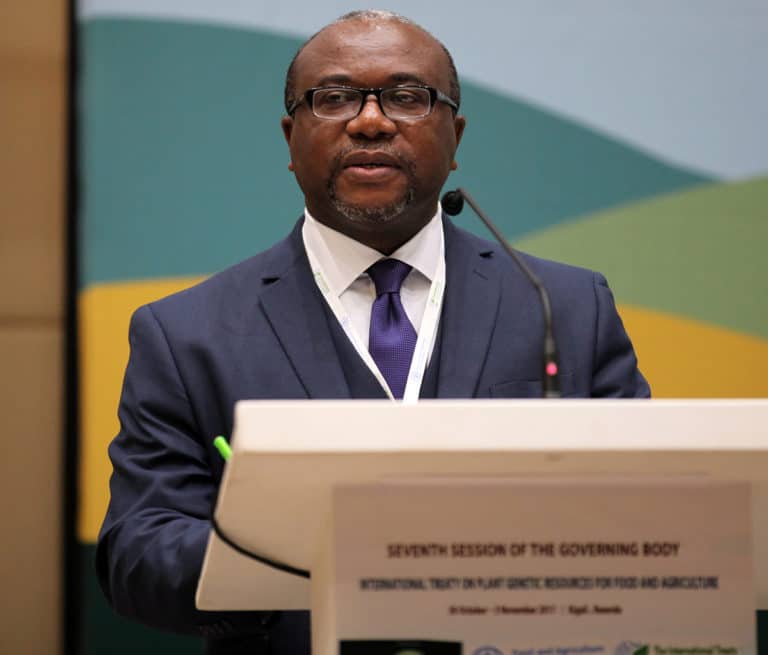
Kent Nnadozie
Dr Kent Nnadozie, Secretary of the International Treaty

The CBD, its Nagoya Protocol on Access and Benefit-Sharing and the International Treaty all form part of the international regime on access and benefit-sharing and share objectives related to the conservation and sustainable use of biodiversity and the sharing of the benefits arising out of the use of genetic resources. The three global agreements also all recognise the important role of communities in conserving and sustainably using biodiversity.

The Nagoya Protocol recognises the special nature of genetic resources for food and agriculture and the International Treaty addresses the specific features of plant genetic resources for food and agriculture. The Secretariats of the International Treaty and the CBD have been working together to ensure that mutually supportive implementation of these instruments supports enhanced access to genetic resources and the sharing of benefits arising from their use, which will in turn contribute to economic development, innovation and research. The MoC signed today renews and enhances collaborative efforts to this end.

Dr Cristiana Paşca Palmer, Executive Secretary of the Convention on Biological Diversity, said: “I believe that the partnership between the International Treaty and the Convention on Biological Diversity is an outstanding model of cooperation for a common goal.

“The achievements under the Nagoya Protocol will strengthen the implementation of the Treaty, while the Treaty’s successes will support the CBD in the accomplishment of its mandate. I thus could not be more pleased with our cooperation to date and I look forward to many more opportunities for us to work together in the future.”

Dr Kent Nnadozie, Secretary of the International Treaty, said: “Building on the strong and long-standing partnership with the Convention, this agreement will further expand our collaborative efforts to provide better services and support to governments and other stakeholders towards the achievement of our common objectives.

“It will also help mainstream biodiversity into existing programs and policies, and further reinforce the continuing dialogue between environment and agriculture, based on the development of concrete interfaces between the two sectors.”

The MoC includes the development of synergies between the International Treaty’s Global Information System and the CBD’s Access and Benefit-sharing Clearing-House; a joint initiative for on-farm conservation; work on sustainable use of plant genetic resources for food and agriculture and protected areas; and the promotion of the importance of biodiversity and plant genetic resources for food and agriculture for food security and nutrition under a changing climate.

As part of the MoC, the two secretariats will work together in undertaking and promoting workshops, seminars and other events; and, in the coordination of technical assistance at the international, regional, sub-regional and national levels.

Dr Nnadozie said: “I am particularly pleased with the success of our close collaboration to date, which should serve as a model for better coordination and collaboration between the stakeholders of the respective agreements at the national level.”

Dr Paşca Palmer said: “This partnership has already led to concrete activities and tangible results and in this new phase I would like to demonstrate how our collaboration creates new value and brings these results to governments in a practical way.”
Global Biodiversity Information Facility surpasses one billion records

0

A global platform for sharing information about the world’s biodiversity has passed a major milestone, with the publication of the one-billionth species record of where a species lives through the Global Biodiversity Information Facility (GBIF).

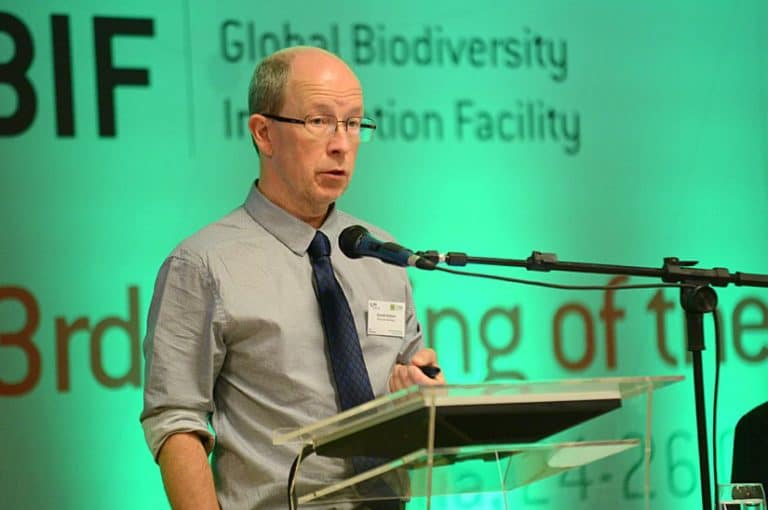
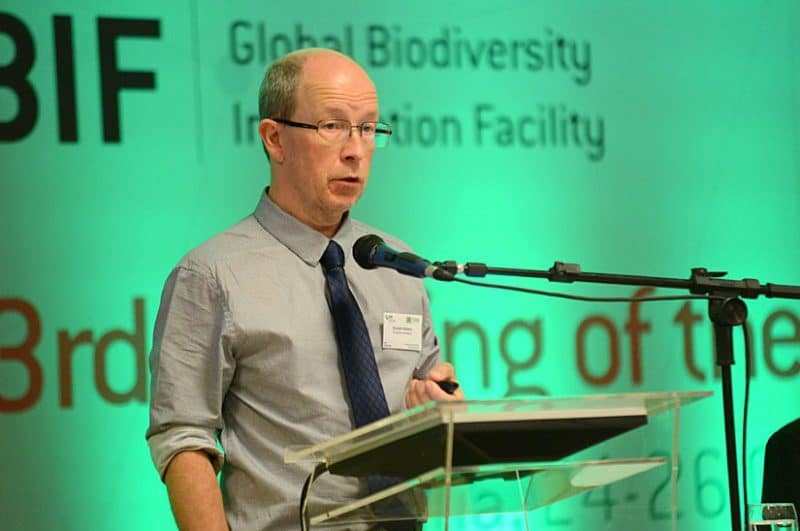
Donald Hobern
GBIF’s Executive Secretary, Donald Hobern

GBIF is an international network and research infrastructure aimed at providing anyone, anywhere, open access to data about all types of life on Earth. Records freely accessible to all through the GBIF.org platform provide researchers and policy makers with an unrivalled information resource, bringing together evidence gathered over centuries and across the whole planet on where and when species have been observed or collected.  The facility is funded by the world’s governments.

Commenting on the one-billion record milestone, GBIF’s Executive Secretary, Donald Hobern, said: “If we want to address the big challenges we face around the future of land use, conservation, climate change, food security and health, we need efficient ways to bring together all the data capable of helping us understand the changing state of the world and the essential role that biodiversity plays at all scales.

“This milestone shows that today’s GBIF is prepared for continued growth and ready to handle the massive volume of data we expect to see from other new technologies and sources.”

GBIF confirmed the one-billion record landmark as delegates from 141 countries gathered in Montreal for the second meeting of the Subsidiary Body on Implementation (SBI2) to discuss the next phase of implementing the objectives of the Convention on Biological Diversity, in anticipation of the end of the Strategic Plan for Biodiversity 2011-2020.

Dr Cristiana Pasça Palmer, Executive Secretary of the Convention on Biological Diversity, said: “Stepping up action to combat biodiversity loss is going to require access to the best possible data and information. GBIF has demonstrated the power of big data to be harnessed in support of our objectives.

“We have the potential to unlock vast additional information resources to inform smarter responses – if we are willing to share the information we hold and invest in the infrastructure and capacity to make it available for the public good.”

The information available about the occurrence of over one billion species through GBIF is the result of the collective efforts of more than 1,200 institutions in 123 countries that willingly share data in standard digital formats, arising from natural history collections, research projects, species monitoring programmes and citizens’ observations, among many other sources.

Data accessed through GBIF.org is cited in approximately two research publications each day, covering topics as diverse as conservation planninginvasive alien speciesimpacts of climate changefood security and human disease risk.

GBIF’s collaborative network of 56 participating governments and 36 international organisations shares skills and experiences in the mobilisation and use of biodiversity data, including through capacity programmes such as Biodiversity Information for Development, funded by the European Union, supporting over 60 projects to enhance the availability of biodiversity data for policy needs in Africa, the Caribbean and Pacific.

We’re doomed, cries fisherman over dwindling Lake Victoria fishing

0

Maurince Otieno has been a fisherman for over 15 years.

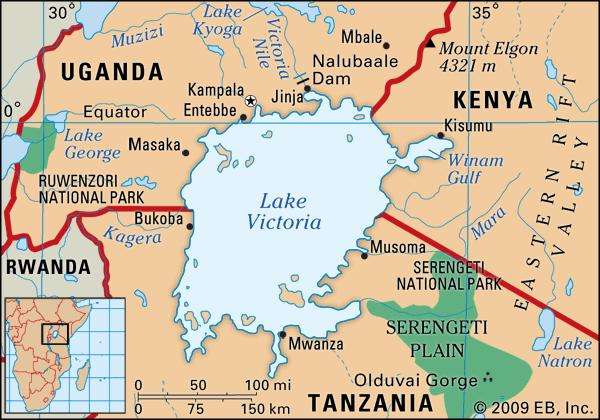
Lake Victoria
Some 40 million people in Kenya, Uganda and Tanzania depend directly or indirectly on the Lake Victoria

He inherited this outstanding skill of fishing from his late grandfather, George Omollo Otieno, who was a renowned fisherman in his time.

For the past several months, Otieno, who does his fishing along the shores of Dunga beach in Lake Victoria, has been experiencing difficulties in his fishing expedition despite his bloodline skills.

Otieno, currently in his late 40s, says he no longer harvests sufficient fish to meet the needs of his immediate and extended family that depends on him.

This has made him a very scared man. He is afraid of what the future holds for him and his family as his only source of income continues to diminish very fast.

“We are doomed. I don’t know how I will support my family now that I hardly have any catch. I am a worried man,” he says as we set out for a fish expedition along the shores of Lake Victoria in Dunga beach.

Ever since the passing on of his father more than 10 years ago, Otieno notes he has been eking out a living out of the turbulence waters of Lake Victoria.

He observes that his father and grandfathers, were all fishermen and they passed the skills of fishing on to their siblings.

But Otieno notes that the tradition that has always been passed down from one generation to another was bound to come to an end in his life time as fishing spots continue to diminish along the shores of Lake Victoria.

“I am certain that my generation will have nothing to pass down to coming generation as it has been our norm and tradition,” stresses Otieno in a low tone with a sense of disappointment.

He notes that his family has been forced to find alternative ways to make a living besides fishing which has been their bloodline.

“I don’t know what is happening to our God given lake, we hardly catch any fish,” narrates Otieno as he jumps into his dilapidated boat.

“You see all these,” he says as he hands me a life jacket and shows me a fleet of abandon boats that were on the verge of rotting, “the owners abandon them here due to declining fish in the lake.”

With disillusionment evident in his hoarse voice, he engages the forward gear to his boat and the engine roars as we begin to drift and gain momentum as the boat accelerates.

I engage a handful of fishermen that we find, and their sentiments were similar.

After three hours of fishing with no success, we docked the boat at the shores of Dunga beach.

It was at this beach that I was lucky to bump into a researcher and scientist who, according to Otieno, has been doing “serious research “of the lake.

Dickson Wallace, the scientist and researcher, says he has been conducting research on the lake for over three years.

Wallace notes that the lake was adversely being impacted negatively by climate change that is common with extreme weather patterns over a period.

He attributes extreme weather changes to climate change, which he says was also being experienced not only in Nyanza region of Kenya but also across other neighbouring towns.

To this end, he observes that the rampant variation particularly in temperatures, may have been the cause of declining marine life at Africa’s largest lake – Lake Victoria.

“It is no doubt that a significant number of aquatic marine are usually affected by extreme weather conditions caused by climate changes,” he says.

A report released by the International Union for Conservation of Nature (IUCN) this year which assessed the extinction risk of 651 freshwater species in Lake Victoria including fish and aquatic plants found that up to 24 percent of these species are being threatened with extinction.

The world nature watchdog cautioned that “three-quarters (76 percent) of these endemics are at risk of extinction.”

Will Darwall, the co-author of the report who heads IUCN’s freshwater biodiversity unit, said in the report that although “the Lake Victoria Basin is incredibly rich in unique species found nowhere else on Earth, its biodiversity is being decimated.”

Apart from climate change, the report attributed this to Industrial and agricultural pollution, invasion of the deadly water hyacinth, over-harvesting of fish and wetland degradation among others.

One of the worst affected fish species is the African Lungfish, according to this report.

As discovered by this report, Kibet Chemiron, a marine expert and fellow at the University of Port Elizabeth in South Africa, confirms the negative effects of climate change on freshwater species in Lake Victoria.

According to Kibet, most aquatic animal species that are used for human consumption are poikilothermic (animals whose internal body temperatures change with the temperature around them) and are usually affected by extreme weather brought by climate change.

Chemiron explains that any changes in habitat temperatures usually influence fish metabolism, growth rate, productivity, seasonal reproduction, and susceptibility to diseases and toxins.

“Fish population may be reducing drastically as a result of these factors emanating from climate change,” he says.

Rose Anyango, a resident who has a mini food joint at the beach says they no longer have access to clean water.

“The dams where we used to access clean water are now filled with mad caused by flooding water,” she states.

Courtesy: PAMACC News Agency

$3tr sovereign wealth funds commit to Paris goals

0

Six sovereign wealth funds which collectively represent more than $3 trillion in assets have committed to only invest in companies that factor climate risks into their strategies, thereby helping to achieve the climate goals of the Paris Agreement.

Norges_Bank
The Oslo, Norway-based Norges Bank Investment Management is a part of the One Planet Sovereign Wealth Fund Working Group

Given the size, long term investment horizons of sovereign wealth funds (SWFs), and the financial risks posed to SWFs should warming exceed 1.5°C above pre-industrial levels, SWFs are in a unique position to both benefit from sustainable market outcomes and to accelerate the transition to a low carbon economy.

The six funds are organised in the “One Planet Sovereign Wealth Fund Working Group”,  established in December 2017 at the One Planet Summit in Paris, France. The working group consists of the Abu Dhabi Investment Authority, Kuwait Investment Authority, the New Zealand Superannuation Fund, Norges Bank Investment Management of Norway, the Public Investment Fund of the Kingdom of Saudi Arabia, and the Qatar Investment Authority.

In a joint statement from all six SWFs, they said: “By using the Framework, SWFs can reinforce their long-term value creation, improve their risk-return profile, and increase long-term portfolio resilience by factoring and integrating climate issues into their decision-making.”

They added that they hope “other long-term institutional investors will be able to make use of this Framework in the execution of their mandates and investment objectives.”

The framework is based on three principals: alignment, ownership, and integration.

Alignment of investment decisions with climate change conscientiousness includes the recommendation of public reporting on the alignment and the consideration that the financial risks from climate change may prevent SWFs from delivering the same returns in the future.

The second principal of ownership encourages companies to take responsibility for climate change in their business strategy and planning, governance, and risk management.

Companies are expected to understand the implications of their greenhouse gas emissions and take responsibility for reducing the emissions to levels agreed upon in the Paris Climate Agreement.

SWFs are also encouraged in the framework to help companies understand the financial risks of climate change that the Paris Agreement seeks to address.

Ownership also suggests that SWFs require companies to provide regular reporting of climate change related data according to the Greenhouse Gas Protocol and the Task Force on Climate-related Financial Disclosures.

The third and final principal is the full integration of climate change related risk and investment opportunities into the SWF investment strategy. Funds should be managed according to the expected transition to a low carbon economy and include a focus on investment in climate change adaptation and mitigation to reduce investment risks. Climate change risk should also be considered in new investment decisions.  An investment that would increase greenhouse gas emissions and thus climate change will lead to greater risk in the future and should be avoided.

Reliable data, key to SDGs implementation – Presidential aide

0

The Senior Special Assistant to the President on Sustainable Development Goals (SDGs), Princess Adejoke Orelope-Adefulire, on Monday, July 9, 2018 said that a reliable data collation was crucial for effective implementation of SDGs.

Adejoke Orelope-Adefulire
Senior Special Assistant to the President on Sustainable Development Goals (SDGs), Princess Adejoke Orelope-Adefulire

Orelope-Adefulire made this assertion in Abuja at the opening ceremony of a two-day training retreat on “Capacity Imperatives for Implementing SDGs in Nigeria’’.

She said that the retreat was organised to bring together key stakeholders driving the implementation of SDGs at the national, state and local levels.

The presidential aide said the idea was to enable the participants to understand the capacity requirements for SDGs implementation.

“In order to meet up with the resolutions of the UN for follow-up and reporting on the SDGs, we must strengthen our statistical capacities.

“It is important we build our capacities to collect quality, timely and reliable data and to analyse and interpret such data to inform policy decisions.

“Deliberate efforts must be made to ensure that programming and budgeting processes are connected with clear Key Performance Indicators (KPIs) of the SDGs,” she said.

Orelope-Adefulire commended the National Bureau of Statistics (NBS) and the UNDP for collaborating with the Office of the SDGs on data mapping and determination of 126 baseline SDGs indicators to benchmark progress on SDGs.

She urged state governments to put in place, a robust and comprehensive statistical information system for monitoring progress on SDGs implementation.

She said the Federal Government was in the process of ensuring that state governments integrate the SDGs into their short, medium and long-term development plans.

According to her, the successful implementation of SDGs requires the engagement of many stakeholders, encompassing government.

“The implementation efforts must be guided by a careful analysis and an understanding of the roles of different stakeholders in the country’s development process.

In his remark, Mr Waziri Laminu, the Secretary, SDGs Programme, said the implementation of the 2030 agenda requires partnership as well as integrated and innovative approaches to sustainable development.

He said the Office of the SDGs had placed high premium on mobilisation of human resources for the implementation of the SDGs through capacity building.

He said the training retreat was designed to address some of the capacity gaps to ensure successful implementation of the SDGs in Nigeria.

Laminu, therefore, implored the participants to take advantage of the capacity building workshop to acquire relevant knowledge and information needed to translate the agenda to action.

By Monday Ijeh

Government, EU, UNICEF provide 480 solar boreholes for Osun communities

0

The European Union (EU) and the United Nations Children’s Fund (UNICEF) in collaboration with the Federal and Osun State Governments have provided 480 solar boreholes and hand pumps to communities in Osun.

Gov.-Rauf-Aregbesola
Gov. Rauf Aregbesola of Osun State, Nigeria. Photo credit: thesheet.ng

Alhaji Olaposi Adiatu, the General Manager, Osun Rural Water and Environmental Sanitation Agency (RUWESA), made this known while speaking with newsmen on Monday, July 9, 2018 in Osogbo, the state capital.

Adiatu said that the projects were part of the EU/UNICEF Water Supply and Sanitation Sector Reform Programme II, which involves provision of water, sanitation and hygiene facilities in communities, schools, health centres and public places.

He said that the projects were aimed at providing potable water for over 60,000 people in the state.

Adiatu said that communities in Odo-Otin, Ifedayo and Ayedaade Local Government Areas were the beneficiaries of the projects.

According to him, over 129 of such projects are still ongoing in other communities.

Adiatu said that the EU, UNICEF and Federal Government contributed 70 per cent of the cost of the projects, while Osun Government contributed 15 per cent.

He explained that the benefitting local governments contributed 10 per cent to the projects, while the host communities contributed five per cent.

Meanwhile, some residents of the communities where the projects were located commended the Federal Government, EU and UNICEF for the initiative.

Mrs Asimotu Jolayemi, a resident of Odo-Otin Local Government Area, said the hardship suffered by the people in accessing potable water had now become a thing of the past, following provision of the boreholes and hand pumps.

According to Jolayemi, the lack of clean water in the local government areas has been a major concern of residents.

“We suffered seriously because of lack of water.

“Children must go to the river to fetch water every morning and they will not be able to go to school on time.

“Our children and even the adults fell sick often because of the kind of water we were drinking.

“Now, we have overcome the water problem in these communities, ‘’ Jolayemi said.

By Victor Adeoti

Niger seeks government intervention in gully erosion menace

0

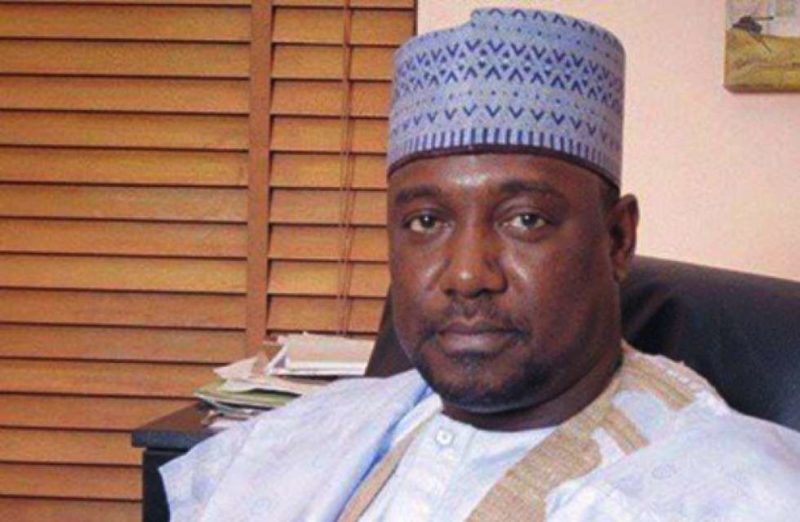
Gov. Abubakar Bello of Niger State on Monday, July 9, 2018 called on the Federal Government to assist in tackling gully erosion confronting the state.

Alhaji-Abubakar-Sani-Bello
Alhaji Abubakar Sani Bello, Governor of Niger State

The governor made the call when he visited Rafin-Gora village, to condole with the people over the recent floods that claimed the lives of eight persons in two villages and rendered many homeless.

The News Agency of Nigeria (NAN) reports that the eight persons, mostly children, died following a downpour on July 3 in Rafin-Gora and Gangare Saji communities in Kontagora Local Government area of the state.

Bello also appealed to the Federal Government to intervene on the state ecological situation, adding that the situation was beyond the financial capability of the state.

“The recent flood was devastating because it claimed the lives of innocent people as there was no proper concrete drainage in the area.

“We need Federal government assistance, especially in communities experiencing gully erosion.

“I am made to understand that, officials from National Emergency Management Agency (NEMA) have visited the area to assess the damage done, probably to see the assistance they could offer,” he said.

The governor said that residents of the affected areas would be resettled temporarily, pending when intervention from the Federal Government would come.

Bello urged other communities experiencing gully erosion to relocate whenever the threat of flood was high.

“My major fear is that, most rains are usually at night when the people are sleeping, this can be difficult to control.

“My advice to communities with threat of flood is to vacate the area temporarily to avoid further disaster.

“The affected residents will be relocated before we find lasting situation to the problem.”

Bello also appealed to members of the affected communities to see their loss as an act of God.

By Rita Iliya

World’s fish consumption unsustainable, UN warns

0

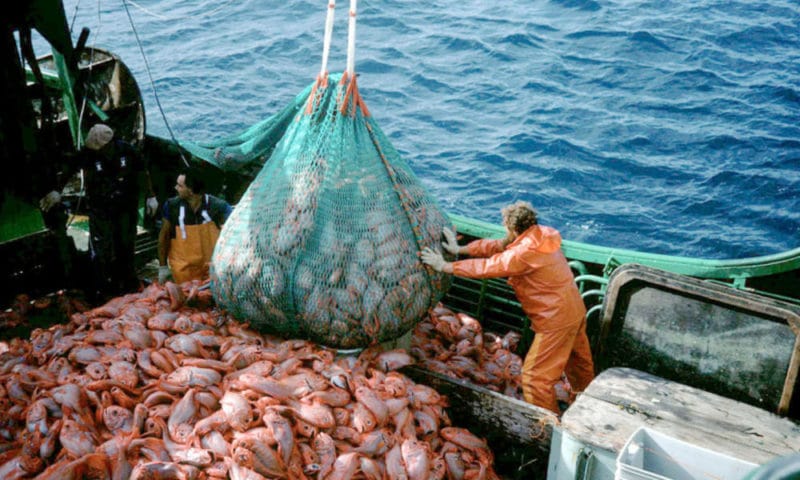
A third of the world’s oceans are overfished and fish consumption is at an all-time high, raising fears over the sustainability of a key source of protein for millions around the world, the UN warned in a report on Monday, July 9, 2018.

Overfishing
Large scale fishing

According to a report released by the Food and Agriculture Organisation, overfishing is particularly bad in parts of the developing world where many people already struggle to get enough nutritious food to eat.

“There’s too much pressure on marine resources and we need significantly more commitments from governments to improve the state of their fisheries,” said Manuel Barange, director of the FAO fisheries and aquaculture department.

“We predict that Africa might have to import fish in the future,” he told the media, adding that shortages could lead to higher prices, disproportionately affecting the poor.

Barange said Africa had great potential for aquaculture, but needed support in terms of finance, feed and supply of fish.

Fish farming or aquaculture – the fastest growing agricultural sector for the past 40 years – has been largely responsible for making more fish available, said the report.

As catches from the open sea continue to dwindle, more countries are turning to fish farms.

In Algeria, the government is encouraging farmers in the Sahara Desert to grow fish to increase their income and boost fish production.

Critics say it can damage the environment and put disease and invasive species into the wild, but Barange said the solution was to have “proper regulation, legislation and monitoring and control”.

Traditional fishing nations are also promoting the potential of fisheries to improve nutrition and end hunger.

Globally, the percentage of stocks fished at unsustainable levels increased to 33.1 in 2015, from 31.4 in 2013 and 10 in 1974.

Fish consumption reached an all-time high of 20.2 kg (44.5 lb) per person from 9 kg in 1961, said the report, and further rises are expected as health-conscious consumers turn to fish.

Currently, 3.2 billion people rely on fish for almost 20 per cent of their animal protein intake.

Shakuntala Thilsted, research programme leader at international non-profit, WorldFish, said reducing losses and waste would go a long way towards making fisheries sustainable, with an estimated 35 per cent of catches thrown away.

“Fish heads, fish bones are (the) parts that are most nutritious.

“Why aren’t we using innovative solutions to turn this into nutritious, palatable food?” she said.

Youths urged to serve as guards of the environment

0

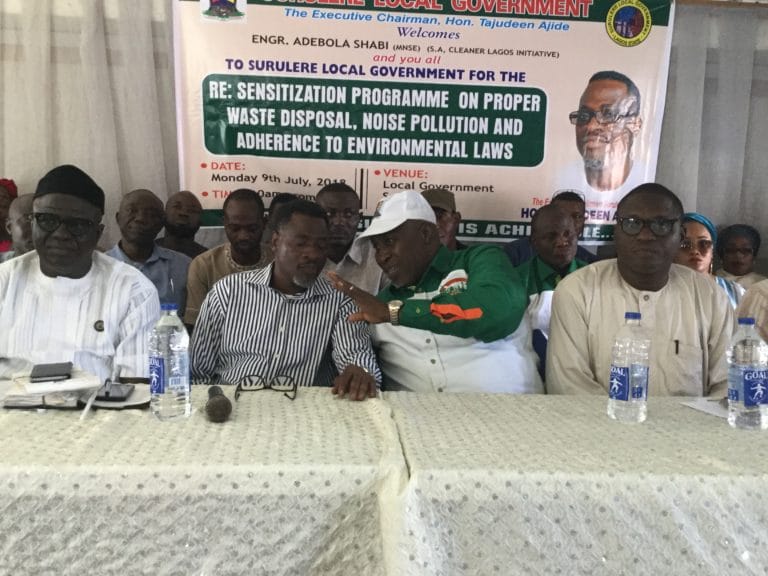
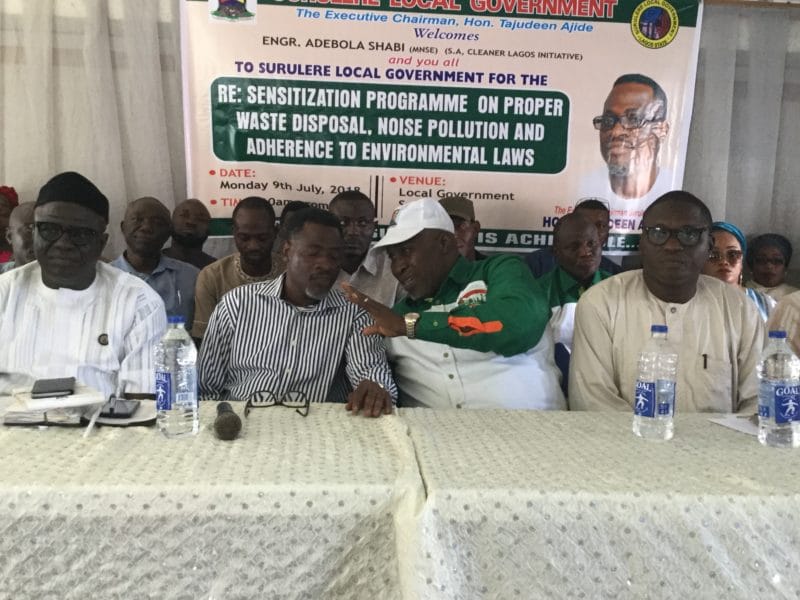
The Lagos State Government has called on youths to serve as environment guards to secure the state from environmental nuisance and health hazards.

Youths
From Left Mr Tajudeen Quadri, SSA to Gov. Akinwunmi Ambode on Community Affairs; Mr Tajudeen Ajide, Chairman Surulere LGA; Mr Adebola Shabi SA to Ambode on Environment and Mr Adewale Dsumu, Secretary to Surulere LGA. Photo credit: NAN

Mr Adebola Shabi, the Special Adviser to Gov. Akinwunmi Ambode on Environment, made the call at a sensitisation programme on proper waste disposal, noise pollution and adherence to environmental laws.

The News Agency of Nigeria (NAN) reports that the programme was organised by the Surulere Local Government Area.

Shabi said that youths should also engage in the clearing of waste in some black spots to achieve a clean environment and sustainable synergy at the grassroots.

The governor’s aide said that residents, especially youths should adhere to the environmental laws to achieve a healthy and sustainable environment.

“The state government should not be blamed for unclean environment; we need to have attitudinal change and change for improvement toward the environment.

“Surulere is one of the cleanest; we commend the council Head of Environment on his efforts toward evacuation of waste in the council area.

“We have to sustain the evacuation exercise; local government should start to engage environment guards, especially youths to ensure that waste is cleared in the area.

“Engage the youth is not by giving them money; make them environment guards and empower them to be useful to the state and themselves,” Shabi said.

He warned the residents against patronising scavengers and cart pushers, saying that they constituted nuisance to the society.

Shabi also urged the Supervisors for Environment in local government areas in the state to take full responsibility of educating and ensuring proper baggage of waste.

He encouraged the councillors to work together with the Cleaner Lagos Initiative to achieve a cleaner environment.

The council Chairman, Mr Tajudeen Ajide, said that there was need to continuously embark on sensitisation toward achieving environmental sustainability.

Ajide said that since inception of CLI, the council had been working in synergy to get involve in the daily evacuation of waste from within and around the council area and streets.

He urged the residents to ensure cleanliness of their environment and imbibe clean habit for a cleaner and healthier environment.

NAN reports that 2,000 waste disposal bags were distributed freely by CLI to residents at the event.

By Okuanwan Offiong

NiMet DG appointed into WASCAL Advisory Board

0

Director-General/CEO, Nigerian Meteorological Agency (NiMet), Prof. Sani Mashi, has been appointed into the International Advisory Board (IAB) of the West African Science Service Centre on Climate Change and Adapted Land Use (WASCAL).

Sani Marshi
Director-General/Chief Executive Officer of NiMet, Prof. Sani Mashi

A statement by Mr Muntari Ibrahim, General Manager, Public Relations Unit of NiMet, on Monday, July 9, 2018 in Abuja, said the appointment is for a period of five years, effective from June 2018.

Ibrahim said that Mashi’s appointment into the advisory board would contribute to the achievement of its sole aim of strengthening climate-related research in the West African Sub-region.

He said that NiMet’s enormous impact in the sub-region seemed to be gaining traction and yielding positive fruits with the recognition and appointment of Mashi into the advisory board.

According to him, with this and many more, NiMet is not resting on its oars, as its motherly arm stretches towards other African countries by way of technical support.

Ibrahim disclosed that one WASCAL Doctoral Research Programmes on West African Climate System (DRP-WACS), was being hosted at the Federal University of Technology Akure.

He added that WASCAL project was a large-scale research-focused programme initiated to develop effective adaptation and mitigation measures to climate change.

According to Ibrahim, the role of the board is to serve as advisor to help facilitate students’ selection, curriculum development and review, lecturers’ selection and students’ research proposal review.

“The board will also ensure the quality of the programme and its regional character, as well as deal with any other matters assigned by authorities of the WASCAL programme.

“The geographical focus of WASCAL is on West Africa, with in-depth research in case study watersheds in Benin, Burkina Faso, Nigeria and Ghana.

“WASCAL is designed to help tackle the challenge of climate change in a view to enhance the resilience of human and environmental systems to climate change and increased variability.

“It does so by strengthening the research infrastructure and capacity in West Africa related to climate change and by pooling expertise of ten West African countries and Germany.

“The programme is funded by the German Federal Ministry of Education and Research (BMBF),” he said.

By Sumaila Ogbaje