Home Blog Page 1794

Cautious optimism as Global Climate Action Summit closes

0

Against a backdrop of typhoons and hurricanes hitting different parts of the world, business and state leaders, indigenous groups, and investors gathered at the Global Climate Action Summit (GCAS) in California over two days and pledged to step up their climate commitments to meet the Paris targets and keep warming below 1.5°C.
Global Climate Action Summit
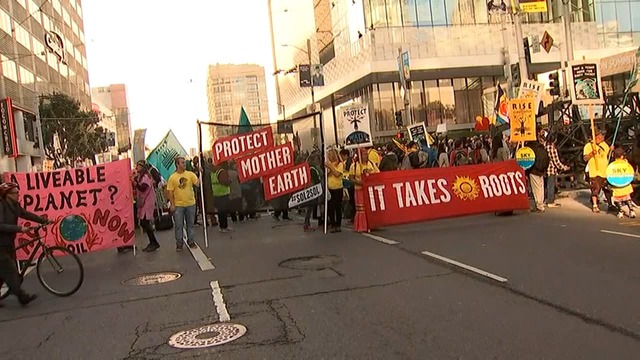
Protesters block the streets in San Francisco as the world gathered for the Global Climate Action Summit

Over 100 Mayors, state and regional leaders, and CEOs committed to become emissions neutral by 2050 at the latest and in line with the 1.5°C degree goal of the Paris Agreement.

More than 400 businesses will set science-based targets. More than 60 CEOs, state and regional leaders, and mayors said they will decarbonise their transport sector by 2030. Many cities, major businesses, state and regional governments committed to net-zero carbon buildings, cutting emissions equivalent to more than 50 coal-fired power stations.

Indigenous groups, state and local governments, and businesses launched coalitions to deliver climate solutions through forests, food and land. Nearly 400 investors managing $32 trillion will work to ensure a low-carbon transformation of the global economy with the urgency required.

The GCAS appears to have demonstrated that momentum is growing. But, according to civil society organisations, the world needs to do more and quicker to meet the climate change challenge and keep warming from devastating whole countries, states, communities and bolstering poverty, migration, diseases and insecurity.

They insist that climate change is faster than mankind and catching up quickly with Hurricane Florence just battering the US Southeast coast and Typhoon Mangkhut currently threatening millions in Southeast Asia. Mangkhut is expected to be as strong as Typhoon Haiyan, which left more than 6,000 people dead in the Philippines in 2013, according to observers.

In the light of the devastating impacts being suffered by people in the Philippines and the US, members of the Climate Action Network (CAN) and partners say it’s not enough and more needs to be done.

They stressed that more sub-national actors must step up globally with tangible commitments that collectively help meet the Paris targets and substantially reduce emissions, bending the curve by 2020.

But most importantly, they added, governments must listen to the terrorised voices of people fleeing Mangkhut and Florence and the calls of the sub-national actors who thet say backed words with action in the California Summit and step up to enhance their nationally determined contributions by 2020 in line with the Paris promise and the ratchet up mechanism.

The Summit closed with a call to action and to inclusive multilateralism to achieve the urgent and required transformative change in societies and economies.

The call to action consists of three asks:

  • STEP-UP AMBITION NOW: Commit to increased climate ambition, including in the form of strong national policies and updated, enhanced Nationally Determined Contributions (NDCs) by 2020, consistent with what science tells us is needed to achieve the goals of the Paris Agreement;
  • CHART A CLEAR PATH TO YOUR ZERO-CARBON FUTURE: Develop net-zero mid-century emissions plans to inform future NDCs and to guide long-term economic and technological transformation that ensures decent jobs and increasing community resilience; and,
  • EMPOWER BOTTOM-UP CLIMATE ACTION: Support and accelerate climate action at the local and regional level, with legislation, regulation, financing and policies that incentivize zero-carbon development, and through inclusive, transparent planning, dialogues and consultations that empower businesses, cities, states, investors, civil society, and individuals.

Jennifer Morgan, Executive Director, Greenpeace International, said: “The urgency and pace and scale we need now on climate change means a different level of climate leadership is required. We saw some commitments here at the Global Climate Action Summit from businesses and investors, but what we really need to see are commitments in line with full divestment from fossil fuels. That’s leadership. If you are taking the stage here to talk about your climate commitments, are you following up in your countries, with your heads of government?  Because that’s leadership. And we are lacking for leadership on the national level – with the exception of a few bright spots.”

Sven Harmeling, Global Policy Lead Climate change and Resilience with CARE International: “We welcome the strong signal of urgent action that business, states, cities and civil society sent at the Summit. Climate change impacts are hitting people hard already today, particularly women and girls. Another super storm is threatening people in the Philippines, and people on the US Southern coast face Hurricane Florence. It is time for all government and non-state actors to step up their climate ambition, such as those cities who announced in San Francisco that they would strengthen their resilience and reduce emissions in line with the global goal of limiting climate disruption to 1.5°C. Governments must take the voices from the Summit as a sign of confidence that they can go faster and further with policies that tackle climate change.”

Alden Meyer, Director of Strategy and Policy, Union of Concerned Scientists: “We have seen bold climate action on full display at the Summit these last two days.  Cities, states, businesses, NGOs, and others are charting the path to the transformation of the global economy that is needed to meet the ambitious temperature limitation goals world leaders agreed to three years ago in Paris.  Now we need those leaders to step up as well by strengthening their national commitments under Paris. The ever-increasing wave of powerful storms, floods, wildfires, heat waves, and droughts across the world underscores the huge economic and human costs of inadequate action.

“The good news is that the continuing revolution in renewable energy, efficiency, and storage technologies, together with emissions reduction and sequestration strategies in the forest and agriculture sectors, provides us with the suite of cost-effective solutions we need to confront the climate crisis.  All we need now is the political will to take full advantage of those solutions and bring the fossil fuel era to a close.”

Erika Lennon, Senior Attorney, Center for International Environmental Law (CIEL): “At the same time that we welcome the commitments of businesses, states, cities, and civil society at GCAS, we recognize more ambitious action is urgently needed. The devastating impacts of climate change on people around the world are increasing. Three years ago, in Paris the world committed to keeping global temperature rise below 1.5 degrees.

“It is past time for governments to take the action needed to end our dependence on fossil fuels, including by shifting financial support away from the fossil fuel industry. As typhoons and hurricanes batter southeast Asia and the southeast United States, it is increasingly evident that we need rights-based and people-centered climate action, and we need it now.”

Michael Brune, Executive Director of the Sierra Club: “The bold commitments announced at the Global Climate Action Summit are a testament to the strength of American cities, as well as countries around the world, that will not turn away from the crisis of climate change, as Donald Trump would have us do. We know that we cannot stop climate change alone, but together we can take on the challenge. This fight is far from over, and with unprecedented droughts, hurricanes, wildfires, and floods ravaging the globe, it has never been clearer that world leaders must join us in stepping up and facing the demand head on.”
Calls for increased action, new commitments trail Global Climate Action Summit

0

Top UN officials welcomed the outcomes of the Global Climate Action Summit that concluded on Friday, September 14, 2018 in San Francisco, showcasing a surge of climate action and commitments from regions, cities, businesses, investors and civil society; and calling on governments everywhere to step up their efforts to tackle climate change.

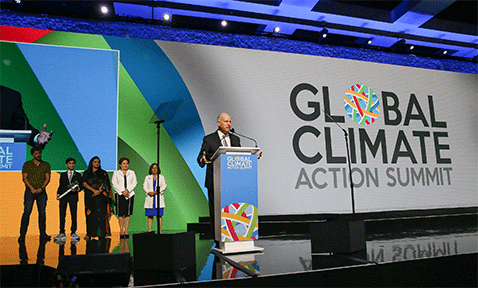
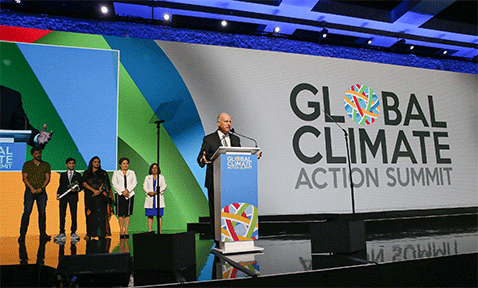
Californian Governor, Jerry Brown
Californian Governor, Jerry Brown, played host to an official programme of events that generated more than 500 commitments

Leaders from all sectors of society gathered at the event to demonstrate how they are “taking ambition to the next level” with a wave of fresh and brave climate action announcements that, if implemented, will generate over 65 million new, low-carbon jobs by 2030.

“We are experiencing huge economic losses due to climate change.” said UN Secretary-General António Guterres.” But the Global Climate Action Summit has brought together actors demonstrating the vast opportunity afforded by climate action. They are betting on green because they understand this is the path to prosperity and peace on a healthy planet.”

This momentum culminated in a landmark Call to Action, which was presented to the UN’s Envoy on Youth, Jayathma Wickramanayake, in a symbolic gesture to illustrate that it is future generations who will be most affected by the decisions of the current generation to build a better, more resilient world.

Accepting the Summit’s Call to Action on behalf of the United Nations, UN Climate Change Executive Secretary Patricia Espinosa said: “This Summit and its Call to Action make an important contribution towards achieving our collective goal: to keep global temperatures to 1.5 degrees Celsius in line with the Paris Agreement. It will encourage governments worldwide to step up their actions, demonstrating the vital role that states and regions, cities, companies, investors, and civil society are playing to tackle climate change.”

The event took place against a background of accelerating impacts of climate change, including Super Typhoon Mangkhut that made landfall on Saturday and Hurricane Florence, which continues to devastate communities on the east coast of the United States.

UN Environment highlighted the vital role of non-Party stakeholders in propelling the global fight against climate change forward, in an excerpt of their Emissions Gap Report launched at the Summit.

“Climate change is undoubtedly the defining issue of our time, and working together across nations, organisations and communities is the only way that we can tackle this enormous task and seize the huge opportunities,” said head of UN Environment Erik Solheim. “We have seen here over the past few days the inspiring amount of work that is already being undertaken by communities around the world to address these issues. If we manage to put our environment first, we can come out on the other end of this formidable challenge and achieve our common goal, a sustainable world for all.”

Patricia Espinosa’s speech at the Closing Ceremony underscored the need for all actors to embrace “inclusive multilateralism”, strongly mirroring the UN Secretary-General’s remarks on Monday in New York, where he called on leaders to adopt a sense of urgency to deliver a decisive response to climate change.

This spirit of collaboration is in keeping with the history of San Francisco, which witnessed the signing of the UN Charter in 1945, first establishing a rules-based international order that championed multilateralism over self-interest, and endorsed progress not through conflict, but through all people working together.

Over the last couple of days, Californian Governor, Jerry Brown, played host to an official programme of events that generated more than 500 commitments.

Participants used these events to unveil new commitments under five challenge areas – healthy energy systems, inclusive economic growth, sustainable communities, land and ocean stewardship, and transformative climate investments – captured in the Summit’s final communiqué and registered on UN’s revamped Climate Action Portal – aimed to send a strong signal to governments to step up action by 2020, when global emissions need to peak and then swiftly decline.

The outcomes of the Summit – a ‘call to action’ from actors who are seizing the opportunities to transition to a low-carbon economy – will provide a valuable contribution ahead of UN General Assembly discussions and New York Climate Week, taking place in a few days’ time.

UNDP Administrator Achim Steiner said, “Bold climate action could deliver $26 trillion in economic benefits and create millions of jobs. By bringing together cities, states, private sector and civil society, the Global Climate Action Summit is setting the stage for even more ambitious action needed to achieve the goals of the Paris Agreement.”

Business leaders were fully engaged in the Global Climate Action Summit: “It is clear that enlightened business leaders are taking their place at the vanguard of climate action and seizing the opportunity that this exponential shift to a cleaner and more sustainable economy represents,” said Lise Kingo, CEO and Executive Director of the UN Global Compact. “Now we need to ensure that all companies, industries and markets step up to the challenge.”

Additionally, the Intergovernmental Panel on Climate Change will issue a Special Report in October. The report will look not only at the impacts of 1.5C warming but also at the pathways that are still available to limit warming to 1.5C, while enhancing sustainable development and alleviating poverty.

Importantly, the outcome of the Summit will provide encouragement to governments as they finalise the implementation guidelines of the Paris Agreement in Poland in December of this year. It will guide them in preparing their national climate action plans in 2020 and give them bold options and examples for change in designing their short and long-term climate strategies.

Buhari delegates NEMA to declare ‘National Disaster’ on flooding

0

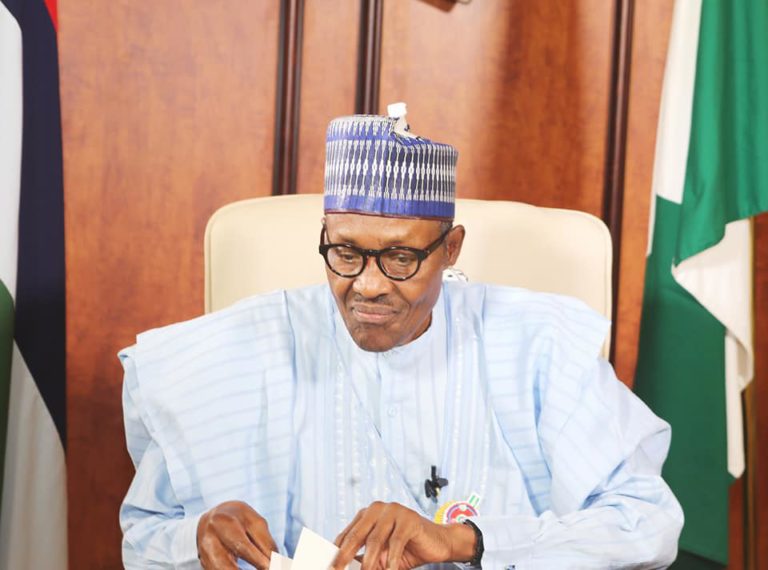
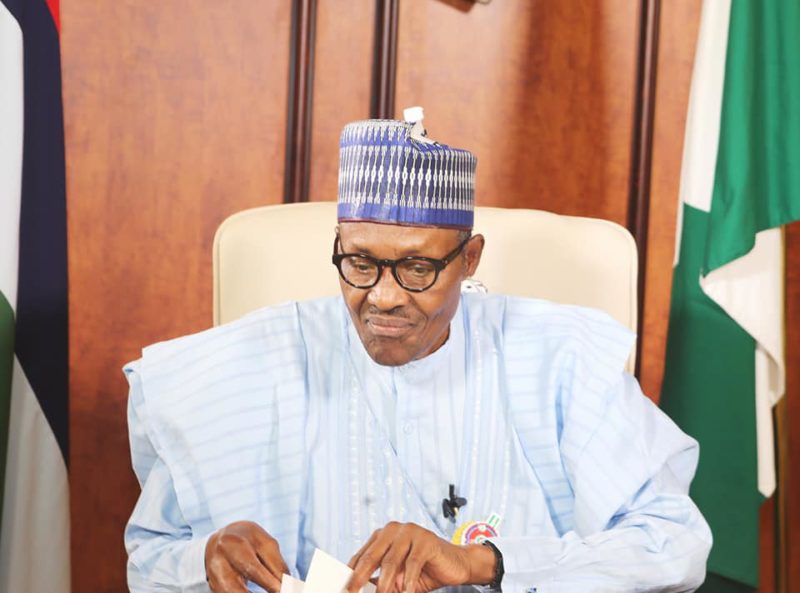
President Muhammadu Buhari has delegated authority to the Director-General, National Emergency Management Agency (NEMA), Mustapha Maihaja, to declare a “national disaster’’ if anticipated flooding turns a reality in parts of the country.

Muhammadu Buhari
President Muhammadu Buhari

Malam Garba Shehu, the President’s Senior Special Assistant on Media and Publicity in a statement in Abuja, said the President’s directive followed a warning by the Nigeria Hydrological Services Agency that Rivers Benue and Niger had almost reached levels that resulted in flooding in 2012.

The 2012 disaster had led to lost of lives and destruction of property in some parts of the country.

A letter to the Director-General, NEMA, titled: “Situation Report on the River Flood along the Banks of Rivers Benue and Niger’’, which was signed by the Chief of Staff to the President, Abba Kyari, said: “Delegation of authority to the Director General of NEMA to activate the Disaster Response Units of the military for possible search and rescue missions, and the procurement and proportionate stocking of relief materials and health related items up to N3 billion to provide for the needs of possible victims.’’

The letter also instructed the head of the emergency agency to provide regular updates to the President.

By Ismaila Chafe

WHO enhances HIV treatment cascade to improve interventions in South Sudan

0

The World Health Organisation (WHO) in collaboration with South Sudan’s health ministry has strengthened HIV treatment cascade to improve interventions and achieve the national 90-90-90 targets, an ambitious goal to end the pandemic.

Evans Liyosi
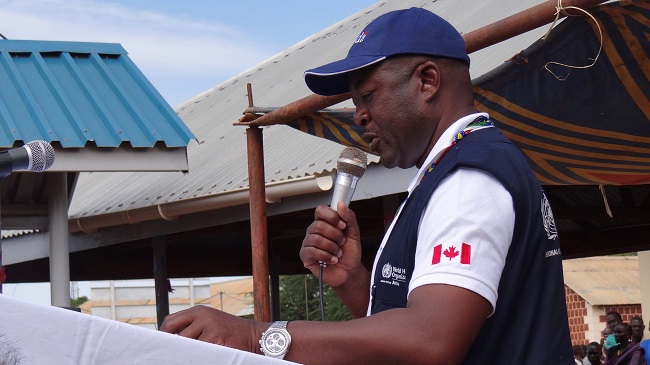
Evans Liyosi, WHO Representative for South Sudan

Moses Nganda, Medical Officer at WHO South Sudan, said over the last decades, Juba had continued to face humanitarian crises of varying nature and intensity weakening the health systems,

And this had hindered progressive coverage of health services including HIV.

“The HIV treatment cascade is a convenient tool for assessing integrated health service delivery for people living with HIV,” Nganda said in a statement issued in Juba on Saturday, September 15, 2018.

The HIV treatment cascade, also referred to as the HIV care continuum, is a system to monitor the number of individuals living with HIV, who are actually receiving medical care and the treatment they need.

The tool tracks the progress individuals make from the initial diagnosis to achieving a very low level of HIV in the body.

According to WHO currently, a large gap exists between the number of people, who have HIV, those, who are aware of their infection, those receiving effective treatment and those virally suppressed.

“To improve quality of care, address gaps and increase efficiencies along the continuum for better outcomes of treatment, WHO held a five-day training workshop on HIV treatment cascade,” said the UN health agency.

Nganda said health workers including medical doctors and clinical officers, nurses, counselors, pharmacist and monitoring and evaluation (M&E) officers reviewed and identified the HIV care cascades, programmatic gaps and support facilities with practical approaches to strengthening M&E systems.

Victora Achut, National HIV/AIDS Programme Manager, Ministry of health, said the current coverage of services was inadequate, and the rate of expansion is too slow to achieve the 2020 national 90-90-90 targets.

Achut said the ultimate aim of the National HIV treatment programme is for people living with HIV to be virally suppressed.

“For this to happen, people living with HIV need to be diagnosed promptly, linked to care, initiated on antiretroviral treatment (ART) and continuously adhere to medication,” Achut stressed.

UN urges African CSOs to advance continent’s environmental agenda

0

The UN Environment on Saturday, September 15, 2018 called on African civil society organisations (CSOs) to help advance essential environmental agenda that are critical to the effective implementation of policies and projects in the field of environment and sustainable development.

Julliette Biao Koudenoukpo
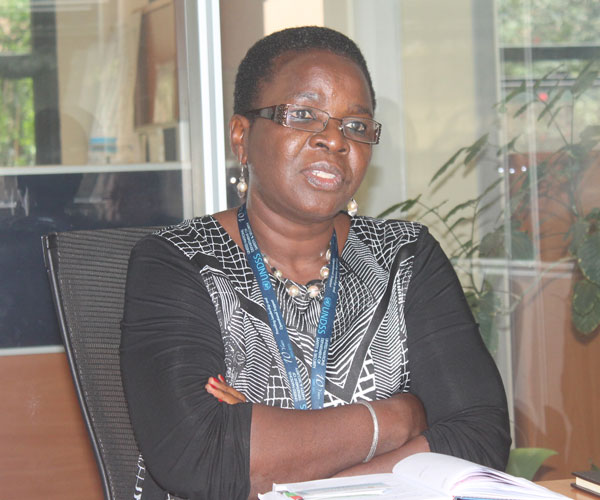
Dr. Juliette Biao Koudenoukpo, Director and Regional Representative, Regional Office for Africa UNEP

Juliette Koudenoukpo, Director and Regional Representative at the UN Environment Africa office, said that the CSOs could shape African countries’ innovative solutions to tackle environmental challenges that are facing the society.

“Use your networks and diplomacy to shape the environmental agenda in the continent,” Koudenoukpo said during the opening a two-day African Major Groups and Stakeholders forum in Nairobi.

Koudenoukpo said there was need to move faster from “business as usual” approach and devise ways and means to address issues such as rising energy costs, poverty, environmental degradation, pollution and social inequality.

She said that African continent had the capacity and the knowledge to innovatively overcome environmental challenges.

The UN Environment official noted that Africa needs to invest in innovative solutions to unlock its economic and social potential and create inclusive wealth for the well-being of their populations.

She called on the organisations to engage the youths in changing policy, since they have innovative ideas and initiatives capable of making a difference in transforming societies.

“You represent the many voices of those most likely to be directly affected by environmental crisis and the adverse effects of natural resource degradation,” Koudenoukpo said.

She said that the CSOs have a role in bridging the gap between science and policy and engaging key stakeholders in the implementation of the Sustainable Development Goals and the African Union’s (AU) agenda 2063.

The two-day consultation conference for the African Major Groups and Stakeholders is being held to prepare their inputs for the seventh special session of the African Ministerial Conference on the Environment which starts Monday.

The outcome of the meeting will be a regional statement including key messages by civil society from Africa.

This regional statement will be incorporated into the overall information document comprised all regional statements by civil society and presented as an official preparatory document to the UN Environment Assembly in 2019.

ABU to get N800m ecological projects

0

Secretary to the Government of the Federation (SFG), Mr Boss Mustapha, said on Friday, September 14, 2018 that the government had earmarked N800 million for the execution of ecological projects in Ahmadu Bello University (ABU), Zaria.

Ahmadu Bello University
Ahmadu Bello University, Zaria

Mustapha made the disclosure as the Special Guest of Honour at the 13th Annual General Assembly Public Lecture held at the ABU main campus, Samaru, Zaria, Kaduna State.

The lecture was organised by the ABU Alumni Association.

Mustapha said: “Mr Vice Chancellor, I have good news for you. Under my office as the Secretary to the Government of the Federation, we have a department that deals with ecological projects.

“We have undertaken one project here at the second phase, a project that will cost about N800 million has been approved for the university. Of course, it’s time to give back to our alma mater.”

He said as an alumnus of the university, he was highly excited that ABU was rated high among universities on the continent.

The SGF said the success story was made possible, partly by the diligent and focused impact of ABU Alumni Association as well as the contributions of its members.

He said such contributions were for the university and the growth and development of Nigeria.

Mustapha said that during his days in the university, students made friends at very intimate levels without prejudice to the region, religion or ethnic groups they belonged.

“We had genuine relationships that saw us behaving as Nigerian students first before other considerations.

“It is possible to rekindle those feelings and extrapolate same to the national level to enable Nigeria truly achieve a nation devoid of prejudices and other primordial sentiments.

“I make bold to state that the giant strides as well as conscious strategic planning by President Muhammadu Buhari-led administration in this direction in respect of attempt to evolving a true nation among Nigerians is like no other since the return to democracy in 1999.

“The administration, fully conscious of various sociological tendencies that in many African nations resulted in chaos and fiasco, has weathered the tendencies and pulled through despite many attempts to distract the president from delivering his and APC’s campaign promises.”

Mustpha assured students, youths and other Nigerians that the present administration was doing everything possible to ensure a brighter future for the citizens.

In a paper entitled: “Repositioning Education for National Development”, Hadiza Bala Usman, the Managing Director, Nigerian Ports Authority, appreciated the alumni association for being alive to its responsibilities.

“I want to appreciate the alumni association for continually awakening the consciousness of all students as well as succeeding administrations of the school to the important task of sustaining culture of excellence for which ABU is known within and outside of the country.

“I want to register my desire to improving the standard of Ahmadu Bello University. Education is the reason why we are here today, I am a stakeholder in this aspect.

“I am a child of ABU, whatever I present here is because of the fact that I was nurtured, born and brought up in ABU, it is my desire to see how ABU can be repositioned and indeed education in Nigeria can be repositioned.

“Of course, if the education sector is repositioned it will give us the kind of leadership and government the society deserves,” she said.

The ABU Vice Chancellor, Prof. Ibrahim Garba, said the university had no choice but to restructure but not in the way that people were calling for restructuring of the country.

“We have restructured and continue to restructure our academic delivery system. Our faculties have before now remained a cage, they have refused to grow and refused to modernise.

“One of the tasks of the success story is really to make sure that our university is competitive on the global scale such that we also give more access to the teaming countries that always solicit coming to this university.

“We have already achieved the restructuring or the break-up of the Faculty of Science into two Faculties now. We used to have a situation where one department in the former Faculty of Science was awarding three degrees.

“And there were quite a few of those departments, now we have Faculty of Physical Sciences and Faculty of Live Science but the biggest is breaking of the long-time standing culture of keeping a small republic called Kongo Campus.”

He said the Accounting Department and Business Administration Department had been moved from Kongo and merged with Economics Department at the main campus to form a brand new “ABU Business School”.

By Mohammed Lawal

Flood ravages 700 houses, farmlands in Rivers communities

0

No fewer than 700 houses including large farmlands have been affected by flash floods following heavy rains in parts of Rivers, the News Agency of Nigeria (NAN) reports.

Nyesom-Wike
Nyesom Ezenwo Wike, Governor of Rivers State

According to Mr Martins Ejike, the Rivers Coordinator, National Emergency Management Agency (NEMA), the flood began since August 2018.

He said that areas affected by flood in the State included Rumukpokwu, Elekohia and Rumueme communities and Mile 4.

Ejike said flash flood ravaged Mile 1, Obiegbo by Pipe line axis, Ahoada farm lands and some villages as well as Aba road by Intel axis.

He said that although no life was lost in the flood, economic activities and farming were affected at ABS Road Axis and Ahoada farmlands.

The coordinator said the State government had constructed drainage on major roadsides for free flow of water while sensitisation effort by NEMA were still ongoing.

According to him, the State Emergency Management Agency (SEMA) has not been inaugurated by the Rivers government.

He said that what was needed to cushion the effect of the flooding was stockpiling of necessary relief materials.

Ejike advised people living in affected areas to relocate to higher ground for temporary shelters in case of the bigger flood.

By Precious Akutamadu

Flood sacks 35 communities in Edo, renders 30,000 homeless

0

No fewer than 35 communities in Etsako East and Etsako Central Local Government Areas of Edo State have been sacked by flood, occasioned by unending rains and overflow of the River Niger.

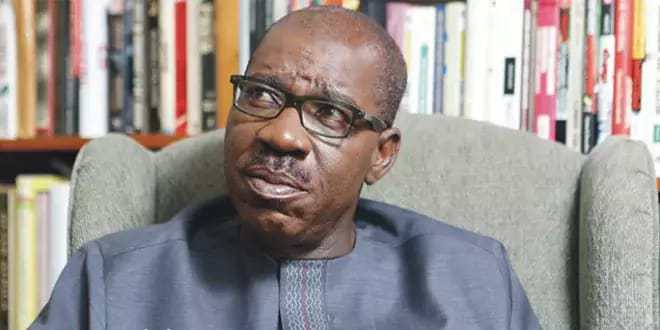
Godwin-Obaseki
Governor Godwin Obaseki of Edo State

The News Agency of Nigeria (NAN) reports that the flood, which displaced over 30,000 people, also damaged hundreds of hectares of farmland across the two council areas.

NAN reports that mostly affected by the flood are communities such as Udaba, Anegbette, Usomegbe, Uduchiz among others, all in Etsako Central Local Government.

Similarly, the flood also sacked the entire six Uneme clans in South East Uneme, Okpekpe, among others, in Etsako East Council area.

The Etsako East council boss, Mr Aremiyau Momoh, and his counterpart in Etsako Central, Mr John Akhigbe, said the disaster had gone beyond the purview of the council areas.

They called for urgent intervention from both the State and the Federal Governments.

The duo said camps for the Internally Displaced Persons had been placed in strategic locations across the council areas.

Akhigbe said aside the Resettlement Camp built aftermath of a similar disaster in 2012; about five other camps are being prepared for the victims.

Similarly, Momoh said six camps had been opened in Etsako East for the same purpose.

“We have tried our best as far as the councils are concerned, we are hoping and appealing to the Federal Government to urgently intervene on this matter,” he said.

In his remarks, the clan Head of Uzanu, South East Uneme in Estako East local government, Benjamin Ikani, also cried out over the sacking of six communities in his domain by flood.

The Monarch said more than 1,700 persons from the six communities are now displaced looking for where to stay.

Ikani listed communities affected by the flood to include Uneme-Ekwuekpele, Uneme-Ogwoyo, Uneme-Ukpeku, Uneme-Ogbethaya, Uneme-Yeluwa and Uneme-Unubu.

He said he relocated some widows, old women and children to Uzanu community to enable the children go to school.

He said the displaced persons had been moved to higher ground at Uneme-Yeluwa waiting for interventions from the state.

Ikani said he has reported the matter to the relevant authorities but was yet to get any help.

He expressed worry over stranded pregnant women that could no longer get access to ante-natal care.

“The flood started last week. You can see the women and children in my palace. Nobody died in the flood, but my people need help.

“The most pathetic situation is the pregnant women because of lack of health care, food stuff, medicine. The people can no longer harvest their crops.

“I brought 18 persons because all of them have left their villages to stay at Uneme-Yeluwa.”

Council moves to save flood-threatened Jigawa bridge from collapse

0

The Kirikasamma Local Government Council in Jigawa State has commenced erection of a sandbag embankment at Marawaji Bridge to save it from imminent collapse.

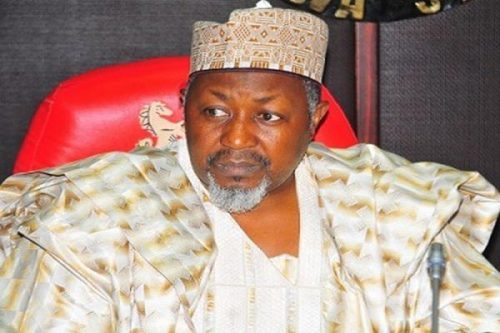
Gov. Muhammad Badaru
Gov. Muhammad Badaru of Jigawa State

The News Agency of Nigeria (NAN) reports that the bridge, which connects 20 other communities, is being threatened by flood.

Speaking at the project site on Saturday, September 15, 2018 at Kirikassama, the council’s Chairman, Alhaji Salisu Kubayo, said the council had acquired an excavator, a tipper and over 2000 sacks for the project.

“The release of water from Tiga Dam means that disaster will soon befall us if we do not take urgent measures to prevent this bridge from collapse.

“Due to the high volume of water, it washed away the surface leading to the two entrances to the bridge, making movements of people and vehicles almost impossible.

“We are now building a sandbag embankment to stop the water from going out of its way to destroy the bridge,” he said.

Kubayo, who personally took part in the manual labour, distributed over 1000 sacks to Community Based Organizations (CBO’s) for the construction of river embankments in their various localities.

He advised them to avoid being ravaged by flood like the neighboring communities and urged them to use the sacks for the purpose they were meant.

“Do not divert them for personal use, if you use these sacks judiciously, you will save lives and property in over 30 communities currently at risk of being destroyed by flood in Kirikasamma,” he appealed.

The chairman also advised farmers in the council to ensure that crops ready for harvest were harvested and moved to their homes immediately in order to avoid damages.

UK could be carbon neutral by 2050

0

In a joint report by the Royal Society, the Royal Academy of Engineering and Imperial College London, it has been found that the UK could be carbon neutral by 2050.

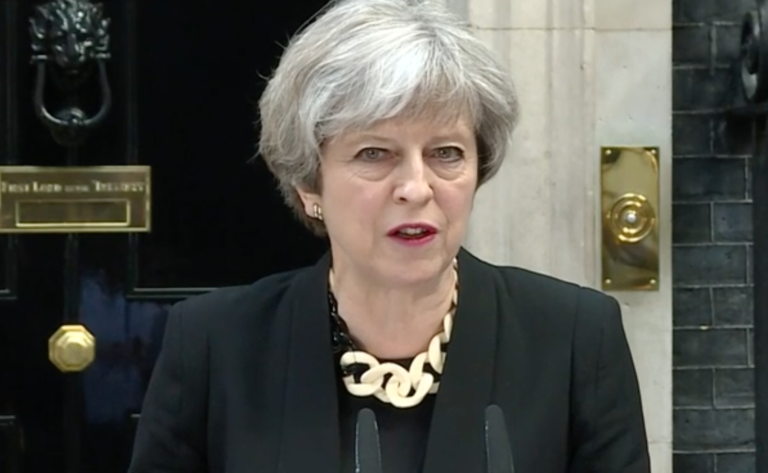
Theresa May
Theresa May, Prime Minister of the United Kingdom

The report states that the UK could cut new emissions of CO2 from 468 million tonnes in 2015 to 130 million tonnes in 2050.

However, the authors of the report say that just reducing emissions will not be enough to become carbon neutral. Instead, they propose that we need to proactively remove CO2 from the atmosphere, this would be set out in a series of “negative emissions” measures.

To ensure they meet this goal, the report finds that the UK could capitalise on a range of proposed techniques such as planting new trees, restoring wetland and forest habitats, and adding nutrients and alkalinity to oceans. These methods increase the amount of CO2 removed from the atmosphere by photosynthesis.

Other methods include bioenergy with carbon capture and storage, which captures CO2 from biomass power plants, transports it to a storage site, and deposits it where it will not enter the atmosphere.

Co-author Professor Nilay Shah, from Imperial’s Department of Chemical Engineering, said: “Using these methods at a large enough scale will be challenging, and will need a concerted effort from engineers, scientists and government. We must act now.”

By removing carbon dioxide emissions, it will help the UK to meet its targets set by the Paris Agreement.

Professor Gideon Henderson, Professor of Earth Science at the University of Oxford and chair of the report working group, said: “If the UK acts now on greenhouse gas removal, we can reach national emissions targets and show how a major industrialised economy can play a leading role in meeting the goals of the Paris Agreement.”

Presently, other countries around the world are trying to implement measures to ensure they meet the Paris Agreement goals. However, Australia and North America are currently failing to implement climate policy that will meet the intended targets.

Courtesy: Climate Action