As the world prepares to mark the 2018 World Polio Day, Rotary International clubs have advocated for clean and hygienic environment to end transmission of the ailment.
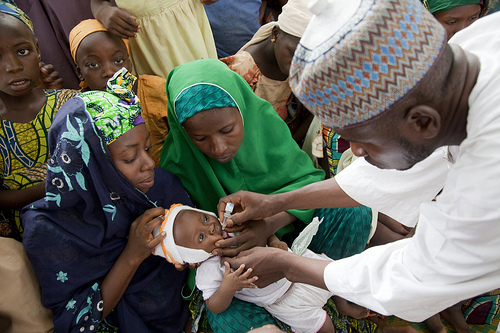
Polio immunisation in Nigeria. Photo credit: comminit.com
Flagging off the World Polio Day programme on Saturday, October 29, 2918 in Abuja, the incident manager, National Emergency Operations Centre for Polio, Director National Primary Health Care Development Agency (NPHCDA), Dr Usman Adamu said the environmental component was key to eradicating polio in Nigeria.
He said though there was no reported case of polio in the past 25 months, there were evidences of polio viruses in the environment.
Dr Usman, who represented the executive director of NPHCDA, Dr Faisal Shuaib, said though the country was close to eradicating polio, all hands must be on deck to achieve a polio-free generation.
“In 2012, 100 cases of polio were reported across Nigeria; the last was seen in 2016.
“We have come a long way, 25 months without a case of wild polio type. We are close, but we are not there yet, we are still seeing polio viruses in the environment,” he said.
The vice chairman, Nigeria National Polioplus Committee, Dr Kazeem Mustapha, said it was not yet uhuru for the fight against polio in Nigeria.
Dr Kazeem said the advocacy was to ensure that the tempo was maintained by getting every child immunised against polio and other diseases.
He added that different campaign platforms were engaged by Rotary International to create awareness and increase sensitivity in individuals, organisations and encourage stakeholders not to be complacent.
The Managing Director, United Healthcare Ltd., Dr Kolawole Owaka, called on Nigerians to imbibe healthy lifestyles to ensure a healthy living.
He said healthy living should not stop with good food but exercises.
Owaka recommended that there should be gymnasium centres in all the local governments where people could go to and partake in aerobic exercise to remove waste products from the body.
He added that the united healthcare, which promotes good health, does not believe in curative but rather steps to prevent diseases and other ailments.
The World polio Day will be celebrated on Wednesday, October 24.
Cashew Desk Officer in the Enugu State Ministry of Agriculture, Mr Chijioke Egbo, has called for planting of cashew in the southeast to prevent and control soil erosion.
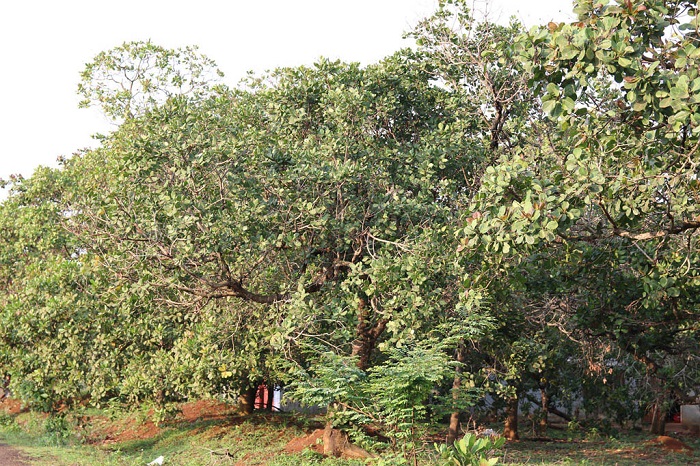
Cashew trees
Egbo,who gave the advice in Enugu, the state capital, in an interview with the News Agency of Nigeria (NAN) on Saturday, October 29, 2018, said cashew trees have the potential of saving the area from the current erosion menace if planted.
The desk officer explained that the extensive root system of the cashew tree enables it to spread to vast portions of land beyond the point where it is planted.
He said the root has the capacity to hold the soil firmly without being washed away by erosion, adding that the branches and leaves could also lower the density of rain on the soil.
“Cashew trees help in checking soil erosion due to their widespread branches and roots together with their leaves.
“Before cashew became an economic value crop and as one of one of the exporting commodities, the trees were planted for the purpose of a forestation, soil conservation which was used to check soil erosion,” he said.
Egbo, however, said that many people are not willing to plant cashew trees on their land due to the widespread of the roots.
He, however, called on cashew farmers in the state to embrace the planting of the trees as they would add to their economic values and as well prevent soil erosion in the area.
The Head of Training, National Water Resources Institute (NWRI) Kaduna, Dr Martin Eduvie, has cautioned farmers against the use of waste water for irrigation.
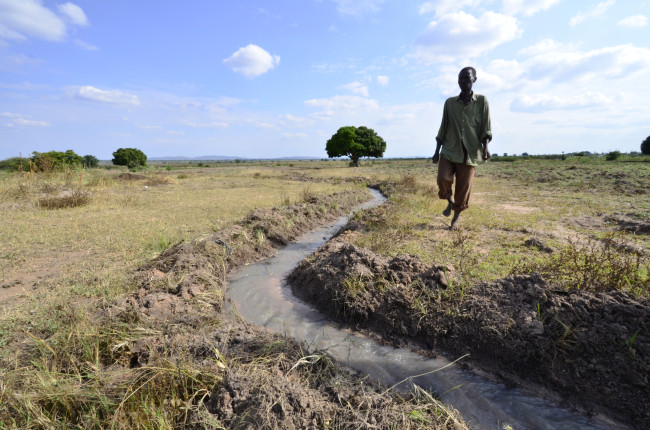
A man walks over an irrigation channel. Photo: Courtesy Neil Palmer/CIAT
He told News Agency of Nigeria (NAN) on Saturday, October 20, 2018 in Kaduna that some farmers rely on water from drains, lavatories, septic tanks or soakaway, among others, for irrigation, which are not ideal for agriculture.
He said that, in most cases, waste water from industries move into the river, and from there, farmers use the water directly, not knowing that most water from drains and industries contain chemicals that are not suitable for plants.
Eduvie advised consumers to be careful about the source of their vegetables, its smell, as well as how long vegetables last.
He, however, added that the issue of how long vegetables last might not be directly related to the type of water used in its irrigation until research is carried out.
He said farmers could source for cheaper methods of getting good water like the tube wells within the fadama zones, saying that there are lots of people ready to assist them to have tube wells that they could use both for agricultural purposes and for drinking.
He reiterated the readiness of the institute to train local farmers on how to acquire such water system.
He added: “NWRI offers free consultancy service in terms of drilling boreholes.
“We train farmers on the best sources of water for their plants, how to go about sourcing for the water, as well as educate them on the health hazards of using unsuitable water for irrigation on humans.”
Meanwhile, a NAN correspondent who went around farms in Rigasa, Igabi Local Government Area of Kaduna State found that most of the farmers use water from the gutter for irrigation.
Malam Musa Mohammed, a dry season farmer in Rigasa, said that 75 per cent of water used in his farm is from the gutter.
He explained that most farmers in the area believe that water from the gutters contain nutrients needed by plants to grow faster and thought it had no impact on humans.
Mohammed said majority of the local farmers preferred waste water for crops like tomatoes, lettuce, carrot, vegetables, okra, onion, cabbage, among other things cultivated during dry season.
Another farmer, Usman Aminu, also said waste water is considered low priced fertiliser because most of the farmers believe it contains nutrients.
He said that last year majority of wheat farmers recorded huge loss due to water scarcity across the northern states, saying “We depend on the waste water so that our crops will not die.”
The Lagos State Chapter of the Nigerian Institute of Building (NIOB) says it will ensure that operators in the industry strictly adhere to construction site safety measures.
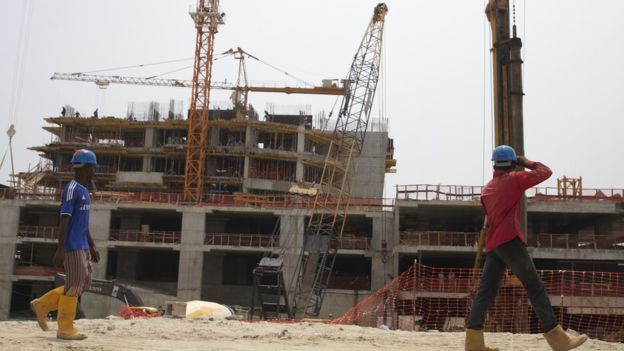
A construction site in Lagos
Its Chairman, Mr Adelaja Adekanmbi, made the promise on Friday, October 19, 2018 at a press conference heralding the 27th Conference and Annual General Meeting of the institute in Lagos.
Adekanmbi said that many professionals and artisans in the built environment sector had neglected, abandoned and violated safety rules and regulations.
According to him, this is unethical, as many casualties and loss of lives have been recorded due to non-compliance to construction site safety rules.
He blamed the cause of building collapse on negligence and reckless omissions by professionals and artisans.
Adekanmbi said negligence by operators, particularly artisans, should be addressed if the issue of casualties at sites could be curtailed.
“The artisans are the most vulnerable when issue of accidents at construction site is concerned, yet many of them still find it difficult to comply with safety rules.
“Rarely do professionals like architects, surveyors, builders or engineers die on site, but artisans are the most vulnerable to site accidents.
“Many of the artisans pay deaf ears to safety tips like wearing helmets, boots, safety jackets, sunglasses, among others, in the course delivering their services.
“The programme, which will hold for two days from Wednesday, October 24, 2018 to Thursday 25, will educate operators in the industry on how to identify safety hazards and ways to mitigate them.
“They will also be educated on the implication and rights of the employees and employers for not using the Personal Protective Equipment (PPE) as well as not providing it for our operatives on site,” he said.
Adekanmbi reiterated the commitment of the institute to zero per cent tolerance of site accidents in Lagos State, stressing that all stakeholders should contribute to sensitisation campaigns on the need for adherence to site safety measures.
He said that the institute had embarked on retraining and retraining of building artisans on site safety measures and enhance their competence in the profession.
Adekanmbi urged the public to always report to authorities like the Lagos State Safety Commission about construction sites observed not complying with the construction site safety measures.
The theme of the conference is: “Safety, Health and Environmental Concerns and their Management on Building Projects in Lagos State: Holistic Approach and Best Practices”.
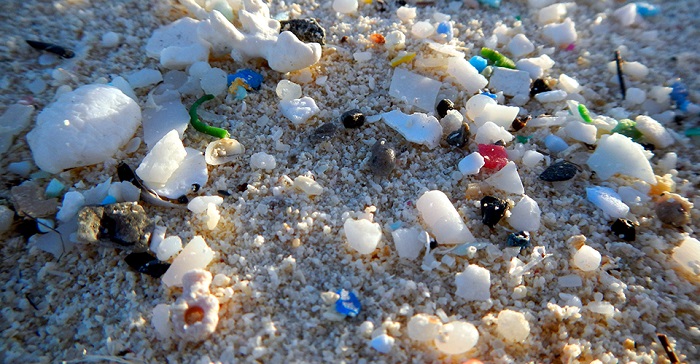
Over 90% of sampled salt brands globally were found to contain microplastics, with the highest number coming from salt sourced in Asia, according to a new study co-designed by Kim, Seung-Kyu, Professor at Incheon National University and Greenpeace East Asia.
Microplastics
The study, which has been published in Environmental Science & Technology, a peer-reviewed scientific journal, analysed 39 various salt brands globally, showing that plastic contamination in sea salt was highest, followed by lake salt, then rock salt – an indicator of the levels of plastic pollution in the areas where the salt was sourced. Only three of the salt brands studied did not contain any microplastic particles in the replicated samples.
“Recent studies have found plastics in seafood, wildlife, tap water, and now in salt. It’s clear that there is no escape from this plastic crisis, especially as it continues to leak into our waterways and oceans. We need to stop plastic pollution at its source and therefore call upon the accountability of big corporates in this crisis. They need to reduce their plastic footprint and take on the problem they have created,” said Awa Traoré, West Africa Oceans Campaigner at Greenpeace Africa.
“We also need to see the effective implementation of single use plastics ban laws in African countries and not only strong commitments from governments. For the health of people and our environment, it’s incredibly important that these big corporates be pushed to go beyond recycling, start taking responsibility for their contribution to plastic pollution and begin reducing single-use plastic production,” continued Awa Traoré.
Building on previous studies of microplastic pollution in salt, this research is the first of its scale to look at contaminant levels of the geographical spread of sea salt, and its correlation with environmental discharge and pollution levels of plastics.
The new research findings of plastics in salt with the two sample results for Senegal showing the types of salt, the level of a yearly 1 ton 49 riverine plastic emission, and the presence of Microplastics in sea salt, are said to be good indicators of the correlation between abundance micro plastics in sea salts, riverine plastic emissions, and micro plastic level in seawater. It’s another big critical highlight that plastic pollution is a global crisis, and Africa, in particular, must take this issue seriously, as the ecosystem and human health in African seas could potentially be at greater risk because of severe maritime microplastics pollution.
Assuming intake of 10 grams per day of salt, the average adult consumer could ingest approximately 2,000 microplastics each year through salt alone, as the study suggests. Even after discounting the highly contaminated Indonesian salt sample from this study, the average adult could still be consuming many hundreds of microplastics each year.
“The findings suggest that human ingestion of microplastics via marine products is strongly related to plastic emissions in a given region,” said Professor Kim, Seung-Kyu, corresponding author of the study. “In order to limit our exposure to microplastics, preventative measures are required, such as controlling the environmental discharge of mismanaged plastics and more importantly, reducing plastic waste,” he added.
Earlier this month, Greenpeace along with the Break Free From Plastic coalition released a report naming Coca-Cola, PepsiCo, and Nestlé as among the most frequent companies whose packaging relies on the single-use plastics that pollute our oceans and waterways globally.
On the heels of one of the deadliest summers of climate-related weather disasters affecting countries all over the world, an unprecedented gathering of global leaders has launched the new Global Commission on Adaptation to catalyse a global movement to bring scale and speed to climate adaptation solutions.
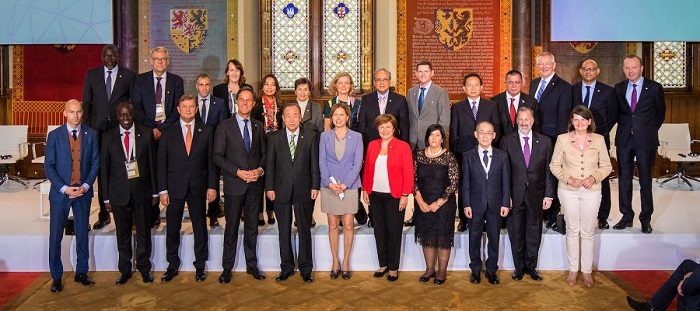
Members of the Global Commission on Adaptation
The Global Commission on Adaptation is led by Ban Ki-moon, 8th Secretary-General of the United Nations; Bill Gates, co-chair of the Bill & Melinda Gates Foundation; and Kristalina Georgieva, CEO, World Bank. It includes 17 convening countries and 28 commissioners, including the leaders, representing all regions of the globe and all sectors of development and industry.
As indicated in the Intergovernmental Panel on Climate Change (IPCC) Special Report on Global Warming of 1.5 °C, damaging climate change impacts are being felt now, much sooner and more powerfully than previously projected. Adaptation is about managing the risks associated with climate change – from floods and droughts to sea level rise and storms. The work of the Commission will elevate the visibility and political importance of climate adaptation and encourage bold solutions like smarter investments, new technologies and better planning to become more resilient to climate-related threats.
“Without urgent adaptation action, we risk undermining food, energy and water security for decades to come. Continued economic growth and reductions in global poverty are possible despite these daunting challenges – but only if societies invest much more in adaptation. The costs of adapting are less than the cost of doing business as usual. And the benefits many times larger,” said Ban Ki-moon, 8th Secretary-General of the United Nations.
“We are at a moment of high risk and great promise. We need policies to help vulnerable populations adapt and we need to ensure that governments and other stakeholders are supporting innovation and helping deliver those breakthroughs to the people and places that need them most,” said Bill Gates, co-chair of the Bill & Melinda Gates Foundation. “If everyone does their part, we can reduce carbon emissions, increase access to affordable energy, and help farmers everywhere grow more productive crops.”
“Our climate has already changed. Dramatic weather events and volatile seasons are the new normal,” said Kristalina Georgieva, CEO, World Bank. “Millions of people in poor countries are already living with the effects of climate change. It is a cruel irony that those who have least contributed to climate change are the ones who are affected and least able to prepare. We face a choice: business as usual and hope for the best. Or we act now and build for a resilient future.”
There are four major roadblocks slowing adaptation that the Commission will work to address:
Decision makers and the wider public are not yet aware of all the opportunities to be gained from becoming more resilient and less vulnerable to climate impacts and natural hazards;
Governments and businesses fail to incorporate climate change risks into their social and economic development plans and investments;
Adaptation efforts fall short of those who need them most, the world’s poorest and most vulnerable people; and
Although adaptation is a global challenge, global leadership on the issue is scarce. In short, the world is falling short of the transformation required to adapt to a changing climate.
In its first year, the Commission will oversee preparation of a flagship report and present its findings and recommendations at the 2019 UNSG Climate Summit. The report will be informed by input from the world’s leading scientific, economic and policy analysis institutes; and will set out why adapting to climate risks and accelerated action is essential, what new actions are needed and what must be done differently; and how governments, companies and citizens can start working today to make the world a safer, better place.
The Commission also will convene key champions, coalitions, private sector and civil society actors to advance activities aligned to several action tracks, including food security and rural livelihoods, global supply chains, cities, infrastructure, finance, social protection and nature-based solutions.
“The costs of adapting to climate change could be in the hundreds of billions per year by 2050. We have reached a point where adaptation is in our collective interest, with a strong economic case for action. Over the next two years, the Global Commission on Adaptation will demonstrate that adapting to climate change is not only essential but also an opportunity to change the way our societies plan and invest. It will provide the roadmap for what new actions are needed and what must be done differently to secure more sustainable economic development and security for all,” said Dr. Patrick Vincent Verkooijen, CEO, Global Center on Adaptation.
“Once viewed as a distant, future threat, climate change is now here. As the new IPCC report makes abundantly clear, without urgent action, climate change will bring devastation to people’s homes, crops and businesses,” said Dr. Andrew Steer, President & CEO, World Resources Institute. “This Commission will put adaptation at the center of the development agenda, encouraging governments and businesses to urgently prepare for our changing world.”
Global food movement leaders and organisations representing hundreds of millions of farmers and food workers in Rome on Tuesday, October 16, 2018 (World Food Day) set out their clear opposition to “gene drives” – a controversial new genetic forcing technology. Their call for a stop to the technology accompanies a new report, “Forcing the Farm”, that appears to lift the lid on how gene drives may harm food and farming systems.
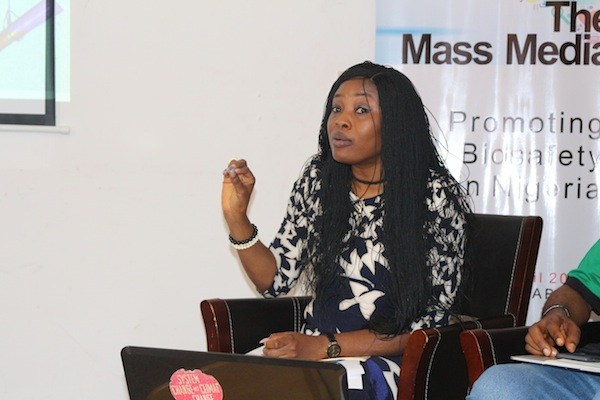
Mariann Bassey, chair of the African Food Sovereignty Alliance
Gene drives are a genetic engineering tool that aim to force artificial genetic changes through entire populations of animals, insects and plants. Unlike previous genetically modified organisms (GMOs), the gene drive organisms (GDOs) are deliberately designed to spread genetic pollution as an agricultural strategy – for example, spreading “auto-extinction” genes to wipe out agricultural pests.
Agri-research bodies now developing these extinction-organisms include the California Cherry Board, the US Citrus Research Board and the private California company Agragene Inc. Next month, the United Nations Biodiversity Convention will meet to discuss measures to control this technology, including a possible moratorium.
“There is no place in a good food system for these deliberately spreading organisms,” says Mariann Bassey, chair of the African Food Sovereignty Alliance, whose 34-member organisations are among the 200+ groups and individuals who have signed the call against gene drives. “Gene drives may drive species to extinction and undermine sustainable and equitable food and agriculture,” Bassey continued.
Those launching the call for a moratorium on gene drives in food and agriculture include all past and present UN Special Rapporteurs on the Right to Food; the International Federation of Organic Agriculture Movements; IUF (the International Union representing Food and Farmworkers); and La Via Campesina, the largest network of peasant movements representing 200 million peasants in 81 countries. Signatories also include well-known commentators on food matters including seed activist Vandana Shiva, World Food Prize winner Dr Hans Herren, International President of Friends of the Earth International Karin Nansen, Activist and Food entrepreneur Nell Newman, and environmentalist and geneticist David Suzuki.
“Applying gene drives to food systems threatens to harm farmers’ rights and the rights of peasants as enshrined in international treaties,” explains Dr Olivier De Schutter, who served as the UN Rapporteur on the Right to Food from 2008-2014. “Gene drives would undermine the realization of human rights including the right to healthy, ecologically-produced and culturally appropriate food and nutrition.”
“La Via Campesina is firmly positioned against the gene drive technology. It is a threat to peasant economies, to people, countries and even the world’s food sovereignty – a technique which threatens life, biodiversity and social systems,” said Genevieve LaLumiere, a Canadian young farmer of La Via Campesina. “This uncontrolled technology is dangerous and can contaminate our seeds, our animals and our soil; destabilise our ecosystems; and destroy our fundamental resources.” Marciano Da Silva from Brasil Peasant Organisation (also of La Via Campesina) continued, “gene drive technology is, fundamentally, a tool for patentability of native traits of our peasant seeds.”
The Forcing the Farm report, researched and produced by ETC Group and the Heinrich Böll Foundation, details several ways in which gene drive technology is being readied for application in agriculture. The report, it was gathered, exposes how gene drive developers are deliberately keeping from view agricultural applications while trying to focus public interest on high profile health and conservation projects. Reports from closed meetings with a US defence committee show that agribusiness firms such as Monsanto-Bayer and Cibus Bioscience appear to be engaging with gene drive development.
“Applying gene drives to food and agriculture turns biotech industry strategies on their head,” explains Jim Thomas, Co-Executive Director of ETC Group. “Previously GMO companies engineered the food crops. Now that consumers won’t buy GMO food, companies are coming to engineer the rest of the agricultural system instead – the weeds, the pests and the pollinators.”
“If spreading gene drives were to be released, they could pose an existential threat to organic, non-GMO and agroecological agriculture,” explains Peggy Miars, International Chair of IFOAM – Organics International, the umbrella organisation for organic agriculture worldwide with close to 800 affiliates in 117 countries. “Any government who cares about protecting organic agriculture and the organic food market should move quickly to contain this threat.”
Gene Drives and Agriculture: Six examples drawn from Forcing the Farm
Gene drives are being engineered into flies, insects, worms and other pests to spread sterility as a biological alternative to pesticides.
Researchers are proposing using gene drives as a breeding tool to increase meat production in livestock.
“Auto-extinction” gene drives are being engineered into rats and mice as well as beetles that affect storage of grains.
Patents have been sought to engineer gene drives into honey bees to control pollination patterns using light beams.
Research is ongoing to engineer gene drives into common weed species to make them more susceptible to herbicides such as Roundup.
Analysis of two key patents on gene drives show that they each reference around 500-600 agricultural uses including brand names of 186 herbicides, 46 pesticides, 310 agricultural pest insects, nematodes, mites, moths and others
A team of four junior school students from Whitesands School in Lekki are the recent winners of the annual Conrad Foundation Spirit of Innovation Challenge Summit held at the Kennedy Space Centre Visitor Complex, Florida, USA. During the challenge, students were tasked with creating an innovative, marketable product which solves real-world problems and builds a more sustainable world — via the use of STEM. The students (nicknamed-named Team Newton) along with their coach, Mr. Matthew Omotoso, are the only participants from Nigeria and Africa to reach the fourth and final stage of the competition.
The Whitesands School students
“Virtual Farm” technology
Afolabi Williams, Osagumwenro Naaman Ugbo, Olubusiyi Famobiwo, Menashi Mordi won the category “Smoke-Free World”. While the worldwide decline of smoking has positive health and environmental benefits, it’s also negatively impacted tobacco farmers financially – who largely reside in developing countries. The students therefore created “Virtual Farm”, an agricultural and management app which is the first of its kind.
The app is uniquely tailed to helping tobacco farmers with managing money, farming, livestock, and crops as well as providing tutorial support. They also created a comprehensive business plan. The team were sponsored by Guaranty Trust Bank plc as part of its corporate social responsibility to promote access to equal education, foster community development, and protect the environment.
Supporting Nigeria’s rising “techpreneurs”
The team’s fantastic win isn’t the only example of impressive entrepreneurship and tech-savvy talent in Nigerian youth put to developing real-world sustainable solutions. Another team of three young Nigerian students recently won gold at the 2018 World Adolescent Robotics competition in China. The team’s win focused on resolving the water problem around the world.
Vice President, Yemi Osinbajo, has already highlighted the need for home-grown technologies, innovations, and creative ideas to help solve Nigeria’s challenges. In particular, he called upon young graduates to take up the role of “solutions providers”. He also stressed the importance of adequately funding education, so students can graduate without financial barriers and equipped with the knowledge and skills to succeed in this technology-driven world.
A sustainable future
Industry experts now see a brighter future for Nigeria and Africa as a whole. This rising new generation of young “techpreneurs” can help the continent rise up – and even compete with the West’s domination of the tech world. By supporting the innovation and ingenuity of high school and university students, Nigeria has a better chance of securing a thriving and sustainable future.
In a move to ensure optimal use of resources, the Federal Government has commenced moves to deploy underutilised power assets to deliver incremental power to industrial centres and needy communities in the country.
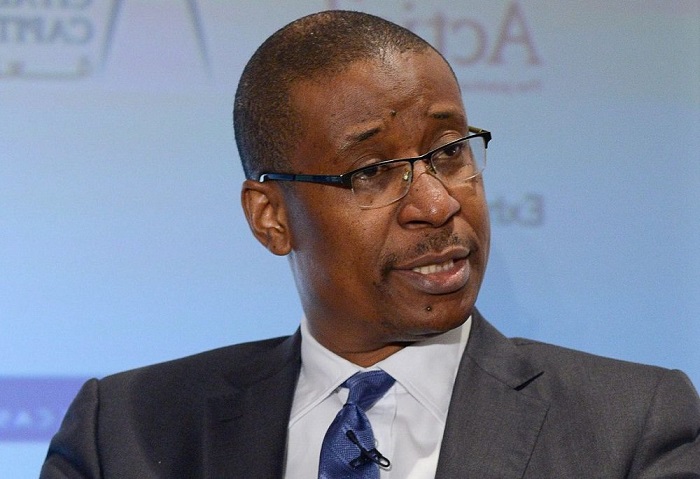
Dr Okechukwu Enelamah
Through the coordination of the Nigeria Industrial Policy and Competiveness Advisory Council, the government seeks to generate additional 4.2 Gigawatts of power to the national grid in the next 12 to 18 months.
Towards this end, a total of eight power projects have been selected for the critical intervention. They are the Aba Integrated Power Project, Kainji rehabilitation and expansion, power transmission, captive power projects for industry, Afam IV rehabilitation, Afam V rehabilitation, a Seplat gas facility, and Alaoji power plant.
The Council believes the Niger Delta Power Holding Company (NDPHC) brownfields are the fastest and the most cost-effective path to increased power delivery to industrial hubs and communities.
According to the Council’s Executive Secretary, Edirin Akemu, the objective of the intervention is being achieved through enhanced distribution infrastructure and elimination of technical power rejection; transmission upgrades on critical path to industrial and commercial load centres; and generation optimisation and maximisation of NDPHC output.
Briefing journalists at the end of the Council’s meeting during the week, Dr Okechukwu Enelemah, Vice Chairman of the Council, who is also the Minister of Industry, Trade and Investment, said work is ongoing on the Alaoji power plant to supply about 360MW of unutilised power to industrial centres and people in the South-East Axis of Onitsha, Aba, Nnewi and Ihiala.
He explained that only 120MW out of the 480MW of power generated by the plant is regularly utilised, so 360MW of power is available for centres willing and ready.
He said, “The end-to-end power delivery project, which is being undertaken through Public-Private Partnership ensures that generation, transmission and distribution, are all aligned and simultaneously executed.
“The beauty of this project, which is a pilot, is the optimisation of resources and also that the learning from it is intended to be used to unlock up to 2GW from underutilised NDPHC power plants.”
The partners executing the project are the Federal Government (through The Transmission Company of Nigeria, Niger Delta Power Holding Company), GE Power, and Enugu Disco.
Earlier, during the introduction of Council meeting, chaired by Vice President Yemi Osinbajo, Enelamah explained that the main purpose of the body is to deal with critical intervention at the highest level.
In attendance were Alhaji Aliko Dangote; a Vice Chairman of the Council, Chief Kola Jumodu; the new president of the Manufacturers Association of Nigeria, Mansur Ahmed; Dr. Latif Busari, MD of the National Sugar Development Council; Lazarus Agbanzo, CEO of GE Nigeria; Mr. Louis Edozien, Permanent Secretary Ministry of Power; Abdulsamad Rabiu, Chairman of BUA Group; Dr. Kamarudeen Yusuf, Chairman KAM Industries; and representatives of TCN and the Nigerian Communications Commission.
Other key issues discussed at the meeting were broadband penetration in the country towards achieving fibre connectivity in all 774 local government areas; and the establishment of a Sugar Industry Apprenticeship Centre.
The Council, comprising government and private sector representatives at the highest level, was inaugurated on May 30, 2017, by Vice President Professor Yemi Osinbajo to assist the government in formulating policies and strategies for implementation to enhance the performance and industrialisation of the nation.
Prof. Chidi Odinkalu, former Chairman of the National Human Rights Commission, has identified electoral violence, hate speech and political innumeracy as some of the major threats capable of undermining the 2019 general elections.
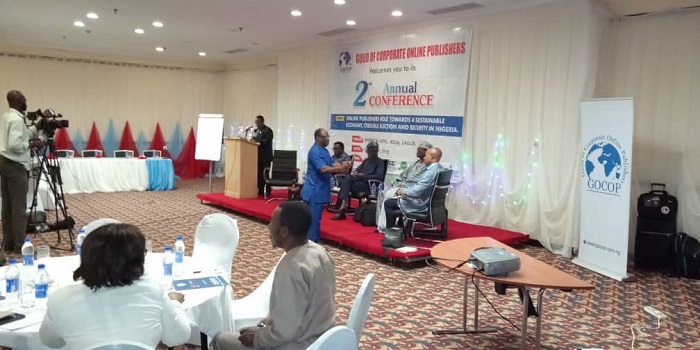
The Second Annual Conference of the Guild of Corporate Online Publishers (GOCOP)
Odinkalu, a Senior Manager, Africa Programme, Open Society Justice Initiative as well as Chair, Advisory Board, Global Rights, said this as Guest Speaker at the Second Annual Conference of the Guild of Corporate Online Publishers (GOCOP) in Lagos.
He spoke on the theme of the Conference: “Fostering a Sustainable Economy, Credible Elections and Security in Nigeria – What Role for the Online Publisher?”
The professor of law, who is also Chair, Board of Directors, International Refugee Rights Initiative, admonished the media to step up its advocacy and enlightenment responsibilities towards ensuring that 2019 elections are conducted in a safe and secure environment void of these threats.
He listed other factors that may undermine the polls to include insecurity, especially with killings and abductions in many parts of the North, South East and South South; food insecurity accentuated by the killings and violence in the nation’s food basket states of Benue, Adamawa, Plateau among others; and the growing abuse of drugs (opiods), which he explained has a direct correlation with violence.
While sympathising with journalists and the journalism profession in the 21st century, which he described as a “dangerous business, a risky venture”, he insisted that despite the obvious threats to the lives of journalists, media practitioners must never shy away from their primary duty of bringing public actors to account to the people.
According to Odinkalu, electoral violence has the capacity of casting huge slur on the electoral process such that the electorate are not only intimidated, the entire process is bullied, and the outcome is mutilated.
He wondered that given the red flags and flashpoints of violence already recorded in the primary elections, the nation’s security apparatchik may have more than enough to chew in its duty of securing the nation.
He said: “With the armed forces now leading in security provisioning and deployed in all states of the country, security institutions are likely to be stretched very thin ahead of the 2019 elections. I do not wish to get into predictions of fields of violence in the 2019 elections, but it would also be naïve, based on what we already know and have seen, to assume that the contest will be without major incidents.”
With elections holding in 36 states and 774 local government areas across 8,809 registration areas (wards) in a total of 119,973 polling units with an expected voting population of 84.2 million registered voters at a time the nation is almost at war with itself, Prof. Odinkalu said both the electorate and the security agencies need to collaborate, especially in intelligence sharing, so as to nip some premeditated violence in the bud.
According to him, the media, especially corporate online journalists, must take the lead in reporting the entire electoral process impartially and objectively as any attempt to engage in partisan reporting will throw up dire consequences that may consume the society, including the media itself.
He said Nigeria suffers a crisis of self-manufactured innumeracy, which makes it difficult to cast ballot, count ballot accurately and announce credible result.
He said: “Elections are about numbers because democracy is about counting. Every democracy is built on counting the people (demographics of census), counting the voters (elections) and counting and distributing the commonwealth (appropriations). In this way, numbers are supposed to make us honest. In Nigeria, however, we choose to subvert all these processes of counting through manufactured political innumeracy.
“Predictably, Nigeria has a habit of historically innumerate counting, especially in elections. Our elections are often problematic not because we don’t vote peacefully (we mostly do) but because we choose almost always to be rooked with counting. Like the auto assembly, our political innumeracy is born of a completely knocked down (CKD) process. It begins long before the vote. It has already begun with the party primary process with some State Governors manufacturing ghost numbers of turnout that were manifestly fictional.”
Other dignitaries at the conference included former Governor of Ogun State, Chief Segun Osoba, who was represented by the Executive Director of Diamond Awards for Media Excellence; Lanre Idowu; Chairman, Centre of Excellence in Multimedia Tech, Department of Mass Communication, University of Lagos, Prof. Ralph Akinfeleye; Prof. Leonard Shilgba; and erudite columnist, Akogun Tola Adeniyi, popularly known as Aba Saheed.