Home Blog Page 1768

Nigeria joins scheme to conserve elephants

0

Nigeria has formally joined the Elephant Protection Initiative (EPI), a coalition of African countries dedicated to the sustainable conservation of elephants and ending the ivory trade.

elephant ivory
Poaching: Forest elephants are poached for their ivory and skin, and threatened with extinction

Nigeria’s Minister of State for the Environment, Ibrahim Usman Jibril, speaking in London at the Illegal Wildlife Trade (IWT) Conference, said, “It is our duty to save what we have inherited from our parents and grandparents, and our responsibility to protect species that are endangered. Nigeria is committed, we will continue to partner with other African countries and the world at large to ensure that the intentions of the EPI are carried out at the highest level.”

John Stephenson of the EPI Secretariat said: “We are delighted to welcome Nigeria as the 19th member state in the EPI. As an African-led initiative, it is important for us to have a true giant of the continent on board. We held warm and productive talks with the Nigerian delegation in London, and we look forward to working with the Nigerian government on ways of shutting down internal ivory markets and developing a National Elephant Action Plan (NEAP).”

The EPI was founded in 2014 by the leaders of Chad, Gabon, Ethiopia, Botswana and Tanzania. EPI countries are committed to shutting down internal ivory markets, putting national ivory stockpiles beyond economic use, maintaining the international moratorium on the trade in ivory, and developing National Elephant Action Plans.

These long-term plans, intended to conserve elephants and benefit the human communities who live alongside them, are designed to be compatible with the African Elephant Action Plan, which was signed by all African elephant range states in 2010.

The EPI held its inaugural Consultative Group meeting in London during the IWT Conference. It was chaired by President Ali Bongo Ondimba of Gabon, and attended by President Mokgweetsi Masisi of Botswana, as well as ministerial delegations from several EPI countries, including Nigeria. Donor governments, including the UK, and multilateral institutions such as the World Bank, UNDP and the Global Environmental Facility (GEF) were also present. Seven EPI countries- Chad, Gabon, Angola, Malawi, Ethiopia, Uganda and Kenya- presented completed NEAPs, requiring some 268 million USD over the next three years.

Africa’s elephant population has fallen dramatically in recent decades. An estimated 55 African elephants are killed every day, mostly by ivory poachers. There are thought to be just over 400,000 elephants surviving in sub-Saharan Africa, compared with 1.3 million in 1979. Nigeria has only a few hundred surviving elephants. The largest herd is in Yankari National Park, with smaller relict populations in the forests of southern Nigeria and the savannah of northern Nigeria.

Stephenson said: “Working together with the Nigerian government, we’d like to ensure the conservation of Nigeria’s elephants, and also prevent the smuggling through Nigeria of ivory largely originating from neighbouring states.”
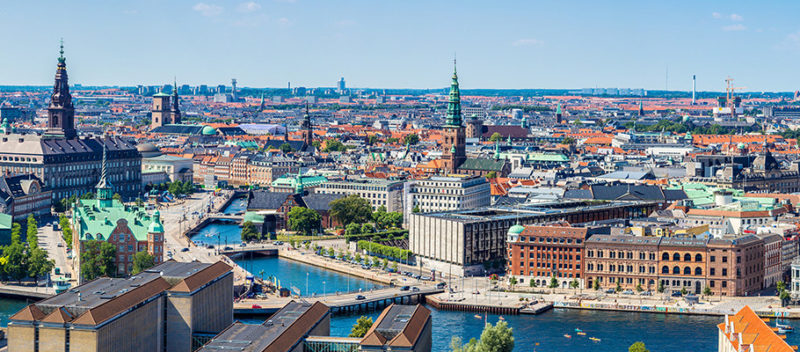
Copenhagen to host C40 Mayors Summit 2019

0

Lord Mayor, Frank Jensen, announced on Friday, October 19, 2018 that the City of Copenhagen in Denmark would host the C40 Mayors Summit in October 2019. Copenhagen was reportedly selected as the host city, for the landmark climate event, by the 17 mayors that make up the C40 Steering Committee.

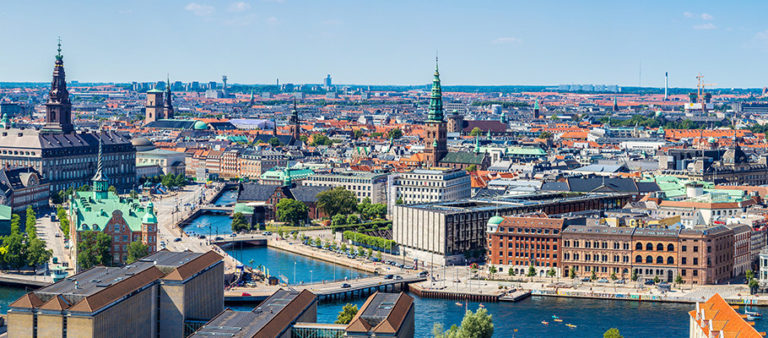
Copenhagen Denmark
Sustainable city: Copenhagen, Denmark

The C40 Mayors Summit, takes place every three years, bringing together the mayors and leaders of the 96-member cities of the C40 network from across the globe. The Copenhagen Summit, it was gathered, will celebrate and share the most effective climate solutions being delivered in cities worldwide. Mayors, CEOs, philanthropists, investors, scientists and citizens will come together to shift global markets and create the sustainable, prosperous and healthy future for the world’s great cities.

Previous C40 summits have been hosted by London, New York, Seoul, São Paulo, Johannesburg and Mexico City.

“Copenhagen aims to be a true global leader in climate action,” said Jensen. “We have a goal to be the world’s first carbon-neutral city by 2025 and believe Copenhagen provides a model for what a sustainable and livable city looks like. We look forward to welcoming mayors from across the globe in October 2019. The Summit will seek to inspire the world whilst remaining uniquely Danish.”

“I am delighted that Lord Mayor Jensen and the people of Copenhagen will host the C40 Summit in 2019,” said Anne Hidalgo, Mayor of Paris and Chair of C40 Cities. “2020 will be a crucial deadline in delivering on the highest goals of the Paris Agreement. The Copenhagen Summit represents a unique opportunity in defining the future that we want for today and for future generations in the great cities of the world.”

“Danish municipalities from Aalborg to Middelfart are setting world leading examples of how to counter the impacts of climate change and transition to emissions-free local communities,” said Jesper Nygård, Chief Executive of Realdania. “Hosting the C40 Mayors Summit in Copenhagen will provide a unique opportunity to showcase the success of Danish climate innovation to the world and will provide Danish actors across all sectors with inspiration from the most ambitious cities on the planet.”

350Africa flays Kenyan TV network over pro-Lamu documentary

0

The Kenyan TV network, NTV, airing of a 26-minute documentary on the Lamu coal plant project and its supposed benefits for the country has been condemned by 350Africa.

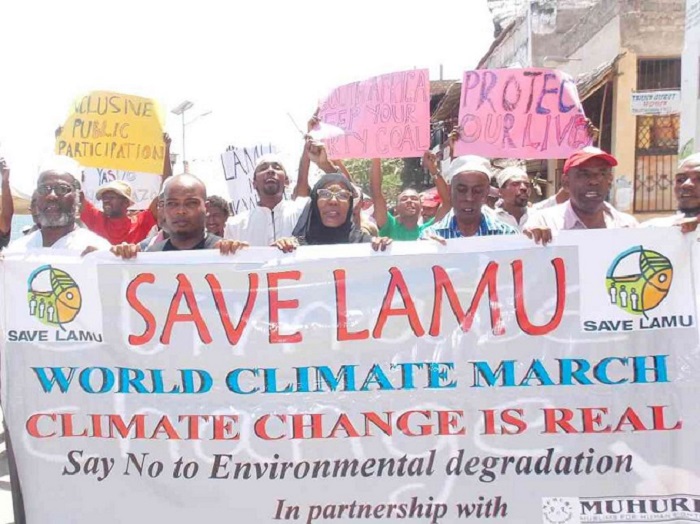
Lamu coal plant
Residents protest against plans to build the Lamu coal plant

“This brazen bid at showing support for #CoalingLamu has been met with contempt by many Kenyans. What was meant to be an impartial line of reporting by the channel was marred by a clear bias for clean coal and technology as long-term solutions, that would help Kenya achieve economic growth and industrialisation,” said the civil society organisation in a statement.

Referring to Karabiga coal plant located in Western Turkey, NTV’s programme allegedly presented clean coal as a modern technology with very low emissions and hence not harmful for the people, the environment and ecosystems.

“While those opposing the coal plant were given a handful of minutes, sandwiched between staunch proponents of the project, most of the programme focused on running through the talking points of the coal industry, which is struggling to sell to the public a project that has been rejected by Lamu residents,” the group added.

Regional Team Leader for 350Africa.org, Landry Ninteretse, says, “You can’t clean coal. Period. Only halting its production altogether will immediately save lives, threatened by pollution and by the increasingly negative impacts of climate change, to which coal plants contribute.

“On September 24, the High Court in Nairobi restored previous orders to halt the Lamu coal project, a further indication of its shortcomings and potential risks. No matter how much money the coal industry throws at the issue, either in an attempt to mitigate coal’s contribution to health problems or to have us believe that coal can be “clean”, people and environment will be affected.”

Omar Elmawi, Coordinator of deCOALonize.org campaign, said: “How can we boast about freedom of the media to report on the truth, when national media outlets are deliberately covering the Lamu coal plant, focusing mainly on the project proponents yet not include the community and other renowned experts on the other side of the story? The science is clear: the Lamu coal plant poses a real threat to the people of Lamu and Kenyans at large and the only people to benefit from the deal are those who will make the most from it.”

“What happens in Turkey is not about us. We as the youth of Lamu don’t need clean coal but solar energy since we have an abundance of sunshine daily,” added Leila Yusuf, a youth leader from Lamu who has been actively mobilising against the coal project.

Over a month ago anti-coal campaigners protested at a side event of the Global Climate Action Summit to voice their concerns about the planned Lamu Coal fired power station. This is part of a growing movement to advocate for a world free of fossil fuels and powered by renewable energy.

The proposed Lamu Coal Power Station is a potential 1,050 MW coal-fired thermal power station in Kenya. The proposed plant would be developed on 865 acres of land and feature a 210-meter-tall smoke stack, which would become East Africa’s tallest structure.

USADF mini-solar powers 145 households, borehole, businesses in Abuja

0

A mini solar power grid funded by United States African Development Foundation (USADF) has provided 145 households in Kigbe community, Abuja with electricity.

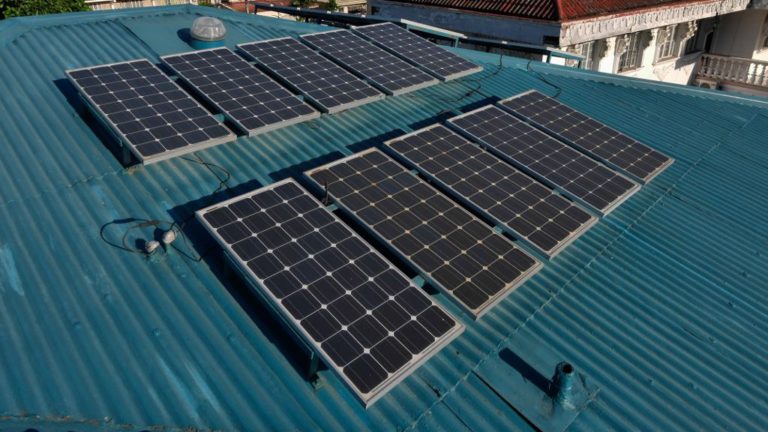
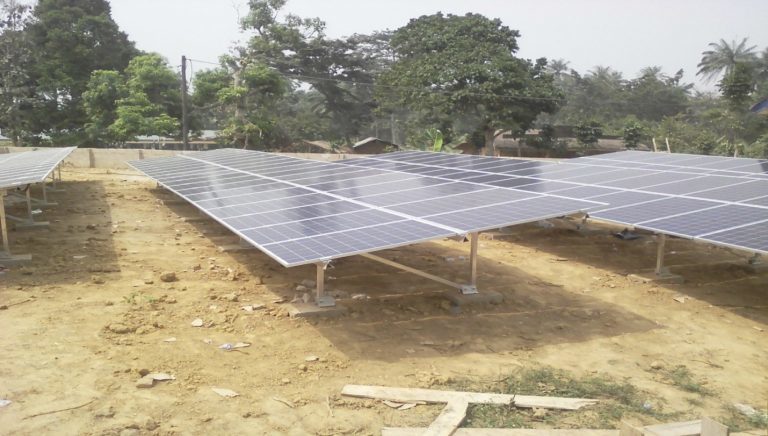
ADB-rooftop solar
The project will finance rooftop solar power subprojects equivalent to additional capacity of 50 megawatts

The grid also extended power to five businesses and a 20,000-litre borehole.

The U.S. Embassy in its twitter handle @USEmbassyAbuja on Friday, October 19, 2018 said that the 115-kW project was implemented by a cleantech organisation, Havenhill Synergy.

It stated that the USADF President and CEO, C.D. Glin; USADF Chairman, Jack Leslie; and U.S. Ambassador to Nigeria, Stuart Symington, visited the community located in Kwali area Council.

It stated that the officials were excited at the success of the scheme which provided constant power through solar energy to the FCT rural community.

“USADF President and CEO C.D. Glin, USADF Chairman Jack Leslie, and U.S. Amb. Stuart Symington were taken round the 115-kW project by Segun Odunaiya of Havenhill Synergy, which implemented the project.

“United States African Development Foundation and U.S. Embassy Abuja officials visited a mini solar power grid in Kigbe community, Kwali Local Government Area, Abuja,” it stated.

Glin had said in a report that the Kigbe solar mini-grid project allows the beneficiaries power basic electrical appliances such as bulbs, fans and TVs which they could not do before.

He said that before the solar electrification by Havenhill that the inhabitants had been relying on candles, kerosene lanterns and petrol generators for those who can afford it.

He noted that the other power sources posed both health and environmental dangers to the inhabitants of the community.

By Isaac Aregbesola

Climate finance is about saving lives – Espinosa

0

In the light of the Green Climate Fund (GCF) meeting in Bahrain from October 17 to 20, 2018, Executive Secretary of UN Climate Change, Patricia Espinosa, has stressed the importance of a successful outcome of the meeting and the impact it will have on the UN Climate Change Conference (COP24) holding in December in Katowice, Poland. In an address, Ms. Espinosa highlighted the role that the GCF plays in supporting the shift of developing countries to low-emission and climate-resilient pathways.

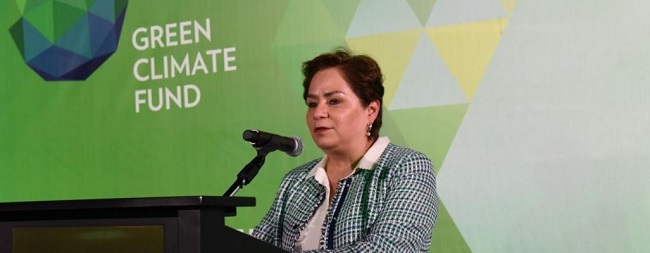
Patricia Espinosa
Patricia Espinosa

The GCF is close to my heart – I was the COP President when it was established at COP16 in Cancun. Much has changed since then: both in the climate change process and throughout the world.

While many accomplishments have moved us forward, such as the signing of the Paris Agreement, the stark reality is that today we’re in a race against time and we’re falling behind.

The recent Special Report from the IPCC emphasizes just how little time remains to limit global temperature rise to 1.5C.

Never have we faced the urgency we do now. Never has the need for solutions been greater. Never has there been more need for multilateral cooperation. And never has finance played a more central role to the overall climate regime itself.

With that urgency as a backdrop, and with the climate regime entering one of its most crucial and defining periods, expectations for the GCF and this meeting are very high.

At COP24 in December, Parties must achieve one clear goal: finalising the Paris Agreement Work Programme.

This is more than a set of rules, it will unleash the power of the Agreement itself.

The outcome of this session of the GCF will impact those negotiations in Katowice.

Success here means sending a clear and unmistakable message of trust to developing countries that they can have confidence in the process going forward.

Replenishing the GCF will allow it to continue playing a critical role in supporting developing countries shift to a low-emission and climate-resilient path.

We recognise that the GCF is a very young institution that has made progress since its inception. We congratulate you on this work as you continue building a stronger and more vibrant institution over the long-term.

At the same time, the GCF, like any other new institution, continues to evolve.

In addition to the launching of the replenishment process, we see three other challenges facing the GCF going forward.

The first challenge is addressing existing policy gaps.

While other gaps exist, one is the lack of a regulatory framework allowing for a proper assessment of projects.

This is an important policy gap – particularly now that the number of projects in the pipeline far exceeds available financial resources.

This must be addressed for the GCF to prioritize projects for funding.

The second challenge is the implementation of GCF projects that have already been approved.

Although the number of projects that have their Funded Activity Agreements signed has increased over the past two years, the number is still too low.

As of April 2018, only 26 projects out of the 76 approved have started implementation and $158 million has been disbursed.

This represents only 13 per cent of total value of the projects under implementation and only 4 per cent of total GCF funding.

The delay in the signing of Funded Activity Agreements for approved projects is slowing down the implementation of projects.

Finally, going forward, the GCF must learn from its experience and anticipate future requirements by assessing:

  1. whether its policies have resulted in the desired outcomes;
  2. and to what extent they are aligned with the scale and pace required for a successful implementation of the Paris Agreement.

These are immediate and significant issues, but the benefits of addressing them are clear.

They will help deliver the much-needed climate financing support for developing countries, particularly the most vulnerable.

And as I said before, they’ll allow the GCF to continue playing a critical role in supporting developing countries shift to low-emission and climate-resilient development paths.

Looking deeper, because climate change is connected to some of humanity’s biggest challenges, proper financing can also help tackle issues such as poverty, migration, equality and more – issues reflected in the Sustainable Development Goals.

Not achieving these goals – addressing climate change is Goal 13 on that list – could lead to great destabilisation throughout the world. If we think it’s bad now, a business-as-usual approach will make things much, much worse.

And let’s remember: when it comes to climate change, finance is about more than money.

It’s about helping people impacted by climate change. It’s about reducing their suffering. And, in some cases, it’s about saving lives.

We face an unprecedented level of urgency to address climate change. I cannot stress this enough. The Special Report by the IPCC made this very clear.

The time has come to put aside differences where they exist and work together to achieve our common climate goals.

Climate change recognises no boundaries – political or otherwise – it is coming all the same. Our approach must be one of unity.

Let us therefore embrace our challenges. Let us exceed expectations. Let us build the trust that is needed. And let these meetings provide the results.

NCF partners Lagos to rally for the environment

0

The Nigerian Conservation Foundation (NCF), in partnership with the Lagos State Government through its Ministry of the Environment, is hosting the 11th edition of the annual “Walk for Nature”. The event holds on Saturday, October 20, 2018.

Muhtari Aminu-Kano
Director-General, Nigerian Conservation Foundation (NCF), Dr Muhtari Aminu-Kano

The theme for this year’s edition is ‘Beat Pollution – live a Sustainable Lifestyle’. The choice of this theme is borne out of the dire need to highlight the challenges with pollution being faced by a megacity like Lagos.

The NCF/LASG Walk for Nature is said to be an initiative aimed at raising awareness on a wide variety of contemporary environmental issues confronting everyday living in Nigeria by demonstrating the importance of nature conservation, sustainable use of natural resources and environmental education.

This partnership with the Lagos State Government for the Walk is in its 11th year, supported by corporate organisations (Chevron Nigeria Limited, Fidelity Bank Plc and HIS Towers, Fan Milk Nigeria Plc among others) that reportedly share in the vision of a Nigeria where people prosper while living in harmony with Nature.

The 3km walk takes participants through a designated route of inner and outer Marina, with participants donning sponsors’ branded t-shirts bearing the theme of the event.

Relevant government agencies are present to provide support services – these include the Lagos State Traffic Management Authority (LASTMA), Lagos State Ambulance Service (LASAMBUS), and Lagos State Environmental Sanitation Corps (LAGESC). The Police, supported by the Lagos Neighbourhood Safety Corps will equally be on ground.

The Walk for Nature climaxes with a reception featuring speeches from stakeholders expounding the theme, with keynote addresses from the representatives of the Lagos State Governor, NCF, sponsors and community members.

LDCs urge adoption of Paris guidelines towards speedy climate action

0

The meeting of Ministers and Heads of Delegation from the Least Developed Countries (LDC) group held recently in Addis Ababa, Ethiopia, has been described as productive. The delegates had gathered from October 15 to 16, 2018 to discuss the priorities of the LDC group in preparation for the international climate negotiations in Katowice, Poland in December.

Gebru Jember Endalew
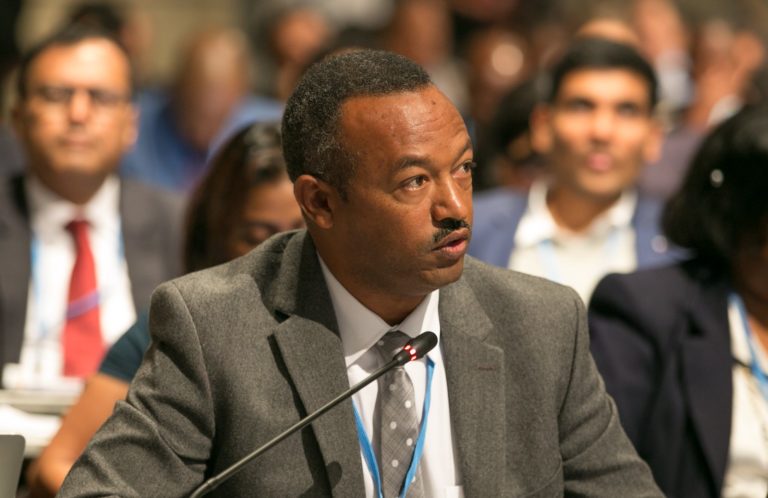
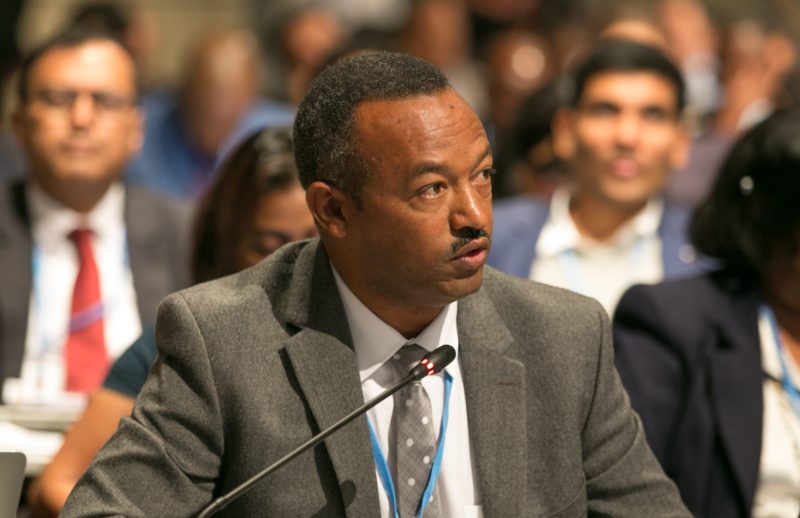
Chair of the Least Developed Countries (LDC) group, Gebru Jember Endalew

Mr. Gebru Jember Endalew, Chair of the LDC Group, said ministers had engaged in productive discussions around key issues in the negotiations and LDC initiatives and had summarised their priorities in an LDC Ministerial Communiqué on Climate Change.

His words: “Ministers from across the world’s 47 least developed countries expressed their dedication to climate action and to collaboration to achieve our shared goals to lift our people out of poverty and achieve low-carbon, climate-resilient sustainable development.

“They emphasised their grave concern at the increasingly severe climate impacts already experienced by LDCs at the current level of warming, and highlighted the disproportionately higher future risks for LDCs, as evidenced in the IPCC Special Report on the impacts of global warming of 1.5°C.

“It is clear that, to address the climate challenge, immediate action is required to implement transformative change across societies. The ministers emphasised the need for the rapid deployment of proven, real climate solutions such as scaling up renewable energy, eradicating energy waste, managing the rapid decline of fossil fuels, and protecting and expanding forests, soils and natural systems. The ministers also recognised that any possibility of future technological solutions cannot excuse delaying action.”

A key issue discussed at the meeting was climate finance.

Endalew commented: “The ministers stressed that the ambitious climate plans LDCs have put forward cannot be achieved without predictable, accessible, adequate and sustained financial, capacity building and technological support from developed countries and international partners.”

On the upcoming climate negotiations in Katowice, he noted: “The LDCs look forward to the adoption of a comprehensive, robust and effective set of guidelines at COP24 that will enable full and ambitious implementation of the Paris Agreement. It will be particularly important that the guidelines facilitate action to address loss and damage and to adapt to climate change.

“The LDCs look forward to a formal political declaration and COP decision on the Talanoa Dialogue at COP24, sending a strong political call for fair and ambitious climate action.

“In Paris the world laid down a blueprint, and now in Katowice we must finalise the structure that will bring the spirit and vision of the Paris Agreement to life – achieving the 1.5°C temperature goal and protecting communities across the world from the devastating impacts of climate change.”

Surveyors seek adoption of modern mapping technologies to end boundary overlap

0

Land surveyors on Wednesday, October 17, 2018 called for the adoption of Continuous Reference Station (CORS) system in surveying to ease land administration system and prevent land boundary overlapping.

Babatunde-Fashola
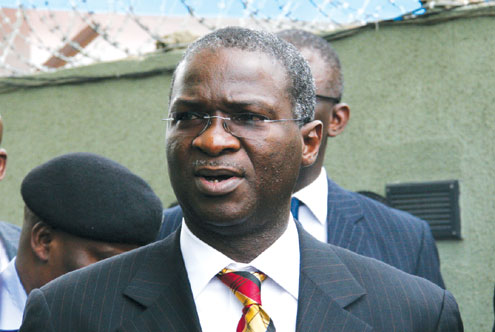
Minister of Power, Works and Housing, Babatunde Raji Fashola (SAN)

Lagos State Chapter Chairman of the Nigerian Institution of Surveyors (NIS), Mr Adesina Adeleke, made the call at the Mandatory Continuous Professional Development (MCPD) programme of the institution in Lagos. The programme was themed: “Improving Geospatial Deliverables through Modern Mapping Technologies.”

Adeleke described the CORS system as the latest modern application used for land surveying and mapping for efficient and effective service delivery, adding that it was in operation in other developed and developing countries.

According to him, land survey practice is evolving with new trend.

He underlined the need for surveyors to move and keep abreast with the new developments to remain relevant in the profession.

Adeleke said that the essence of the programme was to maintain an up-to-date technical knowledge on modern surveying practices among members of the institution.

“The MCPD is a skill renewal process and a channel for knowledge acquisition through training and retraining.

“The aim of the programme is to encourage the use of modern mapping technologies in improving geosepatial deliverables.

“It also focussed on assisting surveyors for inter and intra professional competitiveness, and also help surveyors to discover new areas of opportunities open to them in this information age,” Adeleke said.

The expert said that there was only one existing and functional CORS system in Lagos, while the state government had embarked on the construction of five other CORS system across the state.

He urged the state government to hasten construction of the CORS system for effective mapping/surveying operation that could put an end to boundary overlapping across the state.

Also, Mr Chika Okorocha, the Principal Consultant, Sacridion Geospatial Engineering, enjoined surveyors to embrace usage of the Global Navigation Satellite System (GNSS) for enhanced services delivery.

Okorocha said that GNSS was a network system/instrument of the CORS that empowers its operation.

According to him, surveyors can form into groups and pull resources together to purchase the GNSS/CORS system.

He said there were low cost instruments, irrespective of the high cost of the GNSS/CORS system.

Okorocha added that all over the world, the surveying and mapping sector had been enjoying the innovative opportunities brought about by the GNSS and CORS technologies and in particular, the precise positioning provided by GNSS satellites constellation.

“The need for the use of modern technology and making it a standard in surveying practice in Lagos State and Nigeria as a whole cannot be overemphasised.

“Modern surveying instrument and data processing software packages play an important role in how surveys are carried out. It also encourages the management of geospatial deliverables.

“Accurate positioning is of great importance to surveyors and with the GNSS in place, more accurate positioning is possible even in challenging environment.

“The discipline of land surveying has changed significantly through the introduction of new technologies and processes such as the GNSS/CORS system.

“These changes have brought about the need to check the opportunities the technology provides and make changes to the traditional processes of data acquisition, processing and presentations,” Okorocha said.

By Lilian Okoro

USADF, All-On partner to promote off-grid energy solutions

0

The U.S. African Development Foundation (USADF) and All-On, an indigenous company, are partnering to promote the use of renewable off-grid energy technologies to reach communities not served by existing power grids in Nigeria.

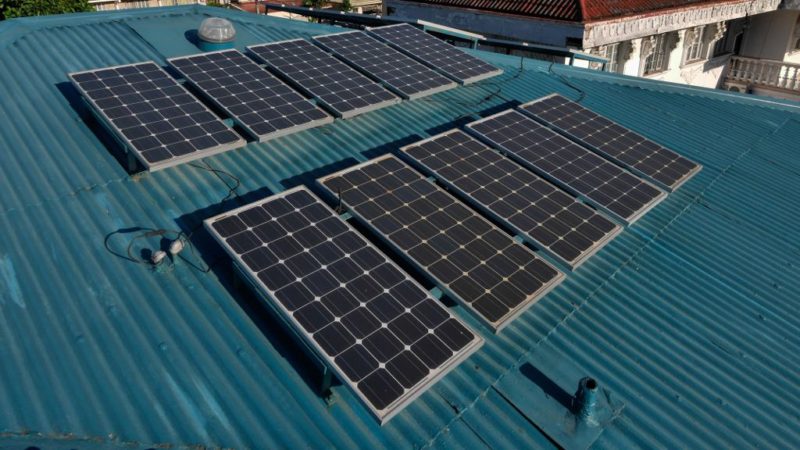
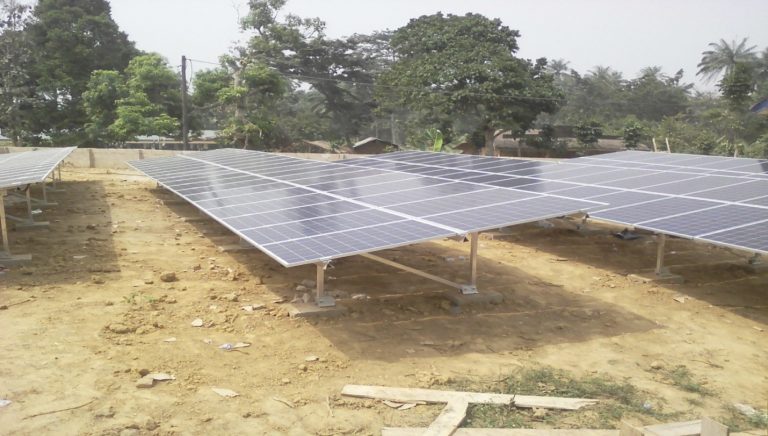
solar panels
Off-grid energy: An array of solar panels

Mr C. D. Glin, the President/CEO of USADF, told journalists in Lagos on Wednesday, October 17, 2018 that the All-On/USADF collaboration would co-finance innovative Nigerian off-grid energy companies to boost renewable energy development in Nigeria communities.

Glin said the three-year partnership would empower up to 30 indigenous companies in the country to champion the project.

According to him, under the partnership, the USADF would provide $50,000 in seed capital while All-On also provides $50,000 in convertible debt to each of the selected energy enterprises in the first year.

“Another set of companies will also enjoy same privileges in the second year and later in the third year,’’ Glin said.

He said the USADF would develop local content in the Nigeria power sector and boost local company’s participation in enhancing the use of renewable energy in the country.

He said that the $50,000 grant would take care of the risk associated with new businesses.

“However, to ensure effective management of resources, the beneficiaries will also receive technical assistance from USADF and governance support from All-On.

“We are proud to partner with All-On to foster the growth of local enterprises to bring power and connectivity to underserved Nigerians.

“This partnership combines grant capital with private sector funding to support the selected Nigerian energy enterprises to grow their businesses, increase access to power and change people’s lives,’’ Glin said.

According to him, USADF is an independent U.S. government agency, established by Congress to support African-owned community and social enterprises which improve lives and livelihoods in underserved communities.

He said the foundation also target utilising a community-led development approach.

Glin added that USADF invests by directly providing seed capital and local project management assistance to early-stage enterprises to address local challenges like food security, energy access and women and youth.

According to him, USADF annually grants assistance for enterprise development and expansion to generate approximately $100 million in new local economic activity throughout Africa’s Sahel, Horn and Great Lakes regions, reducing poverty, creating peace and economic stability and putting millions on a pathway to prosperity.

Dr Wiebe Boer, the Chief Executive Officer of the Nigerian based All-On, an off-grid energy impact investment company backed by Shell, said: “The biggest challenge hindering Nigeria’s economic and social development is access to energy.

“These off-grid energy companies are introducing innovations that will improve household livelihoods and local economies by providing affordable power to unserved and underserved communities.

“We are proud to partner with USADF to provide an innovative blend of financing to these companies to enable them to scale up and meet the increasing demand.’’

Boer said that All-On is an independent impact investing company, seeded with funding from Shell.

It works with partners to increase access to commercial energy products and services for off-grid energy markets in Nigeria, with a special focus on the Niger Delta.

The Managing Director of Rural Electrification Agency (REA), Ms Damilola Ogunbiyi, commended the partners for the innovations they brought to off-grid energy support.

“This is a remarkable initiative that demonstrates what we already know.

“That private sector is taking a solution-driven role, is the only way to provide sustainable power solutions for Nigerians.

“The Federal Government, through the REA is currently replicating this model of private sector driven power projects through the Nigerian off-grid electrification strategy,’’ Ogunbiyi said.

The beneficiary companies include Havenhill, Prado, Solmenz, Darway Coast, de Auxano, Eastwind, Alyx, Creeds and iKabin.

By Yunus Yusuf

Farmers advised to insure crops against flood

0

Managing Director, American International Insurance Company (AIICO), Edwin Igbiti, on Wednesday, October 17, 2018 in Lagos advised Nigerian farmers to insure their crops against flood and other natural disasters.

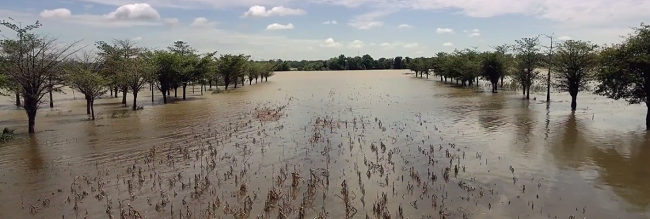
Flooded farmland
A flooded farmland. Photo credit: FAO

Igbiti told the News Agency of Nigeria (NAN) that the recent loss of farm produce to flood called for a rethink, especially knowing that many of the farmers affected did not insure their crops.

The AIICO boss said agricultural insurance products recently rolled out by the company was a response to losses incurred by Nigerian farmers.

“AIICO wishes to sympathise and encourage farmers to take advantage of the agricultural insurance solutions by AIICO,” he said.

Igbiti said that the underwriter was uniquely positioned to offer both indemnity and index based agricultural insurance products to farmers as well agricultural sector investors.

He said that the company had launched “AIICO Integrated Customer-Focused Contact centre” (AIIContact) to enable it deliver positive experience across all touch points and offer superior service to its customers.

“Besides, AIICO also embraced technological innovations to enable it establish direct and unified contact with its customers.

“Living up to its promise of safety and being reliable risk manager of repute, AIICO was able to pay over N44.265 billion claims within a period of 33 months.

“In 2015, gross claims paid for both life and non-life was approximately N13.045 billion.

“In 2016, gross claims paid increased to N14.571 billion and as at third quarter of 2017, AIICO’s gross claims paid stood at N16.649 billion,” he said.

By Bukola Adetoye