Home Blog Page 1769

Don flays charcoal use, urges provision of alternatives

0

Former Deputy Vice-Chancellor, Management Services, University of Ilorin, Prof. Albert Olayemi, on Tuesday, October 16, 2018 called for provision of alternative to charcoal fuel to discourage deforestation.
Forest
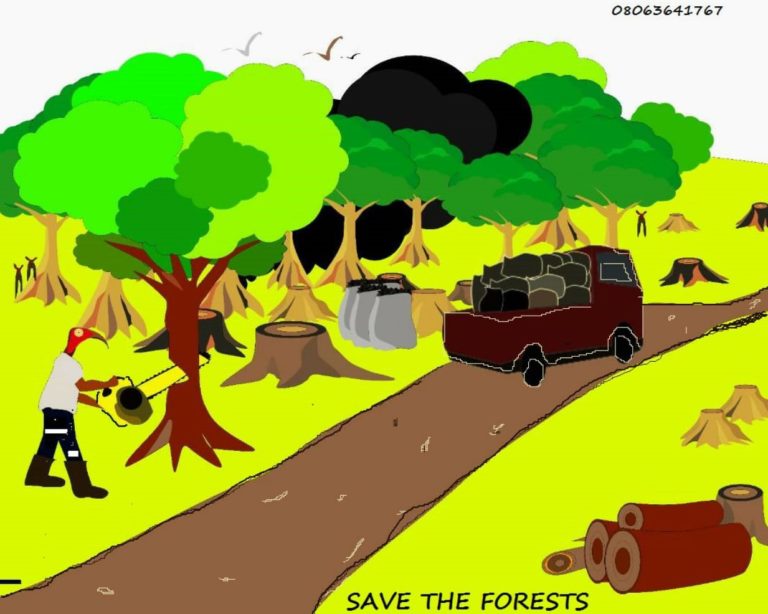
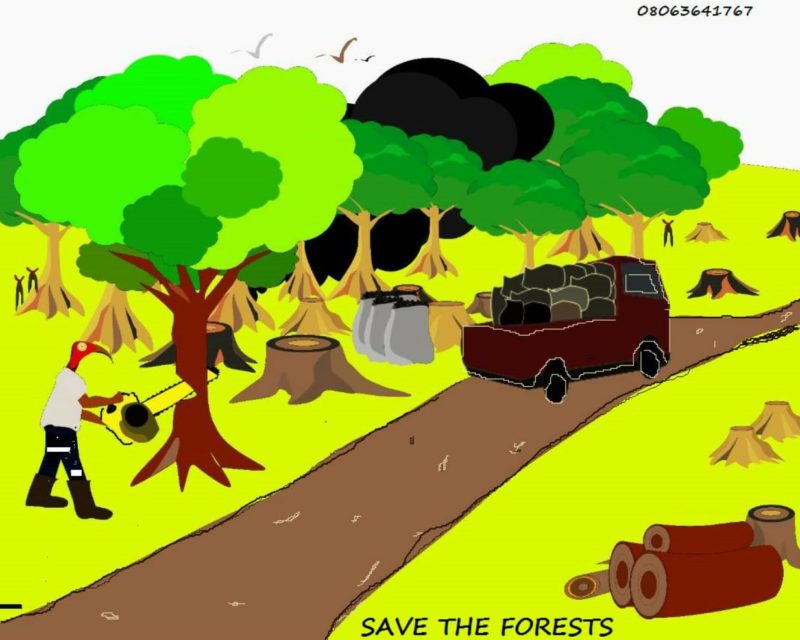
Saving the forests from charcoal merchants

Olayemi made the call at the sensitisation programme organised by the Agricultural and Rural Management Training Institute (ARMTI) in conjunction with the Regional Centre of Expertise on Education for Sustainable Development for farmers in Kwara and Kogi states.

He urged government to make kerosene and cooking gas available and affordable to Nigerians to discourage people from using charcoal as an alternative cooking source.

In a paper entitled: “Charcoal Production: Burning for Sustainability”, he said that the use of other sources for cooking would prevent indiscriminate cutting of trees.

Olayemi, who is a Focal Person of the Centre, said that it would prevent charcoal production and curb deforestation in the country.

The don called for more enlightenment programmes to sensitise the public on the dangers associated with cutting of trees and making of charcoal from the forests.

Olayemi said that the use of other sources of cooking would prevent indiscriminate cutting of trees, prevent charcoal production and curb deforestation in the country.

He called for more enlightenment programmes for the public to be aware of the dangers associated with cutting of trees and making of charcoal from the forests.

He noted that the aim of the sensitisation outreach was to discuss ideas, problems and issues in the charcoal sector in Kwara and Nigeria in general.

The don said that the programme specifically aimed at finding out the options for those whose livelihoods were affected by the ban on the production of charcoal.

“It is also to identify follow up action with the policy makers and allow participants to agree on a list of what the issues are and suggest solutions on the way out,’’ he said.

Earlier, the Executive Director of ARMTI, Dr Olufemi Oladunni, said that the Centre had identified 72 farmers from Kwara and Kogi states to be sensitised on the subject matter.

“When we are aware of the environmental, socio-economic and health impacts of charcoal production, we would not need any prosecution or threats to deter people, rather, the people would be the ones sensitising others against the practice,” he said.

By Fatima Mohammed-Lawal

Lagos to improve officers’ capacities in processing building plan permit

0

The Lagos State Physical Planning Permit Authority (LASPPPA) on Tuesday, October 16, 2018 restated its commitment to train and improve the capacities of district officers that process planning permits across the state.

Funmi Osifuye
Funmi Osifuye

Mr Funmi Osifuye, the General Manager, LASPPA, made the disclosure while speaking with the News Agency of Nigeria (NAN) in Lagos.

Osifuye said the training was necessary to improve the technical and professional skills of the officers for efficient and effective service delivery to the public.

He said the training would educate the officers on the ethics/conducts of processing building permits.

According to him, the training will help to address and avert some of the issues/challenges that emanate while granting building permits.

“The training which will be an in-house quarterly programme for the district officers and management staff in the planning field will treat 10 carefully selected professional and technical topics in town planning profession.

“The topics include: Planning Permit Application Processing, Guidelines and Procedure; Strategies for Increase in Revenue Generation; Site Monitoring and Public Relations; Planning Information and its Relevance to Planning Permit Processing.

“Some others are Report, Memo Writing and File Management; Importance of Technical Report in Planning Permit Processing; Unified Assessment Rates; and Ethics, Conduct and Responsibilities of a District Officer.

“The last topic is State Land Acquisition and Revocation: Its Implications on the Grant of Planning Permit.

“The major focus for the training is to expose the planners to requisite skills and knowledge of modern planning. And the agency has just concluded the second in the series of the training,’’ Osifuye said.

Also, Mr Lateef Oladeinde, a Deputy Director in the Development Permit Department, LASPPPA, urged the district officers to seize the opportunity to enhance their technical knowledge about planning permit processing.

Oladeinde said the lectures would re-fresh the officers’ knowledge and also re-echo what was expected of them at their duty posts.

According to him, the officers sometimes deviate from the statutory duties in their job description, resulting in lots of complaints and criticism from the public.

“During the course of the training, officers will be exposed to requisite skills and knowledge of modern planning concerning the process of planning permit for efficient service delivery to the public,’’ the deputy director said.

He advised the public to always contact either the agency’s district offices or head office whenever notices for auditing of buildings, contraventions such as illegal conversion or non-compliance with approved permit were served.

“This is necessary to avert loss of funds through payments to the wrong person, quacks and impersonators.

“The agency’s monitoring officers in the field are not obliged to collect payments of any kind from the developers/owners of property,’’ Oladeinde said.

By Lilian Okoro

IITA launches global initiative to boost cocoa production

0

The Cocoa Research Institute of Nigeria (CRIN), and Institute of Agricultural Research and Training (IITA), Ibadan on Tuesday, October 16, 2018 launched a five-year “Cocoasoil Project’’ to improve cocoa production in Nigeria.

Cocoa
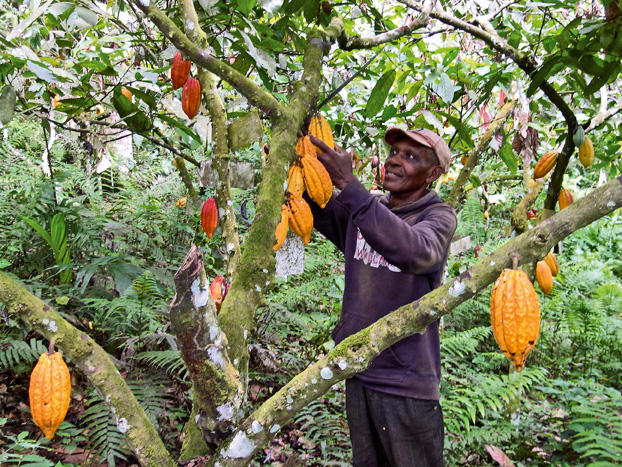
Harvesting cocoa

The programme is themed: “Sustainable intensification of cocoa production through the development and dissemination of integrated soil fertility management”.

Speaking at the occasion in Ibadan, the Oyo State capital, Project Coordinator, Dr Richard Asare, said that the project was a global initiative with an African focus funded by the Norwegian Government.

Asare said it was a public-private partnership led by IITA, Wageningen University and Research (WUR), Cocoa Research Institutes of Cameroon, Cote d’Ivoire, Ghana, Nigeria, and International Centre for Tropical Agriculture, among others.

According to him, the main objective is to develop Integrated Soil Fertility Management (ISFM) recommendations to be brought into extension messages for cocoa intensification and avoided deforestation.

“This will be done through an integrated ISFM approach that uses a stepwise cocoa intensification process that combines improved planting materials, canopy cover management, and pest/disease control with targeted fertilizer application to enhance sustainability.

“The program currently has 8 confirmed trials in Ghana, Cote d’Ivoire, Cameroon and Nigeria being undertaken by CRIN, Cocoa Research Institute of Ghana (CRIG), private chocolate manufacturing companies and others.

“There are also on-going discussions to conduct similar trials in Ecuador, Brazil and Indonesia with interested partners and stakeholders.

“It’s our strong belief that at the end of the first five years, the project would have achieved its goals,” he said.

Also speaking, Chief Audu Ogbeh, Minister of Agriculture and Rural Development, said that the project would serve as investment guide for investors in cocoa value chain and improve rural household income.

Ogbeh, who was represented by Dr Lekan Quadri, Director of Tree Crop in the ministry, said the planned inclusion of cocoa drink in School Feeding Program would transform the cocoa sector.

“One of the reasons cocoa farming seems to not to be profitable today is because of low productivity occasioned by poor soil fertility management among other contemporary issues.

“Therefore, this project has come at an auspicious time to save our numerous cocoa farmers from colossal losses, whose livelihood depend on this singular commodity,” he said.

Earlier, the CRIN Executive Director, Dr Olayiwola Olubamiwa, emphasised that the programme would improve cocoa production in Nigeria.

Olubamiwa said cocoa was one of the greatest foods given to mankind with numerous health benefits.

“Since I started taking cocoa powder in 2006, I only experienced two episodes of malaria, because of cocoa’s health benefits alone, its production shouldn’t go down in the country.

“We hope the project accomplishes its purpose and it shall be well with Nigeria,” he said.

By Chidinma Ewunonu-Aluko

NASRDA seeks patenting of Automated Irrigation System for improved farming

0

The National Space Research and Development Agency (NASRDA) on Tuesday, October 16, 2018 said patenting of its Automated Irrigation System (AIS) would enable mass production and improve mechanised farming in the country.

Prof. Seidu Mohammed
Prof. Seidu Mohammed, Director-General of the National Space Research and Development Agency (NASRDA)

Dr Bonaventure Okere, the Acting Director of the agency’s Centre for Basic Space Sciences (CBSS) in Nsukka, Enugu State, made this known in an interview with the News Agency of Nigeria (NAN) in Abuja.

Okere said that the AIS had been approved by the Ministry of Science and Technology but required patenting by the National Office for Technology Acquisition and Promotion (NOTAP).

According to him, designing and manufacturing of the AIS is targeted at achieving the Sustainable Development Goals (SDGs) to meet the need for year-round farming and enhance agricultural produce.

“The challenges posed by conventional irrigation practices are better appreciated with large-scale farming, where it often requires days to manually irrigate a farm.

“Conventional methods of irrigation are labour-intensive, relatively ineffective due to poor water distribution and lack of monitoring and smart control mechanisms.

“This motivated us to develop an automated irrigation system that will perform intelligent and independent farm irrigation and characterise crop environmental thriving conditions.

“The design of this system features an automation and control implementation board where the system’s logical itinerary is handled.

“It is interfaced with advanced communications modules for wireless operation capabilities; sensor array for specific science interest are interfaced and programmed in the system to provide information on crop environmental thriving conditions.

“We are waiting for NOTAP to finish the processing for the patent of the AIS. When it is patented, it will enable us mass produce it and enhance agriculture,” Okere said.

The director also described the AIS as having a timing system embedded in it to implement time-related automation.

According to him, the solar power system will be designed to provide adequate and reliable power for both the pump system and the control systems.

Okere said that the AIS was designed to automatically alert the farmer when the soil moisture level of the farm was low and needed watering.

He said that the farmer would be prompted through Short Message Service (SMS) once the irrigation system was activated to switch the irrigation pump “on”.

According to him, a user of the irrigation system will also have the privilege of querying the system via simple SMS command to get real time readings of the farm environment.

“A user can query soil moisture values, soil temperature values, ambient temperature and humidity, which will be sent as SMS from the system to the users’ mobile phone,” he said.

Okere said that the AIS could foster research in crop sciences by supplying data on environmental parameters critical to crop yield.

He said that if the AIS was installed and commissioned, it had the capacity to perform independent smart irrigation under dynamic environmental conditions.

“The AIS has the capability to perform farm environmental characterisation and data presentation that affords research and good knowledge of crop thriving conditions.

“It is an equipment that can be remotely operated using mobile phones and can send feedbacks to authorised users,” he said.

NAN reports that Prof. Seidu Mohammed, the Director-General, NASRDA, presented the AIS to Dr Ogbonnaya Onuh, the Minister of Science and Technology in June.

The AIS will be utilised as the first equipment for mechanised farming which will deploy satellite technology to boost food security in the country.

By Ijeoma Olorunfemi

Marketers advocate increased cooking gas usage for cleaner environment

0

The Nigeria Association of Liquefied Petroleum Gas Marketers (NALPGAM) on Tuesday, October 16, 2018 urged the Federal Government to intensify campaign among Nigerians on the need to use cooking gas for cleaner and safer environment.

Gas cylinders
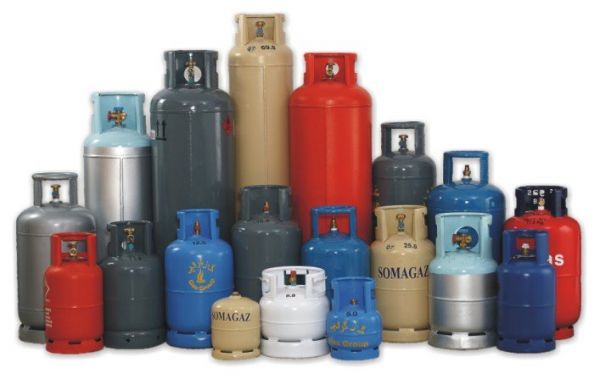
Gas cylinders

The association’s Executive Secretary, Mr Bassey Essein, who gave the charge in an interview with the News Agency of Nigeria (NAN) in Lagos, urged the country to fast-track its attainment of greater per capita consumption of gas.

Essein decried the rise in the use of kerosene, firewood and other fuel-powered apparatuses by many households for cooking, in spite of the attendant negative implications on the environment.

He urged women to be at the forefront in the fight for renewable energy and total conversion to Liquefied Petroleum Gas (LPG), commonly known as cooking gas in Nigeria.

“There is the need for a massive outreach to women, and indeed the need to embrace the use of LPG, which is healthier, safer and even more cost-effective.

“Cooking gas remains cleaner and cheaper, and therefore, should be the preferred option for fuel users.

“Government should fast-track its plans to transmit cooking gas for the use of one million homes in the next two years,’’ the NALPGAM scribe said.

According to him, there is no doubt that the socio-economic benefits of switching from kerosene, firewood and charcoal to LPG are innumerable.

“For instance, Nigeria has commercial reserves of natural gas. LPG is also known to be cheaper and cleaner than other domestic fuels

“Ironically, the nation remains the lowest consumer of cooking gas in Africa, while statistics have shown that poor households in neighbouring countries like the Republic of Benin, and Ghana are already using gas for everyday cooking.

“Nigerians have remained on the threshold of using kerosene, firewood, charcoal and animal waste or sawdust for cooking.

“Apart from its negative environmental effects, the health implications are also worrisome,’’ Essein said.

The NALPGAM scribe said that government could contribute in a variety of ways to facilitate expanded LPG use by households through actions, both within and outside the sector.

He said that government could establish a virtuous circle of growing demand, increased investment and expanded availability of the product.

Essein said that LPG demand was growing and that NLNG was saddled with the responsibility of supplying the product to the domestic market.

He, however, added that the union had increased its supply volume from 150,000 metric tonnes per year to 300,000 metric tonnes per year.

According to him, the only way to achieve expanded usage is for the government to begin implementation of its plans to transmit cooking gas into one million homes in the next two years.

“The annual target of cooking gas consumption volume of at least five million, up from the current annual consumption rate of about 400,000 metric tonnes is achievable.

“This can be achieved by replication of Indonesia’s success story, which was able to get 53 million homes to use gas in three years.

“Today, in the energy mix of cooking gas, firewood takes the pride of place with 60 per cent, kerosene 30 per cent, coal five per cent and cooking gas a dismal five per cent,’’ Essein said.

He said that with such percentages came a lot more responsibilities and advocated for more efforts to be directed toward developing the local market for cooking gas.

The LPG expert said that the world was “awash with gas’’, adding that the times were not suited for the continued reliance on oil exports either.

Essein identified lack of infrastructure, an underdeveloped market structure and a widespread but inaccurate belief that gas was more expensive than traditional fuels as the major obstacle impeding the progress of Nigeria’s LPG industry.

By Yunus Yusuf

Ebonyi signs $4m solar power agreement with Chinese firm

0

The Ebonyi State Government on Monday, October 15, 2018 signed a $4 million solar system production agreement with the Foshan Sunchees Energy Company of China.

David Umahi
Governor David Umahi of Ebonyi State

Gov. David Umahi, represented by his Deputy, Dr Kelechi Igwe, said in Abakaliki, the state capital, that the agreement included the establishment of a solar power factory in the state.

The governor said that the occasion marked the realisation of the state government’s vision and aspiration toward industrialising the state.

“Our vision is to make Ebonyi the leading industrialised state in the country as it is the first time in the country that a government is aiming at energising the entire local government areas of a state.

“The 13 LGA Chairmen of the state have appended their signatures in support of the project and we assure our citizens that we are not purchasing energy from China,” he said.

Umahi said that the agreement was a product of his economic trip to China, saying “the company is reputed globally in solar power manufacturing and distribution.

“It will establish a factory to manufacture solar panels in the state and subsequently make Ebonyi, a leading manufacturer, distributor and marketer of solar panels in the country.

“We are hopeful that in the future, the state will be exporting solar energy beyond Africa,” he said.

He pledged that the government would abide with the terms of the agreement and demonstrate a good maintenance culture.

“The problem of poor execution and maintenance of projects experienced by most governments in the country is due to lack of due diligence in supervision and maintenance.

“The situation is however different with Ebonyi as we will monitor, supervise your work and not rest until you execute all you stipulated in the agreement.

“We are eagerly waiting for you to mount the first solar panel factory in the state as this would make our industrial dream come true,” he said.

Umahi appreciated the local government chairmen for their diligence and partnership in the project, noting that it would be one of the legacies they would leave behind as council chairmen.

Mr Jack Chen, the leader of the Chinese team thanked the state government for its reception and belief in the project, pledging to abide by all the terms of the agreement.

“We are happy to be in partnership and sign this agreement with Ebonyi government.

“We know the state’s logo to be the ‘Salt of the Nation’ but we hope that in the future, it will be Power of the Nation,” he said.

By Chukwuekemeka Opara

Britain tasks experts over net zero emissions climate target

0

Britain has asked its climate change experts to advise on whether it should set a date to meet a net zero emissions target, the government said on Monday, October 15, 2018.

Claire Perry
Claire Perry, Britain’s Energy and Clean Growth Minister

Britain has a target to cut its greenhouse gas emissions by 80 per cent compared with 1990 levels by 2050.

However, campaigners have warned this does not go far enough to meet pledges made under the Paris climate agreement.

The move also comes a week after a United Nations report warned the world needs to make unprecedented changes in the way people use energy to curb global temperature rises.

They will also limit the worst effects of climate change such as more extreme weather and loss of species.

Britain’s Energy and Clean Growth Minister, Claire Perry, has asked the Committee on Climate Change (CCC) to examine whether the target should be reviewed and whether the country should set a date to meet net zero emissions.

“The evidence is clear – governments, businesses and communities must take further action to confront one of the greatest global challenges we’ve ever faced,” Perry said in a statement on Monday.

Under the Paris agreement more than 190 nations agreed in 2015 to pursue efforts to limit a rise in global temperatures this century to 1.5 degrees Celsius.

Namibia champions water reclamation to sustain growing population

0

Namibia has made significant strides in wastewater management by converting sewage water to tap water over the years, the Windhoek Municipality said on Monday, October 15, 2018.

Hage Geingob
Hage Geingob, President of Namibia

It said that the country would celebrate the 50th anniversary of Direct Potable Reuse (DPR) on Oct. 18 and 19, and global experts from Australia, Europe and the U.S. will be in attendance.

The event will run under the theme “Direct Potable Reclamation with a Clean Bill’’.

According to the municipality, a special session will take place, which will also focus on the current developments and future of DPR not only in the country but also globally.

Windhoek, being driven by continuous water scarcity and exceptional challenges in term of supply, innovatively took the step to introduce purified sewage effluent into the drinking water system way back in 1968.

“Over the years, this unconventional supply source has gone through various stages of refinery and maintained as an important source of supply to the ever-growing city.

“Windhoek is regarded as one of the world leaders in DPR.

“It remains one of the only places in the world where this is practised on a significant scale and continuous basis to supply the residents of the city with drinking water,’’ the municipality.

Nigeria got it right at tobacco treaty talks, says ERA/FoEN

0

The Environmental Rights Action/Friends of the Earth Nigeria (ERA/FoEN) has eulogised the Nigerian delegation that attended the Eighth Conference of the Parties (COP8) to the World Health Organisation Framework Convention on Tobacco Control (WHO-FCTC) that held recently in Geneva, Switzerland.

Nigeria tobacco
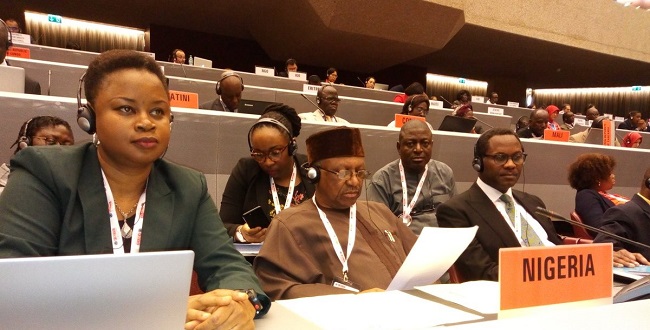
L-R: Florence Adeyemi, Permanent Missions Geneva; Dr. Osagie Ehanire, Minister of State, Health; and Mr. Babatunde Irukera, Director-General, Consumers Protection Council, at the Eight Conference of Parties of the Framework Convention on Tobacco Control, in Geneva

The ERA/FoEN in a statement issued in Lagos on Monday, October 15, 2018 said that, with the strong stance of the delegation throughout the talks on issues bothering on protecting the treaty from tobacco industry interference, Nigeria has taken its pride of place in the tobacco control community.

The delegation, led by Minister of State for Health, Dr. Osagie Ehanire, also had Director, Department of Public Health of the Federal Ministry of Health, Dr. Evelyn Ngige; National Coordinator of Non-Communicable Diseases, Department of Public Health, Dr. Nnenna Ezeigwe; and the Director-General of the Consumer Protection Council, Mr. Babatunde Irukera. The Nigeria Customs Service (NCS) and the Standards Organisation of Nigeria (SON) were also on the delegation.

The group stated that the Nigerian delegation was not only united in advocating that the tobacco industry be held accountable for tobacco harms but also became one of the standard bearers in ensuring that the treaty talks remained focused on stamping out loopholes that might be exploited by the tobacco industry to infiltrate country delegations.

ERA/FoEN Deputy Executive Director, Akinbode Oluwafemi, said: “The Nigerian delegation was exemplary. We anticipate that post-COP8 the federal government will move speedily to remove all the bottlenecks to effective tobacco control in the country, particularly the draft regulations for the enforcement of the National Tobacco Control Act.”

Oluwafemi added that Nigeria stood solidly behind the review of the public badges policy which had hitherto been exploited by the tobacco industry to pressure delegates to take a soft stance on implementing the treaty.

“To demonstrate that heightened transparency and that no member of the Nigerian delegation had any conflict of interest that might influence their position on the treaty talks, Health Minister, Dr. Ehanire, compelled them to sign a mandatory declaration of interest form and insisted this would be the practice henceforth. This is unprecedented.”

According to him, this decision drew applause from other Parties and informed the decision of non-governmental organisations under the Framework Convention Alliance to award Nigeria the orchid reserved for Parties that take courageous decisions on fully implementing the WHO-FCTC.

The ERA/FoEN boss noted that, with the strong statement in support of tobacco control that the minister made during his intervention at the treaty talks, Nigerians should expect expedited action in the processing of Nigeria’s ratification of the trade protocol so that the instrument of the ratification can be deposited at the WHO.

Climate change tagged multiplier of disaster losses

0

UN Climate Change Executive Secretary, Patricia Espinosa, and UN Secretary-General’s Special Representative for Disaster Risk Reduction and head of the UN Office for Disaster Risk Reduction (UNISDR), Mami Mizutori, in an op-ed published on October 11, 2018 by the Thomson Reuters Foundation, insist that climate change is now a major multiplier of disaster losses worldwide

Espinosa - Mami
UN Climate Change Executive Secretary, Patricia Espinosa (left0, with UN Secretary-General’s Special Representative for Disaster Risk Reduction and head of the UN Office for Disaster Risk Reduction (UNISDR), Mami Mizutori

There has been a doubling of extreme weather events in the last twenty years which have experienced some of the hottest years on record.

A new report published to mark the International Day for Disaster Reduction spells out clearly that 91% of major disaster events are extreme weather events and they account for 77% of the recorded economic losses from climate and geophysical events.

Total recorded economic losses for the last 20 years are significantly under-reported but come to a total of almost $3 trillion, according to an analysis of the global data base maintained by the Centre for Research on the Epidemiology of Disasters (CRED).

And, a whopping $2,245 billion of that is attributed to climate-related disasters.

At the end of this year in Poland, governments are set to complete the implementation guidelines of the Paris Climate Change Agreement – a crucial step to ensure that the agreement can be truly effective.

The international community needs to support all nations in their efforts to develop national adaptation plans and to integrate climate change and disaster risk reduction fully into their development objectives.

For this, the developed country pledge of mobilising $100 billion per year by 2020 for developing countries’ climate change efforts will be crucial.

This is a relatively small investment in light of the size of economic losses from extreme weather events.

Last year set a record for economic losses caused by extreme weather events, notably floods and storms, which are aided and abetted by record rises in land and sea surface temperatures, rising sea levels and more vapor in the atmosphere.

Global mean temperatures last year were 1.1˚C above pre-industrial temperatures and the world’s nine warmest years have all occurred since 2005. Odds are that 2018 will become the fourth hottest year on record.

These profound changes often find expression in unspeakable tragedies such as the loss of lives, homes and livelihoods in wildfires. Droughts are contributing to a rise in world hunger for the first time in a decade.

Unprecedented levels of rainfall contribute to the loss of many lives in events such as the collapse of a hillside in Sierra Leone or a dam in Laos. Atlantic hurricane seasons can kill thousands of people. Typhoons in Asia force the evacuation of millions.


Integrated Approach

What these events are telling us is that the level of risk that already exists is being heightened in an unprecedented way by climate change.

The community of nations has recognized that measures to adapt to the inevitable impacts of climate change are just as important as cutting greenhouse gases.

The world requires an integrated approach to disaster risk reduction and tackling climate change. This means integrating implementation of the Paris Agreement and the global plan for reducing disaster losses, the Sendai Framework for Disaster Risk Reduction.

The push agreed by UN member states to increase national and local strategies for managing disaster risk includes taking account of the impacts of climate change, poverty, rapid urbanization, environmental degradation and weak regulation of land use and construction.

The failure to adopt a risk-informed approach to social and economic development would have dire consequences in a world that is on course not for the desired 1.5˚C rise in temperatures but 3˚C at current levels of ambition.

There are promising signs regarding action as cities, regions, businesses, investors and non-governmental organisations are increasingly developing resilience and adaptation strategies to cope with climate change impacts.

Many of these stakeholders have begun aligning their strategies with the Paris Agreement, which is encouraging given that governments cannot rise to the challenge on their own.

While governments continue to take the lead, the increasing involvement of other actors is creating a new, more inclusive multilateralism to tackle climate change.

The clock is ticking down. Only by fully translating strategies such as the Sendai Framework, the UN’s Sustainable Global Goals and the Paris Agreement into concrete action at all levels can we adequately protect the peoples of the world and the economies they depend on.