Home Blog Page 1751

Senate ready to pass gas flaring prohibition bill, says lawmaker

0

Chairman, Senate Committee on Gas, Sen. Bassey Albert, on Thursday, November 1, 2018 said that the Senate would pass the Gas Flaring Prohibition Bill before the end of the year.
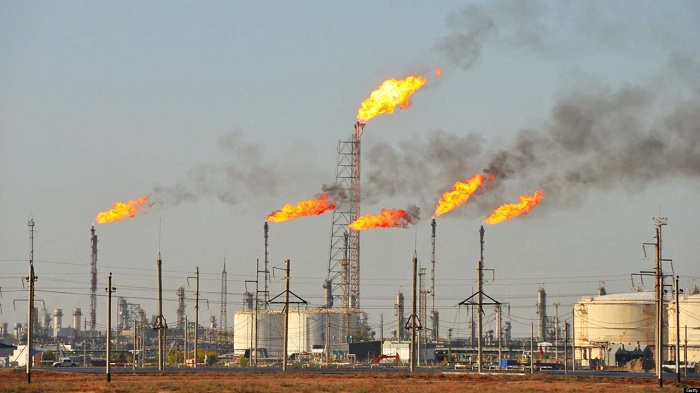
Gas flaring
Gas flaring

Albert gave this hint in Lagos when he led his members on oversight functions to the Department of Petroleum Resources (DPR).

He said the bill was currently on the third reading and would be given accelerated attention to enable it to come to fruition.

He explained that the bill, when passed, would eliminate gas flaring and put punitive measure against perpetrating the act by increasing the penal fees paid by seeing companies from N10 per 1,000 Standard Cubic Feet (SCF) of gas to 3.50 dollars per 1,000 SCF of gas.

Albert expressed the National Assembly’s support for the 2020 final elimination of gas flare out date but expressed the need for Nigeria to be pragmatic on the new date.

He also expressed discontent over the manner gas resources were being treated like byproduct, saying there was need for paradigm shift on the part of the country to see gas as economic enabler.

The legislator said the Senate was not resting on its oars to ensure that all the grey areas spotted by the President in the botched Petroleum Industry and Governance Bill were addressed and resent to him for final assent.

He promised that the Senate would look at the other legs of the Petroleum Industry Bill as part of its contribution to ensure a robust oil and gas industry in Nigeria.

To him, the Department of Petroleum Resources has not fared bad in playing its watchdog roles in the industry and assured that through its oversight functions, the Senate would collaborate with the agencies to nip in the bud challenges militating against the delivery of its mandate.

In his remarks, the acting Director of the DPR, Alhaji Ahmed Shakur, commended the Senate for its robust contribution and eventual submission of the Petroleum Industry Bill (PIGB) to President Muhammadu Buhari.

Shakur said the roles played by the Senate in the PIGB showed that it was committed to ensuring the entrenchment of robust oil and gas laws in the country.

He also commended the lawmakers for the oversight visit, saying the DPR had always seen them as a partner in progress and assured that the agency would not derail in entrenching standards in the nation’s oil and gas sector.

He also told the visiting senators that the agency was committed to dedicated gas exploration, grow gas reserves to meet domestic and export needs.

The director added that the agency had embarked on aggressive campaign for the elimination of gas flaring in Nigeria by 2020, as well as meeting the target of 200 trillion cubic feet of gas by same year, which he said the agency had met in 2018.

By Yunus Yusuf 
Government lauded on pace of Ogoniland cleanup

0

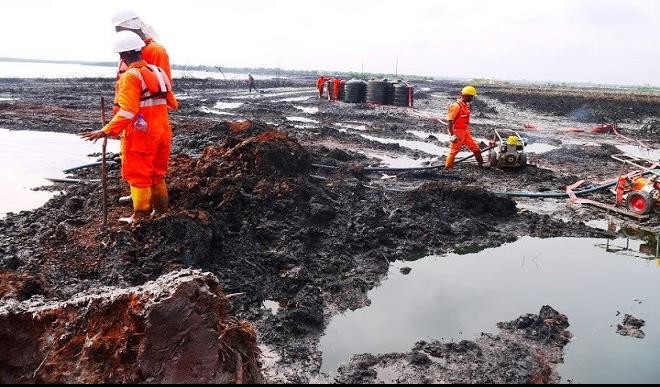
A civil society organisation (CSO), the Green Alliance Nigeria (GAN), has lauded President Muhammadu Buhari for the pace of work on remediation of communities impacted by oil spill in Ogoniland.

Ogoniland cleanup
Ogoniland cleanup

GAN President, Mr Chima William, commended the progress of work at a meeting organised by the Civil Society Legislative Advocacy Centre (CISLAC), in Port Harcourt, Rivers State, on Thursday, November 1, 2018.

He said the Federal Government ought to be commended for its action so far, saying that it would be better to experience delay while the proper things are being done.

“We have been interacting with the Hydrocarbon Pollution Remediation Project (HYPREP) to know what they have been doing.

“Going by our assessment based on their presentation; we have seen that the agency is on ground and not just on papers.

“Our stand is that the agency should do it slowly, but they should at the same time ensure that the actual clean up is done properly,” he said.

William urged HYPREP to also update its records regularly for easy monitoring.

“It is important that the agency do some procedural phases to understudy what the situation is and to begin to tackle it.

“Thou, they are on the right track but the CSOs need to criticise them to keep them (HYPREP) on their toes,” he said.

Also, Mr Young Kigbara, Coordinator, Civil Society Coalition on the Implementation of the Cleanup of Ogoni and Niger Delta, called for patience from communities in Ogoniland.

According to him, the communities have reasons to expect so much, “But we believe that HYPREP is doing very well to breach the gap.

“We are in the communities talking to them to ensure the project succeeds. We believe that the agency should continue with the emergency measure side-by-side with the clean up.

“If HYPREP should wait to complete the emergency measure; the clean up may take many more years. We think the best time to start is now,” he said.

By Desmond Ejibas

Australia to import grains as devastating drought takes hold

0

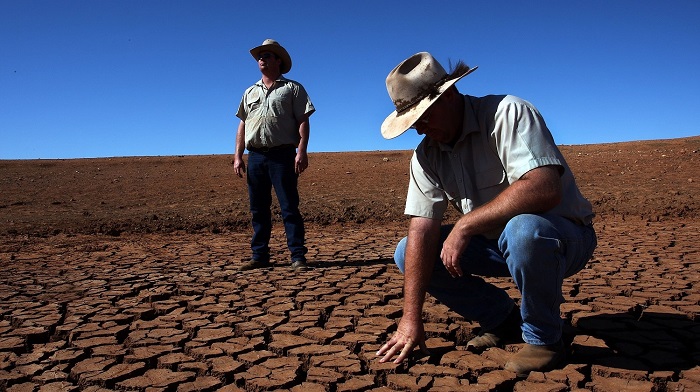
Australia’s Department of Agriculture says the department is preparing to import grains for the first time over a decade as the nation’s drought takes hold.

Drought in Australia
Farmers hope for rain as drought continues in New South Wales, Australia

The department said in a statement released on Thursday, November 1, 2018 that it was assessing five options to import bulk whole grains from the U.S. and Canada.

If it goes ahead, it will be the first time Australia has brought in additional grains since 2006.

It comes at a time where grain production on Australia’s east coast, where the drought is worst, has fallen to its lowest level in a generation.

At the current rate, Western Australia (WA) will produce over half the national crop since the 1990s.

According to forecasts from agriculture lending giant – Rabobank, the national winter crop would produce less than 30 million tonnes of grain in 2018, compared to the 2017, 23 per cent increase.

The bank said it expected the 2018 harvest to “go down as one of the worst in eastern Australia’s history.”

Steve Hatfield-Dodds, a spokesman for the Australian Bureau of Agricultural and Resource Economics and Sciences (ABARES), said the government’s official forecaster had revised its expectations down, citing poor rainfall as the reason.

“We expect 2018-19 winter crop production to be around 15 per cent lower than our September forecast of 33.2 million tones.”

Importing grain is seen as a last resort in Australia because of the bio-security risk doing so poses.

One of the risks associated with importing grain is plant disease – karnal bunt, which Plant Health Australia estimated will restrict Australia’s agriculture exports to 45 countries.

“Our concerns are really around the potential for weed seeds and fungal disease to be brought in on the grain, that’s our clear outlier that we’re concerned about,” Grain Producers Australia chairman, Andrew Weidmann, said.

COP24: Poland, UN sign host country agreement

0

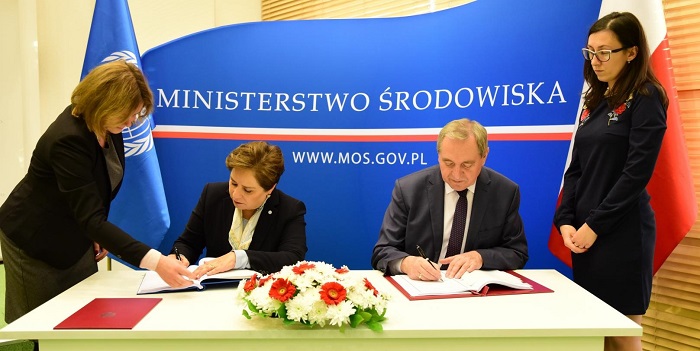
The government of Poland and the UN on Wednesday, October 31, 2018 co-signed the bilateral agreement which forms the legal basis for organising and hosting the UN Climate Change Conference (COP24) in Katowice from December 2 to 14.

Cop24 Signing
The UN’s Patricia Espinosa (left) and Polish Minister, Henryk Kowalczyk

The conference is organised by the Bonn-based UN Framework Convention on Climate Change (UNFCCC/ UN Climate Change) and is presided over by Poland.

“The signing of the Agreement sums up the process of negotiating this document and serves as the final formal element of the organisational preparations for an important international event – the COP24 climate summit,” said Polish Environment Minister, Henryk Kowalczyk, at the signing ceremony in Warsaw, the Polish capital city.

“Our joint efforts to this date show the great importance that Poland and the United Nations attach to the success of the summit in Katowice. We have built very strong foundations for further actions and I am certain that successful cooperation and our mutual trust will contribute to the smooth organisation of the climate conference and to their ultimate success in the form of a package of decisions implementing the Paris Agreement,” he added.

“We are pleased to sign this host country agreement and look forward to working with the Government of Poland to deliver a robust and successful COP24,” said UN Climate Change Executive Secretary, Patricia Espinosa.

“With the devastating impacts of climate change increasingly evident throughout the world, it’s crucial that Parties achieve the primary goal of COP24: finalising the Paris Agreement Work Programme. This will not only unleash the full potential of the Paris Agreement, but send a signal of trust that nations are serious about addressing climate change. We need progress on several other issues as well, including commitments to boost global climate action and ensuring nations fulfil their financial pledges to support the climate regime,” she added.

Preparations for COP24 including the construction of temporary structures have been ongoing for several months.

Indian fishworkers flay proposed shipping corridor

0

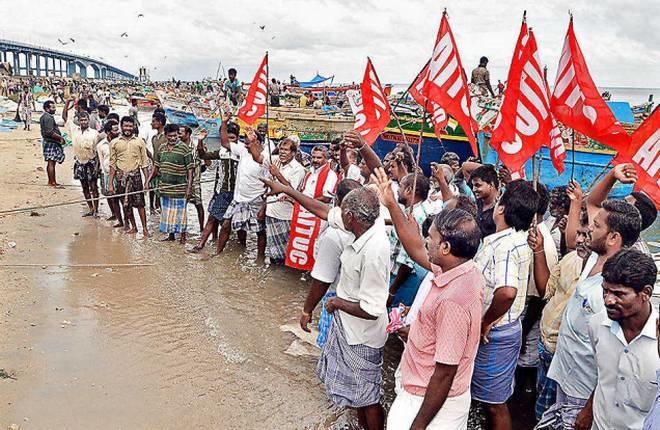
Members of the National Fishworkers Forum (NFF) in India on Tuesday, October 30, 2018 staged protests in 23 ports and harbours across the coastal states to kick against a planned shipping corridor which they claim endangers their source of livelihood.

Fishworkers protest
Fishworkers protest

The protests across the state saw a turnout of thousands of fishermen and the public. The NFF says it stands firm against any proposed plan of a shipping corridor “as it endangers the lives of all fishermen”.

The protests were described as a success in garnering attention towards the fishing communities and their plights at the hands of “a disinterested government and an exploitative corporate nexus”.

In Kerala, Shri. K.V Thomas, a Member of Parliament, inaugurated the protests, standing firmly in support of all fishing communities. MLA, Shri.M. Vincent was also in attendance.

In Maharasthra, various fishing unions convened in large numbers, rallied for their livelihood and opposed the government’s “one-sided notification”.

Shri.Mahadev Janker, Minister of Cattle and Dairy Development, Fisheries, reportedly attended the protests and heard the fishing communities’ demands. Along with him, Shri.Rahula Navekar, Shri. Bhai Jagtap, Shri. Raj Purohit, Shri Jayant Patil, all MLAs, also participated.

Numerous political leaders joined the protests acrossall coastal states and were in support of the fishing communities and theirdemands.

In Goa, amidst hundreds of fishermen, Prime Minister Narendra Modi’s effigy was burned as a collective sign of dissatisfaction. With a strong opposition to the disastrous effects of the Blue Economy, including the Sagarmala project, various GoanFishing Unions expressed their mistrust in the current ruling government. Furthermore, in West Bengal, all fishing unions submitted a memorandum outlining their fearsand listing their demands to the concerned Ministry. Odisha and Tamil Nadu alsosaw a turnout of hundreds of fishermen standing in solidarity with each otherand against the proposed shipping corridor.

Mr. Narendra Patil, Chairperson of NFF, and Mr. T. Peter, General Secretary, have both pledged that if the government does not relent and continues towards establishing ashipping corridor, these protests will become nationwide and will reach Delhitoo.

In this regard protests were held in Gujarat: Kutch,Porbandhar, Veraval; Maharashtra: Mumbi Port, Ratnagiri and Malvan; Goa: Vasco fishing harbour; Karnataka: Mangalore, Karvar, Malppe harbours; Kerala: Kochin port, Chellanam harbour, Vizhinjam harbour; Tamilnadu: Colachal,Thengapattanam, Muttam, Chinnamuttam and Nagapattinam harbours and Ramnadu; Andhra Prathesh: Guntur Bapatla; Odisha: Bhubaneswar Rajbhavan; West Bengal: Contai and Diamond harbour.

If the government does not heed the demands of the fishworkers after this protest, the NFF says it is planning to take massive campaign across the coastal states with immediate effect.

Nigerian activist and Director, Health of Mother Earth Foundation (HOMEF), Nnimmo Bassey, in a reaction to the development, submitted: “FishNet Alliance (Africa) stands in solidarity with fishers in India against the proposed shipping corridor that threatens their livelihoods. Our struggles are connected, just as the oceans and seas are connected.”

HOMEF and South Durban Community Environmental Alliance are Co-coordinators of FishNet Alliance.

Group wants hand washing facilities in health centres

0

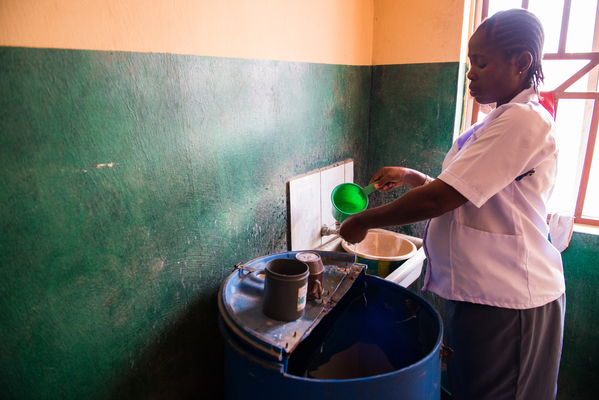
The Network of Civil Societies on Water and Sanitation (NEWSAN) has called for the provision of hand washing facilities in all health centres to promote hygiene and effective service delivery.

Nkiruka
Nkiruka Okafor, 40, a volunteer nurse washing her hands thoroughly with water bought and stored, before attending to patients at the Zuma Primary Health Centre, Abuja, Nigeria

National Coordinator, NEWSAN, Mr Benson Attah, made the call at a sensitisation campaign on hand washing to pregnant women at the Township Clinic, Gwagwalada, FCT on Wednesday, October 31, 2018.

He noted that the group had always re-echoed the need for all tiers of government to ensure the provision of basic hygiene facilities in public places, especially in health centres.

Attah said that the intervention was in line with the mandate and commitment towards the enhancement of life, health and wellbeing of the citizens through improved service delivery.

He said the choice of the maternity section of the hospital followed an outcome of assessments carried out between June and July, which saw a huge gap in access to hand washing facilities.

“This year alone, not less than 20 states in the country have recorded no fewer than 30,000 cases of cholera and we all are aware of the socio-economic implications of such situation on the citizens.

“Needless to say that Water, Sanitation and Hygiene (WASH) is the gateway to both national and personal development, as it impacts directly on most of the Sustainable Development Goals (SDGs),” he said.

He said that any country that has not attained improved WASH services delivery cannot attain development.

“Access to WASH is central to National Development, we hereby call on mothers and indeed all women to lead their families in ensuring that every family member imbibe the Hand Washing Practice,” he said.

He said the availability and use of hand washing facilities would prevent infections arising from poor hygiene, noting that lack of hand washing facilities poses health risks to patients, health workers and nearby communities.

The coordinator said that when such facilities were in place, it would augment efforts of the Ministries of Health and Water Resources in scaling up hygiene promotion and practices in the country.

He said that there was the need for sector collaboration and support to the civil societies to monitor access and implementation of programmes towards meeting the Sustainable Development Goals before 2030.

“Adopting the behavior of hand washing with soap, ash and water is adjudged to be one of the most cost-effective and inexpensive ways to prevent diseases, cutting deaths from acute respiratory infections by nearly one-quarter.’’

The FCT Coordinator of NEWSAN, Mr Williams Ngwakwe, said the sensitisation campaign was targeted at expectant mothers because it has been reported that diarrhoea kills under-five children most.

He said that equipping them with the knowledge and skills of hand washing would make them imbibe the culture and overall behaviour change.

Ngwakwe said addressing the issue of hygiene through hand washing was more beneficial than treatment.

Mr Umar Bako, the clinic’s Chief Nursing Officer, while commending the team on the awareness campaign, called for interventions to renovate the clinic.

He said the area, which was already water-logged due to poor drainage system, needed immediate interventions, while calling for the construction of more toilets in the area.

By Tosin Kolade

Plastic-busting fungi may help tackle pollution, climate change – UNEP

0

A new United Nations-backed report has revealed that fungi can help wean the world off its plastic addiction by degrading polyurethane in just a matter of weeks.

 Ilia Leitch
Senior Kew Gardens Scientist, Ilia Leitch

According to the first-ever “State of the World’s Fungi” report, Scientists at London’s Kew Botanical Gardens reported that these organisms have the potential to break down waste plastic.

The report is an important advance in a world where momentum is building to reverse the toxic tide of plastic that is killing marine life and polluting the ocean.

According to the UN, at least eight million metric tonnes of plastic end up in the sea every year, sometimes decomposing into tiny micro-plastics that make their way into the food chain.

Senior Kew Gardens Scientist, Ilia Leitch, said that other fungi and microorganisms were also being explored for their potential to degenerate different types of plastic.

The report explained that, by understanding how the fungi break down these bonds and what the optimal conditions are, “you can then increase the speed at which they do it”.

Noting that there may be as many as 3.8 million fungal species, with only 144,000 named, the authors – a team of some 100 scientists from 18 countries – argue that further research into these organisms could provide answers to some of humanity’s greatest challenges.

The report spelt out that advances in their agricultural applications could translate into improved food security, environmental sustainability and increased production revenues.

In addition to recycling nutrients and helping crops to grow efficiently, fungi also provide compounds that produce antibiotics, immune-suppressants and statins that block cholesterol-producing liver enzyme action.

According to the UN Environment Programme (UNEP), there is mounting evidence that climate change is affecting the ranges of species and biodiversity in ways that are still not comprehensible.

Fungi themselves are also under threat, particularly in high latitude areas where average temperatures continue to rise, such as the Arctic, UNEP said.

The UN environment agency said these changes were already affecting fungi reproduction, geographic distributions and activity, with possible knock-on effects for ecosystems.

Niklas Hagelberg, a UNEP climate change and ecosystems expert, said: “Species react differently to climate change, which disrupts the delicate interaction between them.

“This further complicates conservation; we need to quickly add climate change to our ecosystem management effort.”

Meanwhile, the Kew Gardens report showcased the kind of pioneering thought that would be at the heart of the fourth UN Environment Assembly in March 2019, on “innovative solutions for environmental challenges and sustainable consumption and production”.

Ahead of the 2019 assembly, UNEP is urging people to “think beyond and live within,” a motto that is aimed at tackling environmental challenges and assuring a prosperous future – that may include a role for fungi, that was unthinkable just a few years ago.

By Prudence Arobani

States urged to use ecological funds judiciously

0

The Federal Government on Wednesday, October 31, 2018 urged state governments to judiciously use ecological funds to complement its efforts in addressing the multifarious ecological challenges in various communities across the country.

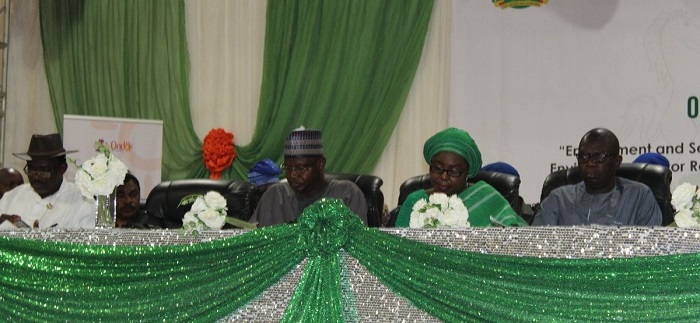
National Council on Environment
Minister of State for Environment, Alhaji Ibrahim Jibril, with other dignitaries at the National Council on Environment in Akure, Ondo State

The Permanent Secretary, Ecological Fund Office, Dr Habiba Lawal, gave the advice at the 2018 National Council on Environment (NCE) Meeting in Akure, Ondo state.

The theme of the meeting is “Environment and Security: Consolidating Nigeria’s Environmental Reforms towards Sustainable Development’’.

According to Lawal, the Federal Government will continue to promote and ensure successful partnership critical to the effective management of the environment.

“However, the state governments should also ensure that the shares of their Derivation and Ecological funds are judiciously expended.

“By so doing, the huge cost on intervention projects will be far reduced and the savings thereof will be harnessed to address other national developmental needs,’’ the permanent secretary said.

According to her, the sharing formula of the fund is as follows: Federal Government collects one per cent as its monthly share; state governments get 0.72 per cent while local governments have 0.60 per cent as their monthly share.

“The one per cent Federal Government’s share is domiciled in the Central Bank of Nigeria and managed by the Accountant General of the Federation.

“The National Emergency Management Agency benefits 20 per cent of the Federal Government’s share monthly.

“The state and local governments collect their shares monthly at the Federal Account Allocation Committee’s meeting,’’ she said.

The permanent secretary said that since the inception of President Muhammadu Buhari’s administration, 150 projects had been approved by the Federal Government.

She said that, out of the figure, 63 projects had been inaugurated and handed over to the affected communities while 16 were waiting to be inaugurated.

According to her, the remaining projects are ongoing and at various stages of completion.

“It has become glaring that the Federal Government cannot address these challenges alone.

“So, the state and local governments should intensify more efforts to ensure full participation to complement the Federal Government’s efforts,’’ Lawal said.

The Minister of State for Environment, Alhaji Ibrahim Jibril, urged the Ondo State Ministry of Environment to turn the ministry around, to ensure that relevant stakeholders paid attention to the issues of environment.

Jibril, who visited a coastal area “Aiyetoro’’, in Ilaje Local Government Area of Ondo State, expressed shock over sea incursion that displaced many houses in the community.

“What happens in Aiyetoro shows that climate change is real because it is high sea level that causes it and it is sad to see school children studying under such inconducive condition,’’ he said.

The minister called for synergy among the tiers of government and relevant stakeholders to address the problem.

Gov. Rotimi Akeredolu of Ondo State, who called for the Federal Government’s intervention to address ecological problem in Aiyetoro community, commended the minister and other stakeholders for visiting the community.

Akeredolu, who was represented by his Deputy Governor, Mr Agboola Ajayi, said that the minister’s visit to Aiyetoro would assist in addressing sea incursion in the area.

By Deji Abdulwahab

Dredging River Niger panacea to perennial flooding, says group

The World Igbo Environment Foundation (WIEF) has called for the dredging of River Niger and de-silting of water bodies to solve the perennial problem of flooding in Nigeria.

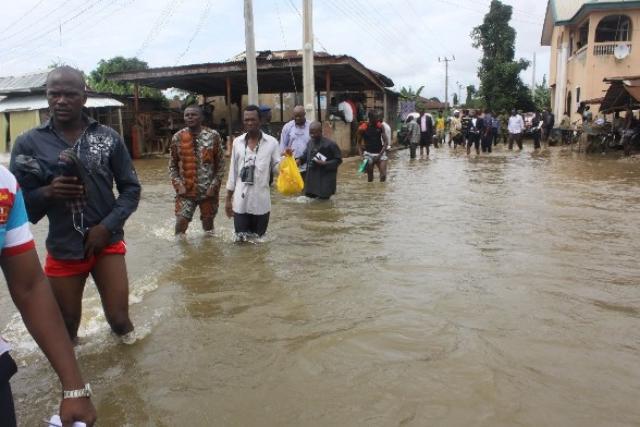
Anambra flood
Flooding in Anambra State

The foundation’s Executive Director, Dr Odili Ojukwu, suggested this in an interview with the News Agency of Nigeria (NAN) on Wednesday, October 31, 2018 in Awka, the capital of Anambra State.

Ojukwu said that apart from mitigating the impact of flooding on the lives in affected communities and the national economy, dredging had immense potential for trade and industry.

He said climate change had come to stay with all its consequences and called on the Federal Government to come up with sustainable ways of managing it and exploring other opportunities.

The foundation said it would also facilitate the development of vibrant economy along the coastal lines and decongest some major cities of the country.

“River Niger needs to be dredged for the benefit of the entire Nigeria; this flood would have been effectively contained if river Niger was appropriately dredged before now.

“The streams and rivers which serve as flow corridors for floods are clogged up, they have to be de-silted so that they can withstand flood considerably when it comes.

“The benefit of dredging is so enormous; it will increase coastal transport system, easier and cheaper movement of goods and also enhance irrigation for farming,” he told NAN explaining the causes and benefits of dredging.

“Again, it will help to develop the glass industry because sand is a major raw material in the production of glass and reduce the indiscriminate mining of sand which leads to erosion of the environment.

“Why should we continue to neglect a critical sector like that which borders on the human person, ecology, environment, economy and industry.

“We are having issues of congestion in Lagos, Kano, Abuja, Kaduna while we can open up other areas for economic purposes and move some of our population there,” he said.

The WIEF chief also called for an environmental policy that would be proactive, people oriented and cost efficient.

He decried the huge amount of money spent on relief materials and rebuilding of destroyed properties and livelihoods because of flood disaster.

“I can challenge anybody; the cost of responding to flood and erosion emergencies (relief materials and repairs) is much higher than the budget for environment ministry both at the federal and state levels.

“The approach of government to these emergencies is more of reactionary that proactive, when the alarm is sounded by the National Emergency Management Agency (NEMA), the next move be `what can be done to reduce the effect’?

“But they were busy setting up Internally Displaced Peoples (IDPs) camps without working on possible mitigation of factors like what we see in Asia and America.

“They don’t have to wait until erosion by flood cuts off major roads and vehicles plunge into them and when it begins to claim human lives,” Ojukwu said.

“Nigeria needs actionable environmental policy which is people-driven, gone should be the days when Abuja conceive projects and give it to people without knowledge of the terrain to implement.

“There are non-structural issues that can be done without much money, but government will not deal with those issues until the whole issues degenerate.”

Ojukwu said Ecological Fund should be scrapped and be made part of the federal allocation so that states could use the increase to deal with their peculiar challenges.

According to him, the Ecological Fund is just free money for politicians; it should be scrapped completely because it was no longer serving the original purpose.

“Rather, the Federal Government should make it part of the money shared among the tiers of government, this will increase what is available to states to fund the various sectors of their economy,” he said.

By Chimezie Anaso

Al-Makura advocates creation of grazing areas by government, states

0

Gov. Umaru Al-Makura of Nasarawa State has urged the federal and state governments to set up grazing areas to address the incessant clashes between herders and farmers in the country.

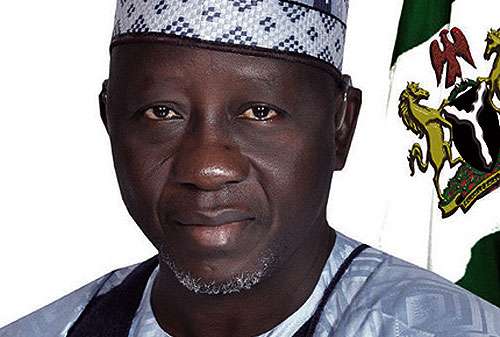
Umaru Tanko Al-makura
Governor of Nasarawa State, Umaru Tanko Al-makura

Al-Makura made the call on Wednesday, October 31, 2018 in Lafia, the state capital, at the stakeholders’ meeting organised by the Presidential Committee on Farmers/Herders crises in collaboration with the Nasarawa State Government.

Represented by Haruna Osegba, the state Commissioner for Local government and Chieftaincy Affairs, the governor also called on private individuals, groups and organisations to set up private ranches to curb the farmers/herdsmen clashes.

He maintained that all established cattle routes should not be blocked during and after harvest to guarantee the constitutional rights to the free movement of citizens.

Al-Makura stressed the need to intensify surveillance and patrol by security agencies and urged farmers and herders to refrain from taking laws into their hands but rather report cases of trespass to constituted authorities for redress.

The governor said perpetrator and sponsors of heinous crimes, including the farmer/herder conflicts, should be promptly arrested and prosecuted to serve as a deterrent to others.

Al-Makura noted that the establishment of the Community-Based Conflict Resolution Committees at the state, local government, district and village levels by his administration had yielded tremendous results in resolving conflicts among individuals and communities.

He lauded the intervention of the Federal government over the farmers/herder crises, especially the establishment of the Presidential committee headed by the Vice President, Prof. Yemi Osinbajo.

“Let me commend the efforts of the presidential committee for your commitment toward engendering symbiotic and peaceful relationship between farmers and herders with a view to harnessing our agricultural potential for socio-economic growth of the country.’’

He stated that the assignment of the committee was in line with the vision of the President Muhammadu Buhari-led administration.

Al-Makura added that hosting the meeting in Nasarawa state was apt, particularly as harvest season usually characterised by incessant farmers/herder conflicts was approaching.

“It’s my belief that this meeting will draw inspiration from our unique broad-based community-based conflict resolution mechanism for possible adoption,” Al-Makura added.

Earlier, Dr Andrew Kwasari, secretary of the Presidential Committee, said the meeting was the third in the state since its inauguration in 2017.

He said the essence of the stakeholders’ meeting was to put in place machinery for the commencement of the implementation of resolutions reached by stakeholders in the previous engagement toward resolving such crises.

Kwasari noted that the harvest season (November-February) mostly witnessed perennial crises, hence the need to build the capacity of the local communities to be able to amicably resolve conflicts that might arise between farmers and herders during the period.

He explained that the Federal and state government had developed an expanded plan following inputs from the stakeholders in the state during the fact-finding visits of the committees earlier in this year.

He said the 10-year plan aimed at developing a robust livestock and crop production system in the country could only be implemented with the support and commitment to conflict resolution by all stakeholder, especially those in the rural communities.

By Isaac Ukpoju