Home Blog Page 1752

Air Pollution: WHO calls for construction of schools, playgrounds away from busy roads, factories

0

The World Health Organisation (WHO) has advised governments to ensure that schools and playgrounds are constructed away from busy roads, factories and power plants to reduce children’s exposure to air pollution.
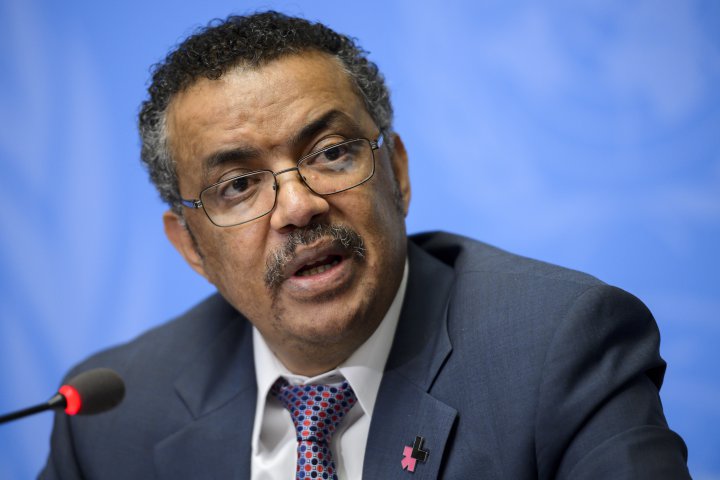
Dr Tedros Adhanom Ghebreyesus
Dr Tedros Adhanom Ghebreyesus, Director General of the World Health Organisation (WHO). Photo credit: FABRICE COFFRINI/AFP/Getty Images

Dr Tedros Ghebreyesus, the WHO Director-General, gave the advice in a New WHO Report on “Air pollution and child health”, released by the organisation on Wednesday, October 31, 2018.

The report was launched on the eve of WHO’s First Global Conference on Air Pollution and Health holding at the WHO Headquarters in Geneva from Oct. 30 to Nov. 1.

The WHO director-general noted that busy roads, factories and power plants were major sources of air pollution, stating that constructing schools away from these would limit children’s exposure to polluted air.

He said that around 93 per cent of the world’s children under 15 years breathe air that is so polluted and puts their health and development at risk everyday.

Ghebreyesus said that tragically, many of these children die as WHO estimates in 2016 showed that 600,000 children died from acute lower respiratory infection caused by polluted air.

“Polluted air is poisoning millions of children and ruining lives; this is inexcusable. Every child should be able to breathe clean air so that they can grow and fulfill their full potential.

“One reason why children are particularly vulnerable to the effects of air pollution is because they breathe more rapidly than adults and so absorb more pollutants.

“They also live closer to the ground where some pollutants reach peak concentrations, and this is a time when their brains and bodies are still developing.

“The new report reveals that when pregnant women are exposed to polluted air, they are more likely to give birth prematurely and have small, low birth-weight children.

“Air pollution impacts neuro-development and cognitive ability and can trigger asthma and childhood cancer.

“Children who have been exposed to high levels of air pollution may be at greater risk for chronic diseases such as cardiovascular diseases later in life,” the WHO director-general said.

The report further revealed that air pollution was one of the leading threats to child health accounting for almost one in 10 deaths in children under five years.

According to the report, more than 40 per cent of the world’s population, which includes one billion children under 15 years, is exposed to high levels of household air pollution.

“This pollution comes mainly from cooking with polluting technologies and fuels.

“In low and middle-income countries around the world, 98 per cent of all children under five are exposed to ambient fine Particular Matter (PM2.5) levels which is above WHO air quality guidelines as against 52 per cent in high-income countries,” the report read in part.

The UN health body therefore urged countries to work towards meeting the WHO global air quality guidelines to enhance the health and safety of children.

The organisation said governments should reduce over-dependence on fossil fuels, invest in improving energy efficiency and facilitate the uptake of renewable energy sources to achieve this.

WHO said that better waste management methods should also be adopted which could include reducing the amount of waste burned within communities in order to reduce ‘community air pollution’.

The three-day conference aims to provide opportunities for world leaders, ministers of health, energy and environment, mayors, scientists, heads of intergovernmental organisations and others to commit to act against air pollution.

By Yashim Katurak
1.4m people migrate to cities weekly, says UN

0

The UN says no fewer than 1.4 million people migrate every week to cities around the world.

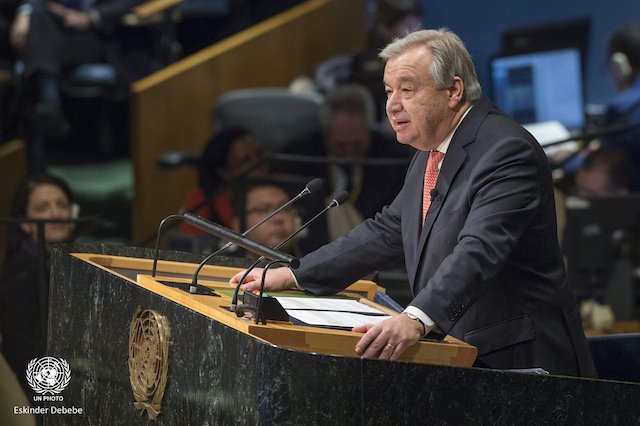
Antonio Guterres
Antonio Guterres, UN Secretary General

Secretary-General António Guterres warned that the weekly migration could contribute to “disasters”.

The UN chief said the development “can strain local capacities, contributing to increased risk from natural and human made disasters”.

In his message for World Cities Day, celebrated annually on Oct. 31, Guterres stressed that “hazards do not need to become disasters”.

“The answer is to build resilience – to storms, floods, earthquakes, fires, pandemics and economic crises,” he said.

Guterres explained that cities around the world were doing just that, forging new ways to increase resilience and sustainability.

He noted that the capital of Thailand, Bangkok has built vast underground water storage facilities to cope with increased flood risk and save water for drier periods.

In Quito, the capital of Ecuador in South America, local government has reclaimed or protected more than 200,000 hectares of land to boost flood protection, reduce erosion and safeguard the city’s freshwater supply and biodiversity, he noted.

The UN chief also indicated that the city of Johannesburg in South Africa “is involving residents in efforts to improve public spaces so they can be safely used for recreation, sports, community events and services such as free medical care”.

Guterres said a range of UN-backed international agreements provided “a roadmap for a more sustainable and resilient world”.

The agreements include the 2030 Agenda for Sustainable Development, the Paris Agreement on climate change, the Sendai Framework for Disaster Risk Reduction and the New Urban Agenda

World Cities Day was established by the UN to promote the international community’s interest in global urbanisation, push forward cooperation among countries in meeting opportunities and addressing challenges of urbanisation, and contributing to sustainable urban development around the world.

Maimunah Sharif, Executive Director of the UN Human Settlements Programme (UN Habitat), flagged the importance of investing in resilience or face growing “economic, social, political and human” risks.

“It has been estimated that without action on climate change – which accounts for just one facet of resilience – some 77 million urban residents risk falling into poverty,” she warned.

Sharif elaborated that human-made and environmental threats ranged from droughts, floods and fires to economic shocks, disease outbreaks, war and migration.

“Investing in resilience is a wise investment,” the UN Habitat chief said.

The theme of the 2018 commemoration, “Building Sustainable and Resilient Cities”, focuses on the need to preserve human life and limit damage and destruction while continuing to provide infrastructure and services after a crisis.

By Prudence Arobani

Africa to inject $9bn in smallholder irrigation

0

Expansive lush sugarcane plantations stretching to 8000 hectares in Kenya’s semi arid Kwale County along the coastal line is a clear testimony that irrigated agriculture could be the magic bullet for a green revolution in Africa.

Nuhu Hatibu
Prof Nuhu Hatibu, the regional head of the Alliance for a Green Revolution in Africa (AGRA)

Yields at the Kwale sugar plantation are higher than they would be were it to be rain-fed, and there is no need to worry about variations in seasonal rainfall, said Pamela Ogada, the general manager for the KISCOL Sugar Company, which owns the site.

Irrigation has been “the magic bullet” for the global agricultural revolution, said Prof Nuhu Hatibu, the regional head of the Alliance for a Green Revolution in Africa (AGRA), which works to improve farming across the continent.

Now AGRA has said it will work to mobilise billions of dollars in cash and kind through different partners to ensure that smallholder farmers – from individuals to cooperatives – can benefit from irrigation.

This $9 billion, according to Hatibu, was promised by the World Bank, and it will be through loans to governments.

The World Bank has pledged to work with the African Development Bank (AfDB) and other organisations to provide the money to African governments to improve irrigation, said Steven Schonberger, the World Bank’s global lead for water in agriculture.

Financing for the effort is still being put together, Schonberger said, but “we are very optimistic about it because a lot of financing is already there.”

The money could begin to flow as soon as 2019, he said.

The project will target water from multiple sources that include rivers, streams, stored rain water and groundwater.

They are still in the planning stage and, so far, they cannot tell how many African countries will express interest and have not decided when the funding will be rolled out. AGRA will help countries develop national strategies and also capacity building. The starting point according to Hatibu will be mapping of the groundwater aquifers in various countries before deciding on which crops to be grown.

He says that AGRA will have a microfinance facility known as “Irrigation Fund” through which the private sector can access money for putting up the infrastructure, such as constructing dams, wells, piping and different forms of storage.

Nearly all countries in Africa set up large projects post-independence to support irrigation and mechanisation programs after independence, Hatibu said. But they were not properly implemented, and all failed.

“What happened in other countries – those failures pushed them to look for solutions. But in Africa, we got paralysed and declared that irrigation was bad,” he told PAMACC News.

Raj Shah, the president of the Rockefeller Foundation, one of AGRA’s key funders, said Africa’s challenge was not over-irrigation but under-irrigation.

“Compared to any other agriculture-producing economy on the planet, Africa uses very little irrigation and very little fertiliser,” he said.

And, he added, the Green Revolution should be unique to Africa and should take water scarcity into account.

“Especially now that it’s been 40 years and we know how to avoid the negative environmental consequences of nitrogen runoffs, excess fertiliser use and over irrigation,” he said.


Groundwater

But how is this going to be possible without running into the same problems as India, whose quest to improve productivity through irrigation ended up depleting all the underground aquifers faster than they expected?

Research funded through the British government’s UK Aid programme – Unlocking the Potential of Groundwater for the Poor (UpGro) – has shown that the water table in some African countries is declining.

One project looked at shallow groundwater systems used by smallholder farmers in Ethiopia, and found increased competition for the resource, said Behailu Berehanu, a hydrologist at the Addis Ababa Science and Technology University and one of the researchers.

“With the growing trends of water use for industry, community water supply, rapid urbanisation, rapid growth of irrigated areas – definitely sustainability will be questionable,” he told PAMACC News.

“The main problem, and it cuts across many African countries, is that we do not have proper integrated groundwater resources management practices,” he said.

AGRA’s Hatibu said the irrigation project would benefit from applying technology and best practice from other parts of the world to ensure there is sustainable and efficient use of water.

“We must not run away from our problems. All we need is to look for solutions to those problems,” he said, adding that Ethiopia, for instance, was promoting irrigation by mapping shallow and medium- aquifers across the country.

“That is a very important investment to deal with resilient systems. This will help to have a well-balanced design of how much pumping is happening in relation to the recharge,” he said.

With increased knowledge, Hatibu said, it was possible to recharge artificially – especially with shallow aquifers.

“For example, rice fields are very good recharge mechanisms for groundwater systems,” he said.

The solution, he added, required identifying where the recharge basin for the aquifers was located, then finding a mechanism to direct rain- or river-water to the aquifer to recharge it.

And while some aquifers might require just one season to recharge, others might need longer.

“So, whenever you decide to use an aquifer, ask yourself: what is the recharge basin for that aquifer? If the recharge basin can be used for rice paddies, then you can grow rice as you recharge the groundwater system at the same time,” he said.

So far, the Rockefeller Foundation (one of the AGRA funders) is working to bring the ‘Smart Power’ programme to East Africa in order to help rural communities take advantage of new solar technology that makes it cheap and affordable to reach rural communities with off-grid renewable energy solutions.

The Smart Power programme has been highly successful in India where communities have been able to set up mini-grids. Through the programme, farmers have put up agro processing equipments and irrigation projects that can run on solar power. Excess power is also sold to the national grid to fetch income for communities.

Shah said that he has already discussed with Uganda’s President Yoweri Museveni, and they had agreed on implementing the Smart Power Programme in Uganda, as a starting point.

“That is what is required to be successful in agriculture,” said Shah.

Courtesy: PAMACC News Agency

Nigeria to raise fresh N50bn green bond

0

Following the successful issuance of its first Sovereign Green Bond, Nigeria has embarked on a follow up scheme for 2018/2019.

National Council of Environment
Director, Department of Climate Change in the Federal Ministry of Environment, Dr Peter Tarfa (left), with Director General/CEO of the National Biosafety Management Agency (NBMA), Dr. Rufus Ebegba, during a session at the National Council on Environment in Akure, Ondo State

The initial issuance, which enabled the Federal Government raise some N10.69 billion to fund 2017/2018 appropriation projects with climate benefits, is now being followed up with issuance targeting a maximum amount of N50 billion, according to a memo by the Federal Ministry of Environment to the National Council on Environment (NCE), which is meeting in Akure, Ondo State, from Monday, October 29 to 31, 2018.

The green bond is a financial mechanism to facilitate Nigeria meet its Nationally Determined Contribution (NDC) target and low carbon pathway for socio-economic development in line with the Economic Recovery Growth Plan (ERGP).

Director, Department of Climate Change in the Federal Ministry of Environment, Dr Peter Tarfa, at the NCE further described the green bond process as an alternative source of financing to green the budget, fund green projects with measurable emission reduction calculations towards meeting the nation’s commitments in the NDC”.

Minister of State for Environment, Alhaji Ibrahim Jibril, disclosed recently that government would spend N10.6 billion Green Bond to execute its Energising Education Programme, which entails the provision of solar power to power higher institutions.

In the memo, the Environment Ministry urged the Council to, apart from supporting the development of bankable climate resilient and low carbon projects and programmes, encourage broad-based participation of all stakeholders for the dissemination of information on the green bond process as a source of financing for the implementation of the NDCs.

On the 24th Session of the Conference of the Parties (COP24) to the United Nations Framework Convention on Climate Change (UNFCCC) hold in December in Katowice, Poland, Dr Tarfa disclosed that, for the first time in its history, Nigeria would have a pavilion at the global climate talks.

“Stakeholders are invited to take up space at the pavilion. We are not charging them, but we will appreciate their support towards ensuring that the country’s participation at COP24 is a huge success,” he said.

14m ha of land need restoration in Nigeria, others – Study

0

A report on the state of the environment and socio-economic conditions in fragile ecosystems reveals the extent of land degradation in dryland Africa and shows how closely it is related to hunger and poverty. The report’s authors make an urgent call for increased investment in land restoration for small-scale farmers.

Burkina Faso tree planting
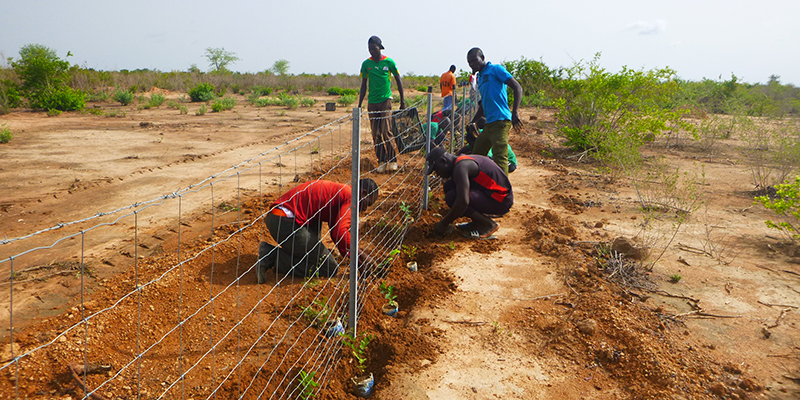
Combating desertification: Planting some 20,000 trees to create living hedges in Burkina Faso

The report was carried out by a major EU-funded Food and Agricultural Organisation (FAO) programme called Action Against Desertification. It states that over half of the area in the six African countries, where the programme operates – Burkina Faso, Ethiopia, The Gambia, Niger, Nigeria and Senegal – need restoration, an estimated 14 million hectares (ha), nearly half the size of Belgium.

“These findings again show what a huge challenge land degradation really is,” said Moctar Sacande, lead author and in charge of Action Against Desertification. They also make clear how closely land degradation is linked to poverty, he added. “80% of the area’s inhabitants, which is home to 1.8 million people, said they experienced food insecurity.”

Pietro Nardi of the European Union, the programme’s major sponsor, said: “Despite the momentous challenge, land degradation is not yet irreversible.” He explained that Action Against Desertification, now in its final stages, has covered an estimated 45 000 hectares of degraded land in four years, reaching around 500,000 people.


Poverty and land degradation

The report, called “Biophysical and socio-economic baselines: the starting point for Action Against Desertification”, is the result of surveys undertaken in the eight countries covered by Action Against Desertification, which also include Haiti in the Caribbean and Fiji in the Pacific.

The study combines biophysical data to analyse the state of the environment in the areas of intervention with household surveys to determine the living conditions of the people concerned.

A grim picture emerges from the biophysical data, collected with Collect Earth, an innovative tool developed by FAO using high-resolution satellite imagery. In Nigeria, for example, half of the forests in the area where Action Against Desertification works have disappeared in less than 10 years. Desertification affects an estimated 71% of the area in neighboring Niger.

Data on local living conditions, obtained following the Sustainable Livelihood Framework, reveal a close relationship between poverty and land degradation. Nearly all interviewed households in Burkina Faso had experienced uncertainty about their food supply in the preceding year. In Fiji, where rising sea levels are a major threat, a majority said that water supplies sometimes runs dry.


Bringing restoration to scale

This study is a high point of Action Against Desertification’s monitoring and evaluation efforts. Earlier research made it into Science magazine, as it found that forest in drylands are much more extensive than previously assumed. The same research allowed to map restoration needs and opportunities for Africa’s Great Green Wall for the first time.

Monitoring and Evaluation is a key element of Action Against Desertification’s successful land restoration approach. It allows to measure the progress and the impact of activities on the ground. At the same time, it generates a wealth of knowledge on dryland restoration for application well beyond the project itself.

Central to the success of Action Against Desertification is a restoration method that places rural communities at the heart by focusing on their needs for useful species and preferences in support of their livelihoods. A lot of effort also goes in improving the living conditions of local communities by developing the economic potential of non-timber forest products, such as fodder and gum Arabic.

Currently, the initiative is expanding its activities in African countries. But a lot more is needed, Sacande argues, pointing out the findings of the survey. “Action Against Desertifcation can be a game-changer for Africa’s drylands and beyond. But it will require major investments to bring its activities to scale.”

Action Against Desertification is an initiative of the African, Caribbean and Pacific Group of States (ACP) in support of the Great Green Wall initiative and UNCCD national action programmes to combat desertification. It promotes sustainable land management and restoration of degraded land in Africa, the Caribbean and the Pacific. Action Against Desertification is implemented by FAO and partners with funding from the European Union.

World Cities Day: Highlighting need for cities’ resilience to risks

0

United Nations Under-Secretary-General and Executive Director, UN Human Settlements Programme (UN-Habitat), Maimunah Mohd Sharif, in a message to commemorate the 2018 World Cities Day that is observed on Wednesday, October 31, says that numerous cities today face repeated risk from a wide range of both human-made and environmental threats and as such need to invest in resilience to stem the tide in terms of the costs on economic, social, political and human terms

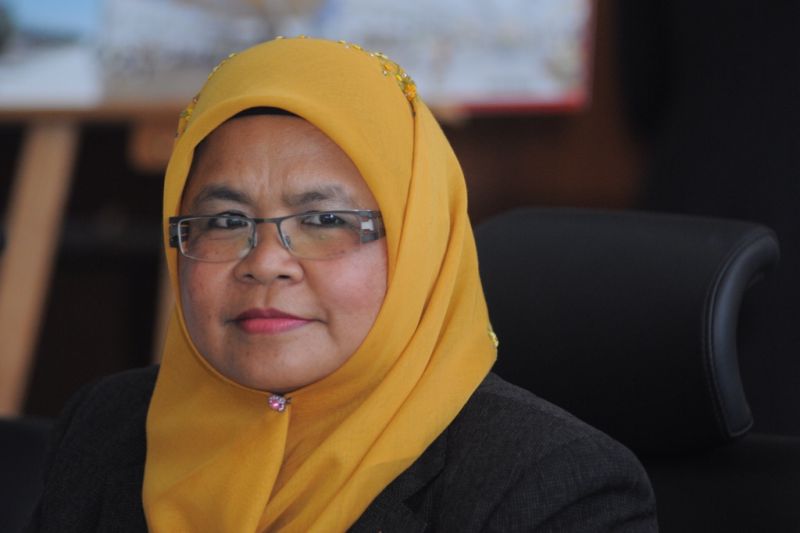
Maimuna Moh’d Sharif
Maimuna Moh’d Sharif, Executive Director of the United Nations Human Settlements Programme (UN-Habitat)

As Urban October comes to an end, a month dedicated to raising awareness on urban challenges, successes and sustainability, faced by cities and human settlements around the world, I am delighted to learn that an unprecedented number of global celebrations marking this month have taken place around the world.

This month, over 100 events have taken place across almost 50 cities and nearly 30 countries.

For World Cities Day on 31 October, we expect some 20 events to take place around the world, with the global observance being celebrated this year in the city of Liverpool, United Kingdom. Urban October is a key platform to raise the global consciousness of the importance of cities and human settlements in Building Sustainable and Resilient Cities, this year’s theme. Sustainability and resilience are an underlying commitment of the New Urban Agenda.

Many cities today face repeated risk from a wide range of both human-made and environmental threats: droughts, floods and fires to economic shocks, unemployment, disease outbreaks, migration, war and conflict.

World Cities Day is therefore a key platform for Member States and partners to highlight the need to increase resilience to natural and human-made risks.

If cities do not invest in resilience, the costs on economic, social, political and human terms will only grow. We need only to read the news to be aware of recurrent disasters that challenge our cities and human settlements everywhere, from rich to poor, from developed to developing, devastating families and entire communities, creating turmoil that can last for years. Cities are also a melting pot where inequalities are exacerbated, leading to social unrest and the potential for conflict. Investing in resilience is a wise investment.

With more and more people making cities their homes, the risks also increase. We need to find innovative and flexible ways to anticipate threats whether they are human-made or natural. We need to protect cities and their residents and enable them to adapt, survive and thrive. As with most disasters, it is usually the most vulnerable: women, youth, the poor, refugees and those on the move, such as migrants and internally displaced persons, who are hit the hardest and have the least ability to cope. At the same time, this year we have also seen natural disasters destroying communities in the global north, demonstrating that resilience is an important issue for all.

It has been estimated that without action on climate change – which accounts for just one facet of resilience – some 77 million urban residents risk falling into poverty. Urban resilience does not just mean building strong infrastructure, it also requires strong economic, social and governance systems to support physical and intangible resiliency. If cities do not invest in resilience now, the cost only increases. Current economic losses from disasters are unsustainable. They pose another challenge for countries in galvanising the potential of the global development agendas and moving towards eradicating poverty.

UN-Habitat supports resilience building in several ways. We help poor and marginalised communities find practical ways to adapt to climate change – increasing social inclusion through promoting participatory governance and planning, addressing land and property rights enabling access the improved living standards, and developing profiling and interactive tools, holistic, integrated approaches and support to communities from Paraguay to Mozambique, Sri Lanka to Somalia. UN-Habitat also support countries to improve their building and planning standards, both before after crisis.

I would like to sincerely recognise and thank the People’s Republic of China for founding World Cities Day, through a United Nations General Assembly resolution. Since 2014, the cities of Shanghai and Guangzhou, together with the Ministry of Housing and Urban Rural Development of China, have graciously financed the celebrations of World Cities Day. Thank you very much for your generous sponsorship, enabling cities and communities around the world to come together on this important platform to learn and share best practices on sustainable cities and their practices.

The need for resilient cities is recognised in the Sustainable Development Goals, the Paris Agreement for Climate Change, the Sendai Framework and in the New Urban Agenda. Urban resilience is not just strong infrastructure, it requires strong economic, social and governance systems. UN-Habitat calls for action on building sustainable and resilient cities to protect urban populations today, tomorrow and in the future. Let us all work together to ensure that no only do we protect our cities and ensure they can respond to crises, but that we turn challenges into solutions, and solutions into opportunities. I would like to especially thank the city of Liverpool in the United Kingdom, for hosting the global observance of World Cities Day 2018.

Volvo Environment Prize 2018 awardee tags Lagos ‘environmental nightmare’

0

A leading expert and thought leader on urbanisation and sustainability, Xuemei Bai, has painted a grim picture of the spatial status of Lagos, Nigeria’s commercial capital city.

Xuemei Bai
Xuemei Bai, Professor at the Fenner School of Environment and Society, Australian National University, Canberra, Australia, is the Volvo Environment Prize Laureate for 2018.
Photo credit: Tore Marklund

Bai, who is of the Future Earth Urban Knowledge Action Network, was recently awarded the Volvo Environment Prize 2018. She is a professor in Urban Environment and Human Ecology at the Fenner School of Environment and Society at the Australian National University in Canberra, Australia.

A leading expert on how to make rapidly growing cities more livable, sustainable and resilient, her focus is on Asia and the global South.

According to her, while cities in the North try – and sometimes succeed – in becoming smart, green and carbon-neutral, cities such as Lagos, have grown 100-fold and are environmental nightmares.

She submitted that, in just two generations, Lagos went from a population of 200,000 to nearly 20 million.

“It is wealthy in parts, but largely chaotic and with many residents living in slums not connected to water or sanitation systems, and with momentous traffic congestion and air full of fumes. Projections show that if Nigeria’s population continues to grow, Lagos could become the world’s largest metropolis, home to perhaps 85 million people, with drastic environmental consequences,” said the human settlements development expert.

She opined however that other megacities are growing at an even faster rate, such as Guangzhou and Beijing in China and Kinshasa in Democratic Republic of the Congo.

“In fact, all of the top 10 fastest growing megacities are in Asia or Africa,” she said, adding: “It is sometimes said that sustainability will be won or lost in cities. I would go one step further and say that sustainability will be won or lost in cities in the Global South.”

“We need to approach cities as a human-dominant complex ecosystem and manage them as such. If we do that I believe there is a bright future for humans and their cities,” says Bai.

She adds: “More than half of the world’s population lives in cities, and the trend keeps growing at an unprecedented rate. In future we will need drastically different ways of planning, building and governing cities.

“Cities have been the cradles and powerhouses of new ideas and movements from time immemorial. They still are – from the industrial revolution in Birmingham in the 18th century to the breakneck speed of economic growth in Bangalore, India, today.

“The lure of a better life attracts millions of people to the cities of the world. For the first time in history more people are living in cities than in rural areas. And this way of living is set to continue: by 2050 more than two thirds of the world population will live in urban areas.

“Urbanisation is arguably one of the biggest social transformations of our time.”

Born and raised in China and living in Japan for many years, she is now an Australian citizen. Bai is one of the founding members of the Future Earth Urban Knowledge Action Network and is said to have been influential in building its vision.

The motivation of the jury of the Volvo Environment Prize Foundation: “Professor Xuemei Bai is one of the most active global thought leaders in urban sustainability research, working across scales and tackling both theoretical and applied challenges with a focus on urban development in East Asia. Her work is an outstanding example of the application of research to policy and practice.”

Vice Chancellor of the Australian National University, Professor Brian Schmidt, a Nobel Prize laureate in Physics: “Xuemei Bai is an excellent researcher, well in front of the times. Her work here in Asia is absolutely poignant to the problems of the day. Study of urbanization and making that sustainable is something that is very real today and it is almost certainly going to be established as a broader discipline around the world.”

Owen Gaffney of the Future Earth Media Lab and Stockholm Resiliance Centre: “Xuemei is an outstanding academic and a leading thinker and analyst on cities in the Anthropocene – the local to global scale impacts of urbanisation. She has published widely on China’s urbanisation strategies. This is perhaps the largest human-resettlement experiment in history. China’s urban population could reach one billion within two decades. Exploring how this migration from rural to urban can enhance Earth system stability rather than undermine it is one of the most challenging questions of our time. Xuemei’s work reaches to the heart of this question.”

Wendy Broadgate, Global Hub Director of Future Earth in Sweden: “Xuemei’s research puts science at the centre of sustainable urban futures particularly for cities in the global south, when much research is focused on the north. She is a visionary leader within Future Earth’s Urban Knowledge Action Network and played an important role in setting research priorities for addressing climate change in city development.”

Web-based tools to manage wastewater, faecal sludge launched

0

The India-based Centre for Science and Environment (CSE) has launched two web-based tools and platforms to help cities and individuals plan their sanitation interventions and manage wastewater.

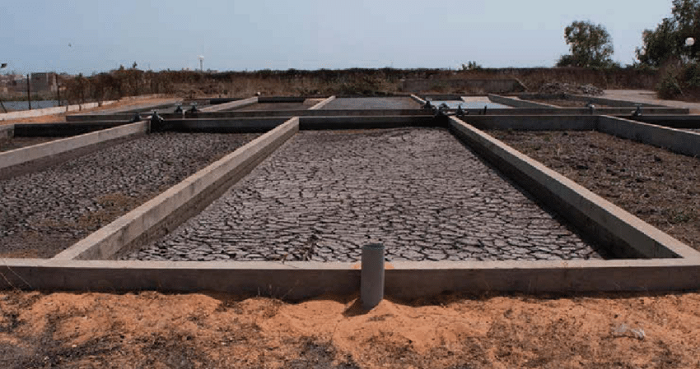
Faecal sludge treatment plant
A faecal sludge treatment plant

The first of these – SANi-KiT – is a web-based portal which offers a comprehensive collection of essential tools to enhance the capability of urban local bodies in India to prepare high quality, city-owned City Sanitation Plans (CSP).

Says Suresh Rohilla, programme director, water and wastewater management, CSE: “SANi-KiT enables users to not only prepare but implement the City Sanitation Plan. The toolkit is designed to give a detailed synopsis of the city with regard to sanitation at present and planning in the future. It focuses on issues which are often missed out and are crucial for overall implementation.”

According to CSE researchers, SANI-KiTfocuses on achieving sanitation objectives through taking the users through a step-by-step guide, touching upon issues of convergence, stakeholder involvement and effective planning. It also provides hands-on tools for data analysis, as well as data checklists for all the sanitation sectors and templates to prepare a CSP.

MOUNT – or Menu on Un-networked Technologies – is an aggregator platform to bring together technological interventions and innovations which can treat wastewater and faecal sludge, albeit cheaply and energy-efficiently. The platform has been designed to be used by engineers, planners, environmentalists and other related practitioners, says CSE.

MOUNT offers four different categories of technologies, under which 19 technologies have been listed. These are searchable by location, technology type and sub-technology type. Practitioners can share their experience and knowledge on MOUNT, which already carries over 50 national and international case studies, including SeTPs (Septage Treatment Plants) and FSTPs (Faecal Sludge Treatment Plants) which are running successfully.

Says Rohilla: “Containment of wastewater and faecal sludge is one of the primary concerns of the Swachh Bharat Mission (SBM). The end objectives and corresponding benefits of SBM cannot be achieved without proper management of faecal sludge and septage across the value chain. A National Policy on FSSM (faecal sludge and septage management) has been notified in February 2017, according to which, every state in India is supposed to issue an FSSM action plan/strategy/operative guidelines. CSE’s efforts – its online tools, awareness campaigns etc – are all meant to aid this overall objective.”

Nigeria’s newest eco houses made from plastic

0

With 18 billion pounds of plastic filling the oceans each year, this may seem like the last material you’d want to build an eco-house out of. However, this is exactly what has started happening in the neighborhood surrounding Abuja, Nigeria’s federal capital city.

By collecting discarded plastic bottles, whole homes are being constructed which are structurally sound and fit for human habitation. This has three main benefits. Firstly, it is a way of cleaning up and repurposing plastic waste. Secondly, it offers cheap housing to the community. Finally, the construction projects are providing work for our unemployed youth. With humans consuming microplastics with their seafood, repurposing bottles for housing could help to keep the oceans clean.

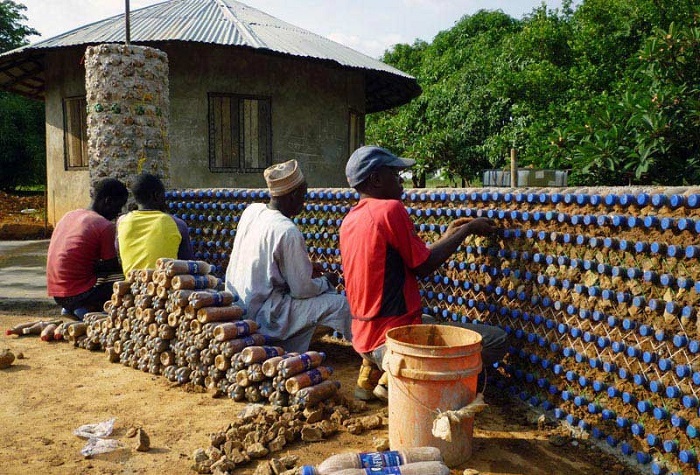
Plastic bottle house
Plastic bottle house under construction in Nigeria

The Problem of Plastic

With a population of 182 million, Nigeria generates 62 million tons of waste each year. If things don’t change, Nigeria will be producing over 161 million tons of waste annually by 2025. Much of this is plastic, which can be difficult to recycle, especially if the necessary mechanisms aren’t there. The plastic inevitably ends up in drains and flowing into the ocean, where it traps or is eaten by sea life. If it doesn’t make it to the ocean, it becomes trapped in drains, causing a risk of flooding during heavy rains.


How are the Houses Constructed?

The biggest house currently under construction, though unfinished, has so far used nearly 50,000 polyethylene terephthalate (PET) bottles. Many of these have been bought from local waste collectors but are increasingly being donated by citizens. The bottles are stacked between sand and concrete to ensure that they keep their shape. Combined with sustainable home maintenance practices, these are likely to be the greenest homes in Nigeria.


Other Potential Societal Benefits

These eco-friendly housing building schemes don’t just exist for environmental reasons. Youth unemployment has risen substantially over the last couple of years, from 11.7% in January 2015 to 33.1% in June 2017. Construction is a great way to provide work and encourage people to learn new skills. Once people are earning more, they will be paying more tax which can then be used by the government to invest in recycling schemes.

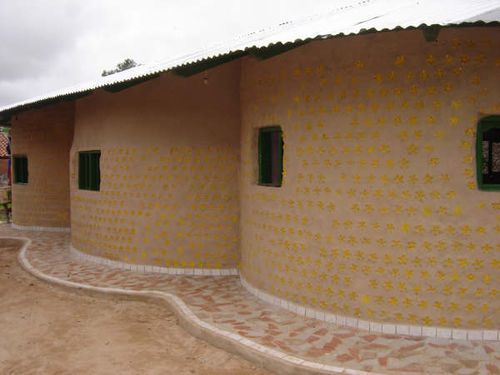
Plastic house
A house made entirely of plastic bottles in Nigeria. It is said to be stronger than the brick house

It could also be a solution to the growing housing crisis. Some 108 million Nigerians are classified as homeless, despite 100,000 new houses being built every year. The problem is that many of these houses are too expensive. By using plastic bottles as a building material, costs can be kept down. Although it is early days, if this project works, then it could help to ease the number of homeless Nigerians, providing them with safety and stability.

The plastic housing initiative is certainly unique, but it is also genius. Plastic is a durable and insulating material, making it perfect to fill the walls of modern houses. This provides work and cheap homes, but also repurposes waste which would otherwise line the streets and fill the oceans. This is just one way that the innovation of the Nigerian people is helping to reduce this nation’s impact on the environment.

By Cassandra Ally

AfDB moves to boost climate risk financing, insurance for African countries

The African Development Bank (AfDB) has approved the Africa Disaster Risks Financing (ADRiFi) Programme, the institution’s first climate risk management programme to boost resilience and response to climate shocks in regional member countries.

Atsuko Toda
Atsuko Toda, AfDB Director for Agricultural Finance and Rural Development

The comprehensive programme, open to regional member countries, will enhance their ability to evaluate climate-related risks and costs, respond to disasters and review adaptation measures at both national and sub-national levels. It will also facilitate initial financing for countries in need of support.  The programme’s initial phase is expected to run from 2019 to 2023.

The enhanced resilience and adaptation of countries to the negative impacts of climate change, as well as disaster risk insurance cover, will reduce the vulnerability of the poor to climate change and act as a safeguard against loss of livelihoods in communities, especially for smallholder farmers. Nine countries have already expressed interest in participating in the programme. These include Burkina Faso, Chad, Gambia, Madagascar, Malawi, Mali, Mauritania, Niger and Senegal.

“Africa is the most vulnerable continent to climate change, prone to a wide variety of natural disasters including droughts, floods and tropical cyclones. However, disaster risk management suffers from inadequate financing and challenges in the deployment of available funds,” said Atsuko Toda, the AfDB Director for Agricultural Finance and Rural Development.

“This programme is a significant step to help reduce exposure and vulnerability of African countries, and will create a system to absorb, adapt and aid recovery of these countries from climate shocks,” Toda said.

ADRiFi will promote disaster response mechanisms such as sovereign parametric index-based insurance, for which payouts will be disbursed automatically and in timely manner when a pre-defined risk threshold is exceeded. It is estimated that every $1 spent on ex-ante intervention through the programme will save $4.40 in ex-post disaster relief measures for a response carried out six months after the event.

The ADRiFi programme, according to AfDB, is directly aligned with its “High 5” priorities, particularly “Feed Africa” and “Improving the Quality of Life of Africans”. It is also aligned with the bank’s Climate Change Action Plan II (2016-2020) policy.

The AfDB has signed a Memorandum of Understanding with The African Risk Capacity to cooperate in preparing, developing and implementing projects and programmes in climate change and risk resilience in member countries. As a key partner, ARC will assist member countries with policies on drought risk pools and other sovereign disaster risk measures.