Home Blog Page 1750

Pollution: NIMASA to enforce 0.5 per cent sulphur limit on ships

0

The Director-General (DG) of Nigeria Maritime Administration and Safety Agency (NIMASA), Dr Dakuku Peterside, on Friday, November 2, 2018 said that the agency would enforce strict compliance on sulphur pollution.

shipping
Shipping

Peterside said the measure would be in line with International Maritime Organisation (IMO) regulation which put a maximum of 0.5 per cent sulphur cap on all fuel used by vessels by the year 2020.

According to a document signed by Isichei Osamgbi, NIMASA Head, Corporate Communications, the D-G made the statement during an interactive session with newsmen at the ongoing maritime week in Dubai.

“That part of the requirements adopted at the 73rd meeting of the Marine Environment Protection Committee (MEPC) of the United Nations maritime organ is to reduce the sulphur content permitted in ships’ fuel oil globally to 0.5% with effect from 1st January 2020.

“The 2020 fuel challenge is geared towards energy efficiency, environmental pollution control, health as well as core regulatory enforcement issues.

“As a maritime nation, we cannot afford not to comply with the IMO standard which will also do a lot in mitigating global warming and other related environmental issues”, Peterside said.

He said that the IMO ban which related to fuel intended for combustion, propulsion and operation purposes on board ships will enter into force on March 1, 2020.

Peterside said that all member states were expected to comply with the stated standard by this date.

He said that it would in the best interest of Africa to ensure compliance because the continent did not have the technology to mitigate effects of sulphur fuel on the environment.

The maritime boss enumerated some of the steps the agency planned to take to manage the transition and ensure compliance to include embarking on massive enlightenment and stakeholder’s engagement.

The agency would collaborate with fuel refiners and suppliers and a schedule for pre-enforcement to engender the right approach.

“It is worthy of note that the IMO has been working to reduce harmful effects of shipping on environment since 1960.

“The Annex VI to the International Convention for the Prevention of Pollution from Ships (MARPOL) was adopted in 1997 to address air pollution from shipping.

“The regulation 14.1.3 of Annex VI of the convention seeks to control airborne emissions of compounds such as sulphur oxides, nitrogen oxides and other ozone depleting substances arising from shipping activities.

“All these is in order to mitigate its effects on health and the environment,” he said.

By Uchenna Eletuo
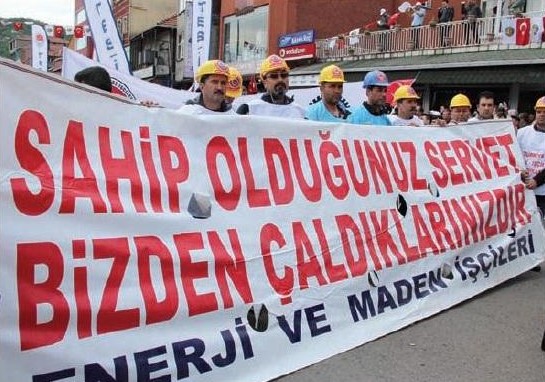
How Turkey’s coal investments are poisoning people, air, seas – Report

0

Villagers affected by three polluting coal mines in Muğla city, Turkey have joined together to demonstrate against plans to extend the mines. People had their photos taken and projected them in front of Yatağan coal power plant.

Yatağan Coal Power Plant
A Yatağan Coal Power Plant protest

“After years of suffering from the deadly impacts of lignite mines and coal burning in their lands, the villagers of Muğla came together to remind us all that coal pollution affects everyone – no matter where it is burned, we all pay its environmental and health impacts,” says Efe Baysal, Turkey Campaigner, 350.org.

A new report released on Friday, November 2, 2018 shows the “The Real Costs of Coal: Muğla” in Turkey by CAN Europe. The research places a spotlight on plans to expand three coal-fired power stations in Muğla city and demonstrates the huge price those living nearby and those in countries further afield face from air pollution.

The Real Costs of Coal: Muğla shows that since the plants became operational in 1983, the three coal plants are responsible for the release of: 9.5 million tons of sulphur dioxide, 890,000 tons of nitrogen oxides, 65,000 tons of dust, and 28,000 kg of mercury.

According to health impact modelling carried out by the study, the pollution has caused more than 45,000 premature deaths, hospitalisation of around 46,000 people due to respiratory and cardiovascular illnesses and the loss of 12 million working days, a price too high to pay. The testimonies of the villagers living in Muğla support these findings, according to 350.org.

Dr. Haluk, a resident of Karacahisar Village, said: “In the last decade, the cause of death in our village has changed significantly, it’s mostly cancer. We also see more and more young children, and non-smokers with acute respiratory diseases.”

The findings of the report come at a moment when health experts around the world have met in Geneva for the first WHO Global Conference on Air Pollution and Health. The Conference is expected to deliver a “Call for Urgent Action” on air pollution, an issue caused primarily by burning of coal.

Due to the transboundary nature of pollutants, Muğla’s coal plants’ costs to health are being felt in Europe and East and North Africa, with the largest transboundary impact taking place in Egypt, followed by Israel, Greece and Palestine.

Since coming online in 1984 the three plants have released 360 million tons of CO2, an expansion will mean spewing another 328 million tons of CO2 into the atmosphere.

“The expansion of any new coal power plant is inconceivable given the findings of the IPCC report released this October.  Every ton of coal burned makes an immediate contribution to the quantity of CO2 in the atmosphere causing long term and irreversible climate change. We need to keep fossil fuels in the ground now to ensure that we stay below 1.5 degrees to avoid catastrophic climate change,” says Hoda Baraka, Global Communications Director, 350.org

Expert says review of Lagos environmental law overdue

0

An environmentalist, Mr Taiwo Adewole, says the the review of the Lagos State Environmental Law 2017 is long overdue.

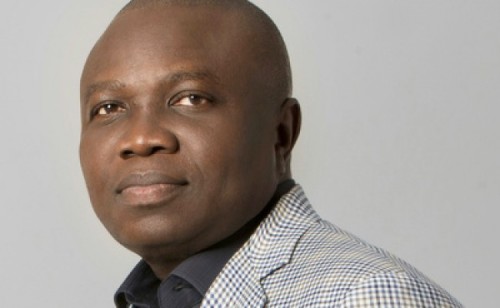
Ambode
Akinwunmi Ambode, Governor of Lagos State. Photo credit: ecomium.org

Adewole, Chief Executive Officer of Taiwo Adewole and Associates, told the News Agency of Nigeria (NAN) on Friday, November 2, 2018 in Lagos that the 2017 Environmental Law was done in a hurry.

He said that the previous Environmental Law was done to favour of Visionscape Sanitation Solutions and the state lawmakers had seen the flaws and now want to set the record straight.

“There are a lot of flaws because it was rushed and passed into law just to favour Visionscape, all in the name of Pubic Private Partnership (PPP),” the environmentalist said.

He said that while reviewing the law, the aspects of first line charge payment to Visionscape and total scrapping of the Private Sector Participants (PSPs) should be investigated.

According to him, the area of introduction of Waste Collection Operators (WCO), which is selective of some selected PSPs, and killing of the Lagos Waste Management Authority (LAWMA) should be reviewed.

“The new law should give all opportunity previously given to Visionscape to the PSPs in terms of PPP and funding based on first line charge and signing of bonds for the indigenous PSP/investors,” he said.

NAN reports that the Lagos State House of Assembly on Thursday began a three-day retreat to review the state’s Environmental Law and nine others, to meet global best practices.

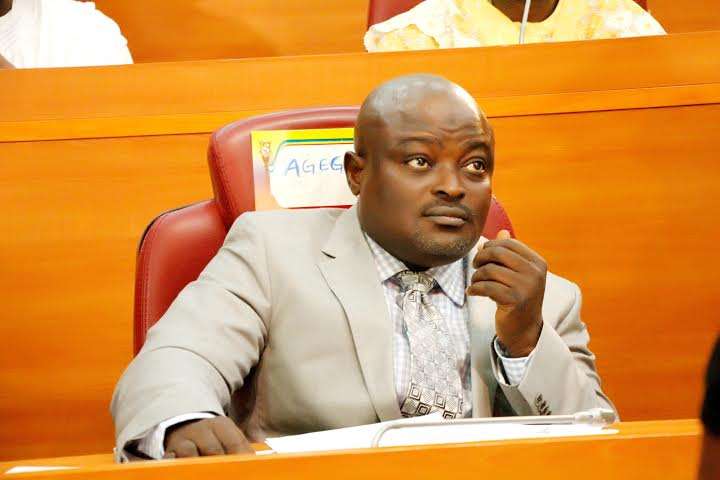
The Speaker, Mudashiru Obasa, said the House was committed to moving the state forward with realistic laws.

Obasa said that, to move Lagos State forward, there was the need to put in place laws that were enduring and in conformity to the interest of the people.

“We must restructure them (selected laws) and introduce new laws where applicable. We need laws that can satisfy the interest of our constituents.

“In our parliamentary business, we need to pick laws that we have passed and see areas we need to tinker with, so that we continue to do what we were elected for,” he said.

Obasa said that Lagos had a good environmental law in place but had problems with the implementation.

“We are here because people raised eyebrows over some aspects, and we want to see how we can amend them.

“We have brought in people who have served as commissioners, as insiders, to tell us what is wrong with the laws and what we need to do.

“We will continue to review our laws. It is by going through them regularly that we will prepare our state for a better law.

“Even if a law was passed yesterday, we can come around to review it today,” he said.

By Florence Onuegbu

FAO wants inclusion of food, nutrition security analysis in university’s higher degree curriculum

0

The UN Food and Agriculture Organisation (FAO) has called for partnership with the Federal Government and some universities on the inclusion of food and nutrition security analysis in master’s degree curriculum.

Suffyan Koroma
Suffyan Koroma, FAO Representative in Nigeria

The Country Representative of FAO, Mr Suffyan Koroma, made the call in Abuja on Friday, November 2, 2018 at the presentation of October 2018 Cadre Harmonise (CH) Analysis Outcome for 16 states and FCT.

Koroma, who was represented by Mr Patrick David, the FAO’s Programme and Liaison Officer, said that inclusion of the analysis in the higher degree curriculum would facilitate the training of experts in food and nutrition analysis.

He said that the training of experts would also ensure the sustainability of the Cadre Harmonise analysis and boost the gathering of data on food and nutrition in the country.

“FAO wishes to partner with the government of Nigeria and some Nigerian universities to initiate a curriculum at the Master’s degree level for the training of experts in food and nutrition security analysis.

“FAO Nigeria will continue to provide the needed technical support for the regular conduct of the Cadre Harmonise analysis as well as the expansion of the process to the remaining states.

“We believe that there is also a need to increase the commitment of the states and Federal Government to financially support data collection,’’ he said.

Koroma pledged that the organisation would continue to support the government by providing emergency and resilient livelihood assistance, including nutritious food crops, cash crops and livestock support.

Cadre Harmonise is an early warning and food insecurity nutrition analysis tool to serve Food Crisis Prevention and Management Framework, which considers various food security and nutrition outcomes in 16 states.

News Agency of Nigeria (NAN) reports that the Cadre Harmonise analysis started in Nigeria in 2015 to support and reinforce government interventions in food and nutrition security.

The Cadre Harmonise analysis is facilitated by FAO, the World Food Programme (WFP) and Committee for Drought Control in the Sahel (CILSS), among others.

By Ginika Okoye

Earth tremor hits Abuja again, NEMA, geological agency confirm incident

The National Emergency Management Agency (NEMA) and the Nigeria Geological Survey Agency (NGSA) have confirmed an incident of earth tremor at the Maitama District of Abuja, the Federal Capital Territory, on Thursday, November 1, 2018.

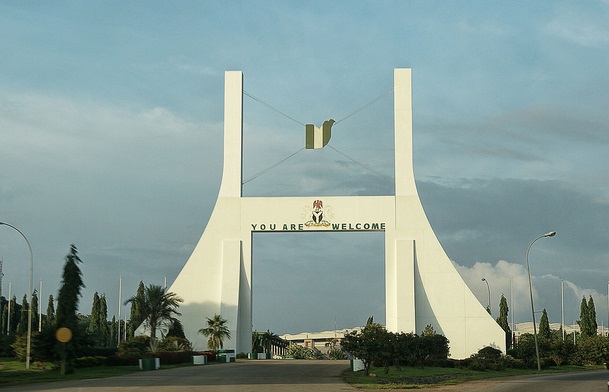
Abuja
The Abuja city gate

Both agencies confirmed this in a joint statement signed by Mr Vincent Owan, Director, Planning, Research and Forecasting NEMA, and Mr Abdulrazak Garba of the NGSA, and made available to newsmen in Abuja.

The earth tremor was reoccurring just a few months after an earth tremor shook the Mpape axis and environs in the FCT in September.

In the statement, the NGSA revealed that it received a call at about 12.45 p.m from a location in Maitama reporting the incident after which a technical team was immediately dispatched to the location.

It stated that a team was sent to the location of the call for an on-the-spot assessment and an internal response protocol was immediately activated, informing relevant government agencies and stakeholders.

“Our preliminary findings indicated that the tremor occurred at about 12.26 hrs around the vicinity of Panama Street in Maitama District, Abuja.

“After the field evaluation, the NGSA determined that the intensity was about 3.0 on the Mercalli Intensity Scale.

“That means it was just felt indoors and lasted less than one minute.

“Further inspection revealed that there was no structural damage due to the vibrations and hence, NEMA was adequately briefed by the NGSA.

“The residents were consequently assured that there was no cause for alarm,’’ it stated.

According to Owan, the NGSA technical teams are conducting further assessments and will continue to update the public on further development.

Visiting the scene of the incidence, residents expressed worry over the reoccurrence of the earth tremor in the FCT, saying that they no longer feel safe.

Hajiya, Lami Abubakar, who lives on Panama Street, said that it was important for adequate assessment to be done around the axis that has been experiencing the earth tremor.

She said that this would help identify the causes, to know if it was natural or due to manmade activities for possible solutions or safe practices that should be adhered to by residents.

She said that the reoccurrence was too soon, and she was yet to recover from the shock which has also affected her three-year-old baby.

Abubakar called on relevant agencies not to take the incident for granted.

By Lizzy Okoji

UNIDO, Edo to construct 2mw micro dam in Benin

0

Gov. Godwin Obaseki of Edo State says his administration is working with the United Nations Industrial Development Organisation (UNIDO) to construct a two-megawatt micro dam on Ikpoba River to improve power generation as well as to create jobs in the state.

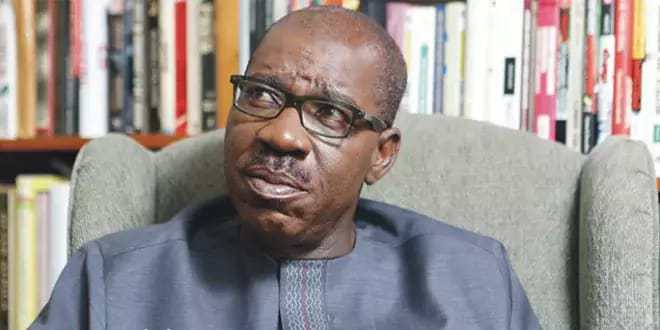
Godwin-Obaseki
Governor Godwin Obaseki of Edo State

The Special Adviser to the Governor on Media and Communication Strategy, Mr Crusoe Obaseki, said this in Benin City, the state capital, on Thursday, November 1, 2018.

The Governor’s Aide said Obaseki disclosed this when he led some members of his cabinet on a condolence visit to family members of the late industrialist, Dr Efionayi Iyayi, in Benin on Wednesday.

The governor, extolling the roles late Iyayi played in boosting economic activities in the state, said: “We share his dreams that you must create the enabling environment for business to thrive.

‘’We will do all in our power, as a government, that the dream of creating jobs for Edo people is realised by my tenure.”

The governor said the two-megawatt dam project would commence next year and, on completion, supply power to a 30-hectare estate.

He said the estate would have an entertainment park that would host Nollywood investments.

Obaseki said his administration was also working on a 50-megawatt power plant that would be fired by gas produced in Ologbo area of the state.

‘’Two weeks ago, the National Electricity Regulatory Commission approved licence for one of our partners in Ologbo for the first phase of a 50-megawatt electricity which will be fired by gas produced in the area.”

‘’Construction has started, and the first phase of the electricity will supply power to the Benin Industrial park,” said the governor.

In his remarks, the first son of the deceased, Mr Caesar Iyayi, thanked Gov. Obaseki and his entourage for the condolence visit.

He said his late father lived an accomplished life worthy of emulation and created jobs for many people in Edo through his investments in manufacturing, construction and agriculture.

“He used his own resources to build a 20-kilometre road linking Benin-Abuja Expressway to Akure.

“He extended electricity to Egba Community from Benin City and built factories and police stations in the state.

“My father led a life of accommodation, tolerance, justice and sacrifice,” he said.

By Joy Odigie

Council urges aggressive campaign against environmental degradation

0

The National Council on Environment (NCE) has urged stakeholders to intensify efforts in engaging on aggressive campaign against human activities causing environmental degradation in the country.

Ibrahim Usman Jibril
Minister of State for Environment, Ibrahim Usman Jibril

The council gave the advice in a communique read by the Minister of State for Environment, Alhaji Ibrahim Jibril, in Akure, Ondo State, on Wednesday, October 31, 2018.

The NCE, the highest policy and decision-making body in the environment sector, held its 2018 meeting between Oct. 29 and 31 in Akure, Ondo State.

The theme of the meeting was: “Environment and Security: Consolidating Nigeria’s Environmental Reforms towards Sustainable Development’’.

In the communiqué, the council observed that man-made activities were more responsible for environmental degradation than natural causes.

It also called on the three tiers of government, private sector, community-based organisations, faith-based organisations and NGOs to engage in aggressive public enlightenment and sensitisation programmes.

“The council has noted the ongoing reforms in the environment sector.

“It emphasised the need to prioritise the intricate and inexorable linkage between environment and security – food, human, social, economic and cultural by government at all levels as well as the citizenry,’’ the minister said.

The council called on the Federal Government to place environment as a top priority national security strategy.

“The council considered 138 memoranda, stepped down 33 and recommended 105, consisting of 70 actions and 35 information memoranda.

“In alignment with the theme of the council meeting, deliberations focused on consolidating reforms in the environment sector, strengthening the environmental sector in line with contemporary environmental challenges.’’

By Deji Abdulwahab

Lagos Assembly set to review environmental law, others

0

The Lagos State House of Assembly on Thursday, November 1, 2018 began a three-day retreat to review the state’s Environmental Law and nine others to meet global best practices.

Mudashiru Obasa
Mr Mudashiru Obasa, Speaker, Lagos State House of Assembly

The News Agency of Nigeria (NAN) reports that the retreat, holding in Abeokuta, Ogun State, is aimed at revisiting the state laws to enhance their operational capacity for development.

Declaring the workshop open, Speaker Mudashiru Obasa said the House was committed to moving the state forward with realistic laws.

“For us to move Lagos State forward, there is the need for us to put in place laws that are enduring and in conformity to the interest of those who put us here.

“We must restructure them (selected laws) and introduce new laws where applicable. We need laws that can satisfy the interest of our constituents.

“In our parliamentary business, we need to pick laws that we have passed and see areas we need to tinker with so that we continue to do what we were elected for,” he said.

Obasa said that Lagos had a good environmental law in place.

“The fact that we have problems with the implementation of the law does not mean that the law is not good.

“We are here because people raised eyebrows over some aspects, and we want to see how we can amend them.

“We have brought in people, who have served as commissioners, as insiders, to tell us what is wrong with the laws and what we need to do.

“We will continue to review our laws. It is by going through them regularly that we will prepare our state for a better law. Even if a law was passed yesterday, we can come around to review it today,” the speaker said.

On the contention between the House and the executive arm over the engagement and activities of Visionscape Sanitation Solutions Ltd. for waste collection, Obasa said the company was incapable.

The speaker said that there was nothing like Visionscape in the new Environmental Law of the state.

He, however, said there were sections of the law that gave an opportunity to the executive arm to have private/public partnership.

According to him, in such an instance, the executive arm should revert to the House for approval.

This, he said, was not done by the current executive.

“We have said on the floor that no money of the state must be paid to Visionscape.

“I repeated it recently because the company is not known to us, and we are not aware of it,” he added.

NAN reports that the Assembly recently directed the 57 LGAs and LCDAs to engage the PSP operators for refuse clearing in the state.

Also speaking, Mr Sanai Agunbiade, the Majority Leader of the House, said that the Assembly passed laws and monitored them to meet the demands of the changing society.

Agunbiade said that the need to make the state’s law stronger and functional necessitated the retreat.

According to him, no law in the state has failed but there are some circumstances that require review of laws to enhance their operational capacity.

Also, Mr Tunde Briamoh, Chairman, House Committee on Judiciary, Public Petitions, Human Rights and Lagos State Independent Electoral Commission, said that laws were dynamic and required reviews for good governance.

Briamoh said the retreat was to make Lagos State laws to meet the yearnings and aspirations of the people.

Earlier, Mr Azeez Sanni, the Clerk of House, said that the review of the 10 laws was aimed at progressive transformation of the state.

NAN reports that one of the laws to be reviewed is Law to Consolidate all laws relating to the Environment for the Management, Protection and Sustainable Development of the Environment in the state and for connected purposes.

Others include: Public/Private Partnership Law, Urban and Regional Planning Law, Model City Law, Public Procurement Agency Law, Transport Law, Neighbourhood Safety Agency Law, and Environmental Law (Waste Management).

By Yemi Adeleye

HYPREP accused of lacking will to clean Ogoniland

0

An Ogoni-born activist, Mr Kpobari Agara, has faulted the Federal Government’s creation of the Hydrocarbon Pollution Remediation Project (HYPREP), saying it lacked the will to implement Ogoniland clean-up.

Dr Marvin Dekil
Dr Marvin Dekil, National Project Coordinator, Hydrocarbon Pollution Remediation Project (HYPREP)

Agara made the assertion in an interview with the News Agency of Nigeria (NAN) on Thursday, November 1, 2018 in Port Harcourt, Rivers State.

He alleged that the Federal Government had no plan to justify the $177 million recently remitted as part of the initial $200 million for the Ogoni clean-up for 2018.

“It is worrisome, the Federal Government has no plan in terms of physical project to justify the payment so far made since the commencement of the UN Environment Programme (UNEP) report implementation.”

NAN reports that the UNEP had recommended an initial release of $1 billion to be used for the clean-up of oil spills for over a period of five years.

The activist said that while huge sums of money had been retired to the Ogoni clean-up project, the people had yet to feel the impact of the exercise.

“This is the reason Ogoni people are not allowed to be involved at strategic levels in the plan, Ogoni people are outnumbered on the board of trustees.

Agara urged the Federal Government to shun bureaucratic bottlenecks and ensure maximum value in terms of projects to build trust among the Ogoni people.

“Instead of creating the Ogoni Environmental Restoration Agency recommended by the UNEP report, the Federal Government had gone ahead to create HYPREP which is rather a bogus contraption.

“If HYREP is striving towards achieving the clean-up, it would have at least accomplished some projects that would have boosted confidence in the Ogoni people.

“In the clean-up budget drawn by UNEP, there is a certain sum of money set aside for the support of modular refineries.

“But are modular refineries actually what we really want? Ogoni people need drinkable water.

“We need HYPREP to use these monies to alleviate the plight of the Ogoni people, our environment is consistently being degraded even beyond the UNEP report,” he said.

The activist urged Federal Government to tackle the UNEP report implementation headlong as an emergency to alleviate the suffering of the Ogoni people.

By Ikuru Lizzy

India’s environment minister blames state govts as pollution worsens in Delhi

0

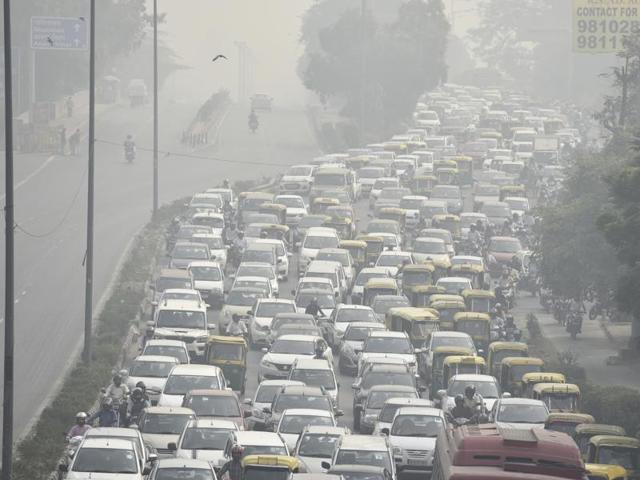
India’s environment minister blamed the Delhi government and its neighboring states for failing in their efforts to check air pollution which was six times above the recommended limit on Thursday, November 1, 2018 posing severe health risks.

Delhi pollution
As Delhi’s pollution levels rise to severe, the EPCA has directed governments to impose all conditions under the Graded Response Action Plan under severe category

The minister, Harsh Vardhan, said in a statement that efforts by state governments, including Punjab and Haryana, to bring down incidents of widespread crop burning were “far from satisfactory”.

“In Punjab only, daily cases of stubble burning were still running into thousands,” the minister said, adding the overall incidents of crop burning were down 30 per cent from the previous year.

India has aimed to reduce stubble burning that is a major source of pollution during the winter months by 70 per cent in its top two farm states this year, a top government official said on Oct. 26, but experts questioned whether the target was credible.

The minister also blamed the Delhi city government for falling short of meeting its targets to rein in pollution from construction activities, open dumping or the burning of waste, including industrial waste, traffic congestion and road dust.

Delhi was also headed for a “deadly cocktail” of pollution in the coming weeks as a major Hindu festival of Diwali on Nov. 7 – during which many fireworks are usually let off – would coincide with crop burning.