

Chairperson of the Africa Group of Negotiators on Climate Change (AGN), Nana Dr. Antwi-Boasiako Amoah, has called for a decisive shift from climate finance pledges to implementation, urging global partners to deliver predictable and accessible funding to support Africa’s climate and development priorities.
Speaking at the opening of the 12th Session of the Africa Regional Forum on Sustainable Development (ARFSD-12) in Addis Ababa, Ethiopia, the AGN Chair emphasised that Africa’s foremost demand is not additional commitments but tangible financial flows that address adaptation, resilience, loss and damage, and green industrialisation.
He underscored the need for outcomes from key global processes, including the Fourth International Conference on Financing for Development and COP30, to translate into grant-based and concessional financing mechanisms that are both predictable and accessible to African countries.
“Africa’s message is implementation finance, not more pledges,” he told delegates, stressing that climate finance must directly support national priorities such as Nationally Determined Contributions (NDCs), National Adaptation Plans (NAPs), and critical resilience infrastructure.
Dr. Amoah further highlighted the urgency of closing the widening development and climate finance gaps, referencing global commitments such as the Sevilla Commitment. He noted that, for Africa, this must result in expanded fiscal space, reduced debt burdens, and lower costs of capital to unlock large-scale investments.
On the roadmap to COP30, he called for a “delivery agenda” anchored in clear milestones and accountability mechanisms, particularly in efforts to mobilise at least $300 billion annually by 2035 and scale climate finance to $1.3 trillion within the same timeframe.
He stressed that adaptation finance should be treated as development finance, given its direct impact on food systems, water security, health, infrastructure, and economic stability across the continent.
“Climate resilience is not a peripheral issue—it sits at the core of Africa’s development,” he noted, adding that the quality of finance is as critical as its volume.
The AGN Chair cautioned against financing models that exacerbate debt vulnerabilities, advocating instead for grants, highly concessional funding, non-debt instruments, and innovative solutions such as debt swaps and local currency financing.
He also called for simplified access to climate funds and stronger support for project preparation, particularly for Least Developed Countries (LDCs) and fragile states.
He urged a shift in approach where Africa leads in shaping its investment agenda, rather than being a passive recipient of fragmented projects. According to him, financing should align with national and regional development frameworks, including Agenda 2063 and the Sustainable Development Goals (SDGs).
As part of his key recommendations, Dr. Amoah proposed the establishment of a climate finance delivery compact for Africa to track progress, ensure transparency, and guarantee equitable distribution of resources.
He also called for reforms to the global financial architecture to reduce vulnerability, lower borrowing costs, and prioritise grant-based support for adaptation and resilience.
In addition, he advocated for increased investment in sectors such as renewable energy, climate-smart agriculture, water systems, and resilient urban development, describing these as strategic drivers of sustainable growth and global stability.
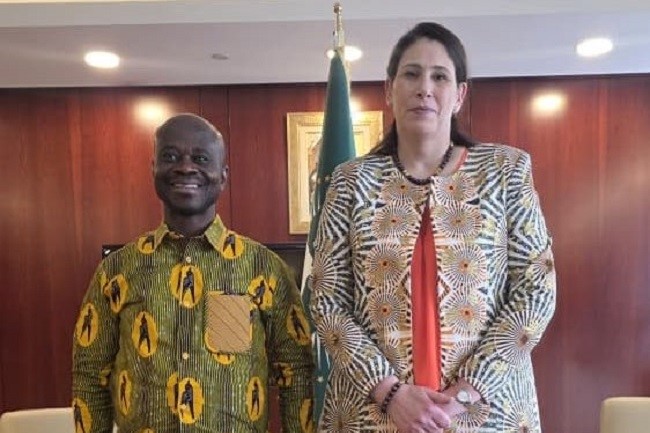
Meanwhile, Deputy Chairperson of the African Union Commission, Selma Malika Haddadi, reaffirmed the Commission’s commitment to supporting the AGN in advancing Africa’s climate action agenda.
She assured the AGN Chair of continued collaboration to strengthen the continent’s negotiating position and mobilise the resources required to meet its climate goals.
In conclusion, Dr. Amoah stressed that climate finance for Africa must be viewed through the lens of equity and accountability.
“For Africa, unlocking climate finance is not about charity; it is about justice, implementation and trust,” he said, warning that the credibility of global climate processes will ultimately be judged by their impact on vulnerable communities, economies, and ecosystems across the continent.
By Kofi Adu Domfeh