

The First Conference on Transitioning Away from Fossil Fuels concluded on Wednesday, April 29, 2026, in Santa Marta, Colombia, with optimism as 56 national governments gathered for the first time to begin phasing out fossil fuels, reports from conference proceedings.
In a significant step for impacted communities, participants including academia, Indigenous Peoples, Afro-descendants, parliamentarians, subnational governments, and the private sector called for reducing petrochemicals – a major driver of climate change – and addressing the plastic crisis.
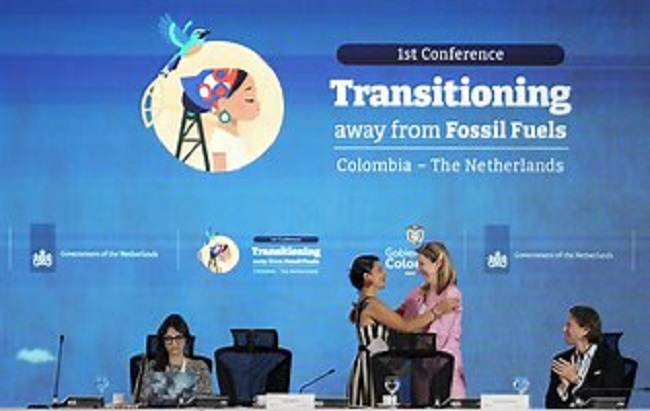
Ana Rocha, Global Plastics Policy Director at GAIA, stated: “Santa Marta brought together a group of countries that recognise the urgency of phasing down fossil fuels. While there is always an appetite for more tangible outcomes, progress matters, and Colombia, the Netherlands, and all involved deserve credit for moving the conversation beyond paralysis. Now countries must build on this momentum to translate intention into decisive action.”
A science and policy dialogue co-convened by GAIA and the Centre for International Environmental Law (CIEL) recommended freezing petrochemical expansion, establishing declining caps on production, ensuring transparency across the supply chain, eliminating subsidies, avoiding false solutions, and creating financial mechanisms for just transitions.
Experts noted that without intervention, petrochemicals could account for nearly half of oil demand growth by 2050, according to the International Energy Agency.
Participants emphasised the need for a Just Transition, with countries facing similar realities collaborating on actionable solutions.
The conference decided to convene a second edition next year in Tuvalu, hosted in collaboration with Ireland – a choice underscoring climate vulnerability and South-North solidarity.
In the interim, countries will advance work through three streams: tackling economic and financial barriers, promoting green trade over fossil fuel trade, and addressing fossil fuel dependency and supply.
The gathering is viewed as historic progress in international cooperation, offering an alternative pathway that bypasses the veto systems often hindering broader climate talks.
Quotes from participants highlighted the need for a people-centered, inclusive transition that delivers justice, reparations, and remediation for frontline and Indigenous communities while ending reliance on single-use plastics and agrochemicals.
By Winston Mwale, AfricaBrief