

The First Conference on Transitioning Away from Fossil Fuels concluded in Santa Marta, Colombia, on Thursday, April 30, 2026, with almost 60 countries addressing what decades of UN climate negotiations have largely avoided: the need to wind down fossil fuel production itself.
Climate Action Network International (CAN), a global network of over 1,900 civil society organisations (CSOs) in more than 130 countries, has welcomed this historic step – and puts governments on notice that civil society will ensure it does not stop here.
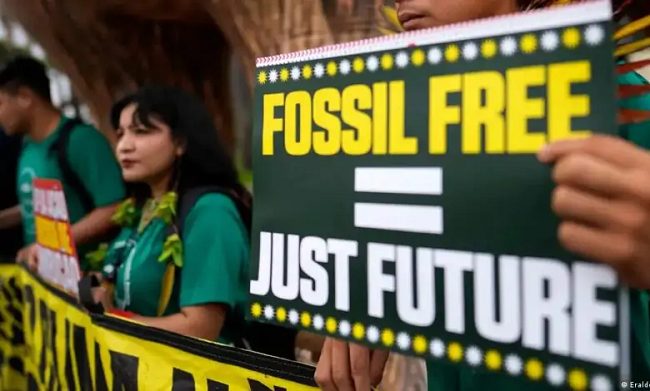
Ahead of the summit, CAN co-convened the People’s Summit for a Fossil-Free Future – a three-day mobilisation that brought together frontline communities, trade unions, Indigenous peoples, Afro-descendants, feminists, youth, farmers, fisherfolk, and social movements from across the world. Almost 1,000 organisations united behind a single People’s Summit Declaration, which fed directly into the government dialogue.
Tasneem Essop, Executive Director of CAN International, said: “The People’s Summit was three days of commitment, energy, and hope that reflected decades of struggle – and a shared conviction that the fossil fuel era can and must end. Almost 1,000 organisations came to Santa Marta not just to bear witness, but to set the terms. Now governments must honour them. CAN International and our member organisations will use every opportunity – nationally and internationally – to ensure this conference lives beyond Santa Marta. The work of implementation begins now.”
Santa Marta builds directly on the landmark agreement reached at COP28, where all governments committed for the first time to transitioning away from fossil fuels. This conference opens the door to the international cooperation and national planning required to make that commitment real – and lays the basis for bringing more governments into the coalition.
The Co-host Takeaways from the Conference fall short of the very substantial proposals brought by civil society – and that gap must be closed, says CAN, calling on governments to ensure that the final conference report – to be released in the coming months – fully reflects the demands of the movements and peoples who came to Santa Marta: Indigenous Peoples, Afro-descendants, feminists, youth, trade unions, farmers, fisherfolk, and social movements who have fought for decades for this moment.
The People’s Summit Declaration deals in demands, not aspirations. Key among them:
- An immediate halt to all new fossil fuel licensing, exploration, and approval. No new coal, oil, or gas projects. No public or private financing of expansion.
- Time-bound, socially equitable national phase-out plans covering both production and consumption, aligned with 1.5°C, integrated into their national climate plans (NDCs), and subject to independent accountability.
- A binding Fossil Fuel Treaty – a legally mandated framework to deliver a rights-based, equitable, and fully funded transition away from fossil fuels, with differentiated responsibilities and clear timelines for Global North and Global South.
- Non-debt-creating, grants-based public finance for the transition. No conditional loans. No structural adjustment. No nation – especially in the Global South – should go into debt to phase out the fossil fuels that wealthy countries burned to build their economies.
- Immediate exit from Investor-State Dispute Settlement mechanisms that allow fossil fuel companies to sue governments for enacting climate policy – and binding safeguards against fossil fuel lobbying and conflicts of interest across multilateral bodies, including the UNFCCC.
- No false solutions. Carbon offsets, Carbon Capture and Storage, ammonia co-firing, and gas as a transition fuel prolong fossil dependence and drain public funds from the decentralised, community-based renewable systems that deliver real emissions reductions – and real economic and social opportunity.
- An end to militarism, imperialist aggression, and resource wars. Wars and militarisation account for an estimated 5.5% of global emissions. Redirecting military spending toward the just transition is not only a moral imperative – it is a climate imperative.
CAN also calls for meaningful and equitable civil society inclusion in all future conferences in this process. Structural barriers – visa access, funding, language justice – prevented full participation from the Global South in Santa Marta. This must be addressed as a matter of urgency. Governments must move beyond consultation to genuine co-design, with civil society contributions substantively reflected in all final outcome documents.
Marking the close of the First Conference on Transitioning Away from Fossil Fuels, a range of civil society leaders and climate policy advocates shared their reflections:
Kumi Naidoo, President of the Fossil Fuel Treaty Initiative, said: “From Santa Marta to the Pacific, a new reality is taking shape: this is no longer a one-off moment, but the foundation of an ongoing international process dedicated to phasing out fossil fuels. The agreement to continue under Pacific leadership, with Ireland and Tuvalu co-hosting the second conference now confirmed, marks a decisive shift from stalled negotiations to sustained political direction.
“What is emerging is a process that can finally match climate diplomacy to the scale of the crisis – moving beyond voluntary pledges toward a coordinated, equitable and binding framework to phase out oil, gas and coal extraction. The Pacific has helped turn a historic opening into a standing process, and the task now is to ensure it delivers the legal and political architecture for a just and rapid transition.”
Fernanda Carvalho, Head of Policy for Climate and Energy, WWF International, said: “In this pivotal year for the transition away from fossil fuels, shaped both by the current geopolitical landscape and the momentum since COP30, Santa Marta is a key milestone. The conference shows that international cooperation efforts can be catalyzed even in the most challenging contexts. It is here that the seeds of a new, implementation-focused initiative have been planted.
“In times of an exhaustion of multilateral processes and a gap in delivering the systemic change we need, what is emerging offers a different approach. If improved, this could be a real bottom-up process that centres the voices of communities most affected by fossil fuel extraction and consumption. The outcomes of Santa Marta should reinforce and complement both the UNFCCC climate negotiations and the COP30 Presidency Roadmap, helping to bridge the gap between ambition and action.”
Irene Burga, Climate Justice and Clean Air Director, GreenLatinos said: “The Santa Marta conference, with more than 50 countries participating, marks an important step in creating a global space to advance a fossil fuel phaseout beyond the UNFCCC, where progress has been too slow. At the same time, the absence of the U.S. government is telling. Instead of leading, it continues to expand fossil fuels and uphold systems that fuel conflict, militarisation, and harm. Frontline communities were clear: we need a just transition rooted in rights, reparations, and real accountability. That means moving beyond voluntary commitments toward a legally binding, fully funded pathway to phase out fossil fuels. GreenLatinos stands in solidarity with that call.”
Friederike Strub, Advisor at Recourse, said: “A just transition away from fossil fuels cannot happen without a paradigm shift in our financial system, putting finance and macroeconomics at the service of people and the planet. That means Global North countries paying the climate debt they owe to Southern countries, overturning a financial architecture that only serves creditors and wealthy elites, and cancelling illegitimate debt while working towards a UN debt resolution.
“It means challenging the role of institutions like the IMF and multilateral development banks that continue to lock in a fossil-fuelled system through debt-based climate finance, loan conditionalities, investments in harmful energy projects or false solutions, and a private-finance-first development paradigm.”
Teresa Anderson, Global lead on climate justice at ActionAid International, said: “So many governments expressed real hunger to be free from the economic and climate harm of fossil fuel dependence. This was a watershed moment in which the collective mind became truly focused on the common cause of ending the fossil fuel era.
“What set this conference apart was the willingness to dive into and address the complex challenges of our fossil-fuelled world. The debt crisis, which keeps so many countries trapped on the fossil fuel treadmill against their will, came up repeatedly. Phasing out fossil fuels is not only a matter of energy transition, but also economic transformation, requiring just transitions and climate finance.
“Santa Marta is a major milestone on our journey out of the fossil fuel era. It must set the stage for a new Fossil Fuel Treaty for the countries that are ready to lead the world down this path.”
Bronwen Tucker, Oil Change International Public Finance Lead, said: “In Santa Marta, a line is being drawn – momentum to move beyond fossil fuels is growing and cannot be ignored. Fossil fuel dependence drives economic instability, conflict, and debt, keeping Global South countries locked into a system shaped by Global North financial rules. The leaders here have been clear that a shift away requires planned, government-led national roadmaps and new forms of international cooperation. But this momentum is not yet enough to deliver the needed breakthrough.
“The richest polluting countries must take immediate action to accelerate their transitions at home and show up with meaningful international economic cooperation. A just transition requires breaking the structural barriers – through debt cancellation, scaled-up public finance, and rejecting false solutions – so governments can deliver a transition that works for people, not profit, because the human cost of delay is already being paid every day.”
Shereen Talaat, Founder/Director of MENAFem Movement for Economic, Ecological Justice and Development, and CAN Arab World, said: “The Santa Marta conference, with more than 50 countries participating, opens an important global space for a transition away from fossil fuels. For us in Southwest Asia and North Africa, this transition is not only about energy.
“It is about dismantling a system rooted in extraction, colonial control, and imposed economic dependency. Fossil fuel economies in our region are tied to militarism, occupation, and external control over resources. These are not separate crises. They are structurally linked. This is why voluntary pathways are not enough. We need a legally binding, rights-based, and fully funded treaty with no new oil, gas, or coal expansion.
“A just transition cannot be built on debt. It requires grant-based public finance, debt cancellation, and social protection. False solutions like debt swaps and offsets only delay real change and reproduce inequality. We acknowledge the effort to include civil society, while recognizing that participation remains uneven. This is an area for improvement. Santa Marta can mark a shift. But only if it confronts the colonial and financial systems that sustain fossil fuel dependence and enables a transition grounded in justice, sovereignty, and peace.”
Dr. Sanjay Vashist, Director, Climate Action Network South Asia, said: “After three decades of climate negotiations, Santa Marta marks a turning point ‘much like a long drifting ship finally sets its course’, bringing countries together to begin charting a real pathway away from fossil fuels. Without a clear commitment to phase them out, justice in the ‘transition’ would remain incomplete. The Santa Marta conference stands as a pivotal moment in moving from ambition to action in addressing the climate crisis.”
Javier Andaluz Prieto, Coordinator, Climate Alliance, said: “The world already knows that the exit from fossil fuels is not optional, and for the governments that sit at this table today, it has been a first step, but there is a long way to go to live up to their own words. For this moment to be historic, we need to continue to make progress in future meetings on a binding multilateral framework that curbs the devastating human toll on the fossil fuel economy.
“Santa Marta launches a demand that goes beyond the end of extraction; it is a call for international solidarity, for those who generate it to pay the bill, for the debt that condemns the Global South to depend on fossil fuels to be cancelled, and for the legal shields that, like ISDS, place corporate profit above the rights of the people and peoples who inhabit the territories, to be eliminated.”
“The world already knows that phasing out fossil fuels is not optional, and for the governments sitting at this table today, this has been a first step, but there is still a long way to go before they live up to their own words. For this moment to be historic, we need to continue making progress at future meetings within a binding multilateral framework that puts a stop to the devastating human toll exacted by the fossil fuel economy.
“Santa Marta is making a demand that goes beyond the end of extraction; it is a call for international solidarity, for those who generate the costs to pay the bill, for the cancellation of the debt that condemns the Global South to dependence on fossil fuels, and for the removal of legal safeguards such as ISDS that place corporate profit above the rights of the people and communities inhabiting these territories.”
Isatis M. Cintron-Rodriguez, Director, Climate Trace Puerto Rico, said: “The Santa Marta conference confirmed what we from Puerto Rico and our territories have always understood: the energy transition is not only a socio-environmental issue but an issue of sovereignty. From our violated territories, we know that the fossil economy, militarized geopolitics and colonialism are part of the same problem.
“A just transition that does not confront colonial status, military occupation, illegitimate debt, and necessary reparations is not the transition for us, but a continuation. The Santa Marta conference opens the way in the face of multilateralism in crisis, integrating the People’s Assembly as an official part of it. Although there is still a long way to go to move from consultation to binding, Santa Marta leaves us with hope that a new climate pact, made from the people and not about them, is still possible.”
Dr. Neil Tangri, Senior Director of Science and Policy, GAIA, said: “Santa Marta represents a critical juncture in our ability to tackle global problems. For too long, international efforts have been stymied by a handful of petrostates, determined to profit from the destruction of communities, ecosystems, and climate stability. Now, freed from their interference, a “coalition of the willing” is taking the first steps toward a new world order. The absence of the petrostates is crucial to future progress. Our job is to ensure that the future is not only fossil-free, but just.”
“Santa Marta marks a watershed moment for our ability to address global issues. For decades, international efforts have been hampered by a handful of oil-rich states, dedicated to profiting at the expense of the destruction of communities, ecosystems and climate stability. Now, freed from its interference, a “coalition of the willing” is taking the first steps toward a new world order. The absence of oil states is crucial for future progress. Our task is to ensure that the future is not only free of fossil fuels, but that it is fair.”
Bertha Argueta, Senior Policy and Advocacy Officer for Climate Justice, Eurodad, said: “The transition away from fossil fuels is no longer optional, it is a defining political choice. Colombia’s leadership in convening this first conference is a welcome step forward. But a just transition demands more: developed countries must lead by rapidly phasing out fossil fuels while confronting structural inequalities, from rising debt burdens in developing countries to the urgent need for progressive environmental taxation. We need a legally binding treaty to guarantee a rights-based, fully funded transition away from fossil fuels – one that breaks with privatisation and corporate profit and is driven instead by public policy that prioritizes justice, redistribution, and people over markets.”
“The transition away from fossil fuels is no longer optional, but a decisive policy decision. Colombia’s leadership in convening this first conference is a very positive step forward. But a just transition requires more: developed countries must take the lead by rapidly phasing out fossil fuels and tackling structural inequalities, from the growing debt burden in developing countries to the urgent need for progressive environmental taxation. We need a legally binding treaty that ensures a rights-based, fully-funded transition away from fossil fuels, a transition that breaks with privatisation and corporate profits, and is instead driven by public policies that prioritize justice, redistribution, and people over markets.”
Stela Herschmann, Climate Policy Specialist, Observatório do Clima (Brazil), said: “No country alone is capable of overcoming fossil fuel dependence. Santa Marta marks the beginning of a process that can build many things, from a treaty to end fossil fuels to a coalition of forces for all other necessary forums where we can move forward to dismantle the countless barriers to the transition.”
Rodrigo Estrada, Senior Climate Advisor, Greenpeace International, said: “Amid a tense geopolitical context and worsening climate extremes, Santa Marta helped spark a feeling of renewed energy, but delegates must now follow through to deliver action, not just words. While households struggle with rising costs as the US-Israel war on Iran drives oil and gas profits higher, 57 nations in Santa Marta have also been looking for ways to finance a just transition. That solution starts with permanently taxing the profits, not just windfalls, of fossil fuel majors and replacing this system with renewable energy.”
Svitlana Romanko, Founder and Executive Director, Razom We Stand, said: “Especially for those of us in Ukraine, the problems of fossil fuels are clearly evident in the form of the fossil-funded, imperialist and brutal war that Russia inflicts on us daily. The Kremlin uses its revenues from exports of dirty oil or LNG gas to further its violent expansionist war against people who courageously stand up for freedom and democracy. For us in Ukraine, but also for people across the world, freedom and justice will come much quicker when we have cheap local renewable clean energy to base our economies on.”
Mariana Paoli, Global Climate Policy and Advocacy Lead, Oxfam, said: “The fact that over 50 countries came together to start developing a path to transition away from fossil fuels must be celebrated. The People’s Summit demonstrated that there is no shortage of concrete proposals for how to implement a just transition. Wealthy governments have still not stepped up in providing climate financing that is sufficient for poorer countries, which face the brunt of the impacts of the climate crisis, to transition away from fossil fuels. Rich countries, which hold disproportionate historical responsibility for the climate crisis, must not only move first and faster but also provide finance at scale for others to follow suit.”
Eriel Tchekwie Deranger, Founder, Indigenous Climate Action/The Woven Project, said: “Over the past week, hundreds of people traveled to Santa Marta to engage in dialogue and determine the necessary steps towards addressing one of the most urgent challenges of our time, moving beyond a fossil fuel economy. Fossil fuels, and the colonial systems that drive them, were built without our consent and caused a legacy of deep harm to the climate, biodiversity, human health, and the rights of Indigenous Peoples and frontline communities.
“The new discussion for a just transition away from fossils continues to struggle with what full and effective participation of Indigenous Peoples as distinct rights-holders, consistent with the United Nations Declaration on the Rights of Indigenous Peoples, including self-determination, Free, Prior and Informed Consent, and respect for our lands, territories, knowledge systems, sciences and governance really means. While states and civil society rush to define solutions we want to remind you all that a just transition cannot be built through limited consultation or rushed participation.
“As this process moves forward, we hope future spaces will provide more time, stronger engagement, and clearer pathways for Indigenous Peoples to shape decisions, not only respond to them. We leave this conference with appreciation, but also with a clear call: transitioning away from fossil fuels must not repeat the harms of extraction. It must deliver justice, reparations, and real participation for Indigenous Peoples and frontline communities.”
Sasha Lleshaj, International Just Transition Coordinator, Climate Action Network Canada, said: “Santa Marta called for courage, and the multiple crises we are facing demand nothing less. Civil society from all over the world arrived in Colombia with urgency, hope, and the bold political imagination needed for a future beyond fossil fuels – cancelling debt, ending colonial-era legacies like ISDS, making polluters pay instead of rewarding them with public money, governing the phase-out and fairly distributing its benefits.
“We looked to Canada, with its vast resources and capacity, to show ambition and commitment. Canada showed up—but with timidity. But what started in Santa Marta cannot be stopped, and we’ll continue fighting for Canada to step away from its fossil fuel dependence and extraction at home, and step forward as a real partner in the global just transition.”
Alejandro Alemán, node coordinator of CAN Latin America, said: “The role that Colombia and the Netherlands have played in organising the first international conference to move away from fossil fuels is certainly worthy of recognition and congratulations; from CAN Latin America we hope that the results of this conference will materialise in concrete and effective actions that lead to a just and orderly transition away from fossil fuels.
“We also expect that these results can strengthen the UNFCCC conversations taking place in Bonn in June of this year, and that in turn, the results of this summit can appropriately reflect the recommendations emanating from the People’s Summit, a space to which different global and regional networks and spaces have joined and contributed. For future conferences, we hope that better conditions of participation and fewer visa restrictions can be implemented, especially for activists from the Global South.”
Kathy Mulvey, Climate Accountability Campaign Director, Union of Concerned Scientists, said: “The conference in Santa Marta was a long-awaited and historic step toward creating a global roadmap for a fair, fast, and funded phaseout of fossil fuels that science shows us is necessary. In a space free from the pernicious influence of the profit-seeking fossil fuel industry and even as the Trump administration is trying to upend climate and clean energy progress, more than 50 nations showed up.
“So did representatives of civil society, frontline communities, Indigenous peoples, Afro descendants, social movements, and scientists. We must all nurture the seeds planted here to boost ambition and accelerate action – through the continuation of this process in next year’s conference cohosted by Tuvalu and Ireland, and within the UN FCCC negotiations – toward a healthier, safer, more just world.”
Candy Ofime, Climate Justice Researcher and Legal Adviser, Amnesty International, said: “The Santa Marta conference sent a strong political signal that the age of fossil fuels must end; this newly formed “coalition of the doers” must now turn their commitment into proactive international cooperation to pave the way for rights-based just transitions. The International Court of Justice has made clear that states must phase out fossil fuels in order to keep 1.5°C alive. Therefore, knowledge sharing is not enough. Governments have a legal duty to act now and must choose courage over delay, justice over profit, and people over fossil fuels.”
Chiara Martinelli, Director, CAN Europe, said: “Santa Marta shows that momentum for a fossil fuel phase-out is no longer an abstract concept, it is now politically and socially unavoidable. The political space is expanding rapidly given current geopolitical events, but governments must now translate this into time-bound, science-aligned action to end the fossil fuel era, without delay. If the EU is serious about aligning with science, it must now move beyond general commitments and establish clear, binding fossil fuel phase-out dates and pathways to achieve those.”
Sinéad Loughran, Climate Justice Policy & Advocacy Advisor, Trócaire, said: “Ireland co-hosting the second conference alongside Tuvalu is an important outcome, and a test of whether Ireland will sincerely step up to its climate obligations. Pacific nations are setting the ambition the world needs, and Ireland and other Global North countries must rise to meet their obligations, at home and globally. This next stage is critical to advancing a legally-binding international mechanism to phase out fossil fuels, grounded in equity and justice.
“To truly support this process, the Irish Government must also take urgent action domestically; Ireland cannot claim climate leadership while pursuing new fossil fuel infrastructure, including LNG, at home. However, by aligning national actions with this Pacific-led ambition, Ireland could help deliver a just transition that meets the needs and rights of current and future generations everywhere.”
Dr Ketakandriana Rafitoson, Executive Director, Resource Justice Network, said: “Santa Marta has set something important in motion, and the People’s Declaration we brought there is a reminder that ambition must be grounded in the realities and needs of those who cannot wait: frontline communities, Indigenous Peoples, workers and women in countries most dependent on fossil fuels.
“The new workstreams are a chance to turn political momentum into the reforms that actually matter: debt cancellation, an end to ISDS, and trade, finance and intellectual property rules that give Global South countries real technology access and policy space. That means not just importing affordable clean technologies, but building the energy systems, jobs, skills and local industries that improve people’s lives on the ground: from affordable power to decent work and stronger public services. The ambition is there. Now governments must build the political will, and the delivery architecture, to make it real.”
James Trinder, International Climate Policy Coordinator, CAN Europe, said: “The next phase must focus on delivery. This should include the EU setting concrete timelines for fossil fuel phase-out and advancing structural transformation that ends proliferation of fossil fuels, including windfall taxation on fossil profits, an end to fossil subsidies, and addressing trade and fiscal barriers to phase-out.
“The next target must be a global TAFF roadmap that supports a systemic shift towards locally-led, equitable access to renewable energy, together with these structural measures. The required direction of travel is increasingly clear. The question now is whether governments will move at the speed and scale required.”
David Hillman, Make Polluters Pay, said: “Santa Marta marks a turning point – the end of fossil fuels is now being planned. But it must be a fair transition. Big oil is making huge, crisis-driven profits, and those windfalls should help pay for the shift to clean energy. The public is behind this – now it’s time for governments to act.”
Francisco Ferreira, President of the Board, ZERO – Association for the Earth Sustainability, Portugal, said: “We welcome this political momentum – the participation of over 50 countries opens a vital window to accelerate the transition away from fossil fuels. Now we need concrete and binding commitments: no new oil, gas, or coal expansion; non-debt-creating public finance; and the cancellation of Global South debt. We must end fossil fuel subsidies and industry influence now. The political momentum from Santa Marta will only be meaningful if it translates into clear, legally binding frameworks and financial mechanisms that ensure a just and rapid phase-out of all fossil fuels.”
USCAN Delegation, Shontaé Cannon Buckley, Knellee Bisram, and Analyah Schlaeger dos Santos, said: “USCAN members from the frontlines of the fossil fuel fight were on the ground at the 1st conference transitioning away from fossil fuels. We came to Santa Marta and are leaving with deep hope and optimism. We witnessed youth, Indigenous People, Afro-descendants, women and feminists, and social movements make contributions to the assembly of the people, then the high sector.
“Relationships were deepened with multiple stakeholders and the consensus in those conversations was that while this event was historic, much more needs to be done. We saw a clear path to what the future can bring, and it must involve all!! We must all make it to the finish line together and we must all have an active seat at the table or we all lose. Now the work continues. We want a binding agreement that secures a non-extractable clean energy future for generations to come.”
Susann Scherbarth, Head of Climate Justice, BUND e.V. (Friends of the Earth Germany), said: “This conference is a historic moment: a determined coalition of the willing is now jointly and progressively pushing ahead with the phase-out of all fossil fuels – supported by science, civil society and affected communities. A fossil-free future strengthens energy security and can only succeed through a just energy transition worldwide. Germany must now lead the way – with binding, fair and affordable phase-out plans, a consistent phase-out of gas and a clear no to pseudo-solutions such as CCS. Now is the time to leave blockers behind and turn the departure into decisive action now.”
“This conference marks a historic moment: A determined coalition of the willing is now jointly and proactively driving the phase-out of all fossil fuels—backed by science, civil society, and affected communities. A fossil-free future strengthens energy security and can only be achieved through a just global energy transition. Germany must now take the lead with binding, fair and affordable phase-out plans, a consistent phase-out of gas and a clear rejection of false solutions such as CCS. Now is the time to leave those behind who block the transition away from fossil fuels.”