

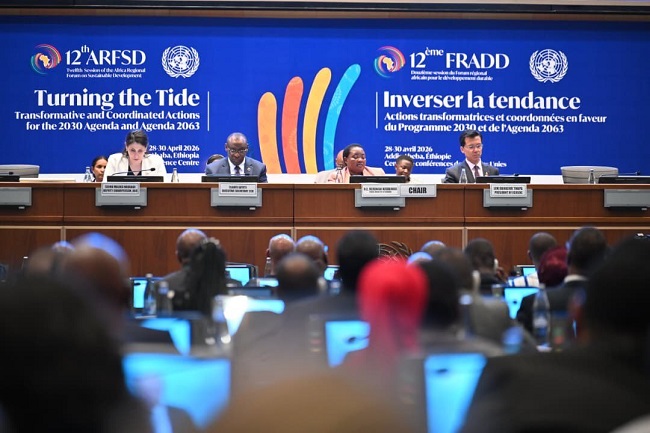
Key groups and other stakeholders who gathered at the 12th Africa Regional Forum on Sustainable Development (ARFSD-12) have agreed on the need to act urgently to overcome the structural obstacles that hinder development on the continent.
This category of ARFSD stakeholders includes civil society, business and industry organisations, as well as academic and research institutions, who gathered to address pressing challenges that are holding back progress towards the achievement of the 2030 Agenda and Agenda 2063. The discussions revealed uneven progress and structural constraints.
They underlined that, despite some progress, developments in Africa remain uneven and severely constrained by major obstacles, such as increasing debt vulnerability, declining official development assistance, data gaps, weak accountability, and shrinking civic space.
Participants stressed the importance of people-centred and rights-based approaches to ensure that no one is left behind. This implies paying special attention to vulnerable groups, including women, youth, people living with disabilities and marginalized communities.
To support these efforts, they advocated for inclusive data systems and disaggregated, gender-responsive budgeting and better articulation between national commitments and their local implementation.
They also highlighted their critical contribution to accelerating progress through co-designed solutions and community-led actions. Participants expressed the need to improve access to finance for local and youth-led initiatives, thereby strengthening the crucial interface between research, public policy and society.
Highlighting the value of indigenous knowledge in complementing scientific expertise, they called for innovative approaches to ensure that digital transformation and artificial intelligence improve productivity and inclusion, rather than exacerbate inequalities or undermine workers’ rights.
The discussions delved deeper into the levers critical to Africa’s transformation, with a focus on sustainable financing for development, alleviation and restructuring of the economy. and climate finance, which favours grants over loans. Energy sovereignty emerged as a crucial issue, as did the need for effective social dialogue.
Participants called for strengthened partnerships between governments, parliaments, civil society, academia, the private sector and the United Nations system. The need to reform global and regional governance structures to correct power imbalances and rebuilding trust was also highlighted as essential for sustainable development.
The side event made a strong call for collaboration to address the complexity of development in Africa, reaffirming the importance of a united front for growth inclusive and sustainable across the continent.