Nigeria is to a host dialogue on mainstreaming climate change adaptation into state development plans, focusing on enhancing climate resilience and fostering private sector participation.
This is contained in a statement issued by Mr. Ibrahim Haruna, the Director of Press, Ministry of Environment, on Friday, May 1, 2026, in Abuja.
He said that the dialogue would also focus on focusing on climate resilience and fostering private sector participation.
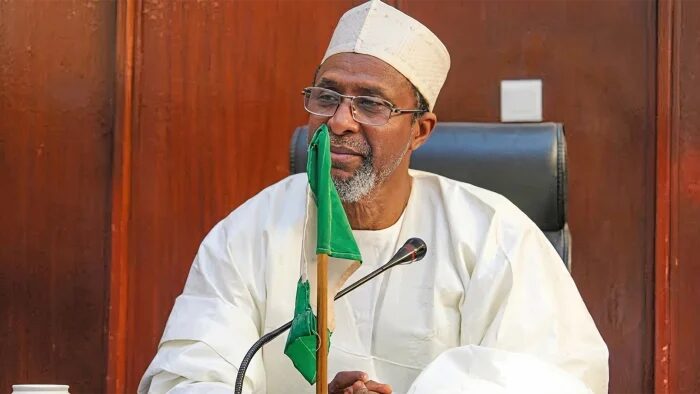
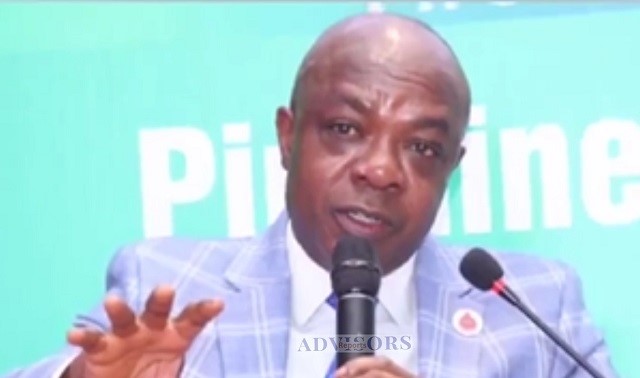
Malam Balarabe Lawal, the Minister of Environment
“The Technical Dialogues is scheduled to take place in Abuja, Nigeria, from May 5 to May 7 and is co-hosted by the National Adaptation Plan (NAP) Global Network, Canada and Nigeria, bringing together government representatives from across Africa.
“Participants from Burkina Faso, Cameroon, Central African Republic, Chad, Liberia, Somalia, and South Sudan are taking part in the three-day peer learning event in Abuja.
“The event is focused on strengthening national responses to their unique climate change vulnerabilities and risks and identifying adaptation measures that reduce conflict and actively promote peace.”
According to him, the peer learning event, supported by the NAP Global Network, housed at the International Institute for Sustainable Development (IISD), is unpacking opportunities and challenges on how countries can align their adaptation priorities and actions with peacebuilding frameworks.
“As we grapple with the impacts of climate change, linking adaptation and peacebuilding efforts are high on Nigeria’s climate agenda.”
Also, Dr Iniobong Abiola-Awe, the Director, Department of Climate Change in the Ministry, said that in spite of the challenges, the ministry recognises the urgent need to design conflict-sensitive national adaptation plans.
She added that the plan would align with peacebuilding and development objectives.
“This event represents an opportunity for peer-to-peer learning and exchange to leverage national adaptation plan processes for policy dialogue, trust, and peacebuilding.
“Conflict-affected states and communities, which are acutely vulnerable to the impacts of climate change, might find it challenging to prioritise climate change adaptation while grappling with immediate needs, such as ensuring security, restoring public services, or delivering clean water.
“Inspite of the fragmented responses in conflict-affected settings, several countries are striving to integrate conflict and peacebuilding considerations into adaptation priorities through their NAP processes: a key vehicle to put adaptation at the heart of decision-making.”
Abiola-Awe said that studies have shown that inclusive and effective NAP processes offer an opportunity to integrate conflict dynamics and support peacebuilding objectives into adaptation efforts.
“Many conflict-affected states are also among the most vulnerable to climate change,” she said.
Anne Hammil, the Associate Vice-President for Resilience at the IISD which hosts the NAP Global Network Secretariat, said that the NAP process can help to break this cycle of climate change on conflict-affected states.
“Through this peer learning event, we are aiming to foster open and honest discussions among participants on leveraging the NAP process for peacebuilding.
“The NAP Global Network helps accelerate climate change adaptation efforts around the world by supporting partner countries in advancing their NAP processes.
“Peer learning is a key pillar of the NAP Global Network’s support to countries on NAP processes, and it has engaged more than 1,000 adaptation planners from 84 countries to participate in peer learning.”
The dialogue would include peer learning event with funding from the government of Ireland.
Nigeria’s National Adaptation Plan (NAP) Framework, led by the Federal Ministry of Environment, established a structural, sectoral approach to mitigate climate change impacts across key sectors like agriculture, water and health.
It addresses medium- to long-term adaptation needs, aiming to reduce vulnerability and align with national development goals, such as the Economic Recovery Growth Plan.
The First Conference on Transitioning Away from Fossil Fuels concluded in Santa Marta, Colombia, on Thursday, April 30, 2026, with almost 60 countries addressing what decades of UN climate negotiations have largely avoided: the need to wind down fossil fuel production itself.
Climate Action Network International (CAN), a global network of over 1,900 civil society organisations (CSOs) in more than 130 countries, has welcomed this historic step – and puts governments on notice that civil society will ensure it does not stop here.
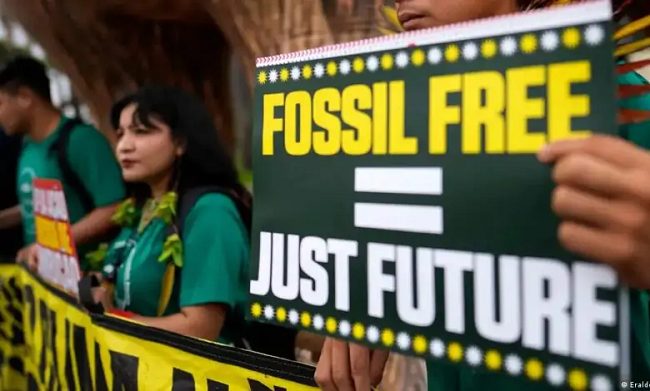
Ahead of the summit, CAN co-convened the People’s Summit for a Fossil-Free Future – a three-day mobilisation that brought together frontline communities, trade unions, Indigenous peoples, Afro-descendants, feminists, youth, farmers, fisherfolk, and social movements from across the world. Almost 1,000 organisations united behind a single People’s Summit Declaration, which fed directly into the government dialogue.
Fossil free future campaign
Tasneem Essop, Executive Director of CAN International, said: “The People’s Summit was three days of commitment, energy, and hope that reflected decades of struggle – and a shared conviction that the fossil fuel era can and must end. Almost 1,000 organisations came to Santa Marta not just to bear witness, but to set the terms. Now governments must honour them. CAN International and our member organisations will use every opportunity – nationally and internationally – to ensure this conference lives beyond Santa Marta. The work of implementation begins now.”
Santa Marta builds directly on the landmark agreement reached at COP28, where all governments committed for the first time to transitioning away from fossil fuels. This conference opens the door to the international cooperation and national planning required to make that commitment real – and lays the basis for bringing more governments into the coalition.
The Co-host Takeaways from the Conference fall short of the very substantial proposals brought by civil society – and that gap must be closed, says CAN, calling on governments to ensure that the final conference report – to be released in the coming months – fully reflects the demands of the movements and peoples who came to Santa Marta: Indigenous Peoples, Afro-descendants, feminists, youth, trade unions, farmers, fisherfolk, and social movements who have fought for decades for this moment.
The People’s Summit Declaration deals in demands, not aspirations. Key among them:
An immediate halt to all new fossil fuel licensing, exploration, and approval. No new coal, oil, or gas projects. No public or private financing of expansion.
Time-bound, socially equitable national phase-out plans covering both production and consumption, aligned with 1.5°C, integrated into their national climate plans (NDCs), and subject to independent accountability.
A binding Fossil Fuel Treaty – a legally mandated framework to deliver a rights-based, equitable, and fully funded transition away from fossil fuels, with differentiated responsibilities and clear timelines for Global North and Global South.
Non-debt-creating, grants-based public finance for the transition. No conditional loans. No structural adjustment. No nation – especially in the Global South – should go into debt to phase out the fossil fuels that wealthy countries burned to build their economies.
Immediate exit from Investor-State Dispute Settlement mechanisms that allow fossil fuel companies to sue governments for enacting climate policy – and binding safeguards against fossil fuel lobbying and conflicts of interest across multilateral bodies, including the UNFCCC.
No false solutions. Carbon offsets, Carbon Capture and Storage, ammonia co-firing, and gas as a transition fuel prolong fossil dependence and drain public funds from the decentralised, community-based renewable systems that deliver real emissions reductions – and real economic and social opportunity.
An end to militarism, imperialist aggression, and resource wars. Wars and militarisation account for an estimated 5.5% of global emissions. Redirecting military spending toward the just transition is not only a moral imperative – it is a climate imperative.
CAN also calls for meaningful and equitable civil society inclusion in all future conferences in this process. Structural barriers – visa access, funding, language justice – prevented full participation from the Global South in Santa Marta. This must be addressed as a matter of urgency. Governments must move beyond consultation to genuine co-design, with civil society contributions substantively reflected in all final outcome documents.
Marking the close of the First Conference on Transitioning Away from Fossil Fuels, a range of civil society leaders and climate policy advocates shared their reflections:
Kumi Naidoo, President of the Fossil Fuel Treaty Initiative, said: “From Santa Marta to the Pacific, a new reality is taking shape: this is no longer a one-off moment, but the foundation of an ongoing international process dedicated to phasing out fossil fuels. The agreement to continue under Pacific leadership, with Ireland and Tuvalu co-hosting the second conference now confirmed, marks a decisive shift from stalled negotiations to sustained political direction.
“What is emerging is a process that can finally match climate diplomacy to the scale of the crisis – moving beyond voluntary pledges toward a coordinated, equitable and binding framework to phase out oil, gas and coal extraction. The Pacific has helped turn a historic opening into a standing process, and the task now is to ensure it delivers the legal and political architecture for a just and rapid transition.”
Fernanda Carvalho, Head of Policy for Climate and Energy, WWF International, said: “In this pivotal year for the transition away from fossil fuels, shaped both by the current geopolitical landscape and the momentum since COP30, Santa Marta is a key milestone. The conference shows that international cooperation efforts can be catalyzed even in the most challenging contexts. It is here that the seeds of a new, implementation-focused initiative have been planted.
“In times of an exhaustion of multilateral processes and a gap in delivering the systemic change we need, what is emerging offers a different approach. If improved, this could be a real bottom-up process that centres the voices of communities most affected by fossil fuel extraction and consumption. The outcomes of Santa Marta should reinforce and complement both the UNFCCC climate negotiations and the COP30 Presidency Roadmap, helping to bridge the gap between ambition and action.”
Irene Burga, Climate Justice and Clean Air Director, GreenLatinos said: “The Santa Marta conference, with more than 50 countries participating, marks an important step in creating a global space to advance a fossil fuel phaseout beyond the UNFCCC, where progress has been too slow. At the same time, the absence of the U.S. government is telling. Instead of leading, it continues to expand fossil fuels and uphold systems that fuel conflict, militarisation, and harm. Frontline communities were clear: we need a just transition rooted in rights, reparations, and real accountability. That means moving beyond voluntary commitments toward a legally binding, fully funded pathway to phase out fossil fuels. GreenLatinos stands in solidarity with that call.”
Friederike Strub, Advisor at Recourse, said: “A just transition away from fossil fuels cannot happen without a paradigm shift in our financial system, putting finance and macroeconomics at the service of people and the planet. That means Global North countries paying the climate debt they owe to Southern countries, overturning a financial architecture that only serves creditors and wealthy elites, and cancelling illegitimate debt while working towards a UN debt resolution.
“It means challenging the role of institutions like the IMF and multilateral development banks that continue to lock in a fossil-fuelled system through debt-based climate finance, loan conditionalities, investments in harmful energy projects or false solutions, and a private-finance-first development paradigm.”
Teresa Anderson, Global lead on climate justice at ActionAid International, said: “So many governments expressed real hunger to be free from the economic and climate harm of fossil fuel dependence. This was a watershed moment in which the collective mind became truly focused on the common cause of ending the fossil fuel era.
“What set this conference apart was the willingness to dive into and address the complex challenges of our fossil-fuelled world. The debt crisis, which keeps so many countries trapped on the fossil fuel treadmill against their will, came up repeatedly. Phasing out fossil fuels is not only a matter of energy transition, but also economic transformation, requiring just transitions and climate finance.
“Santa Marta is a major milestone on our journey out of the fossil fuel era. It must set the stage for a new Fossil Fuel Treaty for the countries that are ready to lead the world down this path.”
Bronwen Tucker, Oil Change International Public Finance Lead, said: “In Santa Marta, a line is being drawn – momentum to move beyond fossil fuels is growing and cannot be ignored. Fossil fuel dependence drives economic instability, conflict, and debt, keeping Global South countries locked into a system shaped by Global North financial rules. The leaders here have been clear that a shift away requires planned, government-led national roadmaps and new forms of international cooperation. But this momentum is not yet enough to deliver the needed breakthrough.
“The richest polluting countries must take immediate action to accelerate their transitions at home and show up with meaningful international economic cooperation. A just transition requires breaking the structural barriers – through debt cancellation, scaled-up public finance, and rejecting false solutions – so governments can deliver a transition that works for people, not profit, because the human cost of delay is already being paid every day.”
Shereen Talaat, Founder/Director of MENAFem Movement for Economic, Ecological Justice and Development, and CAN Arab World, said: “The Santa Marta conference, with more than 50 countries participating, opens an important global space for a transition away from fossil fuels. For us in Southwest Asia and North Africa, this transition is not only about energy.
“It is about dismantling a system rooted in extraction, colonial control, and imposed economic dependency. Fossil fuel economies in our region are tied to militarism, occupation, and external control over resources. These are not separate crises. They are structurally linked. This is why voluntary pathways are not enough. We need a legally binding, rights-based, and fully funded treaty with no new oil, gas, or coal expansion.
“A just transition cannot be built on debt. It requires grant-based public finance, debt cancellation, and social protection. False solutions like debt swaps and offsets only delay real change and reproduce inequality. We acknowledge the effort to include civil society, while recognizing that participation remains uneven. This is an area for improvement. Santa Marta can mark a shift. But only if it confronts the colonial and financial systems that sustain fossil fuel dependence and enables a transition grounded in justice, sovereignty, and peace.”
Dr. Sanjay Vashist, Director, Climate Action Network South Asia, said: “After three decades of climate negotiations, Santa Marta marks a turning point ‘much like a long drifting ship finally sets its course’, bringing countries together to begin charting a real pathway away from fossil fuels. Without a clear commitment to phase them out, justice in the ‘transition’ would remain incomplete. The Santa Marta conference stands as a pivotal moment in moving from ambition to action in addressing the climate crisis.”
Javier Andaluz Prieto, Coordinator, Climate Alliance, said: “The world already knows that the exit from fossil fuels is not optional, and for the governments that sit at this table today, it has been a first step, but there is a long way to go to live up to their own words. For this moment to be historic, we need to continue to make progress in future meetings on a binding multilateral framework that curbs the devastating human toll on the fossil fuel economy.
“Santa Marta launches a demand that goes beyond the end of extraction; it is a call for international solidarity, for those who generate it to pay the bill, for the debt that condemns the Global South to depend on fossil fuels to be cancelled, and for the legal shields that, like ISDS, place corporate profit above the rights of the people and peoples who inhabit the territories, to be eliminated.”
“The world already knows that phasing out fossil fuels is not optional, and for the governments sitting at this table today, this has been a first step, but there is still a long way to go before they live up to their own words. For this moment to be historic, we need to continue making progress at future meetings within a binding multilateral framework that puts a stop to the devastating human toll exacted by the fossil fuel economy.
“Santa Marta is making a demand that goes beyond the end of extraction; it is a call for international solidarity, for those who generate the costs to pay the bill, for the cancellation of the debt that condemns the Global South to dependence on fossil fuels, and for the removal of legal safeguards such as ISDS that place corporate profit above the rights of the people and communities inhabiting these territories.”
Isatis M. Cintron-Rodriguez, Director, Climate Trace Puerto Rico, said: “The Santa Marta conference confirmed what we from Puerto Rico and our territories have always understood: the energy transition is not only a socio-environmental issue but an issue of sovereignty. From our violated territories, we know that the fossil economy, militarized geopolitics and colonialism are part of the same problem.
“A just transition that does not confront colonial status, military occupation, illegitimate debt, and necessary reparations is not the transition for us, but a continuation. The Santa Marta conference opens the way in the face of multilateralism in crisis, integrating the People’s Assembly as an official part of it. Although there is still a long way to go to move from consultation to binding, Santa Marta leaves us with hope that a new climate pact, made from the people and not about them, is still possible.”
Dr. Neil Tangri, Senior Director of Science and Policy, GAIA, said: “Santa Marta represents a critical juncture in our ability to tackle global problems. For too long, international efforts have been stymied by a handful of petrostates, determined to profit from the destruction of communities, ecosystems, and climate stability. Now, freed from their interference, a “coalition of the willing” is taking the first steps toward a new world order. The absence of the petrostates is crucial to future progress. Our job is to ensure that the future is not only fossil-free, but just.”
“Santa Marta marks a watershed moment for our ability to address global issues. For decades, international efforts have been hampered by a handful of oil-rich states, dedicated to profiting at the expense of the destruction of communities, ecosystems and climate stability. Now, freed from its interference, a “coalition of the willing” is taking the first steps toward a new world order. The absence of oil states is crucial for future progress. Our task is to ensure that the future is not only free of fossil fuels, but that it is fair.”
Bertha Argueta, Senior Policy and Advocacy Officer for Climate Justice, Eurodad, said: “The transition away from fossil fuels is no longer optional, it is a defining political choice. Colombia’s leadership in convening this first conference is a welcome step forward. But a just transition demands more: developed countries must lead by rapidly phasing out fossil fuels while confronting structural inequalities, from rising debt burdens in developing countries to the urgent need for progressive environmental taxation. We need a legally binding treaty to guarantee a rights-based, fully funded transition away from fossil fuels – one that breaks with privatisation and corporate profit and is driven instead by public policy that prioritizes justice, redistribution, and people over markets.”
“The transition away from fossil fuels is no longer optional, but a decisive policy decision. Colombia’s leadership in convening this first conference is a very positive step forward. But a just transition requires more: developed countries must take the lead by rapidly phasing out fossil fuels and tackling structural inequalities, from the growing debt burden in developing countries to the urgent need for progressive environmental taxation. We need a legally binding treaty that ensures a rights-based, fully-funded transition away from fossil fuels, a transition that breaks with privatisation and corporate profits, and is instead driven by public policies that prioritize justice, redistribution, and people over markets.”
Stela Herschmann, Climate Policy Specialist, Observatório do Clima (Brazil), said: “No country alone is capable of overcoming fossil fuel dependence. Santa Marta marks the beginning of a process that can build many things, from a treaty to end fossil fuels to a coalition of forces for all other necessary forums where we can move forward to dismantle the countless barriers to the transition.”
Rodrigo Estrada, Senior Climate Advisor, Greenpeace International, said: “Amid a tense geopolitical context and worsening climate extremes, Santa Marta helped spark a feeling of renewed energy, but delegates must now follow through to deliver action, not just words. While households struggle with rising costs as the US-Israel war on Iran drives oil and gas profits higher, 57 nations in Santa Marta have also been looking for ways to finance a just transition. That solution starts with permanently taxing the profits, not just windfalls, of fossil fuel majors and replacing this system with renewable energy.”
Svitlana Romanko, Founder and Executive Director, Razom We Stand, said: “Especially for those of us in Ukraine, the problems of fossil fuels are clearly evident in the form of the fossil-funded, imperialist and brutal war that Russia inflicts on us daily. The Kremlin uses its revenues from exports of dirty oil or LNG gas to further its violent expansionist war against people who courageously stand up for freedom and democracy. For us in Ukraine, but also for people across the world, freedom and justice will come much quicker when we have cheap local renewable clean energy to base our economies on.”
Mariana Paoli, Global Climate Policy and Advocacy Lead, Oxfam, said: “The fact that over 50 countries came together to start developing a path to transition away from fossil fuels must be celebrated. The People’s Summit demonstrated that there is no shortage of concrete proposals for how to implement a just transition. Wealthy governments have still not stepped up in providing climate financing that is sufficient for poorer countries, which face the brunt of the impacts of the climate crisis, to transition away from fossil fuels. Rich countries, which hold disproportionate historical responsibility for the climate crisis, must not only move first and faster but also provide finance at scale for others to follow suit.”
Eriel Tchekwie Deranger, Founder, Indigenous Climate Action/The Woven Project, said: “Over the past week, hundreds of people traveled to Santa Marta to engage in dialogue and determine the necessary steps towards addressing one of the most urgent challenges of our time, moving beyond a fossil fuel economy. Fossil fuels, and the colonial systems that drive them, were built without our consent and caused a legacy of deep harm to the climate, biodiversity, human health, and the rights of Indigenous Peoples and frontline communities.
“The new discussion for a just transition away from fossils continues to struggle with what full and effective participation of Indigenous Peoples as distinct rights-holders, consistent with the United Nations Declaration on the Rights of Indigenous Peoples, including self-determination, Free, Prior and Informed Consent, and respect for our lands, territories, knowledge systems, sciences and governance really means. While states and civil society rush to define solutions we want to remind you all that a just transition cannot be built through limited consultation or rushed participation.
“As this process moves forward, we hope future spaces will provide more time, stronger engagement, and clearer pathways for Indigenous Peoples to shape decisions, not only respond to them. We leave this conference with appreciation, but also with a clear call: transitioning away from fossil fuels must not repeat the harms of extraction. It must deliver justice, reparations, and real participation for Indigenous Peoples and frontline communities.”
Sasha Lleshaj, International Just Transition Coordinator, Climate Action Network Canada, said: “Santa Marta called for courage, and the multiple crises we are facing demand nothing less. Civil society from all over the world arrived in Colombia with urgency, hope, and the bold political imagination needed for a future beyond fossil fuels – cancelling debt, ending colonial-era legacies like ISDS, making polluters pay instead of rewarding them with public money, governing the phase-out and fairly distributing its benefits.
“We looked to Canada, with its vast resources and capacity, to show ambition and commitment. Canada showed up—but with timidity. But what started in Santa Marta cannot be stopped, and we’ll continue fighting for Canada to step away from its fossil fuel dependence and extraction at home, and step forward as a real partner in the global just transition.”
Alejandro Alemán, node coordinator of CAN Latin America, said: “The role that Colombia and the Netherlands have played in organising the first international conference to move away from fossil fuels is certainly worthy of recognition and congratulations; from CAN Latin America we hope that the results of this conference will materialise in concrete and effective actions that lead to a just and orderly transition away from fossil fuels.
“We also expect that these results can strengthen the UNFCCC conversations taking place in Bonn in June of this year, and that in turn, the results of this summit can appropriately reflect the recommendations emanating from the People’s Summit, a space to which different global and regional networks and spaces have joined and contributed. For future conferences, we hope that better conditions of participation and fewer visa restrictions can be implemented, especially for activists from the Global South.”
Kathy Mulvey, Climate Accountability Campaign Director, Union of Concerned Scientists, said: “The conference in Santa Marta was a long-awaited and historic step toward creating a global roadmap for a fair, fast, and funded phaseout of fossil fuels that science shows us is necessary. In a space free from the pernicious influence of the profit-seeking fossil fuel industry and even as the Trump administration is trying to upend climate and clean energy progress, more than 50 nations showed up.
“So did representatives of civil society, frontline communities, Indigenous peoples, Afro descendants, social movements, and scientists. We must all nurture the seeds planted here to boost ambition and accelerate action – through the continuation of this process in next year’s conference cohosted by Tuvalu and Ireland, and within the UN FCCC negotiations – toward a healthier, safer, more just world.”
Candy Ofime, Climate Justice Researcher and Legal Adviser, Amnesty International, said: “The Santa Marta conference sent a strong political signal that the age of fossil fuels must end; this newly formed “coalition of the doers” must now turn their commitment into proactive international cooperation to pave the way for rights-based just transitions. The International Court of Justice has made clear that states must phase out fossil fuels in order to keep 1.5°C alive. Therefore, knowledge sharing is not enough. Governments have a legal duty to act now and must choose courage over delay, justice over profit, and people over fossil fuels.”
Chiara Martinelli, Director, CAN Europe, said: “Santa Marta shows that momentum for a fossil fuel phase-out is no longer an abstract concept, it is now politically and socially unavoidable. The political space is expanding rapidly given current geopolitical events, but governments must now translate this into time-bound, science-aligned action to end the fossil fuel era, without delay. If the EU is serious about aligning with science, it must now move beyond general commitments and establish clear, binding fossil fuel phase-out dates and pathways to achieve those.”
Sinéad Loughran, Climate Justice Policy & Advocacy Advisor, Trócaire, said: “Ireland co-hosting the second conference alongside Tuvalu is an important outcome, and a test of whether Ireland will sincerely step up to its climate obligations. Pacific nations are setting the ambition the world needs, and Ireland and other Global North countries must rise to meet their obligations, at home and globally. This next stage is critical to advancing a legally-binding international mechanism to phase out fossil fuels, grounded in equity and justice.
“To truly support this process, the Irish Government must also take urgent action domestically; Ireland cannot claim climate leadership while pursuing new fossil fuel infrastructure, including LNG, at home. However, by aligning national actions with this Pacific-led ambition, Ireland could help deliver a just transition that meets the needs and rights of current and future generations everywhere.”
Dr Ketakandriana Rafitoson, Executive Director, Resource Justice Network, said: “Santa Marta has set something important in motion, and the People’s Declaration we brought there is a reminder that ambition must be grounded in the realities and needs of those who cannot wait: frontline communities, Indigenous Peoples, workers and women in countries most dependent on fossil fuels.
“The new workstreams are a chance to turn political momentum into the reforms that actually matter: debt cancellation, an end to ISDS, and trade, finance and intellectual property rules that give Global South countries real technology access and policy space. That means not just importing affordable clean technologies, but building the energy systems, jobs, skills and local industries that improve people’s lives on the ground: from affordable power to decent work and stronger public services. The ambition is there. Now governments must build the political will, and the delivery architecture, to make it real.”
James Trinder, International Climate Policy Coordinator, CAN Europe, said: “The next phase must focus on delivery. This should include the EU setting concrete timelines for fossil fuel phase-out and advancing structural transformation that ends proliferation of fossil fuels, including windfall taxation on fossil profits, an end to fossil subsidies, and addressing trade and fiscal barriers to phase-out.
“The next target must be a global TAFF roadmap that supports a systemic shift towards locally-led, equitable access to renewable energy, together with these structural measures. The required direction of travel is increasingly clear. The question now is whether governments will move at the speed and scale required.”
David Hillman, Make Polluters Pay, said: “Santa Marta marks a turning point – the end of fossil fuels is now being planned. But it must be a fair transition. Big oil is making huge, crisis-driven profits, and those windfalls should help pay for the shift to clean energy. The public is behind this – now it’s time for governments to act.”
Francisco Ferreira, President of the Board, ZERO – Association for the Earth Sustainability, Portugal, said: “We welcome this political momentum – the participation of over 50 countries opens a vital window to accelerate the transition away from fossil fuels. Now we need concrete and binding commitments: no new oil, gas, or coal expansion; non-debt-creating public finance; and the cancellation of Global South debt. We must end fossil fuel subsidies and industry influence now. The political momentum from Santa Marta will only be meaningful if it translates into clear, legally binding frameworks and financial mechanisms that ensure a just and rapid phase-out of all fossil fuels.”
USCAN Delegation, Shontaé Cannon Buckley, Knellee Bisram, and Analyah Schlaeger dos Santos, said: “USCAN members from the frontlines of the fossil fuel fight were on the ground at the 1st conference transitioning away from fossil fuels. We came to Santa Marta and are leaving with deep hope and optimism. We witnessed youth, Indigenous People, Afro-descendants, women and feminists, and social movements make contributions to the assembly of the people, then the high sector.
“Relationships were deepened with multiple stakeholders and the consensus in those conversations was that while this event was historic, much more needs to be done. We saw a clear path to what the future can bring, and it must involve all!! We must all make it to the finish line together and we must all have an active seat at the table or we all lose. Now the work continues. We want a binding agreement that secures a non-extractable clean energy future for generations to come.”
Susann Scherbarth, Head of Climate Justice, BUND e.V. (Friends of the Earth Germany), said: “This conference is a historic moment: a determined coalition of the willing is now jointly and progressively pushing ahead with the phase-out of all fossil fuels – supported by science, civil society and affected communities. A fossil-free future strengthens energy security and can only succeed through a just energy transition worldwide. Germany must now lead the way – with binding, fair and affordable phase-out plans, a consistent phase-out of gas and a clear no to pseudo-solutions such as CCS. Now is the time to leave blockers behind and turn the departure into decisive action now.”
“This conference marks a historic moment: A determined coalition of the willing is now jointly and proactively driving the phase-out of all fossil fuels—backed by science, civil society, and affected communities. A fossil-free future strengthens energy security and can only be achieved through a just global energy transition. Germany must now take the lead with binding, fair and affordable phase-out plans, a consistent phase-out of gas and a clear rejection of false solutions such as CCS. Now is the time to leave those behind who block the transition away from fossil fuels.”
As Nigeria marks International Workers’ Day 2026 on Friday, May 1, Corporate Accountability and Public Participation Africa (CAPPA) has called on all tiers of government to move beyond symbolic gestures and confront the worsening socioeconomic realities confronting the country’s workers.
In a statement issued Thursday, April 30, CAPPA said this year’s commemoration comes at a time when workers across the country are grappling with soaring living costs, stagnant wages, and deteriorating social protections, conditions that continue to erode dignity, productivity, and quality of life.
CAPPA’s Executive Director, Corporate Accountability and Public Participation Africa (CAPPA) Akinbode Oluwafemi
“May Day should not be reduced to ceremonial speeches,” CAPPA’s Executive Director, Akinbode Oluwafemi, said. “It must be a moment of reckoning. For millions of Nigerian workers, survival has become a daily negotiation with inflation, rising rents, and shrinking real incomes.”
CAPPA highlighted the deepening housing crisis in major urban centres such as Lagos, Abuja, and Rivers State, where the cost of accommodation has surged beyond the reach of average earners, who are now being priced out of cities.
The organisation expressed particular concern over media reports of university lecturers and other public sector workers resorting to sleeping in offices and on campuses, unable to afford rent close to their workplaces.
“That Nigeria’s educators, entrusted with shaping the nation’s future, are compelled to sleep in their offices is an indictment of our economic priorities,” Oluwafemi said. “It underscores a broader housing emergency that demands urgent, coordinated intervention.”
Furthermore, CAPPA called out the Federal Government’s decision to approve land allocation to political appointees, who are yet to even serve the country.
“Ambassadors and High Commissioners-designate are part of the political and administrative elite. Providing them with land allocations, most likely in prime areas of Abuja – raises questions about who benefits from public assets,” CAPPA stated. “In a period defined by acute housing stress for ordinary Nigerians, government decisions on land use must visibly prioritise broad public need over elite benefit. Anything less risks deepening public distrust.”
While acknowledging recent efforts to review the national minimum wage, CAPPA noted that wage adjustments alone are insufficient without parallel measures to tame inflation, regulate housing costs, and expand access to essential services.
“An increase in wages that is immediately swallowed by rent hikes, transport costs, and food inflation offers little real relief,” the statement said. “What workers need is a comprehensive framework that aligns income with the actual cost of living.”
CAPPA also drew attention to the declining state of public services, including healthcare, education, and transportation, which places additional financial burdens on workers forced to seek private alternatives.
The group warned that the continued commercialisation of basic services risks widening inequality and pushing more Nigerians into precarious living conditions.
To address these challenges, CAPPA called for a national housing strategy that prioritises affordable rental schemes and curbs speculative practices in urban property markets.
The group demanded stronger labour protections and enforcement of fair wage standards across both public and private sectors, targeted social investments in healthcare, education, and public transport to ease the cost burden on workers and fiscal policies that prioritise public welfare, including health-promoting taxes and reinvestment of revenues into social services.
“Workers are the backbone of any economy. When they are pushed to the margins, the entire system weakens,” the group added.
Furthermore, CAPPA urged labour unions, civil society, and policymakers to use May Day as an opportunity to reassert the rights of workers and demand accountability from those in positions of power.
“This is not just about commemoration; it is about commitment,” the organisation said. “Nigeria must choose whether it will continue on a path where workers are overburdened and undervalued, or one where their welfare is placed at the centre of national development.”
Reaffirming its solidarity with Nigerian workers, the group called for urgent, sustained action to reverse the current trajectory.
“A nation that neglects its workers undermines its own future,” the statement concluded.
Dangote Petroleum Refinery has approved the recall of engineers previously redeployed across its business units, following what management described as a conditional pardon after internal disciplinary actions linked to operational disruptions.
In an internal communication to staff, the company said the decision followed an extensive review process and numerous appeals from respected individuals, stakeholders, and the engineers. The refinery noted that while earlier actions were taken to protect operations and uphold organisational standards, it has now opted to offer a second opportunity to the staff.
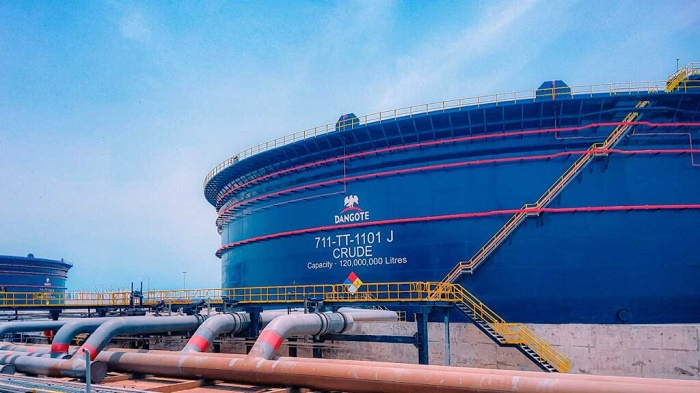
Dangote Refinery
Under the directive, according to a memo signed by the Group Vice President, Oil & Gas, Devakumar Edwin, all affected personnel will be invited for a meeting and subsequently reassigned to resume duties at the refinery. The recall also covers those who did not take up earlier redeployment options offered by the company.
Management emphasised that the move reflects both a commitment to fairness and a belief in second chances, while reiterating that discipline, professionalism and adherence to corporate values remain non-negotiable.
“This decision was not an easy one. It reflects not only our belief in second chances but also serves as a clear reminder that loyalty, professionalism and adherence to organisational standards are non‑negotiable,” it said. “Effective immediately, all engineers previously redeployed to other business units, will be invited for a meeting and, subsequently, will be provided with an opportunity to render their services at our Petroleum Refinery. This would include those who did not avail the opportunity provided earlier for redeployment”.
The company, however, issued a firm warning that any recurrence of misconduct would attract immediate and decisive sanctions, underscoring its zero-tolerance stance on actions capable of undermining operations.
Dangote Refinery added that it expects the returning engineers to demonstrate renewed dedication as it continues efforts to strengthen operational efficiency and maintain its position as a key player in Nigeria’s oil and gas sector.
“We welcome our colleagues back, with the expectation of renewed dedication, and we look forward to working together to strengthen our operations and deliver excellence in the oil and gas sector,” it added.
Recall that the Dangote Group, in October 2025, redeployed some refinery engineers to other companies within the Group as part of measures to stabilise operations at the time.
The Nigerian equities market closed bullish on Thursday, April 30, 2026, leading to N3.266 trillion gains for investors.
The positive performance was driven by continued demand for industrial, consumer, and energy stocks like: Seplat Energy, Unilever, CAP, FTN Cocoa Processors, UAC of Nigeria and 41 other stocks.
Specifically, the market capitalisation, which opened at N152,728 trillion, added N3.266 trllion or 2.14 per cent to close at N155.994 trillion.
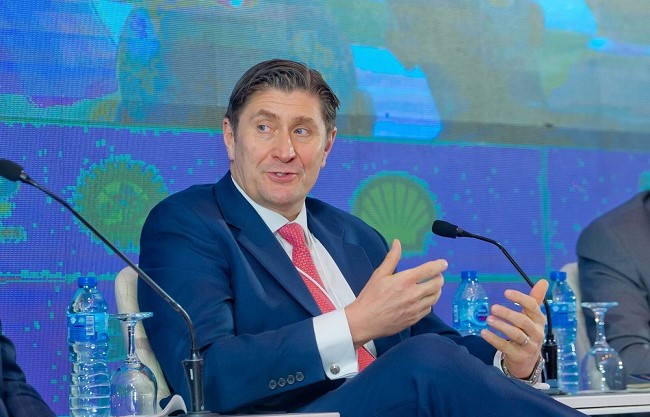
Chief Executive Officer, Seplat Energy Plc, Roger Brown
The All-Share Index also gained 2.14 per cent or 5,072.22 points, to settle at 242,277.81, against 237,205.59 recorded on Wednesday.
As a result, the Year-To-Date (YTD) return increased to 55.69 per cent.
The market breadth closed positive with 46 gainers and 42 losers.
On the gainers’ chart, Seplat Energy, UAC of Nigeria, CAP, Unilever and FTN Cocoa Processors led by 10 per cent each, closing at N11,495, N181.50, N145.20, N137.50 and N5.50 per share respectively.
Conversely, Aluminium Extrusion Industry led the losers’ chart by 9.95 per cent, settling at N9.50, Royal Exchange followed by 9.93 per cent, finishing at N1.36 while Legend Internet lost by 9.32 per cent, ending the session at N5.35 per share.
Also, Austinlaz dropped by 9.12 per cent, closing at N3.39 and Neimeth Pharmaceuticals shed by 7.26 per cent, finishing at N8.30 per share.
Market activity closed on a positive note, as total volume traded surged by 40.33 per cent to 1.87 billion shares, valued at N104.29 billion across 92,353 deals.
Access Corporation led the activity chart by volume, with 934.96 million shares exchanged, representing 49.96 per cent of total trades.
Seplat topped the value chart with transactions worth N25.50 billion, accounting for 24.45 per cent of the day’s turnover.
In a related development Seplat on Thursday announced its unaudited results for the three months ended March 31, 2026, declaring US 9.0 Cents total dividend per share for the period, which is 96 per cent higher than 1Q 2025 payout.
The foremost energy company grew its profit after tax (PAT) to $37.9 million from $23.3 million Year-on-Year with cash generated hitting $243.4 million.
Group production for the period averaged 129,841 barrels of oil equivalent per day (boepd) up 9 per cent since 4Q 2025 (119,200 boepd). Crude and condensate liftings benefitted from the company’s put-option hedge strategy that exposed it to a 100 per cent of price upside, resulting in strong free cash. Gross profit for the period stood at $370.5m.
The Group delivered more than 9.1 million man-hours without Lost Time Injury – 3.0 million hours onshore-operated assets and 6.1 million hours offshore.
Operational highlights
• Production during the first 26 days of April has averaged approximately 153 kboepd, bringing group average daily working interest production for the year to 26 April to approximately 135 kboepd, within FY 2026 guidance.
• Onshore production contribution of 50,700 boepd, down 10% YoY (1Q 2025: 56,267 boepd).
• YoY decline principally due to 38 days unplanned downtime on third-party operated Trans Forcados Pipeline, impacting Western Assets. Pipeline operations resumed on 24 March and Western Assets production has normalised.
• First gas at ANOH in January 2026, contributed working interest volumes of 17.0 mmscfd, planned increase 2Q 2026 onwards.
• Offshore production contribution of 79,141 boepd, up 5% vs. 1Q 2025: 75,478 boepd.
• Idle well restoration programme continued its strong performance, adding 10 kbopd gross JV production capacity from 8 wells.
• NGLs delivered strong growth, WI production of 9,802 bopd (1Q 2025: 3,376 bopd), as EAP continued to perform at high levels.
• Yoho restart on track for 2Q 2026, Oso-BRT 1 gas expansion project on track for 3Q 2026 start up.
• Carbon emissions intensity for Seplat group assets: 41.6 kg CO2/boe improved by 13% YoY (1Q 2025: 47.9 kg CO2/boe), within this onshore operated emissions intensity reduced 24% on 1Q 2025, reflecting the positive impact of our End of Routine flaring programme.
Financial highlights
• Gross revenue $840.7 million up 4% on prior year (1Q 2025: $809.3 million). Realised oil price of $86.16/bbl.
• Onshore operated assets now reporting under PIA, group blended unit royalty rate 14.7% of revenue (1Q 2025 16.2%).
• Unit production operating cost of $17.1/boe (1Q 2025: $12.6/boe), above our $13.5-14.5/boe guidance due to acceleration of planned maintenance activities at Yoho and lower volumes in the quarter, also impacting EBITDA, expected to normalise in subsequent quarters.
• Adjusted EBITDA of $371.3 million (44% margin), down 7% vs prior year (1Q 2025: $400.6 million).
• Cash generated from operations of $337.9 million up 10% from $306.5 million in 1Q 2025.
• Cash capital expenditure of $42.6 million up 6% YoY (1Q 2025: $ 40.2 million). Capex run rate expected to increase 2Q 2026 onwards.
• Balance sheet remains robust, end-March cash at bank $461.7 million (YE 2025: $332.3 million).
• Net Debt at end-March of $531.6 million down 21% on prior quarter (YE 2025: $673 million). ND/EBITDA improves to 0.43x (YE: 0.53x).
• Completed refinancing of our undrawn revolving credit facility (‘RCF’) and upsized to $400 million, cost of borrowing reduced to SOFR plus 4.5% (down from SOFR plus 5% plus CAS), an overall saving of 76 bps.
Dividend
• 1Q 2026 declared dividend of USD 9.0 cents per share, consisting of USD 5.0 c/share base and USD 4.0 c/share special dividend, for a total cost of approximately $54 million. The declared dividend is up 8% QoQ and up 96% YoY.
2026 Outlook
• 2026 guidance reiterated
• Production guidance of 135-155 kboepd (Crude & Condensate: flat, NGL: +85% YoY & Gas: +30% YoY)
• Capex guidance remains $360-440 million, unit operating cost guidance reiterated at $13.5-$14.5/boe
Commenting on the results, Mr. Roger Brown, Chief Executive Officer, said: “The conflict in the Middle East has dramatically changed the outlook for the oil and gas industry in 2026, andquite possibly beyond. Nigeria’s favourable geographic positioning, combined with our oil rich portfolio, which isfully exposed to higher oil prices, and our strong balance sheet, means we are well placed to deliver strong cashflows in 2026. As a result, we have increased our 1Q 2026 dividend to 9.0 cents per share (core: 5.0 cents andspecial: 4.0 cents).
“Production in 1Q 2026, improved QoQ but modestly missed our internal expectations, largely due to unplanned downtime on third-party infrastructure onshore. That said, April to date production has averaged c.153 kboepd, illustrating the potential of our asset base. Notably, this is before the return of Yoho, scheduled to come back onstream before end 2Q 2026, and full ramp-up of ANOH, as such we remain comfortable with our 2026 guidance.
“While the firmer oil price outlook should enhance cash flows its duration is uncertain, as such, we expect to retain our current growth-focused 2026 work programme, which will deliver enhanced asset reliability and overall portfolio growth on route to our 2030 targets. Overall, we have delivered a solid start to 2026, with expectations that 2Q 2026 will see a step forward in performance.”
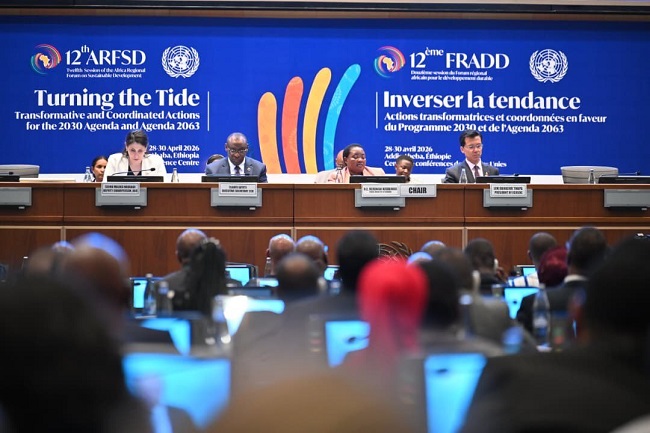
Key groups and other stakeholders who gathered at the 12th Africa Regional Forum on Sustainable Development (ARFSD-12) have agreed on the need to act urgently to overcome the structural obstacles that hinder development on the continent.
This category of ARFSD stakeholders includes civil society, business and industry organisations, as well as academic and research institutions, who gathered to address pressing challenges that are holding back progress towards the achievement of the 2030 Agenda and Agenda 2063. The discussions revealed uneven progress and structural constraints.
They underlined that, despite some progress, developments in Africa remain uneven and severely constrained by major obstacles, such as increasing debt vulnerability, declining official development assistance, data gaps, weak accountability, and shrinking civic space.
12th Africa Regional Forum on Sustainable Development (ARFSD-12)
Participants stressed the importance of people-centred and rights-based approaches to ensure that no one is left behind. This implies paying special attention to vulnerable groups, including women, youth, people living with disabilities and marginalized communities.
To support these efforts, they advocated for inclusive data systems and disaggregated, gender-responsive budgeting and better articulation between national commitments and their local implementation.
They also highlighted their critical contribution to accelerating progress through co-designed solutions and community-led actions. Participants expressed the need to improve access to finance for local and youth-led initiatives, thereby strengthening the crucial interface between research, public policy and society.
Highlighting the value of indigenous knowledge in complementing scientific expertise, they called for innovative approaches to ensure that digital transformation and artificial intelligence improve productivity and inclusion, rather than exacerbate inequalities or undermine workers’ rights.
The discussions delved deeper into the levers critical to Africa’s transformation, with a focus on sustainable financing for development, alleviation and restructuring of the economy. and climate finance, which favours grants over loans. Energy sovereignty emerged as a crucial issue, as did the need for effective social dialogue.
Participants called for strengthened partnerships between governments, parliaments, civil society, academia, the private sector and the United Nations system. The need to reform global and regional governance structures to correct power imbalances and rebuilding trust was also highlighted as essential for sustainable development.
The side event made a strong call for collaboration to address the complexity of development in Africa, reaffirming the importance of a united front for growth inclusive and sustainable across the continent.
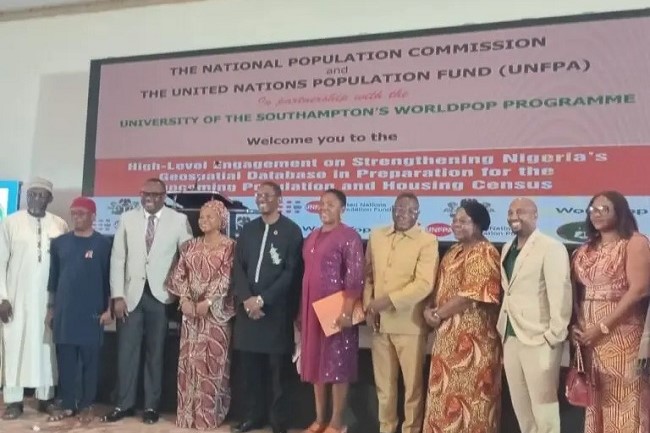
Nigeria has launched a geospatial database to strengthen preparations for the forthcoming National Population and Housing Census, aimed at delivering credible, technology-driven and verifiable national population data.
The initiative was unveiled on Thursday, April 30, 2026, in Abuja at a High-Level engagement on Consolidating Nigeria’s Geospatial Database in Preparation for the Upcoming Population and Housing Census.
Ms. Muriel Mafico, the Resident Representative, United Nations Population Fund (UNFPA), said the project marked the commencement of an 18-month initiative to modernise Nigeria’s population data systems and strengthen national geospatial and population data systems.
Participants at a High-Level engagement on Consolidating Nigeria’s Geospatial Database in Preparation for the Upcoming Population and Housing Census on Thursday in Abuja
Represented by the Deputy Representative, Mr. Koesson Kuawu, Mafico said that Population and Housing Census data are fundamental for effective governance, economic planning, national development, and informed decisionmaking.
She said that Nigeria’s ability to plan and deliver on its development goals depends significantly on the availability of credible, timely, and disaggregated population data.
“However, since the last Population and Housing Census was conducted in 2006, Nigeria has undergone significant demographic, social, and economic changes.
“The current reliance on outdated population estimates undermines evidence-based planning and hampers the effective implementation of national and global development programmes.”
According to her, an updated census data is critical for informing national planning and the government’s Renewed Hope Agenda, as well as assessing progress towards achieving goals like the Sustainable Development Goals and the Africa Agenda 2063.
Mafico added that the fund had deployed technical support, including advisory services, development of a census project document, and updating Nigeria’s geospatial database in line with 2030 census round requirements.
The NPC Chairman, Mr. Aminu Yusuf, represented by the Delta State Commissioner, Mrs. Blessing Brume-Ataguba, said census planning must rely on accurate and integrated spatial data systems.
“As Nigeria prepares for the next population and housing census, our planning must draw on current, spatially precise, integrated, and operationally useful data systems.
“This initiative seeks to strengthen Nigeria’s national geospatial database to aid census preparation, evidence-based planning, and broader development goals.”
According to him, a modern geospatial database is more than a technical asset as it forms a core part of national planning architecture.
He said that when well-developed and responsibly applied, it supports census operations alongside health planning, education delivery, infrastructure targeting, disaster preparedness, agricultural strategy, local governance, and other public priorities.
“Let me state clearly, this initiative neither substitutes for the census nor alters statutory responsibilities.
“It is a technical enhancement to equip the commission and national systems with better data infrastructure.”
The Statistician-General of the Federation, Mr. Adeyemi Adediran, said the project would strengthen Nigeria’s statistical system and support credible census outcomes.
Represented by Mr. Salihu Itopa, the Director, Information and Communication Technology, National Bureau of Statistics, he said it strengthens the technical backbone required for a credible, inclusive, and future-oriented national population and housing census.
“The world has entered an era in which geospatial intelligence is central to governance and countries are using spatial data to plan infrastructure, monitor population movements, manage natural resources, respond to emergencies, and design targeted social interventions.
“The quality of our population data determines the quality of our national surveys, which also determines the quality of our national statistics, and the quality of our national statistics determines the quality of our development decisions.”
The Director-General of the National Identity Management Commission (NIMC), Mrs. Abisoye Coker-Odusote, emphasised the role of identity systems in strengthening census credibility.
Coker-Odusote, who was represented by Mallam Sherrif Balogun, the Deputy Director of Database, said as Nigeria prepares to conduct its first census in nearly two decades, the imperatives of accuracy, inclusivity, and credibility are more critical than ever.
“The integration of geospatial intelligence into census planning is therefore not only timely but essential to ensuring a robust and reliable national enumeration exercise.
“The National Identification Number (NIN) provides a unique and verifiable identity for every citizen and legal resident and when harmonised with a comprehensive geospatial framework, it enhances the integrity of population data.”
In his keynote address, Dr Chris Nnanatu of WorldPop, University of Southampton, highlighted the importance of integrating multiple datasets for accurate planning and census execution.
“For us to be able to accurately identify how things are to be built across the general spatial landscape, we need other data sets.
“The project would ensure an updated database, strengthen national capacity and modernise census readiness.
“The goal is to strengthen Nigeria’s geospatial data infrastructure and produce high-resolution policy-relevant sampling frame to support census planning, health programming and development activities.”
He added that integrating datasets and advancing artificial intelligence and machine learning technologies would strengthen Nigeria’s spatial data framework for census and long-term development planning.
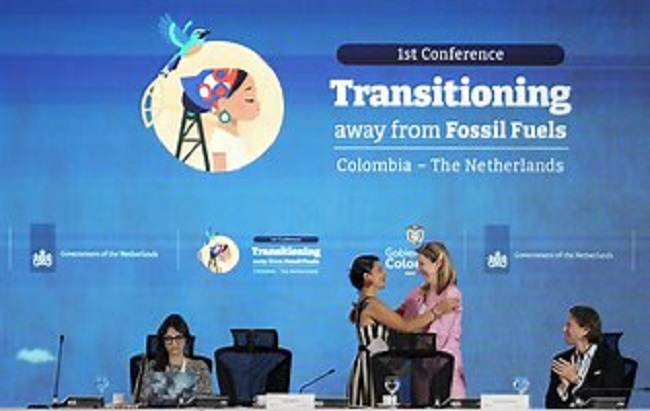
The First Conference on Transitioning Away from Fossil Fuels concluded on Wednesday, April 29, 2026, in Santa Marta, Colombia, with optimism as 56 national governments gathered for the first time to begin phasing out fossil fuels, reports from conference proceedings.
In a significant step for impacted communities, participants including academia, Indigenous Peoples, Afro-descendants, parliamentarians, subnational governments, and the private sector called for reducing petrochemicals – a major driver of climate change – and addressing the plastic crisis.
First Conference on Transitioning Away from Fossil Fuels
Ana Rocha, Global Plastics Policy Director at GAIA, stated: “Santa Marta brought together a group of countries that recognise the urgency of phasing down fossil fuels. While there is always an appetite for more tangible outcomes, progress matters, and Colombia, the Netherlands, and all involved deserve credit for moving the conversation beyond paralysis. Now countries must build on this momentum to translate intention into decisive action.”
A science and policy dialogue co-convened by GAIA and the Centre for International Environmental Law (CIEL) recommended freezing petrochemical expansion, establishing declining caps on production, ensuring transparency across the supply chain, eliminating subsidies, avoiding false solutions, and creating financial mechanisms for just transitions.
Experts noted that without intervention, petrochemicals could account for nearly half of oil demand growth by 2050, according to the International Energy Agency.
Participants emphasised the need for a Just Transition, with countries facing similar realities collaborating on actionable solutions.
The conference decided to convene a second edition next year in Tuvalu, hosted in collaboration with Ireland – a choice underscoring climate vulnerability and South-North solidarity.
In the interim, countries will advance work through three streams: tackling economic and financial barriers, promoting green trade over fossil fuel trade, and addressing fossil fuel dependency and supply.
The gathering is viewed as historic progress in international cooperation, offering an alternative pathway that bypasses the veto systems often hindering broader climate talks.
Quotes from participants highlighted the need for a people-centered, inclusive transition that delivers justice, reparations, and remediation for frontline and Indigenous communities while ending reliance on single-use plastics and agrochemicals.
Climate movements led by 350.org on Thursday, April 30, 2026, launched globally coordinated actions calling on governments to shift public money from costly fossil fuels towards cheaper renewables, as fossil fuel giants BP and TotalEnergies announce billions of dollars in “scandalous” first quarter profits, with Chevron and Exxon Mobil set to follow.
350.org demanded governments to rein in profiteering by imposing permanent windfall taxes on excess oil and gas profits. Campaigners say that windfall taxes can raise up to $400 billion globally in its first year, which can be used to immediately protect households from price shocks and accelerate the energy transition to bring down household bills for good.
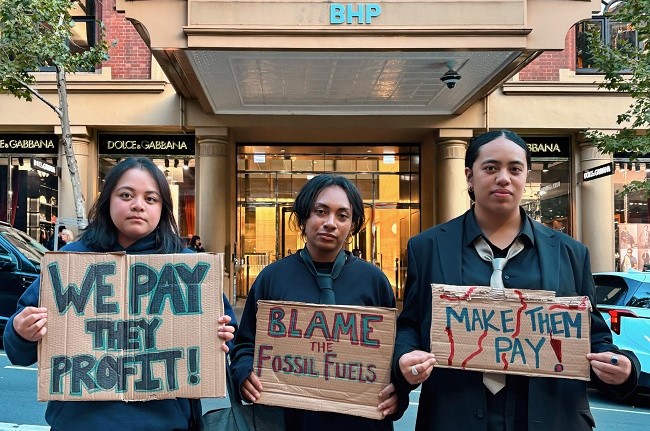
Action in front of the Melbourne headquarters of BHP & Mitsubishi Alliance. Photo credit: Jacynta Fa’amau / 350.org
New analysis by 350.org shows that elevated oil and gas prices will impose more than US$600 billion up to $1 trillion in additional costs on the global economy by the end of the year. On top of soaring energy bills, 350.org also says that households shoulder an extra $12 trillion each year in “hidden” fossil fuel costs in the form of fossil fuel subsidies, tax breaks, health impacts, and climate damages.
In its flagship campaign “The Great Power Shift,” 350.org groups and partners in Japan, Indonesia, France, Canada, Türkiye, Brazil, South Africa, East Africa, Pacific and the Caribbean underscored the need to end dependence on fossil fuels and ensure affordable renewable energy for all by ending fossil fuel subsidies and phasing out fossil fuel expansion.
They said that the just concluded landmark conference in Santa Marta, Colombia – participated in by 57 countries representing one-third of global GDP – proved that many countries were ready to advance the economic transformation necessary to transition away from fossil fuels.
Savio Carvalho, 350.org Head of Campaigns and Networks, said: “People are being squeezed by soaring energy costs while oil majors pocket scandalously huge first quarter profits – and that covers just one month of wartime gains. We pay, they profit – until we break free from fossil fuels.
“The lesson is clear: the less reliant we are on fossil fuels, the more protected ordinary people are from price shocks. Renewables have surged ahead as the cheapest option available, while fossil fuels have become a shock-prone liability. It’s time to make Big Oil pay and shift power back to the people.”
In France, 350.org campaigners called on French Parliamentarians to enact a legislative proposal for a fossil fuel windfall tax, and criticised the EU’s decision to leave out windfall taxes in its emergency energy measures announced last week. They held a stunt near a gas station of TotalEnergies, which just announced US$5.8 billion in first quarter profits.
France Petitbon, 350.org France Country Manager, said: “While millions of French people struggle to pay their bills, TotalEnergies is cashing on war. Taxing obscene profits only during price spikes is not enough, we need a permanent windfall tax. The billions this would unlock could deliver urgent support to vulnerable households and fast-track the renewable transition. It’s the only way to break free from economic and political blackmail. The French government, which bears its own responsibility as chair of this year’s G7, has run out of excuses. It is time to listen and put people over profits, not the other way around.”
In Türkiye, in a gathering in Antalya – the host city of the COP31 UN climate talks – 350.org campaigners highlighted analysis that the surge in oil and gas prices during the first 60 days of conflict in West Asia has cost ordinary households and businesses an additional $3 billion.
Efe Baysal, 350.org Türkiye Country Manager, said: “For Türkiye, as the host of COP31, these figures are not just statistics; they are an urgent wake-up call to action. A country preparing to lead on the global climate stage must first complete its own energy transition at home. Freeing our people from the price instability caused by fossil fuels will not only alleviate the financial strain on households but also serve as the most powerful message Türkiye can send to the world in the lead-up to COP31.”
In Indonesia, actions were held in Jogjakarta, Jakarta, Bali, and Lombok calling on the government to tax windfall profits of coal exporting companies, and to redirect fossil subsidies to renewable energy.
Sisilia Nurmala Dewi, 350.org Indonesia Country Manager, said: “Indonesian households just finished honouring their tax obligations this season, while fossil fuel companies pocket record profits and pass the cost of climate disaster to ordinary families. The Indonesian government must act urgently to make windfall tax proposals a reality. Every rupiah collected must be earmarked for the energy transition and climate reparations. Those who wreak damage must pay – not Indonesians already struggling with high costs of living.”
In Japan, campaigners called out the country’s dependence on imported fossil fuels and urged the government to redirect fossil fuel and nuclear subsidies to renewable energy, highlighting 350.org analysis that shows the country has lost up to ¥ 1 trillion in oil and gas spikes in the last two months of war.
Masayoshi Iyoda, 350.org Japan Campaigner, said: “Since Japan relies almost entirely on fossil fuel imports, its energy security is repeatedly jeopardised whenever crises occur. The Takaichi administration’s crisis measures – such as gasoline subsidies and the reuse of inefficient coal-fired power plants – as well as massive oil, gas, and nuclear investments in the US, only feed the world’s fossil fuel addiction that may well lead us to the next crisis. The government should instead embark on energy conservation and rapid renewable energy expansion to ensure affordable energy and protect the livelihoods of the Japanese people.”
In Australia, 350.org campaigners held an action at the Melbourne headquarters of the country’s largest coal company BMA (BHP & Mitsubishi Alliance), as Pacific island nations face an energy crisis.
Jacynta Fa’amau, 350.org Pacific Campaigner, said: “Fossil fuel companies reap obscene profits even while people in the Pacific and worldwide declare various states of emergency, choked by fossil fuel dependence. The polycrisis of climate change, energy insecurity and skyrocketing cost of living has shown us that the Pacific critically needs to move beyond fossil fuels and embrace renewable energy. Australia can begin by stopping monstrous carbon bombs like BMA’s Peak Downs mine and stepping up to lead the region’s era of renewable energy security.”
In Canada, 350.org campaigners say that Canadian oil and gas companies could make up to CAD $100 billion in excess profits this year – a windfall tax could provide up to CAD $75 billion in direct relief to Canadian consumers and renewable energy investments.
Atiya Jaffar, 350.org Canada Country Manager, said: “While everyday Canadians struggle to make ends meet as the cost of fuel skyrockets, Big OIl is raking in billions they didn’t earn and don’t deserve. They’re not innovating or investing; they are just passively profiting from the global oil price shock. We are calling for an immediate 75% excess profits tax on the oil and gas sector to fund immediate relief for households struggling most during the spiralling cost of living crisis and to massively expand renewable energy, public transportation, and an East-West electricity grid.”
In South Africa, 350.org campaigners are calling for free basic electricity through renewable energy, as the country faces its biggest electricity tariff increase in decades.
Tshepo Peele, 350.org South Africa Country Manager, said: “The energy transition is more urgent than ever as the global energy crisis forces ordinary working-class families to make impossible choices between putting food on the table or keeping the lights on. We need to develop renewable energy infrastructure to address energy poverty for communities hit hardest by rising energy costs. The upcoming local government elections in South Africa offer a vital opportunity for the public to usher in a shift in policy – from a system that favors fossil fuel profiteering to one that benefits the people.”
In Brazil, 350.org campaigners propped up a giant “expensive and dirty” electricity bill in front of the National Congress, and demanded cleaner, cheaper energy from candidates. Brazilian households spend around 12% of their income on energy – the highest share among major economies – with the situation likely to worsen as electricity tariffs are projected to rise further.
João Cerqueira, 350.org Brazil Country Manager, said: “While legislators continue to subsidise fossil fuels and contract new coal and gas plants that lock in higher costs for years to come, families across Brazil are struggling to pay their bills. This is not an accident; it is a political choice. The fossil fuel lobby is winning, and Brazilians are paying the price. This election year, it’s time to change that.”
In East Africa, 350.org campaigners called on local governments to allocate more public money towards affordable, decentralised clean energy.
Rukiya Khamis, 350.org East Africa Programme Manager, said: “The global energy crisis has laid bare a painful truth: while fossil fuel giants enjoy protection, our communities are left vulnerable to every price hike and supply shock. The time for asking nicely has passed. We need to hold big corporations to account for the damage they cause, but we must also look closer to home.
“Local governments must stop pouring public money into the volatile systems of the past and start ring-fencing budgets for affordable, decentralised, clean renewable energy. True resilience isn’t found in a pipeline; it’s built through public investment that prioritises the needs of the many over the profits of the few.”
Nigeria is pushing its indigenous oil and gas firms as global partners, using the Offshore Technology Conference 2026 in Houston to attract investment and reshape industry perceptions.
The Petroleum Technology Association of Nigeria (PETAN) says its delegation is focused on converting technical capacity into bankable partnerships and long-term collaborations.
Dr Joan Faluyi, PETAN Publicity Secretary, in a statement on Thursday, April 30, 2026, said the association would anchor Nigeria’s presence at the Nigerian Pavilion with a clear investment message.
Chairman, Petroleum Technology Association of Nigeria (PETAN), Mr. Wole Ogunsanya
“Our participation goes beyond visibility; it is about demonstrating that Nigerian firms are ready for serious global partnerships,” she said.
The conference is with the theme: “Africa’s Energy Transformation: Scaling Investment, Technology, and Local Capacity for Sustainable Growth”.
Faluyi said the conference theme reinforces Africa’s need to scale investment, technology and local capacity for sustainable growth.
She noted that PETAN was advancing a narrative that places indigenous companies at the centre of energy development.
“For us, local capacity is no longer complementary; it is the foundation of Nigeria’s energy future,” she said.
PETAN Executive Secretary, Mr Eloka Ejeh, said years of investment in skills and technology were yielding competitive results.
“The capabilities we present are built on deliberate development and proven performance.
“We are engaging partners who recognise value and are willing to collaborate on equal terms,” he said.
Ejeh said the conference provided an opportunity to redefine how global investors view Nigerian firms.
He urged Original Equipment Manufacturers to move beyond transactional roles and build strategic alliances with local companies.
“As Africa expands energy access while pursuing sustainability, Nigerian firms offer both capacity and adaptability.
“Local expertise should be seen as an advantage, not a limitation,” he said
PETAN Chairman, Mr. Wole Ogunsanya, said the conference marked a decisive moment for Nigeria’s energy sector.
“OTC 2026 allows us to present Nigerian companies as leaders, not followers, in Africa’s energy transition.
“We are here to influence decisions, not merely participate,” he said.
Ogunsanya said Nigeria’s delegation would host targeted engagements designed to unlock capital and strengthen partnerships.
He listed the African Energy Forum, the NCDMB–OEM Investment Forum and a strategic networking golf event among key activities.
“These engagements bring decision-makers together to convert interest into tangible investments,” he said.
He added that PETAN members covered a wide range of services, reflecting decades of accumulated expertise.
“Our strength lies in our diversity and depth, from engineering to logistics and reservoir management,” Ogunsanya said.