Home Blog Page 2216

Worry in Ethiopia, Kenya as Lake Turkana water level falls

0

Water and Sanitation Dropping water levels in Kenya’s Lake Turkana following the development of dams and plantations in Ethiopia’s lower Omo Valley threaten the livelihoods of half a million indigenous people in Ethiopia and Kenya, according to the Human Rights Watch.
Lake Turkana
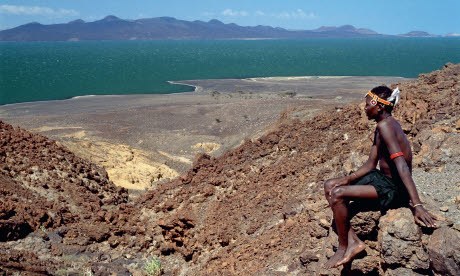
A young Turkana man looks out over Lake Turkana. Photo credit: Richard Trillo

Based on publicly available data from the United States Department of Agriculture, Lake Turkana’s water levels have dropped by approximately 1.5 meters since January 2015, and further reduction is likely without urgent efforts to mitigate the impact of Ethiopia’s actions.

Human Rights Watch research based on satellite imagery shows that the drop is already affecting the shoreline of the lake, which has receded as much as 1.7 kilometers in Ferguson Gulf since November 2014.

The Gulf is a critical fish breeding area, and a key fishing ground for the indigenous Turkana people.

“The predicted drop in the lake levels will seriously affect food supplies in the Omo Valley and Lake Turkana, which provide the livelihoods for half a million people in both Kenya and Ethiopia,” says Felix Horne, senior Africa researcher at Human Rights Watch.

“The Ethiopian government’s moves to develop its resources should not endanger the survival of indigenous people living downstream.”

In 2015, the reservoir behind the new Gibe III dam in Ethiopia began filling. Water that previously flowed unimpeded into Lake Turkana, replenishing seasonal drops in lake levels, has since been held behind the Gibe III dam. In 2015, the annual July-November flood from the Omo River into Lake Turkana did not occur, resulting in a drop of water levels of 1.3 metres from November 2014. The very limited artificial release of water from Gibe III in 2016 was not enough to replenish water levels in Lake Turkana.

As of January 30, 2017, lake levels were approximately 1.5 metres lower than they were two years earlier according to the data.

Lack of safe drinking water is one of the world’s leading problems affecting more than 1.1 billion people globally. Most of these live in Africa.

People living in fishing communities along Lake Turkana who spoke to Human Rights Watch in August 2016 were generally aware of the risks posed by Gibe III, but largely uninformed about the plantations and the devastating impact they could have on their livelihoods.

When Human Rights Watch visited communities around Ferguson Gulf on the western lake shores that month, local residents had noticed changes from previous years in the lake levels.

People who depend on fishing for their livelihood said that their daily catch has been reduced. One 50-year-old woman living near Lake Turkana told Human Rights Watch in August 2016: “It has been difficult these days…the main issue has been hunger. There is reduced water in the lake.”

While multiple factors contribute to the decline, including overfishing and unsustainable fishing practices, a further drop in lake levels will most likely reduce catches even further.

The Kenyan government has done little to address the impact from Ethiopia’s Omo Valley development, or to press Ethiopia to take steps to mitigate the damage and to consult with and inform affected communities about the impact of the project.

The governments of Kenya and Ethiopia should urgently work with these communities to ensure upstream industrial works does not devastate their livelihoods, Human Rights Watch said.

In addition to the industrial developments in lower Omo, climate change is exacerbating the already significant problems the Turkana people face in getting sufficient food and water, and maintaining their health and security.

“The Ethiopian government has shown scant regard for the lives and livelihoods of already marginalised communities who are reliant on the Omo River and Lake Turkana for their livelihoods,” Horne said. “In its rush to develop its resources it has not developed strategies to minimise the impact on those living downstream.”

Ethiopia’s Gibe III dam, which opened on December 17, 2016, is a key component of a massive industrial project in the lower Omo Valley that includes a cascade of water-intensive mega dams, and sugar and cotton plantations. The sugar plantations have been under development in the Omo Valley since 2011.

Based on Human Rights Watch estimates derived from satellite imagery, approximately 19,500 hectares of land has been cleared on the east bank of the river for sugar plantation development. An additional 10,500 hectares has been prepared for irrigation on the west bank.

The sugar plantations are planned to be 100,000 hectares. According to the Ethiopian Sugar Corporation, the first of the four sugar processing factories should be ready to begin production in early 2017.

In Ethiopia, livelihoods of those living in the Omo Valley depend on cattle grazing and planting crops in the rich alluvial soil along the banks of the Omo River. This alluvial soil is replenished by the annual flood, which deposits water and nutrient rich sediment along the banks. A lack of floods in 2015 and an inadequate artificial flood in 2016 are making it more difficult to grow food along the Omo River.

Some communities have also reported restricted access to the Omo River and food shortages in 2016. Furthermore, the plantations necessitate clearing of land used by agro-pastoral indigenous groups including the Bodi and the Mursi. The Bodi have been the most heavily affected, with a significant area of their land cleared.

“The projections of the water drawdown on Lake Turkana, routinely rubbished by Ethiopia’s government, are coming true and lake levels have started dropping,” Horne said. “This should serve as a warning about what could happen if the Ethiopian government continues to ignore the needs of downstream communities in its rush to develop its resources.”

Formerly known as Lake Rudolf, Lake Turkana is the world’s largest permanent desert lake and the world’s largest alkaline lake.

China, Sweden take bold climate action

0

While some countries recently broke new ground in climate ambition, a report on nationally determined contributions (NDCs) shows that there is still a long way to go to realise the full implementation of countries’ pledges under the Paris Agreement on climate change.

Stockholm-Sweden
Stockholm, Sweden. A major feature of the nation’s climate action projects that, by 2045 and thereafter, Sweden will have no net emissions of greenhouse gases

The past few weeks brought news about the efforts of two countries to implement climate change action, illustrating ways in which they are assuming leadership roles. Providing an example of how it is working toward achieving SDG 7 (ensure access to affordable, reliable, sustainable and modern energy for all), China nearly doubled its solar power capacity in 2016, to 77.42 gigawatts (GW) by the end of 2016. With this rapid increase, China becomes the single largest producer of solar energy by capacity in the world. According to development plans set out by the National Energy Administration, China will continue this trend, investing in solar energy in order to increase capacity another 110 GW by 2020.

The other country that recently made the headlines for its climate action is Sweden, who signed what many consider to be the world’s most ambitious climate change framework to date. The framework consists of a climate act, new climate goals and a climate policy council, based on an agreement reached in the Cross-Party Committee on Environmental Objectives.

According to the goals, by 2045, emissions generated from activities in Sweden will be at least 85% lower than in 1990. Also by 2045 and thereafter, Sweden will have no net emissions of greenhouse gases (GHGs), which may rely on “supplementary measures” such as forest sinks or investment in other countries to achieve zero net emissions.

Before 2045, the climate change framework sets out interim goals for emissions in Sweden falling outside the purview of the EU Emissions Trading Scheme (EU ETS). By 2030, emissions should be at least 63% below 1990 levels and, by 2040, 75% lower than 1990 levels. Emissions from domestic aviation transport are to be reduced by 70% below 2010 levels by 2030. The Climate Act, which will review progress against these targets and sets out policies to achieve them, takes effect on 1 January 2018.

A report of the Nairobi Framework Partnership on NDC implementation finds that countries in West Africa, East Africa, Asia, Latin America and the Caribbean urgently need support to green their power sectors.

Amid this ground breaking action and planning, a more sobering report illustrates what is required for developing countries to realise their NDCs under the Paris Agreement. The Nairobi Framework Partnership’s report summarises findings from a survey of the Regional Collaboration Centres (RCCs) in West Africa, East Africa, Asia, Latin America and the Caribbean (LAC) on NDC implementation.

The primary finding is that all these regions urgently need support to green their power sectors. Countries in Asia and Africa also prioritised support to improve waste management and transport systems, while sustainable forestry was important in the Caribbean and East Africa. This finding in particular highlights the cross-cutting nature of the SDGs, that climate action (SDG 13) can support SDGs on waste management (SDGs 12.3 and 12.4), transportation (SDG 11.2), and forestry (SDGs 15.2 and 15.9). Support to develop carbon markets or economic instruments for mitigation was a low priority for most countries in the survey, although many did call for urgent support to help them access finance. For many surveyed, the timeline to complete intended nationally determined contribution (INDCs) in the lead up to the Paris Agreement was too short. They therefore also expressed a desire to update their NDCs in line with the goals of the Paris Agreement.

By Jennifer Allan (Thematic Expert for Climate Change and Sustainable Energy, Canada)

Dangote, rice farmers, Sokoto sign rice growers’ scheme agreement

0

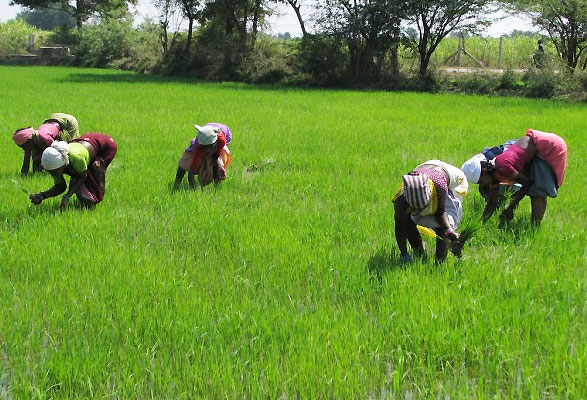
A tripartite agreement spare headed by the Dangote Rice Limited to create jobs for 16,000 outgrower rice farmers in Sokoto State in Northwest Nigeria was on Tuesday, February 14 2017 signed amid excitement and a pledge by all parties to ensure the success of the scheme to make the country self sufficient in rice cultivation.

rice-farming
Rice farming

The agreement was signed during the launch of the Dangote rice outgrower scheme in Goronyo, Goronyo Local Government Area in Sokoto State, which was witnessed by the Sultan of Sokoto, Alhaji Sa’ad Abubakar. Farmers were presented with rice seeds, fertilisers, nets, and agro-chemicals.

Chairman of Dangote Rice Limited, Aliko Dangote, said he was moved to go into rice cultivation because of the interest of the Federal Government to revive agriculture as the mainstay of the economy, and reduce importation of foods that could be produced locally.

He lamented that Nigeria consumes 6.5 metric tonnes (mtn) of rice which costs the nation over $2 billion annually, pointing out that it is heartening that the government now has policy direction that encourages private sector’s active participation in agriculture.

“Buoyed by the policy direction of the Federal Government, we at Dangote decided to key into this by establishing Dangote Rice Limited to partner with states to redress the present situation where a huge sum of forex is spent on importation of rice.

“In the next three years, we want to produce one million tons of quality rice and make it available and affordable to the people. We hope to do 150,000 hectares (ha) and, when we are done, Nigeria will not have anything to do with importation of rice.

“Dangote Rice outgrowers scheme is committed to creating significant number of jobs, increasing the incomes of smallholders farmers and ensuring food security in the country by providing high quality seeds, fertilisers and agro-chemicals as well as technical assistance on best agricultural practice to farmers.

“This Scheme will help to diversify the economy, alleviate poverty and reduce the nation’s import bill. The scheme has been designed as a one stop solution for the rice value chain,” he stated.

The Dangote Rice Project Director, Robert Coleman, said the Sokoto operation was a demonstration phase to familiarise the farming community with the programme, train extension workers and lead farmers as well as test modern technologies.

He noted that they would have 25,000 ha cultivated by nearly 50,000 outgrowers in 2017 in addition to hundreds of jobs expected to be created by the end of that year.

In his remarks, Governor Aminu Waziri Tambuwal expressed delight at the event, saying the coming of Dangote to invest in the state was as a result of his sustained effort towards inviting prospective investors to the state.

He said the state under the scheme, just as it had done with the Federal Government, would distribute nets, water pumping machines and fertiliser at subsidised prices to help the farmers have good yield.

The state Commissioner for Agriculture, Alhaji Umar Tambuwal, disclosed that the scheme would cover 10 local governments in the state and that the state government is committing several millions of naira to support the famers in the scheme.

According to him, “the farmers participating in the 5,000 ha pilot scheme, the state government is giving out free nets which is costing the state N48 million. The state will release and sell 5,000 units of water pump worth N170 million at a subsidised rate of N10,000 each.

“We will also distribute 5,000 bags of rice seed (Faro 44) worth N32.5 million while fertiliser will be sold 50 per cent subsidised rate to complement the outgrower farmers.”

Sultan Muhammadu Sa’ad Abubakar, however, commended President Muhammadu Buhari for his diversifying efforts, urging Nigerians to pray for him.

He commended the Sokoto State Government for the encouragement and support being given to the outgrowers scheme, saying it is a thing of joy that the state is also involved by way of giving the famers some of the inputs needed so that the scheme could succeed.

National President of Rice Farmers Association, Alhaji Aminu Goronyo, described the scheme as one of the potential means of making rice available and at low cost to the people because the farmers are encouraged to put all their best into it.

He said he has no doubt that the scheme would succeed because,according to him, it is a private sector driven venture and that, given the pedigree of the Alhaji Dangote in business, he was sure that the scheme would be sustainable and sooner than later other states will key into it.

NEITI commits to open government partnerships

0

The Nigeria Extractive Industries Transparency Initiative (NEITI) has identified Nigeria’s membership of Open Government Partnership as a timely platform to push for disclosure of beneficial owners of companies in the oil, gas and mining industries in the country.

Waziri-Adio
Executive Secretary of NEITI, Waziri Adio

Executive Secretary of NEITI, Waziri Adio, stated this recently while addressing a Consultative Forum on Open Government Partnership (OGP) in Abuja.

“Knowing how much companies paid in the form of taxes, royalty, rents etc. and how much government received is important, but not enough. Knowing those who are the real owners of the companies is critical to checking corruption, money laundering, drug and terrorism financing, tax avoidance and evasion,” Mr. Adio added.

He called on the Federal Government to enact a special legislation that will compel companies in the extractive sector to make public the names and identities of their real owners.

He also called on the President to issue an Executive Order on compulsory beneficial ownership disclosure by extractive industries companies in Nigeria. He explained that such legislation can be embedded or part of the Petroleum Industry and Governance Bill (PIGB) and should also constitute amendments to the Companies and Allied Matters Act (CAMA).

Mr Adio announced that nine countries including Nigeria have published EITI reports that disclosed the beneficial owners of one or more companies. Mr. Adio also told participants that 43 EITI implementing countries have published roadmaps on beneficial ownership out of which 20, including Nigeria, plan to establish public registers of beneficial owners by 2020.

The Executive Secretary, noted that NEITI has published a road map on beneficial ownership disclosure which provided clear definition of who beneficial owners are, the level of details to be disclosed and institutional framework that are required for effective implementation of beneficial ownership disclosure.

The document also defined Politically Exposed Persons (PEPs) and their reporting obligations, challenges around data collection, reliability, accessibility, timeliness and provided clear guides on them.

The NEITI Executive Secretary identified the absence of specific legal framework that imposes mandatory beneficial ownership disclosure as a major challenge to the implementation of ownership transparency in Nigeria.

While acknowledging the existence of laws like the Companies and Allied Matters Act, Freedom of Information Act, Code of Conduct and Tribunal Act and Public Complaints Commission Act as relevant legislations for beneficial ownership, he noted that there are other policies of the Nigerian government that support efforts at ownership disclosures. They include the Financial Action Task Force, Bank Verification Number, Automation and Access to Corporate Affairs Commission’s register.

Mr. Adio remarked that, because of the limitations of these policies and laws, they can at best be used as interim and complementary instruments while efforts should be made to make them more effective in demanding for the disclosure of the real owners of companies operating in Nigeria especially in the extractive industry.

He said that, in fulfillment of the requirement of the global EITI, NEITI duly reported beneficial ownership of companies covered in its 2012, 2013 and 2014 oil, gas and solid minerals audits. According to him, “in the 2013 oil and gas audit by NEITI, forty one (41) out of the forty four (44) companies covered responded to NEITI questions and inquiries by returning the completed templates on beneficial ownership. However, most of the ownership information were about the legal owners as opposed to the beneficial owners or real owners of the Companies”.

Mr. Adio identified delay and refusal to provide the real information on the audit templates, confusion over ownership structure (legal), conflict with existing confidentiality agreements, negative perception of beneficial ownership by covered entities (witch hunting), inconsistencies between beneficial ownership disclosures and information in CAC, use of surrogates by Politically Exposed Persons and government officials, as some of the challenges confronting NEITI.

Earlier in his presentation, the Attorney General of the Federation and Minister of Justice, Abubakar Malami (SAN), reiterated the commitment of the Federal Government to the implementation of beneficial ownership disclosure in Nigeria.

According to him, “more than ever before, the Government is determined to implement the legal basis on which beneficial ownership is founded from both an international and national perspectives”. Mr. Malami noted that some business entities exist solely on paper without the requisite obligation to list the real people who actually own or control them.

The Attorney General argued that “in the extractive industry, for example, these business entities are used to hold extractive rights and provide a channel for transferring extracted resources out of the host countries without paying specified royalties and taxes. These practices also allow the beneficial owners to avoid responsibility for violation of laws and regulations on labor and tax”.

Based on the requirement of the global EITI, NEITI has been doing some pioneering work in this direction since 2013.

The EITI defines beneficial owner as the natural person(s) who directly or indirectly benefits from, owns or controls the corporate entity. EITI standard requires that countries must disclose their beneficial owners by January 2020 and recommends establishment of beneficial ownership register.

The roadmap developed by NEITI on beneficial ownership envisaged the need for capacity building for all stakeholders that will be involved in the implementation of ownership transparency given the complexity of the extractive industries.

Nigeria was admitted into the Open Government Partnership (OGP) in 2016, following her commitment to the Open Government Partnership (OGP) Principles on Transparency, Accountability and Citizens Participation. One of the commitments under the Nigeria OGP National Action Plan is the need to ensure transparency of beneficial owners of businesses.

This commitment, says the NEITI, underscores the determination of Nigeria to fight corruption by ensuring transparency and accountability in the conduct of government business.

Government develops climate guidance notes for states

2

The Federal Ministry of Environment has announced the development of guidance notes for state governments to help in building capacity for effective state-level response to climate change.

Ibrahim Usman Jibril
Minister of State for Environment, Ibrahim Usman Jibril. He says the guidance note on climate change has been developed at the request of state governments to help in building capacity

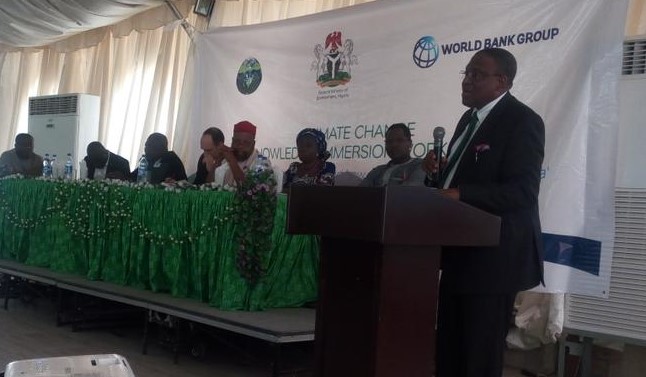
This was revealed by the Minister of State for Environment, Ibrahim Usman Jibril, in Abeokuta, Ogun State on Monday, February 13 2017 at the first leg of the Climate Change Knowledge Immersion Workshop series which was organised by the Ministry’s Department for Climate Change and the World Bank.

According to the minister, the guidance note on climate change has been developed “at the request of state governments to help in building capacity for effective state-level response to climate change” which, he added, necessitated the climate change knowledge immersion workshops.

The immersion workshop, he noted, is part of the Federal Government enlightenment and sensitisation campaign across the country to enhance awareness of the government’s policy on climate change.

Mr Jubril warned: “The impact of climate change that has befallen us is largely our making. If we fail to prevent runaway climate change, the earth will not disappear, we will.”

As part of the implementation of the Paris Agreement, the nation’s Intended Nationally Determined Contributions (INDCs) emphasised a conditional commitment of 45%, and an unconditional commitment to further reduce greenhouse gas (GHG) emissions by 20% by 2030.

To fulfill this commitment, the minister disclosed that the Nigerian government is set to implement the National Determined Contributions (NDCs) Sector Road-maps, which are targeted at reducing average global carbon emissions to two degrees Celsius.

According to him, “Nigeria is committed to economic transformation, which places inclusive green growth at the centre. Thus, the implementation of NDC is certainly the responsibility of Nigerian government to facilitate movement towards this new development path. However, we must take proper steps to educate and engage our people, develop and nurture collaborations and partnership between all of us – Federal Government, state governments, the legislature, private sector, civil society and the general public.”

This is what has led to the development the guidance notes on climate change for state governments.

Mr Jubril further adds that “to deliver on our NDCs pledges, there is a need to have an appropriate institutional arrangement that will not only mainstream climate change into its development priorities, but also encourage the implementation of mitigation and adaptation initiatives at all levels of governance for sustainable development.”

“We note that progress has been made at the federal level to effectively involve MDAs on climate change, much more needs to be done at state level,” he affirmed, hence the need for a guidance note on climate change for states.

He also warned that translating formal agreements for climate action can only be successful when “stakeholders, including the public, agree to cooperate and collaborate towards taking concrete actions that will reduce emissions and promote adaptation to climate change.”

“I believe the starting point of any successful action is solidly dependent on knowledge dissemination which should translate into adjusted behaviour of individuals, public and private sector.”

On the knowledge immersion workshop, he stated: “The workshop is important as it will enable knowledge dissemination and discussion towards climate-resilient and low-carbon development in Nigeria.

“There is no doubt, therefore that  discussions at this workshop will afford us some tools that we will need in our various states to develop practical strategies for effective policy making, planning, budgets and investments towards sustainable development.”

The workshop, which was hosted by the Ogun State Government, had officials from state Ministries of Environment from across the southern part of the country as well as students and the civil society.

Ending fossil fuel subsidies crucial for climate protection

0

A complete removal of subsidies for the production of fossil fuel today would result in a steady decline in greenhouse gas emissions between now and 2050 as more oil, gas and coal is left in the ground.

Ivetta Gerasimchuk
Ivetta Gerasimchuk of the IISD, who is lead author of the report

This is according to new study by the International Institute for Sustainable Development (IISD) Global Subsidies Initiative and the Overseas Development Institute (ODI) that provides what looks like the most robust assessment to-date of how global subsidies to coal, oil and gas companies contribute to climate change.

“It’s no secret that coal, oil and gas companies are extracting fossil fuel from fields that would be uneconomical without government support – what we call ‘zombie energy’,” said IISD’s Ivetta Gerasimchuk, lead author of the report. “However, we now we have a much better understanding of how these subsidies skew global energy markets, and ultimately influence the supply and consumption of fossil fuels.”

The study, “Zombie Energy: climate benefits of ending subsidies to fossil fuel production”, finds that a complete removal of subsidies to fossil fuel production globally would reduce the world’s emissions by 37 Gt of CO2 over 2017-2050. This is roughly the amount of carbon dioxide that would result from burning all proven oil reserves in the United States and Norway.

This is likely a low-end estimate. The study relies on a conservative estimate of global production subsidies in G20 countries ($70 billion annually), which serves as a proxy for the world. The researchers also assume relatively high prices for fossil fuels (up to $145 per barrel of oil by 2050), drawing on the International Energy Agency’s current policies scenario as a baseline. Market prices lower than the IEA scenario would mean that production subsidies have an even greater impact on emissions.

“The irony is that subsidies to the production of oil, gas and coal persist despite the growing popularity of carbon pricing and other measures to curb demand for polluting fossil fuels. It’s equivalent to governments providing handouts to cigarette companies while simultaneously taxing tobacco to protect public health,” said ODI’s Shelagh Whitley, co-author of the report.

Notably, the IISD and ODI study is the first measurement of both first- and second-order impacts of a removal of subsidies to fossil fuel production at the global level. Until now, analysts have focused on the first-tier effects – essentially, higher production costs, which result in reduced supply and consumption. Yet this triggers a chain of second-order impacts whereby market forces push fossil fuel prices, supply and, ultimately consumption and emissions in the opposite direction. On balance, however, the pull factor from subsidy removal is stronger than the push back from market forces.

“To address climate change we need all tools available, on both demand- and supply-side, and ending subsidies to fossil fuel production should be part of climate action by governments,” said Dr. Gerasimchuk. “Climate policies already include the reform of subsidies to the consumption of fossil fuels, the phase out of coal-fired power plants and support for technology innovation.”

“Production subsidy removal is not in competition with these actions – it is an essential part of the overall policy package.”

Climate change negatively impacting wildlife – Study

1

A team of scientists reporting in the journal Nature Climate Change say that negative impacts of climate change on threatened and endangered wildlife have been massively underreported.

GORILLAJPSUB-articleLarge
Species of the gorillas found only in Nigeria and Cameroon forests are at risk of extinction, as Nigeria’s wildlife is threatened by, among others, the negative impacts of climate change. Photo credit: Christophe Courteau / NPL, via Minden Pictures

In a new analysis, authors found that nearly half of the mammals and nearly a quarter of the birds on the IUCN Red List of Threatened Species are negatively impacted by climate change, with nearly 700 species affected. Previous assessments said only seven percent of mammals and four percent of birds on the Red List were impacted.

The paper reviewed 130 studies, making it the most comprehensive assessment to date on how climate change is affecting our most well-studied species.

Impacts for mammals are wide ranging and include a lower ability to exploit resources and adapt to new environmental conditions. For example, primates and marsupials, many of which have evolved in stable tropical areas, are vulnerable to rapid changes and extreme events brought on by climate change. In addition, primates and elephants, which are characterised by very slow reproductive rates that reduce their ability to adapt to rapid changes in environmental conditions, are also vulnerable. On the other hand, rodent species that can burrow, and thus avoid some extreme conditions, will be less vulnerable.

For birds, negative responses in both breeding and non-breeding areas were generally observed in species that experienced large changes in temperatures in the past 60 years, live at high altitudes, and have low temperature seasonality within their distributions. Many impacted species inhabit aquatic environments, which are considered among the most vulnerable to temperature increase due to habitat loss, fragmentation, and harmful algal blooms. In addition, changes in climate in tropical and subtropical forest areas, already exacerbated by habitat degradation, may threaten forest-dependent species.

Said lead author Michela Pacifici of the Global Mammal Assessment Programme at Sapienza University of Rome: “It is likely that many of these species have a high probability of being very negatively impacted by expected future changes in the climate.”

Co-author, Dr James Watson of the Wildlife Conservation Society (WCS) and University of Queensland, added: “Our results clearly show that the impact of climate change on mammals and birds to date is currently greatly under-estimated and reported upon. We need to greatly improve assessments of the impacts of climate change on species right now, we need to communicate this to wider public and we need to ensure key decisions makers know that something significant needs to happen now to stop species going extinct. Climate change is not a future threat anymore.”

The authors recommend that research and conservation efforts give greater attention to the “here and now” of climate change impacts on life on Earth. This also has significant implications for intergovernmental policy fora such as the Convention on Biological Diversity and the Intergovernmental Science-Policy Platform on Biodiversity and Ecosystem Services, and the revision of the strategic plan of the United Nations Framework Convention on Climate Change.

Government urged to review EIA law in states’ interest

1

The need for Nigeria to review its Environmental Impact Assessment (EIA) law has been emphasised in order to carry along the diverse stakes of the 36 states in the country due to the unique impact of climate change they face.

Professor of Chemistry at the University of Lagos, Akoka, Prof. Jide Alo, speaking at the Knowledge Immersion Workshop

Prof Babajide Alo, who was part of the drafters of the EIA law and guidelines in 1998, made the plea in Abeokuta, Ogun State on Monday, February 13 2017 at the first leg of the Climate Change Knowledge Immersion Workshop series which was organised by the Federal Ministry of Environment’s Department for Climate Change and the World Bank.

The Professor of Chemistry and erstwhile Deputy Vice-Chancellor of University of Lagos, Akoka, during his presentation at the workshop on impact of climate change, lamented that Nigeria’s EIA laws and guidelines were categorised according to projects, a situation that does not allow state governments to play different roles in projects which are neither national nor international.

He called for a new law to empower state governments to “give agreement and approval to whatever project the Federal Government is bringing to their states before the final approval by the Federal Government.”

This, he claims, will enable all the states to also start demanding EIA reports for all projects that are to be cited within their boundaries as is currently obtainable in Lagos State.

He said: “The Federal Ministry of Environment does not give approval for any project that does not satisfy the climate change requirements such as the super highway in Cross River State, which has stalled because of the its failure to show how the vast felling of trees will be ameliorated.”

It is important and mandatory to take climate change issues on board for all projects whether it is in construction sector, oil and gas or agriculture.”

As part of the required reviews for the EIA laws, Prof Alo enjoined the state governments to “have a good understanding of climate change impact in their states to enable them develop good climate change governance structure with clearly defined climate financing strategy in the annual budgets.”

Other suggestions by the expert include: integrated state action plan which derives inputs from state climate change policy and adaptation strategies with national climate change policy and response strategy.

According to Prof Alo, “small scale uncoordinated intervention will not adequately address the challenges of climate change, hence the need for more integrated approach.”

He also advised the states to set up a State Climate Change Fund for different sources to donate to for the setting-up of clearly defined mitigation and adaptation mechanism.

Amosun urges investors to embrace clean production technology

0

Governor of Ogun State, Senator Ibikunle Amosun, has appealed to existing and new investors to embrace clean production technology to enhance the sustainability of the earth.

Ibikunle-Amosun
Ibikunle Amosun, Governor of Ogun State. Photo credit: premiumtimesng.com

The governor made the submission in Abeokuta, Ogun State on Monday, February 13 2017 while declaring open the first leg of the Climate Change Knowledge Immersion Workshop series which was organised by the Federal Ministry of Environment’s Department for Climate Change and the World Bank.

According to the governor, “while we will always support all genuine efforts directed towards the development of our economy, we will also ensure that such does not have negative impact on the environment. This is why we also ensure that Environment Impact Assessment (EIA) comes before the approval of the project.”

Confirming the premium the administration places on the environment, Senator Amosun noted: “Our environment provides the foundation for all development efforts we have made so far, but as we continue to push forward our industrialisation agenda, we are not oblivious of the environmental cost as well.”

“As man tries to conquer his environment, he inadvertently creates a major challenge to his own existence,” he quipped, adding that “this is why we always encourage incoming investors to embrace clean production technology and provide plans for acceptable environmental management.”

Existing industries in the state – which is fast becoming a major industrial base due to its proximity to Lagos, the nation’s commercial capital – are also engaged to, “as much as possible, invest in emerging process technologies that do not only optimise resource utilisation but also feature very low environmental impact,” the governor said.

Therefore, the state has articulated a new and holistic environmental policy geared towards efficient and effective management of the environment. This includes dredging of river channels, cultivation of greenery on the medians alongside pedestrian walkways for an aesthetic environment, and recruitment of over 3,000 youths as Environmental Marshals by the state Ministry of Environment.

How government can motivate citizenry to conserve energy

0

With an estimated 8.7% increase in world’s population by 2020 and continual rise in industrialisation especially in the developed nations, it is expected that there will be an increase in global energy production to meet our daily demands; yet some of the major sources of energy are perilous to the environment.

africasolar
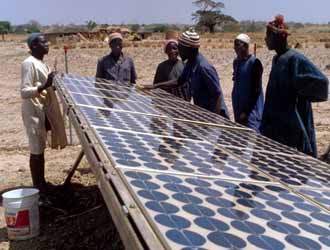
A solar panel being prepared for use. Renewable sources of energy are still quite expensive especially in developing countries. Photo credit: greenchipstocks.com

An annual CO2 emissions report published in 2015 by the International Energy Agency (IEA) shows there is a 40% increase in the concentration of CO2 in the atmosphere compared to the mid-1800s. Also, Robert Wilder and Daniel M. Kammen in an article explained how the continuous increase in CO2 emissions into the atmosphere can result in a rise in sea-level spurring inundation in residential areas. With the impressive endorsements of the Paris agreement in 2016, it is expected that every country should begin to work towards the reduction of greenhouse gasses (GHGs) and one of the ways it could become a reality is when people are motivated to adopt the culture of energy conservation.

The campaign for the adoption of energy conservation mechanisms has made many government agencies and private companies to seek renewable sources of energy, resulting in diminishing emissions despite rising GDP, showing decoupling of energy and economy in 2015. But renewable sources of energy are still quite expensive especially in the developing countries and, with a forecast of over 9.6% of the world’s population living in poverty; it proved unlikely to be accepted globally.

A large percentage of the world’s population is still ignorant about the risks and impacts of global warming, so creating awareness on energy conservation is a good start to motivate people. The government should be responsible for this since they have a well-established structure and can easily foster a partnership with non-profit organisations across the country that focus on environmental sustainability.

Creating energy conversation awareness programme can only be effective if they understand the core values of the target population.  Health and money are the most important core values scholars have highlighted to motivate people into conserving energy. Emily J. Gertz, an associate editor for environment and wildlife at TakePart, explained that people are less persuaded to conserve energy due to environmental risks such as ozone layer without personal benefits such as health/financial.

Lagos State in Nigeria, known as one of the most developing states with good business environment, initiated an energy conversation awareness programme in 2013 called “Conserve Energy, Save Money” monitored by the Ministry of Energy and Mineral Resources. Since there is a shortage of hydroelectricity supply in the state, most of the citizens use alternative sources of energy powered by fossil fuels to generate electricity in their homes and for their businesses.

The initiative focuses on encouraging the citizens to imbibe the culture of energy conservation while using money-saving strategy as the main benefit to motivate them. After the programme, there has been significant encouraging energy conservation in the state because the government knows most Lagosians are business-oriented people and will easily get motivated if they can link it with long-term cost reduction. This also motivates most of the private companies into conserving energy.

The government may wish to increase efforts in improving public transport links and begin to invest in biofuel or electricity-driven buses/trains. This will drive down per capita energy consumption (as transport is a huge contributor) and also reduce the number of petrol/diesel based vehicles on the road, hence greatly reduce emissions and ensure a benefit such as improved air quality and reduced congestion on highways.

Better energy efficiency methods should be adopted in public institutions and adherence to them should be mandatory. Likewise, better building regulations should be designed to improve the energy performance of new structures. For any new developer of the residential or commercial property, energy efficiency should be a criterion to determine ease of getting license/permission to construct. Inspections should follow up to ensure adherence to regulations. Design new connections to the existing grid that allows individuals to sell electricity. Someone with the private capital to build a small-scale solar plant should be able to sell their generated electricity. People will consume less electricity if their energy savings can serve as a source of income.

Energy-related CO2 emissions released during domestic activities such as cooking cause about four million deaths per year and over 500,000 are from childhood pneumonia. Yet about three billion people still cook their meals every day using wood fuels because cleaner fuels for cooking are not affordable for the low-income large population. The government can motivate the people by subsidising cleaner fuels such as LPG and biofuels; making them cheaper, put strict environmental laws to restrict cutting down of trees to produce wood fuels and encourage the citizens on the benefits of using cleaner fuels for cooking in their households.

In conclusion, since human beings are subjective in nature, they can only be motivated to conserve energy if it is relevant to their personal wellbeing and hence standard of living; and also if government provides an enabling environment to have easy access to products or infrastructures that lead to the lesser production of CO2 and other GHGs.

By Kassim Kamal-deen