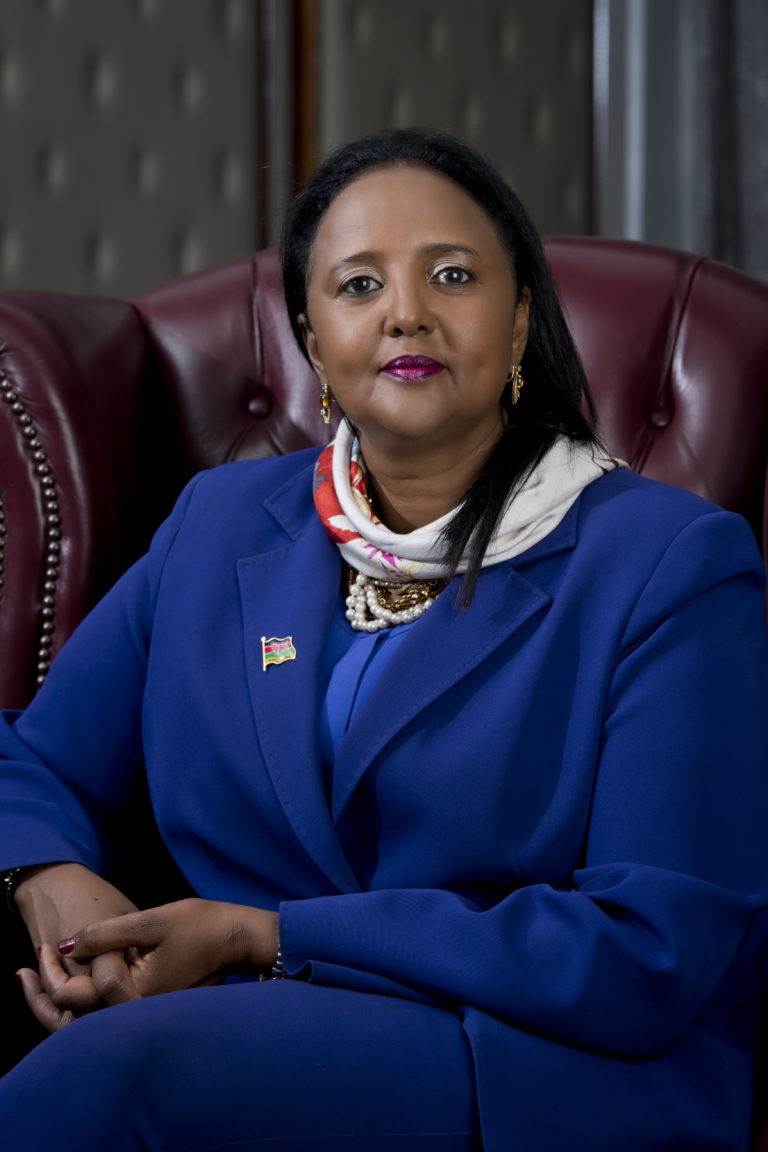
In a recent interview, Ambassador Dr Amina Mohamed sets out her case in her candidacy for the position of African Union Chairperson that will be decided at the forthcoming AU Summit at the end of this month.
Ambassador Amina Mohamed, Kenya’s Minister of Foreign Affairs, and AU Chairperson Candidate
“I am a tough, but fair, negotiator and what I enjoy doing most is building consensus, unifying people and sticking on message to obtain optimum outcomes,” she says.
Ambassador Mohamed, Kenya’s Minister of Foreign Affairs, is confident her track record stands her in good stead to take on the role as chairperson. Her experience as a chief negotiator at the highest level, be it at the WTO, at the UN Environment Programme (UNEP) or at GATT (the General Agreements on Tarrifs and Trade) have shown she can get different vested interest to find a mutually beneficial position, bringing about consensus for the benefit of the majority.
She sees herself as a passionate Africa and pan-Africanist always fighting Africa’s corner at international fora, in some cases as a lone voice for the developing world. As well as building consensus, which is the first step in any discussion, she says that her strength comes from actually getting things done.
Implementation, she says, is where she will focus her energy, so that the AU fulfils the expectation of the people of the continent.
“We need to implement, rather than simply make declarations. Implementation has been woeful – my mantra will be implementation, implementation, and implementation,” she notes, adding that her strategic focus will be on doing better with existing resources.
In order for AU reforms to work, she says, “You must bring everybody along. That is why experience in reaching consensus is vital to this job.”
In building equal partnerships for the delivery of Agenda 2063, Africa’s ambitious roadmap for sustainable socioeconomic development, Ambassador Mohamed says that a different conversation is needed in order to confront some of the most complex global challenges facing Africa.
Amb. Mohamed has received the endorsement from a number of private sector leaders including James Mwangi, CEO of Equity Bank and Josphat Mwaura, CEO & Senior Partner at KPMG in Kenya. They called for a more private sector approach from the AU, which is something that she has been advocating in her manifesto and in her statements.
Amb. Mohamed has also been endorsed by young leaders including Ms. Mariéme Jamme, the Tech Entrepreneur, Activist and a Young Global Leader recognised by the World Economic Forum for her activism work in empowering and investing in young girls and women.
The other candidates for Chairperson of the African Union Commission are: Botswana’s Pelonomi Venson-Moitoi, Chad’s Moussa Faki Mahamat, Equatorial Guinea’s Agapito Mba Mokuy, and Senegal’s Abdoulaye Bathily.
The European Investment Bank (EIB) has said that it will stick to its target of investing around $100 billion in climate action over the next five years, the largest climate finance contribution of any single multilateral institution, and is already exceeding its own targets for climate finance.
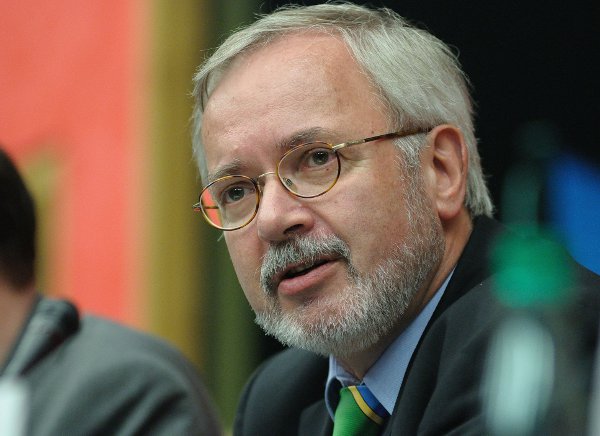
EIB President, Werner Hoyer
EIB President, Werner Hoyer, made the disclosure while presenting the EIB Group annual results at a news conference in Brussels, Belgium, on Tuesday, January 24, 2017.
The contributions of financial institutions such as the EIB are crucial to enable countries to reach their central target under the Paris Climate Change Agreement, which is to keep the global average temperature rise to well below 2 degrees Celsius compared to pre-industrial levels.
The bank announced this week that it has overshot its overall climate finance target for the seventh year running, providing over 19 billion Euros. This represented about a quarter of the bank’s total lending in 2016.
In support of the Paris Agreement, the European Investment Bank has already committed to increase its lending for projects in developing countries to curb greenhouse gas emissions and to build resilience to climate change to 35% of total lending by 2020.
EIB funding supports sustainable projects in over 160 countries and acts as a catalyst to mobilise private finance for climate action, encouraging others to match their investment.
The EIB is self-financed: lending activities are mainly funded via bond issuance in the international capital markets. Despite periods of market uncertainty last year, the Bank successfully raised 66.4 billion euros from investors around the world. Ten years after pioneering the first Green Bonds, they remain the largest issuer, with over 15 billion euros raised for climate projects since 2007.
In the latest demonstration of institutional asset owners’ commitment to climate action, New York State Common Retirement Fund (CRF), the third largest public pension fund in the US with $184.5 billion in assets, has joined the Portfolio Decarbonication Coalition (PDC).
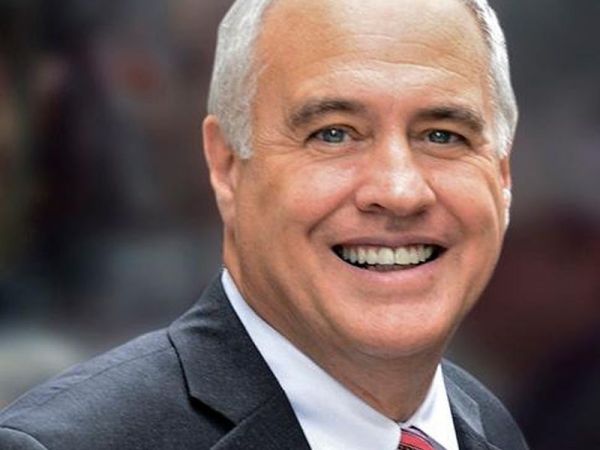
New York State Comptroller, Thomas P. DiNapoli
The CRF is the first major US pension fund to join the Coalition’s 28 members, who between them control over $3 trillion in assets and have pledged to gradually decarbonise a total of $600 billion by designing investment portfolios with a smaller climate change impact.
One year ago, New York State Comptroller Thomas P. DiNapoli, trustee of the CRF, announced plans at the Paris climate talks to position the Fund for a low carbon future. In partnership with Goldman Sachs, the CRF developed a low emission index, which steers assets away from large carbon emitters and increases investments in carbon-efficient companies.
“Climate change is one of the greatest risks to our pension fund’s portfolio,” DiNapoli said. “We’re reviewing and adjusting our investments to reduce that risk and take advantage of the growing opportunities of a lower carbon future. Investors are playing a key role in fostering a cleaner global economy. The PDC gives us the opportunity not only to highlight our own activities in this regard, but also to share insights and challenges with counterparts around the world.”
“Investments with more carbon translate to higher risk, not just from potential carbon fees or pricing, but also from shifts in technology that can leave high carbon assets stranded,” said Erik Solheim, Head of UN Environment Programme (UNEP), whose Finance Initiative is a co-founder of the PDC.
“The success of the Portfolio Decarbonisation Coalition is a clear signal to both governments and companies that climate change, and the corporate response to it, is critical to shareholder value and investor interests going forward,” said Solheim.
CRF’s action comes at a time of intense efforts by the financial community to prevent market shocks from the widespread mispricing of climate change risks.
Last month, the G20’s Task Force on Climate-related Financial Disclosures co-chaired by former New York Mayor Michael Bloomberg and Bank of England Governor Mark Carney recommended full and standardised disclosure by companies and investors of financial risks and opportunities from climate change.
Other investor members of the PDC include major European funds such as France’s ERAFP ($26.9 billion) and FRR ($38.5 billion), the Dutch giant ABP ($481.1 billion) and the world’s largest insurance company, Germany’s Allianz Group.
“We are seeing significant international collaboration among leading asset owners to push on climate issues,” said Lance Pierce, President of CDP North America, the international not-for-profit organisation holding the world’s largest collection of self-disclosed corporate environmental data and one of the Portfolio Decarbonisation Coalition organisers.
Pierce added, “Climate change is requiring transformational changes in the economy in order to safeguard assets and supply chains, and presents a significant economic growth opportunity. The US renewable energy sector employed 769,000 people and the solar industry grew 12 times faster than overall job creation in 2015. Investors are realising they can reduce carbon, reduce risk and generate steady financial returns as well as jobs.”
Mats Andersson, former CEO, The Fourth Swedish National Pension Fund (AP4), co-founder PDC, said: “We welcome New York State CRF to the coalition. Their commitment to manage their funds through sustainable investments and active ownership shows important leadership at a vital time for the transition to a low-carbon economy.”
Hugh Lawson, Global Head of ESG and Impact Investing, Goldman Sachs Asset Management, added: “We are pleased to be CRF’s strategic partner as they consider the risks, and seize the opportunities, presented by the world’s evolving relationship to carbon. CRF has been a leader among institutional investors in the thoughtful use of CDP’s data resources and will be a meaningful contributor to the Portfolio Decarbonisation Coalition.”
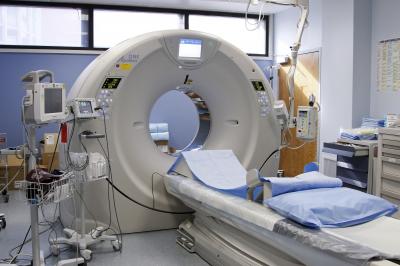
The Benue State Government has been asked to expedite action on completing the Cancer Screening Centre under construction at the Pauline Makka Women Centre, Makurdi in order to harness its health and economic benefits.
A cancer screening machine
The Benue State House of Assembly, which made the call on Tuesday, 24 January 2017 during plenary in resolutions after debate on the report of the House Standing Committee on Women Affairs and Social Development, was on a familiarisation visit to the ministry.
Furthermore, the House, while frowning at the sorry state of the State Rehabilitation Board, Apir called on the Bureau for Local Government and Chieftaincy to ensure that local government councils remit their counterpart fund to the Board as stipulated by the Edict setting it up so as to make it live up to its responsibilities.
In the lead debate, Chairman of the House Committee on Women Affairs and Social Development, Matthew Ire (Oju II/PDP), who noted that facilities under the ministry were in a sorry state, revealed that the Cancer Screening Centre which has been roofed has gulped N25 million out of the initial contract sum of N1.3 million.
He stressed that the committee findings show that, due to increase in prices of building materials among others, the contract which was awarded in 2010 with construction starting in January, 2011 is undergoing review.
Mr Ire added that the Cancer Screening Centre was the first of its kind in the North-Central Zone and has to be completed to save lives in the state and beyond.
In his submission, Chairman, House Standing Committee on Health, Dr Adoga Onah (Oju I/PDP), who noted that the cancer screening centre in the state would be of immense benefit and help to the people, stated that facilities that could generate more revenue for the state abound under the Ministry of Women Affairs and Social Development.
To this end, he charged government to source for funds to complete the cancer screening centre, adding that it is regrettable that government initiates projects but end up being abandoned halfway.
Ruling, Speaker, Mr Terkimbi Ikyange (Ushongo/APC) who commended the committee for its oversight function, charged them to investigate more into operations of the ministry and her out-stations as it is essential to the growth of women and social development.
The Ushongo legislator noted that, in the face of the current recession, it is expedient for the state government to explore all ways to improve her Internally Generated Revenue (IGR) and avenues such as the cancer screening centre will come handy.
France has issued its first “green bonds” with a record seven billion euro ($7.5 billion) sale, paving the way for the establishment of a genuine market in renewable energy bonds.
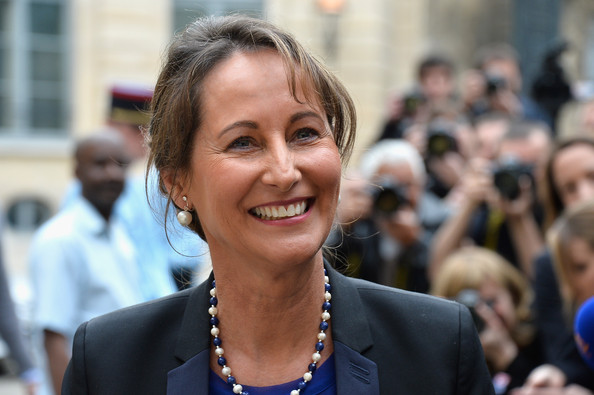
Segolene Royal, Minister of Environment of France and COP21 President. Photo credit: zimblo.com
Proceeds from Tuesday’s (24 January, 2017) sale of the 22-year bonds will be used to finance projects to address climate change.
Credit Agricole-CIB, which was one of the banks handling placement of the bonds with institutional investors, said it was a “historic” event for the green bonds market because of the size and long maturity of the loan.
The move demonstrates France has “a credible and robust framework to implement the Paris Agreement (on climate change),” Environment Minister, Segolene Royal said.
The bonds’ coupon was set at 1.75 percent, an interest rate comparable to conventional borrowing on the same timeframe.
The issue shows France is able to finance expenditure on green projects at the same price as traditional borrowing, Finance Minister, Michel Sapin, told reporters.
The initiative was first announced in April 2016 by President Francois Hollande who has championed his country’s role as a leader in energy transition.
Poland was the first country to enter the green bond market with a more modest 750 million euro issue in December. Previously they had only been issued by companies or finance institutions such as the World Bank.
But because of its size and maturity, the French transaction marked the entry of states into the green bonds market, stressed Anthony Requin, CEO of Agence France Tresor, which manages French government debt.
“By becoming the first country to issue a sovereign green benchmark bond, France has confirmed its role as a driving force for the implementation of the goals of the December 2015 Paris Climate Agreement,” AFT said in a statement.
The issue, which was reserved for institutional investors such as banks and pension funds, was oversubscribed with total demand exceeding 23 billion euros.
Thirteen global car and energy companies have teamed up to promote hydrogen as a clean fuel, which can power the world toward its goal of decarbonising its energy supply.
Toyota FCV hydrogen fuel cell concept car. Toyota is among 13 members of the new Hydrogen Council which will be pushing for a greater role for hydrogen in the world’s energy mix
Hydrogen technology is well understood but for it to work on the global stage it can’t be enacted piecemeal, according to the Hydrogen Council, which was launched this week at the World Economic Forum in Davos. Together, the companies are investing around €1.4 billion (£1.1 billion) annually in hydrogen, but governments need to factor hydrogen into policy and regulatory frameworks, says Pierre-Etienne Franc, of industrial gas group Air Liquide, and secretary to the council. The group, which includes Daimler, Toyota, Shell and Total suggests hydrogen can play a role in every sector which currently relies on fossil fuels.
Hydrogen can be produced from the electrolysis of water or by steam reforming of methane. The former is less efficient but could be a way to harness excess renewable energy, which could be stored as hydrogen – providing a buffer for intermittent daily and seasonal electricity generation.
In Germany, in a scenario where 90% of electricity is generated by renewables by 2050, the projected surplus could fuel half the country’s cars with hydrogen. Storage demonstrator projects are coming on stream in many parts of the world, and industry already has experience of storing hydrogen underground. The cost of storing hydrogen in underground salt caverns is projected to fall to about one third of the cost of pumped hydro storage by 2030, according to a report commissioned by the council. Hydrogen could also be used for heating. In the UK, a £7 million Ofgem funded scheme to pump hydrogen into Keele University’s gas network is due to begin this year.
Presently, most hydrogen is produced using steam reformation of methane which produces carbon dioxide that would need to be captured to make the technology emissions free. While hydrogen produced this way wouldn’t be suitable for fuelling vehicles, the Hydrogen Council says carbon capture and storage (CCS) technology in tandem with hydrogen has the potential to decarbonise energy intensive sectors like cement and steel.
Jamie Speirs at the sustainable gas institute at Imperial College London says a hydrogen economy could be “the saviour for CCS – providing a healthy timeline for investments while other technologies get off the ground”. “Hydrogen makes a lot of intuitive sense but it’s very difficult to say what the whole system will cost,” he adds.
Franc anticipates that putting in an infrastructure for hydrogen fuel cell vehicles – of which there around 3000 worldwide so far – in a country the size of France or Germany would cost around €1.5 billion (£1.3 billion). He points to a joint venture with gas giant Linde, where Air Liquide is working to create a nationwide network of 400 hydrogen fuel stations in Germany which will cost around €400 million, and serve several hundred thousand cars.
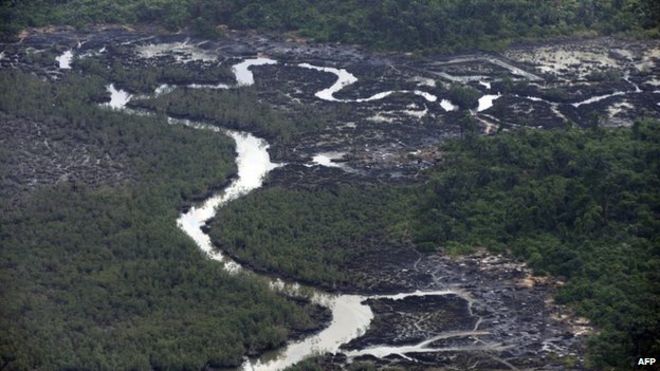
A massive oil spill arising from two (underwater and surface) crude oil leakages from pipelines along the Nembe South, Nembe Local Government Council Area of Bayelsa State is raising food security concerns in the locality.
Creeks devastated as a result of oil spill at Nembe Creek in Niger Delta
This is because the indigenes of the affected five communities and fishing settlements are increasingly unable to eke out a living as fishing and farming activities have been grounded to a halt, amid the threat of water poisoning. The facility is owned by the Nigerian Agip Oil Company (NAOC).
It was gathered that while the under water leakage was discovered by fishermen close to the Brass River, the surface leakage was unveiled in the mangrove forest located a mile away from the Nembe Road.
A joint inspection team of local indigenes and concerned environmental groups led by the Coordinator of the Niger Delta Development Monitoring Group and former Chairman of Nembe Oil and Gas Committee, Nengi James, and the Public Relations Officer of the Sabatorou Youth Group, Justice Andrew, visited the sites of the spillages.
James, who confirmed the development, said the visit to the sites of the leakage was to get video and pictorial evidence. “The team suspected that the spillage occurred some days before discovery by indigenes. And Agip is yet to attend to the cries of the communities. The spillage has stopped aquatic and farming activities,” he said, adding:
“Agip has refused to do containment and clean ups. We are calling on government and appropriate organisations to condemn the attitude of Agip to the host communities. We also recommend that the damaged pipelines be replaced and necessary compensation paid to indigenes of affected communities.”
Prominent research and development agencies have formed an intra – African collaboration in an effort to fund, conduct and facilitate research projects that will effectively target the continent’s shared challenges in the area of maternal, neonatal and child health (MNCH).
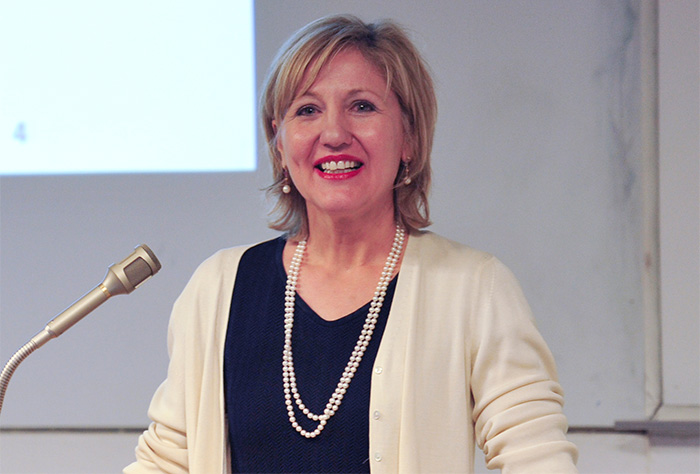
Prof Glenda Gray, South African Medical Research Council president
Estimates show that more than half of the global maternal deaths and more than three-quarters of neonatal deaths occur in sub-Saharan Africa. Although South Africa has in the past decade made some progress in reducing maternal and child mortality, the levels remain unacceptably high. The leading causes of death in children below five years in South Africa include HIV/AIDS, diarrhoeal disease, lower respiratory infections, birth asphyxia, and injuries.
“We encourage cross-border projects that are designed to tackle the continent’s shared maternal health challenges,” says President and CEO of the SAMRC, Professor Glenda Gray. “These should enable the development of management and analytical tools as well as intervention packages that will effectively change the tide in maternal and child mortality on the African continent.”
The partnership between the South African Medical Research Council (SAMRC), the African Academy of Sciences and the NEPAD Agency’s Alliance for Accelerating Excellence in Science in Africa (AESA) will work to create local and global partnerships and accelerate knowledge generation on the African continent.
It will fund Grand Challenges Africa Round 1 Innovations Seed Grants (ISG) through its Grand Challenges South Africa scheme to support innovators based in South African universities, public research organisations and nonprofit organisations.
Successful applicants will be awarded up to $100,000 as part of the first round of the Grand Challenges Africa Innovation Grants, which was launched in November 2016 under the Grand Challenges Africa scheme. The Grand Challenges Africa Innovation Grants will run for the next five years and comprise of the Grand Challenges Africa Innovation Seed Grants (GCA-ISG) and provide funding for scaling up innovations.
“We are pleased to be partnering with the SAMRC to expand the GC Africa Innovation Grants,” said Grand Challenges Africa Programme Manager Dr Evelyn Gitau. “The partnership allows for more innovators to be funded in the first round of the grants ensuring a stronger and concerted effort to find solutions for Africa’s challenges, particularly to improve the survival and health of mothers, their newborns and young children.”
As the global economy moves towards implementation of its new climate goals, the world’s largest purchasing organisations are using their buying clout to drive down emissions across their supply chains.
Paul Simpson, chief executive officer at CDP. The CDP report reveals that reductions equivalent to 434 million tonnes of carbon dioxide – more than France’s total greenhouse gas (GHG) emissions in 2014 – were achieved by suppliers worldwide in 2016
A report prepared by CDP (formerly Carbon Disclosure Project) titled: “The Missing link: Harnessing the power of purchasing for a sustainable future” and written in partnership with BSR and the Carbon Trust, reveals that reductions equivalent to 434 million tonnes of carbon dioxide – more than France’s total greenhouse gas (GHG) emissions in 2014 – were achieved by suppliers worldwide in 2016.
The reductions were disclosed to CDP, the not-for-profit global environmental data platform, at the request of 89 of the world’s largest purchasing organisations, including BMW, Johnson & Johnson, Microsoft and Walmart. These 89 big buyers wield a combined purchasing power of $2.7 trillion.
The Paris Agreement on climate change, now in international law, requires global GHG emissions to be reduced to net zero well before the end of the century. With supply chains responsible for on average four times a company’s direct emissions, they are a critical focus area for global corporations seeking to avoid the risks and capitalise on the opportunities presented by the low-carbon transition.
The new report – which includes commentary from McKinsey & Company – also reveals the names of the 29 companies awarded a position on CDP’s first ever supplier engagement leader board. Selected from over 3,300 companies that were assessed, they are recognised as leaders for their work with suppliers to reduce emissions and lower climate-related risks in the supply chain.
They include:
Braskem S/A: The Brazilian petrochemical company runs targeted workshops with its suppliers, which provide training and technical support on identifying opportunities to reduce emissions and lower costs. Nearly 44% of emissions outside Braskem’s direct control (scope 3) are now reported to the company.
Hewlett-Packard: The American IT company has helped its suppliers avoid 800,000 tonnes of CO2e emissions and save more than US$65 million through development of energy-saving action plans targeting local efficiency improvements.
Royal Philips: The Dutch technology company identifies so-called ‘risk suppliers’ that it targets for participation in its numerous supplier sustainability programs. It has also developed a tool to help suppliers with less experience in disclosure to quantify their carbon emissions.
Dexter Galvin, Head of Supply Chain, CDP, said: “We congratulate the 29 leading companies that are using their buying clout to drive change across their supply chains. Companies have a critical role to play in delivering on the Paris Agreement, and as well as setting their own house in order, it is essential they turn their attention to the risks and opportunities outsourced to their supply chain.”
“By harnessing their purchasing power, big buyers have the potential to deliver the large-scale, rapid change that is needed and lead the way towards our sustainable future.”
Nicola Kimm, Head of Sustainability, Philips Lighting, said: “We are delighted to be recognised as global leaders for our work driving down emissions and improving efficiency in our supply chain. Lower emissions in the supply chain isn’t just about helping the environment, it’s a business imperative which boosts our competitive advantage and builds our resilience for a low carbon future.”
The report, which analyses climate and water-related data disclosed by more than 4,300 companies, also indicates that the sustainability commitments and practices of leading organisations are not being replicated at scale downwards through the supply chain. Despite a 20% increase since 2015 in the number of big buyers requesting climate and water-related data from their suppliers, this is not translating into downstream action, with only 22% of responding companies currently engaging with their own suppliers on carbon emissions and 16% engaging with their suppliers on water use.
Common barriers to engagement include companies’ lack of experience in calculating and managing their own emissions, a perceived lack of leverage over business partners, costs associated with managing an engagement programme and an absence of mandatory requirements from customers or regulation.
Where companies are proactively engaging with their suppliers, they face a serious lack of transparency, with nearly half (47%) of suppliers not responding to their customers’ requests for climate and water-related disclosure.
The data also reveal that suppliers are failing to capitalise on the myriad opportunities presented by the low-carbon transition. While they reported a combined $12.4 billion in savings from emissions reduction projects, fewer than half (47%) have set climate targets and just 34% reported achieving a decrease in emissions in the past year. Only one quarter of respondents are realising climate opportunities by enabling their own suppliers to reduce emissions, or growing revenue through sales of low-carbon products or services.
Tara Norton, Managing Director, BSR, said: “Large buyers have a tremendous opportunity to catalyse supplier climate action, both through addressing the drivers of inaction and by elevating and rewarding those suppliers that demonstrate leadership. This year’s report provides practical insights on how buyers can partner with suppliers for mutual benefit, including facilitating access to tools and resources that enable emissions reductions, providing incentives for good performance, and supporting suppliers to improve climate risk management, including setting science-based targets.”
The report contains a four-part framework, developed by the Carbon Trust, for companies to catalyse change within their supply chains. The framework sets out the journey to cascading sustainability throughout the supply chain, from understanding the risks and opportunities, to planning and taking action to embed sustainability within procurement processes.
Tom Delay, Chief Executive, Carbon Trust, said: “Supply chain is the next frontier in sustainability. Managing the environmental impact of your own operations is expected behaviour. But the greatest opportunities for reductions are typically outside of direct operational control, in the supply chain. While some are showing what can be done today, the majority do not yet have a clear understanding of how to measure their impact or find the value in working with suppliers. Large public and private sector organisations can deliver change at the scale and speed required to address the challenges of climate change and resource scarcity. We hope that our insight and the examples from the leaders engaged with CDP help to accelerate the shift to a more sustainable, low carbon economy.”
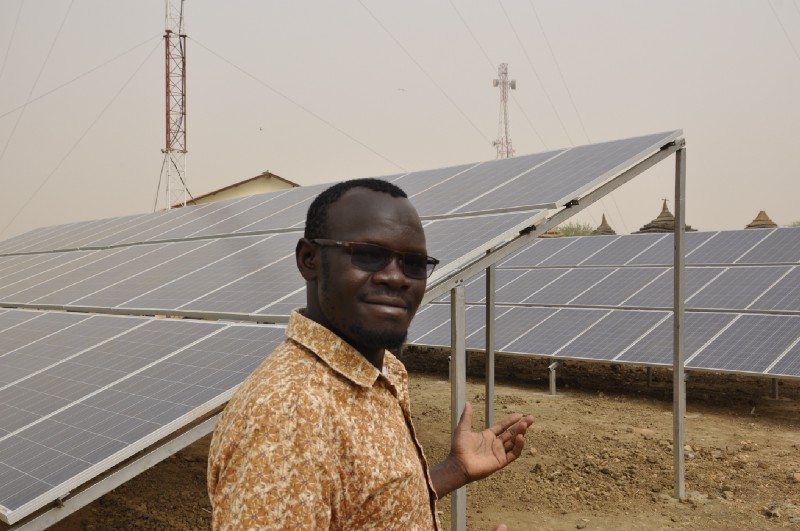
Mayardit FM in South Sudan runs entirely on solar power. Some of the engineers from the station recently traveled to the UK to share their skills and knowledge with the wider radio community, at Radio TechCon. Ann Charles of Internews reports about the station and the experience of the engineers at the conference
“Solar has worked very well in Turalei,” said Issa Kassimu, The Radio Community’s electrical engineer, “and with the right design, it can work here, too!”
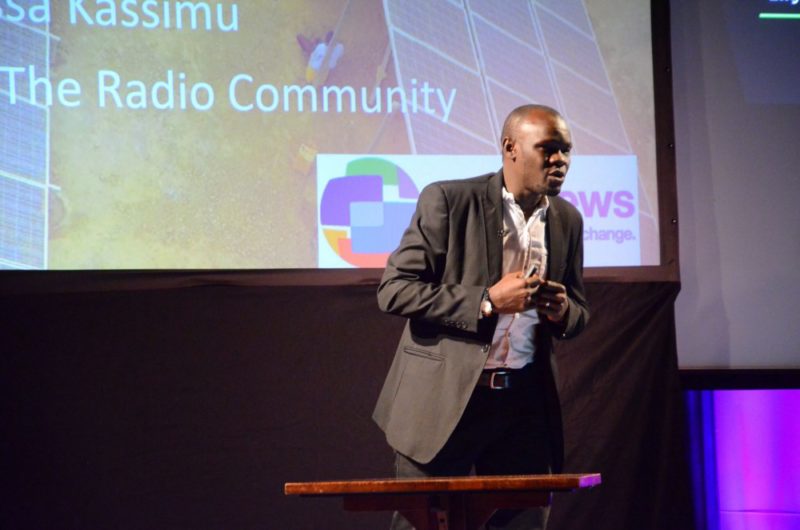
Issa Kassimu addresses the Radio TechCon audience. Photo credit: Vincent Lo/Radio Today
Issa was addressing Radio TechCon, the UK radio industry’s annual technical and engineering conference. Nearly 150 attendees listened as Issa described his project converting Mayardit FM, a station in Turalei, South Sudan, to 100% solar power.
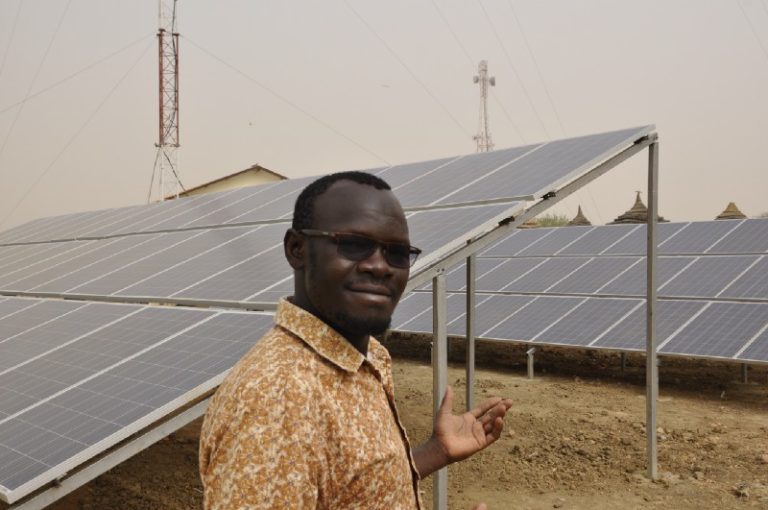
As of March 2016, the station has been running exclusively on sunshine, with broadcast hours extended from eight to 16 hours a day. So far, it has had no downtime.
“The sun charges the batteries,” explained Issa. “The batteries then give power to the station’s equipment and transmitter. If the batteries are full, the sun powers the equipment directly. When there is no sun, the batteries take over.”
“We can run for 24 hours with no sun,” he added.
Solar panels at Mayardit FM. Photo credit: Internews
There is little grid electricity in South Sudan, which means that stations have to rely on expensive generator power. As is typical for stations in the country, Mayardit FM had long faced challenges related to high fuel costs, unpredictable fuel availability, and intensive maintenance. Sometimes the station would be off-air for several days.
Issa’s project created the first 100% solar-powered station in The Radio Community, a network of community radio stations across South Sudan supported by Internews and funded by USAID.
“The annual running costs are significantly cheaper,” Issa explained to the audience. “When there was fighting elsewhere in the country, we were able to stay on the air, as we didn’t have an interruption in the fuel supply.”
As South Sudan is near to the Equator, it seems an obvious location for an experiment in solar power.
However, Issa was keen to explain that solar can be used anywhere in the world – so long as stations plan the right design.
“Even in a country like the UK where it rains a lot of the time, it is still possible,” he informed the audience.
“You need to calculate every piece of equipment which might be used, and include some headroom. Don’t forget the necessary things like a kettle – you will still need to drink tea, as it is cold here!” he joked.
“You can also opt for a hybrid system, where you use half solar and half grid or generator power,” said Issa. “Solar is for everyone!”
It is not the first time that The Radio Community has been represented at TechCon. Last year, Senior Broadcast Engineer Steven Lemmy and Eye Radio Studio Manager James Kwaje spoke at the conference about the difficulties faced by broadcast engineers in the world’s newest nation.
Once again, the contribution from South Sudan was considered a conference highlight. One delegate remarked, “I remember seeing the talk last year about how hard it is to stay on air with the heat, fighting and problems with electricity supply. It’s wonderful to see that the creative engineers have returned with a way to solve the energy problem.”
As well as giving a presentation, Issa and Steven were able to hear talks on the future of radio from British academics and broadcasters, including the BBC. They also visited the BBC World Service, and conducted factory acceptance testing on the new playout system for The Radio Community.
Internews released an in-depth report on the solar-powered transmission, co-authored by Issa. As well as the background to the project, it includes technical specifications, costings, and a section on user-centered design. There is also a detailed “how-to” manual, which can be used by anyone interested in designing a solar system and weighing its feasibility for their own radio station.