35.6 C
Lagos
Saturday, February 28, 2026
Home Blog Page 2006

Brazil: Activists flay sale of oil blocks, energy policy inconsistency

0

Protesting at the Brazilian National Oil and Gas Agency headquarters, activists pressure the government for more transparency and responsibility, and highlight the impacts of oil and gas exploration on climate, biodiversity and traditional communities
Brazil
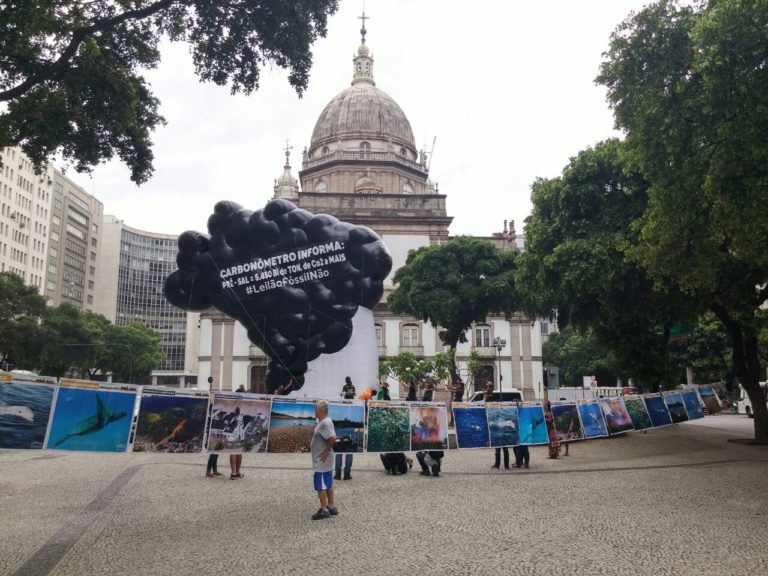
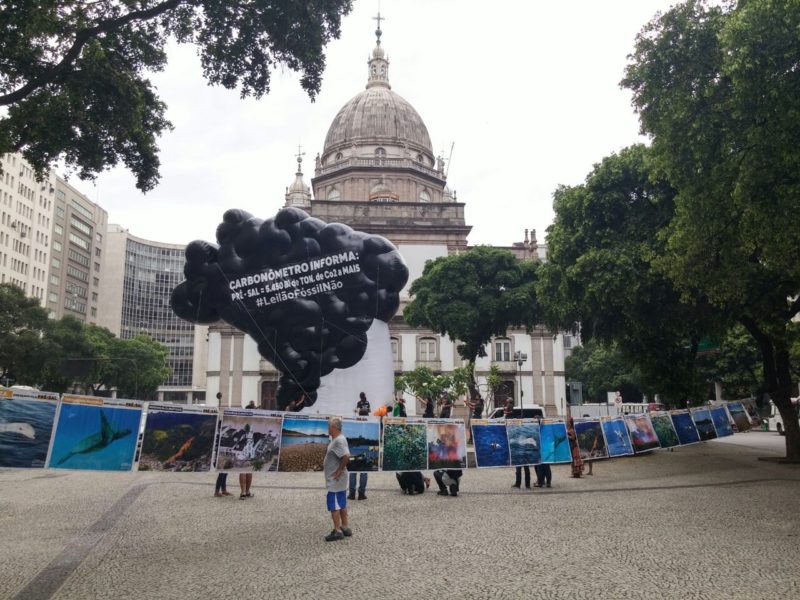
Activists protesting in front of the headquarters of the National Oil and Gas Agency (ANP), in Rio de Janeiro

The Brazilian government’s current move to reopen the oil market as an alternative to raise the country’s economy has rekindled criticism from civil society and raised questions about Brazil’s ability to meet the goals set out in the Paris Accord.

Activists from 350.org Brazil protested on Thursday, October 26, 2017 in front of the headquarters of the National Oil and Gas Agency (ANP), in Rio de Janeiro, demanding greater transparency and dialogue with the communities directly affected by the blocks, and for more coherence with regard to national energy policies.

On Friday November, 27, ANP is set to hold two more rounds of bidding for oil and gas exploration; this time, in the deep pre-salt layers. In total, eight areas in the Santos Basin, located between the states of Rio de Janeiro and São Paulo, will be auctioned off during the 2nd and 3rd Rounds.

Activists took the demonstration to one of the largest avenues in the centre of Rio, and inflated a giant black balloon to represent the pollution and amount of carbon that will be emitted from the exploration.

“Our true wealth is at stake here,” said Nicole Figueiredo de Oliveira, director of 350.org Brazil and Latin America, pointing at a photo exhibition that also formed part of the demonstration. The exposition showed the threatened species in the areas of the blocks and portrayed natural disasters that could be aggravated by the intensification of the climatic changes caused by these activities.

“By prioritising investments in fossil fuel exploration and ignoring the direct impacts on biodiversity, the Brazilian government is showing total disregard for the climate, and for the promises they’ve made under international commitments like the Paris Accord. Worse, by opening new doors for companies that have been exploiting our resources indiscriminately for decades, they disrespect the most fundamental rights of diverse populations. No more walking backwards! We want a fair transition to a renewable energy-powered future, free from the trail of destruction that accompanies the fossil fuels!”

There are 10 companies confirmed for the 2nd Round and 14 for the 3rd Round. Many of them are the same companies interested in the blocs of the 14th Round, which happened exactly one month ago. Among them are big names in the international oil sector, such as Shell, ExxonMobil, Repsol, Petronas and BP. Exxon, the undisputed winner of the latest auction, promises to enter with force again in the next rounds in an attempt to replenish its reserves, which have slumped in recent years on account of the drop in the price of the oil barrel.

The pre-salt areas are offered under a profit-sharing regime, where part of the profit from production goes directly to the Union. These will be the first auctions after the approval of a law that releases the obligation of Petrobras’ participation in at least 30% of the activities in these areas. This time, Petrobras opted to be an operator with a 30% stake in the blocks of Campo de Sapinhoá, to be offered in the 2nd Round, and also with 30% in the blocks of Peroba and Alto de Cabo Frio – Central, both in the 3rd Round.


Emissions and risk to biodiversity

Estimates indicate that the entire pre-salt layer may hold some 80 billion barrels of oil in reserves, placing Brazil among the world’s top ten producers. But the exploitation of these reserves and the burning of all that fuel will also raise the country’s position in the ranking of the biggest climate villains as it would significantly increase greenhouse gas emissions.

Just two of the blocks offered in the 3rd Round – Peroba and Pau Brasil – could release about 5.4 billion tons of CO2 equivalent in the atmosphere. In addition, the oil extraction mechanism alone already causes a lot of damage. The deep sea counts on a great concentration of carbon. Retained in the pre-salt layer for millions of years, on a geological scale, the carbon monoxide will be transferred to the surface in just a few decades. The emissions estimated only for this amount of CO2 present in the reservoirs exceed 3 billion tons.

In addition to putting the country at the top of the list of the world’s largest polluters, exploring the deep layers of the pre-salt also endangers many marine species, such as the Jubarte and Cachalote whales, and one of the symbols of the state of Rio, the Grey Dolphin (‘Boto-cinza’). “There are several overlapping of the blocks with the habitats of endangered species, which are highly sensitive to sound waves and can be strongly affected by seismic tests,” said Nicole Oliveira.

Hydrocarbon exploration and production activities may also result in a considerable intensification of conflicts with the fishing fleets. Not to mention the risk of a spill accident on the high seas, whose impact may reach a much larger area than the polygon of the blocks, including coastal areas, where other endangered species are also found.

“At a time when there is so much talk about sustainable development and the use of clean energy, it is unacceptable for the Brazilian government to take a completely contradictory stance and insist on investing in a process that brings so much damage. Following this path would make it simply impossible for Brazil to reduce its carbon emissions in 30% by 2020, as promised. This goal requires immediate abandonment of fossil fuels. But it seems that the Brazilian government has forgotten that part,” said Juliano Bueno de Araujo, climate campaigner at 350.org Brazil and founder of the No Fracking Brazil Coalition.
Climate change: African youths urged to enhance participation in advocacy

0

African youths have been urged to increase their participation in programmes aimed at reducing the effects of climate change on the environment.

AFRIYOCC
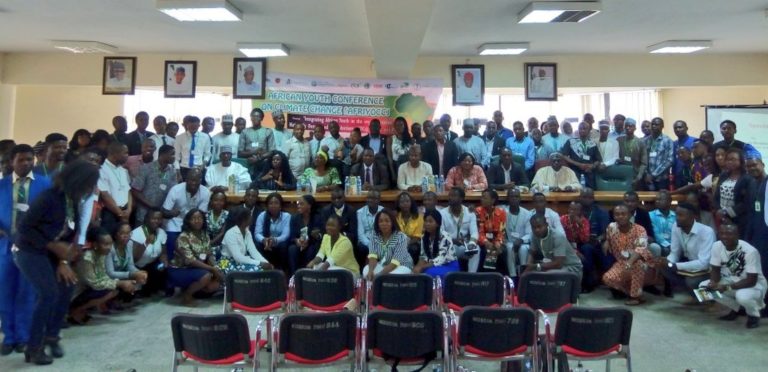
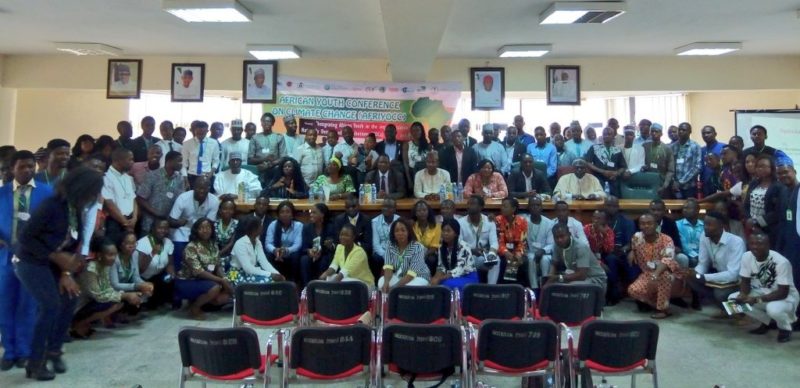
Group photograph of participants at the Third African Youth Conference on Climate Change (AFRIYOCC) in Abuja

This formed part of the discussions at the Third African Youth Conference on Climate Change (AFRIYOCC) organised by Africa Youth Initiative on Climate Change (AYICC) in Abuja on Wednesday, October 25, 2017.

Climate change has been described as change in weather patterns resulting from the rise or fall in temperatures, usually over an extended period of time.

The change is caused naturally and through human activities which increases the earth’s average temperature of 15 degrees Celsius by 35 per cent.

Deputy Executive Coordinator and Programmes Director AYICC, Ms. Nkiruka Nnaemego, however, said it was pertinent for the youth to be in the forefront of advocacy and negotiations.

Nnaemego said that youths across Africa were involved in different activities aimed at promoting environmental sustainability.

She further said that the conference would enlighten young people on roles they could play to address the challenges of climate change.

“There are so many things already happening as to what the youth are doing across Africa to contribute to climate change mitigation.

“We have those working in the areas of renewable energy, recycling and some on climate smart agriculture because we cannot talk about climate change without talking about agriculture.

“A lot of young people also need to be involved in policy advocacy and negotiations because negotiators are usually the elderly ones, we need to have our young people trained on negotiation.

“As young people, we also need to identify and understand our needs and aspirations when it comes to climate change.”

She said action plans to address challenges affecting young people while tackling the effects of climate change would be developed at the end of the conference.

Nnaemego also said that the meeting would develop a youth position paper ahead of the next Conference of the Parties (COP23) holding in Bonn, Germany in November.

In his address, the Regional Coordinator, West Africa, AYICC, Mr Gawusu Kassim, noted that financing was a major challenge of young people addressing issues of climate change.

Kassim said that the conference would provide capacity building for young people to understand issues of climate change.

“Climate change issues are of concern to young people and decisions made today by our leaders have implications on our future.

“We have a crucial role to play through advocacy and holding our leaders accountable, especially to the commitments they make at the international levels.

“This platform is to engage key stakeholders so we can contribute to climate change mitigation and adaptation.”

Also, the Minister of State for Environment, Malam Ibrahim Jibril said statistics had shown that Africa’s youth population would double by 2050, which would make it the youngest region globally.

Jibril said it was important for African governments to take action toward promoting creativity and entrepreneurship in line with climate action and sustainable development.

“If this huge demographic asset is well tapped and well trained, itwill transform Africa to the talent centre of the future,” he said.

Participants at the conference included youths from different countries in Africa.

The first AFRIYOCC was held in Zimbabwe in 2015.

By Temitope Ponle

GM cotton can revive textile industry, says food scientist

0

Head of Department of Food Technology, University of Ibadan, Prof. Ogugua Aworh, has appealed to the Federal Government to use the potential of bio-technology (bt.) cotton (or genetically modified cotton) to revive the country’s textile industry.

GM-Cotton
The GM Bt Cotton is said to have failed in Burkina Faso, with farmers making claims from Monsanto

Aworh made the call when he spoke with newsmen on the sidelines of the 41st Conference and Annual General Meeting of Nigerian Institute of Food Science and Technology (NIFST) in Abuja on Thursday, October 26, 2017.

He said that the utilisation of biotechnology cotton would facilitate increased production of agricultural raw materials for the textile industries.

The professor, who is also a fellow of NIFST, however bemoaned the fact that small-scale farmers in Burkina Faso were already making huge profits from their cultivation of bt.cotton.

According to him, bio-fortified cotton is resistant to pest infestation and, therefore, produces more yields.

“If we are worried about the technology in terms of the food we eat, why are we not producing bt.cotton, an agricultural raw material, which we do not consume?

Our problem as a nation is that we always look for adverse things about something when other countries are making progress and taking full advantage of the thing.

“It is time for the government to face this issue squarely; let us promote the technology and utilise it where we know that it will give us advantages, let us avoid the controversies,’’ he said.

Besides, Aworh urged the government to initiate plans to equip the country’s bio-safety regulatory agencies well so as to avoid the abuse of the technology.

On food production, the food scientist noted that the value addition to agricultural produce via crop processing was vital to efforts to revive the nation’s economy.

‘‘The issue of food value chain is so critical if we must really revive our economy.

“We can make money from exporting raw agricultural produce but we can make more money by converting those products into value-added products and exporting them,’’ he said.

Aworh, however, called on the government to support and engage small scale industries and businesses in its efforts to improve the national economy.

By Ginika Okoye

New guidelines to assist in managing marine noise

0

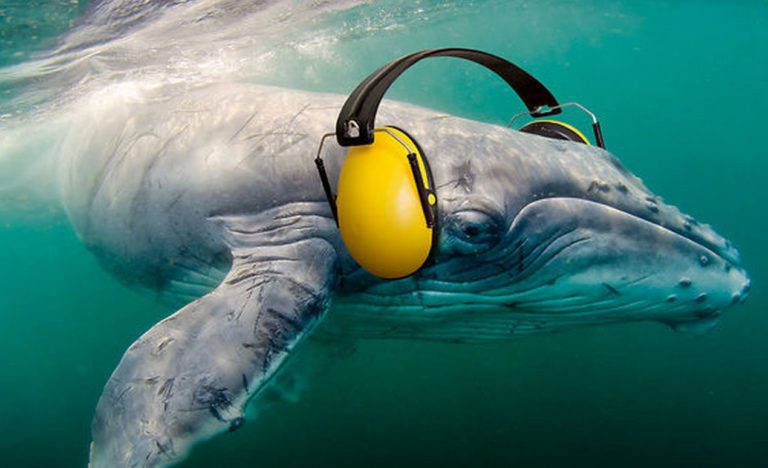
A new set of guidelines for regulators will significantly help to manage marine noise, which is increasingly posing a major threat to many marine animals.

marine noise
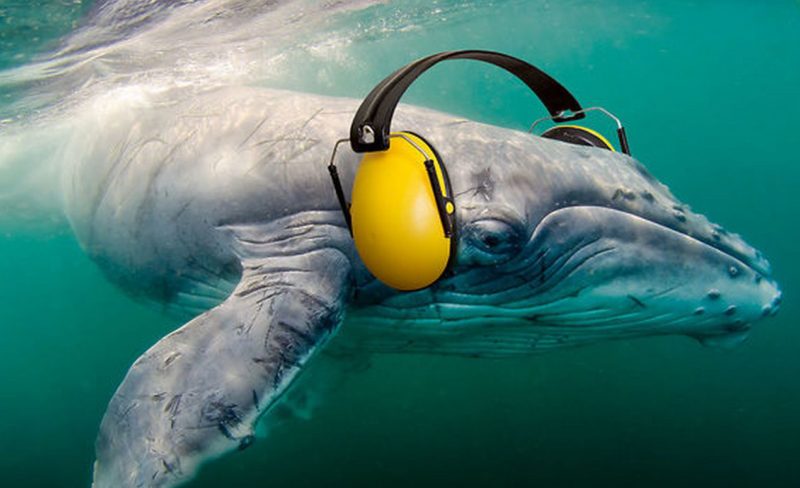
Ocean noise pollution harms marine life from the smallest to the largest

Bradnee Chambers, Executive Secretary of the Convention on Migratory Species (CMS), said the recommendations are a response to a historically unprecedented increase in marine noise.

“Marine wildlife relies on sound for vital life functions, including communication, prey and predator detection, orientation and for sensing surroundings. We know that levels of human-created marine noise have doubled in some areas of the world, every decade, for the past 60 years. It is incumbent upon regulators to act, but it is difficult for them to assess and manage impacts.

“A key instrument for national regulators when deciding to approve or restrict proposed activities are Environmental Impact Assessments (EIAs). The new CMS guidelines help them to ensure appropriate data is presented, and support the creation of cross-boundary standards, which are particularly important for protecting migratory animals, including commercially important fish.”

The guidelines include technical support information with detailed data about species’ vulnerabilities, habitat considerations, the impact of exposure levels and assessment criteria for all of the CMS-listed species groups and their prey.

The CMS Family Guidelines on Environmental Impact Assessments for Marine Noise-generating Activities have been presented to decision-makers in the Philippines this week and are expected to be adopted at the end of the conference. Ministers and officials from over 110 countries are expected to attend the triennial summit on migratory species, also known as CMS COP12.

Shipping, navigational sonar, offshore platforms and wind and tidal energy installations and other marine construction are all responsible for noise pollution at sea. Human-generated noise can travel over more than hundreds of kilometres underwater, unrestricted by national boundaries. It ultimately affects the entire marine ecosystem. A wide range of species including whales, dolphins and porpoises, turtles, seals, polar bears, crustaceans and other fish are affected.

Marine animals exposed to elevated or prolonged human-generated noise can suffer direct injury and temporary or permanent damage to their hearing. Such noise can also mask important natural sounds, including the calls of others in their social group, or the sound made by prey or a predator.

Holding transnational corporations accountable for human rights violations

0

Dr Godwin Uyi Ojo, representing Friends of the Earth International on global legally binding treaty Subject 7 Jurisdiction, says in Geneva, Switzerland on Thursday, October 26, 2017 that States must guarantee that a complaint against transnational corporations (TNCs) can be submitted for the abuses committed in host communities in any member state. He spoke during the United Nations Intergovernmental Working Group to hold transnational corporations account for their human rights violations

NETHERLANDS-NIGERIA-COURT-ENVIRONMENT-SHELL
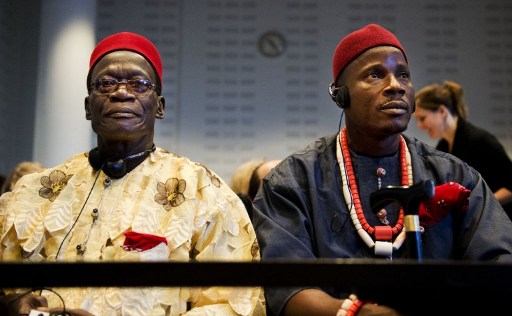
Two of the four Nigerian farmers (Chief Fidelis A. Oguru-Oruma (left) and Eric Dooh) sit in the law courts in The Hague on October 11, 2012. The four farmers take on Shell in a Dutch court, accusing the oil giant of destroying their livelihoods. The court ruled that Shell has a case to answer for its human rights violations committed in Nigeria. Photo credit: AFP / ANP / Robin Utrecht

My name is Godwin Uyi Ojo, Director, Environmental Rights Action/Friends of the Earth Nigeria, member of Friends of the Earth International with autonomous national groups from 75 countries and over 2 million grassroots members.  We are part of the global campaign to dismantle corporate power and stop impunity of transnational corporations.

We welcome the Treaty elements on transnational corporations and their supply chains with regard to holding them to account for human rights violations.

State obligations must include civil and criminal liabilities that address TNCs human rights violations.

The imperative nature of victims’ access to justice and right to reparation in international law is attested to by numerous international instruments and regional jurisdictions.

In the reparation case brought by four fishermen from the Niger Delta, the Court in The Hague, ruled that Shell has a case to answer for its human rights violations committed in Nigeria.

At a national level obligations must establish the jurisdiction of their courts with respect to TNCs’ violations of human rights’.

This should include the state in whose territory human rights violations occurred, the national state of the parent company, the national state of the shareholders, and all other states where the transnational corporation has activities.

States must guarantee that a complaint against TNCs can be submitted for the abuses committed in host communities in any member state. So TNC home states or TNC host states cannot apply the doctrine of forum non conveniens when invoking a human rights violation committed by a TNC. Each State must allow foreign persons and communities seeking environmental justice to take legal action in its courts if they so wish.

It is imperative that the national measures required of States for the implementation of the future treaty contain an obligation for them to establish the criminal responsibility of the leaders of multinationals and other companies in case of negligence or active participation in certain human rights violations.

The States Parties shall adopt legislative, administrative or judicial measures that allow human rights lawyers and defenders to act in litigation process against TNCs, while providing them technical and financial assistance. In this regard, States Parties must ensure that civil society organisations have access to courts on behalf of victims in these cases.

We strongly believe that an international court or Tribunal for TNCs human rights violations will allow impacted communities to seek reparation that is long overdue because as we speak now the people are suffering and dying in silence.

Ghana’s ‘pre-COP festival’ sets tone for Bonn climate confab

0

As the month of November approaches, the international community is making feverish preparations towards the forthcoming 23rd Session of the Conference of the Parties (COP23) to the United Nations Framework Convention on Climate Change (UNFCCC) in Bonn, Germany.

Pre-COP Climate Festival
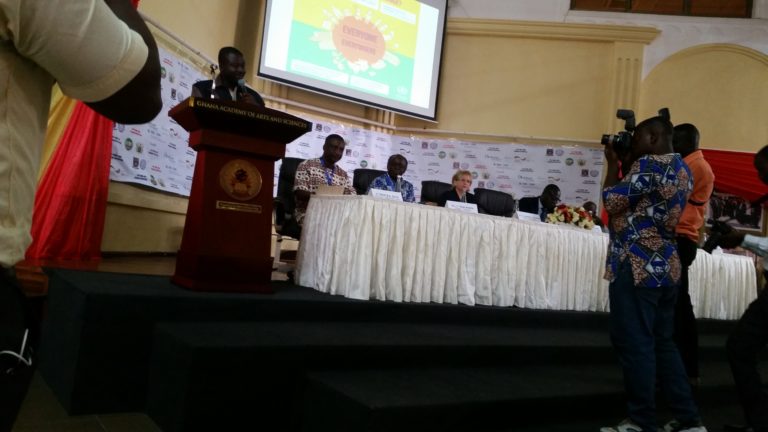
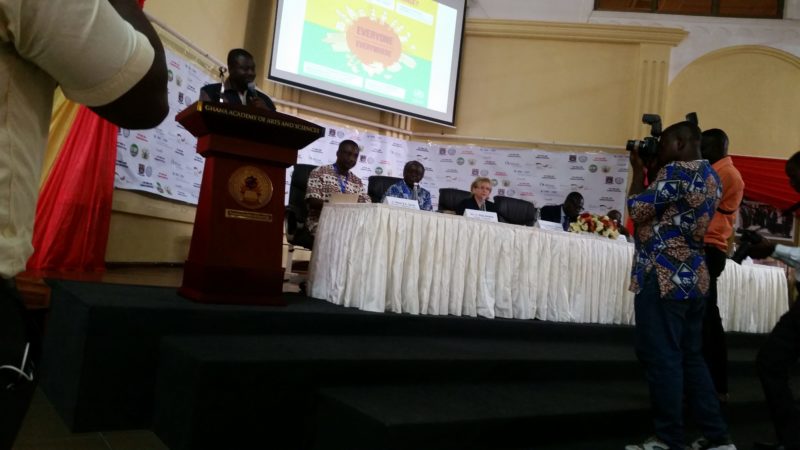
Dignitaries at the 2017 Pre-COP Climate Festival in Ghana

Ghana, like most African countries, will participate in the conference, scheduled to hold from November 6 to 17, 2017. And as part of the preparatory activities, a forum was recently held in Accra, dubbed: “2017 Pre-COP Climate Festival.” It was the sixth in the series of annual dialogue platforms instituted in 2012 by the Regional Institute for Population Studies (RIPS) of the University of Ghana, Legon, under the Africa Adaptation Research Centres of Excellence Project implemented with support from the International Development Research Centre (IDRC) of Canada.

The purpose of the annual event is to bring technical issues related to climate change adaptation and mitigation closer home to policy makers, managers, students, activists, religious leaders, metropolitan municipal and district authorities and officials, and the diplomatic community. It creates the space for diverse stakeholders of scientists, experts, academia and non-scientists to interact with each other and deliberate on issues of climate change that affect society and undermine development, and is of critical concern to the international community; hence, its timing to precede the COPs to the UNFCCC.

The theme for this year’s event was: “The Risks We Do Not Want.” The aim was to sensitise the Ghanaian public about COP23 and Ghana’s performance in relation to climate change.

The Convener of the Festival, Dr. Delali Dovie, explained that this year’s theme was evolved from the Cities and Climate Project being implemented by RIPS, and which see cities as holding the key to development and therefore must be resilient to deliver its development agenda.

However, the current images of cities are that of damages and loss from extreme floods events and storms that have ravaged the country in recent times. Additionally, cities have become major sources of atmospheric pollution, even though there are resources to control carbon emissions and reduce the impacts of global warming.

Dr. Dovie stressed that the “the battle against climate change will largely be won in the cities…”

In his keynote address, the Director-General of NADMO, Eric Nana Agyemang-Prempeh, noted the appropriateness of the theme for the Festival, saying “it could not have been better as the warming of the globe approaches a ‘tipping point’ that could be catastrophic for lives on earth.”

He alluded to the increasing number of severe weather and extreme climate related events with devastating consequences in many countries, and observed that African countries, including Ghana, are extremely vulnerable to climate change with increased risk of drought, famine and floods.

Mr. Agyemang-Prempeh congratulated member countries of the UNFCCC who set the ambitious targets of the Nationally Determined Contributions (NDCs) of the Paris Climate Agreement in order to keep global average temperatures below two degree Celsius.

For 20 years, global negotiations have been on-going to come up with an effective, fair, sustainable solution that is acceptable to all nations. Finally, on December 12, 2015 at COP 21, in Paris, France, members agreed to combat climate change and undertake actions and make investments towards a low carbon, resilient and sustainable future. Known as the Paris Agreement, it brought together all nations, for the first time into a common cause based on their historic, current and future responsibilities.

The NADMO Director-General highlighted the difficulty in implementing the Agreement to the letter, “unless the consequential needs of technology development and transfer, capacity building, costs and financing were addressed.”

He proposed a number of things that Ghana could do to ensure delivery of her NDCs. “The state must be committed in supporting policies that solve key climate compactible development and climatic risk reduction challenges, intellectual leadership and innovation; we must support the application of the best science and technology disciplines to respond to the multi-dimensional issue of climate change towards our nationally appropriate mitigation action (NAMA); and we must ensure that climatic risks to society especially the poor, farmers, women, the elderly and least capacitated are drastically reduced.”

Obviously, these proposals require partnerships that support innovations. Mr. Agyemang-Prempeh cited the partnership between NADMO and the German Cooperation on Integrated Climate Risk Management Transfer as an innovation on drought risk insurance towards resilient agriculture and food security, central to the country’s NDCs.

He said the next 13 years provide the window of time “in which our economies must shift towards low-carbon development and resilience,” and hinted that the NDCs will now become a priority for NADMO. This means that NADMO will have to adopt a new posture to work towards strengthening climatic risk mitigation, preparedness, response and recovery.

The Deputy Head of Missions at the German Embassy in Ghana, Hans-Helge Sander, said the Embassy was aware of the impacts of climate change especially as it manifests in the agricultural sector. Therefore, the Embassy was providing technical support to Ghana through a number of activities such as its partnership with NADMO and the African Risk Capacity Project. He described COP 23 as the conference that will outline the next steps towards implementing the Paris Agreement.

The Canadian High Commissioner to Ghana, Heather Cameron, announced several initiatives of her country to address climate change. These include Canada’s commitment of an amount of $2.65 billion to support developing countries adaptation programmes in response to climate change over a five year period.

She called for adaptation programmes that will give more attention to developing the potential of women to actively participate in solving problems.

Ms. Cameron congratulated RIPS for assembling such diverse stakeholders and bringing on board the youth represented by students from the Presbyterian Boys Senior High, Kimbu Senior High and St. Mary’s Senior High schools to participate in the discussions.

For his part, the Director of RIPS, Prof. Samuel Codjoe, traced the history of the RIPS from its establishment in 1972 as a UN sponsored regional demographic training centre for Africa, and said it has now become a full-fledged institute of the University offering Masters and doctorate programmes. He said RIPS has also established the Ghana Climate Change Resource Centre with support from IDRC.

As part of the Festival there were panel presentations and discussions on priority issues for African Negotiators at the COP, Ghana’s performance in relation to climate change and the African Risk Capacity Programme under which, the concept of the Sovereign Drought Insurance in Ghana scheme was introduced to participants.

Discussants for the first panel presentations were Mrs. Patience Demptey, a Gender Consultant and Dr. Ama Essel, Health Consultant who are both members of African Group of Negotiators (AGN). They agreed AGN’s contribution to the negotiation has resulted in the 50/50 allocation of resources under the Green Climate Fund (GCF). They said the group was able to secure equal access to the fund by making a case in Paris 2015 for Africa to get more funding for adaptation, because the continent contributed least to global warming and yet was suffering the most from it impacts.

Discussants for the second panel presentations were Mrs. Chalotte Norman of NADMO]s Climate Change Department, Ms. Felicity Le Quesney of the Oxford Policy Institute, UK, Ms. Assia Sidiba of the African Risk Capacity and Foster Gyamfi of Ministry of Finance. They provided insight into the nature of climate and drought associated risks, and the insurance opportunity that the African Risk Capacity scheme provides to tackling increased vulnerability of communities to disasters.

The third group of panelists was Daniel Benefor of Ghana’s Environmental Protection Agency, Kingsley Amoako of the Ministry of Food and Agriculture and Winfred Nelson of the National Development Planning Commission. They briefed participants on the progress Ghana has made with her NDCs, the relevance of the NDCs for long term national development and highlights of the implementation of adaptation and mitigation priorities in the agricultural sector.

By Ama Kudom-Agyemang

It’s time to finally free Africa from coal, say campaigners

0

In a bid to halt the exploration and use of coal in Africa (or decoalonise Africa) and move towards 100% renewable energy, the #deCOALonise Africa campaign seeks to stop the development of coal infrastructure within the continent through strengthened community resistance and international collaboration. In this piece, the campaigners insist that Africa is not a dumping ground for dirty, dangerous and outdated power plants. The campaign is being promoted by 350.0rg and decoalonize.org

coal mining
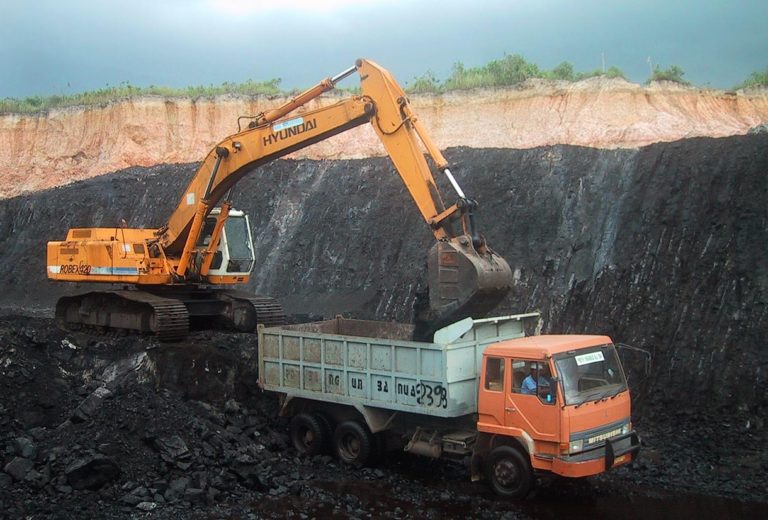
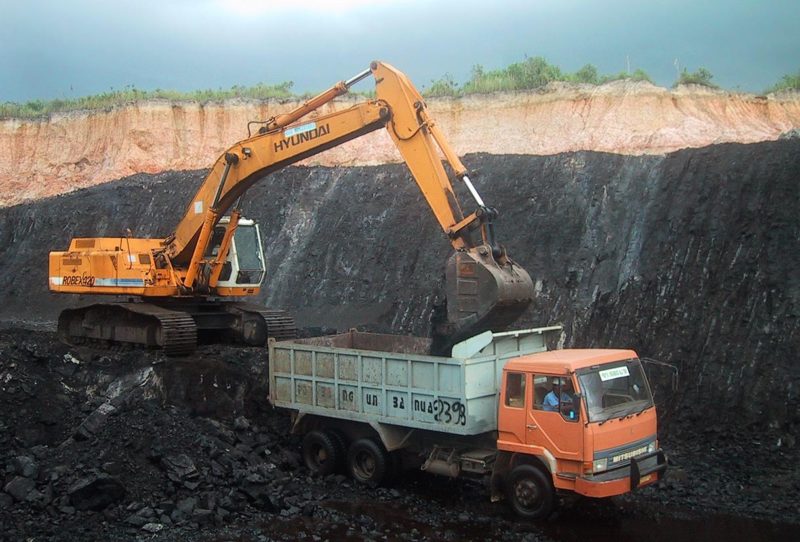
The Federal Government of Nigeria has commenced moves to revive mining activities in Enugu coal mines, which have been inactive for about 40 years

So far, 2017 is the second-hottest year on record. Climate change is here, and Africa is feeling the impacts deeply. Despite this, governments across the continent are making plans to develop massive new coal mines and power plants.

Coal is a killer, and Africa deserves better. We deserve a future free of coal and other fossil fuels and based on clean renewable energy for all.

That’s why we’re launching the #deCOALonise campaign today.

Wherever governments are planning big new coal projects, people resist. Wherever companies and politicians are putting profits before public health, people resist. All over the continent, local communities are actively fighting for a fossil free future.

The #deCOALonise campaign is lifting up these pockets of resistance and highlighting the power of local communities to fight dangerous, unwanted coal projects. This new platform is a space for learning and sharing, for shining a light on the devastating impacts of the coal industry, and for uniting the many powerful grassroots groups working to end the age of coal in Africa.

Africa’s colonial history continues today in the form of the coal industry.

We need to make it crystal clear: the same kind of thinking underpins this new push for coal as the early waves of colonialism in Africa – greed, extraction, and exploitation. If we want to have a planet and continent where future generations can thrive, we have to stop coal development in its tracks.

By building solidarity between the many groups and campaigns fighting coal across the continent, we can show the coal industry that Africa is not a dumping ground for their dirty, dangerous and outdated power plants. Africans are through with their pollution and exploitation.

It will be through local African communities resisting new coal infrastructure and embracing clean, renewable energy that we can shake off the past and chart a course to a better future.

Together, we can pave the way to energy solutions that are for and by Africans.

New partnership to promote migratory birds conservation emerges

0

Three leading bird conservation organisations on Thursday, October 26, 2017 in Manila, the Philippines, announced an innovative partnership to boost awareness of the plight of migratory birds around the globe. The new alliance formally unites two of the world’s largest bird education campaigns, International Migratory Bird Day (IMBD) and World Migratory Bird Day (WMBD) in a bid to strengthen recognition and appreciation of migratory birds and highlight the urgent need for their conservation.

Migratory-Birds
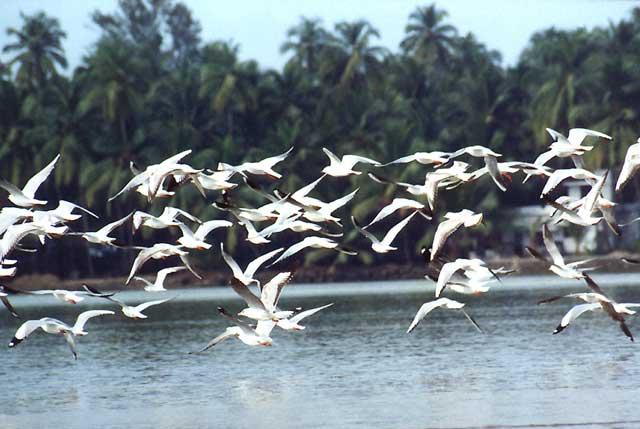
Migratory birds

The Convention on Migratory Species (CMS), the Agreement on the Conservation of African-Eurasian Migratory Waterbirds (AEWA) and Environment for the Americas (EFTA) outlined their new cooperation in a partnership agreement at a side event in the margins of the 12th Conference of the Parties to the (CMS COP12) holding in Manila this week.

The collaboration establishes a single, global campaign organized around the planet’s major migratory bird corridors. These include the African-Eurasian, the East Asian-Australasian, and the Americas flyways.

Speaking at the event, Bradnee Chambers, Executive Secretary of CMS, said: “Shaping a sustainable world for migratory birds and people requires better cooperation at all levels and across all the flyways of the world.  With this new partnership agreement, we are uniting our voices for bird conservation and setting the stage for a new global venture in efforts to raise awareness and appreciation of migratory birds.”

Susan Bonfield, Executive Director of Environment for the Americas, said: “Birds do not recognise political boundaries, so their conservation depends on our joint efforts at the many habitats they need for nesting, migratory stopovers, and wintering grounds. This partnership represents our desire to work together for the benefit of migratory birds around the globe.”

Jacques Trouvilliez, AEWA Executive Secretary, said: “For 10 years, AEWA has been promoting WMBD in Eurasia and Africa to make flyway conservation happen. It is time now to unify our efforts to make this campaign a really global one for the benefit of all birds on our Earth.”

IMBD was created in 1993 to raise awareness of migratory birds and their conservation throughout the Western Hemisphere. Now in its 24th year, IMBD has grown into a framework underpinning 700 events across the Americas, from Canada to Argentina and more than 15 countries in the Caribbean.

WMBD was initiated by AEWA and CMS in 2006 as a way to counter the negative public opinion towards migratory birds due to the spread of the H5N1 Avian Influenza virus. A total of over 2,000 events have taken place in 140 countries since the campaign started.

Both campaigns are typically observed in May but can be timed to coincide with local migrations.

“By pooling educational and outreach materials, each partner will leverage their resources to reach a broader audience,” said Bonfield. “Ultimately, we’re all working towards the same goal: connecting people to our shared birds.”

Based in Boulder, Colorado, Environment for the Americas works with diverse partners to provide bilingual educational materials and information about birds and bird conservation throughout the Americas. Their programmes, it was gathered, inspire children and adults to get outdoors, learn about birds, and participate in their conservation.

ERA describes union’s successful elections new dawn in campaign against water privatisation

0

The Environmental Rights Action/Friends of the Earth Nigeria (ERA/FoEN) has commended the Amalgamated Union of Public Corporations Civil Service Technical and Recreational Services Employees (AUPCTRE) for a successful national congress which saw Comrade Benjamin Anthony of Federal Housing Authority (FHA) Abuja emerge as the new president.

Akinbode Oluwafemi
Akinbode Oluwafemi, Deputy Executive Director, Environmental Rights Action/Friends of the Earth Nigeria (ERA/FoEN)

The national congress which held in Ibadan, Oyo State from October 18 to 19 2017, had about 500 delegates from 38 state councils of the union across the 36 states, National Coordinating Councils (NCCs) and FCT Abuja of the federation in attendance. Former president – Solomon Adelegan from Ondo State Water Corporation – lost to Comrade Anthony, who is also the current Federal Capital Territory chairperson.

In a statement issued in Lagos, ERA/FoEN said the atmosphere of calm under which the elections held and the outcomes reflected the deep cohesion and strength of AUPCTRE, which is one of the largest affiliates under the Nigeria Labour Congress (NLC).

Akinbode Oluwafemi, deputy executive director of ERA/FoEN, said: “We commend AUPCTRE for the hitch-free national congress and election which has produced a new president in the person of Comrade Benjamin Anthony. With his track-records as a campaigner for just policies, his emergence as national president gives us hope that AUPCTRE will continue leading the campaign against water privatisation in Nigeria.”

Oluwafemi explained that members of AUPCTRE have over the years been at the fore of the fight to get state governments, especially Lagos, to reject Public Private Partnerships (PPPs) in the water sector in favour of Public Public Partnership (PuP).

AUPCTRE is also part of the Our Water Our Right Coalition which embarked on a host of activities including street protests in Lagos to get the state government to expunge “anti-people sections” in the Lagos Environmental Law signed into law early this year.

The ERA/FoEN boss reiterated the organisation’s conviction that, with the new helmsman, a new dawn in the campaign against water privatisation has come, even as he added: “With all our local and international partners we will continue to engage with the union on innovative solutions to the crisis in the water sector within the realm of human rights.”

“We are confident in Comrade Anthony and his team in steering AUPCTRE in a direction that will not only strengthen state chapters but also reinvigorate their engagement with civil society to guarantee that government policies does not violate the right of any Nigerian to clean, safe and adequate water,” Oluwafemi said.

How COP23 will run on clean energy

0

The UN Climate Change Conference in Bonn (COP23) scheduled to hold from November 6 to 17, 2017 is designed to increase climate action and more sustainable development at all levels of society. The organisers of COP23 are apparently walking the talk, the conference will be made sustainable to the greatest possible extent. In a special series, the UN Climate Change News team is looking at the different aspects of sustainability – including transport, waste management, catering, energy and offsetting. To kick off the series, the team looked at the issue of making the conference fully climate neutral, including by offsetting carbon emissions. In this second installment of its special series, the team is looking at the issue of sustainable transport and energy.

Bonn bus
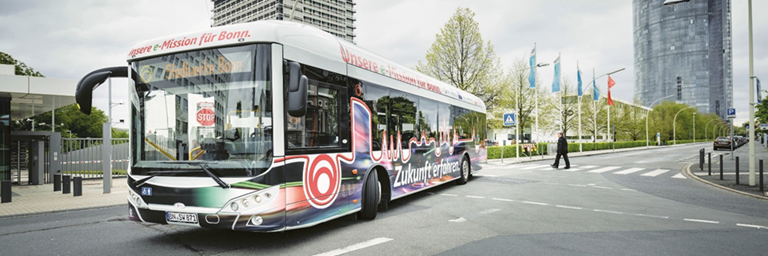
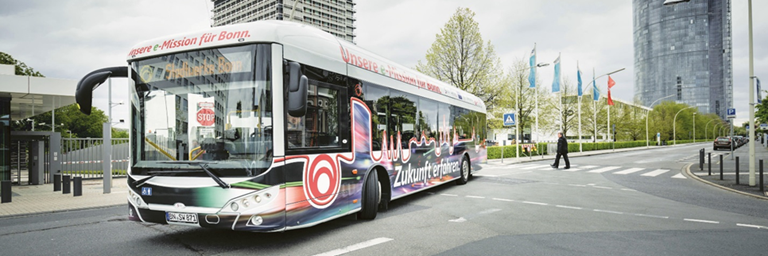
One of Bonn’s several electric and hybrid buses in service. Photo credit: Stadtwerke Bonn/Martin Magunia

Ensuring that carbon emissions from energy and transport are kept to a minimum will be an important way of ensuring the upcoming COP23 conference is as sustainable as possible.

Up to 25,000 people are expected to participate in COP23 – including government delegates, representatives of observer organisations, businesses and journalists. The lion’s share of transport emissions will be from long distance travel of participants coming from abroad (see the team’s special article on the overall climate neutrality of the COP, with a focus on offsetting emissions from international travel).

Once the participants are in Bonn, they will have to make their way to the conference site each day, get around on site – and get back to the places they are staying at night. Reducing emissions caused by local transport is therefore a crucial part of the work of the COP23 Sustainability Taskforce.

“The most important aspect is that local public transportation is free of charge for all registered participants from Parties, observer organisations and media,” says Dennis Winkler, Lead of the COP 23 Sustainability Taskforce and responsible for the sustainability of UN climate change conferences at UN Climate Change. “Also, 600 bikes will be provided free of charge for participants to get from one conference zone to another, or even to the city.”


Riding from Bula to Bonn on electric shuttles

The city of Bonn has several electric and hybrid buses in service and special electric COP23 shuttles, running on 100% renewable energy, will connect a brand-new UN Campus train stop with the nearby metro stop and the two conference zones (“Bula” and “Bonn”).

“We think it is important for there to be electric transport at the Bonn Climate Change Conference, as it absolutely meets the key goals of COP23,” says Anja Wenmakers of Bonn’s public transport provider, SWB. “We are committed to supporting climate action goals and believe that public transport in general can make an important contribution to quickly achieving these goals.”

Furthermore, a shuttle service with smaller electric vehicles through the Rheinaue park will be organised by the German Environment Ministry.


Using clean energy efficiently

Transport aside, energy is another important aspect of reducing the footprint of COP23. In an effort to use energy efficiently, the organisers are seeking to keep all indoor areas at an average temperature of 21 degrees Celsius, and not warmer. And participants are requested to turn off room lights and ventilation as well as ICT equipment when not in use.

In addition to maximising energy efficiency, the COP organisers are making sure that the energy that is used in buildings is to the greatest extent possible from renewable sources.

“We have a target of 80 percent renewable energy all over the conference,” says Winkler, adding that he and his team would have to make an assessment of whether this target has been reached at the end of the conference.

The secretariat of UN Climate Change runs on 100% renewable energy, some of it sourced from solar panels on the roof of its headquarters building.

×