Researchers at the University of Michigan (UM) are developing a pill that makes tumours light up when exposed to infrared light, and the concept has worked in mice.
An impression of breast cancer tumour
“It’s actually based on a failed drug,” said Greg Thurber, UM assistant professor of chemical engineering and biomedical engineering, in a news release posted on UM website.
“It binds to the target, but it doesn’t do anything, which makes it perfect for imaging.”
The researchers attached a molecule that fluoresces when it is struck with infrared light to this drug.
Then, they gave the drug to mice that had breast cancer, and they saw the tumours light up.
The targeting molecule has already been shown to make it through the stomach unscathed, and the liver also gives it a pass, so it can travel through the bloodstream.
The move could also catch cancers that would have gone undetected.
By providing specific information on the types of molecules on the surface of the tumour cells, physicians can better distinguish a malignant cancer from a benign tumour.
Moreover, using a dye delivered orally rather than directly into a vein also improves the safety of screening.
Tens of millions of women are screened every year in the U. S. alone.
According to a study out of Denmark last year, about a third of breast cancer patients treated with surgery or chemotherapy have tumours that are benign or so slow-growing that they would never have become life-threatening.
The research has been published in the journal Molecular Pharmaceutics.
Africa continues to suffer enormous social and economic losses in billions of dollars as a result of climate change impacts.
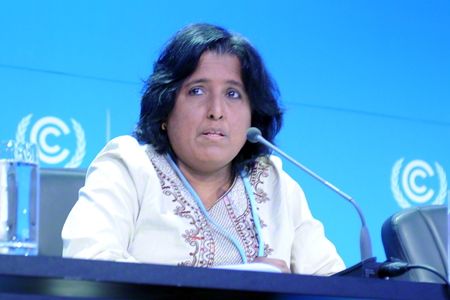
Meena Raman of the Third World Network
A vulnerable continent that is burning and flooding at the same time needs finance to be able to achieve mitigation, adaptation and technology goals.
But without a clear roadmap for delivering $100 billion per year by 2020, as pledged by developed countries since 2009, developing countries are hindered in their ability to carry out their own climate actions.
Negotiators from the world’s governments are gathering in Bonn, Germany from April 30 to May 10 for three simultaneous meetings under the United Nations Framework Convention on Climate Change (UNFCCC).
Ironically, the United States, which has signalled it will not want to be a party to the Paris Agreement when implementation starts in 2020, is sitting and negotiating as a party.
“Our worry is that the world will once again be pressured to accommodate the United States and this is really very unfair because the concessions are already made in the Paris Agreement,” said Meena Raman of the Third World Network. “The solutions for addressing the climate challenge have to be fair and have to ensure that once again the poor and the planet are not sacrificed.”
Climate finance has become a sticking point in the climate talks since the withdrawal of $2 billion by the U.S. under Trump’s administration.
And it is increasingly becoming a taboo to discuss climate finance with other developed countries, observed Augustine Njamnshi of the Pan African Climate Justice Alliance (PACJA).
“When finance becomes a taboo in this discussion, then there is no good faith in the discussions,” he said. “You want to sit here and tell nice stories when whole families are being swept by floods in West Africa?”
The conditional Nationally Determined Contributions (NDCs) from developing countries in implementing the Paris Agreement will cost more than $4.3 trillion to be achieved.
African civil society therefore wants finance for climate action prioritised if the Paris Agreement should come to life.
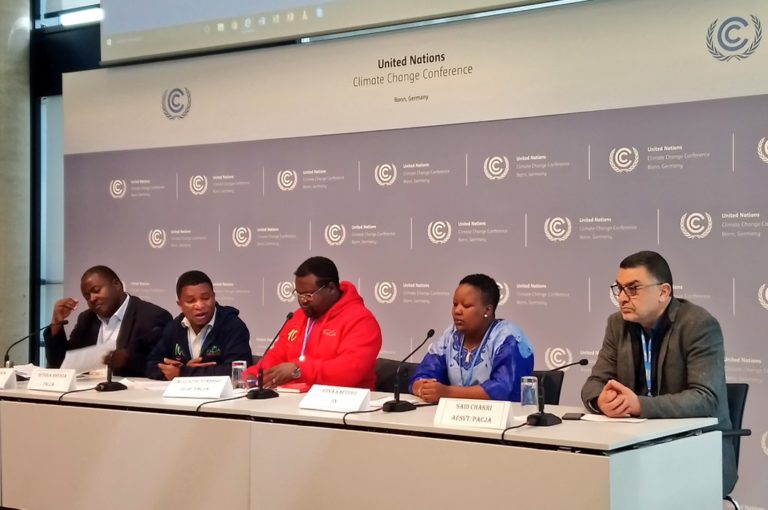
“Africa strongly supports the Adaptation Fund to serve the Paris Agreement. However, we are dismayed with the shifting of goal posts by our partners who intend to delay the realisation of actual financing of full costs of adaptation in Africa,” said Mithika Mwenda, Secretary General of PACJA at a press conference. “We urge our partners not to further delay the decision which is key in providing adaptation support to Africa.”
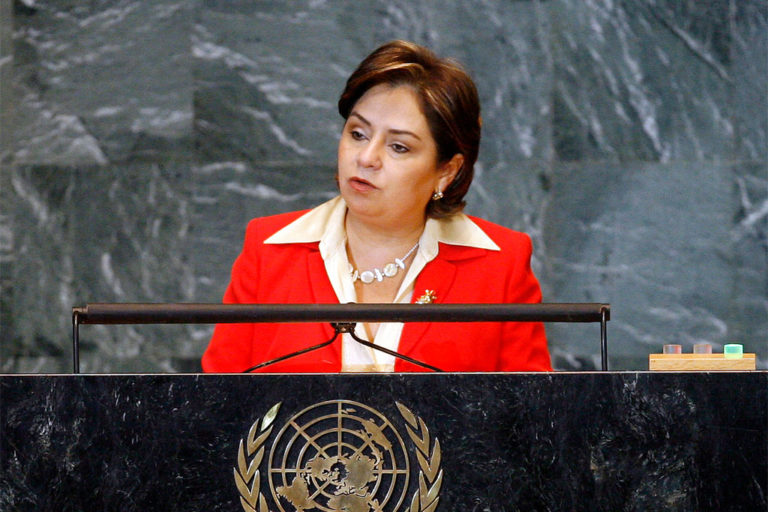
UN climate chief, Patricia Espinosa, has outlined three important goals to accomplish by the end of 2018 – building on the pre-2020 agenda, which charts the efforts of nations up to the official beginning of the Paris deal; unleashing the potential of the Paris deal by completing the operating manual; and building more ambition into countries national pledges.
But African civil society is demanding the rich world offers more detail on its commitments to climate finance without any delay in the Paris Rulebook beyond COP24.
“The effective ambition of developing countries depends on the provision of means of implementation by developed countries,” said PACJA in a statement. “We strongly urge our African governments to rethink critically on the progress of climate talks as any position that contradicts that real climate change implications to Africa then will shift the burden of climate change to African countries.”
Agriculture is the mainstay of most developing country economies, which are the most vulnerable to climate change impacts through extreme weather events such as drought, floods, landslides, storm surge, and soil erosion, affecting their predominantly rain-fed agricultural productivity.
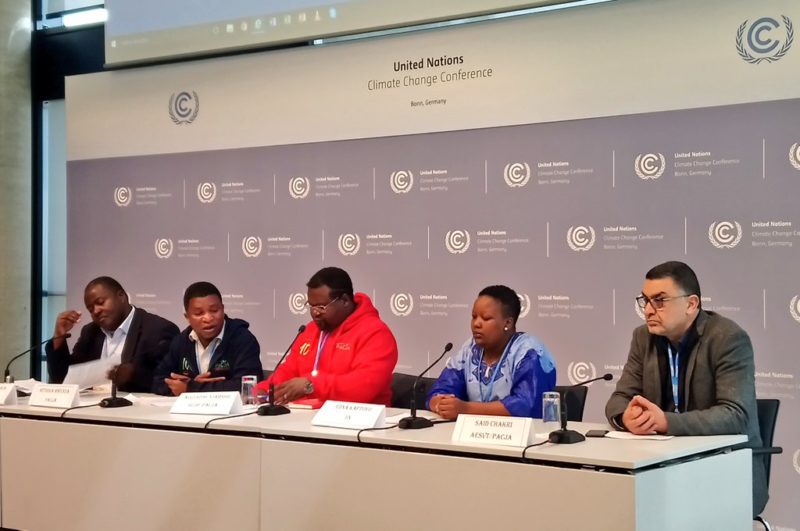
Representatives of civil society groups at the conference in Bonn
In consideration of the vulnerability of their agricultural systems to climate change, developing party negotiators have been pushing for it to be considered as a stand-alone work programme at the negotiating table.
And the push finally paid off at COP23 where decision 4/CP.23 on the “Koronivia joint work on agriculture” was adopted, paving way for issues related to agriculture to be addressed, taking into consideration the vulnerabilities of agriculture to climate change and approaches to addressing food security.
However, while this was a milestone, African civil society groups still want more ambition on agriculture considering its importance to their countries in relation to adaptation, as most countries depend on agriculture for livelihood.
“Noting the significance of agriculture in Africa, the decision on agriculture during UNFCCC COP23 was a big milestone,” said Mithika Mwenda, Pan African Climate Justice Alliance (PACJA) Secretary General. “We caution our African governments however to urgently ensure that there is a joint work-plan for agriculture in ensuring that it receives the required means of implementation.”
According to Mithika, further attention should be paid to the type of agriculture being promoted, saying Africa is not interested in industrial agriculture as practiced by developed countries but rather, promoting resilience of smallholder farmers.
“Our interest is to promote resilience to agriculture, the context in Africa is how do we support that smallholder farmer, that pastoralist whose cows are dying due to drought every time, so we are talking about; how do we now change that, so it’s important that we look at it from this context,” explained Mwenda at the on-going SB48 Climate Talks in Bonn.
In fact, the African civil society is linking agriculture to loss and damage, another long-standing issue that developing parties have been pushing at the negotiating table.
The argument is that developing countries and Africa, in particular, continues to suffer enormous economic losses in billions of dollars as a result of climate change impacts. Coupled with un-costed social losses due to climate induced displacement of persons triggering conflicts, the African group is dismayed to keep hearing that the answer to loss and damage is insurance – a concept which they believe is a far-fetched dream in Africa.
“Insurance works out in developed countries but not in developing countries especially in Africa, where the concept is hardly understood,” said Richard Kimbowa of Uganda Coalition for Sustainable Development.
Kimbowa says Africa “needs a predictable and easy-to-understand financing approach for loss and damage,” adding that severity of climate change impacts are not the “normal adapt and move on.”
He explained that it is for this reason that the loss and damage mechanism is being pushed to address such losses that have become more severe for communities to easily cope.
Closely connected to agriculture and loss and damage, is gender. It is worth noting that there is considerable progress that has been made in terms of gender policies that support activities on adaptation, mitigation, finance, technology development and transfer, including capacity building, under the convention.
“Off course, one of the decisions made at the highest level is that we have the gender national focal point persons but, so far, only 22 states have put forward national gender focal point persons to the UNFCCC, so we urged countries to see the importance of gender in the climate processes,” said Edna Kaptoyo of the Indigenous Information Network.
The call is for the Parties to increase their efforts in ensuring that women are represented in all aspects of the convention process, to ensure that gender mainstreaming is achieved in all processes, and activities of the convention.
Overall, African civil society are demanding more ambition on means of implementation, which they believe is key to the attainment of the set targets in the Paris Agreement.
This, they say, is in consideration that effective ambition of developing countries depends on the provision of means of implementation by developed countries, without which there would be no predictable pathway for implementation of the Paris Agreement.
Therefore, the next 10 days will see a lot of lobbying and activism from African CSOs as they push for Africa’s climate change and development agenda.
The Nigerian Meteorological Agency (NiMet) has predicted cloudy weather conditions over the central states of the country on Wednesday, May 2, 2018 with chances of localised thunderstorms over Abuja, Ilorin, and Bida and Minna axis.
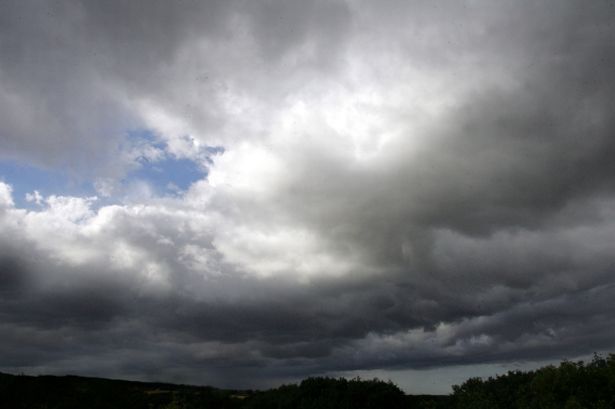
cloudy weather
NiMet’s Weather Outlook by its Central Forecast Office in Abuja on Tuesday also predicted day and night temperatures in the range of 28 to 39 and 18 to 28 degrees Celsius respectively.
It added that Kaduna, Jos, Mambilla Plateau, Yola, Bauchi and Gombe were expected to be under the influence of localised thunderstorms in the afternoon and evening hours.
The agency predicted that the southern states would experience cloudy morning with day and night temperatures in the range of 31 to 35 and 22 to 25 degrees Celsius respectively.
It also predicted chances of localised thunderstorms over Owerri, Umuahia, Lagos, Ijebu-ode, Uyo, Calabar, Port-Harcourt and Eket in the afternoon and evening hour.
According to NiMet, northern states will experience partly cloudy to cloudy conditions during the forecast period with day and night temperatures in the ranges of 33 to 42 and 23 to 28 degrees Celsius respectively.
“Partly cloudy to cloudy conditions are expected over the northern cities with prospect of localised thunderstorms over few places in the central down to the southern cities in the next 24 hours,” NiMet predicted.
Cross River State, home to the largest remaining rainforests of Nigeria, is fast losing its prized asset.
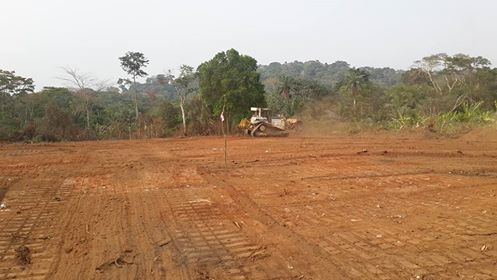
Deforestation: Bulldozers at work clearing the Superhighway’s route passing through parts of Boki in Cross River State
Over a million hectares of pristine forest that had largely remained unexploited is now under considerable threat, if recent submissions are anything to go by.
Nigeria REDD+ Stakeholder Engagement Specialist, Tony Atah, disclosed that the hitherto jealously guarded vast forest land is fast disappearing.
REDD+ stands for countries’ efforts to reduce emissions from deforestation and forest degradation, and foster conservation, sustainable management of forests, and enhancement of forest carbon stocks.
Attah disclosed in a presentation on Thursday, April 26, 2018 in Lafia, Nasarawa State, during the High Level Stakeholders Sensitisation Workshop on National Forest Inventory that, between 2007 and 2014, the annual rate of deforestation in Cross River State stood at 23,911 hectares (ha) (2.95%), while the net forest loss was 39,907 ha.
Previously between 2000 and 2007, the annual rate of deforestation seemed much lower at 5,701 ha, even as the net forest loss was 39,907 ha.
“Over the two periods (2000-2007 and 2007-2014) annual rate of deforestation had risen from an average of 5,701 hectares (0.67%) to 23,911 hectares (2.95%),” observed Attah in his paper titled: “Drivers of Deforestation and Forest Degradation: Cross River State in perspective”.
According to Attah, forest loss to agriculture from 2000 to 2007 was some 77,148 hectares of forestland while between 2007 and 2014 125,355 hectares of forestland was lost to cropland.
“These figures are a compound aggregate for both subsistence and commercial agricultural activities,” he explained, even as he listed the drivers of deforestation to include: economic causes, technological causes, policy & institutional causes, cultural causes, demographic causes, energy, mining/quarrying, infrastructure development and agricultural expansion.
He suggested ways to respond to the drivers of deforestation, saying that, for instance, the state’s 30-year growth and development plan targets green investments across all sectors presents a much-needed succour.
He added that management plan developed to strengthen institutional arrangement for sustainable land and forest governance would go a long way in curbing deforestation, as well civil society supporting community-based actions to strengthen institutions, build livelihoods and elaborate land and forest management plans.
Most of all, he continued, REDD+ strategies, such as forest conservation and sustainable management of forests, can likewise address drivers of deforestation.
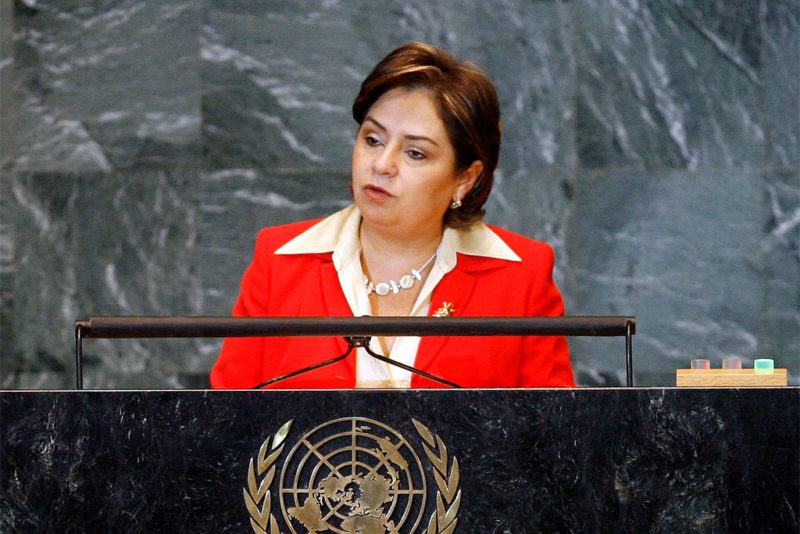
Speaking at this year’s Forum on Urban Resilience and Adaptation in Bonn, UN Climate Change Executive Secretary, Patricia Espinosa, warned that the impacts of climate change are “an incredible risk” to many cities throughout the world.” The UN’s top climate change official also said that the bulk of action to cut greenhouse gas emissions must happen in the world’s cities
Patricia Espinosa, Executive Secretary of the United Nations Framework Convention on Climate Change (UNFCCC) welcomes ratifications by Ukraine and Micronesia
2017 made this clear – t was nothing less than a climate disaster for many people throughout the world.
Whether it was flooding, fire, droughts or the devastation of entire island states such as Barbuda, we saw millions of people who lost homes, livelihoods or lives because of extreme weather.
We saw this in both developed and developing states alike.
Every credible scientific source at our disposal tells us one thing: the impacts of climate change aren’t going to get better, they’re going to get worse.
And these impacts are an incredible risk to many cities throughout the world. They will affect their infrastructure, their economies, and the lives of people living there.
Cities such as Osaka, with 5.2 million people at risk.
Cities such as Alexandria, with 3 million people at risk.
Cities such as Rio de Janeiro, with 1.8 million people at risk.
But we can avoid the worst of these impacts if we act now to increase our action and investment towards climate change.
And that action must happen in our cities.
As I mentioned at COP23, cities are where the climate battle will be won or lost.
That makes your work at this congress very important. And we are pleased it takes place through the Talanoa Dialogue.
For those who are unfamiliar with it, the Dialogue – an initiative on behalf of the Government of Fiji – is an international conversation, held in a spirit of openness, to determine if we’re meeting the goals of the Paris Agreement, and to increase global ambition towards them.
While it is not a top-down exercise, we are looking for answers to both general and specific questions.
First, are we achieving our climate goals? Why or why not? What will get us there? What will get us there faster? What do you want the world to look like in 20 or 30 years?
More specifically, you are here to exchange knowledge that will help build a sustainable and resilient urban future.
That means developing the strategic partnerships you need.
It also means untangling the many challenges that will stand in the way of truly integrated and inclusive action.
It’s not an easy task, but it’s absolutely necessary.
Building stronger, more resilient cities is about more than protecting financial assets—although those are very important.
And it’s about more than protecting our rivers, our coastlines and our cities—although those are also very important.
It’s about seizing the opportunity to craft a better future—one built on a clean, green and sustainable foundation.
A future where we move away from fossil fuels and embrace renewable sources of energy.
A future where we are better prepared to respond to risk, better prepared to deal with climate emergencies…
…and by linking our climate goals to our overall sustainable development goals, a future where we are better prepared to address some of the biggest challenges humanity faces.
Because climate change is intricately linked to issues such as poverty, security, migration, gender representation and many more.
We are seeing an incredible momentum for action in cities and regions throughout the world.
We’re seeing it in the United States where the State of California strengthened its commitment to reducing greenhouse gas emissions – they’re targeting 100% renewable energy by 2045.
We’re seeing it in the City of Los Angeles, which aims to significantly reduce its urban heat totals over 20 years by establishing strong cool roofing requirements.
We’re seeing it in cities throughout China which are embracing the Low Carbon City Initiative, which aims to improve energy efficiency in their industry, construction and transportation sectors.
And we’re seeing it in cities such as Athens, Barcelona, and Paris, which have not only mapped their urban heat, but also their vulnerable populations. Together, they’re working to ensure their citizens have access to cool places on hot days.
These are only a few examples of cities taking action. But we need more action and we need it duplicated throughout the world on a massive scale.
You can help make this possible.
I know it’s easier said than done. I understand jurisdictional complexity—I’m from one of the biggest cities in the world.
But I also understand that cities are where citizens are most directly connected to their governments.
It’s where people have the most influence and where we can communicate most effectively.
Let me now turn to three ways that I feel cities can do even more to contribute to our global climate goals, their country’s climate action plan, and improve their resiliency.
The first thing cities can do is incorporate climate change into what they’re doing right now. From infrastructure to finance to procurement, the opportunities are endless.
This includes expanding transit to include electric busses, as we’ve seen here in Bonn.
Or making buildings more efficient by using sustainable material, just as we’re seeing in many cities in India.
On the finance front, making resilient infrastructure investments, growing green bond options, and helping to establish stable, clean energy markets are also important ways cities can contribute.
Second, cities must incorporate climate change and sustainability into their future planning.
If cities can assess the impacts of climate change and sustainability and then incorporate these threats into planning, growth is going to become smarter and more sustainable.
This just makes sense. It’s proactive instead of reactive. And it’s going to drive both innovation and a dynamic economy.
Third, cities must communicate with citizens about climate change in ways that matter to them.
Lack of knowledge and the assumption that it’s very difficult to contribute are perhaps the greatest roadblocks we face when it comes to tackling climate change. Let’s then open a dialogue with people about what matters to them.
They need to hear and read more stories about how resilient and better-prepared cities are going to be not only safer, cleaner and healthier for themselves and their families, but how these cities are where 21st century businesses will want to be.
In fact, we encourage you to use the idea of the Talanoa Dialogue as a model for of communicating with private citizens in your cities. The idea of sharing information in an inclusive, bottom-up manner is an excellent example to use.
Ladies and gentlemen, rather than standing at a crossroads, we stand at the edge of opportunity.
Yes, an opportunity to build a future that is safer, cleaner, greener and more resilient, but also a future that is more prosperous.
But that work begins here by building the necessary partnerships and sharing the needed information. Break down the barriers that stand in your way and work together to reduce jurisdictional hurdles.
In the end, building more resilient cities means nothing less than investing in our own futures.
And this has the benefit of helping the world achieve its global climate goals and the closely-linked sustainable development goals that will benefit all of humanity.
Building resilience. A safer, cleaner and healthier future. Ongoing prosperity—it’s one and the same.
All of this is necessary. All of this is possible. All of it is achievable if we work together at all levels.
The Federal Government has banned the production and importation of codeine as active pharmaceutical ingredient for cough syrup in an apparent move to check the substance abuse among Nigerians.
A cough syrup containing codeine
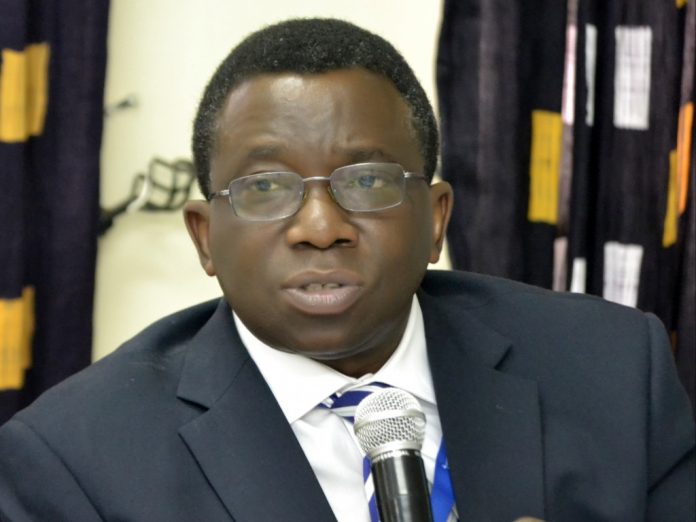
Minister of Health, Prof. Isaac Adewole, made the decision known in a statement issued by Mr Olajide Oshundun, Assistant Director of Information in the ministry, in Abuja on Tuesday, May 1, 2018.
The minister directed the National Agency for Food and Drug Administration and Control (NAFDAC) to ban the issuance of permits for the importation of codeine as active pharmaceutical ingredient for cough preparations.
He also directed the Pharmaceutical Council of Nigeria (PCN) and NAFDAC to supervise the recall for labelling and audit trailing of all codeine containing cough syrups nationwide.
Adewole said government had also banned the sale of codeine containing cough syrup without prescription.
He said the directive became necessary due to the gross abuse of codeine in the country.
In this regard, the minister said PCN had been directed to continue enforcement activities on pharmacies, patent and proprietary medicine vendors’ shops and outlets throughout the country.
He also directed NAFDAC to carry out its functions in compliance with the new directives.
The minister said cough syrups containing codeine should be replaced with dextromethorphan which is less addictive.
Dextromethorphan is a cough suppressant used to treat coughing; it is also a drug of the morphinan class with sedative, dissociative, and stimulant properties.
Adewole said the ministry would ensure collaboration among regulatory agencies for effective implementation of extant laws, regulations, policies and guidelines on codeine control and usage.
He said the regulatory agencies included NAFDAC, PCN, National Drug Law Enforcement Agency (NDLEA), Nursing and Midwifery Council of Nigeria (NMCN).
“These agencies shall work together to increase pharmacovigilance around codeine, tramadol and other related substances of abuse,’’ Adewole said.
Adewole said the ministry would partner National Orientation Agency (NOA), Nigeria Football Federation (NFF), football celebrities and other celebrities to drive the national campaign against drug abuse.
“The ministry shall ensure that drug treatment intervention for victims of substances abuse shall be undertaken across the spectrum of health care delivery system in the country,’’ he said.
The minister said civil society organisations (CSOs) would be strengthened to deliver effective sensitisation, prevention, treatment and rehabilitation services.
He renewed the commitment of government to ensure the full implementation of the National Drug Distribution Guideline (NDDG) by Jan. 1, 2019.
He added that the NDDG would also ensure the closure of all open drug markets penultimate the implementation date of the NDDG that is, Dec. 31, 2018.
Rehema Tukai grew up in Kondoa and works in Dodoma, Tanzania’s capital city. Until now, visiting her family in Kondoa involved a five-hour journey along a bumpy and dusty road. Thanks to a new road co-funded by the African Development Bank (AfDB), it takes her a little over one hour to travel the same distance.
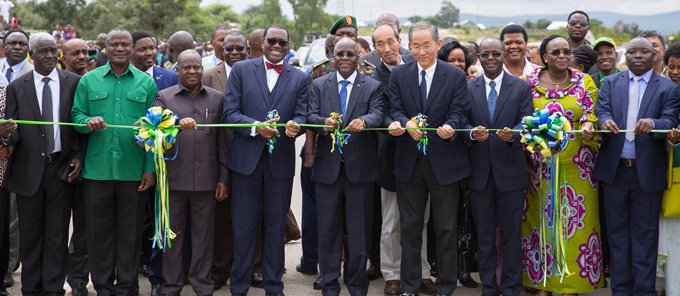
Official opening of the Dodoma-Babati Road in Tanzania
Tukai was one of several locals to celebrate when the President of Tanzania, John Pombe Magufuli, and the President of the AfDB, Akinwumi Adesina, commissioned the Dodoma-Babati Road project on Friday, April 27, 2018.
With the completion of the road, traders and travellers now conduct immigration procedures on only one side of the border, reducing time and costs. Thanks to these efforts, the volume of trade between Tanzania and the rest of Eastern and Southern Africa has risen to $1.1 billion in 2016, a level both Adesina and Magufuli described as historic.
Magufuli said the Dodoma-Babati Road would improve the lives of people living in Tanzania and neighbouring countries. “Projects financed by the African Development Bank have a real impact on people,” Magufuli said, thanking the bank and the Japan International Cooperation Agency (JICA) for their strategic partnership in co-financing the project.
“Roads change everything. They bring hope alive. Such is the case of this road. While economic activity expands, so will family connections. It has brought much joy to families,” said Adesina, referring to beneficiaries such as Tukai.
The 251-kilometre road is expected to provide rural communities with renewed hope, through expanded economic activities, improved access and better prices for farmers, and to transform several communities.
Adesina congratulated Tanzania on the 54th anniversary of the union of the Republic of Tanganyika and the People’s Republic of Zanzibar and described the country’s unity as its strength and an example for the rest of Africa.
“Tanzania is headed in the right direction. With 7% economic growth this year, it has posted one of the highest growth rates in the world. That shows me the future of the Republic is very bright indeed! There will be need for massive physical and social infrastructure. There will be need for a Dodoma Airport. There will be need for a new road network to support increased transport, especially the Dodoma Ring Road. I wish to assure you that the African Development Bank will strongly support you on critical infrastructure for the new City of Dodoma,” Adesina said.
The AfDB says it has invested $3.6 billion in Tanzania, with an active portfolio of $2 billion, 53% of which is in road projects. The institution has reportedly invested more than $1.1 billion in five road projects in Tanzania, covering close to 1,400 kilometres.
At the commissioning ceremony, the Japanese Ambassador to Tanzania, Masaharu Yoshida, commended the African Development Bank for its contribution toward the completion of the project.
“Our cooperation with the Bank on this project will further strengthen the relationship between Japan and Tanzania and with Africa as a whole,” said Yoshida. “This road will contribute to the economic growth of Tanzania and all of Africa because it is, in fact, part of the ‘Trans-African Highway No. 4’ that connects Cape Town-Lusaka-Dodoma-Arusha-Nairobi up to Cairo.”
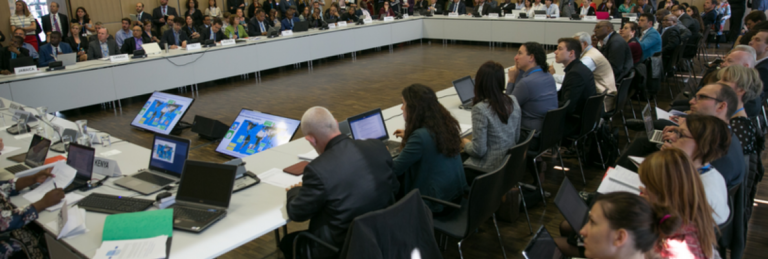
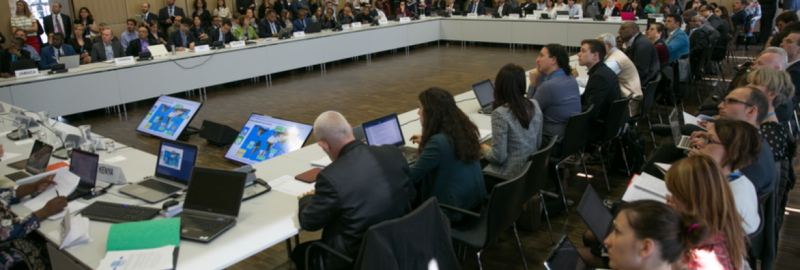
In an effort to step up immediate climate action, experts from around the world are meeting on May 1 and 2, 2018 in Bonn, Germany to discuss the policy options, technological innovations, and best practices on circular economies to achieve emission reductions and generate sustainable development benefits.
The dialogue will check progress, reaffirm the goals of the Paris Agreement and aim to find solutions
The gathering is taking place as part of the so-called Technical Expert Meetings on Mitigation during the 2018 UN Climate Change Conference in Bonn, which aims to identify activities that have a high potential for emission reductions in order to boost climate action before 2020.
Importantly, the expert meeting is aligning its discussion with the format of the year-long Talanoa Dialogue, an important international conversation around ambition now and in the future.
Specifically, the dialogue will check progress, reaffirm the goals of the Paris Agreement and aim to find solutions as per how countries can increase their ambition now and in the next round of their national climate action plans, officially termed “Nationally Determined Contributions”.
As per tradition in the Pacific region, a “talanoa” invites participants to find solutions for the common good through story-telling. The Talanoa Dialogue will invite participants to share climate ambition-related stories around three questions:
Where are we?
Where do we want to go?
How do we get there?
The Technical Expert Meeting will also structure its discussions around these questions to ensure that expert voices can easily be fed into the Talanoa Dialogue. This will be important for the dialogue’s political phase at the UN Climate Change Conference (COP24) at the end of the year in Poland, where high-level officials from around the world will take forward all input received during the year.
Led and organised by the UNFCCC secretariat, the United Nations Industrial Development Organisation, and the World Business Council for Sustainable Development, participants will discuss currently available policies and technological solutions as well as innovative approaches on waste-to-energy and supply chain re-design solutions. These are regarded as integral elements to achieving a circular economy with key economic, environmental and employment benefits.
The circular economy is becoming an established way of creating value, and ultimately prosperity. It works by extending a product’s lifespan through improved design and servicing, and relocating waste from the end of the supply chain to the beginning – in effect, using resources more efficiently by using them over and over, not only once.
A number of experts representing the public and private sectors as well as the civil society from Africa, Asia, Europe, Latin America and the Pacific, will share their hands-on experiences. Their experiences will help to identify ways forward, as well as necessary actions to be taken by Parties, non-Party stakeholders such as cities or businesses and organizations to replicate and upscale innovative approaches. These discussions will also help identify best practices on waste to energy and supply chain re-design.
The expert meeting is part of the technical examination processon mitigation (TEP-M), which was initiated in 2014 with the aim of exploring high-potential mitigation policies, practices and technologies with significant sustainable development co-benefits that could increase the mitigation ambition of pre-2020 climate action.
Inadequate use of medications, inhalers and taking overdose of drugs, are major challenges facing the management of asthma in Nigeria, according to a consultant family physician, Dr Oluwajimi Shodipo.
Minister of Health, Isaac Adewole
Shodipo, who works at the Lagos State University Teaching Hospital (LASUTH), Ikeja, made the disclosure while speaking on the 2018 World Asthma Day with the News Agency of Nigeria (NAN) on Tuesday, May 1, 2018 in Lagos.
The World Asthma Day (WAD) is marked annually on the first Tuesday of the month of May. The 2018 WAD theme is: “Never Too Early, Never too Late. It’s Always the Right Time to Address Airways Disease’’.
Shodipo said: “Asthma is a chronic condition that is managed both by the use of medications and also some lifestyle modifications.
“However, the policy now is to discourage patients from using tablets and oral medications frequently because of the side effects that can occur from the systemic use of tablets.
“Some of the side effects that we see, especially in those who use steroids for long periods of time, include thinning of the hair and cataracts; some people become obese.
“Some, due to becoming obese, develop diabetes mellitus, hypertension, bleeding disorders; all these occur from the use of steroids.
“Unfortunately, what happens a lot of times is that people take an overdose of these medications, which is a major challenge in managing asthma in our environment,’’ he said.
The consultant told NAN that the general advocacy now was for people to move away from using oral drugs and start using devices such as the inhaler.
According to him, the advantage of those devices is to ensure that the medication is delivered at the exact point where it is needed, which are the lungs.
“It also ensures that the medications do not get absorbed systemically into other parts of the body and thereby reduce the side effects.
“Unfortunately, a lot of people are using the devices and complaining that they are not functioning; they say anytime they take the tablets, they feel better.
“What we have discovered is that the reason this is occurring is because a lot of people are not using the devices very well.
“So, there is a general push that doctors, when they are prescribing the devices, ensure that when the patients buy them they are actually taught how to use it and also be demonstrated.
“It should be emphasised at every clinic,” he said.
Shodipo also urged government at all levels to play their roles by ensuring that the devices became cheaper so that more people could use them.
According to Shodipo, it will also help to ensure that people have their asthma properly treated, without causing side effects that could occur from taking tablets.
Also, Dr Olufunke Adeyeye, a Consultant Respiratory Physician, at LASUTH, told NAN that managing asthma would also require support from schools, families and the community.
According to Adeyeye, there is need to train more doctors to manage asthma in the country.
“People should work together to support and help those suffering from the condition to manage their conditions.
“Teachers, parents, brothers, sisters and the community should be taught the risk factors so that they can help those with the condition.
“The treatment of asthma has changed over the years; doctors in Lagos State are being trained, but there is need to train more doctors across the country.
“Many doctors need to change in their pattern of managing asthma,” Adeyeye said.