Criticisms have trailed the inclusion of the Cross River State Security Adviser, Mr. Jude Ngaji, as a member of the judicial commission of inquiry constituted to investigate the genesis of the Boki oil palm estate crisis that resulted in loss of lives and property, and left several people traumatised.
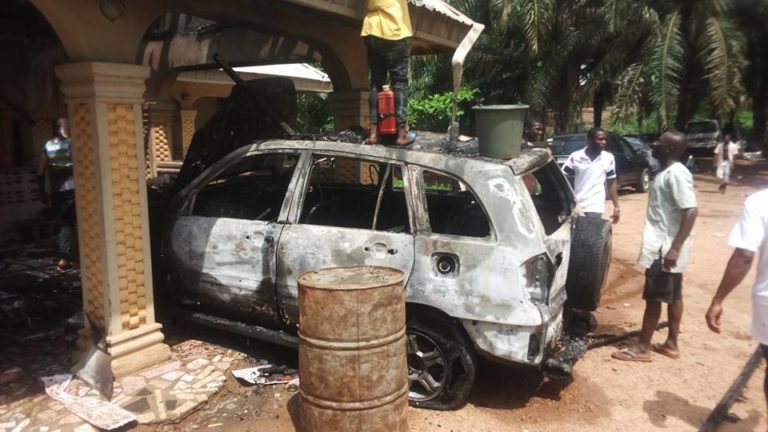
House of the Clan Head of Okundi
A circular issued on Wednesday May 2, 2018 by Mr. Christian Ita, the Chief Press Secretary to Governor Benedict Ayade, listed Mr. Ngaji as part of the six-man team expected to be chaired by Justice M. Eneji.
Other members of the committee include Justice Edem Ekefre, former Attorney General and Commissioner of Justice, Mr. Attah Ochinke, Pastor Sam Inyang and Dr. Mercy Akpama.
The choice of the State Security Adviser (SSA) as affiliate of the group has raised questions on the integrity of such a high level and sensitive panel to effectively carry out its responsibilities and deliver on her mandate.
Human rights lawyer, Dr. Joseph Odok, in a statement released shortly after the names were made public, expressed concern over the personality of the SSA and urged the governor to immediately replace him with someone that has a higher pedigree and undeniable character.
“The distrust around Mr. Ngaji is also not unconnected with perceived compromise and refusal to act in some critical moments in the days of Boki crisis especially when his services were mostly needed,” Dr. Odok said.
He argued that Mr. Ngaji’s lack of security experience is evidence in the poor management and escalation of the feud which has empowered a certain group over others to unleash mayhem on innocent and law abiding citizens in the state.
“Most times he basically refused to intervene, he allowed our people to die, or allowed a particular group of miscreants kill our people,” he lamented.
Rather than the option of the SSA as element of the commission, the rights campaigner advised Governor Ayade to expand his horizon and search for a more capable security expert to help decipher the ongoing chaos in Boki.
The document issued by the spokesman to the governor highlighted that the current management committee of the contentious oil palm estate has been dissolved.
It also added that the Nigerian Army has taken over full control of the oil palm estate to douse the renewed hostility as well as restore law and order in the affected communities.
Health authorities have declared a heatwave red alert in the southern Pakistani city of Karachi, after temperatures surged above 40 and winds came to a halt in the coastal region.
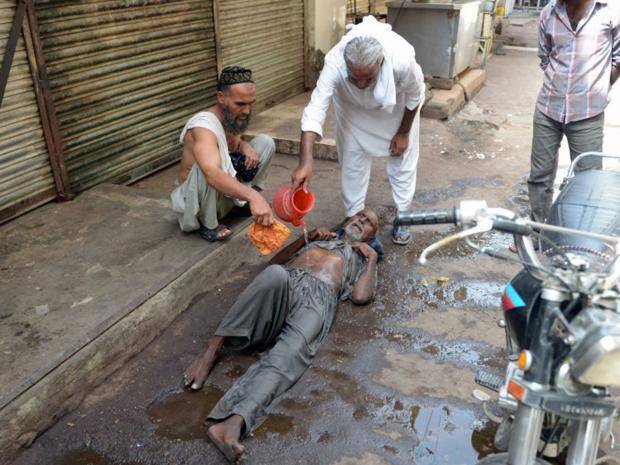
Authorities have declared a heatwave red alert in the southern Pakistani city of Karachi
“We have ordered hospitals, children health care units and clinics to be vigilant for possible emergencies,” said Nasir Durrani, a local official in Karachi, where a severe heatwave in June 2015 caused around 2,000 deaths.
“People have been asked to stay indoors, consume as much liquids as they can and not to face the sun,” Durrani said, terming the situation alarming.
Temperatures in the city of more than 20 million went up to 44 degrees Celsius on Thursday, May 3, 2018 and were expected to touch the same level on Friday, May 4, meteorological department local chief Shahid Abbas said.
“What makes things worse is a high humidity level, at nearly 80 per cent,” he said.
Temperatures were expected to begin sinking Saturday, when winds from the Arabian Sea start blowing again.
The 2015 heatwave stuck the city during the Muslim holy month of Ramadan, when people fast from dawn to dusk, a factor that contributed to the high death toll and aggravated the situation.
No death has been reported so far this time.
Pakistan, sandwiched between the highly industrialised nations of China and India, faces some of the worst fallout from climate change.
On Sunday, temperatures in a Pakistani town near Karachi surged above 50 degrees Celsius, the highest ever recorded on earth in the month of April.
Carbon dioxide (CO2) emissions in the EU increased by 1.8 per cent in 2017, compared to the previous year, the EU’s statistics office said on Friday, May 4, 2018.
EU Commissioner for Climate Action and Energy, Miguel Arias Cañete
Emissions rose in a majority of the bloc’s 28 countries, Eurostat said, noting that the highest increases were reported in Malta (12.8 per cent), Estonia (11.3 per cent) and Bulgaria (8.3 per cent).
In some of the biggest member states of the bloc – notably France, Italy and Spain – there were increases, too.
In Germany, a slight decrease of 0.2 per cent was reported.
Carbon dioxide is considered to be largely responsible for climate change and global warming.
The EU has made international commitments under the 2015 Paris climate change accord to reduce CO2 emissions.
Eurostat estimates the figures based on monthly energy statistics.
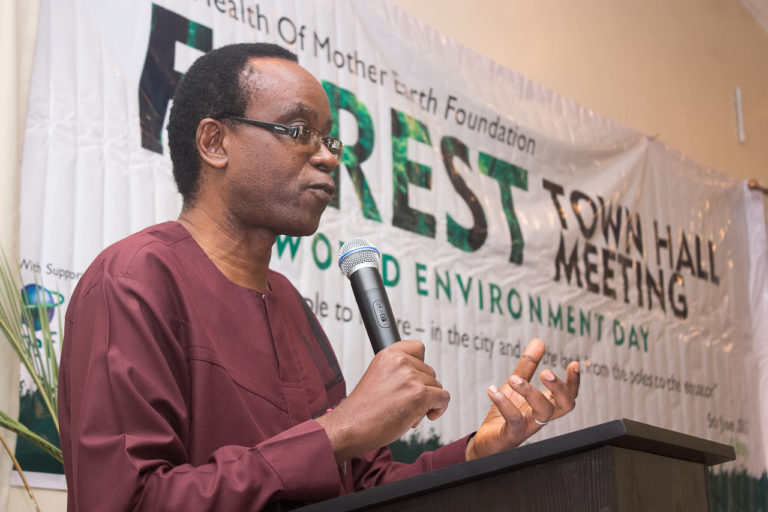
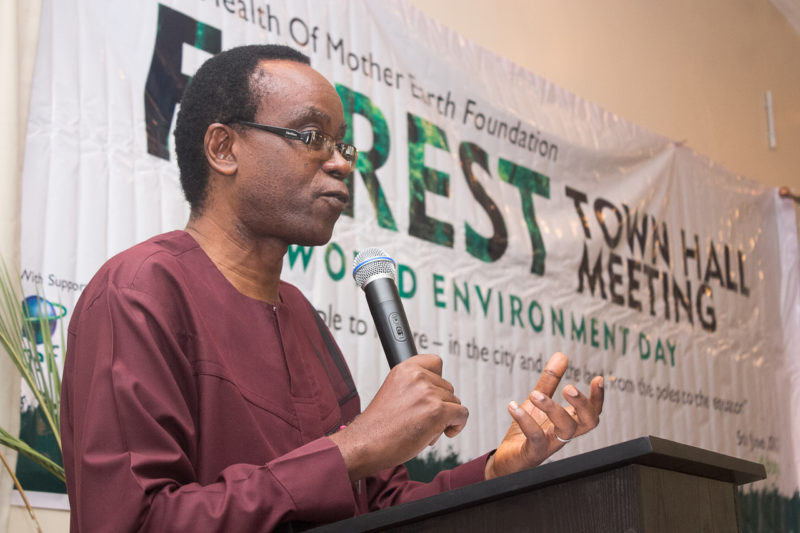
Nnimmo Bassey, Director, Health of Mother Earth Foundation (HOMEF), in this presentation delivered on Thursday, May 3, 2018 at the Stakeholders’ Dialogue on Building Trust and Common Ground for a Successful Clean-Up Port Harcourt, Rivers State, describes the Ogoniland clean-up exercise as not only a positive alternative vision, but also an opportunity to build and consolidate environmental justice
Nnimmo Bassey
Pollution is the number one killer in the world today. It is deadlier than the wars in the world today, than smoking, malnutrition and others. This was the finding published by one of the world’s most respected medical journals, on October 19, 2017. The research looked into air and water pollution, among others. We all know that the Niger Delta is classified among the top 10 most polluted places in the world. And we all know some of the key findings of the United Nations Environment Programme (UNEP) report on the assessment of the Ogoni environment. All water bodies are polluted with hydrocarbons, soils polluted to a depth of 5 metres at a number of places and benzene is found at levels 900 times above World Health Organisation standards. We all know that the Niger Delta has the lowest life expectancy level in Nigeria. This is why the clamour for a clean-up of the region has been a long-drawn struggle.
The history of the struggle for the clean-up of Ogoni environment is that of the struggle for environmental, socio-economic and political justice. This struggle picked steam in the late 1980s and peaked in the early and mid-1990s. The enterprise can be characterised as a struggle for the right to live in dignity, pursue self-actualisation and build a future for upcoming generations. The bedrock was the demand for justice. This was captured through well-articulated demands for the remediation of the damaged Ogoni environment. With cautious and robustly peaceful organising, the demands were catalogued in a carefully crafted Ogoni Bill of Rights (OBR) of 1990.
The Bill noted that although crude oil had been extracted from Ogoniland from 1958, its inhabitants had received NOTHING in return. Articles 15-18 of the OBR illustrate some of the complaints of the people:
That the search for oil has caused severe land and food shortages in Ogoni – one of the most densely populated areas of Africa (average: 1,500 per square mile; national average: 300 per square mile).
That neglectful environmental pollution laws and sub-standard inspection techniques of the Federal authorities have led to the complete degradation of the Ogoni environment, turning our homeland into an ecological disaster.
That the Ogoni people lack education, health and other social facilities.
That it is intolerable that one of the richest areas of Nigeria should wallow in abject poverty and destitution.
This Bill of Rights was the precursor to the Kaiama Declaration of the Ijaws, lkwerre Rescue Charter, Aklaka Declaration for the Egi, the Urhobo Economic Summit, Oron Bill of Rights and other demands of peoples’ organisations in the Niger Delta. It became an organising document for the Ogoni people and also eventually inspired other ethnic nationalities in the Niger Delta to produce similar charters as a peaceful way of prodding the government into dialogue and action.
Although the OBR has never been directly addressed by government, the detailed assessment of the Ogoni environment that culminated in the release of the now famous United Nations Environment Programme (UNEP) report on August 4, 2011 can be said to be a response to some of the demands of the OBR. We note at this point that before the report was released information leaked out that the bulk of the blame for the pollution of Ogoni had been placed on the people. This led to a flurry of protests and by the time the report was eventually released the blame for the massive environmental destruction was more acceptably situated. It could not have been otherwise because the payment for the study was made on the basis of the polluter-pays principle by the lead international oil company (Shell Petroleum Development Company – SPDC) that operated in the area.
Resilient and Successful Struggles
Community organising succeeds where the people have identifiable goals that address their needs or issues. The resilience of a struggle is assured when the people and their leaders have a clear strategy, are able to adapt to unfolding situations, and are willing to change tactics as may be necessary without repudiating the core of what brought them together. This flexibility is possible when the people have a shared understanding of what their collective objectives are and what sacrifices may need to be made to attain the targets. The Ogoni struggle, through the leadership of the Movement for the Survival of Ogoni People (MOSOP), has been an exemplary case study for other nationalities to learn from.
Understanding the depth of the crisis and determining to speak truth to power was aptly captured in one of the last poems, Silence Would be Treason, that Ken Saro-Wiwa wrote while in prison:
But while the land is ravaged
And our pure air poisoned
When streams choke with pollution
Silence would be treason
As we consider the Ogoni clean-up today, we bear in mind that Ogoni has become a global metaphor for resilient community organising against impunity. Saro-Wiwa foresaw this when he wrote in his prison memoir, A Month and A Day:
In virtually every nation state there are several “Ogonis” – despairing and disappearing people suffering the yoke of political marginalisation, economic strangulation and environmental degradation, or a combination of these, unable to lift a finger to save themselves. What is their future?
The global component of the Ogoni situation has important implications for those who see it as a local struggle. It also has implications for those whose geographies are outside the limits of Ogoni. Those within must understand that their success charts the path that would lead to the clean-up of other regions. For those looking in from the outside, the stakes are no less because of the interconnectedness of our environment.
The Ogoni Environment is not isolated from the wider Niger Delta environment. Polluted ground water or polluted air does not obey political or traditional or cultural boundaries. When one part is cleaned up there is the urgent necessity to step to the next spot. Seeing everyplace as discrete and separate would only lead to living in a fool’s paradise believing that the land is clean whereas pollution from elsewhere would be doing its deadly job, unseen, unnoticed except in the festival of funerals that would persist.
Oil Damage Narratives
There was a time when the oil companies operating in the Niger Delta could not boldly claim that the hydrocarbons pollution in the area is caused by local peoples. There was copious evidence of the ill-maintained pipelines and flow stations. Oil spills from equipment failure were the norm. Poorly handled toxic wastes and produced water could not be hidden. And, of course, gas flares continue to stick their sooty fingers in the air as criminal giant cigarettes. The oil companies laboured in vain to shift blames. Reports from communities, the media and environmental justice campaigners continued to pile up evidence of the guilt of the oil companies.
The tide began to change with the rise of violent militancy in the oil fields. Oil infrastructure became targets and the pollution that emanated from the conflicts could neither be hidden nor denied. In fact, the explosions were marked as badges of achievement by the groups that carried out the attacks. Violent militancy achieved aspects of their objectives: gaining attention of the governments that are demonstrably more interested in pipelines and petrodollars than in the peoples and their environment. The militarisation of the Niger Delta rather than bring peace is contributory to the insecurity of lives and infrastructure in the region.
And so the environment suffered and new sources of pollution became entrenched in the region. Oil companies found a plank on which to hang blames for the pervading environmental degradation. They also found excuse in their operational locations being “inaccessible” due to insecurity and with that oil spills could go unchecked for any length of time.
The Amnesty Programme in its first and second coming helped to curtail deliberate tampering with oil facilities. But, a non-violent but equally deadly version of interferences crept in by way of what is generally called illegal refineries, but which we prefer to call bush refineries.
The bush refineries are incredibly polluting. The operators either do not know how toxic the environment in which they work is or they simply do not care. Obviously, the refineries meet the need for petroleum products in zone of perpetual shortages and high costs. Obviously, the operators have economic gains from the enterprise. However, what does it profit a person to make piles of money and not live to enjoy it? What does it benefit a person to accumulate wealth and pollution and sentence entire communities and future generations to death?
Today, when anyone thinks of the pollution of the Niger Delta, decades of incontrovertible pollution by oil companies are now forgotten and all fingers are pointed at the bush refineries.
It is so bad that even when the Port Harcourt refinery continually belches smoke into the atmosphere, fingers are pointed at the bush refineries as the cause of the soot in the atmosphere. The burning, bombing and strafing of bush refineries’ drums and barges of refined or unrefined petroleum products by security forces are accepted as signs of operational successes. We tend to think that pollution does not matter. How wrong can we get!
All the oil companies have to do today to ensure the narrative is shifted away from them is to take some journalists on their choppers for pollution tours, picking out the awful patches destroyed by bush refiners. Who would not do that? The fact that industrial scale oil theft has been going on for decades is hardly spoken of these days because of the visible and graphic horrors of the bush refineries.
Deadly Impacts
The Niger Delta is so scarred, so polluted today that what we have on our hand is an environmental emergency, no less. Our air, water and land are all polluted. We plant crops and end up with poisoned harvests. We cast our nets and hurl in poisoned fish, when we see any. We breathe and our nostrils are blackened by soot. Our rivers, streams, creeks and ponds are clearly polluted, yet we drink the waters for lack of choice. All these have deadly impacts.
Oil pollution causes habitat loses, biodiversity degradation, loss of livelihoods and loss of lives.
The heavy metals extracted along with crude oil include cadmium, lead, mercury, arsenic, copper, iron, barium and many others. These have serious risks to human health and wildlife. Health risks include abdominal pains, kidney diseases, nervous problems, bronchitis, fragility of bones, prostate and lung cancer. They can also cause brain malformations as well as pregnancy and birth complications.
Mercury can rapidly penetrate and accumulate in the food chain. Acute poisoning produces gastroenteritis, inflammation of the gums, vomiting and irritation of the skin with dermatitis which can turn into ulcers.
The flared associated gases cause a cocktail of dangerous health impacts including conjunctivitis, bronchitis, asthma, diarrhoea, headaches, confusion, paralysis and others. Of course, we know of the acid rain that occurs when sulphur and nitrous oxides mix with moisture in the atmosphere.
Poorly handled produced water contaminates creeks, rivers, lakes, aquifers and other water sources. This causes the salination of these waters, soil and associated biodiversity. Salts and metals present can include cyanide which can cause immediate death if ingested. Cyanide in low doses can lead to intense headaches, sour taste, and loss of smell and taste, dizziness, vomiting, difficulty in breathing, anxiety, convulsions, loss of consciousness. In chronic intoxication it can produce goitre.
Clearly, it is extremely unsafe for untrained and unprotected persons to go near crude oil spills and materials used in the extraction processes. Seeing our people literally swim in crude oil and fire in the bush refineries is absolutely appalling.
Cleaning Up Today for Tomorrow
The Ogoni clean-up exercise is an intergenerational investment.
For the short time he was alive and in office, Thomas Sankara of Burkina Faso understood that a people that cannot feed themselves are not truly free. He also saw the direct link between environmental sanity and social justice. In analysis of the work of this great son of Africa, Amber Murray states:
Liberation is incomplete when people hunger daily. Environmental protection and sustainability were therefore crucial to Sankara’s strategic thinking. Today, the continent faces serious environmental and climatic challenges that affect food production, access to water and public health. These challenges include water pollution, deforestation, soil erosion, droughts, floods, desertification, insect infestation, and wetland degradation. Environment protection is inextricably linked to social security, poverty eradication, and health.
The clean-up process has many components and many actors. While the Hydrocarbon Pollution Remediation Project (HYPREP) and other levels of government have various roles to play, there are also the contractors, consultants and the community leaders and people. We have individual responsibilities as well as collective responsibilities. The federal government and its agencies have responsibilities and so do the state and local governments. The clean-up is a complex social engineering project that goes beyond the technicalities that we will soon be seeing with machines, chemicals and diverse equipment. We refer to this exercise as social engineering because apart from remediation the environment we have to decolonise our thinking and relationships. All these require some work.
First, we have to understand that the clean-up is primarily for the sake of our children and future generations. If this fails we could as well look forward to a future in which the Niger Delta will be a museum with no inhabitants because not just the people, but the ecological systems would all be dead. This places a moral burden on all of us, on policy makers, on leaders and on us the people.
Successful social engineering calls for the spirit of sacrifice. The clean-up will produce new skill sets, new jobs and massive employment that would stretch for several years if we get this first steps right. Again, we emphasize that this will require sacrifice. If anyone approaches this sacred task of building an environment for future generations with the aim of profiteering, thievery or self-aggrandisement, you can be sure that the entire scheme will ship wreck.
No contractor should cut corners. No individual or company should trigger new pollutions. As my friend, Inemo Semiama, says, “You cannot successfully mop the floor with the tap running.”
Wisdom
This epic social engineering will require the wisdom of our peoples. It will require local knowledge. The youths must embrace the spirit of sacrifice for it is the way to build the moral authority that will be needed to question activities and actions that may occur in the process of the clean-up implementation. These could include the calls for transparency, for ensuring the availability of funds and for insisting that delivered jobs match specifications, expectations and set milestones.
This effort will also demand and require collective wisdom through popular consultations. The Ogonis have the critical advantage that makes this possible because of the existence of the mass organ, MOSOP – with its youth, women and other arms. Working organically together, there will be no shortage of diversity of wisdom to tackle even the most intractable problems.
Ogoni is a laboratory, a classroom. A careful implementation of this massive social engineering programme will illustrate how the oppressed can escape from being put down by the wielders of privilege and power.
Going Forward
Halting production never halted pollution. Those responsible must continue to bear the responsibility. Those instigating new sources of pollution must halt such acts for the sake of our children, our tomorrow and for the sake of other beings with which we share the planet. We cannot build a liveable tomorrow on a polluted today.
Our slogan as the exercise takes roots should be: A Clean Ogoni: Zero Tolerance for Old and New Pollution.
We have a right to claim what belongs to us as ours. However, taking steps that end up killing us or destroying our environment for the sake of expressing our right of ownership is both a false reasoning and a false economic move. When we do things that compound our problems we are simply playing into the hands of the forces of exploitation.
This is our opportunity to reclaim our humanity. It is time to reclaim our dignity. It is time for all of us in the Niger Delta, nay, Nigeria to stand together in solidarity. There is no part of this nation that is not crying for environmental remediation. From the polluted creeks of the Niger Delta to the contaminated lagoons of Lagos and the rivers in the north, to the Sambisa Forest polluted with military armaments and erosion ravaged lands of the east, we are united by our ecological challenges.
The clean-up is a positive alternative vision. It is time for vigilance based on knowledge. Not a time for complacency. Not a time to be silent. It is time to hold government and its agencies, oil companies and our leaders accountable. It is time to demand accountability and responsibility of ourselves.
The clean-up is an opportunity to build and consolidate environmental justice. Together we can leverage the opportunity. It is a path we must walk together and not alone. As the African proverb says, you may go fast by going alone, but you can only go far by going together. We are that intertwined and interconnected.
A Lagos High Court sitting at Igbosere has ordered that the case filed by PSP operators seeking to stop the Lagos State Government from relieving them of their job of managing domestic waste should be transferred to a judge for trial.
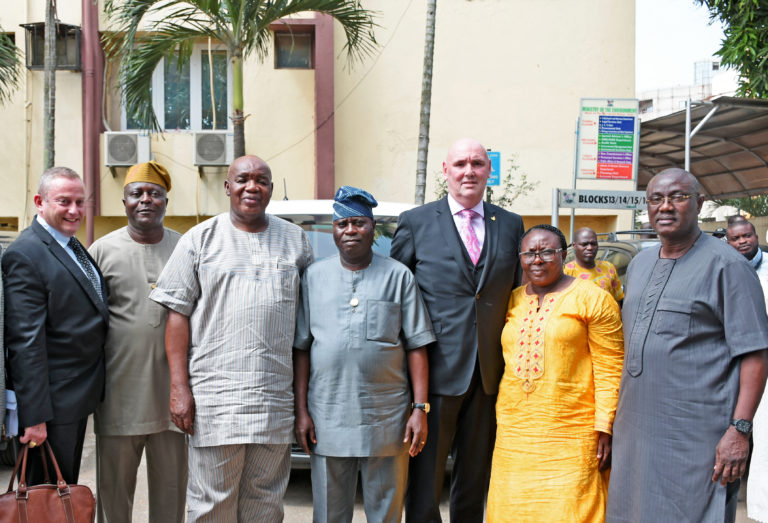
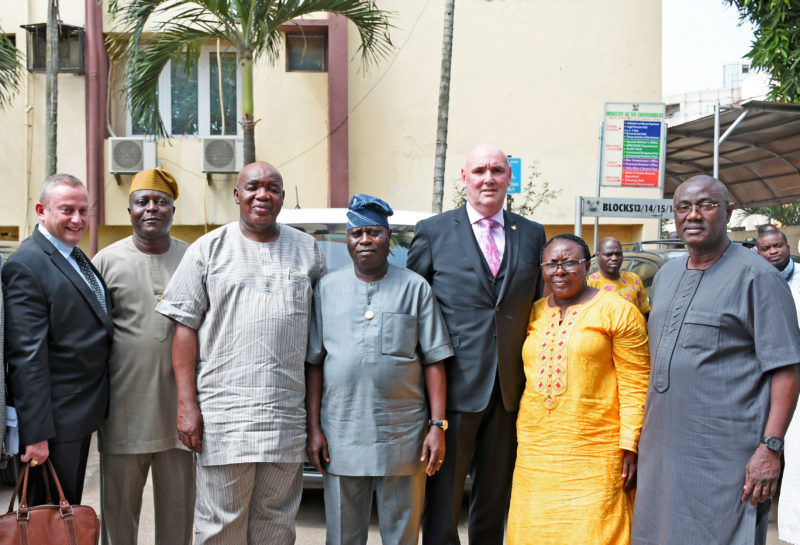
Still no truce: Thomas Forgacs, Chief Operations Officer, Visionscape Sanitation Solutions; Abiodun Bamgboye, Permanent Secretary, Ministry of Environment; Babatunde Durosinmi-Etti, Lagos State Commissioner for Environment; Babatunde Hunpe, Special Adviser to the Lagos State Governor on Environment; John Irvine, Chief Executive Officer, Visionscape Sanitation Solutions; Bamidele Garko, Chief Executive Officer, Bamitony and Company, Ikoyi; and Lanre Wilton-Wawdell, Chief Executive Officer, Cleanway Limited at the Waste Collections Operators Participation roundtable meeting at the Ministry of Environment office, Alausa Ikeja Lagos which held recently
Justice Taofiquat Oyekan-Abdullahi on Thursday, May 3, 2018 ruled that the case should proceed for trial after both parties failed to reach out-of-court settlement as directed by the court.
The News Agency of Nigeria (NAN) reports that the case has been on Case Management Conference (CMC) where parties in a case are advised to resolve issues without recourse to litigation.
Oyekan-Abdullahi also said that the new amended statement of claim from PSP should be served on the other parties, who should in turn respond to the amendment or otherwise.
She advised that the legal system should not be allowed to drag on for long so that people would be comfortable to come to court.
Earlier, counsel to the PSP operators, Mr Tobe Owoeye, pleaded with the court that they had a pending application for the amendment of statement of claim.
Owoeye said the amendment would affect not just the Lagos State Government, but the fifth and sixth defendants in the suit – Visionscope and the ABC Sanitation Ltd.
He said the fifth and sixth defendants had claimed that the initial statement of claim by PSP did not affect them, hence, the need for the amendment to include them.
“But unfortunately it actually does because whatever judgment that is going to be given will affect them.
“But since they wanted us to spell it out in clear terms, that is what we have done,” he said.
Counsel to first, second and third defendants, Ms Adetokunbo Ladega, told the court that the position of the defendants was to proceed with the trial.
Ladega was of the opinion that they should proceed to trial since the parties could not reach a compromise on the issue.
Joined in the suit as respondents are Commissioner for the Environment as well as the Attorney-General and Commissioner for Justice.
Others are Visionscope Sanitation Solutions Ltd and the ABC Sanitation Solutions Ltd.
NAN reports that after the case transfer, a date will be fixed for the hearing.
The African Development Bank, (AfDB) says that no fewer than 650 million Africans currently live without electricity.
Dr Victor Oladokun, the AfDB Director, Communication and Media Relations, disclosed this on Wednesday, May 2, 2018 while welcoming African Journalists on a Media Tour to Saemaul Undong Model village project, in Yamoussoukro, Cote d’Ivoire.
“About 650 million people in Africa are currently without light and some communities till today have never seen electricity.
“We have a commitment to ensure universal electricity commitment and few other commitments,’’ he said
He said that Africa by 2050 would have a population of close to two billion people, a population of China and India put together.
He added that about 90 per cent of the people living in rural areas in Africa live in darkness.
“A state like Lagos in Nigeria has about 25 million population, five million commutes out of Lagos.
“Lagos, like Addis are likely to double its population to 40 to 45 million in the next 20 years, are we prepared? he asked.
He said that the continent needed to work hard to be able to manage the population with the basic needs.
He noted that the bank had five key areas of focus to ensure effective development of the region.
The five key areas, he said, include: Light up Africa, Feeding Africa, Integrating Africa, Industrializing Africa and Improve Quality of Life in Africa.
He said that the bank had continued to expand its operations to take business closer to consumers in the field.
According to him, the bank has established 40 offices in different countries in the region as against the 14 it used to have.
“As a bank, we need to be closer to the consumers and the private sector,’’ he said
He added that the bank had refocused its effort to ensure that rural areas were developed over urban centres to bring the desired result in the region
The World Health Organisation (WHO) has warned that records for extreme weather events are being broken at an unprecedented rate, and that there is a real risk for the world to lose its capacity to sustain human life if the Earth’s climate is further altered by adding ever more heat-trapping greenhouse gases.
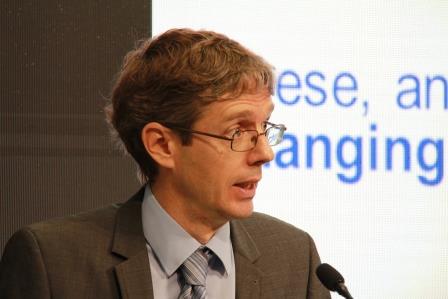
Dr Diarmid Campbell-Lendrum, lead scientist on climate change at WHO. Photo credit: graduateinstitute.ch
WHO officials expressed the warning whilst presenting new data at the 2018 UN Climate Change Conference in Bonn shows that nine out of 10 people breathe air containing high levels of pollutants and that around seven million people every year die from exposure to fine particles in polluted air.
This figure could be far surpassed by deaths caused by rising global temperatures and extreme weather if emissions, primarily caused by the burning of fossil fuels and deforestation, are allowed to rise at their present rate.
“We see the Paris Agreement as a fundamental public health agreement, potentially the most important public health agreement of the century. If we don’t meet the climate challenge, if we don’t bring down greenhouse gas emissions, then we are undermining the environmental determinates of health on which we depend: we undermine water supplies, we undermine our air, we undermine food security,” said Dr. Diarmid Campbell-Lendrum, WHO Team Lead on Climate Change and Health.
A main cause of the deaths mentioned in the new WHO report is indoor cooking with inefficient stoves.
Around three billion people – more than 40% of the world’s population – still do not have access to clean cooking fuels and technologies in their homes, the main source of household air pollution. Cooking with wood and coal is also main driver of deforestation, which in turn negatively affects the world’s climate.
Each year, close to four million people die prematurely from illness attributable to household air pollution from inefficient cooking practices using polluting stoves paired with dirty solid fuels and kerosene, emissions from which add to the growing climate challenge.
“We have a unique opportunity to get these two things, climate change and health, right if we get air pollution right. The health benefits of climate mitigation will pay for the costs of climate mitigation,” said Campbell-Lendrum.
The second main cause of the seven million annual deaths mentioned in the report is the burning of fossil fuels for power, heating and transport which leads to outdoor air pollution.
Fighting climate change by investing in energy-efficient power generation and renewables, planning greener cities with energy-efficient buildings, and providing universal access to clean, affordable energy technology are key ways in which regions can decrease ambient air pollutants, the report finds.
The good news is that countries are increasingly taking up the opportunity to fight climate change and air pollution at the same time. More than 4,300 cities in 108 countries are now included in WHO’s ambient air quality database, making this the world’s most comprehensive database on ambient air pollution.
The report points to Mexico City’s 2016 commitment to cleaner vehicle standards, including a move to soot-free buses and a ban on private diesel cars by 2025.
This year WHO will convene the first Global Conference on Air Pollution and Health (October 30 – November 1, 2018) to bring governments and partners together in a global effort to improve air quality and combat climate change.
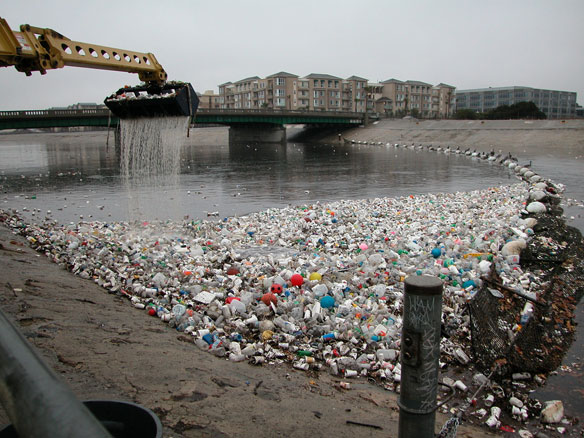
Some environmentalists have called for concrete actions against the spate of micro-plastics pollution in the nation’s water bodies.
Plastic pollution
The environmentalists made the call in various interviews with the News Agency of Nigeria (NAN) in Lagos on Thursday, May 3, 2018.
Micro-plastics are broken-down plastic waste, synthetic fibres and beads found in personal hygiene products.
They also include larger plastics that have broken apart, resin pellets used for plastic manufacturing, and manufactured plastic beads used in health and beauty products.
They harm marine life, which mistake them for food and can be consumed by humans via seafood, tap water and salt.
The Co-founder of Cleanedge Initiatives, Mr Temitope Ogunweide, said that micro-plastics could be prevented from entering human bodies through effective waste management practice.
“Micro-plastic pollution is one of the most widespread and long lasting anthropogenic changes in the surface of the planet.
“The best way to reduce micro-plastics in our waters is by having an effective waste management system, which is why it is urgent to support the ocean clean-up exercises.
“Not cleaning up the ocean will result in the spread of more micro-plastics which is deposited in our food chain, table water and salt among others.
“It takes about 14 days for micro-plastics to digest in aquatic animals when compared to the normal digestion which just takes two days.
“Fish is the primary source of protein for humans. The micro-plastics ingested by the fish can be passed on to humans when consumed,” Ogunweide said.
On his part, Mr Olumide Coker, the Country Manager of Let’s Do It Nigeria, said Nigeria needed to adopt the use of eco-friendly materials to curb micro-plastic pollution.
“Some countries have identified the inherent dangers of micro-plastics both in the aquatic and human environment.
“These countries have resolved to use eco-friendly materials. They have a timeline to create awareness on the dangers of micro-plastics pollution and need to ban plastics.
“We are still far behind in this aspect in Nigeria. I think we should adopt their strategies to eliminate micro-plastics pollution in our country,” Coker added.
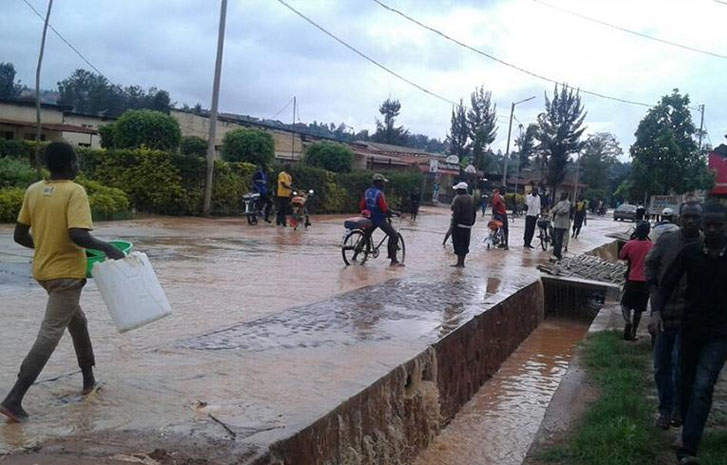
At least 183 people were killed and 215 others injured in Rwanda by heavy rains in the first four months of 2018, the Ministry of Disaster Management and Refugees of Rwanda said.
A flooded street in Rwanda
From January 1 to April 30, the disasters including floods and lightning also destroyed a total of 9,974 houses, leaving 706 people homeless, according to figures released by the ministry on Thursday, May 3.
Also destroyed were 2,450 hectares of plantations and 21 school structures, according to the figures.
The cabinet of Rwanda on Wednesday at a meeting expressed concern and sympathy to all Rwandans, especially families that had lost members and those impacted by the effects of the recent disasters.
The meeting also discussed strategies and mechanisms that would continue to support those affected by disasters and to fast-track repair of damaged properties.
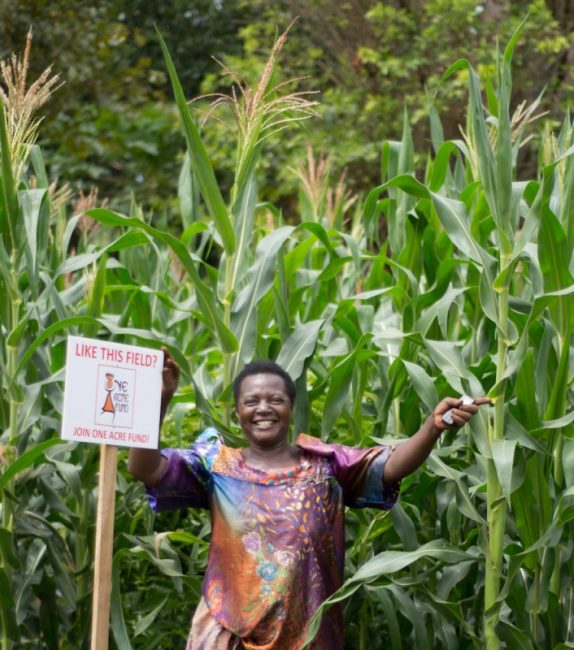
Dr Abebe Menkir of International Institute of Tropical Agriculture (IITA), Ibadan, has commended the West African stakeholders of the Stress-Tolerant Maize for Africa (STMA) for boosting maize production in the African sub-region.
A maize farmer. Photo credit: Kelvin Owino
Menkir gave the commendation in a statement by Dr Godfrey Onagwa, Information and Communication, National Agricultural Extension Research and Liaisons Services (NAERLS), Zaria on Thursday, May 3, 2018.
It quoted Menkir, who is also the head of maize research programme, IITA, as saying that the project had yielded positive results.
The statement said the Stress-Tolerant Maize for Africa (STMA) Project held its West African Regional Planning and Review Meeting in IITA, Ibadan.
It added that the stakeholders gathered in IITA Ibadan to review the STMA’s tremendous roles at increasing maize productivity in the sub-region.
“The project has performed exceptionally well since its inception about two years ago.
“The project is involved in the development and promotion of maize OPVs (open-pollinated varieties) and hybrids that are drought-tolerant, striga-resistant, disease-resistant and those tolerant to low-nitrogen soils.
“The foremost maize scientist said this at the event of the West African Regional Planning and Review meeting of the Stress-Tolerant Maize for Africa (STMA) in IITA from May 1 to May 6, 2018,” it said.
Onagwa said the meeting, which is the forum for reviewing the project activities of 2017 and planning for those of 2018, had participants from four West African countries: Nigeria, Benin, Mali and Ghana.
The International Director of the STMA Project, Dr Cosmos Magorokosho, was also present at the meeting.
He noted that various countries reported increased activities in their variety development and dissemination across the region, disclosing that Nigeria released about two stress-tolerant varieties in 2017 alone.
It added that Nigerian partners include: Institute for Agricultural Research (IAR), Zaria, NAERLS, Zaria; University of Ilorin, Institute for Agricultural Research and Training (IAR&T), Ibadan.
Others include Premier Seeds, Maslaha Seeds, Tecni Seeds, National Centre for Genetic Resources and Biotechnology (NACGRAB) and National Agricultural Seeds Council (NASC).
The statement said Dr Muhydeen Oyekunle, a maize breeder and scientist at IAR, Ahmadu Bello University, Zaria, is the Nigeria country coordinator of the project.