Home Blog Page 1890

Lagos re-certifies 296 waste management operators

0

The Lagos State Commissioner for the Environment, Mr Babatunde Durosinmi-Etti, says 296 Waste Collection Operators (WCOs) have been re-certified and licensed to commence waste operations.

Babatunde Durosinmi-Etti
Lagos State Commissioner for the Environment, Mr Babatunde Durosinmi-Etti (left), during the briefing

Durosinmi-Etti announced this at the 2018 Ministerial Press Briefing to commemorate the third year in office of Gov. Akinwunmi Ambode on Wednesday, May 2, 2018 in Ikeja.

He said that said the evacuation of residential waste was in progress and refuse littering across the state would soon be a thing of the past.

According to him, the ministry has been relating with the PSP operators and there is no form of fractionalisation among them.

“The ministry has a process in place. Every PSP is registered; every truck is certified and registered in the ministry.

“The ministry has an obligation to deal with any PSP that is willing to work with it, in fulfilment of its mandate to keep Lagos clean.

“We should not play politics with the health of Lagosians, in keeping Lagos clean.

“No job is being taken from anybody, we went as far as creating access to capital, through the Employment Trust Fund for PSPs who are willing to work with us.

“My idea is not to work with cartels in dealing with the health and environment of Lagosians. The idea is to go through certification, have an open door policy; it is both a function of offer and acceptance and coming willingly to work,’’ he said.

The commissioner said that the problem of rapid urbanisation was a challenge, as it created more waste for the state.

He said that in keeping with His Excellency’s vision of changing the face of Lagos through reforms of the solid waste management sector, the Cleaner Lagos Initiative (CLI) officially took off in June 2017.

Durosinmi-Etti said that a major update of the CLI was that to aid the delivery of a safe and sustainable environment, community sweepers would henceforth be supervised by the ministry of the Environment.

He said that mechanised street sweeping would be managed by three private companies – Avatar, Wastecare and Corporate Solutions.

According to him, the ministry has entered a new dimension with the engagement so far of 13,958 community sanitation workers for the sweeping of inner streets in the 377 political wards of Lagos State.

“Likewise, the WCOs, otherwise known as the PSP operators, have been charged with the responsibility of managing residential and general waste collection.

“Visionscape Sanitation Solutions now has the mandate of implementing waste management infrastructure development across the state, in addition to intervening in public waste collection to cover any lapses that may occur.

“I wish to appreciate the patience and understanding of Lagosians thus far and restate government’s commitment to the realisation of a sustainable environment as the bedrock of prosperity and social and economic well-being.

“Let me assure Lagosians that the Cleaner Lagos Initiative remains the panacea for delivering efficient and effective solid waste management in Lagos with its attendant benefits, such as job creation, and a cleaner and healthy environment.

“I am therefore confident that with its positive outlook, the Cleaner Lagos Initiative will continue to yield good results and ultimately the current waste challenge being experienced will soon be a thing of the past,’’ he said.

Durosinmi-Etti said that it was important for Lagosians to cooperate with the government to ensure that CLI not only succeeded, but that it was sustained.

He said that Lagos was on the march towards joining some other parts of the world where waste was no longer a burden but wealth.

According to him, this is the direction of a new initiative in solid waste management to create wealth from waste, to utilise waste for many income generating potentials, and ultimately reduce waste.

“The environment is key to life. Therefore, the achievement of a functional and sustainable environment is everybody’s business.

“When we put the environment first, development endures, because we cannot lay claim to economic prosperity in the face of environmental insecurity.

“We must all strive to take good care of the environment, as God never created the environment to be distressed or degraded, it is human impacts that have put it in the current worrisome state,’’ he said.

By Florence Onuegbu
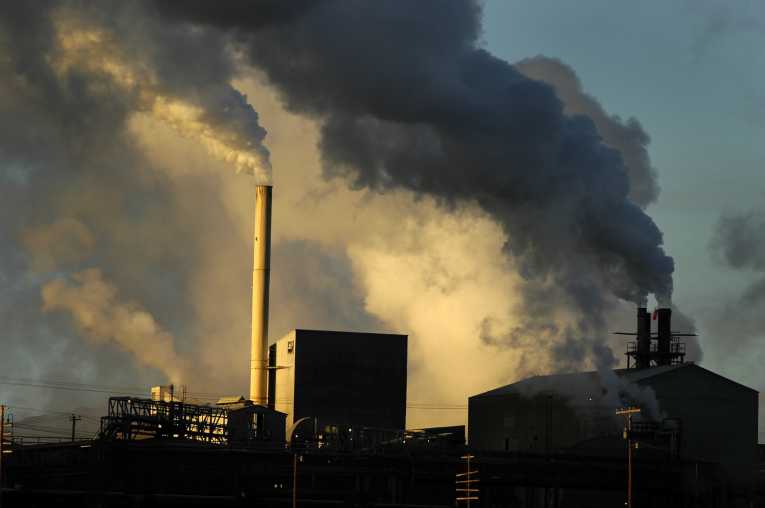
Bonn talks: CSOs want big polluters kicked out of climate policy

0

The demand to tackle conflict of interest within the United Nations Framework Convention on Climate Change (UNFCCC) has over the years been raised by several actors including governments and civil society.

GHG emission
The fossil fuel industry – the big polluters – is said to have an enormous economic interest in delaying climate action. Photo credit: earthtimes.org

However, to date, progress has been slow, notably, due to peaceful relationships formed between politics and the fossil fuel sector lobbyists.

It is for this reason that a global coalition of civil society groups is calling for a strong conflict of interest policy for the UNFCCC to decisively deal with the challenge.

The coalition, supported by the European Parliament, has released a report highlighting revolving doors between the fossil fuel industry and high level politicians, ministers, regulators, and advisors.

According to the study, titled “Revolving doors and the fossil fuel industry”, carried out in 13 European countries, finds that failure to deal with conflict of interest by the EU is due to cosy relationships built up with the fossil fuel sector over the years, and calls for the adoption of a strong conflict of interest policy that would avoid the disproportionate influence of the fossil fuel industry on the international climate change negotiations.

“There is a revolving door between politics and the fossil fuel lobby all across Europe,” said Max Andersson, Member of the European Parliament, at the Bonn Climate Talks. “It’s not just a handful of case – it is systematic. The fossil fuel industry has an enormous economic interest in delaying climate action and the revolving door between politics and the fossils fuel lobby is a serious cause for alarm.”

According to Andersson, to meet the goals of the Paris Agreement and keep global warming to as close as 1.5 degrees as possible, there is need to clamp down on conflict of interest to stop coal, gas and oil from leaving “their dirty fingerprints over our climate policy.”

He says European governments should support the call for a common sense conflict of interest policy so that the next COP can deliver an outcome that will put the world on the road towards a climate in balance.

And, adding his voice to the debate, Augustine Njamshi of the Pan African Climate Justice Alliance (PACJA) believes fossil fuel lobbyists have both a direct and indirect influence on climate policy.

Njamshi says the lack of ambition from developed parties in terms of emission cuts as well as provision of finance for developing parties is a result of bad influence from big polluters.

“For instance, in my opinion, delayed climate action, in particular, climate finance for African countries is indirectly linked to big polluter influence,” said Njamshi. “They have a lot to lose if money is made available for countries to carry out their climate actions because their businesses depend on the current state of affairs.”

Meanwhile, Pascoe Sabido of Corporate Europe Observatory argued for strong advocacy to win the battle against big polluters having a field day at the UNFCCC negotiations.

“Strong advocacy and policy on conflict of interest should be adopted or else, the interests of fossil fuel sector will continue to have huge influence on climate policy,” said Sabido.

The conclusion of the report is that the revolving door phenomenon is systematic and widespread, as the study revealed at least 88 cases of revolving doors between ministers, advisors, regulators and politicians.

A further disturbing finding is that there is lack of adequate legislation to ensure that climate-policy making is not unduly influenced by vested interests and, where legislation exists, it is not properly applied.

The CSO coalition has therefore called for urgent action by interested parties to the UNFCCC to save climate policy from what they have called dirty fingerprints of big polluters.

Courtesy: PAMACC News Agency

Bonn talks: Fossil fuel industry fingered for delayed climate action

0

The fossil fuel industry has been active in lobbying for delays in global climate action as they stand to make enormous amounts of money when the process is stalled.

augustine-bantar-njamnshi
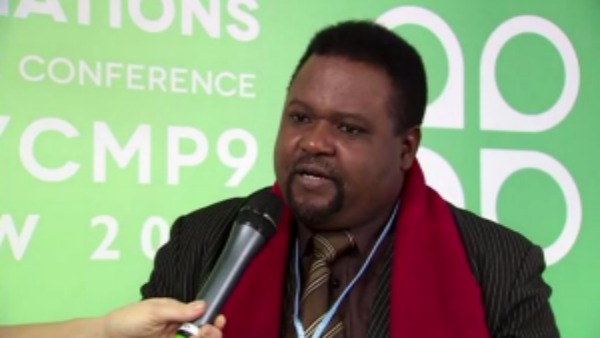
Augustine Njamnshi of the Pan-African Climate Justice Alliance (PACJA)

If the targets of the Paris Agreement on climate change to reduce emissions are to be met, the fossil fuel industry will be losing money.

A study on “Revolving doors and the fossil fuels industry” presented by the Greens/EFA Group in the European Parliament at the Bonn Climate Talks in Bonn this week, is calling for the adoption of a strong conflict of interest policy that would avoid the disproportionate influence of the fossil fuel actors on the international climate change negotiations.

The report gathers studies of revolving doors between the fossil fuel industry and high level politicians, Ministers, regulators and advisors, and questions whether the EU and European governments’ lack appetite to deal with this issue is a result of the cosy relationships built up with the fossil fuel sector over the years.

According to Max Andersson, Swedish Greens Member of the European Parliament, the revolving door between politics and the fossil lobby is a serious cause for alarm.

“If we are to meet the goals of the Paris Agreement and keep global warming down to as close to 1.5 degrees as possible, we need to clamp down on conflicts of interest to stop coal, gas and oil from leaving their dirty fingerprints over our climate policy,” he said.

The demand to tackle conflicts of interest within the UNFCCC has been raised by governments representing over 70% of the world’s population and civil society organisations from across the globe and is supported by the European Parliament.

However, progress has been slow, notably, because the European Commission had been siding with Canada and the USA to block discussions on conflict of interest from appearing on the UNFCCC agenda.

The Africa Group of Negotiators has stated that there needs to be restrictions on business participations in the negotiations because engagement by vested interest “threatens the integrity and legitimacy of the UNFCCC process” and the goals of the Paris Agreement.

Augustine Njamnshi, Chair of Political and Technical Affairs at the Pan African Climate Justice Alliance (PACJA), says there is no basis to delay climate action.

“It is in our interest to ensure that those who come here; those who come to the discussion table are there for real business to solve this climate crisis because the more we delay, the more we endanger the continent of Africa and other developing countries,” he said.

The report by the Greens/FFA Group concludes that there is a need to adopt conflicts of interest policies at the UN, EU and national levels to safeguard public interest policy-making from the disproportionate influence of vested interest, which is particularly urgent when it comes to climate negotiations.

“European governments need to support the call for a common sense conflict of interest policy so that the next COP can deliver outcome that will put the world on the road towards a climate in balance,” said Max.

Courtesy: PAMACC News Agency

Bonn talks: How businesses, cities take climate ambition to next level

0

Organisers of the Global Climate Action Summit (GCAS) taking place this September in San Francisco on Wednesday, May 2, 2018 provided new evidence of how cities, states, regions, businesses and investors are taking climate ambition to the next level. In this way, they are helping to build momentum for a successful outcome for the UN Climate Change Conference in Katowice, Poland (COP24) at the end of the year.

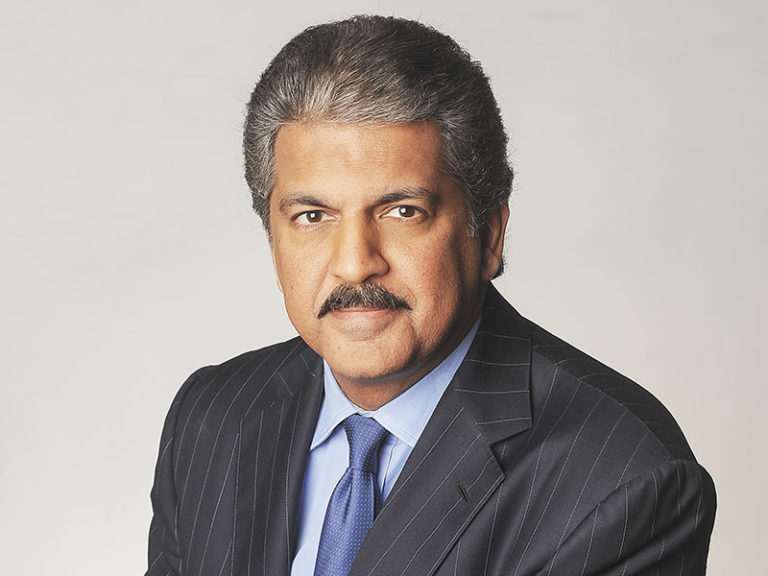
Anand Mahindra
Mahindra Group Chairman, Anand Mahindra

Specifically, 11 new commitments from Mahindra, among India’s largest business houses, push the number of major global companies with science-based targets to over 400.

The summit in San Francisco will be hosted by the Governor of California, Jerry Brown; the UN Secretary-General’s Special Envoy for Climate Action, Michael Bloomberg; the Chairman of the Mahindra Group, Anand Mahindra; and the Executive Secretary of UN Climate Change, Patricia Espinosa.

Speaking to delegates and journalists on the margins of the ongoing UN Climate Change Conference in Bonn, Anirban Ghosh, Chief Sustainability Officer of the Mahindra Group, announced that business had taken an important step forwards today. In total, 13 of its companies have now committed to cut their emissions in line with the Paris Agreement goals by signing-up to a science-based target.

Welcoming this development, Summit Co-Chair and top UN Climate Change official, Patricia Espinosa, said, “At COP24 in Katowice, the world has much to accomplish to ensure that the Paris Agreement delivers the desired result, which is to keep climate change within manageable limits. Thankfully, the revolutionary progress underway in the ‘real world’ economy, which will descend on California in September, will be instrumental to helping make Poland a success.”

To date, over 700 leading businesses around the world have made strategic climate commitments through the We Mean Business coalition’s Take Action campaign. Collectively, these companies represent 2.62 gigatons of emissions, which is equivalent to the total annual emissions of India.

The announcement by the Mahindra Group responds to one of the five “Summit Challenges” being presented to sub-national governments, business and civil society worldwide in advance of the Global Climate Action Summit.

Its commitment falls under the second of the five challenges – Inclusive Economic Growth – and means that so far 400 companies have positively reacted to this particular “call to action,” which aims to sign on 500 companies by the conclusion of GCAS in September.

Anand Mahindra, Mahindra Group Chairman, said, “There is remarkable congruity between the goals of the Paris Agreement, the Indian Government, and businesses like the Mahindra Group. India, like the Agreement, is driven by a strong belief at the highest political level that pursuing environmental stability is the only way forward. As a result, India has set extremely ambitious targets in the area of renewable resources and is actually ahead of schedule in meeting some of these. In my business, we are driven by the belief that sustainability is a business opportunity as well as a way to make work meaningful for our young millennials. So, from all angles, I am delighted to accelerate the momentum created by the Paris Agreement.”

In addition to adding critical momentum to the COP24 negotiations in Poland this December – when governments of the world will meet to signal their readiness to enhance ambition – the GCAS will build momentum for a strong outcome at the Climate Summit convened by UN Secretary-General António Guterres in 2019 and to elevate climate action plans – Nationally Determined Contributions, or NDCs – by 2020.

Nick Nuttall, Global Climate Action Summit Communications Director, said, “2018 is the year when the world must step up climate action to bend down emissions by 2020 – and set the stage for the fast and full implementation of the Paris Climate Change Agreement and its crucial temperature goal. The Summit will bring businesses, states, cities, regions, territories and people from around the world together and in common cause to take climate ambition to the next level.”

The 2018 Global Climate Action Summit, hosted in San Francisco from September 12 to 14, will bring together state and local governments, business, and citizens from around the world to showcase climate action taking place, thereby demonstrating how the tide has turned in the race against climate change and inspiring deeper national commitments in support of the Paris Climate Change Agreement.

To keep warming well below 2 degrees C, and ideally 1.5 degrees C – temperatures that could lead to catastrophic consequences – worldwide emissions must start trending down by 2020.

The Summit will showcase climate action around the world, along with bold new commitments, to give world leaders the confidence they can go even further by 2020.

The Summit’s five headline challenge areas are: Healthy Energy Systems; Inclusive Economic Growth; Sustainable Communities; Land Stewardship and Transformative Climate Investments.

A series of reports are set to be launched over the coming months and at the Summit underlining the contribution of states and regions, cities, businesses, investors and civil society, also known as “non-party stakeholders” to national and international efforts to address climate change.

Many partners are said to be supporting the Summit and the mobilisation in advance including Climate Group; the Global Covenant of Mayors; the C40 Cities Climate Leadership Group; BSR; We Mean Business; CDP, formerly the Carbon Disclosure Project; the World Wide Fund for Nature; Mission 2020.

WHO report on polluted cities in India dire, says CSE

0

“The report by WHO is a warning about the serious and run-away pollution and public health emergency that confronts India today,” remarks Sunita Narain, director general, Centre for Science and Environment (CSE), while responding to the latest urban air quality database 2016 released by the World Health Organisation (WHO). The database says that of the 20 most polluted cities in the world, the top 14 are in India.

india
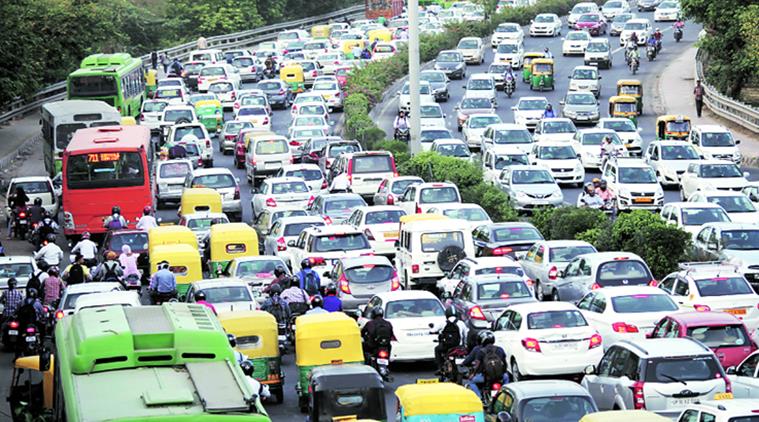
Delhi, India. The WHO report says major sources of air pollution include inefficient modes of transport, household fuel and waste burning, coal-fired power plants, and industrial activities

Anumita Roychowdhury, executive director-research and advocacy, CSE, said: “This is a grim reminder that air pollution has become a national public health crisis. Urgent intervention is needed for implementing the National Clean Air Action Plan with a strong compliance strategy to meet the clean air standards in all cities. It requires hard action.”

CSE says real-time air quality monitoring, especially that of PM2.5, will have to be expanded significantly to assess air quality in all cities with sizeable population. Out of the 5,000 odd cities and towns in India, monitoring is being done in only 307 cities – moreover, most of this is manual monitoring that reports data with considerable time lag.

Says Roychowdhury: “State governments will also have to wake up to ensure action plans are implemented with utmost stringency and aggression. India needs massive energy transition across industries and households, mobility transition to public transport, walking and cycling, and effective waste management to control this run-away pollution.”

7m people die every year from exposure to polluted air – WHO

0

The World Health Organisation (WHO) on Wednesday, May 2, 2018 said seven million people die every year from exposure to polluted air.

Generator Pollution
The WHO says that, in one year, 46,750 persons died as a result of outdoor pollution in Nigeria

According to a WHO report, ambient or outdoor air pollution alone caused some 4.2 million deaths in 2016, while household air pollution from cooking with polluting fuels and technologies caused an estimated 3.8 million deaths in the same period.

Those figures are on a par with the number of deaths recorded in an earlier study published two years ago.

WHO said air pollution levels remain dangerously high in many parts of the world.

New data showed that nine out of 10 people breathe air containing high levels of pollutants.

According to the report, more than 90 per cent of air pollution-related deaths occur in low- and middle-income countries, mainly in Asia and Africa, followed by low- and middle-income countries of the Eastern Mediterranean region, Europe and the Americas.

“Air pollution threatens us all, but the poorest and most marginalised people bear the brunt of the burden,” WHO Director-General Tedros Adhanom Ghebreyesus said.

“It is unacceptable that over three billion people – most of them women and children – are still breathing deadly smoke every day from using polluting stoves and fuels in their homes.

“If we don’t take urgent action on air pollution, we will never come close to achieving sustainable development,” he said.

The WHO recognises that air pollution is a critical risk factor for non-communicable diseases, causing
an estimated one-quarter (24 per cent) of all adult deaths from heart disease, 25 per cent from strokes, 43 per cent from chronic obstructive pulmonary disease and 29 per cent from lung cancer.

Chinese researchers identify two new leprosy gene variants

0

Chinese researchers have identified two new risk gene variants that are responsible for leprosy.

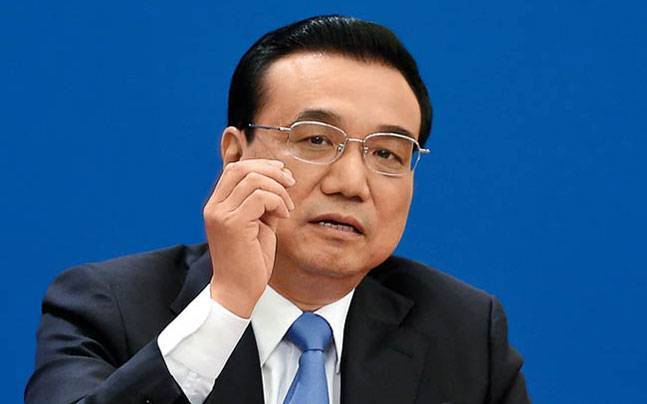
Li Keqiang
China’s Premier, Li Keqiang

The findings have been published in the American Journal of Human Genetics.

The research, led by Yao Yonggang from the Chinese Academy of Sciences Kunming institute of zoology, was based on a study involving 1,433 patients with leprosy and 1,625 healthy individuals from southwest China’s Yunnan Province.

More than 30 risk genes affecting susceptibility to leprosy have been identified.

The research team has identified and validated two new rare damaging variants in HIF1A and LACC1 genes that can increase risk of developing the disease.

Leprosy is a chronic infectious disease which can cause nerve damage, leading to muscle weakness and atrophy, and permanent disability. Leprosy patients also suffer from discrimination.

In 2011, China announced plans to eradicate the disease by 2020.

China had reduced incidence of the disease to less than one per 10,000 in 1981, but leprosy remains a major problem in some rural areas in southwest China.

As of the end of 2016, more than 50,000 people with leprosy had been cured in Yunnan Province.

The number of new cases reported in the province accounts for about one fourth of the country’s total.

It still has 44 counties with serious leprosy problems.

Researchers developing pill for breast cancer diagnosis

0

Researchers at the University of Michigan (UM) are developing a pill that makes tumours light up when exposed to infrared light, and the concept has worked in mice.

breast_cancer_tumor
An impression of breast cancer tumour

“It’s actually based on a failed drug,” said Greg Thurber, UM assistant professor of chemical engineering and biomedical engineering, in a news release posted on UM website.

“It binds to the target, but it doesn’t do anything, which makes it perfect for imaging.”

The researchers attached a molecule that fluoresces when it is struck with infrared light to this drug.

Then, they gave the drug to mice that had breast cancer, and they saw the tumours light up.

The targeting molecule has already been shown to make it through the stomach unscathed, and the liver also gives it a pass, so it can travel through the bloodstream.

The move could also catch cancers that would have gone undetected.

By providing specific information on the types of molecules on the surface of the tumour cells, physicians can better distinguish a malignant cancer from a benign tumour.

Moreover, using a dye delivered orally rather than directly into a vein also improves the safety of screening.

Tens of millions of women are screened every year in the U. S. alone.

According to a study out of Denmark last year, about a third of breast cancer patients treated with surgery or chemotherapy have tumours that are benign or so slow-growing that they would never have become life-threatening.

The research has been published in the journal Molecular Pharmaceutics.

Bonn talks: Finance for climate action turning a taboo subject for rich countries

0

Africa continues to suffer enormous social and economic losses in billions of dollars as a result of climate change impacts.

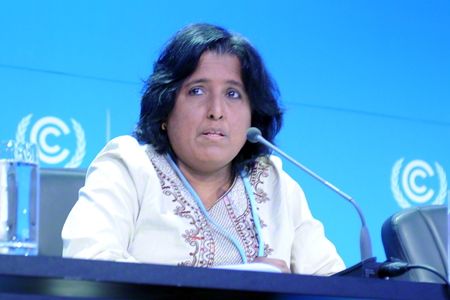
Meena Raman
Meena Raman of the Third World Network

A vulnerable continent that is burning and flooding at the same time needs finance to be able to achieve mitigation, adaptation and technology goals.

But without a clear roadmap for delivering $100 billion per year by 2020, as pledged by developed countries since 2009, developing countries are hindered in their ability to carry out their own climate actions.

Negotiators from the world’s governments are gathering in Bonn, Germany from April 30 to May 10 for three simultaneous meetings under the United Nations Framework Convention on Climate Change (UNFCCC).

Ironically, the United States, which has signalled it will not want to be a party to the Paris Agreement when implementation starts in 2020, is sitting and negotiating as a party.

“Our worry is that the world will once again be pressured to accommodate the United States and this is really very unfair because the concessions are already made in the Paris Agreement,” said Meena Raman of the Third World Network. “The solutions for addressing the climate challenge have to be fair and have to ensure that once again the poor and the planet are not sacrificed.”

Climate finance has become a sticking point in the climate talks since the withdrawal of $2 billion by the U.S. under Trump’s administration.

And it is increasingly becoming a taboo to discuss climate finance with other developed countries, observed Augustine Njamnshi of the Pan African Climate Justice Alliance (PACJA).

“When finance becomes a taboo in this discussion, then there is no good faith in the discussions,” he said. “You want to sit here and tell nice stories when whole families are being swept by floods in West Africa?”

The conditional Nationally Determined Contributions (NDCs) from developing countries in implementing the Paris Agreement will cost more than $4.3 trillion to be achieved.

African civil society therefore wants finance for climate action prioritised if the Paris Agreement should come to life.

“Africa strongly supports the Adaptation Fund to serve the Paris Agreement. However, we are dismayed with the shifting of goal posts by our partners who intend to delay the realisation of actual financing of full costs of adaptation in Africa,” said Mithika Mwenda, Secretary General of PACJA at a press conference. “We urge our partners not to further delay the decision which is key in providing adaptation support to Africa.”

UN climate chief, Patricia Espinosa, has outlined three important goals to accomplish by the end of 2018 – building on the pre-2020 agenda, which charts the efforts of nations up to the official beginning of the Paris deal; unleashing the potential of the Paris deal by completing the operating manual; and building more ambition into countries national pledges.

But African civil society is demanding the rich world offers more detail on its commitments to climate finance without any delay in the Paris Rulebook beyond COP24.

“The effective ambition of developing countries depends on the provision of means of implementation by developed countries,” said PACJA in a statement. “We strongly urge our African governments to rethink critically on the progress of climate talks as any position that contradicts that real climate change implications to Africa then will shift the burden of climate change to African countries.”

Courtesy: PAMACC News Agency

Bonn talks: Agriculture emerges key demand for African CSOs

0

Agriculture is the mainstay of most developing country economies, which are the most vulnerable to climate change impacts through extreme weather events such as drought, floods, landslides, storm surge, and soil erosion, affecting their predominantly rain-fed agricultural productivity.

Pacja
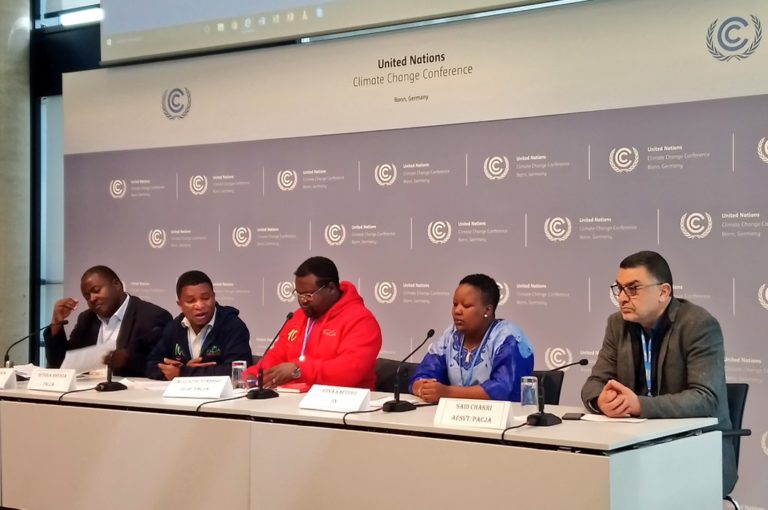
Representatives of civil society groups at the conference in Bonn

In consideration of the vulnerability of their agricultural systems to climate change, developing party negotiators have been pushing for it to be considered as a stand-alone work programme at the negotiating table.

And the push finally paid off at COP23 where decision 4/CP.23 on the “Koronivia joint work on agriculture” was adopted, paving way for issues related to agriculture to be addressed, taking into consideration the vulnerabilities of agriculture to climate change and approaches to addressing food security.

However, while this was a milestone, African civil society groups still want more ambition on agriculture considering its importance to their countries in relation to adaptation, as most countries depend on agriculture for livelihood.

“Noting the significance of agriculture in Africa, the decision on agriculture during UNFCCC COP23 was a big milestone,” said Mithika Mwenda, Pan African Climate Justice Alliance (PACJA) Secretary General. “We caution our African governments however to urgently ensure that there is a joint work-plan for agriculture in ensuring that it receives the required means of implementation.”

According to Mithika, further attention should be paid to the type of agriculture being promoted, saying Africa is not interested in industrial agriculture as practiced by developed countries but rather, promoting resilience of smallholder farmers.

“Our interest is to promote resilience to agriculture, the context in Africa is how do we support that smallholder farmer, that pastoralist whose cows are dying due to drought every time, so we are talking about; how do we now change that, so it’s important that we look at it from this context,” explained Mwenda at the on-going SB48 Climate Talks in Bonn.

In fact, the African civil society is linking agriculture to loss and damage, another long-standing issue that developing parties have been pushing at the negotiating table.

The argument is that developing countries and Africa, in particular, continues to suffer enormous economic losses in billions of dollars as a result of climate change impacts. Coupled with un-costed social losses due to climate induced displacement of persons triggering conflicts, the African group is dismayed to keep hearing that the answer to loss and damage is insurance – a concept which they believe is a far-fetched dream in Africa.

“Insurance works out in developed countries but not in developing countries especially in Africa, where the concept is hardly understood,” said Richard Kimbowa of Uganda Coalition for Sustainable Development.

Kimbowa says Africa “needs a predictable and easy-to-understand financing approach for loss and damage,” adding that severity of climate change impacts are not the “normal adapt and move on.”

He explained that it is for this reason that the loss and damage mechanism is being pushed to address such losses that have become more severe for communities to easily cope.

Closely connected to agriculture and loss and damage, is gender. It is worth noting that there is considerable progress that has been made in terms of gender policies that support activities on adaptation, mitigation, finance, technology development and transfer, including capacity building, under the convention.

“Off course, one of the decisions made at the highest level is that we have the gender national focal point persons but, so far, only 22 states have put forward national gender focal point persons to the UNFCCC, so we urged countries to see the importance of gender in the climate processes,” said Edna Kaptoyo of the Indigenous Information Network.

The call is for the Parties to increase their efforts in ensuring that women are represented in all aspects of the convention process, to ensure that gender mainstreaming is achieved in all processes, and activities of the convention.

Overall, African civil society are demanding more ambition on means of implementation, which they believe is key to the attainment of the set targets in the Paris Agreement.

This, they say, is in consideration that effective ambition of developing countries depends on the provision of means of implementation by developed countries, without which there would be no predictable pathway for implementation of the Paris Agreement.

Therefore, the next 10 days will see a lot of lobbying and activism from African CSOs as they push for Africa’s climate change and development agenda.

Courtesy: PAMACC News Agency