31.1 C
Lagos
Thursday, January 1, 2026
Home Blog Page 1843

Rural development will aid Nigeria’s efforts to attain SDGs, says FAO

0

The Food and Agriculture Organisation (FAO) says the development of rural areas will facilitate Nigeria’s efforts to attain the Sustainable Development Goals (SDGs) before 2030.
Suffyan Koroma
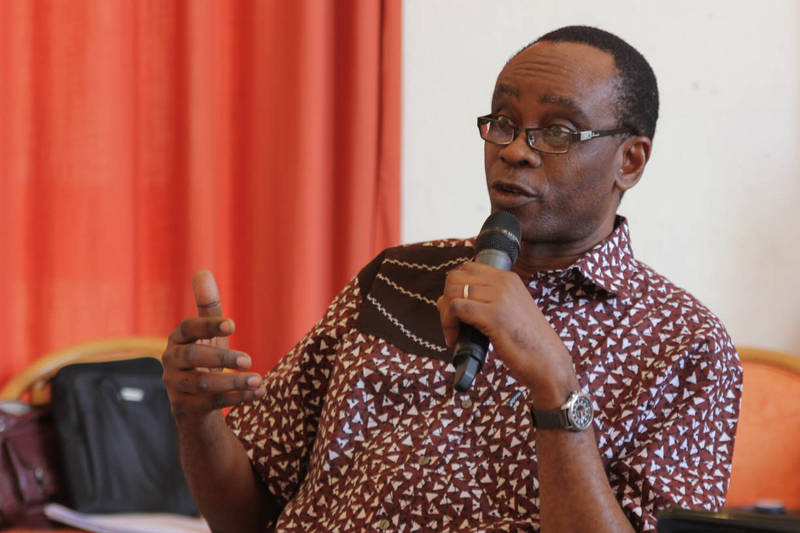
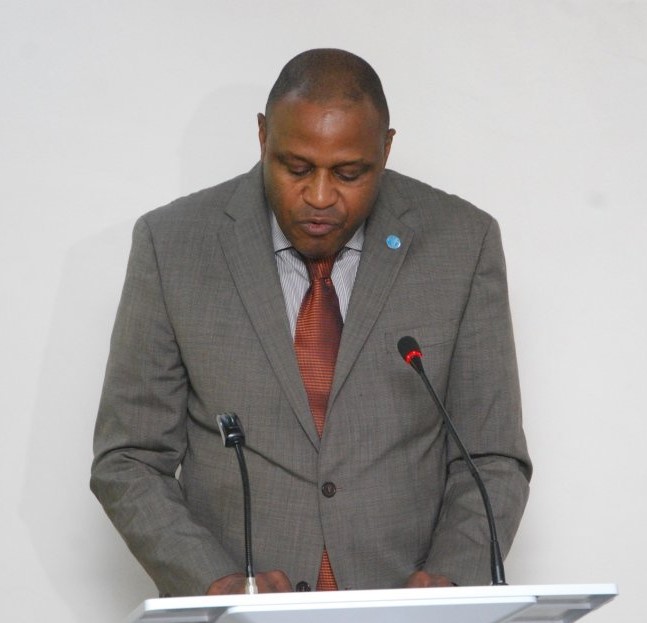
Suffyan Koroma, FAO Nigeria Country Representative

Mr Ahmed Matane, Assistant FAO Country Representative (Programme) for Nigeria, said this in an interview with News Agency of Nigeria (NAN) on Tuesday, March 20, 2018 in Abuja.

The SDGs, as adopted by the United Nations (UN), seek to end poverty and hunger; realise the human rights of all; achieve gender equality and the empowerment of all women and girls; and ensure the lasting protection of the planet and its natural resources by 2030.

Matane said that pragmatic efforts should be made to provide adequate resources for rural development projects across the country.

He said that this was because more than half of the Nigerian population, the vast majority of people in developing countries and other parts of the world lived in rural areas, while their source of livelihoods largely depended on agriculture.

He said that, in spite of the reality, it was so unfortunate that most of the people in the rural areas were still very poor and they depended on rudimentary agricultural practices.

“They live in isolated and often inhospitable places, with little access to the resources they need to improve their agriculture.

“The rural populace can only boast of less than 10 per cent of the country’s infrastructure and other indices of development.

“Many lead their lives barely at subsistence level and due to the numbers of the people, there is a very strong case for the need to give high priority to rural development,’’ he said.

Matane noted that rural development in Nigeria had been a fundamental problem because over the years, the development of rural areas had been neglected because of non-sustainable policies on rural transformation.

“This is responsible for the poor state of affairs among rural dwellers in Nigeria,’’ he added.

The FAO official said that it was so unfortunate that successive governments lacked the political will to develop the rural areas and virtually concentrated on urban development and renewal programmes, to the detriment of the rural areas.

Matane said that as a result of the development, it had become somewhat imperative to explore novel ways by which the issue of rural underdevelopment in Nigeria could be resolved via an integration approach.

He, however, stressed that emphasis must be placed on promoting rural productive activities, supporting human resources development and improving rural infrastructure.

He said that the rural development strategies should also include enhancing the people’s income, ensuring the protection of the environment, promoting gender responsiveness and ensuring adequate care for the vulnerable groups.

Matane said that agriculture was a vital part of any national economy, adding that the development of agriculture was critical to the development of the country’s economy as a whole.

He said that since most of the rural populace relied on agricultural activities for their livelihoods, practical efforts should be made to develop the environment of the rural areas and make it conducive to agricultural and livelihood activities.

He noted that people in the rural areas did not have hitch-free access to good water, health care and educational facilities, while the roads in the areas were in deplorable conditions.

“In some cases, the rural communities are cut off; no electricity, in short, no social amenities,’’ he added.

Matane said that all these inhibiting factors often combined to reduce the productivity of people in the rural communities.

“In 2017, FAO, during the celebration of the World Food Day, purposely chose the theme: ‘Change the future of migration: Invest in food security and rural development’,’’ he said.

He said that the theme was apt because if tangible investments are made in food security and rural development projects; the outcome would be increased agricultural productivity, reduced migration and enhanced food security.

Matane reiterated that if the government invested in rural development, it would change the economic dynamics and improve the nation’s economy.

“If the rural area is good enough, nobody will ever think of rural-urban migration,’’ he added.

The FAO official said that in spite of the agricultural and rural development programmes that were initiated in the country, the goals were not accomplished because of some constraints.

“For instance, the failure of the nation to fully reap the benefits of the integrated rural development approach, which was adopted by successive governments, has been obvious.

“Regarding physical facilities, social opportunities, quality of living and overall score, standards in the rural areas are still very low, in comparison with those of the urban areas,’’ he said.

Matane said that the development of rural areas must remain a priority to policy makers and development experts, while policies and programmes, aimed at improving the socio-economic well-being of the rural poor, must be initiated and pursued.

“It is so unfortunate that the rural-urban gap is still very wide and there is urgent need to bridge the gap with a healthy and dynamic agricultural sector as an important tool of rural development, generating strong linkages to other economic sectors,’’ he said.

Matane, nonetheless, stressed that apart from meeting the basic needs of the citizens in the rural neighbourhoods, investments must be linked to the potential to raise the people’s productivity and incomes.

He also underscored the need to address the vulnerability of the rural poor to the economic crisis as well as climate change and water shortage.

“The success of sustainable rural development activities depends on developing and implementing comprehensive strategies for dealing with climate change, drought, desertification and natural disasters,’’ he added.
Ikeja Rotary Club donates sanitation materials to community

0

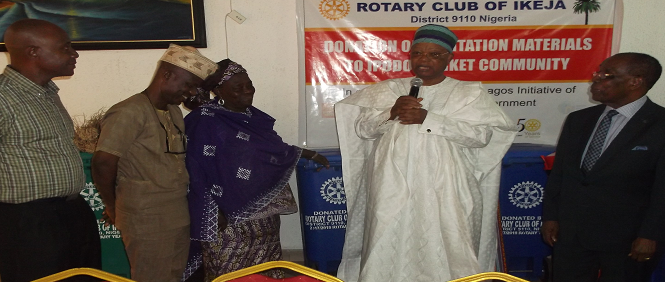
The Rotary Club of Ikeja has made a donation of sanitation materials to the Ipodo Community Market. This community development gesture, according to the President, Rotarian Adeniyi Adelaja, is in further demonstration of the club’s support for, and commitment to, the current Clean Lagos Initiative of the state government.

rotary club of ikeja
L-R: Mr Olasupo Sode who represented Lagos State Commissioner for Environment; Mr. Mayungbe who also represented the Chairman of Ikeja Local Government; Alhaja Abiodun Bintu, Leader of Ipodo Market; Past District Governor of Rotary International (District 9110), and Past President of the club, Prince Julius Adelusi Adeluyi; and Rotarian past President Oliver Johnson, during the presentation of the sanitation materials

Presenting the materials which included plastic waste bins, shovels, and brooms, a Past District Governor of Rotary International (District 9110), who is also a Past President of the club, Prince Julius Adelusi Adeluyi, expressed satisfaction that the club had continued to sustain the tradition of promoting healthy environment. He commended the club members, while also urging the beneficiaries to deploy the items to good use as intended by the Rotary Club.

Earlier, a Past President of the club, Rotarian Tosin Kadiri, had stated that Rotary, among other things, is concerned about the environment, and always carrying out activities to ensure and promote clean environment in order to reduce the incidences of diseases that are consequences of unhealthy or badly kept environment.

Members of the Ipodo Community Market were on hand to receive the items, and they were full of praises for the club’s continued support. The leader of the market, Alhaja Abiodun Bintu, also expressed the community’s appreciation for the club’s unwavering commitment and support to the community.

Mr Olasupo Sode represented the Lagos State Commissioner for Environment while Honourable Mayungbe represented the Chairman of Ikeja Local Government.

Sudan, last male northern white rhino, passes away

0

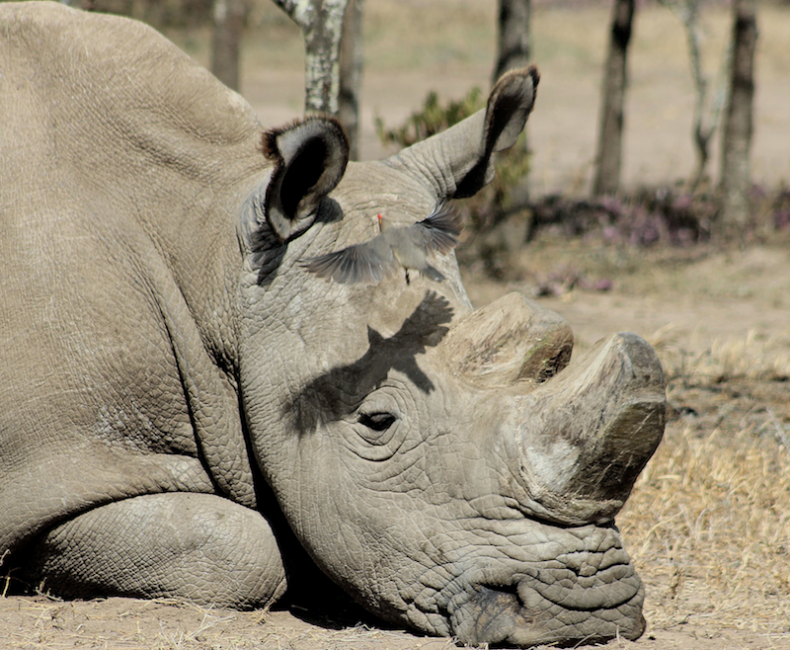
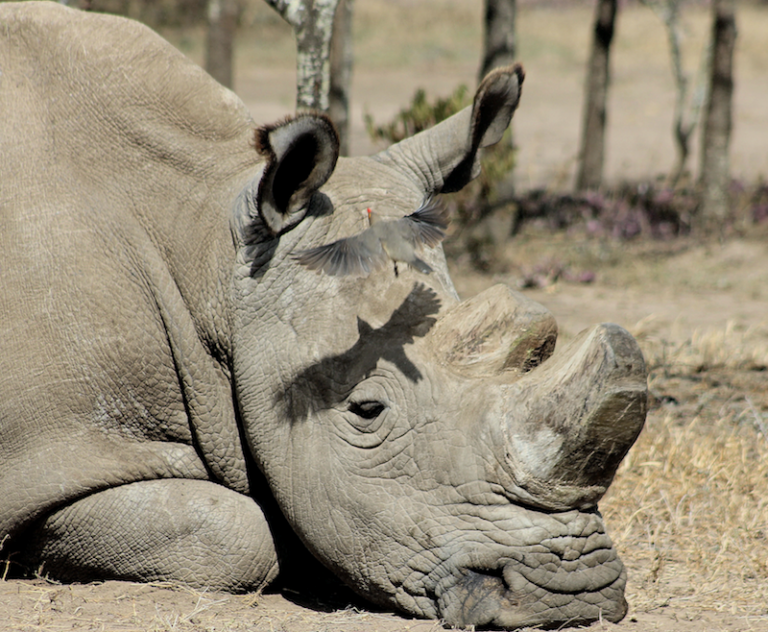
Monday, March 19, 2018 turned out to be a tragic day as Sudan, the last living male northern white rhino, passed away due to age related complications. The decision to euthanise him was made by the veterinary team from the Dvůr Králové Zoo, Ol Pejeta and Kenya Wildlife Service.

Sudan
Sudan

According to the UK-based Save the Rhino International, it is of some comfort that, at the grand old age of 45, Sudan’s passing was not at the brutal hands of poachers.

“Sadly, northern white rhinos are functionally extinct. Even if much-hyped innovations like rhino IVF are perfected in the future, it will likely come too late to save this sub-species. The death of the last Northern white rhino is only a matter of time,” the group said in a statement.

Save the Rhino believes that the best outcome will be to put efforts and funding – including research into IVF – into saving the species which do still have a chance.

“Sudan’s legacy should be one that ensures the same fate does not befall their Critically Endangered Javan and Sumatran cousins,” suggested the nature conservation organisation.

Born in 1973, Sudan was a captive northern white rhinoceros who lived at the Ol Pejeta Conservancy in Laikipia, Kenya. He was known for being one of only three living northern white rhinoceroses in the world, and the last known male of his subspecies.

IPBES vice-chair welcomes global biosafety instrument’s coming into force

0

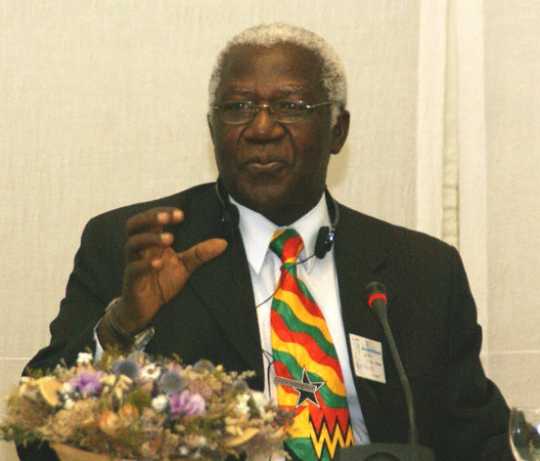
The Ghana-based Vice-Chair of the Bureau of the Intergovernmental Science-Policy Platform on Biodiversity and Ecosystem Services (IPBES), Prof. Alfred Oteng-Yeboah, has welcomed the coming into force of the Nagoya-Kuala Lumpur Supplementary Protocol on Liability and Redress to the Cartagena Protocol on Biosafety.

Prof. Alfred Oteng-Yeboah

He said “the coming into force of the Supplementary Protocol on Monday, March 5, 2018, marks an important development in the biosafety process, as it provides an omnibus legal instrument that can be domesticated for regulating the use of LMOs in countries…”

LMOs are obtained through the process of modern biotechnology and used in the fields of medicine and agriculture.

Prof. Oteng-Yeboah, who is also a retired professor at the Department of Plant and Environmental Biology, University of Ghana, Legon, was speaking in an interview on the legal importance of the Supplementary Protocol.

Its development and essence can be traced to the Convention on Biological Diversity (CBD), which is “an international treaty for the conservation of biodiversity, the sustainable use of the components of biodiversity and the equitable sharing of the benefits derived from the use of genetic resources.”

The CBD was one of the major outcomes of the 1992 UN Conference on Environment and Development, also referred to as the “Rio Earth Summit.” It came into force in 1993. Article 19 of the CBD is on the handling of biotechnology and it includes the provision “to create a protocol setting out the safe transfer, handling and use of any LMOs resulting from biotechnology where required.”

Consequently, the Cartagena Protocol on Biosafety to the Convention on Biological Diversity was established as a supplement to the CBD to “…contribute to the conservation and sustainable use of biodiversity by providing international rules and procedures in the field of liability and redress relating to LMOs.”

The Cartagena Protocol promotes biosafety by establishing rules and procedures for the safe transfer, handling, and use of LMOs, with specific focus on transboundary movements of LMOs. It was adopted in 2000 and entered into force in 2003, with applicability to terrestrial, aquatic and marine environments and the transit of LMOs by air and sea.

The Nagoya-Kuala Lumpur Supplementary Protocol on Liability and Redress to the Cartagena Protocol on Biosafety is “a supplementary agreement to the Cartagena Protocol.”  It has come into force after seven years of dormancy, following its adoption in October 2010 in Nagoya, Japan.

According to the CBD Secretariat, the Supplementary Protocol “is a groundbreaking international treaty, requiring that response measures are taken in the event of damage resulting from living modified organisms or where there is sufficient likelihood that damage will result if timely response measures are not taken.”

The Supplementary Protocol also includes provisions in relation to civil liability.

On its legal efficacy, Prof. Oteng Yaboah stated: “the Supplementary Protocol has all the necessary articles for compensation and serves as a regulatory mechanism that we can fall on.” He explained that “its provisions becomes part of the legal system of a country that has ratified it or acceded to it.”

He said in situations where a country did not ratify or has not yet acceded, such as in the case of Ghana, “the laws of the country especially the Biosafety Act and the institutional framework including the establishment of the National Biosafety Authority, provide sufficient legal backing for redress in case of damage.”

Prof. Oteng Yeboah was however quick to point out that “a country that has ratified or later accedes to the Supplementary Protocol has the added advantage of an extended legal reinforcement to seek redress and compensation in instances of damage.”

The Executive Secretary of the National Biosafety Authority (NBA), Eric Okoree affirmed that Ghana was yet to accede to the Supplementary Protocol. He explained that the process entailed the sector Ministry and in this case – the Ministry of Environment, Science, Technology and Innovation – consulting key stakeholders for comments and input into the Memo that will be sent to Cabinet.

Subsequently, the Sector Minister will write a Cabinet Memo to seek Cabinet’s approval for the country’s accession to the instrument since it has already entered into force. The Memo will among other things state those stakeholders consulted.

If Cabinet gives its approval, the Minister will forward it to the Attorney General’s office for the contents to be crossed checked to ensure that provisions do not conflict with any of the laws of the country. From there, the Sector Minister will send a Parliamentary Memo to the House, urging it to accede to the instrument. Once Parliament passes it, the Sector Minister will forward it to the Ministry of Foreign Affairs, which has responsibility to prepare the instrument of accession and submit to the United Nations Secretariat in New York.

The Supplementary Protocol provides that States must ensure that operators take response measures in the event of damage resulting from LMOs, which find their origin in a transboundary movement. Such measures must also be taken where there is a sufficient likelihood that damage will result if timely response measures are not taken.

Response measures are any reasonable actions to prevent, minimize, contain, mitigate or otherwise avoid damage or measures to restore biological diversity. The Supplementary Protocol defines damage as adverse effect on the conservation and sustainable use of biological diversity that is measurable or otherwise observable and significant, taking also into account risks to human health.

The Supplementary Protocol is seen as the first global and comprehensive agreement providing for regulatory liability and a definition of damage to biological diversity.

In a paper on “the Legal Significance of the Nagoya-Kuala Lumpur Supplementary Protocol:  The Result of a Paradigm Evolution,” René Lefeber of the University of Amsterdam notes that “…by adhering to and implementing the Supplementary Protocol, states give effect, at the international and national level, to the principle that the polluter must pay for the injurious consequences of activities under their jurisdiction or control that create a significant risk of significant damage.”

Additionally, it places the responsibility for the implementation of response measures on the importing state.

The Executive Secretary of the CBD, Dr. Cristiana Paşca Palmer, has also welcomed the entry into force of the Supplementary Protocol. She said its coming into force, “is a major milestone in the 25 years of the Biodiversity Convention, 15 years of the Cartagena Protocol on Biosafety and represents a major step towards achieving the objectives of the Strategic Plan for the Biosafety Protocol.”

She urged all Parties to the Cartagena Biosafety Protocol yet to ratify the Supplementary Protocol to do so as soon as possible.

To date, 10 African countries have ratified, accepted, approved or acceded to the Supplementary Protocol. They are Burkina Faso, Central African Republic, Congo, Democratic Republic of the Congo, Guinea-Bissau, Liberia, Mali, Swaziland, Togo and Uganda.

The Government of Japan, through the Japan Biodiversity Fund, is assisting the CBD Secretariat to organise activities to support Parties in implementing the Supplementary Protocol at the national level.

By Ama Kudom-Agyemang

Environmentalists want government to ban use of polythene bags

0

Some environmentalists on Monday, March 19, 2018 called on the government to ban the use of polythene bags to safeguard the environment and health of the citizens.

Ibrahim Usman Jibril
Minister of State for Environment, Ibrahim Usman Jibril

The environmentalists made the call in separate interviews with the News Agency of Nigeria (NAN) in Lagos.

They, however, advocated the use of biodegradable products as an environmentally-friendly solution to polythene bags.

According to the experts, polythene bags are non-biodegradable and it takes about 400 years to decompose.

Mr Temitope Ogunweide, an ecologist and co-founder of Clean Edge Limited, said the use plastic bags had been accepted in the country, adding that the effect could be dangerous to the environment.

“We see a lot of activities carried out with the use of plastic bags; there is also need to consider the negative impact they have on the environment.

“When people go to shopping malls, they used plastic bags to pack the items because of convenience.

“This trend has become part of us but the convenience of these bags come at a very high cost to the environment and health,” he said.

Ogunweide urged Nigeria to emulate countries like China, France, Italy and Rwanda in ban of plastic as he highlighted the negative impact of plastic on marine life.

“Most of these bags end up in the bottom of the oceans because they are petroleum based band and they do not degrade.

“Currently there are approximately between 46,000 and 1,000,000 plastic fragments floating within every square mile of the globes’ oceans.

“The huge amount of plastics in the ocean has a side effect on the marine life such as sea turtles and fish,” he said.

The expert said recycling of plastic in Nigeria had not been effective, calling for the effective recycling of plastics waste.

“We have had many people advocating for recycling of plastics but most recycling plants do not have the capacity to recycle plastics in Nigeria.

“But we must consider the effect plastic products have on our health, plastic bags contain some pollutants such as polychlorinated biphenyl and Polycyclic aromatic hydrocarbons, which are hormone disrupting.

“It can lead to cancer in humans or some other serious health challenges,” Ogunweide said.

Mrs Candida Nworah, an environmental consultant, called for the gradual ban of plastic bags despite its negative effect.

Nworah said the ban was necessary but advised that it should follow a gradual process.

According to her, the process of banning plastic goes beyond a one-year timeline, adding that it may take some years to complete the process.

“Plastic is dangerous because it is non-biodegradable. Some plastics manufactured centuries ago are still in existence and we keep producing more.

Nworah called for the sensitisation of Nigerians on the health implication of plastic bags and products as well a provision of an alternative to plastic products before the ban.

“We need to educate people at the grassroots and also at the top echelon of society on the non-biodegradable nature of plastic and also create an alternative before the ban.

“After you sensitise people on the dangers of plastic, you also need to create viable and feasible alternative.

“This alternative has to be established before the ban,” she said.

By Mercy Okhiade

Unsustainable mining: Halting the scarification of Abuja

0

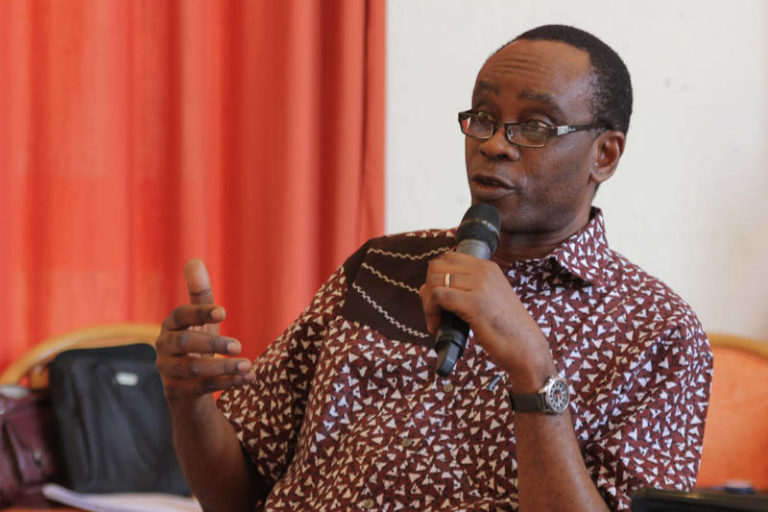
Nnimmo Bassey, Director, Health of Mother Earth Foundation (HOMEF), at a community consultation in Abuja on Tuesday, March 20, 2018 frowns at the deadly act of rock blasting in residential communities

Nnimmo-Bassey
Nnimmo Bassey, Director of Health of Mother Earth Foundation (HOMEF)

The Federal Capital Territory boasts of very unique landscapes. It is dotted with hills and other natural artefacts. These hills are significant as place markers and they equally have cultural and other traditional functions in the communities.

Besides those, the hills are of very high aesthetic value.Unfortunately, these hills have become the target of companies mining building materials with little attention paid to the communities. We see rock blasting or mining going on across the territory, including those right inside communities.

From our interactions with some of the communities in the FCT, we realise that the reckless blasting of rocks with explosives raise issues of concern including those of security of life, environmental pollution and regular destruction of buildings and infrastructure. The blasting also violate the peace that communities used to enjoy.

The grave dangers rock blasting expose communities to are especially worrisome because citizens and livestock are placed in the line of the danger of falling into the unprotected and open craters left by the exploiters.

There is an urgent need for open discussions to be had on the reckless and destructive mining of building materials in the territory. It appears that those destroying the beauty of nature in the territory either do not understand the importance of the hills to the communities or simply do not care.

While we all want improved infrastructure and buildings in Abuja, it does not mean that the environment of communities should be destroyed. It does not mean that a people’s cultural heritage should be wiped out on the altar of greed or of Naira or other forces. Some of the hills may have have traditional religious significance to the communities. Some traditional religions have ecological norms that have effectively protected landmarks, forests and biodiversity.

The Nigerian Minerals and Mining Act, 2007, Section 98 subsection 1, states, “No person shall in any course of exploration or mining, carry out operations, in or under area held to be sacred or permits injury or destruction of any tree or other thing which is object of the veneration.”

Is this and other clauses related to community relations being respected? A man from another impacted community once told me, “Today, the reality is that the miners do not respect the land, the hills and the people. To them, all that matters are pieces of rocks used in building roads and houses. Nothing is sacred places and places of importance to our peoples are blasted away without any measure of concern. We are not respected and we are  not safe.

”The Minerals and Mining Act requires that no mining should be carried out without adequate consultation with relevant communities. This consultation has to result in the community giving a consent before any mining is carried out. They could also withhold consent. The consultation includes agreements on rents to be paid for the land as well as community projects to be executed. The Act also requires that there should be provisions of funds for the restoration of the environment at the end of the mini

ng exercise.Are any of these being done in the impacted communities? Are they receiving annual rent for the destruction of their lands and hills? Have the mining companies provided anything of benefit to the communities? Has money been set aside for the repair of damage being done at the end of the day? Will the hills be restored after they have blasted? Is anyone paying for the loss of the beauty that the hills provided? Can these loses ever be paid for? Was there any agreement before the rocks are blasted away?

We can ask more questions. Sadly, the hills and rocks in the FCT are fast depleting and while others have been heavily defaced. The implication of these activities are enormous. We do not see an easy way to restore the rocks, land, trees, wild life, water and overall biodiversity to their original state after their destruction.

The environment belongs to us all. The environment supports our lives and livelihoods.We must all work together to preserve and sustain our environmental heritage not for just today but for future generations. It is extremely painful to watch a people’s ancestral and beautiful rocks destroyed for profit by entities that are duly paid to buy building materials but prefer to harvest them by destroying our collective heritage.

We must thank groups like U-RED for keeping conversations on this topic alive. We need to remind and enlighten ourselves of harmful impacts of these activities going on in our environment daily. Allowing miners to blast rocks in our communities exposes our people to dust pollution while the vibrations crack and destroy houses, farmlands and ecosystems.

We believe that actions need to taken to halt the state of affairs that mean nothing but degradation of the living environment of our peoples.

To this end, we demand the following:

  • That the hills in the FCT should be mapped, documented and protected as culturally significant environmental artifacts.
  • That the full consent of communities must be obtained before rock blasting or mining is carried out in the territories.
  • That there must be adequate and full compensation for rocks already blasted and those responsible should be compelled to restored the scarified environment.
  • That rock blasting in the FCT should be prohibited. Where such is allowed elsewhere they should only be permitted outside communities and farmlands should be prohibited.
  • That ongoing rocks blasting are stopped for the preservations of the heritage and cultural identity of the peoples.

At a time where violent conflicts are recorded with regard to access to agricultural land, rock blasting in the FCT threatens to add to the crises and should be checked before it is too late

.The Nigerian environment has been heavily impacted by mining, leaving tales of woe across the land – from oil pollution in the Niger Delta to lead poisoning in Niger and Zamfara states. We cannot afford to keep a blind eye on the rock blasting and the ugly scarification of Abuja. It is time for the administration of the FCT as well as the responsible ministries to take urgent steps to stop the despoliation of the territory. This is one environmental abuse too many.

Bonn Global Festival of Action to help drive sustainability

0

Sustainability experts from around the world are gathering in Bonn, Germany from March 21 to 23, 2018 to discuss ways to take action on the UN’s Sustainable Development Goals, also known as the “Global Goals”, including action on climate change.

WCCB
A view of the atrium in the World Conference Centre Bonn (WCCB) in Germany, venue of the event

With global issues such as population growth, rapid urbanisation, food insecurity, water scarcity and increased competition for resources globally fueling tensions and instability, experts attending the Global Festival of Action will be looking at interlinkages between the 2030 Agenda for Sustainable Development and the Paris Climate Change Agreement as the means to build a sustainable future for all.

“By looking at climate and sustainability holistically, we maximise the potential for positive outcomes of every action we take. And when international commitments are turned into country-level action, tangible benefits are delivered to communities and the people who live there,” said Patricia Espinosa, Executive Secretary of UN Climate Change.

The around 1,000 participants from 150 countries attending the festival will be able to connect with partner organisations, exchange ideas, build partnerships, and ensure that solutions are transported across borders.

The UN’s top climate change official Patricia Espinosa will be speaking at the opening of the Festival on Wednesday, March 21. Among the speakers at the Festival are UN Climate Change spokesperson, Nick Nuttall, and Climate Neutral Now Programme Officer, Miguel Naranjo.

Rising to the challenge of climate action, the Global Festival of Action for Sustainable Development is taking the “Climate Neutral Now” pledge and partnering with UN Climate Change to measure, reduce, report and compensate for emissions caused by the event, including those associated with travel of participants.

The organisers are making the festival as sustainable as possible by for example replacing printed materials with an events app and digital signage.

The Festival will also recognise and celebrate the innovators, conveners and breakthrough actors who are transforming lives. The first ever SDG Action Awards will be presented on March 21, recognising outstanding achievements innovative efforts to ignite action on the Sustainable Development Goals.

World Water Day: What Nigeria needs to improve access to potable water

0

The World Bank recently published a report indicating that most Nigerians do not have access to potable water; the report that has raised concerns among stakeholders in the water supply sector across the country.

water-vendors
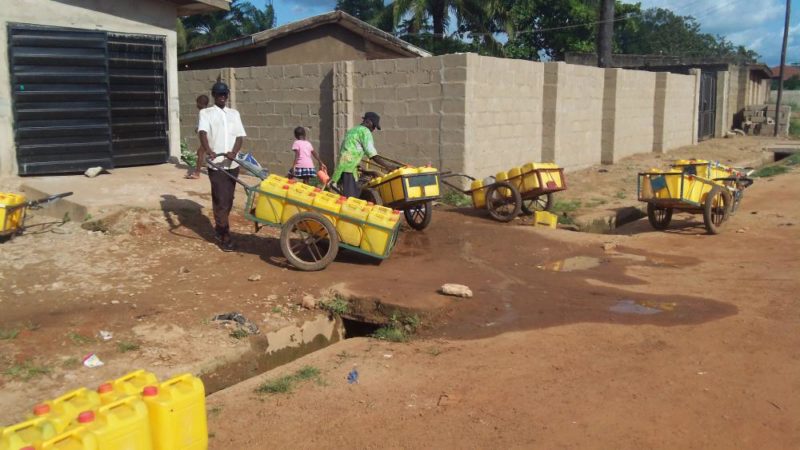
Mai ruwa, or water vendors, in Makurdi, Benue State: Poor access to potable water has boosted their patronage

Similarly, the United Nations observes that damaged ecosystems have affected the quantity and quality of water available for human consumption globally in recent times to complicate the deteriorating water supply situations in developing nations such as Nigeria.

It observes further that no fewer than 2.1 billion people globally living without safe drinking water at home; affecting health, education and livelihoods.

Concerned by water supply situation in Nigeria, the Water, Sanitation and Hygiene (WASH) Poverty Diagnostic initiative, recommends in a report that the country needs to invest three times its current investment to improve the decaying WASH sector.

Giving an overview of poverty in Nigeria as it connects WASH, the initiative notes that huge investment is required for the sector if the country will meet the Sustainable Development Goals (SDGs) 6 on water and sanitation by 2030.

The SDGs 6 commits the world to ensuring that everyone has access to safe water by 2030, and includes targets on protecting the natural environment and reducing pollution.

In the light of this, stakeholders have, on many occasions, called for adequate funding of policies on water resources to achieve greater socio-economic developments.

Aside the needed funds to upgrade water supply system across the country, stakeholders suggest that the 2018 World Water Day on every March 22 should serve as a forum to sensitise policy makers to the importance of providing potable water for the public.

They argue that the day, with the theme, “Nature for Water’’, will also serve as an opportunity to explore nature-based solutions to the water challenges in the 21st century.

They express concern about cases of deaths arising from cholera outbreak due to taking of contaminated water in many parts of the country and call for concerted efforts at addressing the situation.

Mr Hassan Bdliya, Chairman, Global Water Partnership in Nigeria, said that apart from funding and other challenges, Nigerians ought to understand that “water is a resource that can finish if not properly used in line with the principles of Integrated Water Resources Management (IWRM)’’.

He said that the IWRM emphasised the need to use water, putting in consideration its sustainability, equity and reduce conflict that might come from poor use of water resources.

Bdliya also said that stakeholders were fond of developing water resources without following guidelines or principles and they somewhat ended up creating problems.

According to him, although Nigeria has made relative progress in WASH) sector, access to high-quality, reliable, and sustainable services remains low.

In his view, Mr Michael Ale, President, Association of Waterwell Drilling Rig Owners and Practitioners, said that 85 per cent of Nigerians depended on underground sources which had been overburdened and usually contaminated.

He stressed the need for the federal and state governments to address pollution of water sources by illegal drilling activities in the country, warning that failure to do so could lead to more outbreaks of water-borne diseases.

He said that unimproved water supply situation in the country was a time bomb, which needed to be addressed; adding that so long as drilling was done indiscriminately; its benefits might be lost.

Worried by this, participants recommended that President Muhammadu Buhari should declare a national state of emergency on water sector to enhance the political will for the accelerated development of water supply at a recent retreat on Revitalisation of Nigeria’s WASH sector in Abuja.

They urged the federal and state ministries of water resources to urgently develop a WASH emergency action plan aimed at revitalising the sector, encompassing both rural and urban areas.

The participants included commissioners of water resources, managing directors of state water agencies and development partners.

They agreed that failure to address the current situation would have dire consequences on the citizens of the country.

Similarly, at a recent media dialogue on Nigeria’s WASH sector organised by the United Nations Children’s Fund (UNICEF), the speakers agreed that the country should take significant action to improve its water and sanitation sector.

According to UNICEF’s WASH Specialist Drissa Yeo, the agency is supporting the Partnership for Expanded Water, Sanitation and Hygiene Strategy programme to establish a multi-sectoral partnership among government, development partners and the private sector to improve access to potable water supply and sanitation services.

He said that private sectors ought to improve entrepreneurial energies to achieve improved sanitation and Sustainable Development Goals targets through sanitation marketing and financing.

Similarly, Mr Zaid Jurji, the UNICEF Chief of WASH, Nigeria, raised an alarm that very few Nigerians had access to potable water.

The UNICEF official said that Multiple Indicator Cluster Survey between 2016 and 2017 conducted by the National Bureau of Statistics in conjunction with UNICEF also indicated that most of the water consumed by Nigerians was from sources contaminated either by faeces and lack of proper hygiene practice.

He noted that 50 per cent of water infrastructure in the country was bad, attributing the development to poor water governance.

He identified WASH as interrelated, recommending that good hygiene practice and making the nation open defecation free would ensure healthy lives for the citizens.

The WASH specialist also said that 25 per cent in the country practised open defecation, warning that open defecation in the vicinity of water sources could contaminate it, thereby making the water unsuitable for consumption.

He called for promotion of water safety plans to protect water from point of source to consumption.

Minister of Water Resources, Suleiman Adamu, nonetheless, believes that the Federal Government’s constitutional role is to provide raw water to states with a responsibility to intervene by ensuring that its river basin and dams get water to be reticulated to states.

“The laws of the land say the responsibility to provide potable water supply rest on the state and local government.

“What the Federal Government does is to intervene from time to time and what we do at times is to ensure the provision of water in the rural areas through water schemes.

“That is not to say it is our primary responsibility. Our responsibility is providing good policy,’’ he said.

Adamu, however, stated that the Federal Government was willing to provide assistance whenever necessary as it was aware of the high cost of water infrastructure.

He further noted that government had been partnering other bodies through the provision of funds, capacity building, good policy and multi lateral loans to improve on the capacities of the benefiting organisations as well as ensure adequate maintenance of facilities.

By Tosin Kolade, News Agency of Nigeria (NAN)

Global Recycling Day: Stakeholders collaborate to raise awareness

0

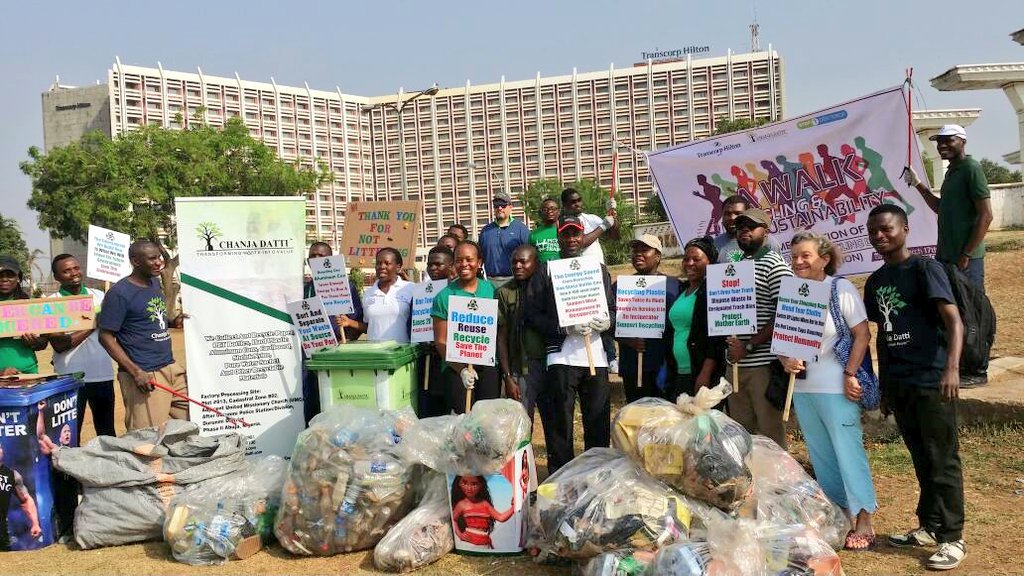
Environmental enthusiasts in Nigeria on Saturday, March 17, 2018 joined other folks across the world to mark the inaugural Global Recycling Day with an event “A Walk for Sustainability and Recycling” in Abuja.

GlobalRecyclingDay
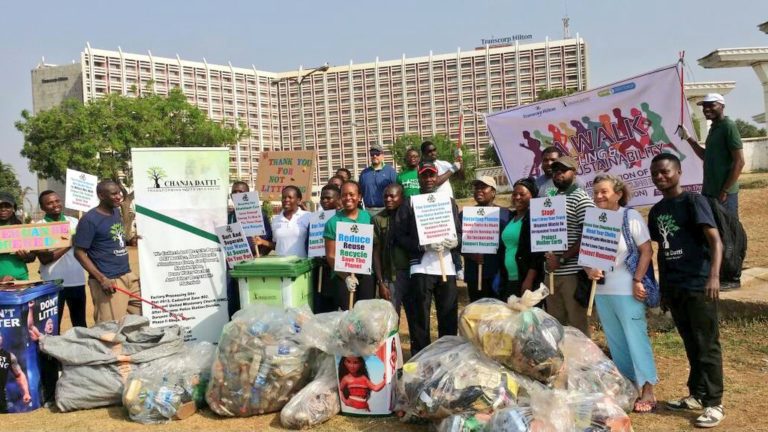
Participants at the Global Recycling Day event in Abuja

The walk was put together by a leading recycling company in Nigeria, Chanja Datti Recycling, in collaboration with Transcorp Hilton, #PickThatTrash initiative, and “Stop Don’t Drop”.

Participants engaged in a two-hour long roadside walk from the Transcorp Hilton gate, through the Federal Secretariat, to the Eagle Square and back to the Unity Fountain, beside the Transcorp Hilton. A total of 112 kilogram of recyclables were gathered at the close of the event.

The Global Recycling Day was initiated by Brussels-based Bureau of International Recycling (BIR) and has called on the United Nations to annually recognise March 18 as Global Recycling Day in its roster of awareness days. The aim of Global Recycling Day is to unite people across the world, highlighting the need to conserve the six primary resources (water, air, coal, oil, natural gas, and minerals) and celebrating what is described as ‘the seventh resource’ – the materials recycled every day.

In Johannesburg, South Africa, Global Recycling Day’s manifesto was launched along with a public clean-up campaign with the help of the Catholic Diocese and the City of Johannesburg. While at the head office of the Australian Packaging Covenant Organisation (APCO) in Sydney, over 50 academics and industry experts gathered to recognise Global Recycling Day and discuss cross-sector collaborations.

In Nigeria, there has been constant urge by relevant stakeholders for the Federal Government to keenly strengthen recycling startups and companies in the country. Hundreds of Nigerians who are aware of the Global Recycling Day have also pledged to cultivate a recycling habit and further educate other people within their respective communities and through their different online platforms.

By ‘Seyifunmi Adebote, Abuja

Atmospheric centre expresses readiness to deploy facilities to forecast air quality

0

The Centre for Atmospheric Research of the National Space Research and Development Agency (CAR-NASRDA) on Monday, March 19, 2018 expressed readiness to deploy facilities to six institutions in the country for air quality forecasting.

Babatunde Rabiu
Prof. Babatunde Rabiu, the Director, Centre for Atmospheric Research

Prof. Babatunde Rabiu, the Director CAR, disclosed this in an interview with the News Agency of Nigeria (NAN) in Abuja.

“Last year, we acquired the first ozone monitor in the network of ground ozone monitors which we intend to build over Nigeria.

“We also have a set of indigenously developed six automatic hybrid weather and air quality systems waiting for deployment.

“They have been acquired when the capital fund was released last year. We have six locations where these equipment are going to stay.

“The locations are Federal University Oye-Ekiti,(FUOYE), Osun State University, the Environment Space Research Lab Abuja within the NASRDA complex.

“Other locations are University of Benin, Abia State University Uturu and Rufus Giwa Polythecnic Owo,” he said.

Rabiu said the host institutions were ready to accept the equipment, adding that they would provide security and internet services.

“The institutions have expressed their readiness to host these facilities, to provide security for them, Wi-Fi services because they transmit data at real time.

“The equipment will be taking measurements in remote locations who have access to the data and anybody all over the world can use the data for research purpose.”

The director, however, said that the equipment was waiting to be deployed owing to lack of funds to install the equipments.

According to him, once funds are available the equipment will be deployed.

He also said the centre had other facilities to be distributed for space weather.

Rabiu said air quality forecast needed good observational facilities on ground which required network of stations that monitors air quality parameters.

Rabiu said alternatively satellite data could be used to forecast air quality but ground data needed to be used to validate satellite data.

He added that infrastructures, high performance computing systems to run data and regular power supply was required to measure air quality continuously.

“You also need the modeling, the software and these things are readily available in the society, we just need to pull them together.

“We need a political will to pull these things together because it is only the political will that can generate the fund that you need,” Rabiu said.

He expressed hope that if air quality was forecasted accurately in the country, it would combat health issues caused by air pollution.

By Ijeoma Ndubisi

×