31.1 C
Lagos
Thursday, January 1, 2026
Home Blog Page 1844

Shell debunks Amnesty allegations on spills management in Niger Delta

0

The Shell Petroleum Development Company of Nigeria Ltd (SPDC) has denied allegations of environmental mismanagement in the Niger Delta levelled against it at the weekend by Amnesty International, reiterating its commitment to swift response to oil spill incidents as much as access and security conditions permit teams to mobilise and deploy to spill sites to investigate, clean up and remediate such areas. This is in addition to deploying technology and best practice to make it more difficult for unauthorised persons to break pipelines and steal crude oil from its facilities.
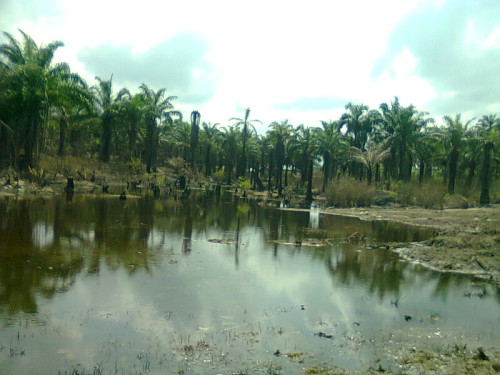
OIL SPILL AT IBUU CREEK OKWUZI
Ibuu Creek polluted by an oil spill, in Okwuzi Community in Rivers State. Photo credit: Dandy Mgbenwa

“SPDC, in collaboration with government regulators, responds swiftly to spill incidents as quickly as it can and cleans up spills from its facilities regardless of the cause,” said General Manager, External Relations, Igo Weli. “We regularly test our emergency spill response procedures and capability to ensure staff and contractors can respond rapidly to an incident. However, response to spills, clean-up and remediation depend on access to the spill site and ultimately on the security of personnel and equipment while work is ongoing.”

He said Amnesty International’s allegations are false, without merit and fail to recognise the complex environment in which the company operates where security, a sole prerogative of Government, remains a major concern with persisting incidents of criminality, kidnapping, vandalism, threats from self-described militant groups, etc.

Mr. Weli said the transparency in the online reporting of spill incidents by SPDC in its areas of since 2011, which Amnesty International itself acknowledged, demonstrates its commitment to creating awareness and enhancing collaboration with key stakeholders on oil spill response and clean-up processes and deepening understanding of the complex and challenging operating environment. “SPDC reiterates its commitment to carrying out operations in line with best practice in a responsible and environment-friendly manner,” he added.

Over the years, SPDC, the operator of a joint venture between the government-owned Nigerian National Petroleum Corporation – NNPC, SPDC, Total E&P Nigeria Ltd and the ENI subsidiary Nigerian Agip Oil Company Limited, sustained air and ground surveillance as well as anti-theft mechanisms on equipment and pipelines to mitigate third-party interference and ensure that spills are detected and responded to as quickly as possible. The company conducts daily over-flights of its pipeline network to identify any new spill incidents or illegal activities, and installed state-of-the-art high definition camera to a specialised helicopter that greatly improves the surveillance of our assets.

Weli added: “SPDC also works diligently to develop new hardware barriers and technologies to detect and prevent oil theft, sabotage, criminality and other types of third party interference that cause environmental damage, participating in industrial organisations in Nigeria as well as internationally to share best practices. Regrettably, despite these and other efforts, criminals still target oil and gas infrastructure, causing spills, and the company is continuing to focus attention on the detrimental impact of these activities on people, the economy and environment in engagements with the media, government officials, diplomats and community people.”
Japan grants UN-Habitat $10m to rebuild Marawi

0

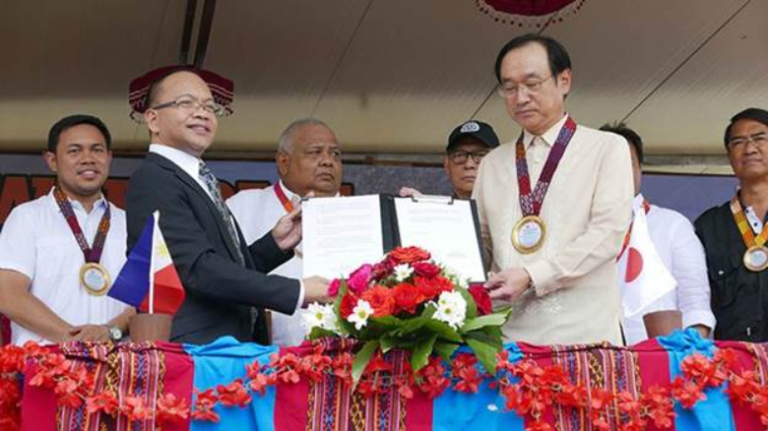
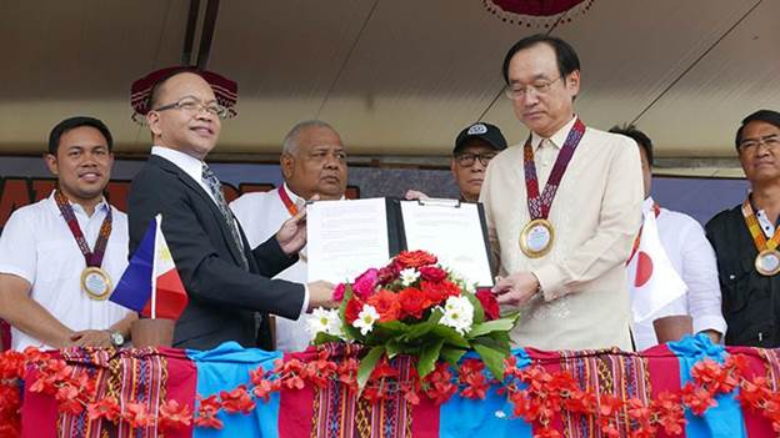
The Government of Japan and the United Nations Human Settlements Programme (UN-Habitat) have exchanged notes  to signify their partnership on a post-conflict shelter rehabilitation project, with financial support of $10 million from Japan.

UN-Habitat
UN-Habitat Philippines Habitat Programme Manager, Christopher Rollo, and Ambassador of Japan to the Philippines, Mr. Koji Haneda, present the signed exchange-of-notes

The Marawi Peacebuilding Through Shelter Recovery Project, focusing on peacebuilding through community-driven shelter and livelihood recovery, aims to support people displaced by the Marawi conflict, which took place from May to October 2017, in the recovery of shelter and community infrastructure. To contribute to the peacebuilding process and sustainable development, the housing and infrastructure components will be supplemented by peace-promotive capacity development and livelihood support.

The Marawi conflict in the Philippines was a five-month-long armed conflict in MarawiLanao del Sur, that started on May 23, 2017, between Philippine government security forces and militants affiliated with the Islamic State of Iraq and the Levant (ISIL), including the Maute and Abu Sayyaf Salafi jihadist groups. The battle also became the longest urban battle in the modern history of the Philippines.

During the conflict, the Maute group militants attacked Camp Ranao and occupied several buildings in the city, including Marawi City Hall, Mindanao State University, a hospital and the city jail. They also occupied the main street and set fire to Saint Mary’s Cathedral, Ninoy Aquino School and Dansalan College, run by the United Church of Christ in the Philippines(UCCP). The militants also took a priest and several churchgoers hostage.

The shelter recovery project, according to the promoters, will be implemented using a community-driven approach to empower households whose homes have been destroyed, by providing training that helps them become active actors in rebuilding their homes and communities.

Shelter reconstruction support will be provided for 1,500 affected households that will be organised under the Community Mortgage Programme (CMP) of the national government through the Social Housing Finance Corporation (SHFC). Transcending this community-focused approach is the development of a city-level recovery and reconstruction plan, including the local shelter plan, that will situate the role of the families and communities in the overall rebuilding of the city.

Complementing shelter recovery, the project will also provide livelihood support by training households in construction, small-scale enterprise development, and other similar skills. Capacity-building for communities will also be at play as they get training on project, business, financial management, with a strong mindfulness for gender balance, peace building, and social development mainstreamed into the training.

The project endeavours to ensure that all related activities are carried out in a manner that helps strengthen or rehabilitate the social fabric and promote peacebuilding among families and communities in relation to the wider community of Marawi and the region.

While shelter reconstruction will directly benefit 1,500 families, the project collectively targets a broader range of stakeholders, about 4,000 households, who will benefit from complementary activities like the construction or improvement of community infrastructure (water, sanitation, road, multipurpose centres), community development support, livelihood assistance, and peace and development initiatives.

The project, slated to run for a year, will be implemented by UN-Habitat in collaboration with partners on several fronts: with national government agencies and offices such as the Department of Social Welfare and Development, Housing and Urban Development Coordinating Council and the Social Housing Finance Corporation, the Office of Civil Defense, and the Task Force Bangon Marawi; with the local government of Marawi; and with the homeowners’ associations in participating communities.

FAO underlines need to prioritise farmers’ protection from climate impacts

0

A new report from the Food and Agriculture Organisation of the United Nations (FAO) has said that, between 2005 and 2015, natural disasters cost the agricultural sectors of developing country economies $96 billion in damaged or lost crop and livestock production. Almost all of these disasters have been directly caused or exacerbated by climate change.

josé-graziano-da-silva
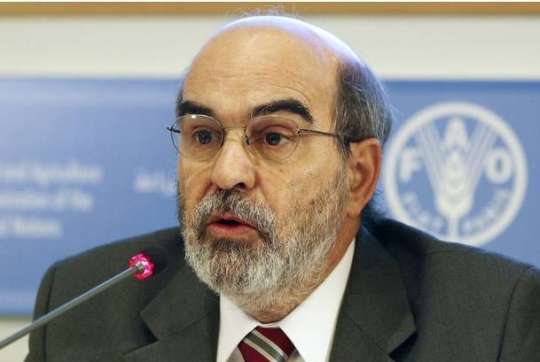
Jose Graziano da Silva, Director General of the FAO

Half of that damage – $48 billion worth – occurred in Asia, says the report, titled: “The impacts of disaster and crisis on agriculture and food security 2017, and presented at a conference in Hanoi convened by Viet Nam’s government in collaboration with the FAO.

FAO Director-General, José Graziano da Silva, said the impacts of climate change had become the “new normal” and because of this, protecting agriculture from extreme weather and climate change must become a priority.

“Disaster risk reduction and management must therefore become an integral part of modern agriculture. Building a more holistic and ambitious disaster-resilience framework for agriculture is crucial to ensuring sustainable development – which is a cornerstone for peace and the basis for adaptation to climate change,”  he said.

Over the past four decades, disaster losses in Asia and the Pacific increased 16 times in terms of financial damage. Agriculture in Asia is particularly vulnerable as it is heavily dependent on climate and natural resources, therefore climate change only intensifies these risks. The Sendai Framework for Disaster Risk Reduction (2015-2030) calls for substantial reduction of disaster risk. Adapting to climate change is critical to reduce disaster losses, prevent and reduce risk.

Also for Africa and Latin America and the Caribbean, drought is the costliest type of disaster – causing crop and livestock losses of $10.7 and $13 billion in those regions, respectively, between 2005 and 2015.

Crop pests and animal diseases were also among the most expense-inducing disasters for African farmers, notching up $6+ billion in losses in that same period.

And across the globe, Small Island Developing States (SIDS) are particularly vulnerable to natural disasters, in particular tsunamis, earthquakes, storms and floods. Economic losses in SIDS stemming from disasters jumped from $8.8 billion for the period 2000-2007 to over $14 billion between 2008 and 2015, the report shows.

“We must take actions to revert this trend. With 2.5 billion people on the planet relying on agriculture for livelihoods, this level of damage and loss jeopardises our efforts to end hunger and poverty,” said Kundhavi Kadiresan, FAO Assistant Director-General and Regional Representative.

FAO works with countries to enhance access of vulnerable smallholder farmers to climate information and disaster risk warning, using this information to adjust their production, diversify livelihoods and take early actions to be better prepared when emergencies happen.

NiMet predicts partly cloudy, sunny weather for Monday

0

The Nigerian Meteorological Agency (NiMet) has predicted partly cloudy weather conditions over the central states of the country in the morning of Monday, March 18, 2017 with chances of localised thunderstorm over Jos, Makurdi, Lafia and Abuja in the afternoon and evening hours.

weather
cloudy weather

NiMet’s Weather Outlook by its Central Forecast Office in Abuja on Sunday also predicted day and night temperatures in the range of 34 to 41 and 18 to 26 degrees Celsius respectively.

The agency predicted that the southern States would experience cloudy morning over the Inland states with prospects of localised thunderstorm over Enugu, Owerri, Akure, Abeokuta, Oshogbo and Shaki in the afternoon and evening period.

It also predicted cloudy condition over the coastal cities with prospects of localised thunderstorms over Calabar and Eket in the morning hours.

NiMet further predicted localised thunderstorm over the entire region in the afternoon and evening hours with day and night temperatures of 33 to 37 and 21 to 27 degrees Celsius respectively.

According to NiMet, northern states will experience partly cloudy to sunny conditions throughout the forecast period with day and night temperatures in the ranges of 37 to 41 and 15 to 27 degrees Celsius respectively.

“Stable conditions are anticipated over the northern states with chances of localised thunderstorm over some places in the southern region in the next 24 hours,” NiMet predicts.

By Sumaila Ogbaje

Government asked to check deforestation by controlling child bearing

0

A Cross River State-based environmentalist, Chief Edwin Ogar, has called on the federal government of Nigeria to come out with a law regulating the number of children couples can have so as to check deforestation in the country.

Chief Edwin Ogar
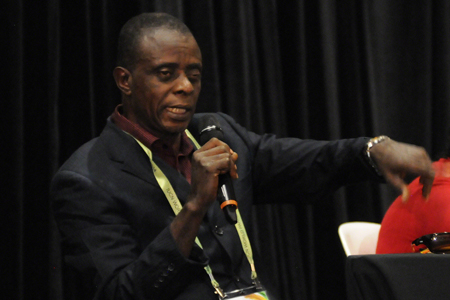
Chief Edwin Ogar, Programme Coordinator, Wise Administration of Terrestrial Environment and Resources (WATER)

The environmentalist said this call has become necessary considering the massive destruction of the forest today by mankind, adding that, if nothing drastic is done, generations unborn will have no conducive environment to live in.

Delivering a special talk on “environment and generation unborn” at a forest enlightenment campaign programme in Akamkpa, Cross River State recently, he said, “We have destroyed the forest to the extent that the effect is now on us and that is climate change. The future of our children, children is threatened and that is why it is essential for us to protect the forest. There is need for me to pass this message to you to help educate one another on the need to protect the environment so that we can guarantee the future of our children’s lives today and not the one trouble, wastage,  new and old diseases that are so destructive will reign”.

Chief Ogar, who is the Programme Coordinator of Wise Administration of Terrestrial Environment and Recourses (WATER), said, “God in its infinite wisdom created the world and created the trees to serve as absorbers of carbon dioxide. Nigeria was a little country with a little population but now we have grown well over 170 million people and all of us are emitting carbon in different ways and it is only the trees that take the carbon and give us oxygen yet we keep destroying the trees and the carbon is becoming excess in the atmosphere, the forest no longer there and the result is the climate change we are suffering from.

“In one aspect, we fall down the trees, burn them and some trees are over 1,000 years and the destroyed trees that have stored carbon for over the years are now released into the atmosphere and the trees are no longer there. The ones that were as big as a large circle are gone and the few trees that are there can longer absorb the carbon and the excess carbon now contribute to climate change that is affecting all of us.

“It is dangerous we celebrate for ourselves today and let our children and generations unborn have a bleak life and it is an irresponsible father or parents can afford to that. If we love our children we must love the forest with all its bio diversity. Let the forest continue to be there for our children and generations unborn.”

Besides the direct activities of man cutting down the forest, he stated that Industrialisation is another key factor affecting the environment as “we know what is happening in Nigeria today as a result of gas flaring and even the few industries here send out so much carbon into the atmosphere, and the  only solution is the forest to absorb the carbon and now the forest is gone and we are celebrating millennium development goals, now its social development goals.

“It is not going to work unless we begin to do something that is very practical to change the way things are then we will guarantee the future generation a sustainable life as God created the world. So we need to go back to the drawing board and allow the forest to survive and not everyday we continue to cut down the forest.

“We should keep the forest standing and regenerate it as well. We should exercise limit in the production of children because what we are seeing in Nigeria today is as a result of the production of children. When you have plenty children they have to encroach and plant in the forest.

“We need government legislation on this because if we have a meaningful number of children, then there is little they can do to harm the forest. We need to also do what is called sustainable or intensive agriculture by continuing to plant in one place as it is done in advance countries so as to reduce the pressure on the forest.”

By Tina Todo, Calabar

Forum recommends electric mobility for Africa

0

As the African Clean Mobility Week drew to a close in Nairobi, Kenya on Friday, March 16, 2018, participants have identified electric mobility as a workable pathway to a more sustainable and cleaner transport system in Africa.

Clean Mobility Week
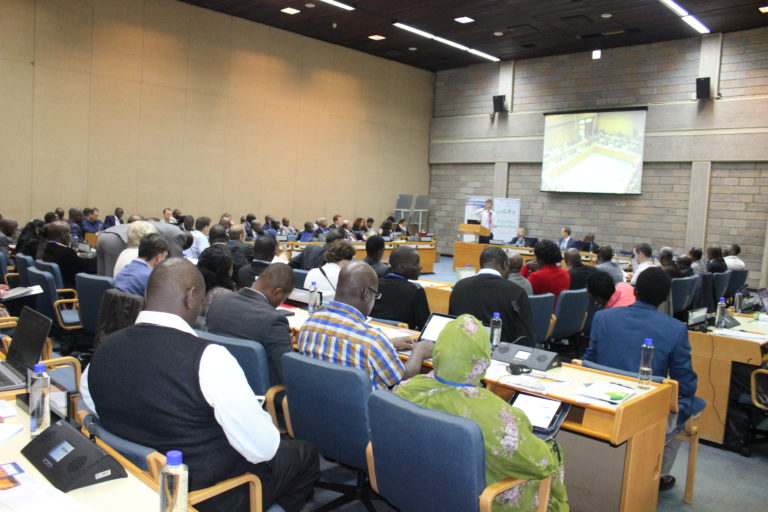
A view of participants at the Clean Mobility Week

This recommendation, alongside other strategies, was approved by delegates to the week-long forum, which comprised representatives of government agencies responsible for transport, environment, energy and finance from 42 African countries; oil and vehicle industry; and donor agencies.

Other delegates were drawn from the academia, civil society and the media.

Taking cognisance of the rapid urbanisation fueled by technological growth as well as Africa’s increasing rate of motorisation which is considered the highest in the world, electric mobility, delegates say, presents an opportunity for African countries to leapfrog to cleaner transport with regards to reduced carbon emissions, improved air quality and economic growth.

African countries, according to the recommendations, are to explore the two low-hanging entry points into electric mobility. These low-hanging entry points revolve round deploying electric/hybrid buses and electric two/three wheelers for public transport.

In view of the fact that only a handful of African countries have put in place policies and regulations on electric mobility, delegates urged African governments to develop fiscal and institutional policy interventions capable of creating a favourable environment for electric mobility uptake.

These policies, they underlined, must be integrated into the wider urban transport system planning with solutions for batteries, recycling and end of life programmes.

However, they warn that Africa’s unique mobility challenges with electric solutions must be understood.

The Africa Clean Mobility Week therefore called for tailor-made products for African countries. These products, according to the delegates, must incorporate electric motorcycles that can run long distances, and on high-load and rough roads.

Local manufacturing capacities are to be strengthened while governments are to set aside resources for peer reviews, and consumer awareness campaigns on the benefits of electric mobility and its impact on everyday life including road safety.

Other recommendations aimed at fast-tracking Africa’s switch to electric mobility include: mainstreaming electric mobility policies into their nationally determined contributions as a way of supporting national and global climate change targets, and the constructive engagement of the private sector.

Courtesy: PAMACC News Agency

SERAP wants UN to declare herdsmen attacks as terrorist acts

0

The Socio-Economic Rights and Accountability Project (SERAP) has called on the United Nations (UN) to urgently declare attacks by herdsmen in Nigeria as acts of terrorism.

lama
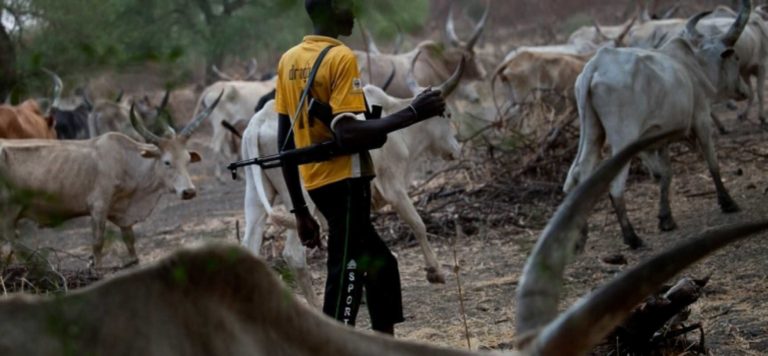
A armed herdsman

In an open letter to the UN Security Council and its members, SERAP urged them to urgently hold a special session on Nigereia and to visit the country to press the authorities to end continuing killings and destruction of property by suspected herdsmen, particularly in the north-central of the country.

The organisation also asked the Council to treat the atrocities by herdsmen as terrorist acts, in line with the UN Security Council resolution 2349 (2017), which addresses Boko Haram’s presence in the Lake Chad Basin and calls on all states to combat all forms and manifestations of terrorism.

“Declaring attacks by herdsmen as terrorist acts would help make up the authorities to seriously address the threats posed by herdsmen and combat the crimes against humanity being committed against Nigerians,” said SERAP.

In the letter dated Friday, March 16, 2018 and signed by SERAP’s deputy director, Timothy Adewale, the organisation expressed serious concern that the government of President Muhammadu Buhari is failing to uphold its responsibility to protect the citizens from increasing atrocities by the herdsmen which, if not urgently addressed, would pose serious threat to regional peace and security and, by extension, international peace and security.

“The Security Council must act now to protect Nigerians, including women and children, if the Council is not to be accused of failing the people of Nigeria,” declared SERAP.

The organisation said further: “The attacks by herdsmen have uprooted families, destroyed communities’ socio-economic activities, and taken away their livelihoods and common heritage. These attacks undermine the very purposes and principles of the UN Charter. If not urgently combatted, such attacks may rise to the level of threat to international peace and security. SERAP notes that the first ‘purpose’ listed for the UN is to maintain international peace and security, and to that end: to take effective collective measures for the prevention and removal of threats to the peace.”

The letter reads in part: “SERAP urges the Security Council and its members to publicly condemn these terrorist attacks, express concern about the protection of Nigerians and communities affected by the violations of international humanitarian and human rights law and press the authorities to put in place special mechanisms for bringing those suspected to be responsible to justice, and victims to receive redress, including adequate compensation and guarantee of non-repetition.

“The Security Council and its members should reaffirm that terrorism of all forms and manifestations, such as the growing attacks by herdsmen in Nigeria, are criminal and unjustifiable regardless of their motivations. They should also recognise that security, development and human rights are interlinked and mutually reinforcing and are vital to an effective and comprehensive approach to countering all forms of terrorism in Nigeria.

“The Security Council and its members should adopt a resolution to: Characterise killings by herdsmen as terrorist acts and mobilise international support for Nigeria to combat these attacks, including for the authorities to adopt and implement measures to tackle the causes and consequences of these attacks and end all forms of terrorism in the country.

“The resolution should also call on the UN Secretary-General to carry out a joint visit to Nigeria with the High Commissioner for Human Rights, Chairperson of the African Union Commission, and the African Union Peace and Security Council to investigate allegations of killings by herdsmen and to better understand the root causes of these killings and put pressure on the Nigerian authorities to end them.

“The resolution should express concern that unabated killings by herdsmen may ultimately contribute to undermining the ability of the Nigerian authorities to provide security, good governance, social and economic development in the country. It should affirm the international community’s solidarity and full support for the victims of killings by herdsmen and the communities affected, including those displaced because of the attacks.

“The Security Council and its members should support collaboration with the African Union Peace and Security Council to combat the threats posed by herdsmen and enable both institutions to support stability and development in Nigeria. We believe that a UN Security Council resolution would help to put pressure on the Nigerian authorities to take urgent and concrete measures to end the killings and secure the safety of all Nigerians. We urge you to act urgently as recommended, and we would be pleased to discuss these issues further.

“SERAP notes that hundreds of people including women and children, have been killed apparently by herdsmen, and several more have been displaced and others forced to flee their homes and communities. The past weeks alone have seen some of the worst attacks against innocent citizens, including unlawful killings, destruction and pillage of property by herdsmen across the country. The attacks have been fuelled by impunity that has plagued the authorities’ response to the problem.

“According reports, at least seven people have been killed and property worth millions of naira destroyed following series of attacks on Takum and Ussa local government areas of Taraba State by herdsmen. In Plateau State of Nigeria, a man identified as Joseph Alli, 23, was killed and beheaded by herdsmen during a fresh attack on Rotsu village, Miango District in Bassa Local Government Area of the State.

“His killers reportedly ate the food that he was about to eat, burnt the kitchen and food barn in the house and left. Three houses around the area were also burnt. In Kogi State, at least 50 people have been killed, with several still missing following an attack on Oganenigwu in Dekina Local Government Area of the state by herdsmen.”

The Security Council has five permanent members: China, France, Russian Federation, the United Kingdom, and the United States, and 10 non-permanent members elected for two-year terms by the General Assembly. The non-permanent members are: Bolivia; Côte d’Ivoire; Equatorial Guinea; Ethiopia; and Kazakhstan. Others are: Kuwait; Netherlands; Peru; Poland; and Sweden.

The presidency of the Council is held by each of the members in turn for one month, following the English alphabetical order of the Member States names. The current president of the Council is the Netherlands.

Rainstorm wrecks havoc, hundreds rendered homeless in llorin

0

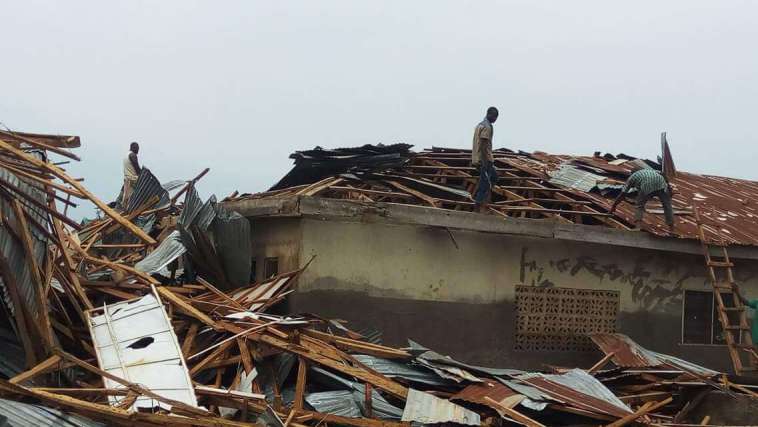
Hundreds of residents in various parts of llorin, the Kwara State capital, have been rendered homeless by rainstorm, following downpour which lasted for over three hours in the evening of Saturday, March 17, 2018.

Ilorin
A house with its roof blown off in Ilorin

The News Agency of Nigeria (NAN) reports that some of the affected houses, which had their roofs blown off by the storm, were in densely populated areas of the township.

NAN observed that several belongings of the victims including clothing, food items, electrical gadgets and other valuables littered the ground in the affected areas.

Some of the affected areas in llorin and its environs were Ganmo, Gaa Saka, Alore Guniyan, Agbooba, Adewole, Kuntu, Magaji Ogidi compound and Okelele among others.

One of the victims, Alhaji Oba Aremu, who resides at Magaji Ogidi compound, Ojuekun area of llorin, told NAN that his residence was completely damaged by the storm.

Aremu explained that he and his 15 family members were currently taking refuge in a small place given to them by the Magaji Ogidi, Alhaji Salihu Amosa-Ajape.

Another victim, Alhaji Asinmi Aliyu, who is a landlord of a six bedroom flat at Agbooba in llorin, said that he was yet to quantify things damaged by the rainstorm in his house.

In their separate reactions, some of the victims appealed to both the state and local governments to come to their aid and give them necessary support.

Most of the affected areas are still in total blackout following damages to electric poles and cables.

The Senior Special Assistant to Governor AbdulFatah Ahmed on Media and Communications, Dr Muideen Akorede, while reacting on the development on Sunday, said the state government symphatised with the victims over the incident.

Akorede assured that appropriate agencies of the government would embark on inspection of all the affected areas with a view to support the victims.

Some of the affected residents are now taking refuge in mosques and some with neighbours.

By AbdulFatai Beki

AfDB to support Nigeria’s power sector recovery programme

0

The African Development Bank (AfDB) says it will support Nigeria’s Power Sector Recovery Programme (PSRP) in three areas.

AfDB
Vice-President, Yemi Osinbajo, receives African Development Bank Vice-President for Power, Energy, Climate Change and Green Growth, Amadou Hott, and other African Development Bank Senior Managers in his office to discuss Nigeria’s Power Sector Recovery Programme (PSRP), State House Abuja

It listed the areas to include: operational and technical intervention, governance issues, and policy based support.

The bank disclosed this in Abuja on Friday, March 16, 2018 in a statement signed by Mrs Fatimah Alkali, the Senior Communications Officer in Nigeria Country Office.

AfDB said it had undertaken a mission to hold further discussions on Nigeria’s PSRP with several stakeholders.

The bank said that the mission was led by Mr Amadou Hott, the bank’s Vice President for Power, Energy, Climate Change and Green Growth.

It said meetings had been held with relevant ministries, departments and agencies (MDAs) to harmonise plans and areas of intervention.

The ministries and agencies include the Ministries of Finance, Power, the Nigerian Electricity Regulatory Commission, the Transmission Company of Nigeria, World Bank and solar power developers.

The bank said the programme was designed to promote energy access to rural communities through the expansion of the transmission grid, development of innovative financing products and provision of technical assistance to improve revenue generation by the distribution companies.

It said the goal of the mission was to identify opportunities for collaboration in the programme.

“The bank’s energy strategy identifies energy as crucial not only for the attainment of health and education outcomes, but for industrialisation, reducing the cost of doing business and for unlocking economic potential and creating jobs.

“In line with its high 5 development priorities, the bank is committed to supporting Nigeria in the effective and efficient implementation of the country’s Power Sector Recovery Programme,” the bank said.

The statement quoted the bank’s President, Dr Akinwumi Adesina, as saying that “Africa is simply tired of being in the dark.

“It is time to take decisive action and turn around this narrative: to light up and power Africa and accelerate the pace of economic transformation, unlock the potential of businesses and drive much needed industrialisation to create jobs,” he said.

By Suzzy Tolofari

Africa can leapfrog other regions in clean mobility transition – Experts

0

Possibilities for swift transition to clean and efficient mobility exist more in Africa than other regions, experts have affirmed.

Africa Mobility Week
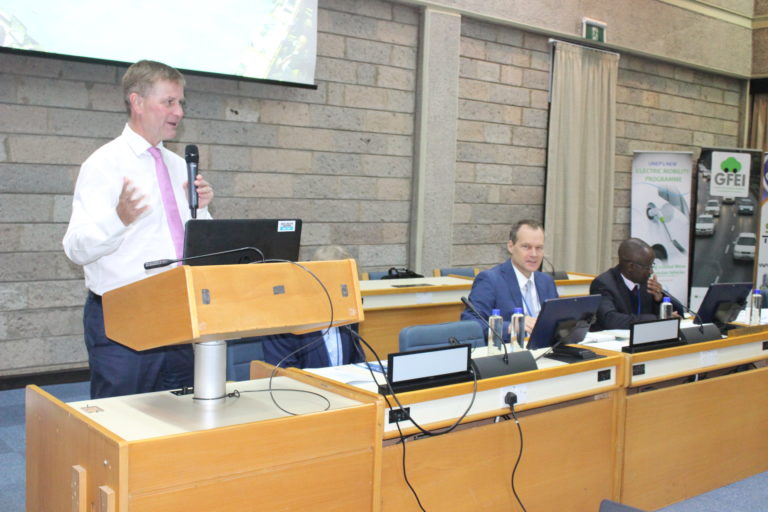
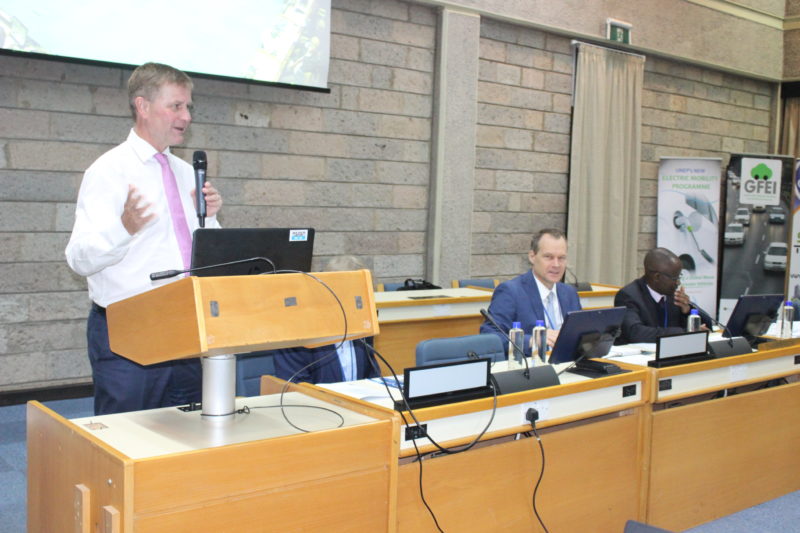
Head of UN Environment, Erik Solheim, speaking during the Africa Mobility Week

Experts at the Africa Clean Mobility Week that ended in Nairobi, Kenya on Friday, March 16, 2018 believe that Africa’s readiness for the much-needed transition remains exceedingly higher than those of other regions that are deeply entrenched in dirty and inefficient fuel economies.

Africa, according to Rob de Jong, Head of the Air Quality and Mobility Unit of the UN Environment, is very ready to transit because the region depends largely on imported fuel to meet 80% of its consumption needs.

The region, he added, “is not producing a lot of vehicles, most vehicles are imported and more than any other continent in the world, Africa can today decide to import cleaner cars and efficient fuel and through this, leapfrog to a new era of clean mobility.”

“In other continents like Asia, where there is so much production of poor quality vehicles, its very difficult to introduce vehicle standards, but for Africa, it becomes easier for the region to set up policy frameworks that regulate the quality of fuel it imports and many African states are already doing that,” Jong said.

Experts are also of the view that a larger part of Africa’s vehicular need is yet to be met even though the region is motorising very quickly. In Kenya for example, the number of vehicles doubles every seven years while in Europe, there are already too many cars and if Africa adopts the clean transition policy today, it will successfully influence a cleaner future.

Jane Akumu, Programme Officer at the Economy Division of the Air Quality and Mobility Unit of the UN Environment, sees great prospects in Africa’s transition to a clean mobility future.

“We see good prospects for progress,” Akumu said. “When we started this move less than a decade ago, Africa was predominantly using lead petrol but today its only one country that is still using lead petrol out of Africa’s 55 countries,” she says.

“What took other regions over a decade was achieved within less than five years in Africa,” Akumu added.

The UN Environment, on its part, has been prioritising and bringing the issues of cleaner transport into the discussions of African ministers and various stakeholders including the private sector, civil society and the media.

“Once issues are prioritised with cost-effective solutions, we see very good and remarkable progress in Africa especially when we link them with health, environment and climate change considerations, it’s a win-win situation,” Akumu said.

Courtesy: PAMACC News Agency

×