Home Blog Page 1787

Flood sacks 35 communities in Edo, renders 30,000 homeless

0

No fewer than 35 communities in Etsako East and Etsako Central Local Government Areas of Edo State have been sacked by flood, occasioned by unending rains and overflow of the River Niger.

Godwin-Obaseki
Governor Godwin Obaseki of Edo State

The News Agency of Nigeria (NAN) reports that the flood, which displaced over 30,000 people, also damaged hundreds of hectares of farmland across the two council areas.

NAN reports that mostly affected by the flood are communities such as Udaba, Anegbette, Usomegbe, Uduchiz among others, all in Etsako Central Local Government.

Similarly, the flood also sacked the entire six Uneme clans in South East Uneme, Okpekpe, among others, in Etsako East Council area.

The Etsako East council boss, Mr Aremiyau Momoh, and his counterpart in Etsako Central, Mr John Akhigbe, said the disaster had gone beyond the purview of the council areas.

They called for urgent intervention from both the State and the Federal Governments.

The duo said camps for the Internally Displaced Persons had been placed in strategic locations across the council areas.

Akhigbe said aside the Resettlement Camp built aftermath of a similar disaster in 2012; about five other camps are being prepared for the victims.

Similarly, Momoh said six camps had been opened in Etsako East for the same purpose.

“We have tried our best as far as the councils are concerned, we are hoping and appealing to the Federal Government to urgently intervene on this matter,” he said.

In his remarks, the clan Head of Uzanu, South East Uneme in Estako East local government, Benjamin Ikani, also cried out over the sacking of six communities in his domain by flood.

The Monarch said more than 1,700 persons from the six communities are now displaced looking for where to stay.

Ikani listed communities affected by the flood to include Uneme-Ekwuekpele, Uneme-Ogwoyo, Uneme-Ukpeku, Uneme-Ogbethaya, Uneme-Yeluwa and Uneme-Unubu.

He said he relocated some widows, old women and children to Uzanu community to enable the children go to school.

He said the displaced persons had been moved to higher ground at Uneme-Yeluwa waiting for interventions from the state.

Ikani said he has reported the matter to the relevant authorities but was yet to get any help.

He expressed worry over stranded pregnant women that could no longer get access to ante-natal care.

“The flood started last week. You can see the women and children in my palace. Nobody died in the flood, but my people need help.

“The most pathetic situation is the pregnant women because of lack of health care, food stuff, medicine. The people can no longer harvest their crops.

“I brought 18 persons because all of them have left their villages to stay at Uneme-Yeluwa.”

Council moves to save flood-threatened Jigawa bridge from collapse

0

The Kirikasamma Local Government Council in Jigawa State has commenced erection of a sandbag embankment at Marawaji Bridge to save it from imminent collapse.

Gov. Muhammad Badaru
Gov. Muhammad Badaru of Jigawa State

The News Agency of Nigeria (NAN) reports that the bridge, which connects 20 other communities, is being threatened by flood.

Speaking at the project site on Saturday, September 15, 2018 at Kirikassama, the council’s Chairman, Alhaji Salisu Kubayo, said the council had acquired an excavator, a tipper and over 2000 sacks for the project.

“The release of water from Tiga Dam means that disaster will soon befall us if we do not take urgent measures to prevent this bridge from collapse.

“Due to the high volume of water, it washed away the surface leading to the two entrances to the bridge, making movements of people and vehicles almost impossible.

“We are now building a sandbag embankment to stop the water from going out of its way to destroy the bridge,” he said.

Kubayo, who personally took part in the manual labour, distributed over 1000 sacks to Community Based Organizations (CBO’s) for the construction of river embankments in their various localities.

He advised them to avoid being ravaged by flood like the neighboring communities and urged them to use the sacks for the purpose they were meant.

“Do not divert them for personal use, if you use these sacks judiciously, you will save lives and property in over 30 communities currently at risk of being destroyed by flood in Kirikasamma,” he appealed.

The chairman also advised farmers in the council to ensure that crops ready for harvest were harvested and moved to their homes immediately in order to avoid damages.

UK could be carbon neutral by 2050

0

In a joint report by the Royal Society, the Royal Academy of Engineering and Imperial College London, it has been found that the UK could be carbon neutral by 2050.

Theresa May
Theresa May, Prime Minister of the United Kingdom

The report states that the UK could cut new emissions of CO2 from 468 million tonnes in 2015 to 130 million tonnes in 2050.

However, the authors of the report say that just reducing emissions will not be enough to become carbon neutral. Instead, they propose that we need to proactively remove CO2 from the atmosphere, this would be set out in a series of “negative emissions” measures.

To ensure they meet this goal, the report finds that the UK could capitalise on a range of proposed techniques such as planting new trees, restoring wetland and forest habitats, and adding nutrients and alkalinity to oceans. These methods increase the amount of CO2 removed from the atmosphere by photosynthesis.

Other methods include bioenergy with carbon capture and storage, which captures CO2 from biomass power plants, transports it to a storage site, and deposits it where it will not enter the atmosphere.

Co-author Professor Nilay Shah, from Imperial’s Department of Chemical Engineering, said: “Using these methods at a large enough scale will be challenging, and will need a concerted effort from engineers, scientists and government. We must act now.”

By removing carbon dioxide emissions, it will help the UK to meet its targets set by the Paris Agreement.

Professor Gideon Henderson, Professor of Earth Science at the University of Oxford and chair of the report working group, said: “If the UK acts now on greenhouse gas removal, we can reach national emissions targets and show how a major industrialised economy can play a leading role in meeting the goals of the Paris Agreement.”

Presently, other countries around the world are trying to implement measures to ensure they meet the Paris Agreement goals. However, Australia and North America are currently failing to implement climate policy that will meet the intended targets.

Courtesy: Climate Action

India may construct buildings from recycled plastic

0

Research from Bath University has revealed that sustainable construction could be a solution to India’s plastic waste crisis.

Plastics dress
Dress made from plastics

The study, in partnership with colleagues from Goa Engineering College India, demonstrated that replacing 10 per cent of sand in concrete with plastic waste could simultaneously solve a national sand shortage and reduce the growing amounts of rubbish on the streets.

The team investigated different types of plastic to see if they could be crushed and used as a replacement for sand, which normally accounts for 30 per cent of a concrete mixture.

Five types of plastic particles, including those from recycled plastic bottles and recycled plastic bags, were trialled in the mixes in a variety of sizes. Recycled plastic bottles were found to perform best.

Dr Richard Ball, Co-investigator and Reader in the University of Bath’s Department of Architecture & Civil Engineering, said: “Characteristics of the waste being added to the concrete, such as the type of plastic and the size and shape of the particles can all have an influence on the final concrete properties. Even when the reduction in performance prohibits structural applications lower tech uses such as paving slabs may be viable.”

India is a rapidly developing country and this has resulted in a growing waste problem. Currently, 15,000 tonnes of plastic are dumped in the streets everyday due to unsuitable recycling alternatives.

The research has the potential to provide a solution for the plastic waste and for the growing population as the nation continues to develop.

This news follows the Netherlands announcing the world’s first cycle path made from recycled plastic.

Courtesy: Climate Action

FAO launches five-year development plan for Kenya

0

The Food and Agricultural Organisation of the UN (FAO) has launched its Country Programming Framework plan for Kenya in the next five years.

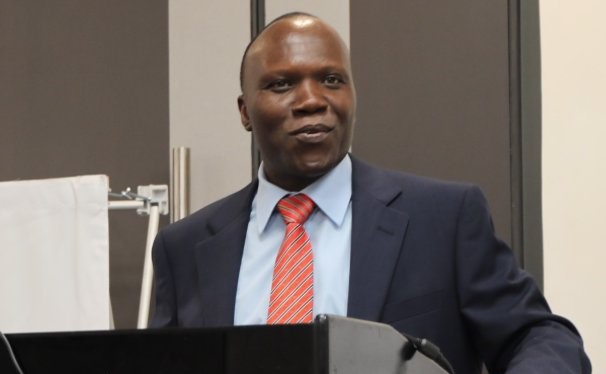
Gabriel Rugalema
Gabriel Rugalema, FAO Representative to Kenya

Gabriel Rugalema, FAO Representative to Kenya, said that during the five-year plan, the UN food agency will place emphasis on agribusiness and value chain, investment and policy environment, natural resource management and resilience in food production.

He said that in the strategic plan, FAO intend to help lives of farmers by encouraging them to grow crops for the market and also linking them to markets as opposed to producing food for consumption only.

“We intend to help transform Kenyan farmers’ mindset towards growing of crops with focus on making profit,” Rugalema said during a meeting with Kilifi Governor Amason Kingi in the coastal town.

The UN official said that investors require an investment and policy environment that could attract them to invest in the country.

He said that in collaboration with the International Fund for Agricultural Development (IFAD) and the World Bank, some 500,000 dollars has been earmarked to help create a conducive policy environment into attracting investors in agricultural development to the country.

Rugalema added that IFAD has further allocated 66 million dollars for the development of aquaculture in the Kenyan waters.

Rugalema revealed that FAO will put emphasis on climate smart agriculture water harvesting, water management, land digitalisation, support towards the creation of land registry systems and support towards the development of Geographic Information System laboratories in equipment in eight Counties.

“We are also keen at promoting planting of pasture as a commercial enterprise to enable livestock farmers access fodder during dry seasons,” he added.

The official revealed that the new strategy will incorporate issues pertaining to nutrition for the children and also ensuring that foods are preserved during glut periods for use during dry seasons.

“We hope that by the end of the five years, the programs will help improve lives of Kenyan populations especially in rural areas,” he added.

Rugalema encouraged Kenyans to start planting trees as a commercial enterprise adding that majority of Tanzanians are today making thousands of dollars from tree planting alone.

Revamped UN portal to capture, drive climate action

0

As leaders gather in California this week for the Global Climate Action Summit (GCAS2018), UN Climate Change is presenting a revamped version of its Climate Action Portal, featuring the accelerated action underway by cities, regions, companies and investors to achieve the collective goals of the Paris Agreement.

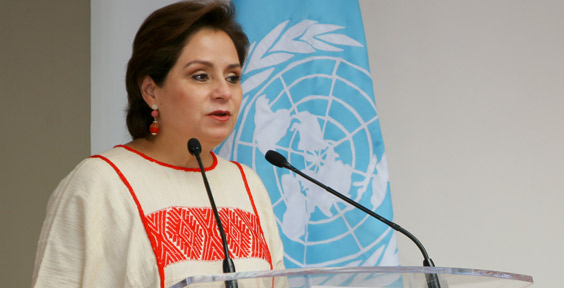
Patricia Espinosa
Patricia Espinosa, Executive Secretary of the UNFCCC

The preview coincides with what has been dubbed “the biggest moment for climate action since the Paris Agreement”, to highlight progress being made around the five”: Healthy Energy Systems, Inclusive Economic Growth, Land and Ocean Stewardship, Sustainable Communities and Transformative Investments.

Key commitments in these five areas were presented at the end of the Global Climate Action Summit on Friday, September 14, 2018, and by the New York Climate Week in a fortnight, UN Climate Change will have uploaded all the actions under each of these five areas to the area, effectively serving as the legacy tool for the Summit.

The energy and momentum emerging from GCAS2018 can help set the stage for the next steps in the international climate change process, starting with the UN Climate Change Conference in Katowice this December (COP24).

Originally called the “NAZCA Portal” – named after the ancient lines in Peru and launched by the Peruvian Government back in 2014 – the Climate Action portal was subsequently enshrined in the text of the Paris Agreement as the official portal to showcase the contributions of the so-called “non-Party stakeholders”.

The new design and improved usability of the website – centred around an interactive map – offers an improved visualisation of the overall data and enhanced aggregation of climate action based on constituencies and sectors.

The update also represents a unique collaboration between UN Climate Change and its core data partners who have been working tirelessly to harvest and consolidate the climate commitments and actions of non-Party stakeholders (cities, regions, businesses and investors): CDP, Carbon Climate Registry, Climate Initiative Bonds, Cooperative Initiative Platform, Global Covenant of Mayors, Investors on Climate Change, The Climate Group, and UN Global Compact.

Recent studies have underscored the vital role that these actors are playing to reduce global emissions and, in doing so, to create persistent momentum towards the Secretary-General’s 2019 Climate Summit. Specifically, some studies suggest that, by 2030, global greenhouse gas emissions could be lowered by as much as 1.5 to 2.2 gigatons (CO2e) every year if the commitments from nearly 6,000 cities, states, regions and over 2,000 companies are fully implemented.

The portal will therefore serve a critical function by capturing the breadth and depth of this action from the “real world” economy, gradually incorporating new data over the coming months from more than 12,000 stakeholders, and capturing many more commitments going forward.

This can encourage governments to raise ambition as they prepare for COP24 in Poland in December of this year and for the next round of climate action plans under the Paris Agreement in 2020.

View the UN Climate Change’s Global Climate Action portal at: http://climateaction.unfccc.int/

NAZCA was launched by the Peruvian Presidency of the UN Climate Change Conference COP20, alongside the Lima Paris Action Agenda (LPAA) in 2014. It was a central tool for the LPAA and the French Presidency to build momentum and support the adoption of the universal climate agreement at COP21 in 2015.

This culminated with its inclusion in the Paris Agreement outcome where countries welcomed the efforts of these actors to scale up their climate actions and encouraged the registration of these actions on NAZCA, which UN Climate Change says will continue to play a key role in providing visibility and tracking the diversity of climate action and mobilising broader engagement to help countries achieve and exceed their national commitments.

Preserving mangrove forest ecosystem in Cross River

0

Mangroves!

We hear of them, maybe we know they are a forest type, we harvest wood from them and then we do not think much of them at all. Like all of the other natural resources of the Earth, we take mangrove forests for granted. We exploit them for our purposes, and we assume they are always going to be there. After all, they always have been.

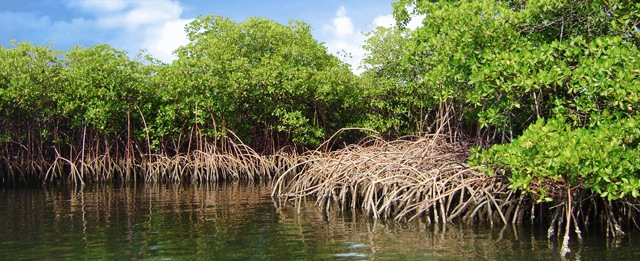
Mangroves
Mangroves

But, the people who live closest to mangrove forest types will tell you things are changing.

At least, that is what this chief in Ikot Ekriba, Akpabuyo local government area in Cross River State thinks.

“In those days, our fishermen could catch very big fish from the rivers around here but these days, they spend days out on their boats and come back with small fish. We cannot sell and get a good price.”

As mangrove forests have been depleted for their value as fuel wood, fish spawning grounds have been lost and communities that relied on their fishing occupation teeter ever more precariously on the edge of poverty. The timber harvested from mangrove forests is sold in wood markets in the nearby city of Calabar, where it is used as construction material and also to fuel the fires that cook the tasty meals the town is known for.

Many people make an honest living as restaurateurs and food kiosk operators dotted all over the coastal city, but local culture dictates that wood-fuelled fires produce tastier meals than other types of fuel (kerosene or gas). The smoky flavour added by forest wood has a charm hard to emulate any other way. Experienced cooks assert that mangrove timber burns cleaner and better than other types of wood.

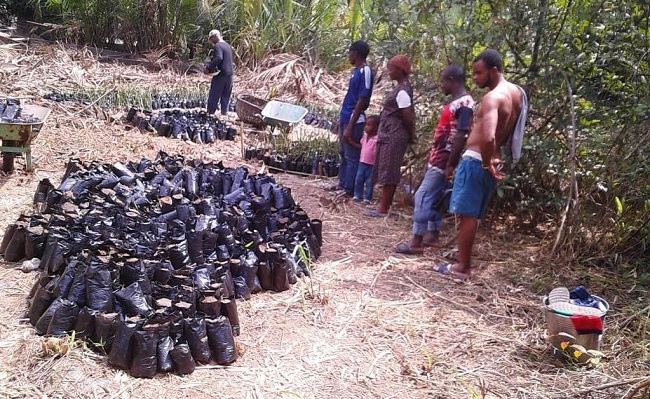
Mangrove
Mangrove tree seedlings at the project site

Very few of these cooks think about the ecological cost of their practices, nor do their customers consider the costs of their food preferences.

However, these ecological costs are a reality that mangrove-dependent communities live with daily. In addition to the loss of fish spawning grounds and depleted income from fishing, they experience stronger environmental consequences because the barrier to strong ocean winds and flooding that mangroves provided is lost.

And this is why they have not hesitated to come together to take concerted action to preserve the mangrove forest ecosystem. They are replanting mangroves, they are formulating by-laws for the more sustainable use of mangrove forests, and they are exploring alternative livelihoods.

They know their actions are not quick wins but stepping stones to create long lasting solutions for the health of the mangrove ecosystem.

So, they are grateful for the technical support provided by the UN-REDD programme and the funding provided by the United Nations Development Programme (UNDP) – Global Environment Facility (GEF) Small Grants Programme (SGP). They are also thankful for the facilitation support provided by the team at the Centre for Information and Development in Cross River State.

The Centre For Information and Development (CFID) is implementing a Community-Based REDD+ project in selected communities in the mangroves of Cross River State.

“We thank you and we promise our unflinching dedication to the success of this project we have started,” says HRM Elder Etinyin Maurice E. E. Nya, the village head of Eden Edo, clan head of Edem Edo Clan.

By Christine Edet (Centre Manager, Centre for Information and Development)

Ex-UN climate chief Pachauri to be tried in sexual harassment case

0

Former UN climate change panel chief, Rajendra Pachauri, will face trial in a sexual harassment case, an Indian court ruled on Friday, September 14, 2018.

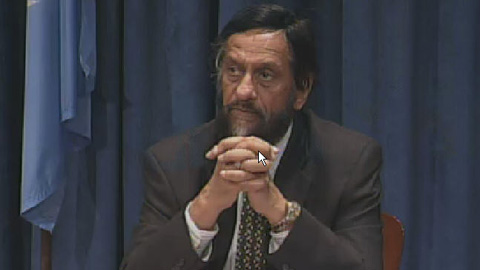
Rajendra Pachauri
Rajendra Pachauri, former Chair of the Intergovernmental Panel on Climate Change (IPCC)

The court said there was enough material to proceed against Pachauri, according to a lawyer representing the complainant.

Pachauri, 78, resigned from the UN’s Intergovernmental Panel on Climate Change (IPCC) in February 2015 after his colleague, a researcher at The Energy and Resources Institute, made allegations of sexual harassment

The woman, then aged 29, alleged Pachauri made physical advances and sent her lewd emails and text messages after she started working at the institute in 2013.

Pachauri has denied all allegations against him.

As head of IPCC, Pachauri received a Nobel Prize, jointly awarded to the panel and former U.S. vice president Al Gore in 2007 for their work on climate change.

An internal committee at the woman’s research institute had found him guilty of misconduct.

The next hearing in the case when charges are expected to be framed is scheduled on Oct. 20.

Archaeologists discover 13,000-year-old brewery in Israel

0

Archaeologists in Israel have discovered what is thought to be the world’s oldest alcohol production site in a cave near the coastal city of Haifa.

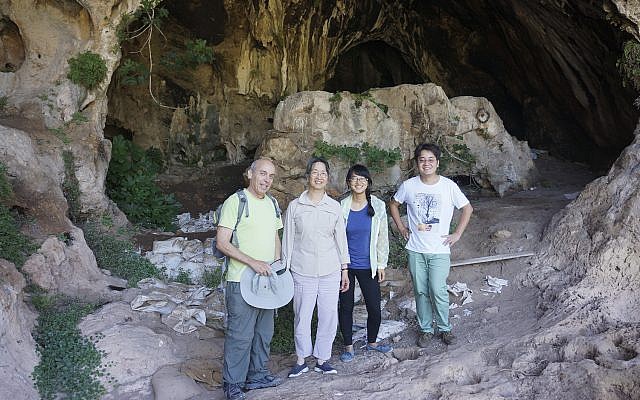
13,000-year-old brewery
A team of Stanford University and Israeli archaeologists stand in the entrance to Raqefet Cave

“This is the earliest evidence of alcohol production that we know of,” Dani Nadel, one of the archaeologists from Haifa University, said on Friday, September 14, 2018.

It’s unclear exactly what kind of alcoholic drink was brewed there, Nadel said, adding that they “didn’t find a bottle of beer there”.

He said that they “the archaeologists” suspected that it might have been a kind of fermented porridge.

“They brewed something that contained a decent amount of alcohol,” Nadel said, explaining that the process relied on the fermenting of grains, still a key process in beer production today.

In the Rakefet Cave in Mount Carmel, only small amounts of alcohol were found to have been produced at the site, where archaeologists found traces of frozen grains in holes in the ground.

Findings also revealed that the cave was also used by people from the Natufian culture to bury the dead, as Nadel and other researchers found out during previous digs.

The Natufian culture began around 15,000 years ago in an eastern Mediterranean region.

The Israeli researchers believe that the alcohol might have been produced as part of a Natufian ceremony.

WHO steps up measures to tackle sleeping sickness in South Sudan

0

The World Health Organisation (WHO) said on Friday, September 14, 2018 it had stepped up efforts by training health workers to accelerate the elimination of human African trypanosomiasis or sleeping sickness in South Sudan.

Evans Liyosi
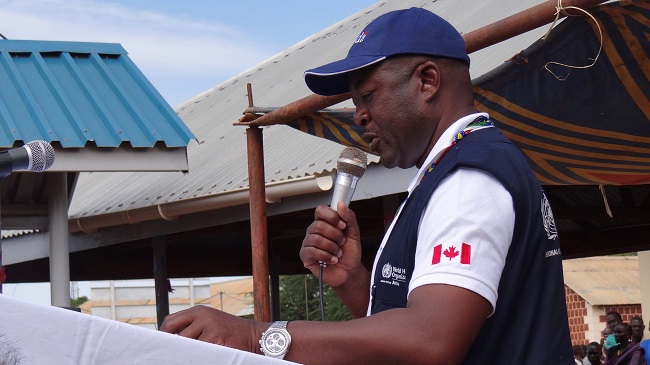
Evans Liyosi, WHO Representative for South Sudan

Evans Liyosi, WHO Representative for South Sudan, said this in a statement issued in Juba, the nation’s capital.

He said the UN health agency trained health experts on the use of different diagnostic tools and case management.

“Sleeping sickness is endemic in South Sudan. Its elimination requires combined efforts of WHO, National Sleeping Sickness Control Programmes, and other partners to strengthen control activities and improve the surveillance of the disease,” Liyosi said.

He said the objective of the training was to empower national personnel from seven hospitals located in key trypanosomiasis endemic areas of South Sudan.

The hospitals were in charge of trypanosomiasis control to optimise diagnosis and treatment, strengthen surveillance and plan effective control and elimination activities and reinforce communications and supply chain for an uninterrupted functioning of the sites.

The participants were also provided with laboratory reagents and blood sampling materials for kick-starting new diagnostic capacities in the seven sites.

Trypanosomiasis is a parasitic disease that is fatal if left untreated. The disease is transmitted by the tsetse fly where it mainly affects impoverished rural communities.

According to WHO, South Sudan is one of the country’s most affected by sleeping sickness.

In 2018, about 5,400 people were screened for sleeping sickness and 13 patients were treated, according to the WHO.

Since 2006, said WHO, control interventions including access to diagnosis and treatment have been considerably diminished due to insecurity, impassable roads as well as the withdrawal of NGOs providing trypanosomiasis diagnosis and treatment activities.

The UN health agency said it had laid out a roadmap to eliminate the disease as a public health problem by 2020, by maximising efficiency in order to achieve elimination.